
Electricity from the city motorway? Solingen is considering a huge solar park on Viehbachtalstraße
Xpert Pre-Release

Available in 27 languages 📢
Prefer Xpert.Digital on GoogleⓘPublished on: October 1, 2025 / Updated on: October 1, 2025 – Author: Konrad Wolfenstein
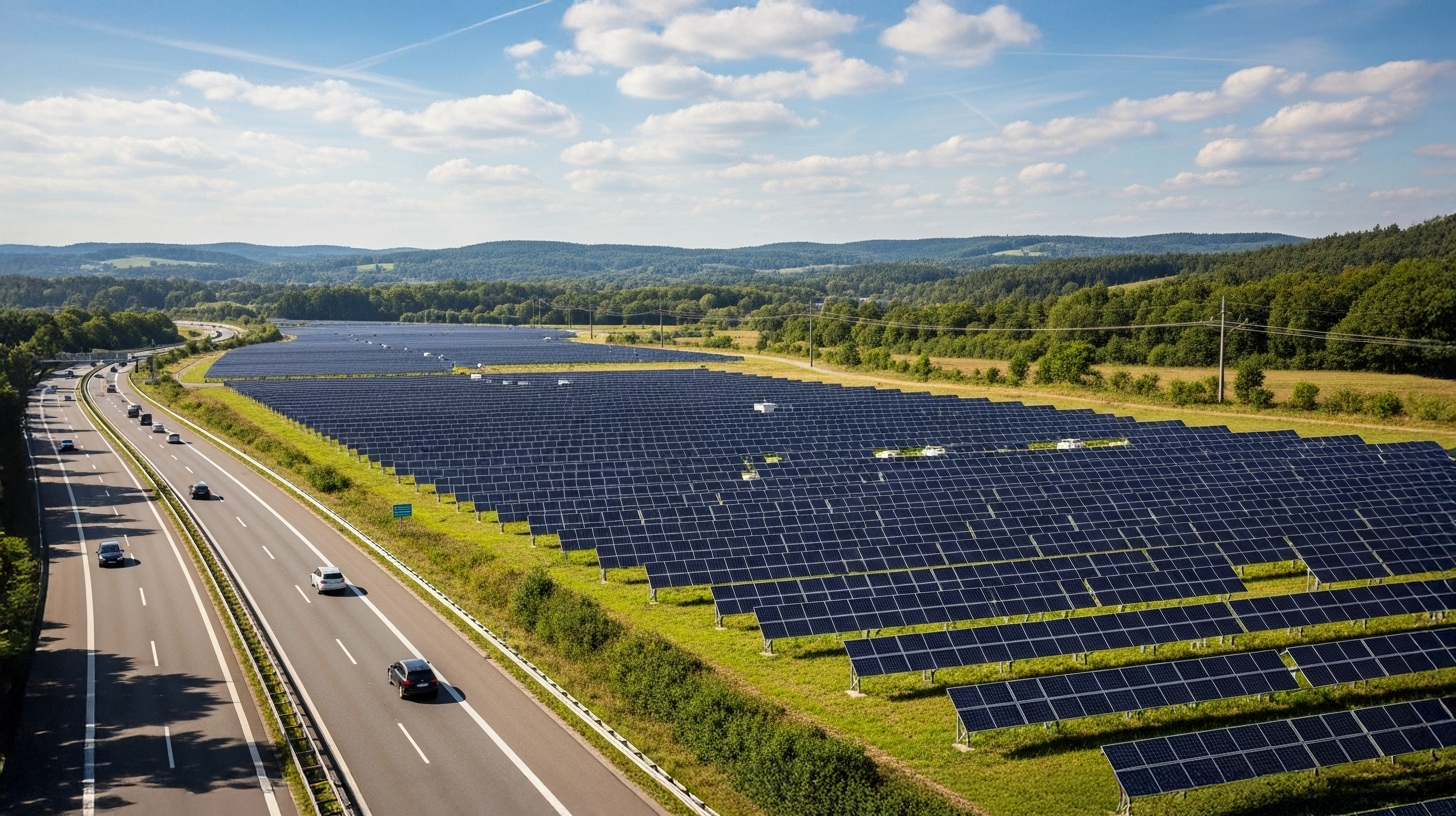
Electricity from the city motorway? Solingen is considering a huge solar park on Viehbachtalstraße – Creative image: Xpert.Digital
Solar park by the highway: Brilliant idea or a plan with too many obstacles?
Green energy for Solingen: What speaks for and against a solar park on Viehbachtalstraße
The debate surrounding the energy transition in Solingen has taken on a new, concrete focus: Viehbachtalstraße. At the initiative of the Green Party, the city administration is to examine the feasibility of constructing a large-scale solar park along this busy thoroughfare. The proposal aims to address one of the central challenges of achieving climate neutrality: Where, in a densely populated city like Solingen, can space be found for the urgently needed expansion of renewable energy?
The idea of constructing photovoltaic systems along transport routes is strategically sound. At the federal and state levels, such already impacted areas are clearly prioritized over valuable farmland or pristine nature. The corridor along Viehbachtalstraße thus emerges as a potentially conflict-free space that could contribute to Solingen's ambitious climate goals. The city is already pursuing a clear strategy with its "Climate-Neutral Solingen 2040" concept and its own potential analysis for ground-mounted photovoltaics, into which this feasibility study seamlessly integrates.
However, the path from idea to reality is complex and fraught with numerous hurdles. Before even a single solar panel can be installed, a comprehensive series of assessments is required. These include not only building and planning procedures, such as the creation of a development plan, but also rigorous environmental and nature conservation impact assessments. Traffic engineering aspects also play a crucial role: the safety of drivers on state highway L141 must not be compromised by glare. Finally, economic viability and eligibility for feed-in tariffs must be ensured, and the grid connection by the Solingen municipal utility company must be clarified. The Green Party's motion for review thus marks the beginning of an in-depth feasibility study that will reveal whether the vision of clean electricity from the highway can soon become a reality.
Green Party motion: Could a solar park be built along Viehbachtalstraße in Solingen?
Main message: A solar park along Viehbachtalstraße in Solingen is conceivable in principle, but requires a series of planning, legal, environmental, and traffic-related assessments. The Green Party's initiative to commission a feasibility study in the environmental committee aligns with Solingen's existing strategies for climate neutrality and PV expansion and addresses a federally and state-level policy goal of expanding the area available for ground-mounted PV. Concrete feasibility depends significantly on land-use planning (zoning plan/development plan), environmental impact assessment, eligibility for feed-in tariffs, distance and glare assessments, the location relative to the L141/Viehbachtalstraße, and the city's overall potential. Solingen already has the foundations for ground-mounted PV (potential analysis, target concept "Climate-Neutral Solingen 2040," energy policy work program), while North Rhine-Westphalia has recently significantly expanded its available land and funding instruments.
What is the purpose of this initiative?
What political question is currently being raised in Solingen?
The Green Party council group intends to commission a feasibility study to determine whether a solar park as ground-mounted photovoltaics (GV) is feasible along Viehbachtalstraße (“L141N”/“Vieh”). This initiative stems from the significant expansion of large-scale ground-mounted PV installations in Germany, the need for additional solar capacity to achieve targets, and the search for low-conflict land corridors near the city. Recent debates in the Climate, Environment, and Mobility Committee and the municipal energy and climate plans, which explicitly include ground-mounted PV, serve as local reference points.
Why is Viehbachtalstraße in particular coming into focus?
Along transport routes, solar installations on verges and previously developed land are often considered more compatible with planning than those on high-quality agricultural land. Federal and state law, under certain conditions, prioritizes photovoltaic (PV) installations along highways and multi-track railway lines; North Rhine-Westphalia has recently expanded the area designated for ground-mounted PV installations in general. Locally, ongoing reconstruction and renovation work, as well as recurring tree and shrub maintenance, are taking place along the L141/Viehbachtalstraße – all factors that suggest a site-specific assessment of spatial suitability.
How does this initiative fit into Solingen's energy and climate strategy?
Solingen is pursuing a target concept, "Climate-Neutral Solingen 2040," an Energy Policy Action Program (EPAP) including a potential analysis for ground-source photovoltaics (GV), and is expanding PV capacity on municipal roofs as well as through cooperative and municipal utility projects. The EPAP explicitly outlines the mapping of the city's own GV potential (supported by GIS) and the development of permit-ready sites with a preliminary potential of approximately 10 MWp. The review mandate along the "Vieh" (a local landmark) would therefore be a continuation of existing plans.
Political context in Solingen: Who wants what?
What position do the Solingen Greens take?
The Green Party has been pushing for accelerated solar power development for years, supported by events with the city, municipal utilities, and citizen energy initiatives, as well as by its platform in the local elections (climate neutrality by 2040, expansion of renewable energies). This new initiative aims to examine the suitability of specific corridors along Viehbachtalstraße.
How are other political actors reacting?
Energy policy is a hotly debated topic in Solingen. While the coalition frequently emphasizes the potential of photovoltaics, the CDU recently criticized aspects of green economic policy. At the same time, they signaled their willingness to discuss master plans. This demonstrates that PV and land-use issues are embedded in a broader discussion about location and transportation, which also includes livestock farming.
Which municipal departments and companies would need to be involved?
The following would necessarily need to be involved: the city planning/mobility department, environmental and nature conservation authorities, the technical services department, the Solingen municipal utilities (network and project expertise), possibly the SEG (land development), and Straßen.NRW as the road authority. The existing potential for solar PV and the municipal heat planning provide the necessary data.
Legal framework: What permits does a solar park need?
What building and planning law steps are necessary?
Ground-mounted photovoltaic (PV) systems are considered structures and generally require a building permit. A two-stage planning process is typically necessary: land-use planning (amendment to the land-use plan and development plan for a "special solar area") followed by a building permit. Exceptions exist for certain privileged locations (e.g., 200-meter strips along highways/multi-track railway lines according to Section 35 Paragraph 1 No. 8b of the German Federal Building Code) or agrivoltaics up to a certain size – however, the L141 is a state road, not a highway corridor. Therefore, municipal land-use planning would generally be required unless a specific exemption applies.
How long do such procedures typically take?
The approval process for FF-PV projects varies, typically taking 6–12 months from the completion of a sound development plan to obtaining a building permit; complexity, environmental impact assessments, and objections can extend the timeframe. North Rhine-Westphalia and the federal government are politically accelerating the process, but environmental and public participation requirements must still be met.
Which environmental impact assessments are required?
The following aspects must be examined: nature conservation and species protection, landscape impact, soil protection, water and drainage, impact/compensation balancing, and, if necessary, a preliminary environmental impact assessment. The German Environment Agency (UBA) recommends environmentally sound site management with minimum criteria for biodiversity (e.g., extensive maintenance, flowering structures, buffer zones and refuge areas). The German Renewable Energy Sources Act (EEG) (newer versions and Solar Package I) contains minimum nature conservation requirements for subsidized renewable energy photovoltaics.
Are there any special legal provisions regarding road traffic on the L141/Viehbachtalstraße?
Facilities located along roadsides are subject to road traffic regulations (distances, sight triangles, traffic safety, glare-free conditions). Roads.NRW must be involved, among other things, for glare assessments, access, temporary closures during construction and maintenance, and safety at on- and off-ramps. Existing measures on Frankfurter Damm and vegetation management demonstrate the importance of these corridors for traffic and their maintenance needs.
Funding and economic framework: Under what conditions does a project become financially viable?
Which EEG funding options are available?
Conventional fixed-surface photovoltaic (FSP) systems larger than 1 MWp participate in tenders issued by the Federal Network Agency (BNetzA). Disadvantaged agricultural areas in North Rhine-Westphalia have been open to FSP since 2022, and this will be expanded nationwide by federal law in 2024. Smaller projects and citizen energy initiatives are subject to special regulations (e.g., up to 6 MW without tendering for citizen energy projects), while agri-PV, floating PV, and installations along transport routes are subject to specific area restrictions.
What state-level funding is available in North Rhine-Westphalia?
North Rhine-Westphalia has reopened progres.nrw for FF-PV, floating, and agri-PV; funding is available for up to 20% (FF-PV) or 25% (floating/agri-PV) of investment costs and up to 70% of planning/consulting services, particularly when no EEG subsidy applies. In 2024, the state government expanded the area designated for FF-PV through the State Development Plan (LEP).
What marketing options are available as alternatives to EEG subsidies?
In addition to feed-in tariffs, power purchase agreements (PPAs) with companies or municipal utilities are possible, potentially in combination with storage solutions. For municipal participation, citizen energy models or municipal levy models are suitable, as project developers in Germany are increasingly using to increase acceptance and local value creation.
Area and location issues: What are the geometric and spatial arguments for or against the "cattle"?
What general location criteria do municipalities set for FF-PV?
Priority is given to previously contaminated or low-quality areas: brownfield and conversion sites, peripheral locations along transport routes, landfills, technical infrastructure areas, sealed surfaces, and less productive agricultural land. Criteria include exposure, shading, distances, glare-free orientation, ecological sensitivity, utility lines, historic preservation, noise protection, and visual connections.
Is there already a FF-PV potential analysis in Solingen?
Yes. In 2023, the administration developed a GIS-based potential analysis, advises interested parties, and plans to develop economically viable and permittable sites from the preliminary study up to commissioning (estimated at approximately 10 MWp, approximately 8,500 MWh per year). The Green Party's request for review would specifically tailor this work to the Viehbachtalstraße corridor.
What are the special features of Viehbachtalstraße?
The L141/Viehbachtalstraße is a four-lane main urban access road with a historically discussed northern extension (stage 2 project, currently unrealistic). Construction work is underway in the Frankfurter Damm area, highlighting its traffic relevance and potential conflicts with a solar energy project. A solar park along this route would have to take into account sightlines, safety distances, slope stability, and maintenance access.
How should the conflict with other land uses be assessed?
Solingen is committed to both protecting and developing open spaces (e.g., the Buschfeld decision in the Regional Council). Projects at the "Vieh" site must therefore strictly avoid impairing high-quality open space functions or planned urban development areas. Early coordination with regional planning authorities and SEG projects is essential.
New: Patent from the USA – install solar parks up to 30% cheaper and 40% faster and easier – with explanatory videos!

New: Patent from the USA – Install solar parks up to 30% cheaper and 40% faster and easier – with explanatory videos! - Image: Xpert.Digital
The core of this technological advancement is the deliberate departure from conventional clamp mounting, which has been the standard for decades. The new, more time- and cost-effective mounting system addresses this with a fundamentally different, more intelligent concept. Instead of clamping the modules at specific points, they are inserted into a continuous, specially shaped support rail and held securely in place. This design ensures that all forces – whether static loads from snow or dynamic loads from wind – are distributed evenly across the entire length of the module frame.
More about it here:
Solar park on Viehbachtalstraße: Opportunities, risks, timetable
Environmental and nature conservation: How can interventions be minimized?
Which nature conservation guidelines are relevant?
In addition to avoiding sensitive protected areas, violations of species protection laws must be examined (birds, reptiles, bats). Minimum standards for biodiversity (structurally diverse buffer zones, extensive management, mowing regimes) and the safeguarding of migration corridors are now considered good professional practice. Guidelines from the German Environment Agency (UBA) and state recommendations provide specific action plans.
How is glare assessed in relation to traffic and residents?
Modern modules minimize reflections; nevertheless, glare assessments are standard practice, especially along heavily trafficked roads. The arrangement of module rows, tilt angle, anti-reflective glass, and screening vegetation can further reduce risks. Roads.NRW must assess this independently.
Which design improves the compatibility with the landscape?
Low building heights, loosely arranged rows with hedges and tiered plantings, appropriately colored fencing, staggered design towards the edge of the space, and windows prevent monolithic impressions. In topographically varied areas, sculpted transitions and sightline planning are advisable.
Technology, network and construction: What is needed for implementation and operation?
Which technical configuration is likely?
Typical features include ground-mounted module arrays on driven piles, DC/AC inverters (string/skid solutions), medium-voltage connection (e.g., 10–20 kV), substation and protection technology, remote control connection, grounding, fence and video/perimeter protection. Optional storage can alleviate grid congestion and strengthen direct marketing.
How is the network connection organized?
Early grid compatibility assessment at the distribution network (usually municipal utility/electricity network operator) to select suitable transfer points, cable routes (preferably alongside roads), crossing of lines/watercourses, and coordination of buffer strips. The Solingen municipal utility has relevant experience in this area.
What construction and logistics issues arise along the L141?
Restrictions due to traffic control measures, road closures, material deliveries, temporary storage areas, crane operation, and the integration of tree maintenance work. Coordination with Straßen.NRW and TBS is essential to utilize construction time windows (e.g., holidays, weekends).
What are the common operating and maintenance concepts?
Targeted vegetation management (extensive mowing, sheep) and maintenance of woody plants outside of modules, regular inspection, thermographic surveys, cleaning regime only when necessary, biotope enhancements through structurally rich edges and deadwood islands without conflict with traffic safety.
Participation, acceptance, added value: How do you engage the city's residents?
Which participation models are suitable?
Proven methods include citizen energy projects and municipal participation (cooperatives, municipal levies per kWh, citizen loans), which strengthen local acceptance and ensure financial returns. Transparent information events and visualizations increase approval.
What is the current situation in Solingen regarding citizen energy and funding?
Solingen has active citizen-led energy initiatives (e.g., installations on municipal rooftops) and municipal funding programs (e.g., plug-in photovoltaics). These structures can be used to complement a public park, for example, for resident participation or educational programs.
How can conflicts be handled constructively?
Early, dialogue-oriented participation, addressing concerns (landscape, glare, intervention, traffic), local value creation, ecological added value (biodiversity, maintenance corridors) and possible synergies (e.g. noise-reducing plantings) reduce resistance.
Time and procedure plan: What steps does an audit assignment include?
What exactly should an audit mandate to the administration include?
A tiered testing approach is recommended:
Screening
Comparison of the Viehbachtal corridors with the city's 2023 GIS potential landscape; identification of sections with low sensitivity to nature conservation, sufficient distance to the roadway, favorable exposure and accessibility.
Carrier vote
Early clarification with Straßen.NRW regarding distances, glare assessment requirements, access, maintenance, cable routes, and with municipal utilities regarding network connection.
Environmental assessment
Preliminary assessment of conflicts under species protection law, biotope and protected area situation; establishment of minimum standards for biodiversity promotion.
Planning law
Decision as to whether privileged circumstances apply; otherwise, initiation of a land-use plan amendment/development plan “Special Area Solar” as corridor or cluster planning, coordinated with regional planning objectives.
economy
Scenario comparison of EEG tendering vs. PPA, with/without storage, use of progres.nrw planning funds and investment subsidies, consideration of municipal participation models.
acceptance
Communication and participation roadmap (information evenings, visualizations, citizen participation), mandate to examine the involvement of citizen energy cooperatives.
What realistic timeframes should be considered?
Preliminary review and stakeholder consultation: 3–6 months. Planning with environmental impact assessment and public participation: 9–18 months (depending on the level of conflict). Building permit and grid connection: 6–12 months. Overall, 24–36 months until commissioning is realistic; shorter for corridors with few conflicts. Acceleration is possible if environmental issues are resolved and road coordination proceeds swiftly.
Comparative and experiential knowledge: What do other cases show?
What lessons can be learned from projects along transport routes?
Photovoltaic noise barriers and verge systems demonstrate that technical and design solutions can manage glare, visual impacts, and maintenance access. Preferential treatment supports projects along highways and railways; state roads generally require standard planning approval, but remain feasible.
What are the typical societal conflict lines?
Conflicts often revolve around competition for land, landscape impact, and biodiversity. Successful projects combine site selection along technical infrastructure, ecological enhancement, transparent participation, and local value creation. Corresponding media reports and studies underscore the relevance of careful site management.
Local strategies and plans: How do these fit into the overall development of Solingen?
Which Solingen strategies does the solar park fit into?
- Climate neutrality by 2040: Expansion of renewable electricity generation, especially PV on roofs and open spaces.
- Energy policy work program: FF-PV potential, consulting and development of approvable sites until 2028.
- Municipal heat planning: electricity/heat sector coupling, grid strategy, synergies with electricity generation and flexibility.
- Mobility and transport concepts: Coordination with measures on the L141N, avoidance of traffic disruptions.
What role do urban actors play?
The municipal utilities (network, project planning, heat transition), TBS (infrastructure/maintenance), SEG (land development), and the sustainability office are key partners. Existing funding programs and experience with citizen energy projects facilitate implementation and acceptance.
Risks, limitations and alternatives: What could speak against the location?
Which risks should be given particular attention?
- Road safety and glare along the L141, including access roads (Frankfurter Damm).
- Nature conservation and species protection in wooded areas and valleys.
- Planning risks due to necessary land use planning/development plan procedures and regional planning requirements.
- Grid connection capacities and route alignment.
What alternatives are available within Solingen?
Parallel examination of other locations identified in the 2023 potential analysis with low conflict levels (brownfield sites, conversion areas, technical infrastructure and peripheral locations) in order to optionally prioritize them if the "livestock" corridors are ruled out for traffic or nature conservation reasons.
Is a solar park on Viehbachtalstraße realistic?
What overall assessment can be made?
A solar park along Viehbachtalstraße appears fundamentally feasible and potentially viable, provided the necessary planning prerequisites are met, environmental and traffic safety concerns are addressed, and grid connection issues are resolved. This initiative aligns with Solingen's climate goals, the city's available potential, and the expanded framework conditions of North Rhine-Westphalia. A structured feasibility study with a phased plan, early coordination with stakeholders, and public participation is the logical next step.
What are the key success factors?
Careful site segmentation, robust environmental and glare assessments, reliable grid connection, participation models with local value creation, use of progres.nrw planning funding and, depending on the case, EEG tendering or PPA. Coordinated scheduling with roadworks on the L141N increases feasibility and acceptance.
Look, this little detail saves up to 40% installation time and reduces costs by up to 30%. It comes from the USA and is patented.

NEW: Ready-to-install solar systems! This patented innovation significantly accelerates your solar construction project
The core of ModuRack 's innovation lies in the departure from conventional clamp fastening. Instead of clamps, the modules are inserted and held in place by a continuous support rail.
More about it here:
Your partner for business development in the fields of photovoltaics and construction
From industrial rooftop PV to solar parks and larger solar parking lots
☑️ Our business language is English or German
☑️ NEW: Correspondence in your national language!

Konrad Wolfenstein
I would be happy to serve you and my team as a personal advisor.
You can contact me by filling out the contact form or simply call me on +49 7348 4088 965 (Munich) . My email address is: wolfenstein ∂ xpert.digital
I'm looking forward to our joint project.







