
Solar park Limbach-Dorf near Schmelz with 80 megawatts on 80 hectares planned for more than 30,000 households
Xpert pre-release

Language selection 📢
Published on: September 3, 2025 / Updated on: September 3, 2025 – Author: Konrad Wolfenstein
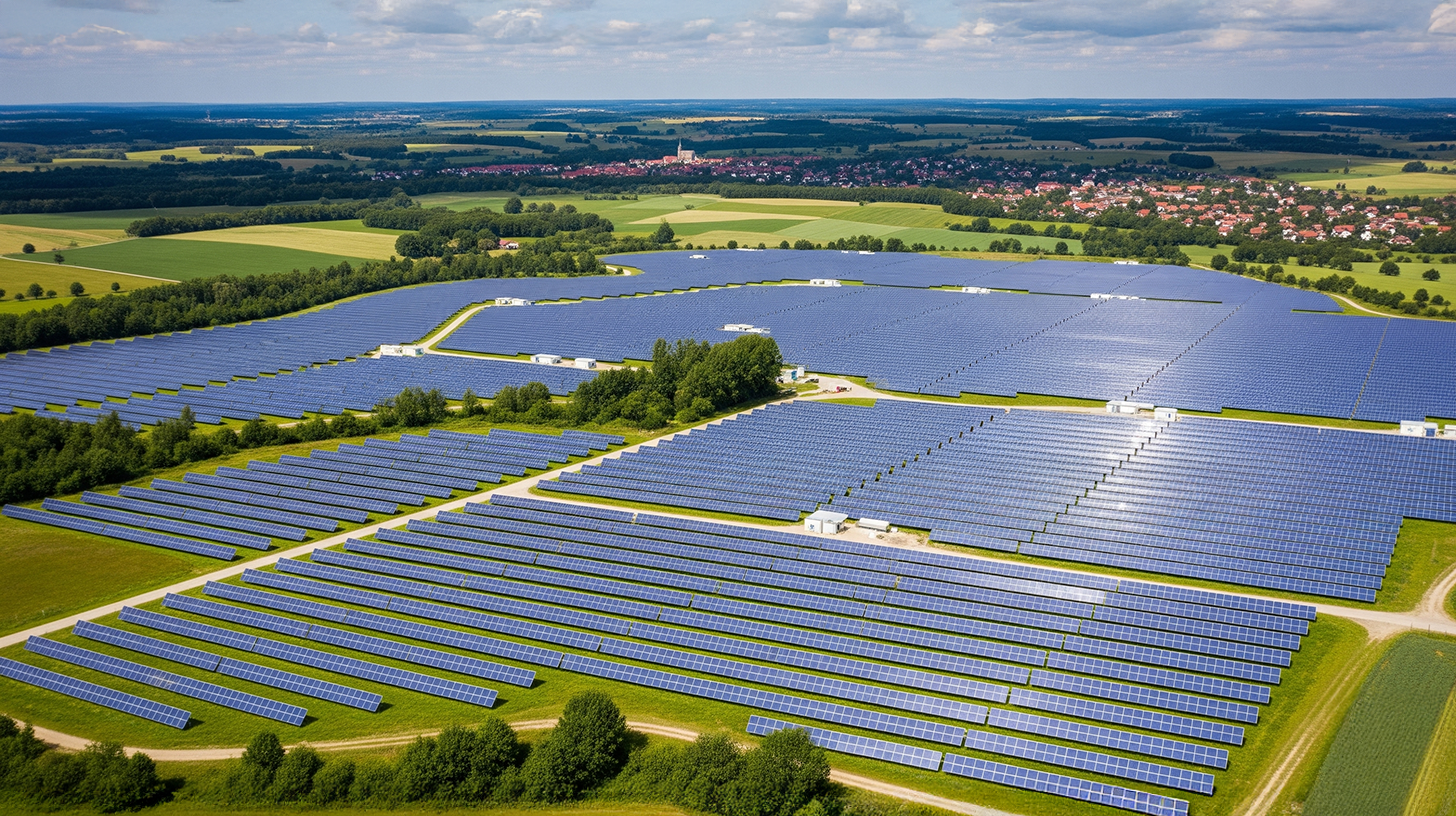
Solar park Limbach-Dorf near Schmelz with 80 megawatts on 80 hectares planned for more than 30,000 households – Image: Xpert.Digital
Forbidden location? Why a huge solar park should be built in a protected landscape area
Large hybrid solar park near Schmelz – innovative technology meets landscape protection
The municipality of Schmelz in the Saarlouis district is on the verge of a groundbreaking energy project that could revolutionize the local energy supply and set new standards for innovative solar technology. The Norwegian energy company Statkraft is planning to build an extraordinary solar park that is attracting attention not only for its impressive size but also for its unique hybrid concept.
The Limbach-Dorf solar park – a flagship project with record potential
The planned solar power plant, called "Limbach-Dorf Solar Park," is to be built on an area of up to 80 hectares and achieve a maximum output of approximately 80 megawatts. These dimensions would make the project one of the largest solar parks in Saarland, significantly exceeding the already completed Weierweiler solar park with 20 megawatts. Commissioning is scheduled for 2028, although the project is currently still in the early planning phase.
The solar park's annual energy production is expected to reach up to 92.2 gigawatt hours, enough to supply more than 30,000 households with climate-friendly electricity. This impressive output corresponds to CO2 savings of up to 57,800 tons per year, representing a significant contribution to climate protection.
Special technology: The hybrid concept
What makes this solar park particularly special is its innovative design, conceived as a hybrid system. Similar to the solar park already in operation by the Merzig municipal utility company in Merchingen/Brotdorf, Schmelz will also utilize an intelligent combination of different solar technologies.
The hybrid concept combines conventional modules tilted in a classic southerly orientation with vertically mounted, so-called agri-PV modules aligned east-west. This innovative arrangement results in more consistent power production throughout the day. While the conventional modules deliver optimal yields at midday when the sun is high in the sky, the vertically installed modules take over energy generation in the morning and evening hours when the sun shines at a lower angle.
The vertical agri-PV modules utilize bifacial solar technology, which can absorb sunlight from both sides, significantly increasing energy yield. This technology is particularly advantageous during off-peak hours and ensures a more balanced load profile that more closely matches users' actual consumption behavior.
The challenge: Landscape conservation area as a location
The biggest hurdle for the project lies in the location of the proposed site within a landscape conservation area. This legal situation requires special permitting procedures and a careful balancing of climate protection goals and landscape conservation.
In principle, landscape conservation areas are considered restricted areas for open-space photovoltaic systems, requiring detailed case-by-case assessment and a comprehensive permitting process. However, the installation of solar systems in such areas is not fundamentally excluded, as recent court rulings demonstrate.
In a groundbreaking ruling, the Halle Administrative Court confirmed that the construction of a ground-mounted photovoltaic system can be permissible despite being located in a landscape conservation area if the public interest in the expansion of renewable energies is appropriately weighted. The decisive factor in this case is an exemption from nature conservation law pursuant to Section 67, Paragraph 1 of the Federal Nature Conservation Act.
Various paths to approval are possible: Amending the conservation ordinance in combination with an exemption under nature conservation law offers a legally secure path. Alternatively, so-called opening clauses can be included in the conservation ordinances, which create a legally controllable opportunity to install photovoltaic systems in landscape conservation areas.
Site selection and location advantages
A key advantage of the planned project lies in the strategic site selection. The solar park will be built largely on so-called disadvantaged areas with particularly poor soil quality. These areas are eligible for funding under the Renewable Energy Sources Act and are considered preferred locations for photovoltaic systems.
Saarland has made use of the state opening clause and considered disadvantaged agricultural areas for ground-mounted solar installations in the award procedures. Of the approximately 88,000 hectares of agricultural land in Saarland, approximately 82,000 hectares have been recognized as naturally disadvantaged areas.
The chosen mountain location offers additional advantages: The farm is not visible from the surrounding villages, minimizing visual impact on the landscape. Furthermore, the high altitude often allows for better wind conditions, which can help cool the solar modules and increase their efficiency.
Regional added value and local participation
Statkraft places particular emphasis on involving local companies in the planning, implementation, and operation of the project. These include local expert and planning firms, solar farm maintenance companies, and regional construction companies. This strategy strengthens regional value creation and creates jobs in the region.
Modern citizen participation models could also ensure that the local population directly benefits from the project. Various approaches such as energy cooperatives, crowdfunding, or fixed-ownership investments enable citizens to participate financially in solar projects.
Section 6 of the Renewable Energy Sources Act (REEG) offers municipalities the opportunity to participate financially in solar parks, allowing everyone in the community to benefit without having to invest themselves. Such models have proven successful tools for increasing public acceptance in other projects.
Environmental impacts and ecological opportunities
Despite its location within a protected landscape area, the project offers potential for ecological improvements. Extensive use of the areas between and beneath the modules allows for the creation of flowering meadows, creating habitats for insects and other small animals. Reduced intensive agricultural use often leads to soil recovery and an increase in biodiversity.
In environmentally friendly solar parks, a maximum of 40 percent of the area is covered with modules. With a well-thought-out concept for unsealing, extensification, and promoting structural diversity, solar park areas can be ecologically enhanced. Stepping stone biotopes such as wooded islands, ponds, and stone piles, as well as passages in the fence for small mammals, support biodiversity.
The vertical agri-PV modules offer additional ecological benefits: They provide shade and reduce water evaporation from the soil, which is particularly beneficial in arid areas. The resulting microclimate can extend growing seasons and improve the quality of adjacent vegetation.
Further solar park plans in the municipality of Schmelz
In addition to the Statkraft project, the municipality of Schmelz is also considering another planned solar park. In December 2024, the municipal council approved a ground-mounted photovoltaic development concept intended to guide the location of ground-mounted solar power systems.
This concept takes into account the fact that the Renewable Energy Sources Act now also permits ground-mounted PV systems at locations other than the originally designated areas along highways. The Saarland ordinance on the construction of PV on agricultural land already designates several areas for large-scale systems, with areas within the municipality being designated in the northern districts of the Saar-Hunsrück Nature Park.
The municipality's own development concept is now intended to identify suitable areas for the expansion of renewable energies on a smaller scale. This must consider and balance a variety of criteria, including the preservation of high-quality agricultural land and insights from heavy rainfall prevention.
Technical implementation and approval procedures
A building permit is required for the construction of the solar park because it is a ground-mounted photovoltaic system. In Saarland, a building permit is required for freestanding solar systems if they are more than 3 meters high and over 12 meters long.
In addition, the open space must be designated as a special area for solar energy in the development plan. If this is not the case, the municipality must amend the land use plan. This process can take several months.
New: Patent from the USA – Install solar parks up to 30% cheaper and 40% faster and easier – with explanatory videos!

New: Patent from the USA – Install solar parks up to 30% cheaper and 40% faster and easier – with explanatory videos! - Image: Xpert.Digital
At the heart of this technological advancement is the deliberate departure from conventional clamp fastening, which has been the standard for decades. The new, more time- and cost-effective mounting system addresses this with a fundamentally different, more intelligent concept. Instead of clamping the modules at specific points, they are inserted into a continuous, specially shaped support rail and held securely. This design ensures that all forces occurring—be they static loads from snow or dynamic loads from wind—are evenly distributed across the entire length of the module frame.
More about it here:
Solar parks as a model for the future: efficient agriculture and sustainable energy production
e, which is why early coordination with the authorities is essential.
The technical implementation of the hybrid concept requires careful planning of the module layout. The planned plant size of approximately 80 megawatts would require approximately 140,000 to 160,000 solar modules, divided between conventional and vertical systems. The modules are mounted on metal racks that typically reach a height of two to three meters.
Grid connection requires several transformer stations to convert the generated direct current into grid-compliant alternating current and transform it to the appropriate voltage level. The power is expected to be fed into the medium-voltage grid of the regional grid operator.
Significance for Saarland's energy transition
The project fits into Saarland's ambitious expansion goals for renewable energies. With its 2030 Energy Roadmap, the Saarland state government has set the goal of doubling the share of renewable energies in electricity consumption from approximately 20 percent to 40 percent. An increase of 750 megawatts in photovoltaics is to be achieved by 2030.
Saarland already recorded a significant net photovoltaic expansion of 156.2 megawatts in 2024, increasing its installed solar capacity to over 863 megawatts. With 346.5 kilowatts of installed photovoltaic capacity per square kilometer, Saarland ranks first in Germany in terms of land-use efficiency.
The planned solar park in Schmelz would make an important contribution to the expansion targets and cover approximately 10 percent of the targeted photovoltaic expansion by 2030. Over the planned operating period of 25 to 30 years, CO2 savings will total more than 1.4 million tons, representing a significant contribution to Saarland's climate protection goals.
Comparison with other major projects
In regional comparison, the Schmelz solar park would occupy a leading position. The recently planned solar park in Wallerfangen is expected to achieve a capacity of approximately 35 to 40 megawatts on 40 hectares and supply 10,000 homes with electricity. The Schmelz project, with 80 hectares and 80 megawatts, would significantly exceed these dimensions.
Across Germany, an 80-hectare facility is one of the larger projects, but still within the norm. The Witznitz Energy Park in Saxony, with 650 megawatts on 500 hectares, is currently the largest solar park in Germany. Projects of the size of the planned Schmelzer Solar Park can be found in many German states, demonstrating the growing importance of large-scale photovoltaic systems for the energy transition.
Suitable for:
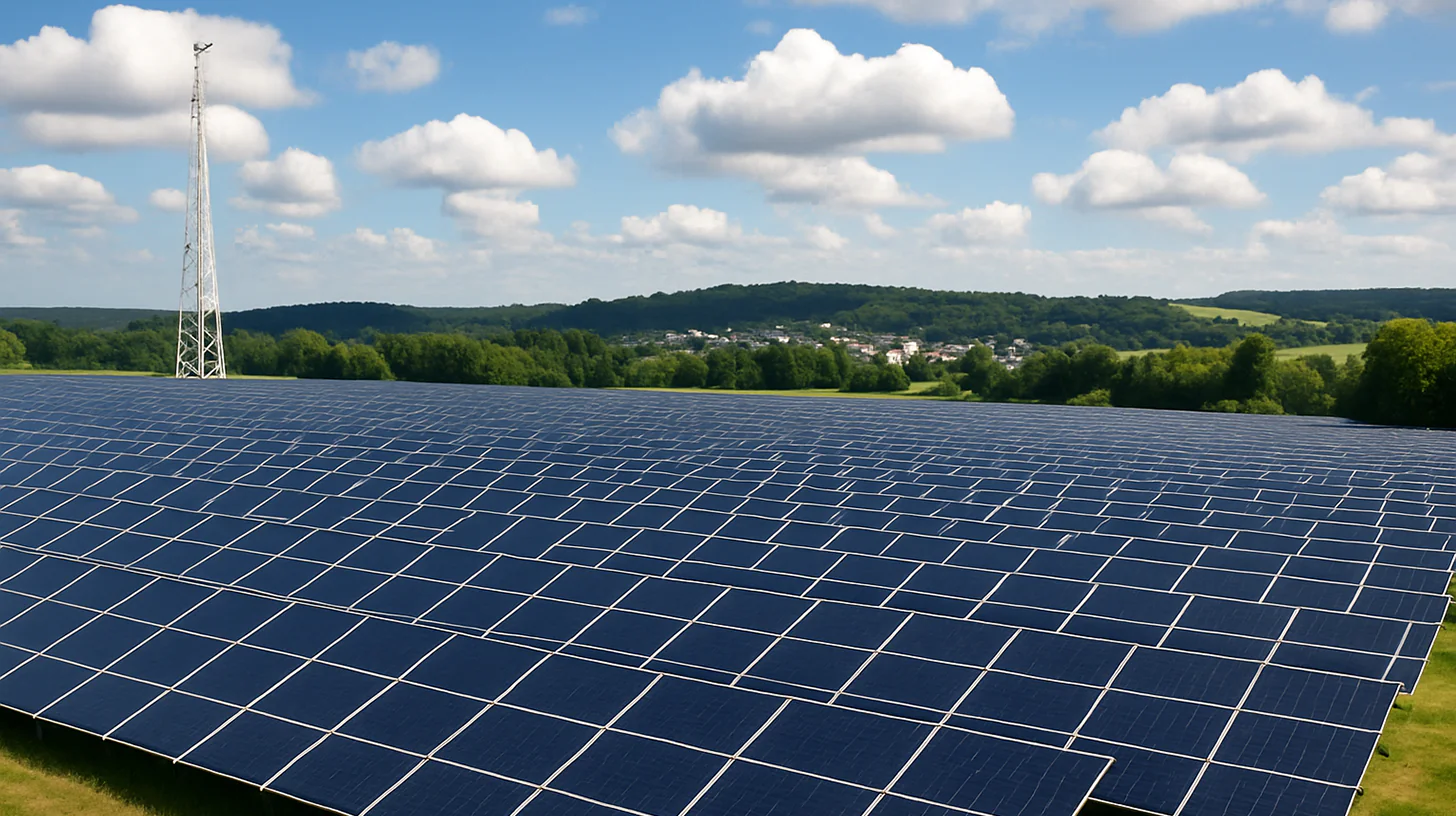
Innovative agri-PV technology as a model for the future
The use of vertical agri-PV systems in the Schmelzer project exemplifies an innovative trend in the solar industry. This technology enables the simultaneous use of the same area for agriculture and energy production, thus mitigating land-use conflicts.
Vertical agri-PV systems are particularly suitable for specialty crops, as they protect plants from hail or heavy rain while simultaneously making optimal use of solar radiation. With vertical installation, approximately 90 percent of the area remains for agricultural use, while less than one percent is built over.
The technology has already seen its first successful implementations in Germany. The Krauscha agri-solar park in Saxony, with a capacity of 1.8 megawatts, became the first vertical agri-solar park in Eastern Germany in 2024 and serves as a showcase project for the innovative combination of agriculture and renewable energy.
Economic aspects and financing
Investments for the Schmelzer project are expected to amount to several tens of millions of euros. By comparison, the significantly smaller hybrid solar park of the Merzig municipal utility company, covering 15 hectares, required investments of around 7 million euros. Correspondingly higher investments are expected for the Schmelzer project, which has five times the area and is more technically complex.
Financing is typically provided through a combination of equity, debt, and possibly public participation. Guaranteed feed-in tariffs under the Renewable Energy Sources Act (EEG) or successful participation in tender procedures secure long-term revenues and make such projects attractive to investors.
The municipality of Schmelz could generate significant revenue, both from trade tax and from potential lease income if municipally owned land is used. The Wallerfang solar park, for example, is expected to generate up to €300,000 annually for the municipal coffers through land leases.
Challenges in implementation
In addition to the legal hurdles posed by the project's location within a protected landscape area, other challenges exist. Public acceptance is a crucial factor, which can be promoted through transparent communication and participation opportunities.
Grid connection presents another technical challenge. Given the planned size of the solar park, existing grid capacities may need to be reinforced, which may require additional investments and approval procedures.
Environmental assessments and species protection assessments are mandatory components of the permitting process. These must demonstrate that the project is compatible with the conservation objectives of the landscape conservation area and does not endanger any protected species.
Schedule and next steps
The project is currently in the early planning phase with a target commissioning date of 2028. Until then, extensive planning work, approval procedures, and the actual construction phase must be completed.
The first steps include the preparation of detailed reports on environmental impacts, species protection, and the landscape. In parallel, the planning requirements must be met, including the adaptation of the land-use plan and the development plan.
Public participation is an important component of the process. Information events and public dialogues are intended to create transparency and address potential concerns at an early stage.
Outlook on the region's energy future
The planned solar park in Schmelz symbolizes the transformation of Germany's energy supply. The combination of innovative technology, ecological improvements, and economic benefits demonstrates how the energy transition can be implemented locally.
The hybrid concept with vertical and horizontal modules could serve as a model for further projects and become the standard solution for large solar parks. More consistent power production throughout the day improves grid integration and contributes to the stability of the power grid.
For the Saarland region, the project represents an important step toward energy self-sufficiency and achieving climate goals. Together with other planned projects, such as the solar park in Wallerfangen, a decentralized energy infrastructure is being created that can increasingly replace fossil fuels.
The successful implementation of the project, despite the challenges in the protected landscape area, could also set a legal precedent and facilitate the implementation of similar projects in other protected areas. This is of great importance given the ambitious expansion targets for renewable energy.
Conclusion: Innovation meets responsibility
The planned solar park near Schmelz combines technical innovation with ecological responsibility and economic viability. The hybrid concept with vertical agri-PV modules represents a pioneering solution that both optimizes energy yield and minimizes land-use conflicts.
The challenge of the location in the protected landscape area demonstrates that the energy transition cannot succeed without carefully balancing various interests. Yet it is precisely this complexity that leads to more thoughtful solutions that do justice to both climate protection and nature conservation.
With its planned capacity of 80 megawatts and the supply of over 30,000 households, the project will make a significant contribution to the regional energy transition. The resulting CO2 savings of almost 58,000 tons annually are equivalent to the impact of a small forest and underscore the project's significance for climate policy.
The success of the project will ultimately depend on the success of engaging all stakeholders—from the permitting authorities to the local community and conservation organizations—in a constructive dialogue. Only through transparent communication, innovative solutions, and a willingness to compromise can a project of this magnitude be successfully implemented in a sensitive environment.
The Schmelzer solar project could thus become a model for future large-scale energy transition projects and demonstrate how technical innovation, ecological responsibility and social acceptance can be successfully combined.
Look, this little detail saves up to 40% installation time and costs up to 30% less. It's from the USA and patented.

NEW: ready -to -mount solar systems! This patented innovation accelerates your solar construction massively
The heart of ModuRack 's innovation is its departure from conventional clamp fastening. Instead of clamps, the modules are inserted and held in place by a continuous support rail.
More about it here:
Your partner for business development in the field of photovoltaics and construction
From industrial roof PV to solar parks to larger solar parking spaces
☑️ Our business language is English or German
☑️ NEW: Correspondence in your national language!

Konrad Wolfenstein
I would be happy to serve you and my team as a personal advisor.
You can contact me by filling out the contact form or simply call me on +49 7348 4088 965 (Munich) . My email address is: wolfenstein ∂ xpert.digital
I'm looking forward to our joint project.







