
Deadly AI components: How a $999 chip from Nvidia ended up in Russian rockets
Xpert Pre-Release

Available in 27 languages 📢
Prefer Xpert.Digital on GoogleⓘPublished on: August 17, 2026 / Updated on: August 17, 2026 – Author: Konrad Wolfenstein
Deadly AI components: How a $999 chip from Nvidia ends up in Russian rockets – Creative image on the topic, with AI: Xpert.Digital
Sanctions circumvented: How civilian hardware from Western corporations powers the Russian war machine
Europe's blind spot: Why semiconductor manufacturers can't stop their chips from ending up in Putin's missiles
AI weapons at bargain prices: The shocking truth about Russia's circumvention networks
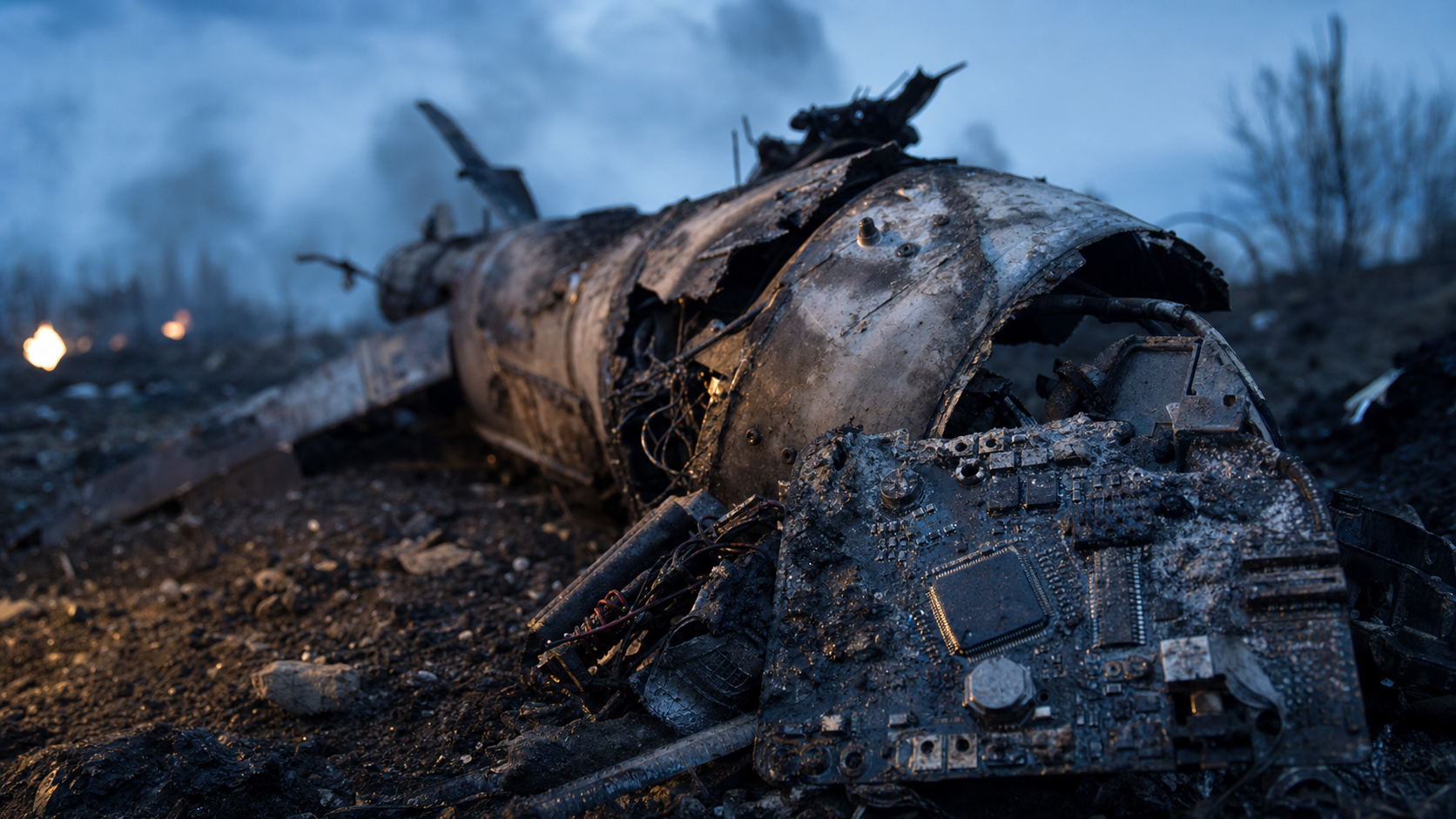
A charred component found in a Russian missile wreck is putting the Western semiconductor industry in a difficult position. Ukrainian military intelligence discovered a modern AI chip from Nvidia in a novel cruise missile. This chip, originally designed for civilian delivery drones and startups, only went into production after strict sanctions were imposed. This explosive discovery reveals a profound structural problem: Global supply chains and opaque gray markets in third countries currently make it virtually impossible to effectively prevent the diversion of commercially available high-tech electronics into Russia's arms industry. While tech companies deny responsibility and state export controls are increasingly reaching their limits, the incident highlights a worrying trend: The democratization of artificial intelligence means that highly advanced, autonomous warfare can be implemented with mass-produced goods more cheaply and discreetly than ever before.
A charred component as evidence
Silicon Lifeline: How Western chips power Russian weapons
In early August 2026, the Ukrainian military intelligence agency GUR recovered a badly burned electronic module from the wreckage of a Russian S-71M cruise missile. The imprinted identifier TE980M-A1 clearly identifies the component as an Nvidia Jetson Orin NX with 16 gigabytes of memory, an edge computing chip that Nvidia launched in early 2023 for robotics, autonomous systems, and similar applications. The S-71M, also referred to by Russian sources as the "Monochrome," is an airborne, optically guided missile with a speed of 500 to 600 kilometers per hour, which, according to GUR, can operate both under human supervision and fully autonomously. This discovery provides concrete evidence that Russia is integrating civilian AI hardware into its weapons programs to perform target recognition and image analysis directly on board, without relying on external data connections.
A timeline that allows no legal way out
The real significance of the discovery lies in the timeline. Nvidia ceased its operations in Russia in 2022, immediately after the start of Russia's full-scale invasion of Ukraine, while the chip in question only went into production in 2023. Therefore, there is simply no point in time when this specific module could have reached Russia through an official, direct distribution channel. Consequently, any explanation for its presence in the wreckage must lie outside of Nvidia's controlled supply chains, whether via resellers, intermediaries in third countries, or organized diversion networks. This finding is economically significant because it demonstrates that even a company's complete market withdrawal does not reliably prevent the physical distribution of its products once a commodity is in circulation.
How a corporation denies all responsibility
Nvidia responded to inquiries with a now-familiar line of reasoning: The Jetson modules are consumer products for students, developers, and startups, not intended for military use, and not officially available in Russia. Furthermore, the company cannot trace sold hardware after it has been sold. Used Jetson units circulate through numerous resale channels outside of the company's control, but Nvidia will take immediate action if violations of US export controls are detected. This position is legally sound, as a manufacturer is generally not liable for secondary markets over which it has no contractual control. Economically, however, it reveals a structural dilemma of the entire semiconductor industry: Mass-produced products manufactured in the millions for harmless applications such as drone deliveries or household robots cannot be treated, in terms of price and logistics, like highly sensitive military equipment, even though they may possess the same technical capabilities.
Silent trade via third countries
The question of exactly how the chip reached Russia can be plausibly reconstructed using comparable cases. Investigations into other Russian missiles such as the Kh-101, Iskander, Kalibr, and Kinzhal, as well as the Geran-5 kamikaze drone, reveal a recurring pattern: Western components are initially exported legally to third countries like Turkey, the United Arab Emirates, Armenia, Kazakhstan, or China, where they are resold in small quantities by small trading companies before finally ending up in the Russian arms industry. Ukrainian experts estimate that around seventy percent of the Western branded components found in such weapons were originally produced legally for the global civilian market, while the remainder comes from overproduction by contract manufacturers or from counterfeit products. Furthermore, Russian engineers even report the practice of removing microcontrollers and memory chips from imported washing machines and refrigerators and reusing them in weapons systems—evidence of how deeply intertwined consumer electronics and arms production now are.
Figures that illustrate the scale of the problem
The sheer scale of this phenomenon can be estimated based on systematic investigations. An analysis by the Ukrainian anti-corruption agency identified 2,797 foreign components in Russian weapons systems, 72 percent of which originally came from the United States. An earlier report by the UK's Royal United Services Institute discovered more than 450 foreign-made components in captured Russian weapons as early as 2022; of these, 318 originated from 57 US companies, and 81 were classified as export-controlled dual-use goods. A single Kh-101 cruise missile alone contained 31 foreign components. These figures demonstrate that the Nvidia chip now discovered is not an isolated incident, but rather part of a systematic and apparently continuous flow of Western microelectronics into the Russian arms industry.
The limits of state export control
The US government has tightened its control regime several times since 2022, imposing restrictions on advanced computing chips, mandating export licenses, and increasingly aggressively pursuing circumvention attempts. Last year alone, the Commerce Department imposed fines and confiscations totaling approximately $420 million in connection with chip smuggling to China, including a $252 million civil penalty against an equipment manufacturer and a criminal case against a server manufacturer for an alleged $2.5 billion diversion scheme. Congress has approved additional funding and personnel for the agency, and another $450 million and over a thousand additional positions are requested for the coming fiscal year to significantly expand export control staffing. However, even this massive increase in resources does not alter the fundamental economic reality that millions of individual components sold through global distribution networks, electronics markets, and online platforms are virtually impossible to trace.
Hub for Security and Defense - Advice and Information

Hub for Security and Defense - Image: Xpert.Digital
The Security and Defence Hub offers expert advice and up-to-date information to effectively support companies and organizations in strengthening their role in European security and defence policy. Working closely with the SME Connect Defence Working Group, it particularly promotes small and medium-sized enterprises (SMEs) that wish to further develop their innovative capacity and competitiveness in the defence sector. As a central point of contact, the Hub thus creates a crucial bridge between SMEs and European defence strategy.
Related to this:
Sanctions at their limit: How trade networks are circumventing export controls on AI chips
Europe's blind spot in the sanctions regime
Not only American, but also European semiconductor manufacturers are affected. Research shows that components from companies like STMicroelectronics, NXP, and Infineon Technologies are appearing in Russian weapons, being primarily diverted to Russia via a network of intermediaries and trading companies in Hong Kong. In this context, the European Parliament has criticized the fact that the EU sanctions regime focuses primarily on individual listed companies, while the broader trade and financial networks, including logistics companies, banks, and distributors, remain largely outside the scope of the sanctions. This structural gap explains why even repeated tightening of the sanctions lists barely reduces the overall flow of dual-use goods as long as the underlying trade infrastructure remains untouched. An example of this contradictory practice is provided by the EU itself, when in May 2026 it proposed lifting a sanction against the Chinese semiconductor manufacturer Yangzhou Yangjie Electronic Technology that had been imposed only a few weeks earlier, after European car manufacturers had warned of supply chain chaos – even though products from this manufacturer had previously been detected in Russian drones and glide bombs.
The economic logic behind the circumvention
From an economic perspective, the pattern is hardly surprising. An edge AI chip like the Jetson Orin NX costs around US$999 in bulk orders and is produced in enormous quantities for perfectly legitimate civilian purposes, from delivery drones and industrial robotics to surveillance systems. With such a broad and affordable mass market, comprehensive end-use tracking is hardly economically feasible without significantly hindering all legal trade. Circumvention networks deliberately exploit precisely this tension: They buy in small, inconspicuous quantities, disguise orders as civilian procurement, and use the anonymity of global secondhand markets to conceal the origin and the actual end user. This creates a reputational risk for the chip manufacturers involved, which is difficult to translate into the costs of additional compliance measures, as these measures often remain ineffective at the actual point of diversion in the third country.
Parallels to the debate about China and advanced AI chips
This case is part of a much larger and currently intense debate surrounding the control of advanced semiconductors. In an unusual weekend announcement in May 2026, the US Department of Commerce reaffirmed that export licensing requirements apply to advanced AI chips such as Nvidia's Blackwell and Rubin families and AMD's MI350x series, regardless of physical location, as long as the recipient's parent company is based in China, Russia, or a comparable country. In August 2026, the responsible agency went a step further and began examining whether even legally structured leases of cloud computing capacity to Chinese AI companies undermine the very purpose of export control laws, even though such leases are not explicitly classified as exports under current law. This development demonstrates that regulators are increasingly recognizing that traditional, commodity-based export controls are reaching their conceptual limits in a world of cloud services, resale markets, and complex corporate structures.
What the discovery means for the future of warfare
The GUR itself sees the discovery not only as a justified critique of incomplete sanctions but also as a comforting signal for Ukraine: The apparent dependence of Russian weapons programs on foreign, commercial hardware suggests that domestic Russian semiconductor manufacturing continues to lag far behind the technological requirements of modern, AI-supported precision weapons. Nevertheless, the integration of a comparatively inexpensive edge AI module into an autonomously operating weapon system points to a broader trend: The threshold for using artificial intelligence in target recognition is decreasing because powerful yet affordable consumer hardware is increasingly sufficient to perform tasks that previously required expensive, specialized military hardware. This democratization of AI capabilities presents export control regimes with a fundamental evaluation problem, as military usability is increasingly less about performance classes and more about specific system integration.
Pressure for action from politics and industry
As a direct consequence of the discovery, the Ukrainian intelligence service is calling for stricter enforcement of existing sanctions and closer coordination among Western allies to more reliably keep comparable components away from Russian weapons production in the future. Realistically, however, a complete interruption of these flows will hardly be possible as long as the underlying economic structure remains unchanged: a global, finely interconnected semiconductor trade in which millions of identical components are produced for civilian purposes and are technically indistinguishable from those that ultimately end up in weapons systems. In the medium term, targeted measures against the identified transit points in third countries such as Hong Kong, Turkey, or the United Arab Emirates, coupled with greater liability for intermediaries and logistics companies that currently often operate outside the sanctions lists, are likely to be more effective than further tightening of sanctions on paper. For companies like Nvidia, this means that despite demonstrably lacking direct responsibility, public and political pressure to further develop their own tracking systems for used goods and resale channels is likely to increase even if complete control seems technically and economically unattainable.
Consulting - Planning - Implementation

Markus Becker
I would be happy to serve as your personal advisor.
Head of Business Development
Chairman SME Connect Defense Working Group
Consulting - Planning - Implementation
Konrad Wolfenstein
I would be happy to serve as your personal advisor.
You can contact me at wolfenstein∂xpert.digital or
Just call me on +49 7348 4088 965 .





