
USA | Court overturns Trump's tariff policy: Why billions are now not reaching consumers
Xpert Pre-Release

Available in 27 languages 📢
Prefer Xpert.Digital on GoogleⓘPublished on: April 20, 2026 / Updated on: April 20, 2026 – Author: Konrad Wolfenstein
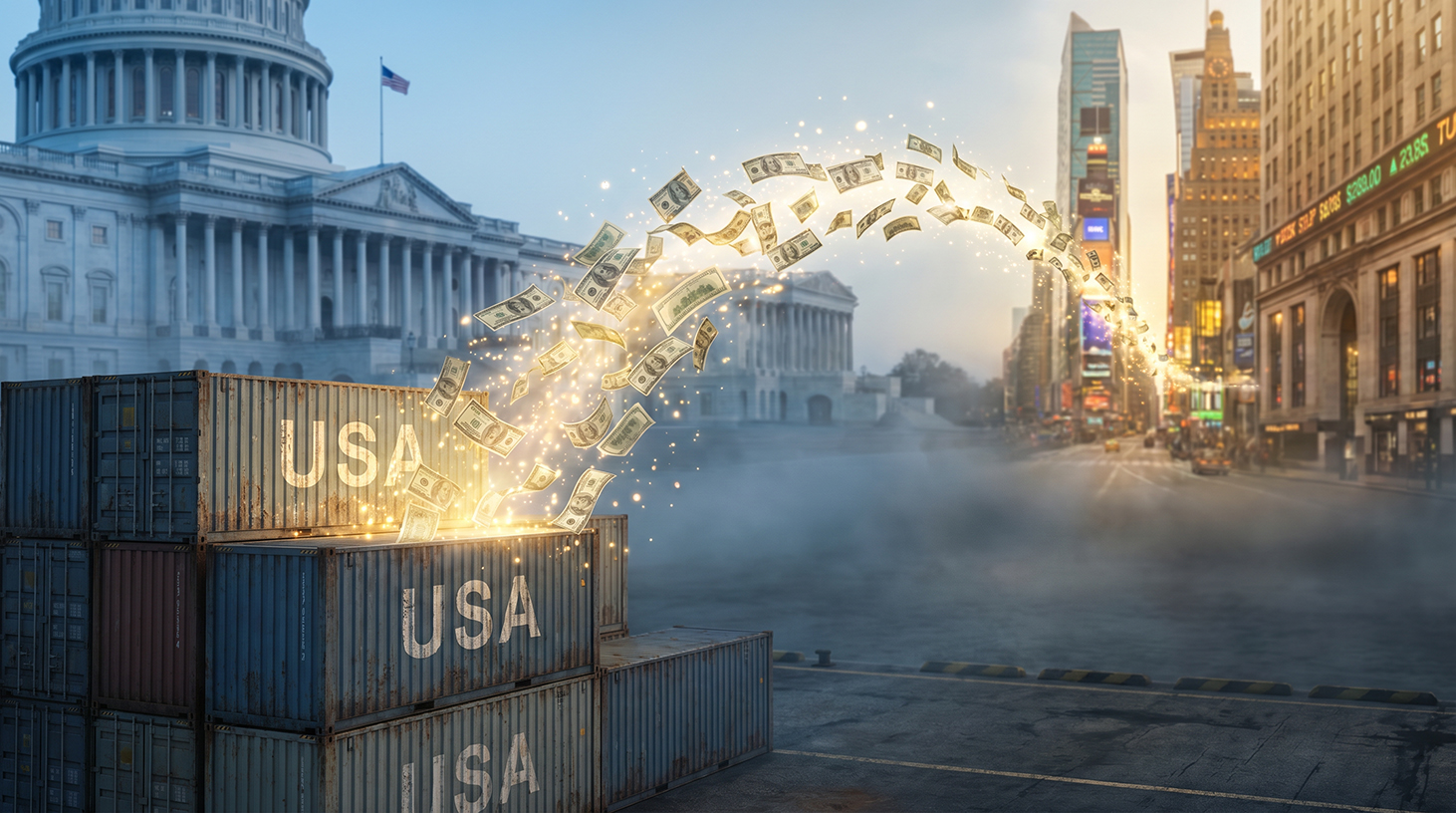
Court overturns Trump's tariff policy: Why billions are now not reaching consumers – Image: Xpert.Digital
A $166 billion gift for Wall Street: Who really benefits from the end of Trump tariffs?
The biggest silent redistribution of wealth in the US: Why the Trump tariff ruling leaves American consumers empty-handed
A windfall for Apple, Amazon & Co.: How overturned Trump tariffs are becoming a gigantic economic stimulus program
Today, April 20, 2026, marks the beginning of an economic and legal process of historic proportions in the United States: US Customs and Border Protection is commencing the repayment of approximately $166 billion in unlawfully imposed tariffs from the Trump era. What at first glance appears to be a just correction of a failed trade policy, upon closer inspection reveals itself to be one of the largest silent redistributions of wealth in recent history. Since the tariffs were largely passed on to American consumers through higher prices in recent years, and prices are not falling again, the gigantic refund sum will flow as pure profit into the balance sheets of publicly traded corporations. While Wall Street celebrates the unexpected tsunami of liquidity, consumers are left empty-handed – and the already heavily indebted US government must finance the transfer to the companies through new debt. This is an in-depth analysis of the explosive economic potential of an unprecedented precedent, where the winners and losers are already predetermined.
Why customs refunds aren't ending up in Americans' wallets, but on Wall Street
A historical precedent turns into a windfall
Today, Monday, April 20, 2026, at 2 p.m. German time, a process will begin in the United States whose scale and economic impact are virtually unparalleled in the recent trade history of the Western world. US Customs and Border Protection will launch the digital portal known as Cape, through which American importers can apply for refunds of the punitive tariffs imposed by the Trump administration in previous years under the International Emergency Economic Powers Act (IEEPA). The Supreme Court declared these tariffs unlawful in February 2026, thereby dismantling one of the cornerstones of the protectionist trade policy of Trump's second term. According to the agency, the total amount of money to be refunded is approximately US$166 billion, of which US$127 billion had already been claimed by 56,497 registered importers by April 9 of this year.
What at first glance appears to be a routine bureaucratic process following a judicial correction reveals itself upon closer analysis as a macroeconomic event of considerable explosive potential. It is not a reversal in the true sense, because the economic effects of the original tariff imposition cannot be undone. Prices have risen, consumer surplus has diminished, and supply chains have been restructured. What is now flowing back is exclusively liquidity, and it is not flowing to those who bore the economic burden, but rather to those who were able to pass it on. This asymmetry lies at the heart of the redistribution now underway.
The legal background of a failed instrument of power
To understand the current situation, it's worth looking at the legal framework that the Supreme Court struck down in February 2026. The Trump administration, in imposing the sweeping tariff packages that rolled out in several waves against the United States' trading partners starting in the spring of 2025, invoked the 1977 International Economic and Financial Action Protection Act (IEEPA). This law was originally created to grant the president broad economic intervention powers in situations of national emergency and exceptional foreign threat, such as for sanctions against hostile states. The administration argued that trade deficits and fentanyl smuggling constituted such an emergency and justified blanket tariffs on imports from virtually every country in the world.
The Supreme Court did not accept this argument. In a decision whose significance harks back to classic precedents on limiting presidential power, the highest court ruled that the IEEPA did not provide a legal basis for imposing blanket tariffs. According to the prevailing interpretation, tariff imposition is an original power of Congress that cannot be undermined by a broad interpretation of an emergency law. This not only struck down the specific tariffs but also curtailed a key trade policy instrument of the executive branch for the future. The so-called Section 232 and Section 301 tariffs, which are based on other legal foundations, remain unaffected. However, the IEEPA tariffs, which constituted the bulk of Trump's tariff architecture, are now history.
The Cape portal and the technical processing
The implementation of the CAPE system, which stands for Combined Automated Processing of Entries, marks a pragmatic attempt by customs to make an administrative nightmare manageable. Originally, importers would have had to submit a separate refund claim for each individual import transaction, each individual customs declaration. Given the millions of import declarations processed between the introduction and judicial review of customs duties, this would simply have been impossible to manage within a reasonable timeframe. The CAPE portal now consolidates claims per company into electronic collective payments and provides for refunds including accrued interest.
The agency has announced that it will roll out the system in several phases, initially processing simple cases and recent import transactions. Valid IEEPA refunds are generally expected to be paid out within 60 to 90 days of acceptance of the electronic CAP declaration. More complex cases, such as those involving incorrect original customs declarations, disputed commodity classifications, or exceptional circumstances, will take considerably longer. Realistically, the entire refund process is expected to take months, and in complex individual cases, even years. Nevertheless, the first wave of payments will already have a noticeable macroeconomic signaling effect, as markets operate with a forward-looking perspective and are already beginning to price in the anticipated inflows of liquidity.
The number of registrations is also remarkable. The 56,497 importers already registered represent claims totaling $127 billion. The agency itself estimates that over 300,000 companies have paid IEEPA duties, which would increase the actual refund volume to the reported $166 billion or even higher. The fact that not all companies undertake the effort of claiming refunds has structural reasons: Small importers often shy away from the administrative costs, and many medium-sized companies simply lack the customs expertise to provide the complex documentation completely.
The economic incidence of tariffs and the problem of reversal
To understand the political economy of the current wave of refunds, one must grapple with a fundamental concept in public finance: tax or levy incidence. This refers to the question of who actually bears the economic burden of a levy, regardless of who formally pays it to the tax authorities. In the case of customs duties, the importer is formally liable for the duty. Economically, however, the price elasticity of supply and demand determines who shoulders the burden and to what extent.
A widely cited study by Goldman Sachs found that approximately 55 percent of the tariff costs imposed by Trump were passed on to American consumers. Further portions were borne by foreign exporters, who had to reduce their profit margins, and by the importing US companies themselves. This figure aligns with the findings of numerous academic studies published since the first rounds of tariffs in the Trump era in 2018 and 2019, which demonstrated that for certain product categories, the costs were almost entirely passed on to the end consumer. American households, therefore, largely paid for the tariffs in the form of higher prices for electronics, textiles, household goods, machine parts, and countless other imported products.
This is precisely the core problem with the current reversal. The money now being refunded is legally paid out to those who formally paid it, namely the importers. Economically, however, it was largely paid by consumers. Reimbursement to end consumers would be administratively impossible, as there is no traceable chain that could reconstruct the path of a dollar from the household through the retailer to the wholesaler to the importer. The American legal system has a so-called passing-on doctrine for such situations, which in some areas allows for claims for damages by those actually burdened. However, it does not apply to customs law, which is why the refunds inevitably end up with those who bore the least economic burden.
The silent redistribution of wealth in favor of publicly traded corporations
This structural asymmetry means that a transfer will take place in the coming weeks and months that, in its scale, amounts to a hidden economic stimulus program for large, publicly traded corporations. The recipients of the refunds are primarily major retail chains such as Walmart, Costco, Target, and Home Depot; technology companies like Apple and Dell; apparel importers like Nike; automotive suppliers; and major electronics and household goods retailers like Best Buy, as well as e-commerce giants Amazon and Shein. These companies paid the tariffs, passed on a significant portion of the costs to end consumers through higher sales prices, and are now receiving the formal payments back without lowering those prices.
A survey conducted by the US news portal CNBC among 25 CFOs of major American companies reveals this situation with alarming clarity. Twelve of them are actively applying for refunds, and not a single one plans to pass the returned funds on to consumers in the form of price reductions. Instead, the billions are flowing into balance sheets, being used for share buybacks, dividend increases, strategic investments, or simply to bolster liquidity. For shareholders, this means a permanent boost to margins. The higher prices enforced during the tariff period have become psychologically and structurally entrenched in the market and will not fall again. The cost base, on the other hand, is retrospectively reduced, and the difference appears as pure profit in the income statements of the coming quarters.
Assuming a conservative estimate of the $127 billion from the first phase and an average interest rate of approximately four percent over the average duration of the tariffs, the resulting cash inflow amounts to roughly $135 billion, concentrated on a few thousand large companies. For comparison, total monthly sales in the US retail sector are approximately $700 billion. The cash inflow from the tariffs thus represents one-fifth of a month's sales for the entire industry, concentrated on a small number of balance sheets within a timeframe of just a few months.
Capital market consequences and the emergence of a secondary market
Financial markets have already begun to price in this development. In particular, consumer and retail stocks, as well as corresponding exchange-traded funds, have outperformed since the Supreme Court decision in February. Analysts at major investment firms have significantly revised their earnings forecasts for the second and third quarters of 2026 upwards and expect substantial one-off items in the quarterly reports, which will inflate reported profits, at least in the short term. The question of how sustainable this effect is divides the analyst community. Some see the repayments as a one-off special effect that cannot justify the valuation multiples in the long term. Others argue that the structurally higher prices and the now-reduced costs will establish a permanently higher operating margin, thus creating a new valuation basis.
Alongside the official refund processes, a remarkable secondary market has emerged in recent weeks. Hedge funds, specialized logistics financiers, and factoring companies are offering small and medium-sized importers the opportunity to immediately assume their refund claims at a discount. Depending on the importer's creditworthiness, the complexity of the customs documentation, and the estimated processing time, discounts of between five and twenty percent are being offered. The acquiring financial players are arbitrating between the importers' immediate need for payment and the later, but virtually risk-free, government refund. This has created a distinct asset class, demonstrating how deeply Wall Street has integrated this event into its profit strategies.
This secondary market also has a structural downside. Smaller importers, who for liquidity reasons must agree to a quick sale of their receivables, effectively subsidize the profits of large financial players. The financialization of the refund process thus leads to a further concentration of the already asymmetrical distribution of refunds.
Our US expertise in business development, sales and marketing

Our US expertise in business development, sales and marketing - Image: Xpert.Digital
Industry focus areas: B2B, digitalization (from AI to XR), mechanical engineering, logistics, renewable energies and industry
More information here:
A thematic hub offering insights and expertise:
- Knowledge platform covering global and regional economies, innovation and industry-specific trends
- A collection of analyses, insights, and background information from our key areas of focus
- A place for expertise and information on current developments in business and technology
- A hub for companies seeking information on markets, digitalization, and industry innovations
Liquidity tsunami: How tariff refunds burden US households and enrich shareholders
The fiscal consequences for a highly indebted state
The flip side of the billions flowing back into the private sector is the corresponding strain on the public budget. The United States finds itself in a fiscal situation that is exceptionally tight, even by historical standards. Total federal debt has surpassed $38 trillion, and annual interest payments exceed the defense budget. The repayments now due, initially amounting to $127 billion plus interest, must be financed either through additional government bonds, savings elsewhere, or increased revenue from other sources.
The complex political landscape further exacerbates this situation. The United States is currently financing military engagements in the Middle East, supporting strategic partners in the Indo-Pacific, and an ambitious infrastructure program. The Federal Reserve is under considerable political pressure, and its monetary policy independence is being openly questioned by parts of the administration. In such a constellation, the outflow of over one hundred billion dollars from the public treasury to the balance sheets of publicly traded corporations coincides with a population still burdened by the higher prices of the tariff phase and now having to indirectly contribute to financing the repayments through increased national debt, higher interest rates, or future budget cuts.
Furthermore, the original customs revenues were incorporated into the federal budget and partially used for current expenditures or tax relief. These funds have effectively been spent, and the repayments now due must be covered by the current budget or through new borrowing. This creates a fiscal gap that is likely to lead to significant political turmoil in the budget negotiations of the coming months.
The persistent inflationary effect despite the elimination of tariffs
A particularly insidious aspect of the situation lies in its asymmetrical effect on price levels. Economists have been pointing out for weeks that the price increases for American consumers resulting from the tariffs will largely persist even after the tariffs are lifted and refunded. This is due to several structural factors. First, retailers often did not pass on the tariff increases directly, but rather implemented them through broader price hikes, sometimes with additional markups. Reversing these markups would therefore not only undo the tariff effect but also reverse their own margin improvements, something no company would do voluntarily.
Secondly, the so-called menu costs, i.e., the costs of the price change itself, have an asymmetrical effect. Prices are adjusted quickly when costs are rising, but only hesitantly when costs are falling. Thirdly, consumers have become accustomed to the higher price level; their willingness to pay has calibrated upwards, and as long as no fierce competitive dynamic forces price reductions, there is no incentive to lower prices. In most of the product categories affected by the tariffs, an oligopolistic market structure prevails, which structurally dampens pressure to lower prices.
The result is a permanently elevated price level coupled with a shrinking cost base, which economically equates to an immediate and permanent margin boost for the retail sector. For the Federal Reserve's monetary policy, this presents a delicate situation. Tariff inflation had prompted the central bank to keep interest rates high for longer. A subsequent influx of liquidity into corporate balance sheets, potentially flowing into share buybacks and dividends and further driving up asset prices, combined with structurally embedded goods price inflation, confronts the central bank with the classic dilemma of overheating asset price inflation coupled with a strain on household purchasing power.
The turning point in trade policy and the end of an era
Beyond the immediate fiscal and distributional consequences, the current situation marks a trade policy turning point of historic proportions. Trump's tariff policy was an attempt to impose a fundamental restructuring of international trade relations using executive power. The Supreme Court has drawn a clear line under this approach, thereby restoring the constitutional balance of power between the president and Congress in a key area of economic policy.
For the United States' trading partners, this marks a period of reorientation. The European Union, the People's Republic of China, Mexico, Canada, Japan, and South Korea had invested considerable resources in countermeasures, negotiation strategies, and supply chain adjustments in recent months. The sudden legal uncertainty surrounding American tariff policy now complicates planning on all sides. At the same time, it opens up opportunities for new trade agreements that could be based on more solid legal foundations.
The administration has already announced that it will examine alternative legal avenues to reconstruct at least parts of the customs architecture. Section 301 of the Trade Act 1974, Section 232 of the Trade Expansion Act 1962, and Section 122 of the same Act are being considered as alternative legal bases. However, these sections have stricter application requirements, demand specific evidence and procedures, and cannot be used for the blanket taxation of virtually all imports. A complete restoration of the old customs regime on a different legal basis is therefore effectively impossible.
For European industry, and especially for export-oriented German companies in the mechanical engineering and automotive sectors, the elimination of the IEEPA tariffs represents substantial relief. Many German SMEs had reduced their US exports last year or were confined to their American production sites to circumvent the tariff barrier. The now-restored planning certainty should contribute to a normalization of transatlantic trade flows, although the structural distortions of recent years will not disappear overnight.
The political-economic dimension of a missed opportunity
From the perspective of sober political economy, the current situation reveals a structural failure of the American legal and economic system to adequately handle situations with high distributional implications. There are at least three approaches to making the refunds more socially equitable. First, Congress could have stipulated by law that refunds to importers be contingent on demonstrable price reductions. Second, a portion of the refunds could have been channeled into a consumer compensation fund, from which lump-sum payments could be made to low-income households. Third, the refunds could have been structured as a lump-sum tax credit for all American taxpayers.
None of these options were seriously pursued politically. The legal construct of reimbursement as repayment to the formal tax debtors was largely accepted without objection, illustrating the structural influence of organized economic interests over the diffuse interests of consumers. This is a textbook example of the phenomenon of the logic of collective action described by Mancur Olson, according to which concentrated interests organize and prevail more effectively than dispersed ones.
The political debate in Washington is remarkably muted. Neither the Democratic opposition nor the progressive wings of the Republican Party have launched any significant campaign to redirect these flows toward consumers. The labor unions, active on other distributional issues, are focused on labor market policies. Consumer protection organizations lack the institutional power to redirect a flow of billions. Thus, the largest silent redistribution of wealth in recent years is taking place largely unnoticed by the public, while the affected corporations are already factoring these returns into future quarterly reports and adjusting their capital market communications accordingly.
Lessons for European economic policy
For European observers, and especially for the German economic policy debate, the American case offers several instructive lessons. Firstly, it demonstrates the limits of executive power in economic emergency measures. The European Union has created similar powers with its instrument against coercive measures from third countries and various other new trade policy instruments, the rule-of-law constraints of which will become increasingly important in the coming years.
On the other hand, this case highlights the importance of a thorough tax incidence analysis before implementing economic policy measures. When policymakers introduce tariffs, taxes, or duties, they should consider the question of reversal from the outset. The European debate on border adjustment mechanisms, such as the Carbon Border Adjustment Mechanism, can benefit from this experience.
Third, this incident demonstrates the importance of robust consumer protection institutions and competition oversight to at least partially control margin expansion in oligopolistic markets. The American antitrust tradition has weakened considerably in recent decades, structurally enabling the upward price pressure now being observed. European competition policy faces the challenge of preventing similar developments and making price transmission more effective in both directions, including when costs fall.
What remains of the day
Today, Monday, will find its place in economic history books, though perhaps for different reasons than initial reports suggest. It is not the day American consumers get their money back. Nor is it the day tariff inflation is reversed. It is the day a Supreme Court ruling is transformed into a flood of liquidity that inflates the balance sheets of America's largest corporations, cementing a redistribution of wealth that was already underway during the active tariff period.
Consumers continue to bear the costs of past price increases, while companies book the refunded taxes as additional profit margin. The government finances the transfer through additional debt, which in turn burdens future generations. Capital markets are already pricing in these effects, thereby increasing the concentration of returns among holders of financial assets, while wage earners without significant stock portfolios receive nothing.
It is the structural logic of an economy in which the transmission channels for cost increases are highly efficient but blocked for cost reductions, and in which the legal construction of economic compensation mechanisms follows the formal debtors rather than the actual burden bearers. The term "liquidity tsunami," circulating in the financial bubble, is figurative but not an exaggeration. A tsunami sweeps wealth in one direction and doesn't ask who bore the burden in the other. For the American economy, April 20, 2026, marks the beginning of a months-long deluge of money pouring down on shareholders while consumers remain dry. It is a lesson in how power, law, and economics intertwine in modern economies, and how even a court ruling that corrects a policy deemed unlawful ultimately benefits those who were least burdened.
Your global marketing and business development partner
☑️ Our business language is English or German
☑️ NEW: Correspondence in your native language!

Konrad Wolfenstein
I and my team are happy to be available to you as your personal advisor.
You can contact me by filling out the contact form here or simply call me at +49 7348 4088 965. My email address is : [email protected]
I'm looking forward to our joint project.
☑️ SME support in strategy, consulting, planning and implementation
☑️ Creation or realignment of the digital strategy and digitization
☑️ Expansion and optimization of international sales processes
☑️ Global & Digital B2B trading platforms
☑️ Pioneer Business Development / Marketing / PR / Trade Fairs
🎯🎯🎯 Data-driven B2B industry hub as a quasi-in-house solution

The quasi-in-house solution: How Xpert.Digital closes operational gaps in B2B marketing and sales – Smart Content-Driven Business - Image: Xpert.Digital
Xpert.Digital is a data-driven B2B industry hub led by Konrad Wolfenstein . The company acts as an external, quasi-in-house solution for industrial partners, closing operational gaps in marketing, content, and sales – without requiring additional resources on the client side.
More information here:
🎯🎯🎯 Global Sourcing & Commodity Trading with integrated logistics

Raw materials, global procurement & trade - Image: Xpert.Digital
State-of-the-art cargo planes, optimized transport routes, and multimodal logistics chains are interchangeable—they can be bought, leased, or outsourced. What money can't buy are direct contacts with producers in Peruvian mines, reliable supply relationships in the CIS countries, and years of built-up trust in markets that are unfamiliar to outsiders. The decisive competitive advantage in global commodity trading lies not in transporting the good from A to B, but in knowing where the good comes from, who produces it, and how to gain access before others even know the market exists. Whoever owns the network sets the price. Everyone else pays it.
More information here:










