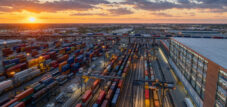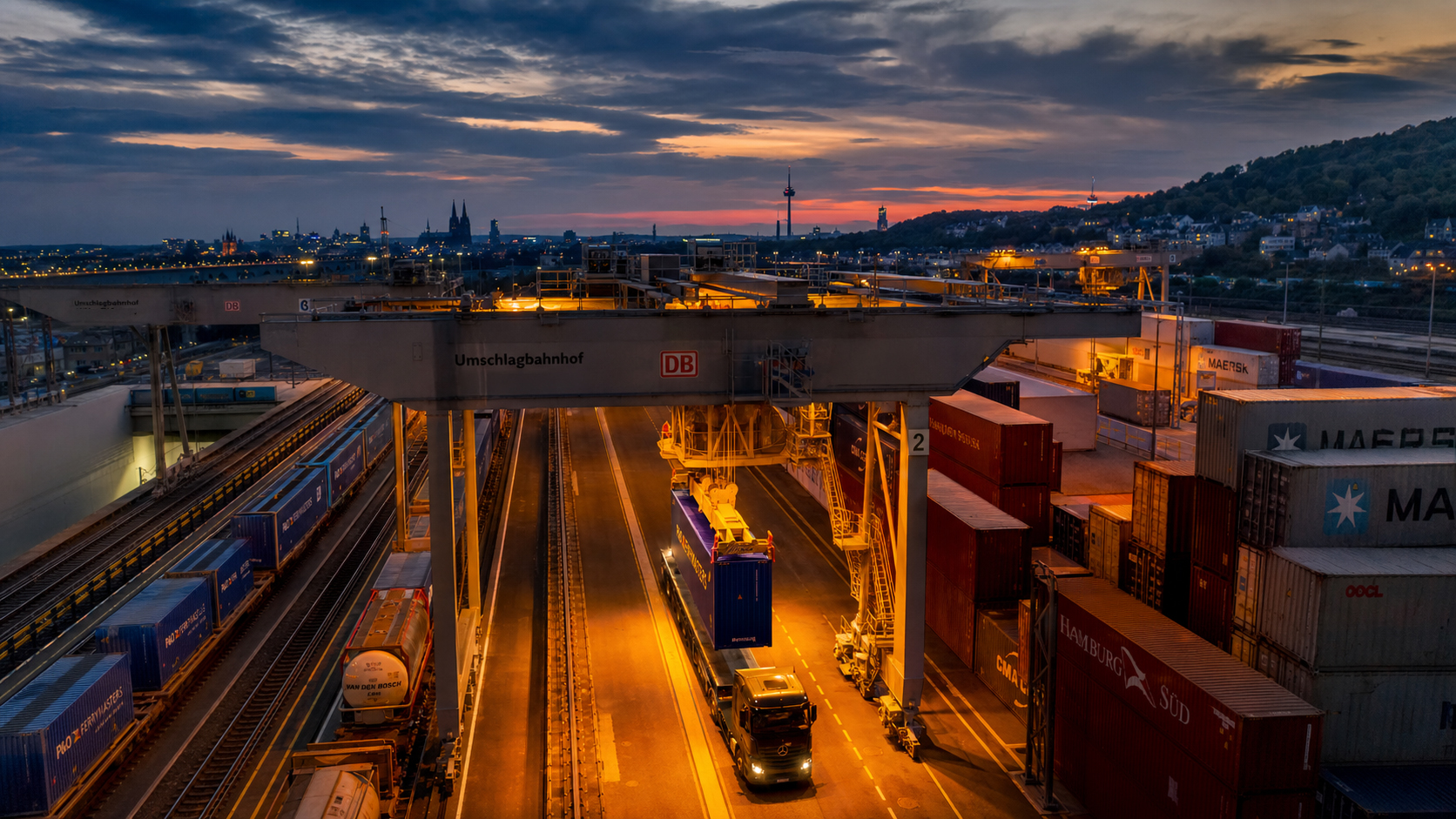
Why "combined transport" is saving our supply chains: Europe's freight transport at its limit – Creative image: Xpert.Digital
No more claustrophobia at the freight yard: This technology is changing transportation forever
Ingenious concept: Why logistics containers will move into fully automated skyscrapers in the future
Combined transport (CT) is the unsung backbone of the European economy. It combines the unbeatable cost advantages and climate-friendliness of rail for long distances with the indispensable flexibility of trucks for last-mile delivery. But the system that sustains our supply chains is reaching its limits: outdated and overloaded transshipment terminals are increasingly becoming bottlenecks, delaying transport and jeopardizing the EU's ambitious climate targets. While geopolitical crises and rising toll costs are increasing the pressure on the sector, logistics is looking toward a revolutionary solution that could change freight transport forever: the fully automated high-bay container warehouse. Discover why the future of logistics lies not only in new tracks, but also in vertical space efficiency, smart digitalization, and radical restructuring – and what enormous opportunities this presents for both the economy and the environment.
Combined transport: backbone of European freight logistics
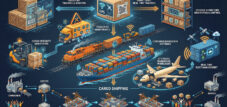
Combined transport (CT) is one of those systems that receives little public attention, even though it forms the economic backbone of continental trade. Put simply, it's a mode of transport in which not the goods themselves, but their containers – such as skips, swap bodies, or semi-trailers – are transferred between different modes of transport, primarily road and rail. The actual journey is made by rail, while the truck only handles the short pre- and post-carriage. What sounds technically trivial is fundamental in its economic impact: CT is the only concept that combines the economies of scale of rail with the extensive coverage of roads – without requiring the goods themselves to be repacked.
This system has experienced remarkable growth dynamics in Europe over decades. Between 2010 and 2023, combined transport volume increased by 59 percent, and the intermodal rolling stock grew by 40 percent. Around 50 percent of all European rail freight is now accounted for by combined transport, and 52 percent of connections are cross-border. In Germany, combined transport generated a transport performance of around 57 billion tonne-kilometers in 2023, representing 45 percent of total rail transport performance. These figures make it clear: anyone who wants to strengthen rail freight must necessarily strengthen combined transport – the two are structurally almost inseparable.
Combined transport is by no means a uniform technology. It is differentiated into unaccompanied combined transport (UCT), where only the loading unit without the driver is loaded onto the railcar, and accompanied combined transport (ACT), also known as the "rolling highway," where the entire truck, including the driver, is loaded onto railcars. UCT is generally more cost-efficient and dominates the European network; the rolling highway has its specific advantage in Alpine transit, where driving bans, tachograph regulations, and topographical obstacles further increase the cost of road transport.
The economics of distance: When does switching to a different mode of transport become worthwhile?
The central economic question for combined transport is: At what distance do the system advantages outweigh the additional costs of double transshipment? The answer is clearly documented: Over distances of 500 kilometers and above, combined transport is competitive with pure road transport; in Alpine transit, this is already the case from 300 kilometers. The reason lies in the physical superiority of rail over long distances: The rolling resistance of steel wheels on steel rails is significantly lower than that of rubber tires on asphalt, resulting in approximately five times lower energy consumption per ton-kilometer. A freight train combines the capacity of around 52 trucks, thus optimizing the use of propulsion energy.
Below this distance threshold, road transport structurally dominates. Terminal costs – that is, the costs for handling goods at the origin and destination terminals – are fixed and are only recouped through the kilometers saved on rail. This cost model also explains why combined transport has historically been a system of long routes: Rotterdam–Northern Italy, Hamburg–Munich, Frankfurt–Vienna. Rail wins the cost and time calculation the longer and more consolidated the transports are. Terminal costs per loading unit vary considerably depending on the facility, level of automation, and capacity utilization, but typically range between 80 and 150 euros per handling operation – an amount that can be recouped many times over on an 800-kilometer rail line through energy savings and toll avoidance.
However, this competitive calculation is more fragile than it appears. Track access charge increases for freight trains, construction work on main corridors, and structural delays are pushing the break-even point upwards. Industry associations are therefore sounding the alarm: They are demanding a freeze on track access charges for 2026 and a capacity guarantee of at least 90 percent of existing transport capacity on key corridors. The structural problem is clear: If combined transport becomes more expensive due to regulatory cost increases on the rails, it loses its decisive advantage over trucks. The climate benefits evaporate, and the EU's modal shift targets become meaningless.
The critical bottleneck: Why terminals decide everything
Even the most efficient rail network is worthless if the transfer points between road and rail don't function properly. Intermodal terminals are the critical points of the combined transport system – and they have been structurally under-capacity for years. In Germany, Deutsche Umschlaggesellschaft Schiene-Straße (DUSS) operates the leading terminal network for combined transport; DB InfraGO plans and implements new facilities and expansions on behalf of the federal government. The terminals are the points at which the efficiency of the entire system is measured: Long waiting times for trucks, overloaded crane systems, and insufficient track capacity can cause even well-functioning rail transport operations to fail.
The problem is real and has already materialized. At the DUSS terminal in Kornwestheim near Stuttgart, it has been reported that truck drivers are waiting two to three hours daily and are unable to complete a second trip – a direct result of capacity overload. The more goods pass through a terminal, the more severe the approach to the bottleneck becomes, the longer the traffic jams on surrounding highways, and the more unpredictable pre- and post-haulage become. This is a classic case of system failure, where a single bottleneck destabilizes the entire transport chain. The third module in Kornwestheim, currently under construction, is intended to increase capacity by almost 50 percent by 2026 – but it is questionable whether this will be sufficient given the projected volume growth.
The Ulm-Dornstadt example illustrates how the industry is responding to this bottleneck pressure. DB InfraGO is building a second automated transshipment module here for around €148 million – co-financed by the German federal government and the EU. By 2028, the terminal's capacity is expected to increase from the current 120,000 to 300,000 loading units per year, a rise of 150 percent. Four additional transshipment tracks, three fully automated gantry cranes, and extensive storage lanes are being built on nearly 80,000 square meters west of the existing terminal. The facility is located on the Rhine-Danube transport corridor, which stretches from Strasbourg to the Black Sea – one of the busiest freight corridors in Europe. Annual CO₂ savings of over 16,700 tons are expected simply from shifting freight to rail; in addition, 22 million truck kilometers per year will be saved.
The climate bill: Rail as a systemic lever
The ecological advantages of rail freight over trucking are scientifically proven and quantifiable. Per ton-kilometer, rail freight already produces around 80 percent fewer greenhouse gas emissions than road freight. DB Cargo's network replaces approximately 20 million truck journeys annually, thereby saving six million tons of greenhouse gases. The physical reason lies in the aforementioned low rolling resistance of rail and the ability to transport large quantities in multiple trains. Furthermore, electrification plays a crucial role: where the infrastructure is electrified, DB already uses around 70 percent renewable energy in its rail power mix, with the stated goal of switching to 100 percent green electricity by 2038.
In 2023, the transport sector was responsible for approximately 146 million tons of CO₂ equivalents in Germany, contributing 22 percent to total emissions. A substantial shift of freight transport to rail is therefore not a niche measure, but a systemic lever for achieving climate targets. A UIRR study concluded that shifting freight to rail would reduce CO₂ emissions by an average of 55 percent compared to road transport alone; the rolling highway (Rolling Highway) achieves a further reduction of 18 percent. For companies subject to Scope 3 emissions reporting requirements, combined transport is therefore not only ecologically sound, but increasingly mandated by regulations.
The political environment reflects this need. In 2023, the European Commission adopted a draft directive to revise the legal framework for combined transport. A key requirement is that combined transport services must have at least 40 percent lower external costs than the road-only alternative. At the same time, all truck journeys in the pre- and post-haulage phases are to be exempt from weekend driving bans, and member states are obligated to reduce the overall costs of combined transport by at least ten percent within seven years. This is an ambitious but necessary target that will sustainably improve the framework for terminal investments.
Alpine transit as a stress test: Shifting under pressure
Alpine transit is the toughest terrain for combined transport in Europe – and simultaneously the most important corridor. Transalpine freight flows between Northern Europe and the Mediterranean region converge on a few key axes, for which combined transport is competitive even for distances as short as 300 kilometers. The Gotthard Base Tunnel – at 57 kilometers the longest railway tunnel in the world – has significantly improved operating conditions for rail freight since its opening: flatter routes, the elimination of multiple traction, and shorter travel times. For decades, Switzerland's modal shift policy has successfully transferred freight traffic from road to rail; since 2000, combined transport has absorbed all of the growth and even contributed an additional third in modal shift.
But this success is under pressure. With the elimination of operating subsidies from Switzerland and the increase in track access charges in Germany, the competitiveness of transalpine combined transport is under threat. Under these conditions, combined transport logistics in Alpine transit can realize at most half of the originally expected productivity gains from the new base tunnel. Industry operators like Hupac, which form the backbone of unaccompanied combined transport through Switzerland, are therefore calling for longer-term political security until 2030. The logic is simple: those who build terminals, order trains, and organize logistics chains need planning certainty over a horizon of more than two years.
The high-bay warehouse: The next stage of terminal evolution
If terminals are the key infrastructure of combined transport, then the question of their technological development is not an academic one, but a core operational issue. The current state of the art involves gantry cranes that transfer containers between freight trains and trucks – a method optimized for high throughput, but requiring considerable space and reaching its limits when it comes to the intermediate storage of loading units. This is precisely where a technology originating from intralogistics comes into play, now venturing into large-scale freight handling: the high-bay container storage system (HBS).
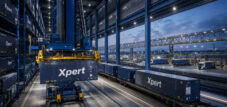
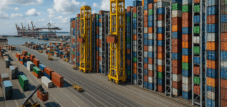
The principle is a direct transfer from warehouse technology: Instead of stacking containers flat and only three to six layers high, they are stored in fully automated racking systems where each container has its own individually addressable shelf space. The crucial difference to conventional stacking methods lies in the direct access: In a high-bay warehouse, not a single container needs to be restacked to reach another. In conventional terminals, however, restacking accounts for between 30 and 60 percent of all container movements – movements that add no transport value whatsoever, but merely provide access to the units below.
The market leader in this segment is the joint venture BOXBAY, founded by DP World and the German SMS Group. Its technological core consists of fully automated storage and retrieval machines that operate along the storage aisles and can move containers at a rate of up to 22 moves per hour. An underground pallet conveyor system connects the individual aisles, ensuring seamless transitions between the different areas of the high-bay warehouse. The concept was originally developed by AMOVA, a subsidiary of the SMS Group, for the fully automated storage of heavy steel coils – coils weighing up to 50 tons and handled around the clock in racks up to 50 meters high. Transferring this proven technology to shipping containers is a logical, albeit challenging, further development.
LTW Intralogistics Solutions – Intermodal Transport

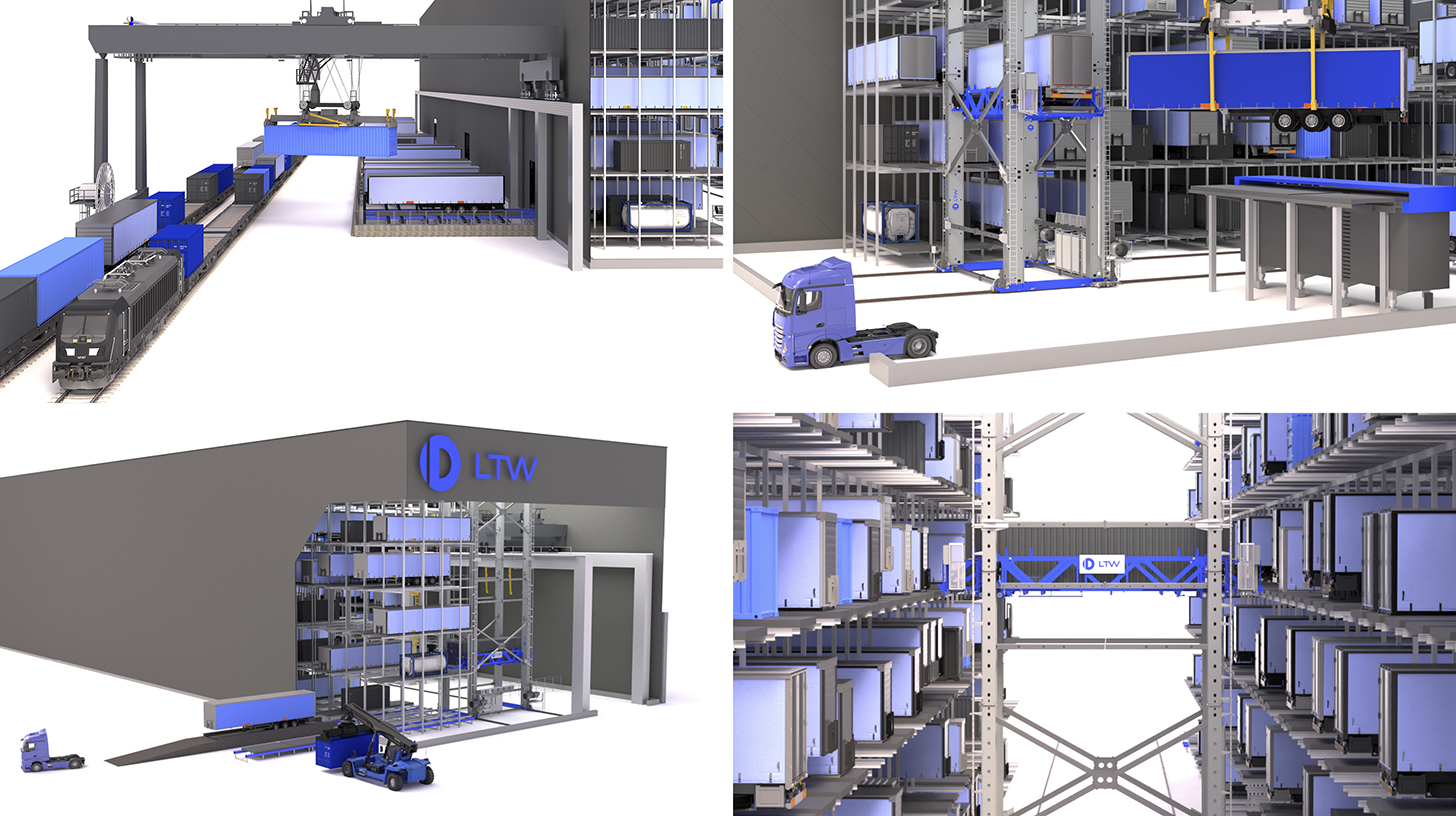
LTW Intralogistics Solutions – Intermodal Transport – Image: LTW Intralogistics GmbH
LTW offers its customers not individual components, but integrated complete solutions. Consulting, planning, mechanical and electrotechnical components, control and automation technology, as well as software and service – everything is networked and precisely coordinated.
In-house production of key components is particularly advantageous. This allows for optimal control of quality, supply chains, and interfaces.
LTW stands for reliability, transparency, and collaborative partnership. Loyalty and honesty are firmly anchored in the company's philosophy – a handshake still means something here.
Related to this:
Risks, returns, reality: Is automated container storage worthwhile?
Seven advantages of container high-bay warehouses in the context of combined transport
The strengths of the high-bay warehouse as a building block in the intermodal terminal can be described in seven dimensions:
First, there's the radical space efficiency: A BOXBAY system achieves three times the capacity of a conventional yard on the same footprint – or conversely, the same capacity on less than a third of the area. This is a decisive advantage for intermodal terminals in urban or topographically restricted locations. The high-bay warehouse planned by BOXBAY at the Port of London Gateway will store 16 layers of containers – compared to a maximum of six with conventional solutions. On a footprint comparable to a few football fields, this creates capacity for 27,000 TEU.
Secondly, the elimination of unproductive restacking operations: Since each container is in its own individual compartment, the entire housekeeping movement program is eliminated. This results in a drastic reduction in machine cycles and energy consumption. BOXBAY quantifies this improvement over conventional yards as an efficiency increase of 65 percent.
Thirdly, the 100% utilization rate: While conventional container yards can only utilize a maximum of 70 to 80% of their capacity for operational reasons, a high-bay warehouse can technically achieve 100% utilization because every storage space is directly accessible. For terminal operators, this translates into a significantly better return on investment in infrastructure.
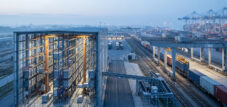
Fourthly, the parallel loading and unloading process: In the intermodal terminal context, as developed by the rXp InterregioCargo system with LTW Intralogistics, the integrated high-bay warehouse enables the simultaneous automated loading and unloading of trains and trucks. The loading track is integrated directly into the high-bay warehouse, allowing for seamless transfer between rail and road without intermediate buffers. Up to 100 13.60-meter swap bodies can be stored within a width of just twelve meters per 100 meters of length.
Fifthly, energy efficiency and decarbonization: The electrically operated storage and retrieval machines produce no direct emissions. Since a BOXBAY system can be designed so that the roof of the racking structure can be used as a solar panel surface, complete self-sufficiency with renewable energy is possible in extreme cases. This makes high-bay warehouses one of the few logistics systems that can evolve towards energy-neutral operation.
Sixthly, digital integration capability: High-bay warehouses are inherently digitally controlled systems. Every container movement is data-driven, every storage location is addressed, and the interface to warehouse management systems and digital freight platforms is directly available. In the context of EU funding requirements for combined transport, which stipulate the use of electronic transport information platforms (eFTI), terminals with integrated high-bay warehouses are structurally better positioned to meet these requirements.
Seventh, modular scalability: High-bay warehouse systems are consistently built modularly. A combined transport terminal can start with an initial module and gradually expand capacity without interrupting ongoing operations. This is economically significant because it spreads the high initial investment over several phases and closely links capacity growth to actual demand.
The system limits of the high-bay warehouse: Where the technology reaches its limits
A serious analysis must also identify the limitations and risks. Container high-bay warehouses are not a universal solution for all intermodal terminal contexts. Firstly, the investment costs are significantly higher than for conventional terminal equipment. The BOXBAY project at London Gateway is valued at €91.7 million – for a facility that exclusively stores empty containers. The return on investment depends heavily on capacity utilization: only with high throughput and high demand for storage space will the investment pay for itself within an acceptable timeframe.
Secondly, the technology requires a highly reliable IT and control infrastructure. A system failure in the high-bay warehouse can, in the worst-case scenario, bring the entire terminal operation to a standstill. Conventional terminals with mobile reach stackers can compensate for the failure of individual devices by redistributing loads; in a fully automated high-bay warehouse, redundancy planning is significantly more complex and costly. Thirdly, the system is primarily optimized for standardized loading units. Swap bodies, semi-trailers, and standard-sized containers can be handled efficiently; atypical units, heavy-duty containers, or special loads require separate processes. And fourthly, the concept requires sufficient vertical space – the full potential of high-bay racking cannot be realized near airports or in areas with strict building height restrictions.
The new generation of the KV terminal: Integration as a paradigm
The intermodal terminal of the future is no longer a simple transshipment point, but a fully integrated logistics system. The combination of automated gantry cranes, driverless transport within the terminal area, digital gate management, and – as the ultimate solution – a high-bay container warehouse creates a system whose overall performance far exceeds the sum of its parts. The degree of automation is not just a cost factor, but a quality factor: predictable turnaround times, reliable capacity commitments, and real-time digital transparency are prerequisites for freight forwarders and shippers to prefer intermodal transport to direct truck transport.
The new module being built at the DUSS terminal in Ulm-Dornstadt, featuring three fully automated gantry cranes and four transshipment tracks for long freight trains, is a step in this direction. It relies on gantry crane technology as the current technological foundation. A future expansion module integrating high-bay warehouse technology could significantly increase the site's space efficiency once again, while simultaneously addressing the storage space shortage already noticeable at terminals like Kornwestheim. The systemic interplay of these technologies – automated gantry cranes for the actual transshipment, high-bay warehouses for buffer storage, and storage space management – represents the logistics paradigm of the coming decade.
Market dynamics and growth prospects until 2030
Despite current fluctuations, the medium-term growth prospects for combined transport are structurally positive. After challenging years with significant volume declines in 2023, the UIRR (Union Internationale des sociétés de transport combiné Rail-Route) reported a 5.19 percent increase in shipment volumes in European combined transport for 2024. Domestic combined transport developed particularly dynamically, growing by 10.6 percent and benefiting from operational advantages unaffected by interoperability issues at borders.
Deutsche Bahn (DB) forecasts moderately positive development for European rail freight after years of stagnation, with combined transport once again expected to be the driving force behind growth. This aligns with the structural logic: In an environment of rising truck tolls, an increasing driver shortage in long-distance transport, growing ESG requirements for supply chains, and ambitious EU climate targets, combined transport benefits from a systemic set of tailwinds. However, the path from regulatory implementation to actual volume growth is long and depends crucially on the quality of the infrastructure.
The decisive factor remains terminal capacity. A European intermodal system with 350 cross-border connections and weekly departures requires a network of efficient, reliably operating transshipment facilities. Every capacity bottleneck at one terminal is a bottleneck for the entire system. Investments in terminals—whether classic expansions like in Ulm-Dornstadt or disruptive high-bay warehouse concepts like BOXBAY in London—should therefore be understood not as infrastructure costs, but as investments in the functionality of the entire European freight transport system.
Geopolitics and supply chain security as new drivers
The debate surrounding combined transport has gained a new dimension in recent years: the geopolitical resilience of supply chains. The war in Ukraine, the disruptions in the Red Sea caused by Houthi attacks, and the tensions in the Pacific have demonstrated to European companies just how vulnerable just-in-time logistics chains over long sea routes can be. In this context, continental land corridors, which utilize rail and combined transport, are gaining strategic importance. The Rhine-Danube corridor, within which the Ulm-Dornstadt terminal is located, connects the industrial centers of Western Europe with the emerging economies of Southeast Europe and is one of the continent's most important land bridges.
At the same time, combined transport is a tool for reducing dependence on fossil fuels in freight transport. In a world of volatile energy prices and increasing pressure to decarbonize, rail offers structural security: it is electrifiable, compatible with renewable energy, and scales energy efficiency with train load in a way that no truck can achieve. For logistics providers who need to demonstrate Scope 3 emission reductions to their customers, combined transport is therefore increasingly not just an option, but a strategic necessity.
The system needs its entire chain
Combined transport is not a niche product of freight logistics, but rather its economically and ecologically superior alternative for medium and long distances – provided the system functions as a whole. The weak point has always been, and remains, the terminal infrastructure. Investments like the €148 million in Ulm-Dornstadt are necessary and appropriate, but they only solve the structural capacity problem temporarily if terminal logic is not simultaneously further developed technologically. The high-bay container warehouse is not a futuristic concept, but an already deployed, proven technology that has demonstrated its practicality in port operations and industrial logistics.
Integrating high-bay warehouses into intermodal terminals addresses the fundamental space problem of terminal logistics, eliminates unproductive movements, increases the utilization rate of storage spaces to nearly 100 percent, enables parallel train loading and truck handling processes, and creates the digital foundation for tomorrow's terminal management. The path to the next generation of combined transport is technically clear – what's missing is the political will to promote investment, stable regulatory frameworks, and the willingness of terminal operators to abandon conventional operating models in favor of more capital-intensive, but ultimately superior, solutions. The system is only as strong as its weakest link – and currently, that weakest link is too often the terminal.
Consulting - Planning - Implementation

Konrad Wolfenstein
I would be happy to serve as your personal advisor.
You can contact me at wolfenstein∂xpert.digital or
Just call me on +49 7348 4088 965 .
Your container high-bay warehouse and container terminal experts
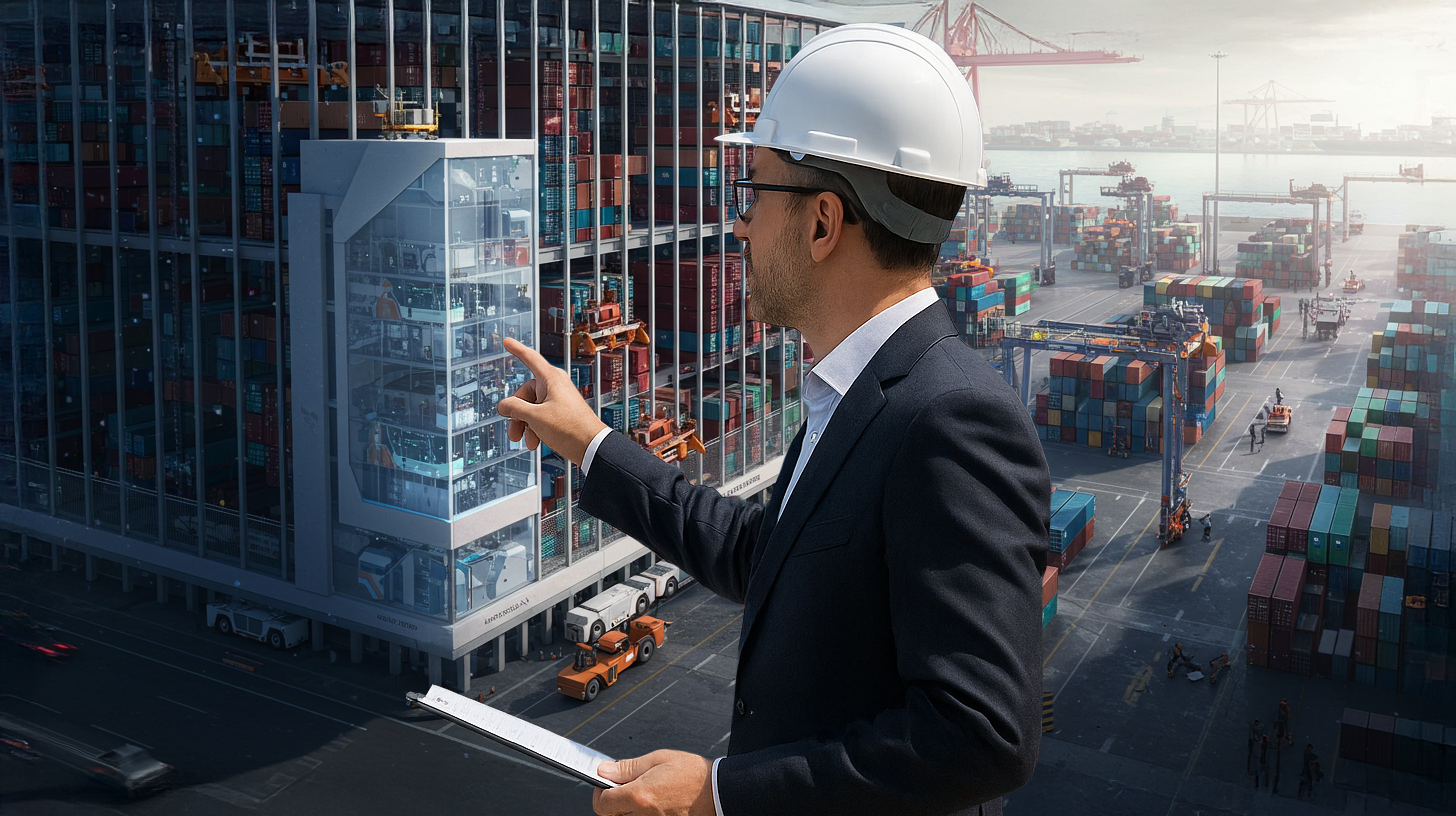
Container high-bay warehouses and container terminals: The logistical interplay – expert advice and solutions - Creative image: Xpert.Digital
This innovative technology promises to fundamentally change container logistics. Instead of stacking containers horizontally as before, they will be stored vertically in multi-story steel racking structures. This not only allows for a drastic increase in storage capacity within the same area, but also revolutionizes all processes at the container terminal.
More information here: