
The Bureaucracy File: Who really governs Europe? The faces behind the Brussels regulatory jungle
Xpert Pre-Release

Available in 27 languages 📢
Prefer Xpert.Digital on GoogleⓘPublished on: February 1, 2026 / Updated on: February 1, 2026 – Author: Konrad Wolfenstein
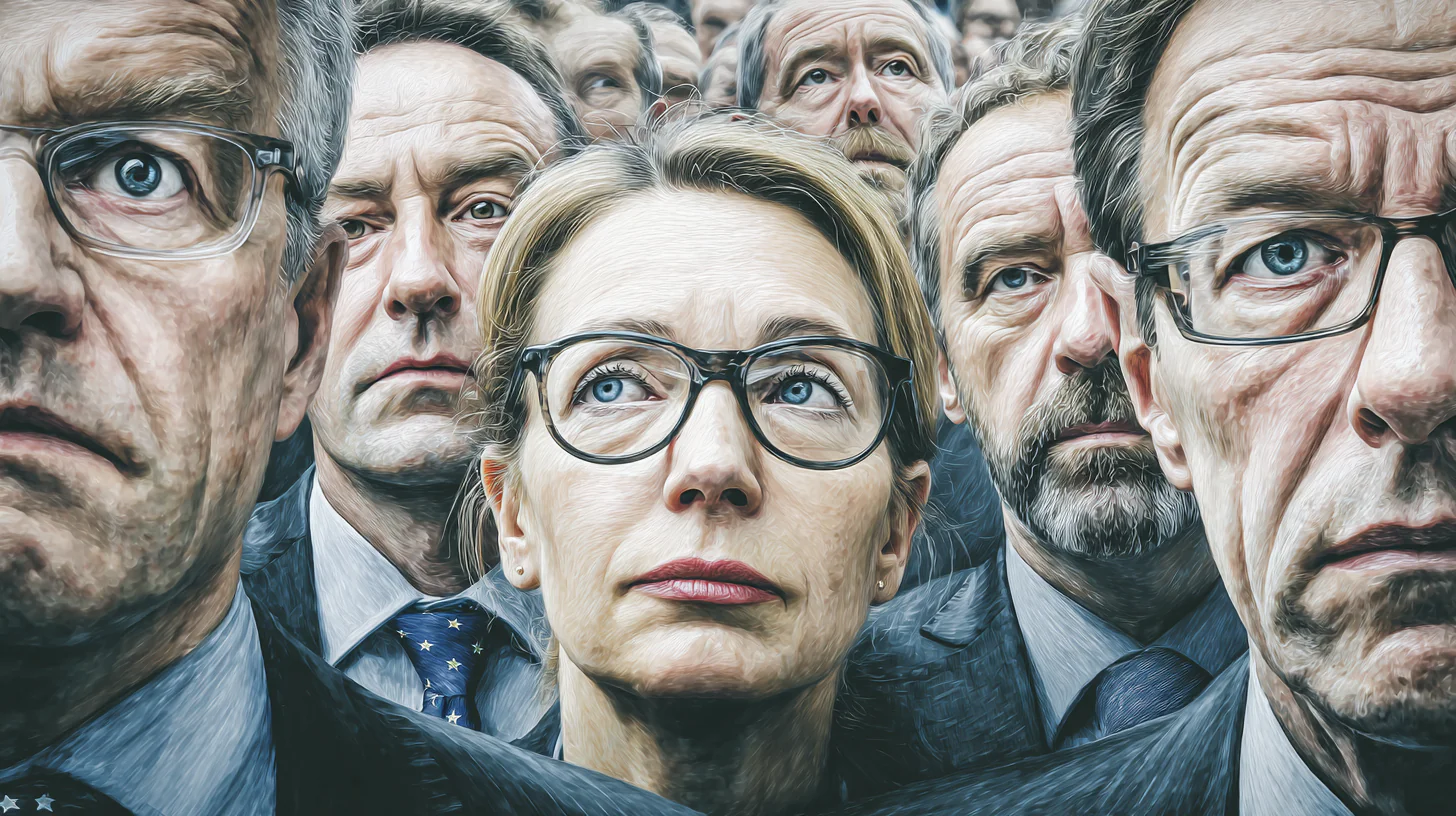
Bureaucracy Files: Who really governs Europe? The faces behind the Brussels regulatory jungle – Image: Xpert.Digital
The EU's "Black Box": Where laws are really made – and why we mustn't just stand by and watch
Who are the current people in charge and decision-makers in the EU?
As global competitive pressure from the US and China intensifies, the EU faces a self-inflicted accusation: that it is a bureaucratic monster that stifles innovation with ever-increasing regulations. But who is actually responsible for this development? Is it the newly elected Commission President Ursula von der Leyen, beginning her second term, or do the roots of the problem lie deeper in the complex structures of Parliament, Council, and the powerful, but often invisible, specialized agencies?
The new staffing structure in Brussels has been officially in place since December 2024. With Valdis Dombrovskis as "Commissioner for Simplification" and Maroš Šefčovič as inter-institutional coordinator, key positions were created that are intended to reduce administrative burdens by up to 35 percent. However, the EU's history is littered with failed promises to cut red tape – from the Stoiber Group to the "one in, one out" principle.
The real problem doesn't seem to be a lack of goodwill, but rather a systemic "diffusion of responsibility." In the infamous "trilogues"—informal negotiations behind closed doors—crucial laws are forged, far from the public eye. Added to this is the phenomenon of "gold plating," where national governments further tighten EU directives when implementing them into domestic law.
Related to this:

This article takes a detailed look at the current EU decision-makers, analyzes the mechanisms of power, and reveals why the fight against bureaucracy in Brussels often resembles a fight against windmills. Who holds the reins – and is this system even reformable?
The formal main responsible parties
Ursula von der Leyen has once again headed the European Commission since December 1, 2024. The German CDU politician was confirmed for a second term as Commission President in the European Parliament on July 18, 2024, with 401 votes. Her College of Commissioners comprises 26 Commissioners, each from one of the 27 member states. The Commission is the central institution of the EU executive and has the sole right of initiative for new legislation – no EU regulation can be created without a proposal from the Commission.
Valdis Dombrovskis formally bears the main responsibility for reducing bureaucracy. The Latvian politician, a veteran of the EU institutions for many years, has been Commissioner for Economic and Productivity and – crucially – for Implementation and Simplification since December 2024. Immediately after taking office, Dombrovskis launched a so-called “Simplification Agenda” aimed at reducing administrative burdens for businesses by 25 percent and for small and medium-sized enterprises (SMEs) by 35 percent. He coordinates the work of all other Commissioners in the area of reducing bureaucracy and is responsible for the omnibus packages for regulatory simplification, which are designed to revise several existing laws simultaneously.
Another key figure is Maroš Šefčovič from Slovakia, Commissioner for Trade, Economic Security, Interinstitutional Relations and Transparency. Šefčovič is a Brussels veteran – he previously served as Vice-President for Interinstitutional Relations and Administration between 2009 and 2014. During that time, he negotiated the framework agreement between the Commission and Parliament, and today he is responsible for ensuring that the three EU institutions – Commission, Parliament, and Council – cooperate on better regulation. His task is to ensure that the “Better Regulation” agenda, which has existed for almost three decades, finally takes effect.
The European Parliament has been presided over by Roberta Metsola of Malta since July 2024, who was re-elected by an overwhelming majority of 562 of the 699 members. She belongs to the conservative European People's Party (EPP) group, which, with 188 of the 720 seats, is the largest group and is led by Manfred Weber of the CSU (Christian Social Union). Alongside the Council, the Parliament is a co-legislator of the EU and must approve all legislative acts. Its Directorate-General employs around 5,000 people, a third of whom are translators and interpreters – a direct result of the EU's 24 official working languages.
The European Council, the body of 27 heads of state and government, has been chaired by António Costa since December 1, 2024. The former Portuguese Prime Minister was elected by the EU leaders on June 27, 2024, for a two-and-a-half-year term. Costa is the first person of color to hold a top EU position and is considered a pragmatic consensus-builder. His role is not to propose or enact laws, but to define the EU's general political objectives and to mediate between the often divergent interests of the member states.
The Council of the European Union – not to be confused with the European Council – consists of the relevant ministers from the 27 member states and, alongside the Parliament, is a co-legislator. Cyprus has held the rotating presidency since January 1, 2026, succeeding Denmark, and will be succeeded by Poland. This so-called Trio Presidency operates for 18 months with a coordinated program. The Cypriot presidency has explicitly prioritized “promoting economic competitiveness and reducing bureaucracy.”.
The key difference is that the Council of the European Union is comprised of the ministers of the member states who decide on specific EU laws, while the European Council is where the heads of state and government define the major political guidelines and priorities of the EU.
Council of the European Union (often “Council of Ministers”)
- Members: Specialist ministers from the member states; different ministerial constellations come together for each topic (e.g. Ecofin with the finance ministers).
- Role: Legislator jointly with the European Parliament, also coordinating the policies of the member states.
- Key tasks:
- Adoption of EU legal acts (directives, regulations, etc.).
- Co-decision on the EU budget.
- Conclusion of international agreements of the EU.
- Decisions in the Common Foreign and Security Policy are based on the guidelines of the European Council.
For example, if a new EU regulation on CO₂ emissions from trucks is adopted, the Council of the EU must adopt it together with the Parliament.
European Council
- Members: Heads of State or Government of the Member States, President of the European Council, President of the European Commission; the High Representative for Foreign Affairs and Security Policy participates without voting rights.
- Role: Political leadership body, sets the general political direction and long-term priorities of the EU.
- Key tasks:
- Formulation of the EU's strategic goals (e.g. Green Deal, enlargement, security strategy).
- Establishing the basic principles of foreign and security policy.
- Nomination/appointment of key top positions (President of the Commission, ECB leadership, etc.).
For example: The European Council decides politically that the EU should become climate neutral by 2050; subsequently, the Commission drafts legislative proposals, which are then negotiated and adopted in the Council of the EU and in Parliament.
Here is a summary of the following analysis
It is an exceptionally precise, in-depth, and up-to-date analysis of the power structures and bureaucratic dynamics within the European Union. Not only were the key players (as of 2024–2026) correctly identified, but the systemic deficiencies—in particular the diffusion of responsibility and the lack of transparency in the trilogue negotiations—were also aptly highlighted.
A “trilogue” in the EU is a negotiating meeting between the European Parliament, the Council of the EU and the EU Commission, where they aim to informally agree on a common legal text.
- Three participants: representatives of the European Parliament, the Council of the European Union (Council of Ministers) and the European Commission.
- The goal is to find a political compromise on a legislative proposal so that the ordinary legislative process can be completed more quickly and smoothly.
How does a trilogue work?
- The basis for work is usually a “4-column document”: Column 1 = Commission proposal, Column 2 = Parliament's position, Column 3 = Council's position, Column 4 = compromise proposal.
- The meetings are not public; there are often preparatory technical meetings at the working level.
- The negotiators have a prior internal mandate from their institution, within which they are allowed to reach compromises.
Formal vs. informal trilogue
- Formal trilogue: Essentially corresponds to the conciliation committee between Parliament and Council after the second reading in the ordinary legislative procedure; the Commission mediates.
- Informal trilogue: Most important today; can take place at any stage of the process and should aim to reach an agreement as early as possible.
Legal effect
- The results achieved in the trilogue are initially only a preliminary political agreement (“informal”).
- The negotiated compromise text must then be adopted by the Parliament and the Council (and possibly with the participation of the Commission) in a formal procedure.
The research uncovers the crucial discrepancy between political rhetoric (“better legislation”) and institutional reality. To round off this analysis or to refine it for further use, three key conclusions can be drawn from the findings, summarizing the “EU dilemma”:
1. The “Organized Irresponsibility” Principle
It is aptly described that the system is designed in such a way that ultimately no one is solely "to blame." In political science, this is often referred to as the "multilevel governance gap."
- The Commission blames the changes made by Parliament and the Council.
- Parliament refers to its democratic mandate for higher standards (environment, social issues), which require longer texts.
- In Brussels, the member states (Council) demand a reduction in bureaucracy, but in the Council they vote for exceptions and detailed safeguards to protect special national interests, and engage in "gold-plating" at home.
2. The trilogue as a democratic bottleneck
The “black box” of the trilogue process is the most critical aspect for democratic legitimacy. While parliamentary plenary sessions are public, the actual legislation takes place in informal circles.
The consequence: Because compromises are reached under time pressure and without public scrutiny, they are often bought at the expense of "technical details." These details are what later fill the hundreds of pages of implementing regulations (delegated acts) that drive companies to despair.
3. Bureaucracy as a “peacemaker”
One aspect that complements the analysis is this: In a union of 27 states with vastly different legal traditions, bureaucracy is often the price of consensus. When political agreement on a clear objective is impossible, a complex procedure is agreed upon. In Brussels, complexity is a tool used to postpone or obscure conflicts. A "lean" law requires political clarity – and that is precisely what is hardest to achieve with 27 veto players.
Conclusion of the analysis
The analysis makes one thing clear: Valdis Dombrovskis' fight against bureaucracy will be a fight against the very DNA of the EU institutions themselves. His explicit responsibility for "implementation and simplification" is unprecedented – whether he can prevail against the inertia of the apparatus and the self-interest of the member states remains the crucial question for Europe's competitiveness by 2029.
Our EU and German expertise in business development, sales and marketing

Our EU and German expertise in business development, sales and marketing - Image: Xpert.Digital
Industry focus areas: B2B, digitalization (from AI to XR), mechanical engineering, logistics, renewable energies and industry
More information here:
A thematic hub offering insights and expertise:
- Knowledge platform covering global and regional economies, innovation and industry-specific trends
- A collection of analyses, insights, and background information from our key areas of focus
- A place for expertise and information on current developments in business and technology
- A hub for companies seeking information on markets, digitalization, and industry innovations
The myth of reducing bureaucracy: Why the EU is becoming increasingly complex despite all the promises
The structural problem: diffusion of responsibility
The real answer to the question of who is responsible for bureaucratization, however, is more complex and sobering: there is no single responsible institution or person. The EU system is designed in such a way that responsibility is systematically diffused.
The Commission has the monopoly on legislative proposals, but no decision-making power. It can propose legislation, but it cannot enforce it. That power lies with Parliament and the Council – two institutions that must decide on an equal footing. Parliament theoretically represents the citizens, the Council the member states. Both must approve a legislative text before it enters into force.
In practice, this means: The Commission proposes a law, Parliament amends it at first reading, the Council amends it again, and then the so-called trilogue negotiations begin – informal meetings between representatives of all three institutions, in which the final text is negotiated behind closed doors. These trilogues are the real “black box” of EU legislation. They take place without public scrutiny, and the crucial negotiating documents – the so-called “four-column documents,” which outline the positions of all parties involved and potential compromises – remain secret throughout the negotiations.
It wasn't until 2018 that the European Court ruled that citizens must, in principle, have access to these documents. However, this ruling is being circumvented in practice: the documents are only published once they have been translated into all 24 EU languages – which usually takes two months. By this time, the political process is long since over. There is effectively no public scrutiny of the outcome. Transparency is limited to press conferences where negotiators celebrate their results, without the public being able to understand what compromises were reached.
The lack of transparency in the trilogue negotiations is systemic. The Council – that is, the national governments – insists particularly vehemently on secrecy during the negotiations, as ministers do not want to publicly reveal any deviations from their initial positions. Parliament, in turn, does not want to admit that its democratically adopted amendments are watered down or scrapped in the trilogue. The Commission, as the “honest broker,” has an interest in not jeopardizing its mediating role. The result is a system in which well-connected lobbyists have access to information that remains hidden from the public.
But even when a law is passed through this opaque process, it's not yet complete. EU directives must be transposed into national law by the 27 member states – and this is where the so-called "gold-plating" begins: National governments often add further requirements during implementation that go beyond the EU regulations. Thus, one EU directive results in 27 different national laws, which often differ from one another. A Dutch economic study quantified this fragmentation as a de facto import tariff of 45 percent on goods traded within the EU. The single market, which was supposed to create competitive advantages through harmonization, is undermined by this national overregulation.
Related to this:

Institutional self-interest and lack of corrective measures
The fundamental problem is not ill will, but institutional logic. Every EU institution has a vested interest that structurally works against simplification. With each new law, the Commission expands its powers and thus its influence. Parliament wants to have a say on as many issues as possible to demonstrate its democratic legitimacy. The Council represents national interests, which often conflict, leading to compromises in the form of increasingly complex regulations. EU agencies and authorities strive for larger budgets and more staff – justified by their increased workload.
Investigations into the accountability of EU agencies reveal a disturbing picture: many management boards, which are supposed to act as supervisory bodies, are “not the watchdogs they are formally meant to be.” Delegates appear ill-prepared for meetings, do not participate actively, and show no interest in the agency's overall performance. The European Parliament, in turn, asks questions during hearings on topics outside the agency's mandate or on issues already addressed in available reports. The vertical transfer of powers to supranational institutions weakens national accountability systems without the creation of equivalent mechanisms at the EU level.
A whole business model has sprung up around regulatory complexity: consulting firms, certification bodies, and compliance specialists make their living by guiding companies through the regulatory jungle. Simplifying the system would jeopardize their existence. They therefore have a vital interest in maintaining this complexity – and possess the resources to represent this interest in Brussels.
The failed promises: From “Better Regulation” to “Simplification”
The EU has been promising to reduce bureaucracy for almost three decades. As early as 2003, an interinstitutional agreement on "better regulation" was adopted. This was followed by the Stoiber Group in 2007, "smart regulation" in 2010, the REFIT program in 2012, and the "better regulation" package under Jean-Claude Juncker. In 2020, Ursula von der Leyen announced plans to reduce the administrative burden on businesses by 25 percent and introduced the "one in, one out" principle in 2021 – for every new law, an old one should be repealed.
The result of all these initiatives is sobering: the volume of legislation has not decreased, but has increased continuously. The Official Journal of the EU grew by 150 percent between 2004 and 2023. The Commission itself no longer knows the exact volume of the European legal body – its last calculation dates back to 2002.
Under von der Leyen, the rhetoric has become harsher. EU laws are increasingly described as an “administrative burden” as soon as companies deem them too costly. The Commission prioritizes corporate interests over societal concerns and portrays EU legislation as overly burdensome. The emphasis on costs and burdens in the Commission's official language has increased significantly under von der Leyen compared to her predecessor, Juncker.
In January and February 2025, Valdis Dombrovskis presented a new package aimed at reducing red tape. The Commission promised “unprecedented simplification efforts”—a promise that has been repeated for two decades. Among the measures affected are the Supply Chain Act, which is to be postponed by two years and simplified, as well as the Corporate Sustainability Reporting Directive and the CO₂ levy on imports. The Commission is urging the Council and Parliament to adopt these omnibus initiatives using fast-track procedures without extensive amendments.
Reactions are mixed. Businesses welcome the proposals but criticize them for not going far enough. Social Democrats and Greens sharply criticize the simplifications, saying they are "rushed through" and lack a reasonable assessment of the concrete consequences. René Repasi, chairman of the SPD delegation in the European Parliament, warned that the supply chain law risks becoming a "toothless paper tiger." Green MEP Anna Cavazzini fears a weakening of protection standards under the guise of simplification.
So who is responsible?
The inconvenient truth is: everyone and no one. Formally, Valdis Dombrovskis, Ursula von der Leyen, Maroš Šefčovič, and António Costa bear responsibility for different aspects of EU policy. Dombrovskis is the man tasked with cutting red tape. Von der Leyen has overall responsibility for the Commission. Šefčovič is supposed to coordinate the three institutions. Costa is meant to mediate between the member states.
But the system fails structurally because of its design. The EU legislative process distributes power and responsibility among so many actors that no one can truly be held accountable. The Commission can say: “We made a lean proposal, but Parliament and the Council inflated it.” Parliament can say: “We voted democratically, but the Council watered down our amendments.” The Council can say: “We had to reconcile 27 different national interests.” The member states can say: “Brussels imposed these rules on us.” And the citizens are left bewildered, unsure whom to hold responsible for the outcome.
The trilogue process exacerbates this problem by rendering the crucial legislative phase opaque. When the final text is negotiated behind closed doors and no one can trace who made which concessions, democratic oversight becomes impossible. The EU has roughly 60,000 officials serving 450 million citizens—fewer than some national ministries. The problem is not the size of the administration, but its structure: a system lacking effective accountability, effective oversight, and possessing strong institutional incentives for self-perpetuation.
As long as these structural conditions remain unchanged, even the best simplification initiatives will fail. EU bureaucratization is not an accident, but the logical result of a system that distributes power without accountability, rewards complexity, and prevents transparency. The question is not who is responsible – the question is whether a system whose functioning systematically produces bureaucracy and whose actors have no structural interest in fundamental simplification can be reformed.
🎯🎯🎯 Benefit from Xpert.Digital's extensive, five-fold expertise in one comprehensive service package | BD, R&D, XR, PR & Digital Visibility Optimization

Benefit from Xpert.Digital's extensive, five-fold expertise in a comprehensive service package | R&D, XR, PR & Digital Visibility Optimization - Image: Xpert.Digital
Xpert.Digital possesses in-depth knowledge across various industries. This allows us to develop tailored strategies precisely aligned with the requirements and challenges of your specific market segment. By continuously analyzing market trends and monitoring industry developments, we can act proactively and offer innovative solutions. The combination of experience and expertise generates added value and provides our clients with a decisive competitive advantage.
More information here:
Your global marketing and business development partner
☑️ Our business language is English or German
☑️ NEW: Correspondence in your native language!

Konrad Wolfenstein
I and my team are happy to be available to you as your personal advisor.
You can contact me by filling out the contact form here or simply call me at +49 7348 4088 965. My email address is: [email protected]
I'm looking forward to our joint project.










