
Billions in subsidies for DAX-listed companies: Privatize profits, nationalize risks?
Xpert Pre-Release

Available in 27 languages 📢
Prefer Xpert.Digital on GoogleⓘPublished on: May 3, 2026 / Updated on: May 3, 2026 – Author: Konrad Wolfenstein
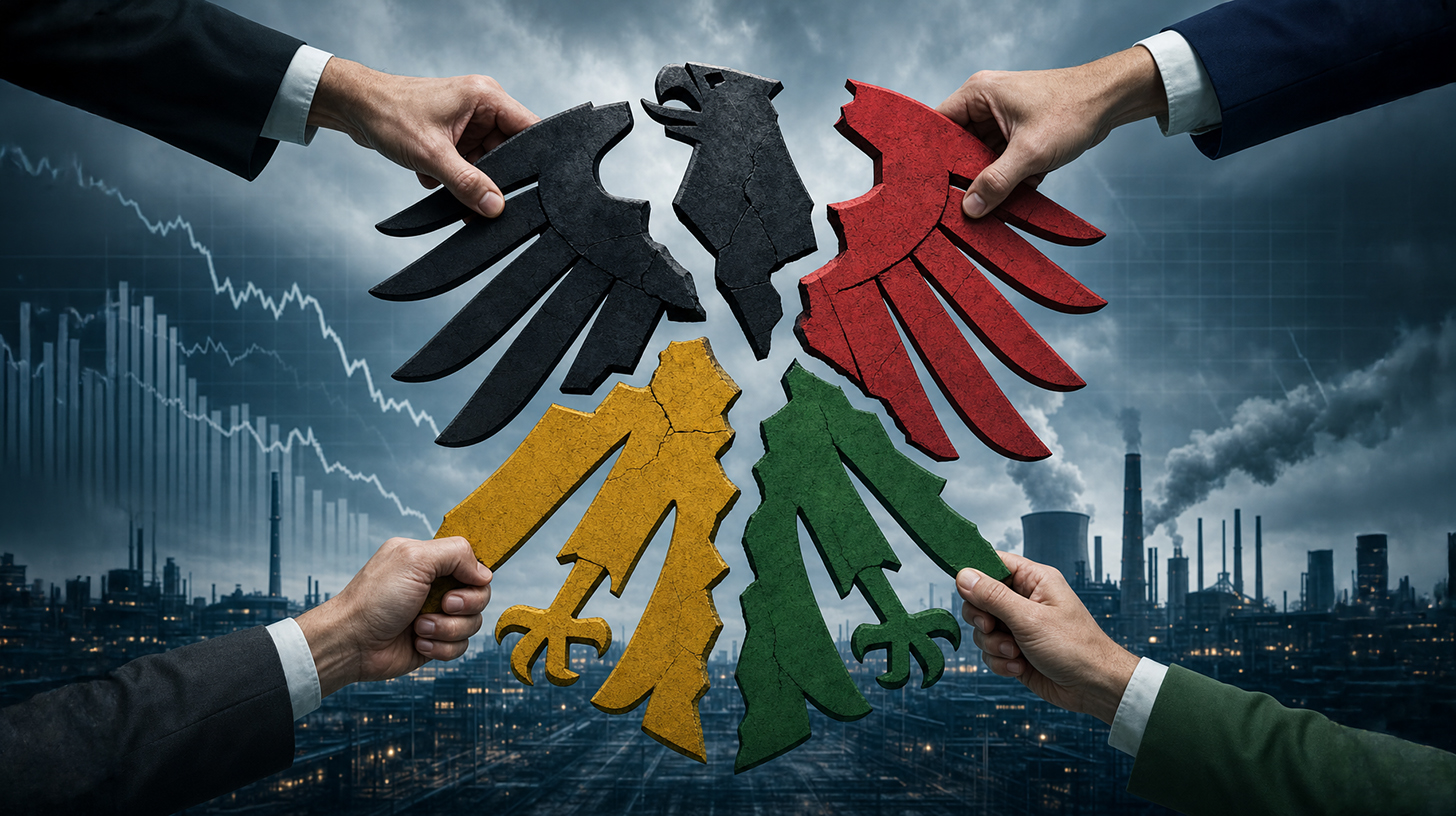
Billions in subsidies for DAX-listed companies: Privatizing profits, nationalizing risks? – Image: Xpert.Digital
Intel, Thyssenkrupp & Co.: The bitter truth about Germany's subsidy policy
Small and medium-sized enterprises (SMEs) are footing the bill: How billions of euros in state funding for DAX giants distort competition
Billions of euros in taxpayer money flow into Germany's largest companies every year – but what does this really bring to the economy? Whether it's Intel, Thyssenkrupp, or the unprecedented support measures during the crisis years: the government is digging deep into its pockets to secure industrial transformations, maintain production sites, and build technological sovereignty. But behind the facade of saved jobs and ambitious industrial policy lies a massive problem. Opaque financial flows, disastrous windfall gains, and a dangerous distortion of competition at the expense of small and medium-sized enterprises (SMEs) raise the question: Is Germany strategically promoting the future here, or is the government merely buying time with expensive band-aids to avoid fundamental structural reforms? A critical analysis of the winners, losers, and the fundamental flaws in German subsidy practices.
Related to this:

The hidden billions: Why nobody knows exactly how much tax money really flows to corporations
When the state feeds the biggest
German subsidy policy towards large corporations is not a peripheral issue in fiscal policy, but rather a reflection of the fundamental economic order. Particularly with regard to DAX-listed companies, a fundamental conflict is intensifying, and has been growing sharper for years: Should the state safeguard industrial transformation, technological sovereignty, and employment with billions in aid, or does it primarily perpetuate market power, perverse incentives, and political dependencies?
The sober answer is contradictory. On the one hand, many subsidies are based on understandable motives such as decarbonization, semiconductor production, crisis stabilization, and research. On the other hand, closer examination reveals that Germany often supports its largest companies with a mix of direct subsidies, special rules, tax breaks, and implicit guarantees, without systematically and transparently demonstrating the overall economic return on this policy.
This is precisely where the real problem lies. Not every subsidy to a DAX-listed company is wrong. But a system that mobilizes large sums of money, only partially discloses its recipients, inadequately evaluates its effects, and politically ignores the question of distribution, creates imbalances in the economic order. Germany's subsidy policy is thus less a precise instrument for shaping the future than an increasingly expensive tool for repair and exerting power.
Why the numbers are so hard to grasp
Anyone wanting to know what DAX-listed companies have received from the state "so far" quickly encounters a transparency problem. While Germany does have federal subsidy reports, detailed individual grants from federal, state, and EU programs, as well as state aid decisions from the European Commission, there is no central, company-specific register that consolidates all financial aid, tax breaks, guarantees, discounted network access, transformation aid, and crisis support.
This lack of transparency is not just a technical shortcoming, but an economic problem. Without a consolidated data foundation, the efficiency of government support cannot be reliably assessed. Even defining the boundaries is difficult: Does short-time work compensation count as an indirect corporate subsidy because it stabilizes labor costs? Are reduced grid fees and energy policy relief measures genuine subsidies or location-related adjustments? Are government guarantees, which may never be invoked, equivalent to direct grants? Depending on the definition, the magnitude of the subsidies changes dramatically.
Furthermore, the German funding landscape is institutionally fragmented. Federal ministries, state governments, KfW financing, EU IPCEI programs, climate and transformation funds, sectoral relief mechanisms, and special tax provisions are all intertwined. This creates the paradoxical situation in the public debate that almost everyone talks about "billions for corporations," but hardly anyone can provide the exact overall figures.
However, this can be clearly demonstrated
Despite the data gaps, the general direction is clear. Research on DAX companies shows that substantial government funds flow to the largest listed companies and their core industries. Reports on DAX subsidies in 2024 indicate that corporations like Eon and Volkswagen are among the largest recipients, while at the same time, government support increased despite high corporate profits.
These sums become particularly apparent where individual projects are politically charged. The German government had promised almost ten billion euros in support for Intel's planned chip factory in Magdeburg before the project later failed. This example illustrates two things: First, Germany is prepared to mobilize extraordinarily large sums for location decisions in strategic industries. Second, even a gigantic funding promise is no guarantee that investments will actually be realized in the long term.
Semiconductor subsidies in Dresden are similarly significant. The EU Commission approved billions in state aid for the TSMC factory to expand European semiconductor production and make supply chains more resilient. While such cases don't always directly involve traditional DAX-listed companies, they illustrate the industrial policy climate in which even Germany's largest corporations operate: large-scale, selective subsidies have long since become standard practice.
Even in heavy industry, the willingness of the state to intervene is high. Billions in aid have been approved for thyssenkrupp Steel to decarbonize and establish climate-friendly steel production. The logic behind this is plausible from an industrial policy perspective: without start-up funding, high CO₂ costs, competitive disadvantages, and relocation of production are likely. However, here too, it remains unclear how high the actual additional societal benefit is compared to the already necessary pressure for transformation.
The most important channels of funding
The funding of large corporations does not primarily come from a single large check, but rather through several channels that, in total, have a significant impact. The first channel consists of direct investment grants and transformation aid. This includes funding for new factories, decarbonization projects, battery and semiconductor production, as well as large-scale technology-related projects. In these cases, the subsidy nature is clearly visible because specific projects, specific sums, and political objectives are communicated.
The second channel consists of crisis aid and stabilization measures. During the pandemic, the government stabilized the economy through measures including short-time work, guarantees, and individual assistance. While short-time work benefits formally went to employees, in practice they acted as a massive relief for companies, as staff could be retained and layoffs avoided. Large corporations with high employee numbers, in particular, benefited disproportionately from this mechanism.
The third channel consists of special tax rules and energy policy relief. This includes, for example, tax breaks, accelerated depreciation, industry-specific exemptions, or reduced burdens for energy-intensive industries. This form of support is often less visible politically than a grant, but can be at least as significant fiscally. The Federal Government's subsidy report regularly demonstrates that tax breaks constitute a large portion of the total funding volume.
The fourth channel consists of implicit safeguards. When governments signal that key companies or critical infrastructure will not be abandoned in a crisis, a value is created that is hardly reflected in balance sheets. This implicit safeguard lowers financing costs, stabilizes expectations, and alters risk assessment. Systemically important companies, in particular, therefore benefit not only from explicit aid but also from the political expectation of their ability to be rescued.
Why does the state pay at all?
From an economic policy perspective, there are four classic justifications for subsidies to large companies. The first is the correction of market failures. If private companies invest too little in research, new technologies, or infrastructure from a societal perspective, government support can be beneficial. This is especially true where positive externalities arise, that is, where innovations, knowledge, or technological leaps have an impact far beyond the individual company.
The second justification is international competition. Germany does not provide subsidies in a vacuum. The USA works with massive industrial incentives, China has been using strategic state intervention for years, and even within Europe, states employ selective subsidies. This creates political pressure not to lose one's "own" core industries through strict regulatory policy. The promotion of semiconductors, batteries, or green steel follows precisely this logic of defensive industrial policy.
The third justification is structural change. The decarbonization of energy-intensive industries, the transformation of the automotive industry, the restructuring of the energy system, and digital sovereignty all require substantial upfront investments. Governments therefore argue that some of these costs cannot be borne by companies alone if employment, value creation, and strategic production capacities are to be maintained within the country.
The fourth justification is crisis avoidance. In exceptional situations, it can be more economically advantageous to temporarily support a large company than to risk its collapse with its associated supply chain disruptions, job losses, and loss of confidence. This argument is not inherently wrong. However, it becomes problematic when the exception becomes a permanent expectation of political support.
Our EU and German expertise in business development, sales and marketing

Our EU and German expertise in business development, sales and marketing - Image: Xpert.Digital
Industry focus areas: B2B, digitalization (from AI to XR), mechanical engineering, logistics, renewable energies and industry
More information here:
A thematic hub offering insights and expertise:
- Knowledge platform covering global and regional economies, innovation and industry-specific trends
- A collection of analyses, insights, and background information from our key areas of focus
- A place for expertise and information on current developments in business and technology
- A hub for companies seeking information on markets, digitalization, and industry innovations
How subsidies actually strengthen Germany — and where they fail
What Germany actually got out of it
The most honest answer is: Germany did experience some real advantages, but they were far less clearly measurable than political rhetoric often suggests. The most visible benefit lay in crisis stabilization. Particularly during the pandemic years and periods of extreme economic uncertainty, government support helped to stabilize employment and demand. Had this stabilization not occurred, the overall economic costs would likely have been higher.
Real effects can also be identified in terms of industrial policy. Promoting semiconductors, green steel, and other future-oriented fields increases the likelihood that Germany and Europe will establish or maintain production capacities in strategically relevant technologies. This is not just a question of growth, but also of resilience against geopolitical shocks, supply chain crises, and technological dependence.
There are also regional benefits. Large industrial projects attract suppliers, research institutions, skilled trades, infrastructure investments, and local development. Where a major site is maintained or modernized, local labor markets and value chains often benefit as well. Such effects are real, but they are very unevenly distributed and often heavily concentrated in specific regions.
However, caution is needed precisely at this point. The political emphasis on job security does not automatically replace an economic efficiency assessment. If billions are spent to stabilize a few thousand jobs directly or indirectly, the question must be asked whether the same money invested in infrastructure, education, energy supply, research, or support for small and medium-sized enterprises would have yielded a higher overall economic return. This comparative analysis is frequently lacking in Germany.
Related to this:

The core of the criticism: windfall gains
The strongest regulatory objection to the practice of subsidies is the windfall effect. Financially strong corporations often invest even without government subsidies because they need to invest to remain competitive. If the government only pays for a portion of the investment that was planned anyway, the company's private return increases, but not necessarily the additional social benefit.
This problem is particularly pronounced in large corporations. They have access to capital markets, political bargaining power, internal planning capacities, and sophisticated expertise in securing subsidies. They are therefore not only able to efficiently access subsidies but also to credibly leverage their investment threats. This creates an asymmetric negotiating game: The state wants to secure locations, while the corporation recognizes its strategic importance and increases the price of establishing a presence or undergoing transformation.
The Intel case is instructive in this regard. The funding was enormous, yet even this commitment could not secure the project in the long term. This raises the fundamental question of whether Germany, with its ever-increasing subsidies, is entering a bidding war that it can hardly win structurally. Where investments ultimately fail to materialize or are delayed, the result is not only fiscal damage but also a loss of political trust.
When subsidies distort competition
Subsidies to DAX-listed companies affect not only fiscal policy but the very core of the competitive order. Targeted support for large corporations alters the market structure. While this can be beneficial in exceptional circumstances, it can easily lead to a long-term preference for established players over smaller, often more agile competitors. The problem is not only moral but also economically significant: innovation frequently arises at the margins of the market, not at the center of state-protected concentration.
Small and medium-sized enterprises (SMEs) in particular feel disadvantaged by this system. Critics point out that multi-billion-euro funding packages for corporations are quickly mobilized politically, while smaller companies struggle to navigate the complex funding landscape due to application burdens, lack of resources, or lower visibility. When large corporations modernize their facilities with public funds, while smaller competitors largely bear the brunt of rising energy prices, bureaucracy, and financing costs, the competitive balance shifts.
Added to this is the effect of market consolidation. Companies that can count on political support have greater leeway to weather periods of hardship, pursue aggressive pricing strategies, or undertake risky transformations. For competitors without such backing, the barrier to entry increases. The state then doesn't correct market failures, but rather creates new ones.
The hidden cost to society
Subsidies are never free. Every euro that flows to a company or is not collected through tax breaks is a euro missing elsewhere. Opportunity costs are therefore crucial. While Germany engages in intensive discussions about individual large-scale projects, it much less frequently considers what alternatives could have been achieved with the same amount of funding: faster permitting processes, improved power grids, modern transportation infrastructure, digital administration, universities, vocational training, or tax relief for broad corporate groups.
That's precisely why the question "What has it brought to the Germans?" cannot be answered simply by pointing to a few saved or created jobs. The relevant measure is overall economic prosperity. A measure may be locally popular and politically justifiable, yet simultaneously inefficient from a macroeconomic perspective. This is especially true when subsidies flow to large corporations while the structural location problems that hinder investment overall remain unaddressed.
Then there's the question of distribution. If profitable corporations receive subsidies while the fiscal burden is borne broadly through taxes, levies, and lost public investment, the perception of fairness shifts. In political economy, this is dangerous because economic legitimacy depends not only on growth but also on whether rules are perceived as equal and comprehensible.
Cases that reveal the ambivalence
German subsidy policy provides several examples where hope, industrial ambition, and fiscal risk are closely intertwined. Intel in Magdeburg became a symbol of an active investment policy. The project was intended to strengthen technological sovereignty, create industrial value, and reposition Germany on the semiconductor map. The fact that, despite the massive support pledged, no tangible success ultimately materialized demonstrates the limitations of government purchasing power compared to the logic of global corporations.
Although Northvolt wasn't backed by a DAX-listed company, it offers a highly instructive perspective on German industrial policy. The debate surrounding funding commitments, risks, and subsequent problems of the project illustrates how quickly the political narrative of securing the future can morph into a discussion about miscalculations, inadequate due diligence, and the careless handling of taxpayers' money. This is precisely why Northvolt is economically relevant: it demonstrates what happens when industrial policy urgency overrides the quality of risk assessment.
Thyssenkrupp, on the other hand, presents the opposite view. Here, it can be argued that without massive support, a climate-compatible transformation of a key industrial sector would be virtually impossible. This case is therefore not merely an example of "good" or "bad" subsidies, but rather of the real dilemma: in some sectors, inaction is also costly, because structural disruption, emissions costs, and import dependency cause their own economic damage.
Why Germany is sliding ever deeper into the logic of subsidies
Germany subsidizes not only out of economic conviction, but increasingly as a strategic defensive measure. The country suffers from high energy prices, slow permitting processes, complex regulations, a shortage of skilled workers, and a comparatively unattractive investment environment. Instead of addressing these structural disadvantages quickly and comprehensively, policymakers often react selectively with subsidy packages for particularly prominent companies or industries.
This is politically understandable, but economically risky. The worse the general business environment, the greater the incentive to buy investments through individual deals. This creates a vicious cycle. The structural problems persist, so the need for subsidies increases; because the need for subsidies increases, the political pressure for selective industrial policy intensifies; and because selective industrial policy intensifies, the pressure for reforms to improve the overall quality of the business environment decreases.
The state thus finds itself in a role that is not conducive to sound economic policy: it is transformed from a rule-maker to a negotiating partner in individual large-scale projects. This strengthens companies with significant political leverage and weakens the idea of a general, fair regulatory framework.
What a better policy should achieve
A more economically sound subsidy policy must begin with transparency. Germany needs a register that makes direct subsidies, tax breaks, guarantees, and relevant special rules at the company level visible. Without this foundation, any assessment of benefits, costs, and distribution remains, to some extent, political guesswork.
Secondly, a rigorous evaluation process is needed. Every major funding initiative should have clearly defined objectives beforehand and be independently measured afterward. The crucial factor is not whether a project is politically spectacular, but whether it generates additional societal benefits that would not have arisen without government intervention. This is precisely the question that determines whether funding corrects market failures or merely transfers resources to powerful actors.
Thirdly, conditions must be tightened. Companies receiving substantial state aid should be subject to verifiable requirements regarding investments, location commitment, employment, technology targets, and, in times of crisis, restrictions on dividends and bonuses. If the aid proves successful, return-to-cap mechanisms or public equity stakes should ensure that not only private shareholders but also the general public participate in the increase in value.
Fourth, a shift from selective incentives to broad, technology-neutral improvements would be beneficial. Better depreciation allowances, predictable energy policies, faster permitting processes, strong research institutions, skilled worker initiatives, and modern infrastructure have a broader impact, distort competition less, and create investment incentives for both large and small companies.
The inconvenient truth
The inconvenient truth about state aid to DAX-listed companies is this: it is neither mere "pampering" nor automatically an engine of the economy. It is an ambivalent instrument that can be useful in exceptional situations, but in everyday German life too often masks structural weaknesses, political dependencies, and a lack of reforms.
Germany has certainly benefited from some forms of aid, especially where crises were cushioned, industrial disruptions mitigated, or strategic technologies promoted. But precisely because these cases exist, it is all the more important to distinguish between good and bad subsidies. So far, this has been done inadequately. Too much remains opaque, too much is legitimized with employment rhetoric, and too rarely are the added benefits weighed against the opportunity costs.
The real scandal, therefore, is not merely the sheer size of individual billions of euros. The real scandal is that Germany, when it comes to subsidizing its largest companies, still too often prioritizes political visibility and crisis pressure over clear principles of sound economic policy. As long as this continues, subsidy policy will do less to secure the future than to breed distrust.
Lack of overview, major consequences: Why subsidy transparency is lacking in Germany
How DAX companies rake in billions in taxpayer money – the underestimated truth
The complete data on government subsidies for DAX-listed companies is complex and drawn from various sources and studies. Here is a structured overview based on known analyses and reports:
Total amount of state aid
Germany is among the largest donors of state aid in the EU. According to the European Commission, Germany has spent between €60 billion and over €200 billion annually on state aid in recent years – a figure that has risen sharply due to COVID-19 relief measures and energy price subsidies. A significant portion of this went to large corporations, including DAX-listed companies.
Known isolated cases
Some of the most prominent cases of subsidies at DAX-listed companies:
- Volkswagen (VW): Received billions in aid as part of the transformation to electromobility, including KfW loans, short-time work compensation (in the hundreds of millions in the Corona year 2020 alone) and indirect subsidies via the state electric car premium (until 2023).
- Intel/TSMC (chip factories): While Intel (not a DAX-listed company) received a commitment of around €9.9 billion in state funding for its planned chip factory in Magdeburg, Infineon (DAX) is receiving state funding of almost €1 billion for the expansion or new construction of its plant in Dresden.
- BASF: Benefited massively from low energy prices, supported by government regulation, as well as from direct research subsidies.
- Deutsche Lufthansa: Received a state rescue package of 9 billion euros in 2020 (KfW loan plus silent participation by the federal government via the Economic Stabilization Fund, WSF).
- Thyssenkrupp: Received subsidies for the conversion of its steel plants to hydrogen technology (including through IPCEI funding programs).
- RWE/E.ON: Benefited for decades from state-supported energy prices and together received around 4.35 billion euros in compensation as part of the coal phase-out (lignite compensation 2020).
Short-time work allowance as a hidden subsidy
Short-time work compensation is one of the most significant implicit subsidies for large corporations. In 2020 alone, short-time work compensation cost the German state around 22 billion euros – a significant share of which went to DAX-listed companies such as VW, Daimler/Mercedes-Benz, BMW and Continental.
Critical studies
The Heinrich Böll Foundation and the Forum for Ecological and Social Market Economy (FÖS) have repeatedly criticized the fact that fossil fuel industries and large corporations benefit particularly strongly from hidden subsidies – for example, through the energy tax refund for the manufacturing sector (several billion euros annually) or the exemption from the EEG surcharge for energy-intensive companies, which was valid until 2022.
Transparency problem
A key problem is the lack of overall transparency: Germany does not publish a central subsidy report at the corporate level. While the federal government does maintain a subsidy report (most recently in 2023: approximately €67 billion annually), this report does not identify specific recipients. NGOs such as Correctiv and Lobbycontrol have identified DAX-listed companies as the main recipients, but point to significant unreported cases.
Would you like a more in-depth analysis of a specific DAX company or a specific type of subsidy (e.g., energy subsidies, research funding, corona aid)?
The specialized databases do not provide any specific E.ON data here. Here is a well-founded supplement based on the documented state of knowledge:
E.ON – a key case of subsidies
E.ON is indeed one of the most significant cases of government support among the DAX companies – and this on several levels.
Nuclear phase-out and compensation payments
The most serious case: Following the accelerated nuclear phase-out after the Fukushima disaster in 2011, E.ON (together with RWE and Vattenfall) sued the German state. In 2016, the Federal Constitutional Court ruled that the companies were entitled to compensation for lost remaining electricity production. E.ON subsequently received approximately €1.4 billion in compensation from taxpayers' money. RWE received around €880 million, and Vattenfall also appealed to the international ICSID arbitration tribunal.
Nuclear Energy Fund Transfer (KENFO)
In 2017, the state-run nuclear waste disposal fund (KENFO) was established. While E.ON, RWE, and EnBW transferred €24 billion to this fund, the state permanently assumed full responsibility for waste disposal and the associated financial risk. Experts such as the Forum for Ecological and Social Market Economy assessed this as a significant indirect subsidy, since the actual risk associated with nuclear waste disposal is projected to last for millennia and its potential costs are unlimited.
Grid regulation and EEG system advantages
As a network operator, E.ON (via its subsidiary E.ON Netz, and later Innogy/E.ON after the RWE transaction) benefits from regulated, guaranteed returns on network investments approved by the Federal Network Agency – a state-guaranteed business model with secure returns, sometimes considered a structural subsidy. Furthermore, E.ON subsidiaries received several hundred million euros in funding through KfW programs and EU cohesion funds for network expansion and digitalization projects.
E.ON is therefore less a case of direct emergency aid like Lufthansa, but rather an example of state-guaranteed risk assumption and compensation payments for politically caused business losses – which raises the social conflict about who bears the costs for political changes in energy policy: the corporation or the taxpayer.





