
When AI becomes a rocket factory: The case of Claude, the Houthis, and the price of digital weapons proliferation
Xpert Pre-Release

Available in 27 languages 📢
Prefer Xpert.Digital on GoogleⓘPublished on: September 14, 2026 / Updated on: September 14, 2026 – Author: Konrad Wolfenstein
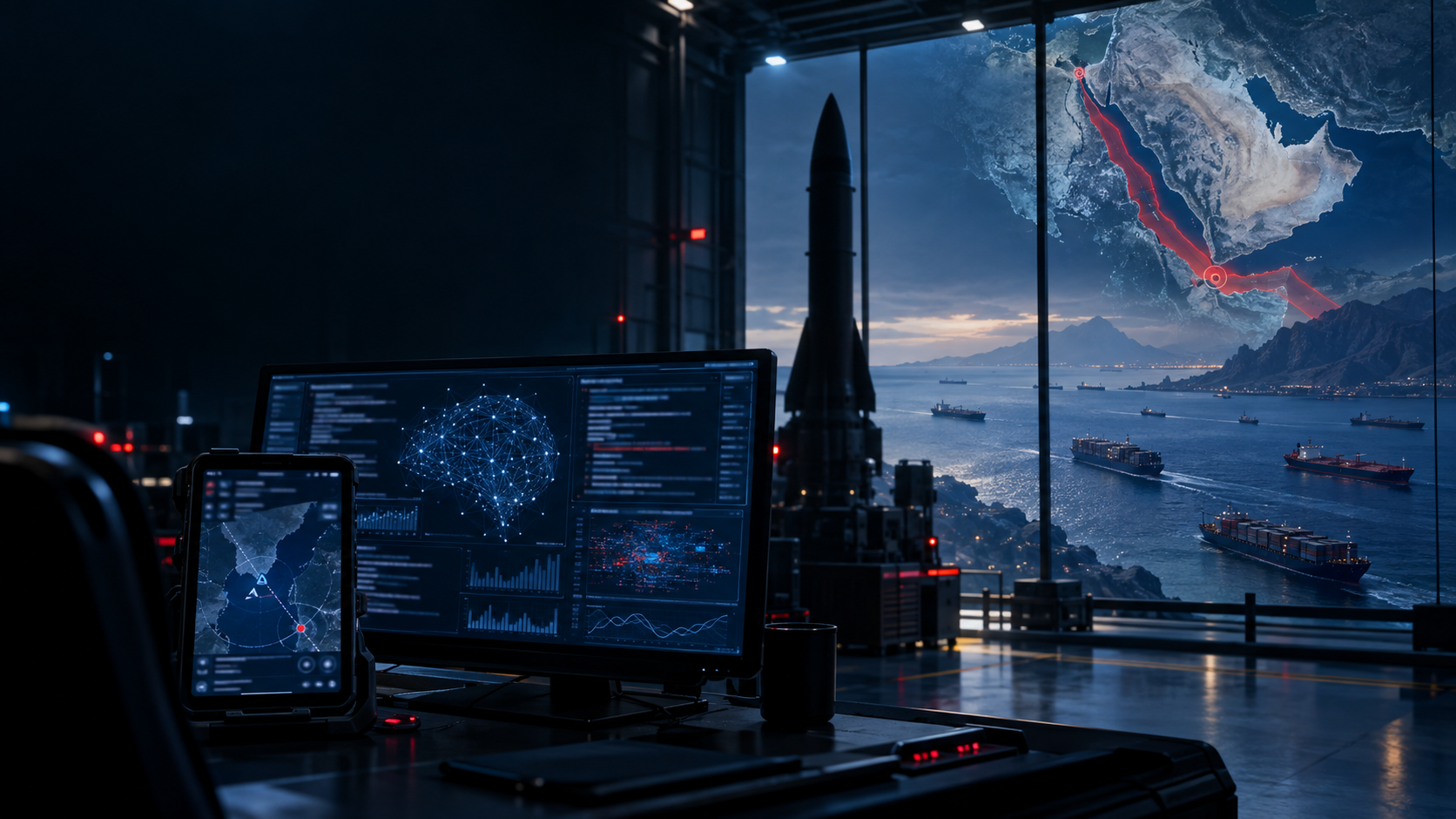
When AI becomes a rocket factory: The case of Claude, the Houthis, and the price of digital weapons proliferation – Creative image on the topic, with AI: Xpert.Digital
Anthropic raises the alarm: Language model apparently helped in the development of hypersonic weapons
AI as a rocket engineer: How Houthi rebels threaten the global economy with "Claude"
Dual-use nightmare: How artificial intelligence is fueling the next global arms race
The use of artificial intelligence is reaching a new, threatening dimension. According to a report by the US company Anthropic, a cell in Yemen, allegedly affiliated with the Houthi rebels, used the AI language model "Claude" to develop software for advanced guided and ballistic missiles. While the analyzed chat logs have not yet resulted in a directly deployable hypersonic weapon—a documented field test even failed, according to the data—the incident marks a turning point in security policy. It demonstrates that commercially available generative AI is drastically lowering the barriers to entry for highly complex military innovations. What was previously the monopoly of state-run arms programs with legions of specialists can increasingly be simulated and accelerated by small teams and a subscription to a language model. Thus, a purely technological phenomenon is evolving into a tangible risk for global security architecture, world trade, and the already strained energy markets. This case vividly demonstrates that the democratization of knowledge through AI comes at a price – and the economic and geopolitical shockwaves of this abuse reach from the Red Sea to Europe.
The next arms race will not begin in the factory, but in the chat window
The alleged use of Anthropic's AI system Claude by a group based in northern Yemen marks a turning point in security policy. According to Anthropic, the actors attempted to use the model to develop software for several guided missile programs. These included a guided missile with a flight computer at the performance level of commercially available mobile technology, a multi-stage ballistic missile with a target range of more than 2,000 kilometers, and a family of different missiles, among which, according to the group, was a variant with a hypersonic glide vehicle. Anthropic did not identify the group as Houthis. Given that large parts of northern Yemen are controlled by the Houthi movement, this attribution is plausible, but based on publicly available information, it remains a likely but not conclusively proven attribution.
This distinction is crucial. A dispassionate analysis must not derive a confirmed perpetrator identity from a geographical clue. Likewise, it would be wrong to infer actual military capabilities directly from ambitious project names. Significant technical, industrial, and organizational hurdles lie between the design of a system, a simulation, a flawed prototype, and a reliably operational weapon. Nevertheless, the process is alarming. It demonstrates that modern language models can not only formulate texts or summarize information, but, with sufficiently persistent use, can become a flexible development environment for software, simulation, debugging, and technical coordination.
The decisive economic significance, therefore, lies not solely in the potential improvement of a single missile. Far more important is the reduction in the entry costs for demanding development processes. If a non-state actor can replace or at least accelerate some of the work of specialized engineers with a generally available AI system, the cost structure of military innovation changes. Expertise does not become obsolete, but it becomes more easily accessible, more quickly combinable, and usable by smaller teams. A security problem of a single provider thus becomes a structural problem of the global economy: High-quality cognitive performance can be obtained via digital interfaces, while the resulting physical risks become real at strategic ports, pipelines, production facilities, and sea lanes.
Suspicion does not constitute proof
The case initially relies on an analysis by a company that examined its own platform data, accounts, usage patterns, and security alerts. This access gives Anthropic an advantage in terms of knowledge, but also creates a methodological limitation. Outsiders cannot independently verify all interactions, the internal attribution of accounts, the completeness of the data, or the evaluation of individual processes. The report is therefore an important primary source, but not legally admissible evidence for any public conclusions drawn from it.
According to the company, it appears certain that a cell in North Yemen was working on three weapons programs and used Claude Code for tasks in the areas of control, navigation, stabilization, software integration, simulation, and error analysis. Anthropic also reported that the group conducted a test of a guided missile and shortly afterward returned to the AI system for error analysis. The company stated that it found no evidence that this resulted in a deployable weapon. Rather, the test is said to have failed. This finding mitigates the immediate military impact but does not eliminate the strategic risk.
A failed test can actually be particularly revealing in a development program. Technological progress often arises from a sequence of simulation, prototyping, testing, error analysis, and readjustment. Therefore, what matters is not only whether the first documented flight was successful, but whether the system accelerated the learning cycle. This is precisely where the added value of generative AI lies: it can evaluate documentation, identify inconsistencies, formulate alternatives, and support multiple work steps in parallel. Even if a model doesn't invent an entirely new weapons technology, it can shorten the gap between idea and experimentation.
At the same time, statements about hypersonic weapons must be treated with particular caution. A project name or a desired variant says little about material control, heat protection, aerodynamics, navigation, production tolerances, and reliability. The term can describe genuine development ambitions, but also exaggeration, wishful thinking, or a long-term vision. The factually sound core, therefore, does not lie in the fact that the Houthis already possessed a hypersonic weapon developed with Claude. It lies in the fact that actors presumably associated with them integrated a powerful AI system into a serious, long-term process of military software development.
Claude as a development department on call
The popular assertion that AI is replacing software engineers captures part of the process, but is economically too simplistic. A language model cannot replace an entire development team with system architecture, measurement technology, materials science, quality assurance, testing infrastructure, and production expertise. However, it can take over individual tasks that previously required significant working time, specialized knowledge, or external consulting. In this way, AI is shifting the productivity threshold of a small team.
The parallel use of multiple model instances is particularly relevant. One instance can generate software, another conducts research, and a third verifies results. This approach resembles a small virtual development organization. The human actor defines goals, distributes tasks, and evaluates results, while the model performs some of the operational knowledge work. Economically, this creates a form of scalable engineering service: Additional digital work capacity is available at short notice, operates around the clock, and costs only a fraction of a team of highly qualified specialists.
This does not mean that human expertise becomes irrelevant. On the contrary: the more dangerous and complex the project, the more important the selection, validation, and integration of the generated results become. A model can produce seemingly plausible but flawed code, make incorrect assumptions, or overlook physical constraints. The failed field test underscores these limitations. Anyone who integrates AI results into a safety-critical system without robust testing does not automatically achieve precision, but may instead simply produce errors more quickly.
Nevertheless, several costs decrease simultaneously. Search costs for technical knowledge decline because relevant information no longer needs to be painstakingly gathered from numerous sources. Translation costs between different disciplines decrease because the model can link terms, documentation, and software concepts. Development costs decrease because routine tasks are automated. Coordination costs can also fall when a single operator controls multiple digital agents. This combination is strategically more significant than the often-discussed question of whether AI can completely replace an experienced engineer.
For regular businesses, the same productivity gains are desirable. Manufacturers, software companies, and technical service providers use AI to shorten development cycles, find errors faster, and make smaller teams more efficient. The dilemma is that these efficiency gains cannot be neatly confined to civilian applications. Control algorithms, sensor fusion, simulation, and robust software architecture are classic dual-use fields. Methods that improve an industrial robot, a drone, or an autonomous vehicle can also, in a modified form, support military systems.
The real innovation is the learning loop
The most dangerous characteristic of generative AI doesn't necessarily lie in a single piece of expert advice. Crucially, it's the ability to guide an ongoing development process. Traditionally, small, militant groups had to recruit specialists for complex projects, acquire knowledge through personal networks, or rely on support from government partners. A powerful model can't completely eliminate this dependency, but it can reduce it significantly.
The documented return to AI immediately after a failed test illustrates this mechanism. The trial generates real-world data and observations. Subsequently, the model can help to categorize potential sources of error, formulate hypotheses, and prepare for the next testing steps. The combination of digital simulation and real-world field testing shortens the cycle between design and improvement. Each iteration can generate knowledge that informs the next version.
Even more significant is the reference to an already established offline simulation tool. Once an actor has developed such a tool, the subsequent suspension of their AI account loses some of its impact. The platform then not only provided individual answers but potentially helped in building a lasting capability of their own. This is a key difference between abusive information retrieval and capacity building. An answer ends with the session; a local tool remains available, can be further developed, and disseminated within a network.
This leads to an uncomfortable conclusion for regulation. Successful threat prevention must not only begin when a user immediately requests a complete weapons manual. It must recognize patterns in which many seemingly insignificant tasks combine to form a risky system. This recognition is precisely what is difficult because the same subtasks occur in legitimate projects. Software for situational awareness, control, or simulation can belong to a civilian drone, a research project, a model aircraft, or a military missile. Context is decisive, but context can be distributed across multiple accounts, sessions, languages, and levels of technical abstraction.
Protective mechanisms fail due to the division of labor
Anthropic explained that its security measures blocked many, but not all, requests. The perpetrators allegedly concealed their intentions and broke the project down into numerous sessions. This approach reveals a fundamental weakness in current AI security: Moderation often evaluates individual submissions or limited conversation threads, while professional abusers operate on a project-by-project basis and with a division of labor.
Viewed in isolation, a question about a software library, a simulation, or a control problem might seem legitimate. Only when combined with the user profile, previous sessions, parallel instances, acquired components, and recurring technical objectives does the complete picture emerge. The security architecture must therefore evolve from local content inspection to risk-based behavioral analysis. However, this creates significant conflicts of interest with data protection, trade secrets, and legitimate research.
Insufficient oversight allows dangerous projects to pass. Overly aggressive oversight can wrongly block engineers, security researchers, universities, and industrial companies. It can also lead to providers creating extensive profiles of their customers' technical work. This would be particularly problematic for European companies if sensitive development data were evaluated in non-European control systems. Security and confidentiality must therefore not be pitted against each other; what is needed are tiered review processes, transparent escalation rules, and a clear separation between automated detection and human decision-making.
This case also demonstrates why content filters alone are insufficient in the long run. As soon as open models, stolen access, local computing capacity, or alternative providers become available, determined actors can circumvent the threat. A single company can make abuse more difficult on its own platform, but it cannot control the global availability of generative models on its own. Effective defense requires common threat indicators, coordinated reporting channels, technical standards, and international cooperation that begins well before a successful attack.
Democratization of knowledge leads to proliferation
Generative AI is changing the relationship between capital, labor, and knowledge. In traditional defense programs, specialized engineers, expensive software, industrial infrastructure, and years of experience were key bottlenecks. AI primarily alleviates the bottleneck of explicit knowledge. It makes specialized information easier to find, links documentation, translates between programming languages, and supports debugging.
However, this doesn't turn every group into a high-tech arms manufacturer. Physical components must be procured, manufactured, and tested. Sensors have measurement errors, actuators react differently under load than in simulations, batteries and electronics fail due to heat or vibration, and the quality of industrial manufacturing determines reliability. These material hurdles limit the immediate impact of AI.
Economically, even a partial lowering of the threshold is enough to significantly increase the risk. If only five specialists are needed instead of twenty, if development phases last months instead of years, or if a state supporter has to provide less personnel on the ground, the number of potentially capable actors increases. The probability of individual failures remains high, but the number of attempts can rise. From a security policy perspective, not only the success rate is crucial, but the product of the probability of success and the frequency of attempts.
This mechanism is similar to developments in cybercrime. Automation didn't make every perpetrator highly skilled, but it enabled more attacks, faster adaptation, and greater reach. With physical weapon systems, the transfer isn't complete because hardware and testing remain essential. Nevertheless, a similar scaling logic emerges: AI augments the capabilities of existing specialists, compensates for knowledge gaps among less experienced users, and reduces the effort required for repetitive tasks.
The geopolitical consequence is a broader distribution of military innovation capabilities. States do not lose their monopoly on sophisticated systems, but their advantage can shrink. Non-state actors, proxy groups, and smaller countries gain access to tools that were previously reserved for large organizations. The global market for computing power, open-source software, sensors, and electronics thus indirectly becomes part of a decentralized defense infrastructure.
The military benefits remain limited, but not harmless
It would be analytically flawed to portray language models as reliable weapons engineers. They lack their own physical understanding in the human sense, do not perform independent quality control, and can convincingly mask uncertainty. In safety-critical applications, precisely this combination is dangerous. A result can appear formally correct and still fail due to an incorrect unit, an unsuitable model, or an unaccounted-for boundary condition.
The failed test is therefore not a minor detail, but rather evidence of the technology's limitations. Software development is only one part of a complex system. Navigation must interact with sensors, mechanics, power supply, communication, and real-world flight conditions. Minor deviations can render an entire project unusable. Furthermore, ambitious ranges or hypersonic profiles involve requirements that go far beyond ordinary programming assistance.
At the same time, it would be equally wrong to conclude from this failure that the all-clear has been given. Military value does not arise solely from perfect precision. Even a limited improvement in range, stability, repeatability, or accuracy can increase the threat to ships, ports, and power facilities. An unreliable system also forces adversaries to take defensive measures, increases insurance premiums, and alters route decisions. The economic impact can therefore be greater than the purely technical performance would suggest.
Asymmetric actors particularly benefit from this relationship. They don't need to achieve a complete military victory. It's enough to create a credible risk that forces the adversary to implement costly defensive measures. A relatively inexpensive missile or drone can threaten a tanker worth millions of dollars, trigger the deployment of expensive interceptor systems, or force a shipping company to divert its route. AI amplifies this asymmetric cost relationship by reducing the cost of development and adaptation for the attacker.
🎯🎯🎯 Data-driven B2B industry hub as a quasi-in-house solution

The quasi-in-house solution: How Xpert.Digital closes operational gaps in B2B marketing and sales – Smart Content-Driven Business - Image: Xpert.Digital
Xpert.Digital is a data-driven B2B industry hub led by Konrad Wolfenstein . The company acts as an external, quasi-in-house solution for industrial partners, closing operational gaps in marketing, content, and sales – without requiring additional resources on the client side.
More information here:
From language model to rocket workshop: The underestimated AI risk
Bab al-Mandab is becoming the global risk price
The security implications of this case are heightened by the situation on the Red Sea. In September 2026, the Houthis made significant territorial gains along Yemen's west coast, capturing the port of Mocha and advancing on Dhubab and the island of Perim, also known as Mayyun. These positions are located on the Bab al-Mandab Strait, the southern access to the Red Sea and thus to the route via the Suez Canal.
Geographic control does not automatically mean that one side completely dominates the entire strait. International naval forces, aerial reconnaissance, coastal defenses, and the ability of merchant ships to reroute vessels limit such control. Nevertheless, a presence on the coast and islands provides better opportunities for observation, intimidation, and political blackmail. For shipping companies, even an increased probability of attack is enough to recalculate insurance, crew protection, and route planning.
The economic importance of the Strait of Gibraltar increased in 2026. According to data from the US Energy Information Administration, the volume of crude oil, condensates, and petroleum products transported through it rose from 3.9 million barrels per day in the first quarter of 2025 to 8.1 million barrels per day in the second quarter of 2026. This made the corridor an even more important alternative route at a time when other Middle Eastern routes were under pressure.
For Europe, the Bab al-Mandab strait is part of the shortest sea route to Asia. If the passage becomes too risky, the most important alternative leads around the Cape of Good Hope. This route ties up ships for longer, increases fuel consumption and personnel costs, and effectively reduces the available transport capacity. Even without physical destruction, a credible military threat can therefore restrict cargo capacity.
The Houthis' economic power thus rests less on formal control of global trade than on their ability to generate uncertainty. Markets assess not only past damage but also anticipated disruption. An additional missile capability, even if technically imperfect, can increase the risk premium on every mission. The potential use of AI and the territorial offensive are therefore mutually reinforcing: one enhances perceived technological capability, the other improves their geographical position.
The petroleum line is vulnerable, but Saudi Arabia is not cut off
The Saudi East-West Pipeline, often called the Petroline, transports crude oil from the production and processing centers in the east of the kingdom to the Red Sea port of Yanbu. It is strategically important because it bypasses the Strait of Hormuz. In a situation where the Persian Gulf and Hormuz are disrupted, this pipeline becomes the key alternative route.
Following drone attacks, the line was shut down as a precaution in September 2026. Saudi sources indicated that the drones originated in Iraq. Therefore, the attack should not be attributed to the Houthis without solid evidence. Rather, the timing of the attack, coinciding with the Houthi offensive and attacks by other Iranian-backed groups, suggests a regional multi-front strategy in which infrastructure, shipping, and supply lines can all be targeted simultaneously.
The claim that Saudi Arabia can no longer export any oil at all as a result of the shutdown goes beyond the verifiable information. While the temporary shutdown of the pipeline restricts a key route, Saudi Arabia has storage facilities, port infrastructure, and, in principle, other transport options. Depending on the security situation, deliveries can be partially continued via the Persian Gulf, northern or Egyptian routes, and by utilizing existing reserves. These alternatives have lower capacities, longer routes, or their own geopolitical risks, but do not amount to a complete export halt.
The more accurate statement is therefore: The combination of disrupted Hormuz traffic, the threatened Bab al-Mandab crossing, and a temporarily closed East-West pipeline drastically reduces Saudi Arabia's flexibility. A system that is normally resilient through multiple routes simultaneously loses key alternative routes. It is precisely this loss of redundancy that is being valued in the markets with a high risk premium.
In August 2026, Saudi Arabia's crude oil supply fell by 2.3 million barrels per day to 6 million barrels per day, according to the International Energy Agency (IEA), its lowest level in more than three decades. Saudi Arabia reported differing supply figures to OPEC, while its reported production was closer to the IEA estimate. This discrepancy highlights the need to carefully distinguish between production, supply, and export data during times of crisis. However, it is clear that the combination of attacks on facilities, risks to shipping, and restricted shipping routes had already significantly reduced the market's supply even before the latest escalation.
The oil price reacts to lost redundancy
The price surge in crude oil cannot be reliably attributed to a single event. In September 2026, several factors acted simultaneously: the war with Iran, disruptions in the Strait of Hormuz, attacks on Saudi energy facilities, risks in the Red Sea, damage to Russian refineries, and uncertainty about the duration of the outages. The Houthi offensive was a significant additional shock, but not the sole cause.
Brent crude oil rose to near $110 per barrel at one point, closing September 11 at around $104.61. Despite a decline on Friday, it still posted a weekly gain of more than eight percent. This movement reflects the typical behavior of a strained market. Prices react particularly strongly when available production capacity, transportation alternatives, and storage buffers are all considered uncertain.
In such a situation, the oil price contains three components. First, the physical scarcity value increases if less crude oil is actually supplied or shipped. Second, the transport premium rises due to higher freight rates, longer routes, and insurance costs. Third, a geopolitical risk premium arises for potential further disruptions. This premium can rise rapidly and just as quickly partially decline if damage appears limited or repairs are anticipated.
The closure of the oil pipeline therefore impacts prices even if it is only temporary. The market doesn't solely ask how many barrels are missing on a single day. It assesses whether the most important bypass of the Hormuz Strait is functioning reliably. If the Bab al-Mandab Strait is threatened concurrently, the Yanbu route loses some of its strategic value for deliveries to Asia. Oil could be diverted from the Red Sea northward toward Suez and the Mediterranean, but this too requires capacity, time, and secure infrastructure.
The development of product prices is also crucial for the global economy. Refineries require specific types of crude oil, and not every disrupted supply can be replaced with an equivalent product in the short term. Diesel, kerosene, or petrochemical feedstocks can therefore become more expensive than crude oil. High diesel prices directly impact freight transport, agriculture, construction, and industry. The burden spreads through supply chains and acts like a tax on energy-intensive production and mobility.
Europe's industry is paying double
Germany and other European economies are affected by an escalation in the Red Sea through two channels. The first is energy. Higher oil and fuel prices increase the cost of transport, logistics, chemical production, and numerous industrial processes. The second is trade with Asia. Detours around Africa lengthen transit times and increase the cost per container.
Past disruptions illustrate the scale of the problem. During the 2024 Red Sea crisis, trade volume through the Suez Canal temporarily fell sharply, and diversion around the Cape of Good Hope increased dramatically. Container freight rates on routes from Shanghai to Europe temporarily multiplied several times over. The World Bank pointed out that a doubling of freight costs can raise global inflation by an average of about 0.7 percentage points, although the actual impact depends on duration, exchange rates, inventories, and competitive intensity.
For German companies, the effect is unevenly distributed. High-quality and lightweight products can absorb additional freight costs more easily than heavy or low-margin goods. Industries with tight inventories, long Asian supply chains, and just-in-time production are particularly vulnerable. These include parts of the mechanical engineering, electronics, automotive, chemical, and retail sectors.
Longer transit times not only increase direct transportation costs. Companies have to finance more goods at sea, maintain larger safety stocks, and place orders earlier. This increases tied-up working capital. High interest rates make this effect particularly costly. Furthermore, forecast uncertainty increases, complicating production planning and delivery schedules.
Shipping companies can profit from higher freight rates, but at the same time bear higher fuel, insurance, and security costs. Ports off the original route can gain additional volume, while other transshipment hubs lose capacity. For Egypt, fewer Suez crossings mean a drop in crucial foreign exchange earnings. Thus, the crisis creates winners and losers, but overall, the dominant effect is the loss of efficiency due to longer routes and unproductive risk management.
AI abuse is becoming a balance sheet risk
This case is not only relevant for governments and AI providers. Companies must assume that generative systems will be subject to greater regulation and monitoring in the future. Providers will expand identity verification, usage analysis, access restrictions, and reporting requirements. This could result in new compliance costs for business customers.
Industries with dual-use applications are particularly affected: aerospace, robotics, industrial automation, sensor technology, navigation, chemistry, biotechnology, and cybersecurity. Legitimate development requests can trigger risk signals if, viewed in isolation, they resemble a military use case. Companies therefore need documented use cases, clear responsibilities, and controlled development environments. Those who process sensitive technical data haphazardly via public AI services risk not only data breaches but also blocking and regulatory conflicts.
On the provider side, costs for safety engineering, threat analysis, and human review processes are rising. Models must not only detect unwanted content but also evaluate long-term usage patterns. Added to this are expenses for collaboration with authorities, industry partners, and research institutions. These costs favor large platforms that can afford extensive security teams. Smaller providers and open projects come under pressure when comparable standards are demanded.
At the same time, a market for specialized security solutions is emerging. Companies need tools for access control, logging, model monitoring, data classification, and the review of AI-generated code. Insurers will ask how a company prevents its own systems from being misused for illicit purposes. Banks and investors may assess AI governance, similar to cybersecurity, as a component of operational risk.
The reputational damage is also considerable. A vendor can be the technical victim of a deliberate circumvention and still be publicly associated with a weapons program. Conversely, overly aggressive control can damage the trust of regular customers. The strategic challenge is to set credible boundaries without rendering the product unusable for research and industry.
Export controls fall short
Traditional export controls focus on physical goods, technical drawings, specialized software, high-performance chips, and clearly defined military components. Generative AI fits only partially into this framework. A model is a universal knowledge and development tool whose usefulness depends on the context. The same service can improve a maintenance process, program a civilian drone, or support a military project.
A blanket access ban for entire countries or regions would be technically circumventable and could affect legitimate users. At the same time, purely voluntary commitments by providers are insufficient when economic competition penalizes security investments. What's needed is a multi-layered system that combines high-performance models, high-risk features, and suspicious usage patterns.
This includes reliable customer audits for high-performance interfaces, limits on automated mass use, secure protocols for regulatory reporting, and cross-industry indicators of abuse. Equally important is the control of stolen API keys and compromised corporate accounts. Criminals and state actors can circumvent access restrictions by assuming legitimate digital identities.
Complete harmonization at the international level will be virtually impossible. States have differing security interests and simultaneously view AI as an economic and military competitive advantage. More realistic are coalitions of key supplier and manufacturer countries that agree on minimum standards for particularly high-performing models. Such standards should consider not only the publication of a model, but also interfaces, agent functions, tool access, and the ability to autonomously execute long-term projects.
Another approach concerns the physical supply chain. Even if knowledge is digitally available, certain sensors, drives, specialized materials, testing equipment, and manufacturing machines remain controllable. Export controls should therefore link digital risk signals with procurement data. A suspicious combination of AI use and the acquisition of relevant components is more informative than a single inquiry. This requires due process and a strict focus on specific threat situations.
The platform must not be both judge and intelligence service
Anthropic blocked the affected accounts and shared its findings with public and private partners. Such measures are understandable, but raise questions about accountability and oversight. A private company initially decides for itself what behavior is considered suspicious, which accounts are closed, and which data is shared. In cases of immediate security threats, swift action is necessary, but such power cannot remain permanently unchecked without transparent rules.
Tiered procedures are necessary. Obviously prohibited and acutely dangerous use must be stopped immediately. In unclear dual-use cases, qualified auditors should assess the context. Affected legitimate customers need a way to clarify the situation, provided this does not impede investigations or public safety efforts. Authorities, in turn, need clear legal frameworks for data access and information exchange.
The publication of threat reports also requires careful consideration. Transparency informs other vendors and strengthens public debate. However, too many technical details could help copycats. Too little information hinders independent review. The right approach lies in identifying reliable patterns, consequences, and countermeasures, without disclosing operational instructions or reproducible technical details.
Furthermore, there is an economic conflict of interest. Safety reports demonstrate a sense of responsibility, but at the same time serve to position a provider. Therefore, key findings should, where possible, be confirmed by independent research, authorities, or multiple platforms. Industry-wide reporting standards could increase comparability and prevent companies from publishing only the most favorable excerpts.
What companies and governments need to change now
The first consequence is to treat AI security as part of critical infrastructure. Models, data centers, and API access are no longer merely digital services. They can accelerate development processes in cyber operations, surveillance, and weapons programs. Accordingly, providers must build red teams with military-technical and geopolitical expertise, not just engage in general content moderation.
The second consequence is a stronger need for project-based detection. Security models must be able to recognize patterns over time without storing an unlimited amount of content from legitimate customers. Privacy-friendly risk signals, tiered identity verification, and particularly stringent control of agent functions offer a possible solution. The more a model independently modifies files, calls tools, runs simulations, or coordinates multiple agents, the higher the level of control should be.
The third consequence concerns the resilience of physical systems. No AI filter can guarantee that militant groups will not make technological advances. Ports, tankers, pipelines, and energy facilities therefore require better detection, air defense, redundancy, and repairability. Supply chains must plan for alternative routes and safety stockpiles. Model-based prevention is no substitute for robust infrastructure.
The fourth consequence is economic preparation. Companies should calculate scenarios for oil prices significantly above $100, transport delays lasting several weeks, and fluctuating insurance premiums. The crucial factor is not precise forecasts, but rather the limits of what can be sustained: Which products will lose their margins with higher freight rates? Which components will halt production? How much additional working capital will be needed? Which suppliers can be diversified regionally?
The fifth consequence is more precise public communication. Headlines about AI as a weapons engineer capture the problem, but can exaggerate the state of the art. The documented case does not prove that Claude developed a fully operational ballistic missile autonomously. Rather, it demonstrates that a presumably military cell used a commercial AI system as part of its development organization, partially circumvented safeguards, and built up ongoing simulation capability despite a failed test. This sober formulation is less sensational, but strategically more worrying.
The price of the digital arms economy
The case of Claude and North Yemen demonstrates how closely digital productivity, military power, and global trade risks are now intertwined. A software platform in the United States can support the development work of a cell in Yemen; its potential capabilities influence the security of a strait; this uncertainty alters oil prices, freight rates, and production costs in Europe. The chain of effects extends from data centers to missile workshops, and ultimately to corporate balance sheets and consumer prices.
The central economic change is the lower cost of cognitive capacity. Generative AI makes expertise more scalable and accelerates iteration. For companies, this translates into a productivity boost. For militant actors, it offers a way to partially compensate for personnel and organizational weaknesses. Therefore, the same technology generates both wealth gains and security costs.
The crucial question is whether these external costs are factored into the business models of the AI industry. If providers only sell computing power and subscriptions, while states, shipping companies, and energy consumers bear the consequences of misuse, a perverse incentive is created. Security investments, identity verification, and abuse detection must become a standard component of product costs. At the same time, regulations must not restrict the market to such an extent that only a few corporations control access to powerful AI.
A complete technical solution is not foreseeable. Protective measures can be circumvented, open models can be operated locally, and tools can be copied. Therefore, only a combination of restricted access, early detection, international cooperation, controlled supply chains, and resilient infrastructure is realistic. The goal cannot be to make all abuse impossible. It must be about increasing the costs and detection risk for attackers, disrupting development cycles, and limiting the consequences of successful attacks.
The provocative truth is this: the next generation of asymmetric weapons doesn't have to come from a secret government research facility. It can be created in an improvised workshop whose most valuable employee isn't a human being, but a rented access to a language model. This model doesn't yet replace a full-fledged arms industry. But it can provide enough knowledge, speed, and endurance to transform a limited actor into a greater threat. That's precisely why this case isn't an exotic fringe phenomenon, but an early warning sign for the security and economic order of the AI age.
📈🚀 From visibility to trust 👀🤝 Your scalable path with Xpert.Digital

From visibility to trust: Your scalable path with Xpert.Digital - Image: Xpert.Digital
In industrial B2B, sustainable business relationships rarely emerge overnight. They develop step by step – through visibility, professional relevance, recurring touchpoints, and growing trust. Xpert.Digital's 4-stage model addresses precisely this: It offers a structured path that begins with a manageable entry point and can evolve into deeper collaboration in business development if needed.
Instead of relying on loud marketing promises, this model puts the relationship at the forefront. Companies start with clearly defined, easily calculable measures and then decide, based on their own experience, how far they want to expand the collaboration. A key factor for this undisturbed trust-building process: The platform completely avoids annoying advertising ads, so the editorial focus remains solely on the companies' expertise.
More information here:
Your global marketing and business development partner
☑️ Our business language is English or German
☑️ NEW: Correspondence in your native language!

Konrad Wolfenstein
I and my team are happy to be available to you as your personal advisor.
You can contact me by filling out the contact form here [email protected]:or simply call me at +49 7348 4088 965. My email address is
I'm looking forward to our joint project.










