
The global automation race in robotics – What is the extent of the global robotics boom?

Available in 27 languages 📢
Prefer Xpert.Digital on GoogleⓘPublished on: September 11, 2025 / Updated on: September 11, 2025 – Author: Konrad Wolfenstein
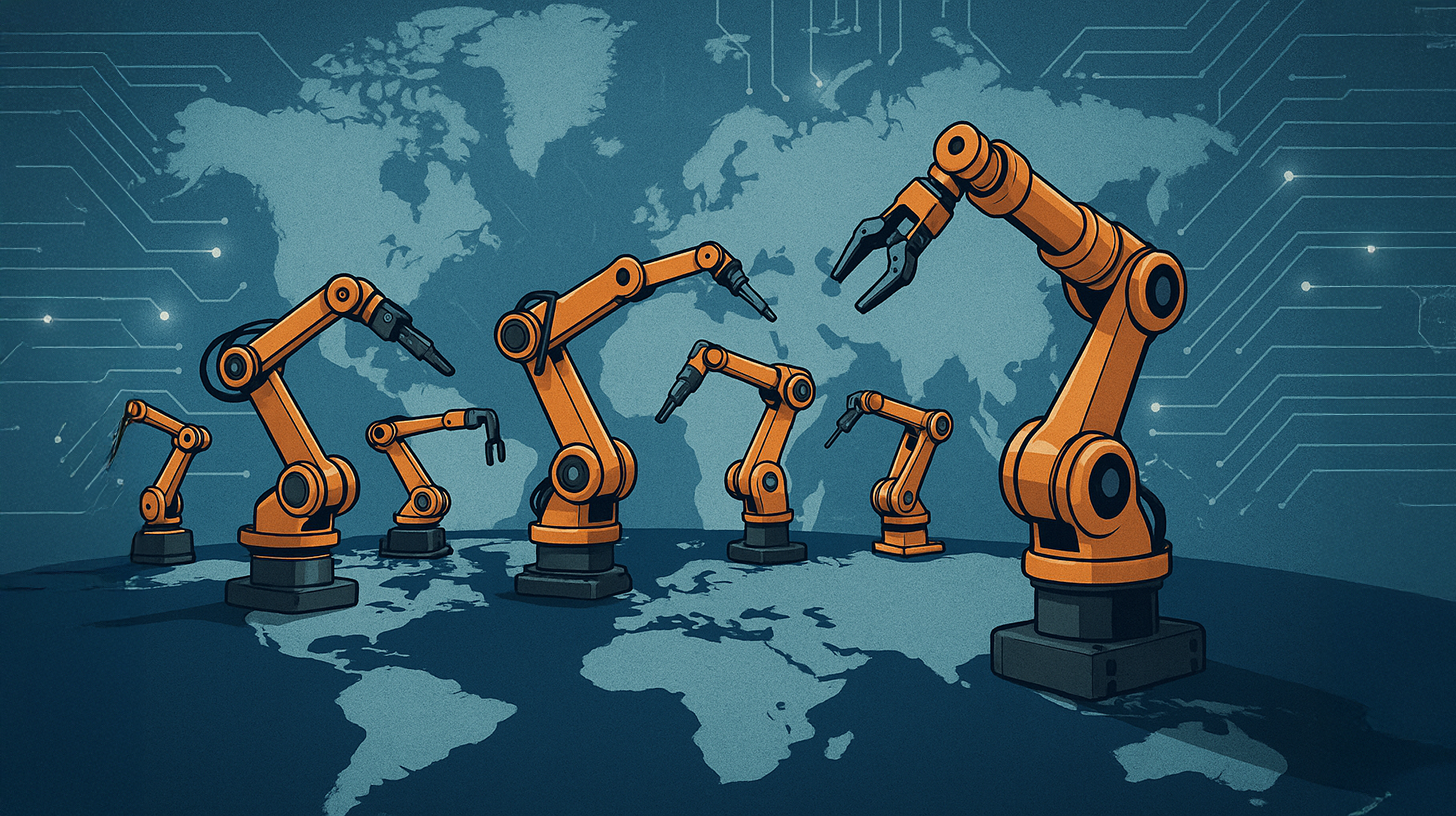
The global automation race in robotics – What is the extent of the global robotics boom? – Image: Xpert.Digital
Hidden champion? Why Germany is among the world's best in robotics
The robot explosion is here: Why over 4 million machines are already changing our world
The world is experiencing a quiet but rapid revolution, driven by steel, silicon, and artificial intelligence. The global automation race has reached a new level: with over 4.28 million operational industrial robots, a historic record was set in 2023 – a doubling in just a decade. This exponential growth, however, is not a global equilibrium, but a race between continents in which the balance of power is being redefined.
Asia is unchallenged at the forefront of this race, accounting for 70 percent of all new installations. China, in particular, has established itself as the undisputed robotics superpower with a market share of 51 percent, supported by massive government investments amounting to billions. Meanwhile, Europe and the USA are positioning themselves as key competitors. Europe, led by automation champion Germany, which boasts the third-highest robot density worldwide, is investing heavily in research, while the USA is significantly increasing its spending on AI and robotics.
But this boom has long since moved beyond the traditional factory floors of the automotive and electronics industries. Robots are conquering new sectors such as logistics, healthcare, and pharmaceuticals, where they optimize supply chains and relieve the burden on nursing staff. Driven by advances in artificial intelligence, we are also on the cusp of the next evolutionary stage: humanoid robots and collaborative "cobots" promise to fundamentally change the interaction between humans and machines and create a trillion-dollar market. The global automation race is in full swing and is shaping not only today's industry but the entire world of work and life tomorrow.
Suitable for:

Robot race of the superpowers: One nation is pulling ahead of everyone else – and it's not the USA
The global robotics industry is experiencing unprecedented growth. The global operational stock of industrial robots reached a new record in 2023 with over 4.28 million units, representing a 10 percent increase. Annual installations exceeded half a million for the third consecutive year, reaching 541,302 robots. These figures underscore that the number of industrial robots installed worldwide has more than doubled in the last ten years.
How is growth distributed regionally across the different continents?
Asia continues to dominate the global automation race with impressive clarity. 70 percent of all newly installed robots in 2023 were installed in Asia. Europe follows with 17 percent of global installations, while the Americas account for 10 percent. This regional distribution reflects the different industrial strategies and investment priorities of the various world regions.
What role does China play as a robotics giant?
China has established itself as the undisputed world leader in robotics. In 2023, the country installed a total of 276,288 industrial robots, representing a market share of 51 percent of global demand. The operational stock in 2023 was just under 1.8 million units. This makes China the first and only country in the world to possess such a large number of industrial robots. The success of Chinese manufacturers is particularly noteworthy: their market share increased from 30 percent in 2020 to 47 percent in 2023.
How is China strategically investing in the future of robotics?
China is pursuing a comprehensive national strategy for robotics development. The National Development and Reform Commission has established a publicly funded venture capital fund for robotics, artificial intelligence, and cutting-edge innovations. The fund aims to raise a total of €128 billion over a 20-year period. The current program, the "Key Special Program on Intelligent Robots," was updated in July 2024 with a budget of approximately US$45.2 million. These massive investments aim to make China a world leader in robotics technology.
What position does the USA occupy in the global robotics competition?
The US significantly increased its investments in robotics and artificial intelligence under the Biden administration. The 2025 budget allocates $202 billion for research and development, including substantial funding for AI research. The National Science Foundation receives $729 million for AI research and development, while DARPA has $310 million available for the AI Forward Initiative. The American market installed a total of 55,389 robot units in 2023. The US ranks tenth globally in robot density, with 285 robots per 10,000 employees.
How is Europe positioning itself in the international robotics race?
Europe occupies a significant position in the global robotics landscape, even though the region lags behind Asia. The European Union boasts a robot density of 208 units per 10,000 employees. Germany leads the European market with 28,355 installed units in 2023. Italy follows as the second-largest European market with 10,412 units, while France recorded 6,386 installed units. The EU is making targeted investments in robotics research: Horizon Europe is providing €180 million for projects in the fields of artificial intelligence and robotics.
What is Germany's significance in the global robotics context?
Germany maintains its position as one of the world's leading automated economies. With a robot density of 415 industrial robots per 10,000 employees, Germany ranks third globally, behind only South Korea with 1,012 units and Singapore with 730 units. Germany is the largest market in Europe and the only European economy among the top five markets worldwide. Robot density in Germany has increased by an average of five percent per year since 2017.
Which new economic sectors benefit from the use of robotics?
Robotics is expanding into entirely new industries and creating innovative business areas. Its use is growing particularly strongly in the logistics sector, where 62.5 percent of the companies surveyed expect significant growth. The pharmaceutical industry also shows great potential with 29.9 percent expected growth. Healthcare is considered a high-growth sector with 23.3 percent. Hospitals are already using autonomous mobile robots to transport medications, laboratory samples, and other essential supplies.
A new dimension of digital transformation with 'Managed AI' (Artificial Intelligence) - Platform & B2B Solution | Xpert Consulting

A new dimension of digital transformation with 'Managed AI' (Artificial Intelligence) – Platform & B2B Solution | Xpert Consulting - Image: Xpert.Digital
Here you will learn how your company can implement customized AI solutions quickly, securely, and without high entry barriers.
A Managed AI Platform is your all-round, worry-free package for artificial intelligence. Instead of dealing with complex technology, expensive infrastructure, and lengthy development processes, you receive a turnkey solution tailored to your needs from a specialized partner – often within a few days.
The key benefits at a glance:
⚡ Fast implementation: From idea to operational application in days, not months. We deliver practical solutions that create immediate value.
🔒 Maximum data security: Your sensitive data remains with you. We guarantee secure and compliant processing without sharing data with third parties.
💸 No financial risk: You only pay for results. High upfront investments in hardware, software, or personnel are completely eliminated.
🎯 Focus on your core business: Concentrate on what you do best. We handle the entire technical implementation, operation, and maintenance of your AI solution.
📈 Future-proof & Scalable: Your AI grows with you. We ensure ongoing optimization and scalability, and flexibly adapt the models to new requirements.
More about it here:
The great robotics race: Who will win the market, regions, and talent?
How is robotics revolutionizing healthcare?
The healthcare sector is undergoing a robotic revolution. Autonomous mobile robots are taking over transport tasks in hospitals, minimizing the risk of cross-contamination. They transport chemotherapy drugs, laboratory samples, and other critical materials, improving workflows and increasing patient safety. Robots allow healthcare professionals to focus on patient care instead of spending time on logistical tasks. The technology also addresses the shortage of skilled nursing staff by automating time-consuming activities.
What role does the logistics industry play in the evolution of robotics?
The logistics industry is undergoing a fundamental transformation driven by robotics and AI technologies. McKinsey predicts that more than 45 percent of logistics activities will be automated by 2030. The global market for autonomous mobile robots is growing at an annual rate of 23.7 percent and is expected to reach ten billion dollars by 2028. Companies like Sereact are developing AI-based robots specifically for logistics tasks, with "PickGPT" being the world's first Robotics Transformer robot capable of being instructed using natural language.
Suitable for:
What are the most important trends in humanoid robotics?
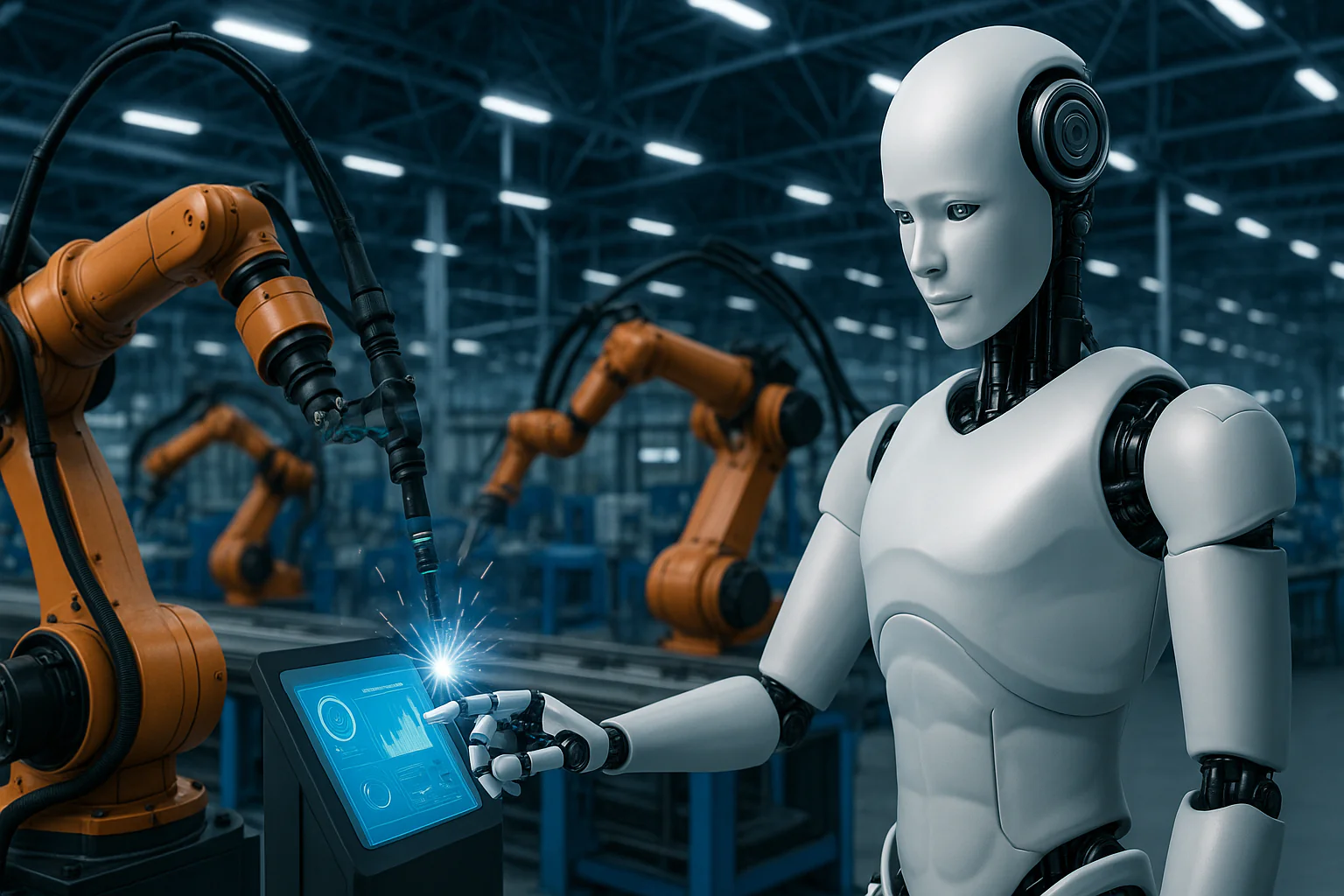
Humanoid robots are poised for unprecedented market growth. The global market was valued at $3.65 billion in 2024 and is projected to reach $86.39 billion by 2032, representing an annual growth rate of 48.5 percent. Goldman Sachs forecasts that the market will reach $38 billion by 2035. The most ambitious forecasts come from ARK Invest, with a maximum market potential of $24 trillion. Manufacturing costs are falling dramatically: from $250,000 today to a projected $20,000 per unit.
How is the market for collaborative robots developing?
Collaborative robots, also known as cobots, are experiencing exceptional growth. The global cobot market surpassed the one billion US dollar revenue mark in 2023. Shipments are projected to increase by 22 percent in 2024, with similar growth of over 20 percent annually until 2028. The market for collaborative manufacturing robots was valued at 121.7 million US dollars in 2024 and is expected to grow to 329.1 million US dollars by 2034, representing an annual growth rate of 10.5 percent. Other forecasts predict the cobot market will grow from 12.4 billion US dollars in 2023 to 23.8 billion US dollars in 2030.
What significance does artificial intelligence have for robotics?
Artificial intelligence is fundamentally transforming robotics and will take a decisive step from hype to practical application by 2025. AI enables robots to understand and autonomously execute complex tasks, rather than simply performing repetitive activities in controlled environments. Analytical AI helps process large amounts of data from robot sensors and react to unforeseen situations. Nvidia and other manufacturers are investing in the development of specialized hardware and software that simulate real-world environments and allow robots to train in virtual settings.
How is the industry distribution in robotics changing?
The industry distribution in robotics reveals interesting trends. The electrical and electronics industry leads with 137,000 newly installed robots in 2021. The traditionally strong automotive industry follows in second place with 119,000 units. Almost two-thirds of all industrial robots in the global electronics industry were installed in China alone. In the automotive industry, Europe installed a total of 23,000 industrial robots in 2024. The metal and mechanical engineering industries follow with a combined total of 62,000 robots purchased.
What market volume does service robotics achieve?
The service robotics market is experiencing impressive growth. Global revenue is projected to reach approximately US$36.97 billion in 2025. Commercial service robotics dominates, with a projected market volume of US$20.98 billion in 2025. The market is expected to exhibit an annual growth rate of 11.01 percent, reaching a volume of US$56.11 billion by 2029. Other forecasts predict the service robotics market will grow from US$47.13 billion in 2024 to US$220.44 billion by 2037.
How are regional robot densities developing worldwide?
Regional robot densities vary considerably. Asia has a robot density of 168 units per 10,000 manufacturing workers. Six Asian economies rank among the top 10 most automated countries: South Korea, Singapore, Japan, China, Hong Kong, and Taiwan. The European Union has a robot density of 208 units per 10,000 workers. North America reaches 188 units per 10,000 workers. The average global robot density has reached a historic high of 151 robots per 10,000 workers.
What challenges and opportunities will shape the future of robotics?
The robotics industry faces significant challenges and opportunities. The shortage of skilled workers, driven by an aging workforce, is accelerating the adoption of robots. Europe must overcome the massive gap between public funding and the enormous private investments in the US and China. Attractive tax incentives, targeted financing for startups, and simplified regulations are needed. The integration of various technologies such as AI, IoT, and 5G opens up new possibilities for advanced robot applications.
What is the forecast for global robotics growth?
Forecasts for global robotics growth are exceptionally optimistic. The total robotics market is projected to reach approximately US$46.29 billion in 2025 and grow to US$66.49 billion by 2029, representing an annual growth rate of 9.49 percent. China is expected to experience annual growth of 5-10 percent from the second half of 2024 through 2027. The US remains the largest single market, with expected sales of US$9.52 billion in 2025. These figures underscore that the global automation race has entered a new phase of exponential growth.
We are there for you - advice - planning - implementation - project management
☑️ SME support in strategy, consulting, planning and implementation
☑️ Creation or realignment of the AI strategy
☑️ Pioneer Business Development

Konrad Wolfenstein
I would be happy to serve as your personal advisor.
You can contact me by filling out the contact form below or simply call me on +49 7348 4088 965 (Munich) .
I'm looking forward to our joint project.
Write to me

Xpert.Digital - Konrad Wolfenstein
Xpert.Digital is a hub for industry with a focus on digitalization, mechanical engineering, logistics/intralogistics and photovoltaics.
With our 360° business development solution, we support well-known companies from new business to after sales.
Market intelligence, smarketing, marketing automation, content development, PR, mail campaigns, personalized social media and lead nurturing are part of our digital tools.
You can find out more at: www.xpert.digital - www.xpert.solar - www.xpert.plus
Keep in touch









