
Invest or perish: The brutal economics of logistics automation
Xpert pre-release

Available in 27 languages 📢
Prefer Xpert.Digital on GoogleⓘPublished on: January 8, 2026 / Updated on: January 8, 2026 – Author: Konrad Wolfenstein
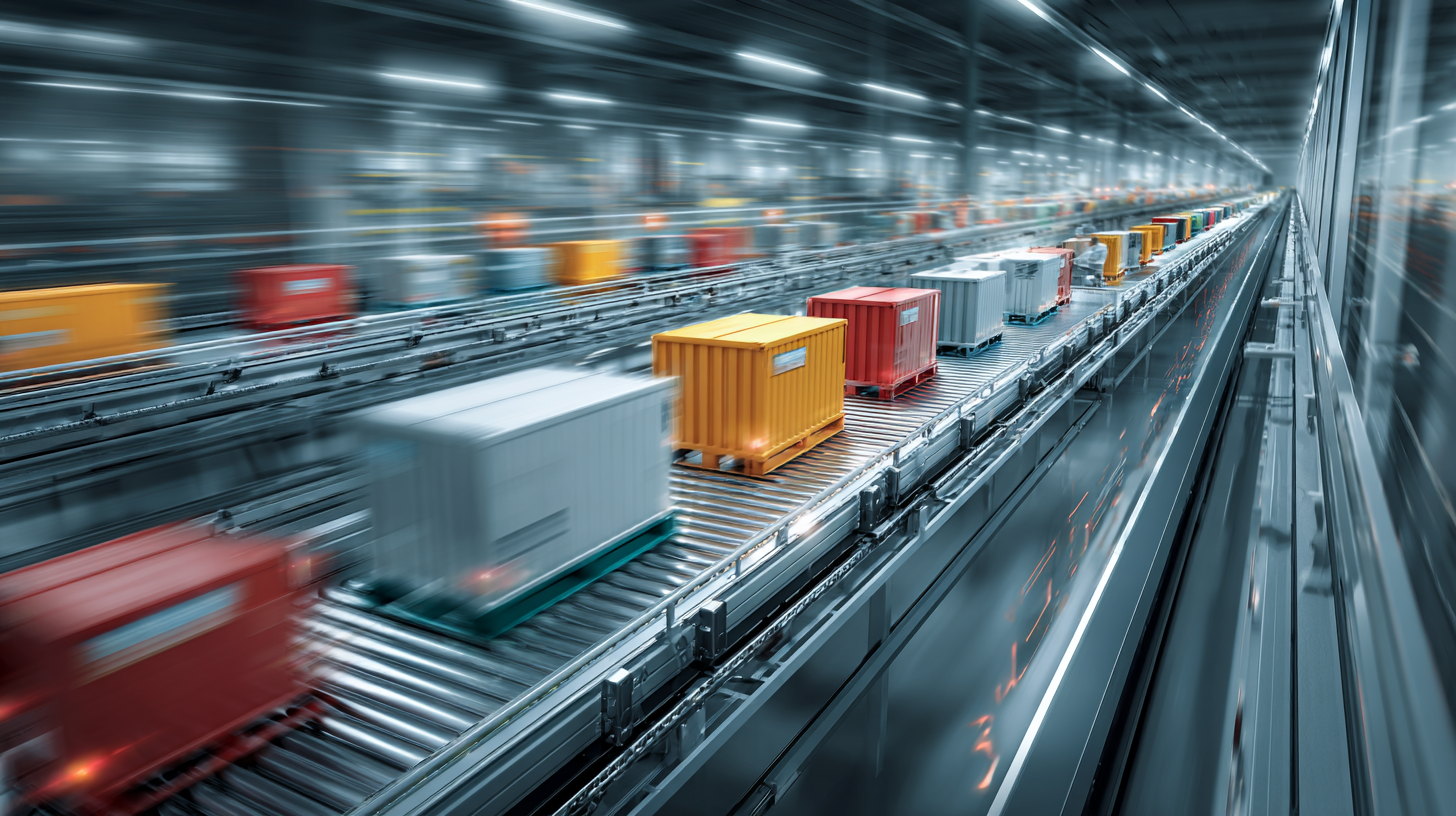
Invest or perish: The brutal economics of logistics automation – Image: Xpert.Digital
The silent revolution of logistics: Between efficiency frenzy and the disappearance of the human factor
The silent takeover: When algorithms replace the boss in the warehouse
The revolution in modern high-bay warehouses isn't arriving with fanfare, but rather on silent rubber wheels and in the form of invisible data streams. What was once the domain of backbreaking physical labor is rapidly transforming into a digital ecosystem in which humans are increasingly being reduced from active participants to mere spectators. Artificial intelligence, autonomous mobile robots (AMRs), and self-learning systems are no longer futuristic experiments, but a stark economic necessity in a market projected to grow to over US$137 billion by 2035.
But behind the glittering facades of increased efficiency and promises of lower hardware costs lies a fundamental paradigm shift. It's no longer just about machines lifting heavy loads – they are beginning to do the thinking. From the precise prediction of goods flows using predictive analytics to AI agents that autonomously manage supply bottlenecks: decision-making power is migrating from human managers to algorithms.
While companies still lament the shortage of skilled workers, they are already building the infrastructure for the "dark warehouse"—warehouses where the lights can remain permanently off because robots don't need eyes. This development raises pressing questions: How secure are these networked systems against cyberattacks? What does "human-robot collaboration" really mean for working conditions? And who ultimately benefits from the productivity gains when human labor is systematically eliminated from the equation?
This article highlights the technological force, the economic constraints, and the social dynamism of a wave of automation that will forever change our understanding of work.
When machines take over thinking: Automation is devouring its programmers – and no one notices in time
The revolution in high-bay warehouses isn't arriving with fanfare, but with algorithms that operate more quietly than any human and more precisely than any union agreement. Artificial intelligence, autonomous robots, and self-learning systems are transforming warehousing from a labor-intensive industry into a digital ecosystem that is increasingly self-organizing. While companies are still lamenting a shortage of skilled workers, they are already building the infrastructure for warehouses where the lights can remain permanently off. This development raises fundamental questions about the future of work—and about the economic power dynamics in an industry navigating between promises of efficiency and a loss of control.
The economic architecture of digital transformation
The global market for artificial intelligence in warehousing surpassed the $13.41 billion mark in 2025 and is poised to quadruple by 2035, with a projected compound annual growth rate (CAGR) of 26 percent. In parallel, the overall market for warehouse and logistics automation is expanding from $23.76 billion in 2025 to a projected $137.37 billion by 2035, representing a CAGR of 19.2 percent. These figures reveal more than just market dynamics—they document a fundamental paradigm shift in the organization of value chains.
The investment costs for a fully automated, medium-sized high-bay warehouse range from five to twenty million euros, with amortization periods typically between two and four years. This break-even point has shortened dramatically in recent years, driven by falling hardware costs and rising labor costs. Prices for industrial robots have fallen from US$46,000 in 2010 to a projected US$10,856 in 2025—a reduction of more than three-quarters, which has massively increased the pressure to automate.
However, the return on investment is not solely manifested in direct cost savings. Companies that rely on robotic automation report cost reductions of between 20 and 40 percent, while throughput can increase by up to 300 percent thanks to collaborative robots. These efficiency gains result from the elimination of idle time, the precision of automated processes, and the ability to operate around the clock without any loss of quality.
However, the economic logic of automation reveals a fundamental contradiction: While investment costs fall and productivity rises, profits increasingly concentrate on those companies that possess the capital resources for these transformations. Small and medium-sized enterprises (SMEs) are under pressure to either invest and thus incur significant financial risks or be displaced by technologically leading competitors. The democratization of automation technology, which promises lower hardware prices, is counteracted by the complexity of integration and the need for specialized expertise.
Artificial intelligence as orchestrator of autonomous systems
The integration of artificial intelligence into high-bay warehouses has evolved from experimental pilot projects to an operational necessity. The adoption rate of generative AI in companies has exploded from 6 percent in 2023 to 30 percent in 2025, with 93 percent of all companies already using or evaluating this technology. This rapid adoption reflects not primarily technological enthusiasm, but economic necessity: those who do not invest in AI-supported systems today risk being left behind tomorrow.
The evolution towards specialized AI systems marks a turning point. Instead of universal models optimized for broad applicability, industry-specific algorithms, tailored to the particularities of warehouse processes, are increasingly dominating. These systems provide more accurate capacity forecasts, identify bottlenecks in throughput, and optimize product placement based on movement patterns and demand fluctuations.
The use of AI agents – autonomous software units that gather information from their environment and make independent decisions – is revolutionizing the control of warehouse processes. These agents monitor deviations in transport times or material flows in real time and automatically initiate countermeasures. In transport logistics, for example, this means that an agent can detect delivery delays and independently evaluate alternative routes or means of transport without requiring human intervention.
The integration of AI into warehouse management software like Easy WMS demonstrates the potential of conversational systems. Users can interact with an assistant that understands and resolves complex queries in seven languages, thereby accelerating decision-making and enabling measures to improve warehouse performance. These systems combine available data to provide visual answers in the form of numbers, lists, or graphs, and allow for queries, report generation, and task execution.
Predictive analytics is fundamentally transforming inventory management. Through machine learning algorithms that recognize patterns in historical data, companies can reduce their inventory levels by up to 25 percent while simultaneously increasing availability. Dynamic inventory optimization positions fast-moving items in easily accessible locations, while slower-moving goods are stored more efficiently further away. This strategy can reduce picking times by up to 30 percent and significantly improve operational efficiency.
The combination of AI and computer vision opens up new dimensions in quality control. Automated visual inspection systems detect product defects and packaging problems in real time, improving quality control while simultaneously reducing waste. These systems are particularly valuable for companies focused on packaging integrity and sustainable processes.
However, the increasing autonomy of these systems raises fundamental questions of control and accountability. When algorithms make decisions that were traditionally the responsibility of human managers—such as procurement quantities, inventory allocations, or workforce planning—the balance of power within organizations shifts. The transparency of algorithmic decisions remains limited, and the risk of bias embedded in training data can perpetuate discriminatory patterns. The demand for AI observability—tools for monitoring decisions, performance, and security aspects in real time—reflects these concerns, but in practice, it often falls short of regulatory requirements.
Autonomous Mobile Robots and the Redefinition of Physical Work
The physical manifestation of automation in high-bay warehouses is autonomous mobile robots that move independently through complex warehouse environments, transporting goods with a precision that systematically surpasses human performance. These systems navigate using LiDAR, cameras, and artificial intelligence, detect obstacles, and dynamically adapt their routes to changing environments.
The technological evolution of AMR manifests itself in various system architectures. Tote-to-person systems transport containers and cartons directly from high-bay racking to warehouse operators, thereby optimizing the picking process and significantly increasing the efficiency and accuracy of order fulfillment. Shelf-to-person solutions revolutionize warehouse processes by having autonomous mobile robots transport entire shelves or racks of goods directly to picking stations. This modern automation solution considerably increases storage density and reduces both the time and physical strain associated with traditional manual order picking.
Three-dimensional navigation in high-bay warehouses up to heights of 14 meters demonstrates the technological maturity of these systems. Skypod warehouse robots move between the shelves and autonomously pick items, enabling optimized order picking through sequenced removal directly into shipping cartons. These systems ensure that orders are sorted and prepared in the intended sequence.
Shuttle systems offer a decisive advantage over conventional storage and retrieval machines: multiple shuttles can operate simultaneously within a single racking system, significantly increasing throughput. These systems are particularly advantageous in refrigerated and deep-freeze warehouses, as they minimize human exposure to extreme temperatures while enabling efficient use of costly cold storage space. Integrating shuttle systems into existing warehouse infrastructures through modular concepts allows for the gradual implementation of automation and the spreading of investment costs over a longer period.
The energy efficiency of modern shuttle systems with energy recovery technologies, which store and reuse energy generated during braking, reduces operating costs and improves the environmental footprint. A specific retrofit project on a shuttle storage system with 573 tons of racking achieved CO2 savings of 1,486 tons compared to a new building – equivalent to driving a car 6,132 times between Vienna and Paris.
The operational flexibility of AMRs stems from their ability to move autonomously and adapt to the work environment in real time. They are ideally suited for dynamic, constantly changing environments such as warehouses and production facilities. By optimizing routes and reducing transport times, AMRs significantly improve productivity, freeing up staff for higher-value activities. The scalability of these systems allows companies to quickly and easily integrate new AMRs and adapt automation to growing operational demands.
But the technological elegance of these systems masks the social upheavals they cause. The substitution of human labor by robots does not occur as a dramatic break, but as a gradual process in which tasks are automated step by step. First, the simplest, most repetitive tasks disappear—such as transporting pallets over short distances. Then more complex tasks follow, like picking standardized products. In the end, a skeleton crew of employees remains, primarily functioning as system monitors and troubleshooters—unless these functions are also taken over algorithmically.
Collaborative robots and the illusion of partnership
The concept of human-robot collaboration promises a harmonious symbiosis in which cobots take over physically demanding and monotonous tasks, while humans can concentrate on creative and strategic activities. This narrative shapes marketing materials and automation strategies, but systematically obscures the power imbalances that are reinforced by these technologies.
Cobots work directly alongside humans, taking over monotonous or physically demanding tasks to improve efficiency and ergonomics in the workplace. They utilize machine learning and artificial intelligence to optimize warehouse routes in real time based on current orders. By guiding employees to storage locations and through their tasks, cobots reduce the long distances between picking areas and between picks within those areas.
The productivity gains are significant: Through human-robot collaboration, the productivity, flexibility, and quality of warehouse processes can be considerably increased. This leads to shorter delivery times and cost savings. The physical workload for humans is reduced, as manual, repetitive, and sequential tasks are common, and heavy objects often have to be carried and lifted in unergonomic postures, increasing the risk of injury and potentially leading to absenteeism. These tasks are supported or completely taken over by the robot, thus reducing workload and the risk of injury.
However, the acceptance of collaborative robotics is by no means a given. Studies identify critical barriers: the widespread fear of losing one's job due to the use of robots represents a significant obstacle to the introduction of cobots. It is crucial to distinguish between conventional robots and cobots, as the latter are intended to support rather than replace employees in collaborative scenarios. This key difference should be communicated to the workforce as early as possible.
Perceived safety is difficult to define and encompasses the human perception of the level of danger as well as the defined comfort level. Human-robot communication plays a central role: when humans know the robot's position and paths, are warned of unforeseen events, and are provided with important information, this increases perceived safety. Information provision and communication should be a focus from the planning and implementation process of cobots.
The reality of human-robot collaboration, however, reveals asymmetrical power dynamics. While robots are equipped with precise sensors and safety systems that protect humans from collisions, the burden of adaptation remains primarily with humans. Workers must learn to anticipate the robots' behavior, adjust their own movements, and recognize potential hazards. The supposed collaboration turns out to be a one-sided act of adaptation, in which humans are reduced to mere complements of machine processes.
The successful implementation of cobots largely depends on the team leader, highlighting the importance of social influence on acceptance. User-friendly interfaces like augmented reality can provide employees with information about the position and path of robots, thereby reducing stress levels and the fear of collisions. However, these technical solutions do not address the fundamental question: Who ultimately benefits from the productivity gains achieved through human-robot collaboration?

Xpert partner in warehouse planning and construction
5G instead of Wi-Fi chaos: Why the right connectivity determines success or stagnation
Security architectures and regulatory constraints
The increasing autonomy of mobile robots in high-bay warehouses necessitates comprehensive safety concepts that ensure both the physical safety of people and the integrity of processes. The normative requirements are defined in harmonized standards such as PN-EN 1525 and ISO 3691-4, which formulate specific requirements for closed and shared work zones.
In enclosed zones, which are fenced along the robot's entire path and have a movable element such as a door, curtain, or gate, robots can move at maximum speed and do not need a people detection system. In shared zones, however, robots must have precise people detection systems that are capable of recognizing body parts close to the ground, among other things, to prevent running over feet.
The standards stipulate that the minimum distance to fixed objects in the hall must be 0.5 meters. If the required distance cannot be maintained, the vehicle may only travel at a maximum speed of 0.3 meters per second at such a point. Further recommendations include detection or minimum speed: If the AMR is unable to detect people in either direction, it may not travel at a speed exceeding 0.3 meters per second and must be able to stop within a distance of no more than 600 millimeters.
Adherence to these safety regulations is necessary, but it does not guarantee optimal performance under specific industrial conditions. An autonomous transport vehicle moves as fast as the conditions in the warehouse or factory floor allow. In a poorly structured space and with a weak work culture, it may turn out that a robot performs tasks more slowly than a forklift driver in the prevailing chaos. This is because humans can improvise and cope better with unforeseen situations.
Work culture, available space, and the layout of the warehouse significantly influence the efficiency of automated systems. If the warehouse is disorganized and no attention is paid to tidying up, pallets often block aisles, and forklift drivers force their way past automated guided vehicles (AGVs). The best conditions can be created in a warehouse specifically designed for the operation of a fleet of robots. The strength of the robots offered lies in their easy adaptation to existing spaces with minimal structural modifications.
While the legal framework established by relevant safety standards such as ISO 10218 and ISO/TS 15066:2016 regulates safety aspects and standards in human-robot interaction and collaboration, it is frequently criticized as insufficient. Cybersecurity is gaining increasing relevance in the context of the digitalization and networking of processes. If sensors are manipulated or safety algorithms are deactivated, this can lead to unforeseen collisions and damage.
The EU AI Act, which entered into force on August 1, 2024, and whose full implementation obligation takes effect on August 2, 2026, defines clear rules for the use of AI systems. The risk-based classification distinguishes between prohibited practices, high-risk systems, systems with limited risk, and minimal risk systems. Comprehensive obligations apply to high-risk AI systems: establishing a risk management system, conducting a conformity assessment, demonstrating compliance with training requirements, implementing transparency requirements, and clarifying responsibilities and liability issues.
Documentation requirements for technical specifications, development processes, and risk analyses are substantial. Logging obligations mandate that high-risk AI systems automatically generate logs that enable traceability. Violations of prohibited practices can be punished with fines of up to €35 million or 7 percent of global annual revenue, whichever is higher.
In logistics, AI applications in areas such as warehouse automation, workforce management, and route planning are potentially classified as high-risk systems, necessitating comprehensive compliance measures. The implementation of AI compliance frameworks with defined roles, approval processes, internal audits, and reporting obligations is becoming a regulatory requirement.
Regulatory requirements act as a double brake: On the one hand, they protect against the most serious risks of autonomous systems, but on the other hand, they raise the barriers to entry for smaller companies that lack both the legal expertise and the resources for comprehensive compliance processes. The danger is that regulation paradoxically increases concentration in the industry by favoring those players who have the capacity to handle complex requirements.
Connectivity as critical infrastructure
The performance of automated high-bay warehouses depends entirely on the quality of the network infrastructure. Driverless transport systems and autonomous mobile robots navigate using LiDAR and cameras, but receive their driving instructions via the central network. A connection interruption leads to an immediate stop. Sensors on gates, conveyor belts, or cold chains monitor the condition of goods and equipment, and this data flows into predictive maintenance systems. All these systems require stable, low-latency, and comprehensive connectivity – if it fails, the processes are not only slowed down, they stop completely.
The migration to 5G campus networks marks a paradigm shift in industrial connectivity. Unlike WLAN's best-effort approach, 5G can allocate guaranteed bandwidth and latency to specific applications, such as AMR control, through network slicing. The extreme reliability offered by ultra-reliable low-latency communication enables achievable availability of 99.99 to 99.9999 percent. While WLAN often exhibits latencies of 20 to 50 milliseconds, 5G achieves values of less than one millisecond, which is crucial for real-time robotics or augmented reality applications.
The high device density of up to one million devices per square kilometer without interference is ideal for massive IoT deployments. SIM card-based authentication is superior to Wi-Fi password security. In a warehouse, this means that critical infrastructure such as robots and driverless forklifts operate on the stable 5G campus network, while less critical applications such as guest Wi-Fi or office PCs remain on the regular Wi-Fi network.
The real-time capability of the supply chain relies on the faster data transmission speeds that 5G offers compared to 4G. This rapid data transmission enables reliable communication and real-time updates for logistics companies. The lower latency of 5G, ranging from 1 to 5 milliseconds compared to 30 to 100 milliseconds for 4G, allows for optimized supply chains, as real-time data on accidents and traffic jams enables logistics companies to manage their operations more efficiently.
Redundancy strategies for external connectivity are critical. The site must have at least two physically separate internet connections. Ideally, a mix of different technologies is used: primarily fiber optic, secondarily a 5G/LTE business plan, and optionally a tertiary Starlink Business connection. An SD-WAN router manages these connections and automatically switches to the next in case of failure.
A real-world example demonstrates the consequences of inadequate connectivity: A medium-sized company suffered production downtime due to Wi-Fi roaming errors, resulting in indirect costs of €80,000. The solution consisted of upgrading to a Wi-Fi 6 mesh system and installing a private 5G campus network exclusively for 50 AMRs and critical production scanners. The dedicated fiber optic connection as the primary link was backed up by an SD-WAN router with a 5G business plan as backup 1 and a Starlink business antenna as backup 2. Internal process disruptions due to roaming errors dropped to almost zero, productivity increased, and a brief fiber optic outage was automatically handled by the 5G backup, ensuring uninterrupted operations.
Digital transformation has irreversibly changed logistics. The efficiency gains from warehouse management systems, AMR, and real-time data are enormous, but they create a total dependence on network infrastructure. A basic Wi-Fi connection is no longer sufficient. The modern warehouse logistics provider must also be an IT infrastructure manager, understanding the limitations of Wi-Fi, evaluating the potential of 5G campus networks as robust internal networks, and securing external connectivity through multi-path redundancy.
This dependence on digital infrastructure creates new vulnerabilities. Cyberattacks on networked high-bay warehouses are not a theoretical threat, but a documented reality. Hackers can take over refineries and high-bay warehouses, with a robotic arm picking up a Euro pallet, moving it up the rack, and pushing it into an unoccupied storage position. Manipulation of sensors or the deactivation of safety algorithms can lead to catastrophic collisions. The security of automated intralogistics systems requires compliance with new EU regulations such as the Machinery Directive and the Cyber Resilience Act.
Skills shortage as a catalyst for automation
The labor market crisis is acting as the primary driver for automation in warehouse logistics. In recent customer surveys, 54 percent of respondents cited warehouse automation as the biggest trend that will impact their business in the near future – a 10 percent increase compared to the previous year. Demographic trends, the shortage of skilled personnel, and the increasing demands on logistics processes are exacerbating this situation.
Companies are facing a limited pool of skilled workers, which is impacting both efficiency and competitiveness. There is a particular shortage of qualified personnel in order picking, packing, and material handling. These gaps can not only lead to production delays but also negatively affect customer satisfaction and the company's profitability. According to recent studies, the labor shortage is expected to worsen in the coming years, potentially posing even greater challenges for companies in the sector.
Automation is increasingly seen as a solution. Modern technologies such as autonomous mobile robots, automated warehouse management systems, and artificial intelligence offer the opportunity to make work processes in intralogistics more efficient and resource-saving. Automated systems are capable of taking over repetitive and physically demanding tasks, which not only increases productivity but also improves employee safety.
A key advantage of automation is its scalability. It allows companies to respond flexibly to fluctuations in demand and adjust their capacities as needed, without relying on additional labor. This is particularly important in times of economic uncertainty and volatile markets.
The narrative that automation is not seen as a complete replacement for human labor, but rather as a valuable complement, is politically expedient, but analytically questionable. Automated systems take over simple, repetitive tasks, while employees are to be deployed for more demanding and creative activities. Successful integration of humans and machines requires close collaboration and continuous training of employees to prepare them for the new demands and technologies.
But this optimistic portrayal obscures the reality: The number of available jobs is decreasing in absolute terms, even as new, more demanding positions are created. Qualification requirements are rising while the number of employees is simultaneously being reduced. Promises of further training often remain vague and non-binding, and the question of who bears the costs of the necessary training measures frequently remains unanswered.
Automation as a response to the skills shortage is proving to be a self-reinforcing cycle: the more automation occurs, the less attractive the remaining jobs appear, further hindering recruitment and increasing the pressure to automate. The structural power of employees is systematically eroding, as their bargaining position is weakened by the constant threat of further automation.
Visions of the future between utopia and dystopia
The vision of the lights-out warehouse or dark warehouse – a fully automated warehouse operating without human presence – marks the logical endpoint of the automation trajectory. A lights-out warehouse is based on fully automated logistics, eliminating the need for human intervention. In dark warehouses, technological solutions automatically perform tasks such as storage, order picking, and delivery to customers.
Manufacturing Operations Management (MES) software can orchestrate fully automated manufacturing processes and provides insight into autonomous production processes. Human stakeholders can remotely monitor lights-out operations and receive alerts to perform supplementary activities or interventions. 24/7 operation without breaks, sleep, or shift changes significantly increases plant utilization and, consequently, productivity.
Examples of lights-out manufacturing already exist: In a Philips factory, 128 robotic arms produce electric razors around the clock, while only a handful of people monitor quality control at the end of the line. Highly automated cleanrooms have long been a reality in the semiconductor industry, where processes run largely automatically under strict environmental conditions, with human personnel intervening only for maintenance or in case of malfunctions.
The trend toward lights-out manufacturing will continue to intensify, and automation is accelerating the transition to dark warehouses. Recent developments in AI are increasingly enabling autonomous systems that render human presence obsolete. To optimize last-mile delivery, companies are working on pilot projects such as fully automated parcel systems that sort and load packages of various sizes without human intervention.
The concept of hyperautomation goes beyond individual automated processes and aims for comprehensive end-to-end automation through the integration of various technologies such as AI, robotic process automation, and process mining. Continuous optimization through data analysis and machine learning enables intelligent decision-making through context-aware data evaluation. Practical applications demonstrate impressive results: Autonomous intralogistics systems at an automotive manufacturer increased transport efficiency by 34 percent and reduced idle time in production by 41 percent.
The combination of hyperautomation with edge computing – data processing directly at the source – enables sub-millisecond latency for real-time responses and relieves the burden on central networks. These systems also function with limited connectivity and offer enhanced data security through local processing.
Emerging technologies like quantum computing promise further leaps in performance. Quantum computers can perform route optimizations in seconds that would take conventional systems hours. QAOA algorithms analyze billions of combinations and enable real-time decisions in distribution centers. Pilot projects at Volkswagen for bus routes and at the Port of Los Angeles for cargo handling demonstrate the potential of this technology.
Blockchain technology in the supply chain offers immutable transaction records and transparency across the entire supply chain, from raw materials to finished products. Integration with IoT sensors for temperature and condition monitoring enables faster, more accurate recalls.
Forecasts for warehouses in 2030 outline safer working environments through automation, intelligent, networked, self-learning systems, and proactive value creation in the supply chain. The complexity, networking, and intelligence of these systems will continue to increase, with high-bay warehouses no longer serving merely as storage locations for goods, but rather as intelligent, networked, and self-learning systems that proactively contribute to value creation across the entire supply chain.
But these technological utopias obscure fundamental societal questions: Who owns these highly automated warehouses? Who benefits from the productivity gains? What happens to the workers whose jobs become redundant? The vision of the dark warehouse is not neutral – it represents a specific economic order in which capital can be accumulated largely independently of human labor.
The political economy of automation
The transformation of high-bay warehouses through artificial intelligence, robotics, and autonomous systems is not a purely technological process, but a political decision with far-reaching distributional effects. The economic incentives for automation are clear: decreasing hardware costs, increasing personnel costs, regulatory pressure, and competitive dynamics create an almost irresistible imperative to invest in autonomous systems.
The concentration dynamics in the industry are intensifying. Large logistics companies, possessing the capital resources for comprehensive automation projects, can achieve economies of scale that remain unattainable for smaller competitors. Barriers to entry are rising due to the complexity of the technologies, the need for specialized expertise, and regulatory requirements. The result is a market structure increasingly dominated by a few key players.
The logistics labor market is facing fundamental upheaval. Repetitive tasks are being replaced by automation faster than new skilled jobs are being created. Promises of further training often go unfulfilled, and social security systems are ill-prepared for the speed and scale of this transformation. Structural unemployment in traditional logistics professions threatens to become a permanent phenomenon.
The shift in power from labor to capital manifests itself in the reduced bargaining power of employees. The constant threat of further automation has a disciplining effect on wage demands and working conditions. Collective organization of employees becomes more difficult as workforces shrink and become more heterogeneous.
Regulatory interventions like the EU AI Act attempt to address the most serious risks of autonomous systems, but their effectiveness remains limited. The focus on transparency and risk management ignores fundamental distributional questions: Who benefits from productivity gains? How are the social costs of automation compensated? What democratic control exists over the development and deployment of these technologies?
The environmental promises of automation – energy efficiency through energy recovery, optimized routes, reduced material consumption – must be weighed against the resource intensity of production and the energy consumption of the digital infrastructure. Lifecycle analyses of automated systems often show that the environmental benefits are overestimated and the hidden costs underestimated.
The future of high-bay warehouses is not deterministic. Technological possibilities do not necessarily define societal outcomes. The question is not whether automation will occur, but how it will be designed, who will benefit from it, and what social safety nets exist for those who are displaced by it. The answers to these questions will not be found in data centers or development labs, but in political debates about the future of work and the distribution of socially produced wealth.
The revolution in high-bay warehouses is in full swing. Machines are taking over the thinking – and no one is asking whether that's a good idea. The economic logic of automation seems compelling, but its social consequences are negotiable. The decision about what kind of future we want cannot be left to algorithms. It requires democratic deliberation, social imagination, and the political will to align technological development with human needs rather than profit maximization. Time is running out for this debate – the systems are learning fast.

Xpert.Plus warehouse optimization - high-bay warehouses such as pallet warehouses consulting and planning
Your global marketing and business development partner
☑️ Our business language is English or German
☑️ NEW: Correspondence in your national language!

Konrad Wolfenstein
I would be happy to serve you and my team as a personal advisor.
You can contact me by filling out the contact form or simply call me on +49 7348 4088 965 (Munich) . My email address is: wolfenstein ∂ xpert.digital
I'm looking forward to our joint project.
☑️ SME support in strategy, consulting, planning and implementation
☑️ Creation or realignment of the digital strategy and digitalization
☑️ Expansion and optimization of international sales processes
☑️ Global & Digital B2B trading platforms
☑️ Pioneer Business Development / Marketing / PR / Trade Fairs
Our global industry and economic expertise in business development, sales and marketing

Our global industry and business expertise in business development, sales and marketing - Image: Xpert.Digital
Industry focus: B2B, digitalization (from AI to XR), mechanical engineering, logistics, renewable energies and industry
More about it here:
A topic hub with insights and expertise:
- Knowledge platform on the global and regional economy, innovation and industry-specific trends
- Collection of analyses, impulses and background information from our focus areas
- A place for expertise and information on current developments in business and technology
- Topic hub for companies that want to learn about markets, digitalization and industry innovations










