
USA - The torn republic: political polarization, controversy and technological change
Xpert pre-release

Language selection 📢
Published on: May 6, 2025 / update from: May 6, 2025 - Author: Konrad Wolfenstein
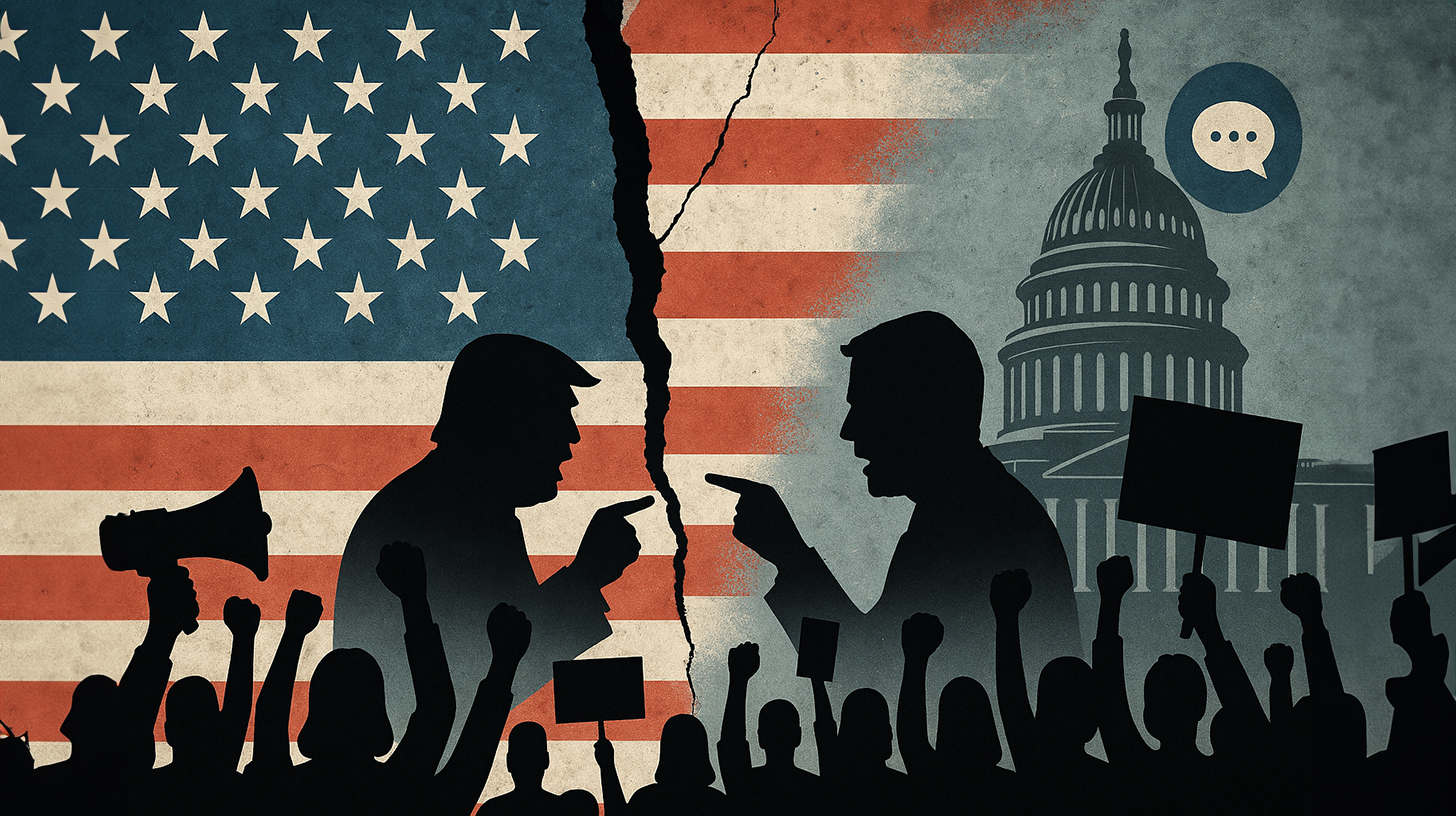
USA - The torn republic: political polarization, controversy and technological change - Image: Xpert.digital
Polarization in the USA: How to deepen the media and AI political divisions
The anatomy of American polarization
The United States of America are in a phase of profound and intensifying political polarization, which significantly shapes the country's political landscape. This split goes far beyond mere ideological disagreements and increasingly manifests itself in intensive party -political hostility, a deep distrust of institutions and a fragmented public discourse. Symptomatic for this climate are often sensational reporting and the increase in personal attacks on political actors, as they have become prominent in public perception.
American polarization is inextricably linked to the behavior of political actors, the dynamics of changing media landscape and the disruptive influence of digital technologies, in particular social media and artificial intelligence (AI) and is reinforced by these factors. These forces form a feedback loop: polarization fuels controversial political tactics, which in turn are reinforced by media and technology and thus further deepen the social ditches.
In order to shed light on these complex relationships, we will initially examine empirical evidence for the extent and the drivers of polarization. Afterwards, case studies of prominent political personalities are analyzed that embody these trends. This is followed by an assessment of the role of media and technology, including specific controversy such as Google advertisements of the Harris campaign and the effects of AI. Furthermore, cultural signal effects of political acts are considered before regulatory challenges and possible solutions follow.
Suitable for:

The polarized state of the Union: extent, driver and consequences
Understanding the current political situation in the United States requires a precise consideration of the phenomenon of polarization. This is not just a keyword, but a measurable reality with profound effects on society and government.
Definition and measurement of polarization
Political polarization includes various dimensions. On the one hand, she describes the ideological sorting in which voters are increasingly identifying with the party that best represents their political views. On the other hand, it describes the affective polarization, which comments in growing aversion, distrust and hostility to the opposing party and its followers. While studies indicate that the broad electorate may be less ideologically extreme than political elites, party sorting and the emotional gap between camps are significant and worrying developments. Data from the PEW Research Center show high levels of party political hostility. A feeling of alienation and political loss is widespread: a majority of the supporters of both large parties indicate that their side in politics loses more often than wins.
Central driver
Several factors contribute to deepening polarization:
Party political hostility and sorting
Republicans and democrats consider each other increasingly negative - often as immoral, dishonest or unintelligent - and live in separate social and informative worlds. Party affiliation is increasingly correlating with the ideological orientation, which deepens the trenches.
Institutional distrust
The public's trust in central institutions is increasingly eroding. This affects the federal government, in particular the congress, the approval rates of which are extremely low. The political parties themselves also enjoy little trust; A record share of the Americans has a negative opinion from both parties. This distrust extends to the news media, university and even in public schools. Particularly striking is the party political division of this distrust: Republicans express significantly more distrust of the media and educational institutions than democrats. This development indicates that polarization is not just a political phenomenon, but part of a more comprehensive crisis of trust in the cornerstones of society. Solutions must therefore go beyond purely political reforms and aim to restore confidence in these diverse institutions.
Geographical and social sorting
The tendency to live in communities and to maintain social contacts that share their own political views (“red” vs. “Blue” states/municipalities) further increases polarization.
Role of the political elites
Research results suggest that political elites and activists are often more polarized than the general population. List of pre -selection systems in which often only the most committed and ideologically consolidated party members could stimulate candidates to take more extreme positions to mobilize their own basis. Although the broad mass may not be ideologically extreme, the feeling of political conflict and the perception of high operations, heated heated by the polarized rhetoric of the elites, is widespread. This suggests that affective polarization and the political mood, which are characterized by elite flict flicts, are possibly stronger instinctive forces for the general political climate than the exact ideological distribution among the population.
Consequences
Polarization has noticeable negative consequences:
Political dysfunction
It contributes significantly to legislative blockade, budget disputes (“Fiscal Cliffs”), failed compromises (“Grand Bargains”) and a general feeling of the government's incapacity to act. The confidence in the ability of the representative institutions, effectively rule.
Erosion of democratic norms
Extreme polarization can undermine fundamental democratic norms, promote contempt for facts and increase the potential for political violence.
Poisoning of public discourse
It leads to a toxic public discourse, which is shaped by personal attacks, disinformation and the inability to find common basics.
The personalization of the conflict: attacks, scandals and political figures
In a highly polarized political environment, the focus of the discourse often shifts from subject topics to personal attacks, scandals and controversy that tends to tend to have individual political figures. These people become symbols and targets that embody the divisions and hostilities of the era. The intolerance to individuals, often accompanied by a lurid language in the media, is a characteristic feature of this development.
Case study: John Fetterman - health, behavior and ideological ambiguity
Senator John Fetterman got into the center of violent controversy after his stroke in 2022 and his subsequent treatment due to clinical depression. Reports, especially an article in New York Magazine, drawn a worrying picture based on statements from current and former employees. Causes regarding his “erratic” behavior were expressed, including ruthless driving (accelerating with the simultaneous texts, facetime calls and reading of news articles), a renewed obsession with social media, alleged “megalomania” and “conspiratorial thinking”. His former chief of staff, Adam Jentleson, expressed serious worries about his health and behavior, including fears that Fetterman, would not take his medication, missed medical control appointments and recently acquired a firearm. A car accident in which Fetterman should have fallen asleep at the wheel and his wife was injured, as well as incidents in aircraft and almost accidents in road traffic reinforced these concerns.
At the same time, Fetterman's political positions caused a sensation. His adamant support of Israel in the Gaza War, which is reported to violent arguments with his more progressive wife Gisele and was referred to by former campaign staff as a “devastating betrayal” at previous progressive positions, alienated parts of its base and staff. His willingness to cooperate with President Donald Trump, including a meeting in Mar-A-Lago and the support of some of his cabinet nominated, shocked both Democrats and Republicans. Fetterman himself rejected the allegations as statements “annoyed employees” and emphasized that they were in good health.
The Fetterman case illustrates, such as personal vulnerability - in this case health problems - is politically exploited in the polarized climate. The debate about its political realignment - whether authentic change, pragmatic maneuver or health influenced - illustrates the blurring boundaries between health, politics and ideology in public perception.
Case study: Stephen Miller - ideology as a weapon
Stephen Miller established himself during Donald Trump's first term as a key figure and architect of a rigorous immigration policy. He was instrumental in the development and implementation of controversial measures such as the ban on entry for citizens mostly Muslim countries and the policy of family separations on the border with Mexico. His hard line and polarizing rhetoric made him a central but also very controversial figure of the Trump administration.
Controversy around Miller repeatedly ignited his views and actions. Leave e-mails from 2019 revealed his communication with right-wing extremist media such as Breitbart News, in which he is said to have advertised white-nationalist literature and shared content from extremist websites. These revelations led to democratic side and reinforced the accusation that he represented white-nationalist positions. The Southern Poverty Law Center (SPLC) classified him as an extremist. Former colleagues described him as “terrible people” and “tyrants” with deeply rooted extremist views. His rhetoric, for example towards journalists in connection with the MS-13 gang, and his role in the spread of conspiracy theories after the election in 2020 continued to contribute to its polarizing effect. His confrontational political nature also emphasizes his argument with governor JB Pritzker, whom he accused of being violent.
The consideration of appointing Miller as a national security advisor triggered considerable concerns among civil rights groups and political opponents. His potential return to a key position is seen as a sign of the continuation of an uncompromising, ideologically driven policy that could further deepen social divisions, especially in questions of immigration and national identity. Miller therefore exemplifies a policy in which ideology becomes a weapon and compromises are deliberately excluded.
Case study: Donald Trump - Master of Polarization and Provocation
Donald Trump plays a formative role in the political landscape of the United States. His strategy is often shaped by polarization and provocation. A recurring element of his approach is personal attacks on political opponents. Among other things, Vice President Kamala Harris came into focus several times in the focus of such statements, in which he described her with terms such as “lazy”, “stupid” or “mentally impaired” and publicly asked questions about her lifestyle. He continued this rhetoric, some of which aims at stereotypes, although some voices within the Republican party called on to focus more on political subject topics. Trump defended his behavior and explained that personal attacks were legitimate in his case.
In addition to personal attacks, Trump's presidency and political career is characterized by numerous controversy and scandals. The Ukraine affair, in which he tried to urge the Ukrainian government to investigate his political rival Joe Biden, led to his first office. The “Signal Gate” scandal, which dealt with the transfer of sensitive information in chat groups and which led to the discharge of his national security consultant, once again raised questions about safety and dealing with information. His rhetoric and politics in relation to immigration, including the representation of migrants as criminals and the justification of deportations, as well as his attacks on international human rights standards and institutions contributed continuously to polarization.
Trump's approach obviously aims to mobilize its basis, dominate media reporting and to deepen the party political trenches. His willingness to challenge established norms and use confrontational rhetoric is a trademark of his political style and an essential factor for the continued division of American society.
Case study: Kamala Harris - target and actor in the digital space
Kamala Harris is the focus of polarized American politics and is both the goal of criticism and the subject of discussions about their own campaign methods. In doing so, she is often exposed to personal attacks, which some rated as an attempt to question their position and credibility.
On the other hand, her own presidential campaign was criticized for her digital advertising strategy. It was revealed that the campaign systematically worked on headlines and description texts in Google search ads. These ads, which were marked as “sponsored”, linked to original articles of established news organizations (such as The Independent, Guardian, Reuters, CNN, AP, CBS News, NPR, USA Today), presented modified headings that drew a more positive image of Harris or presented their political positions more advantageous.
This practice met with violent criticism on the part of the media houses concerned, who declared that they had no knowledge of this and condemned the use of their brands as misleading and harmful to journalistic integrity. While Google declared the ads technically not violating the guidelines because they were identified as advertising, critics of the campaign accused the limits of the ethically reasonable and undermine the trust of voters. Interestingly, Facebook had already banned a similar practice in 2017. The Trump campaign did not use this special tactics according to reports.
Harri's case study illustrates the complex role of top politicians in today's polarized environment: they are both victims of attacks that deepen the division, as well as actors who act in an increasingly digitized and ethically challenging election campaign and use them themselves that can further erode trust in political communication and media.
Case study: Robert F. Kennedy Jr. - Influence of controversial positions on public health debates
Robert F. Kennedy Jr. has positioned himself as a prominent personality in public health over the years. His views and activities come across different reactions because he repeatedly addressed a connection between vaccinations and health risks. Since 2005 he has taken the view that there could be a connection between vaccinations and autism, a position that is largely rejected by the scientific community. His organization, Children's Health Defense, addresses potential risks of vaccines and also critically dealt with the COVID 19 vaccines.
Kennedy also comments on various controversial issues, including doubts about the conventional representation of HIV/AIDS, criticism of the fluoridation of drinking water and the statement that Covid-19 can specifically affect certain ethnic groups. His statements on autism in which he described the disease as a challenge for families and assessed the abilities of affected children restrictively ("will never pay taxes, ... never play baseball"), met with criticism from medical experts and affected groups.
The nomination of Kennedy to the head of the Ministry of Health and Human Services (HHS) by Donald Trump met with massive criticism and dismay in the professional world. Experts warned that his appointment undermine confidence in science, weaknesses and potentially catastrophic political decisions. Trump's statement that he would allow Kennedy to “become wild” in health issues.
Kennedy uses an anti-establishment mood and questions the scientific consensus, which helps him to mobilize political support. This could help polarize public health issues and to weaken trust in scientific institutions and experts. His position illustrates how unconventional views in the current political climate can gain in importance and influence social debates, beyond traditional party borders.
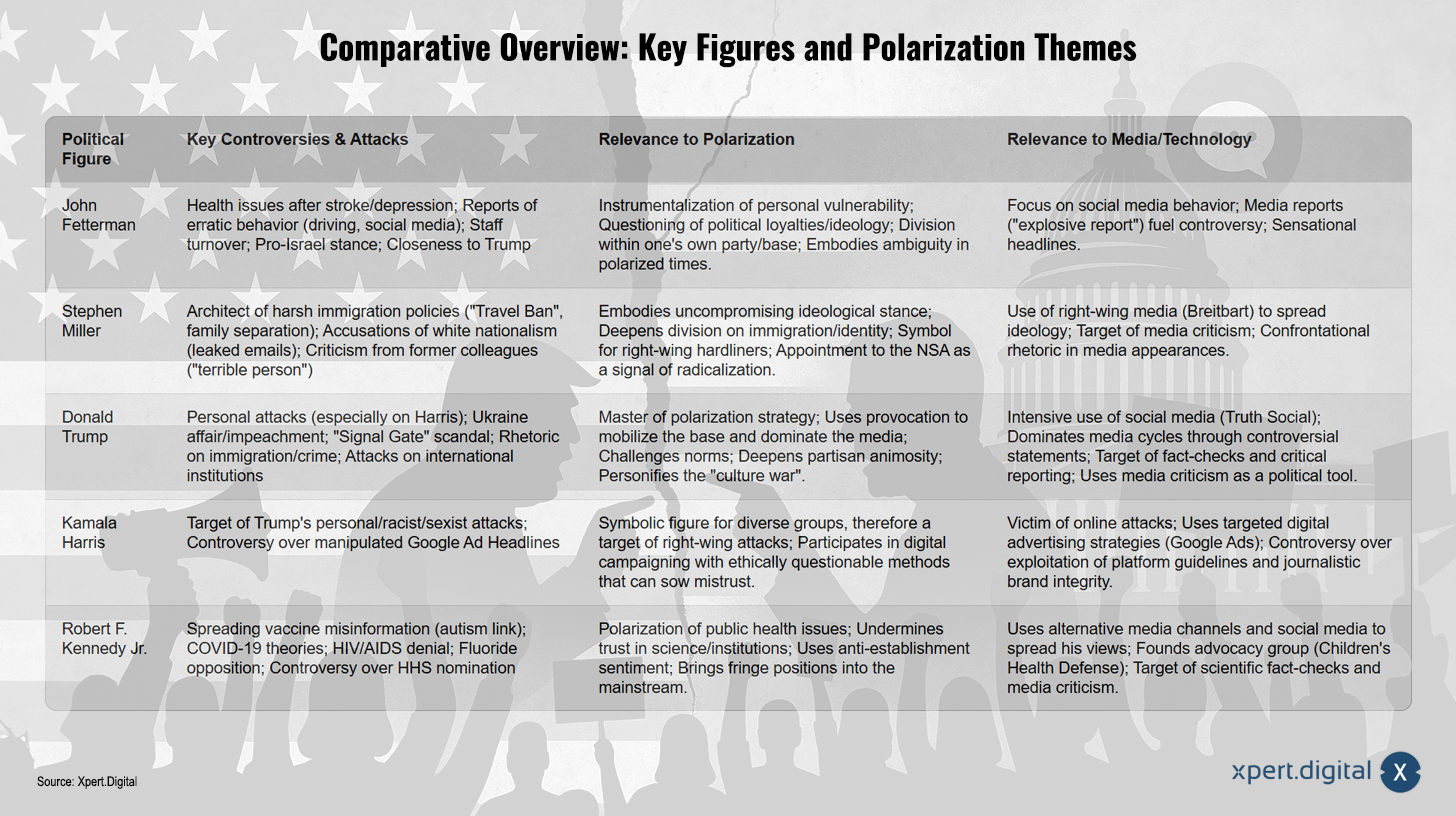
Comparative overview: key figures and polarization topics
The following table summarizes the central controversy and their reference to the overarching topics of this report for the analyzed political figures:
Comparative overview: key figures and polarization topics - Image: Xpert.digital
The following overview illuminates the central controversy of the analyzed political figures and their importance in the context of polarization as well as their connection to the media and technology. The focus is on John Fetterman due to his health problems after a stroke and depression, accompanied by reports on erratic behavior, personnel fluctuation and his pro-Israel posture. His personal vulnerability is exploited, while his loyalities and ideology are questioned, which leads to tensions within his own party. The media strengthen this with reports and sensational headlines, especially through its social media behavior. Stephen Miller, on the other hand, is perceived as an architect of hard immigration policy, combined with allegations of white nationalism and criticism of his person. His uncompromising attitude deepens the split in immigration topics and makes it a symbol for right -hand hardliners, while right media spread its ideology and he attracts attention through confrontational appearances. Donald Trump is known for personal attacks, for example on Kamala Harris, his involvement in political scandals and his polarizing statements about immigration and crime. He uses provocative strategies to attract media attention and increase party political tensions, using social media and media criticism as political tools. Kamala Harris is the goal of attacks that often bear racist and sexist traits and is criticized by their digital campaign strategies. It uses platforms like Google Ads to target advertising, which stirs up debates about ethical guidelines. Robert F. Kennedy Jr. ensures controversy by spreading vaccination fehlin formations and scientifically refuted theories that undermine trust in public health institutions. His activities in alternative media and social networks shift marginal positions to the mainstream, accompanied by fact checks and media criticism.
This table illustrates how the examined personalities reflect and drive the dynamics of polarization in different ways, often in combination with the media landscape and the possibilities of digital technologies.
The accumulation of personal attacks and scandals is not a coincidence, but thrives in a specific environment. A media ecosystem, which is characterized by falling trust, strong fragmentation and algorithms, which may be committed to accuracy, offers a breeding ground for such tactics. Sensational headlines and formulations (“devastating profile”, “explosive report”, “terrible person”), as they appear in the examined cases, are designed to attract attention in this competitive landscape. This leads to personalization and often also trivialization of political conflicts. A symbiosis arises: the polarizing strategy of personal attacks fits the economic and algorithmic incentives of a fragmented, suspicious media system. Attacks are started, reinforced and consumed, which further decomposes political discourse.
At the same time, the actions of some of these figures indicate a certain ideological flexibility or strategic repositioning. If a democrat like Fetterman interacts with Trump or an extremist actor like Miller is considered for the highest office, this suggests that traditional party lines and ideological consistency in a strongly polarized, anti-established climate can be losing importance or can be strategically manipulated. Actions that a group stray (like Fetterman the progressive) can address another or be seen as a sign of independence. This reflects complex calculations that go beyond simple left-right schemes. Extreme polarization and anti-establishment resentment create space for unconventional political maneuvers and alliances, in which the signal of disruption or loyalty can become more important than the strict compliance of traditional party ideologies or norms.
🎯🎯🎯 Benefit from Xpert.Digital's extensive, fivefold expertise in a comprehensive service package | R&D, XR, PR & SEM

AI & XR 3D Rendering Machine: Fivefold expertise from Xpert.Digital in a comprehensive service package, R&D XR, PR & SEM - Image: Xpert.Digital
Xpert.Digital has in-depth knowledge of various industries. This allows us to develop tailor-made strategies that are tailored precisely to the requirements and challenges of your specific market segment. By continually analyzing market trends and following industry developments, we can act with foresight and offer innovative solutions. Through the combination of experience and knowledge, we generate added value and give our customers a decisive competitive advantage.
More about it here:
The new media reality: loss of trust, disinformation and polarization
The changing media landscape: trust, competition and consumption
The way in which citizens consume and evaluated news in the USA has changed dramatically. This transformation of the media landscape is closely interwoven with political polarization and has a significant influence on it.
Falling trust and party political trenches
A central feature of the current media landscape is the low trust of the public in news media. Globally, trust is around 40%, and only 38% in the United States was already measured in 2017, whereby newer trends could indicate further erosion. Party -political division of this distrust is particularly pronounced: Republicans show less trust in the media, especially in established, national news organizations than democrats. The observation is concerned that Republicans and young adults now set almost as much trust in information from social media as in national news sources. This dwindling and party -politically divided trust forms a critical background for the spread of information and the susceptibility to disinformation.
Fragmentation and platform dominance
News consumption increasingly shifted from traditional media such as television and print to digital sources. The online news landscape is very fragmented. A large number of social media platforms now serve as a regular news source. Facebook and YouTube dominate and are regularly used for messages by about a third of the US-growing people. At the same time, platforms such as Instagram and in particular Tikok, especially for younger user groups, are becoming more important. This development is reinforced by the fact that platforms change their strategies and increasingly rely on the content of “creators” and on appealing video formats, often to the best of traditional news publishers.
Changed news consumption habits
Fewer and fewer people head for news sites or apps directly. Instead, they are more frequently available via “side doors” such as social media, search engines or mobile aggregators. At the same time, the general interest in messages decreases, and the phenomenon of “news avoidance” - the conscious averting of messages - increases. The reasons are often mentioned as the reasons for the negativity of reporting and a feeling of overwhelming. At the same time, “news-influencers” establish themselves as relevant sources of information, especially on social media platforms.
Economic challenges for journalism
The news industry is under considerable economic pressure. The advertising revenues, especially in the print area, decrease. Large technology platforms such as Google and Facebook dominate in the digital advertising market. The growth in paid online news subscriptions is limited; Only a minority is ready to pay for online messages, and many existing subscriptions are heavily discounted. There is a “Winner-Takes-Most” dynamics in which few large, national brands combine most of the subscriptions. These economic difficulties threaten the quality and availability of journalism, especially at the local level, where investigative reporting and the control of state action have often been greatly reduced.
The relocation of news consumption to platforms has far -reaching consequences. Algorithms, which are primarily designed to maximize the length of stay of the users and generate advertising revenue, become crucial gatekeen for information. They filter and prioritize content based on commitment signals such as likes, shares and comments. Since emotionally charged, controversy or party content often causes higher commitment, there is a risk that these algorithms systematically promote content that encourages polarization and disinformation, while balanced or nuanced reporting takes a back seat. This gives the platforms immense to form the public discourse, often without taking on the editorial responsibility of traditional media.
The falling confidence in the media and the increasing news avoidance seem to strengthen each other. Anyone who mistrusts the established media or feels overwhelmed by the flood of negative messages may turn away. However, this avoidance can lead to individuals more dependent on less reliable sources or unfiltered social media feeds. This potentially increases susceptibility to disinformation and conspiracy theories, which in turn can further undermine trust in reputable journalism. A vicious circle is created that makes the informed public debate difficult and further fueled polarization.
The double -cut sword of technology: reinforce politics and polarization
Digital technologies, above all social media platforms and artificial intelligence (AI), act not only as neutral channels for political communication. They actively shape the nature of political discourse, influence campaign strategies and act as catalysts for political polarization.
Case study revisited: Kamala Harris' Google Ads - Ethics and transparency in digital election campaign
The controversy around the Google search ads of the Kamala Harris presidential campaign in 2024 highlights the ethical gray areas and manipulative potency of digital campaign techniques. The campaign linked sponsored advertisements that linked to articles of established news organizations (including the independent, Guardian, Reuters, CNN, AP, CBS News, NPR, USA today). The crucial point, however, was that the headings and description texts displayed in the Google search results were written by the campaign itself in order to draw a more favorable picture for Harris or to emphasize their political positions positively.
Although these ads were correctly marked as “sponsored” or “paid by Harris for President” and thus technically met the guidelines of Google, the affected media companies reacted outraged. They stated that they were not informed about this practice and condemned them as misleading and as an abuse of their brand, which undermine journalistic integrity. Google defended the admissibility of the advertisements with reference to the labeling obligation, but admitted a technical problem that led to the marking in the advertisement in the advertisement. The campaign itself reported that it used the ads to offer users who are looking for information to offer additional context.
This tactic, which according to reports is quite common in commercial marketing, triggered a debate about ethics and transparency in the political context. Critics saw this an attempt to deceive voters by exploiting the credibility of established media brands. The contrast to Facebook (Meta), which had already prohibited a similar processing of linked news content in ads in 2017, was remarkable to combat disinformation. The Trump campaign apparently did not use this specific method of ad manipulation at this time. The case impressively illustrates how campaigns explore the scope of platform guidelines and how digital tools can be used to influence public perception, which endangers trust in political actors and sources of information.
The AI front: disinformation threats, Deepfakes and the choice 2024
The emergence of powerful generative artificial intelligence (Genai) has raised concern about disinformation and manipulation in political space to a new level. Tools such as chatt or image generators such as Dall-E make it possible to create texts, images, audio recordings and videos (“Deepfkes”) in a matter of seconds. This technology can not only be used to increase efficiency in campaigns (e.g. for personalized news, designs of speeches, translations), but also carries considerable risks to the integrity of elections and public discourse.
In the run -up and during the election year 2024 there were numerous examples and warnings of the abuse of KI:
Targeted disinformation: AI can be used to generate and distribute false information that is tailored to certain groups of voters. Studies indicate that such personalized messages can be more convincing than created.
Deepfakes: The ability to clone voices and pictures of politicians is particularly worrying. A prominent example was the AI-generated call with the voice of President Biden in New Hampshire, who was supposed to prevent voters from participating in the area code. Also fake pictures, such as that of Trump's alleged arrest or from celebrities who are supposed to support a candidate (Trump/Taylor Swift).
Reinforcement of polarization: AI generated content can serve to deepen existing social divisions by strengthening extreme narratives or hate messages.
Undermining of trust: The mere existence of Deepfakes can lead to voters generally becoming more suspicious of all media content and have difficulty distinguishing between real and wrong (“liar's dividend”).
Despite these considerable threats and the high public concern, analyzes of the election year 2024 indicate that the feared massive influence of AI disinformation on the election results has so far failed to materialize. Although there were documented cases of AI abuse, these were often uncovered relatively quickly, and there is no clear evidence that they had significantly influenced elections. Instead, AI generated disinformation seems to have contributed primarily to further poison the political discourse, to strengthen existing narratives and to deepen political polarization. The main effect of AI in the 2024 election campaign may have been less in the direct voter influence than in the further erosion of trust and the strengthening of existing ideological ditches.
In response to the risks, the first regulatory steps and measures were initiated by platforms. This includes suggestions for laws on the labeling obligation of AI generated content in political advertising (e.g. by the FCC in the USA) as well as self-commitments from technology companies and platform guidelines that prescribe such a label (e.g. meta) ..
Algorithmic politics: The role of social media in the design of information flows
Social media are not only passive channels, but are actively shaping through their algorithms who see users. These algorithms are usually optimized to maximize the user loyalty (likes, shares, comments, length of stay), as this supports the business model of the platforms (advertising).
A widespread concern is that these engagement-based algorithms create so-called “filter bubbles” or “echo chambers”. The theory states that algorithms prefer to display content that corresponds to their existing views and thus isolate them from different perspectives. This could lead to the confirmation tendency and hardening of political positions.
However, the research situation on this topic is complex and not clear. Some studies support the Echokamt thesis, while others relativize or contradict them. Arguments against an excessive emphasis on filter bubbles include:
Political polarization in the United States increased most in older population groups that use social media the least.
Only a small part of the users are actually in heavily isolated online information environments; The isolation from party TV messages could be greater.
The confrontation with opposing views on social media can even reinforce polarization instead of reducing it.
Users often actively look for information that confirms their views, regardless of the algorithm.
Surprisingly, large-scale experiments during the US election 2020, in which the algorithmic feeds of Facebook and Instagram were replaced by chronological feeds, surprisingly showed no significant effects on political polarization or the political attitudes of the users, although the type of content consumed and the useful life changed. This indicates that algorithms strongly shape the user experience, but may not be the main cause of profound settings or polarization.
Nevertheless, the conclusion remains that algorithms play an important role by strengthening existing tendencies. They make it easier to find and consume like -minded content. By optimizing it for commitment, you can also tend to prefer and spread emotionalizing, controversy and potentially splitting content. Studies also showed that conservative users on Facebook tendencies are more confronted with content marked as false information. Thus, algorithms, even if they are not the sole cause, probably contribute to reinforcing polarization and the distribution of problematic content.
The increasing use of sophisticated digital manipulation techniques, as in the case of Google Ads of the Harris campaign or by using AI in the election campaign, indicates questionable normalization. Such methods apparently become standard tools in the political arsenal. Although their direct impact on the election behavior is controversial, they inevitably contribute to a climate of cynicism. They undermine trust in sources of information - be it the media or the campaigns themselves - and lower the inhibition threshold for ethically questionable behavior in political competition. The availability and use of these mighty digital tools, even if they are legally permissible or uncertain effects, pollute the information ecosystem and make it difficult for facts based on facts.
A central result of analyzes on AI use 2024 is that the effects on the design of the discourse and the reinforcement of polarization were apparently greater than on the direct influence of votes. This suggests that the current threat of AI is less in the mass conviction, but rather in the contamination of the information space, the reinforcement of existing prejudices and the further decomposition of the quality of the political debate. Countermeasures should therefore not only target the prevention of direct voting fraud, but also take a look at the broader, decomposing effects on public discourse, trust and reinforcement of echo chambers.
Our recommendation: 🌍 Limitless reach 🔗 Networked 🌐 Multilingual 💪 Strong sales: 💡 Authentic with strategy 🚀 Innovation meets 🧠 Intuition

From local to global: SMEs conquer the global market with clever strategies - Image: Xpert.Digital
At a time when a company's digital presence determines its success, the challenge is how to make this presence authentic, individual and far-reaching. Xpert.Digital offers an innovative solution that positions itself as an intersection between an industry hub, a blog and a brand ambassador. It combines the advantages of communication and sales channels in a single platform and enables publication in 18 different languages. The cooperation with partner portals and the possibility of publishing articles on Google News and a press distribution list with around 8,000 journalists and readers maximize the reach and visibility of the content. This represents an essential factor in external sales & marketing (SMarketing).
More about it here:
Cultural struggle in the digital era: Memes as political weapons - politics between provocation and division

Cultural struggle in the digital era: memes as political weapons - politics between provocation and division - Image: Xpert.digital
Cultural wars and symbolic battlefields
In a deeply divided nation such as the United States, symbolic actions and cultural references often gain disproportionate political importance. They serve as a distinguishing sign for your own group, as a provocation for the political opponent and as a means to mobilize deeper cultural fears and identity conflicts. Instead of specific politics, such actions often aim at emotional reactions and the consolidation of “We against the” narratives.
Case study: Trump's Star Wars Meme
The White House under Donald Trump provided an example of this symbolic policy at the “Star Wars Day” (May 4th). A AI-generated picture was widespread through official channels that Trump represented as a muscular Jedi warrior-but with a red lightsaber, the identification mark of the evil Sith lords. The picture was accompanied by a text that described the opposition Democrats as “radical left spinners”, who wanted to bring “Sith Lords, Murderer, Drug Bosses” etc. back to the galaxy, and with the slogan lock: “You are not the rebellion - you are the empire”.
The reactions to this post were mixed and reflected the political division. Many users, especially Star Wars fans, mocked the obvious mistake with the red lightsaber, which Ironically identified Trump with the villains, which he pretended to fight. The use of AI images by the White House and the aggressive politicization of a popular cultural phenomenon were also criticized. At the same time, the action at Trump's supporters is likely to have been well received, who appreciate the confrontational style and the “trolling” of political opponents. The incident lined up in a series of controversial AI images that were spread by the Trump team, including one that represented him shortly after the death of Pope Francis as his successor. The episode shows how popular culture is used as an arena for political disputes and how even trivial mistakes can become symbolic owners, but at the same time mobilize their own basis through provocation.
Case study: Trump's Alcatraz proposal
Another example of symbolic politics was Donald Trump's announcement that the notorious Alcatraz island prison, which has been closed since 1963, was reopened and expanded in the Bay of San Francisco in order to accommodate “America's most reckless and violent criminals there”. In a post for Truth Social, Trump said that Alcatraz reopened would serve as a “symbol for law and order and justice”. He emphasized the deterrent effect of the name and the historical association with hardness against crime. Later he explained that the name Blade simply strong and he sees himself as a “filmmaker”.
The proposal immediately met with massive criticism and skepticism. Commentators pointed out the enormous costs and logistical challenges that had already led to the closure of the prison in the 1960s (Alcatraz was three times as expensive in operation as other federal prisons). The island is now a popular tourist attraction and part of the National Park Service. Critics saw the proposal to strengthen a purely symbolic gesture without practical feasibility that aimed to strengthen Trump's image as an advocate of “Law and Order”. Some commentators made a direct connection to his hard anti-immigration rhetoric and plans to accommodate migrants in high-security prisons (also abroad as in El Salvador or Guantanamo Bay). Trump's own “Border Czar” Tom Homan supported the idea as a potential option to accommodate migrants classified as dangerous. Conservative defenders of the plan argued that the value of Alcatraz was not in cost efficiency, but in the symbolic deterrent value.
The Alcatraz proposal illustrates how political actors use symbolic places and narratives to address certain voters and to cultivate a specific political image, even if the proposed measures are unrealistic or extremely expensive. It is primarily about the signal effect and the reinforcement of a certain political message in cultural struggle.
These examples illustrate, such as symbolic actions - be it memes or unrealistic policy suggestions - into effective instruments in a polarized environment. Her main purpose is often less in the concrete political implementation than to signal identity, provoke opponents, generate media attention and to cement the cultural and ideological trenches that the “we” mentality nourish. Such actions often avoid the substantial debate and aim directly at emotions and group membership. They are efficient means of mobilizing your own basis and the antagonization of the opposition, which further deepens the cultural gap.
The control of the digital public sphere: moderation, regulation and solutions
The increasing relocation of public discourse and political campaigns to digital space presents companies and governments before immense challenges. The question of how this digital sphere can be controlled to ensure freedom of expression and at the same time curb harmful content such as disinformation, hate speech and impact on violence is central to the future of democratic processes.
The dilemma of content moderation
Technology platforms such as Meta (Facebook, Instagram), Google (YouTube), X (formerly Twitter) and TikTok are faced with the complex task of enforcing rules for the content shared on your pages. You have to find a balance between the protection of freedom of expression and the need to remove or restrict harmful content. Almost all major platforms have developed guidelines for hate speech, harassment, doxing, terrorist content and the influence of voting. These guidelines, for example, prohibit the spread of false information via election dates or locations as well as calls to violence against election workers.
However, the implementation of these rules is highly controversial and inconsistent. Critics accuse the platforms:
A lack of transparency: decisions about moderation are often opaque.
Inconsistent enforcement: rules are not used uniformly, often dependent on the political pressure or the business priorities of the platforms. Powerful actors or political figures sometimes seem to be treated differently than normal users.
Excessive or inadequate moderation: While some complain about censorship, others criticize that platforms do too little against hate speech, disinformation and extremism.
Return from responsibility: There has been a trend towards deregulation recently. Elon Musk's takeover of Twitter (X) and the massive dismantling of moderation teams as well as METAS decision to give up the external factual test program in favor of a decentralized “community notes” system and to loosen it are criticized as a withdrawal from responsibility. The protection of free expression is often cited as a reason.
In the US legal context, platforms through Section 230 of the Communications Decency Act enjoy extensive protection against liability for third parties. In addition, the Supreme Court in the Moody v. NetchOICE confirms that platforms have the right to freedom of expression after the first constitutional additive, which also includes the editorial decision on the curation of content. At the same time, the possibilities of the government to exert pressure on platforms to moderate content (“Jawboning”) are limited by the first constitutional addition. This mixture makes it particularly difficult to regulate content moderation.
Regulatory horizons
In view of the challenges, various regulatory approaches are discussed and partially implemented:
Transparency in online advertising: There is a major deficit in the regulation of political online advertising in the United States, which, unlike television or radio advertising, is hardly subject to transparency obligations. The “Honest Ads Act”, which provided comprehensive disclosure obligations (clients, costs), public advertising archives and measures against foreign interference, has not yet been passed. Some states have issued their own laws. The Federal Election Commission (FEC) recently expanded its rules to extend disclaimer requirements to a broader spectrum of “Internet Public Communications”, including advertisements on apps and advertising platforms, but with exceptions for very small formats. The regulation of paid promotions (e.g. by influencer) is still open.
Labeling of AI content: In response to Deepfakes and AI generated disinformation, there are efforts to identify the use of AI in political advertising. The FCC has proposed to demand corresponding markings for radio and television advertising. Meta already demands this for political ads on its platforms. In 23 US states, there are already laws that regulate the use of Deepfakes in political campaigns, mostly by labeling obligations. There are also legislative initiatives at the federal level.
Platform compulsory obligation: In addition to specific advertising or AI rules, there are demands for general accountability and transparency of the platforms regarding their algorithms and moderation practices. The Federal Trade Commission (FTC) could play a role here, for example in the persecution of “unfair or misleading” business practices. The Digital Services Act (DSA) in the EU often serves as a reference model, the platforms for risk assessment and reduction as well as for greater transparency.
Possible interventions and solutions
To combat disinformation and to improve digital discourse, a bundle of measures is discussed:
Measures of the platforms: Recommendations include the improvement of transparency, more consistent enforcement of one's own rules, prioritization of information quality in algorithms (instead of pure commitment), removal of Deepfkes and maliciously manipulated media, restriction of bots and automated distribution as well as the displacement of plagued or inaugural content.
Role of the government: Governments can promote independent, professional journalism (e.g. by supporting local media) and should avoid interventions in freedom of the press. The promotion of media and digital competence among the population is seen as a long-term important building block. Statutory transparency requirements for platforms are another option.
Civil society and individuals: The expansion of factual initiatives (whose reach and effect can be limited, however), the strengthening of media literacy through educational programs and the awareness of the public are important contributions. Through critical media consumption, the use of diverse sources, questioning information (especially such that cause strong emotional reactions or confirming their own beliefs) can make respectful correcting false information in their own environment and supporting quality journalism.
A central, recurring problem about the areas of moderation, algorithms and advertising is the lack of transparency on the part of the technology platforms. This non -transparency complicates researchers, political decision -makers and the public to understand how information is prioritized, who is behind political messages and whether moderation decisions are made fairly. This hinders the diagnosis of problems and the development of effective solutions. Legally prescribed transparency obligations therefore develop into a central political demand to break up this “black box”.
The debate about content moderation also reveals a fundamental tension in the US context: the conflict between the principles of freedom of expression (which also protects the rights of the platforms and limit state interventions) and the desire to minimize online damage such as disinformation and hate speech. The platforms are in the crossfire political pressure from both sides - censorship allegations here, demands for stronger moderation there - and must agree on this with their own business interests. This leads to inconsistent or opaque guidelines and practices, which is extremely difficult to effective and fair control of the digital space.
Navigate in the age of political fragmentation
The analysis of the political situation in the United States draws the image of a deeply split society, the fragmentation of which is powered by a complex interaction of various factors. Political polarization is not only a superficial phenomenon, but roots deeply into dwindling trust in institutions and a growing affective hostility between political camps.
This state is further tightened by the personalization of the political conflict. Personal attacks, scandals and controversy for key figures such as John Fetterman, Stephen Miller, Donald Trump, Kamala Harris and Robert F. Kennedy Jr. often dominate the discourse and serve as projection surfaces for ideological arguments and party political animosities. These figures embody the broken lines of society in different ways - be it through health crises, radical ideologies, provocative rhetoric, ethically questionable digital tactics or the questioning of scientific knowledge.
The changing media landscape plays a crucial role in this process. Falling trust in traditional news sources, the fragmentation of the information offer through digital platforms and the dominance of algorithms, which are optimized for commitment instead of information quality, create an environment in which disinformation and polarizing content can be easily spread. The economic difficulties of journalism, especially at the local level, further tighten this problem.
The technology itself acts as a double -edged sword. While digital tools and artificial intelligence open up new opportunities for political communication and citizen participation, they also recover considerable risks. The controversy around the Google Ads of the Harris campaign and the use of AI to create Deepfkes and targeted disinformation in the 2024 election campaign illustrate the manipulative potential of these technologies. Even if the direct influence of AI on election results in 2024 seemed limited, these developments contribute to the erosion of trust and pollution of the information ecosystem.
These trends pose significant challenges for American democracy. The polarization complicates the government ability and the solution of urgent problems. It undermines social cohesion and trust in facts and institutions that are essential for a functioning democracy. In addition, it makes the electorate more susceptible to manipulation and populist rhetoric.
There are no simple solutions for these complex problems. The debates on the responsibility of technology platforms, the limits of state regulation in the light of freedom of expression and the effectiveness of various countermeasures such as transparency obligations, labeling of AI content or media literacy promotion will be ongoing. A promising approach lies in coordinated efforts by various actors - government, technology industry, civil society, educational institutions and, last but not least, the citizens themselves.
Navigating in the age of political fragmentation requires continuing vigilance, a critical attitude towards information from all sources and conscious efforts to rebuild and create spaces for a more constructive political discourse. While technological tools are developing rapidly, the underlying political and social divisions require a deeper, long -term discussion to strengthen the resilience of democratic institutions and processes in the United States.
We are there for you - advice - planning - implementation - project management
☑️ SME support in strategy, consulting, planning and implementation
☑️ Creation or realignment of the digital strategy and digitalization
☑️ Expansion and optimization of international sales processes
☑️ Global & Digital B2B trading platforms
☑️ Pioneer Business Development

Konrad Wolfenstein
I would be happy to serve as your personal advisor.
You can contact me by filling out the contact form below or simply call me on +49 7348 4088 965 (Munich) .
I'm looking forward to our joint project.
Write to me

Xpert.Digital - Konrad Wolfenstein
Xpert.Digital is a hub for industry with a focus on digitalization, mechanical engineering, logistics/intralogistics and photovoltaics.
With our 360° business development solution, we support well-known companies from new business to after sales.
Market intelligence, smarketing, marketing automation, content development, PR, mail campaigns, personalized social media and lead nurturing are part of our digital tools.
You can find out more at: www.xpert.digital - www.xpert.solar - www.xpert.plus
Keep in touch











