
Vehicle-to-grid concept and the urgency of a faster expansion of the charging infrastructure for electric cars in Germany

Available in 27 languages 📢
Prefer Xpert.Digital on GoogleⓘPublished on: August 14, 2023 / Updated on: August 14, 2023 – Author: Konrad Wolfenstein
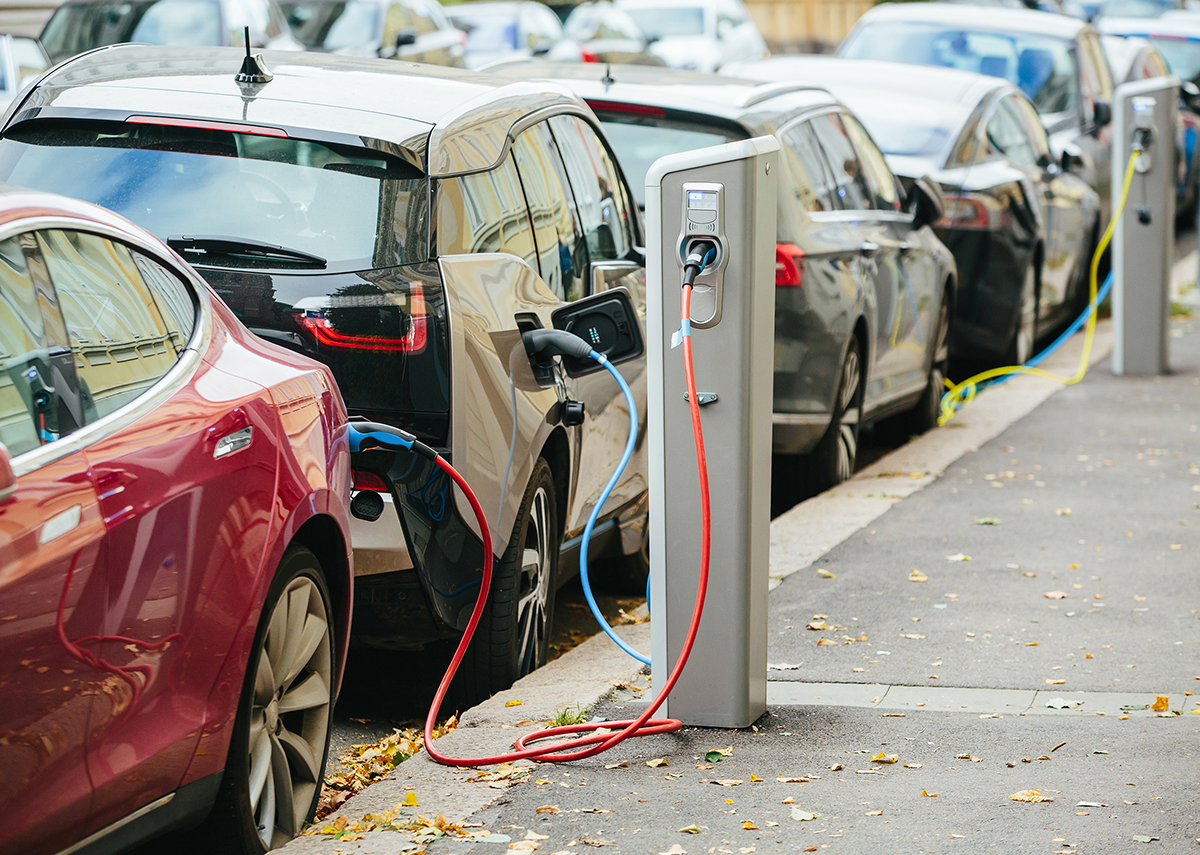
The urgent need for a faster expansion of the charging infrastructure for electric cars in Germany – Image: Scharfsinn|Shutterstock.com
An analysis of the demands of the German Association of the Automotive Industry (VDA) and the role of Hildegard Müller
The automotive industry is undergoing a transformation towards an electrified future. The German automotive industry faces the challenge of significantly accelerating the expansion of the charging infrastructure for electric vehicles. To achieve the German government's ambitious goal of one million charging stations by 2030, VDA President Hildegard Müller emphasizes that the pace of expansion measures would have to quadruple in the last twelve months. The current rate of expansion would not be sufficient to close the gap between electric vehicles and the available charging infrastructure.
Growing demand for charging stations and challenges
In January 2021, there were 14 electric cars and plug-in hybrids per public charging station. According to the German Association of the Automotive Industry (VDA), this number has now risen to 22 vehicles. Currently, there are approximately 90,000 publicly accessible charging points in Germany. This illustrates that Germany has considerable catching up to do in this area. Although the rate of expansion has increased in recent years, Müller urges continued progress.
Increasing production and new registrations of electric cars
Last year was marked by a significant increase in the production, sales, and new registrations of electric cars in Germany. In the first half of the year, approximately 300,000 electric cars and plug-in hybrids were newly registered, representing almost a quarter of all new registrations in June.
The role of infrastructure and electricity grid expansion
In addition to improved charging infrastructure, VDA President Müller is also calling for the expansion of the electricity grid. This step is considered crucial for the success of electromobility. She emphasizes that there is a significant backlog in this area. Müller warns that the electricity grid could become a bottleneck for electromobility.
Urgent need for accelerated expansion
The demands of the German Association of the Automotive Industry (VDA) and the voice of Hildegard Müller emphasize the urgent need for an accelerated expansion of the charging infrastructure and the electricity grid for electric cars in Germany. The current situation reveals a growing discrepancy between the increasing number of electric vehicles and the necessary charging infrastructure. The success of electromobility depends significantly on a comprehensive and efficient infrastructure. Consistent expansion and modernization measures are essential to achieve the German government's ambitious goals and to advance electromobility in Germany.
The future of the German automotive industry lies in electromobility. To ensure a successful transition, the charging infrastructure must be massively expanded and the power grid upgraded. The statements from the VDA (German Association of the Automotive Industry) and Hildegard Müller underscore that these challenges must be tackled decisively to put electromobility in Germany on the fast track.
The Xpert.Solar solar carport planner
Solar parking spaces are a promising way to generate renewable energy while optimizing limited space requirements in cities and urban areas. However, there are actually some challenges that can complicate the introduction of such parking spaces.
One of the biggest hurdles is the high cost and planning effort associated with installing solar panels in parking lots. Not only must the cost of the solar panels themselves be taken into account, but also the cost of the infrastructure required to connect the panels to the grid. In addition, the space required for installing the solar modules must be precisely planned and coordinated to ensure effective use of the available space.
Another obstacle are bureaucratic hurdles and approval processes that can make it difficult to install solar panels in parking lots. Depending on the region or country, different rules and regulations may apply, which can complicate the approval and implementation process.
Despite these challenges, there is high demand for solar parking spaces as they represent an effective way to promote renewable energy while optimizing space requirements in urban areas. With careful planning and collaboration between the parties involved, the hurdles can be overcome to facilitate the introduction of such parking spaces.
➡️ We specialize in providing advisory and planning support for such solar carport projects and advancing their implementation.
➡️ With our solar carport planner we simplify the process.
➡️ We are there for you for the next steps and thus minimize costs and effort for you.

Xpert.Solar solar carport planner
More about it here:
Electromobility as the future of the German automotive industry
The German automotive industry is facing a profound transformation driven by an increased focus on electromobility. The global trend towards more sustainable mobility solutions, the growing pressure to reduce emissions, and technological advances in batteries have led to electric vehicles (EVs) being considered a central element of the automotive sector's future. Two crucial factors are essential for successfully managing this transformation: expanding the charging infrastructure and developing the electricity grid.
Charging infrastructure as a key to success
The availability of a comprehensive and efficient charging infrastructure is crucial for the acceptance and widespread adoption of electric vehicles. In recent years, many cities and municipalities in Germany have already begun installing public charging stations. However, to convince the vast majority of drivers of the advantages of electromobility, a massive expansion of the charging infrastructure is necessary. New technologies, such as fast-charging stations that allow batteries to be charged in a very short time, are being developed and offer a promising solution to the time constraints associated with charging electric vehicles.
Challenges and progress in the expansion of the electricity grid
The increasing number of electric vehicles poses challenges to the electricity grid. Charging a large number of vehicles simultaneously could lead to overloads during peak times. Therefore, grid expansion is necessary to cope with the additional electricity demand. Advances in smart energy management and the so-called "vehicle-to-grid" (V2G) concept could help address these challenges. This allows electric vehicles not only to draw power from the grid but also to feed excess energy back into the grid when not in use, thus contributing to grid stabilization.
Economic opportunities and innovation potential
The shift to electromobility presents not only challenges but also significant opportunities for the German economy. The development and production of electric vehicles requires high-quality batteries, electronics, and software components, which can lead to new business areas and jobs. Furthermore, the demand for renewable energies needed to charge electric vehicles is increasing. This demand could help accelerate the expansion of renewable energy sources such as solar and wind power, which in turn supports the energy transition.
Innovation and research promotion
The transition to electromobility requires continuous research and innovation to increase battery efficiency, improve the range of electric vehicles, and further reduce charging times. Germany has a strong research tradition in the automotive sector, and this expertise can be leveraged to advance new technologies and solutions. Government programs and funding to support research and development in electromobility are crucial for strengthening the innovative capacity of the German automotive industry.
International cooperation and standards
The transformation towards electromobility is not an isolated process, but a global shift. The development of international standards for charging infrastructure, battery technologies, and grid integration is crucial to ensuring the interoperability of electric vehicles and charging infrastructure worldwide. The German automotive industry can benefit from actively participating in international collaborations and partnerships to learn from each other and work together towards a sustainable future.
The course has been set.
The future of the German automotive industry undoubtedly lies in electromobility. A successful transition requires a comprehensive expansion of the charging infrastructure and the development of the electricity grid. These challenges offer not only technical, but also economic and innovative opportunities. With the right mix of research funding, international cooperation, and industry commitment, Germany can take a leading role in the electromobility revolution while simultaneously contributing to the reduction of emissions and the creation of a sustainable mobility future.
Vehicle-to-Grid concept: A bridge between electric vehicles and the power grid
The Vehicle-to-Grid (V2G) concept is an innovative technology that views electric vehicles not only as a means of transport, but also as flexible energy suppliers and storage devices for the power grid. This idea has the potential to facilitate the integration of renewable energies, improve grid stability, and simultaneously reduce costs for electric vehicle owners.
How does the Vehicle-to-Grid concept work?
The vehicle-to-grid (V2G) concept allows electric vehicles to feed energy into and draw energy from the power grid. This is achieved via so-called bidirectional charging stations, which enable the vehicles not only to receive energy but also to feed excess energy back into the grid. The vehicles can thus serve as mobile energy storage units, capable of supplying electricity to the grid or drawing it from it as needed.
Difference to bidirectional charging: More than one direction
While the term “bidirectional charging” is often used synonymously with the V2G concept, there is a subtle difference. Bidirectional charging generally refers to an electric vehicle's ability to exchange energy in both directions with the charging station – both to charge the vehicle and to discharge it back into the grid. Vehicle-to-grid, on the other hand, emphasizes the vehicle's active role in the energy system, acting not only as a consumer but also as an energy source for the grid.
Potential advantages of the Vehicle-to-Grid concept
1. Integration of renewable energies
V2G can help balance the fluctuating nature of renewable energies, such as solar and wind power, by temporarily storing excess energy in vehicles and feeding it into the grid when needed.
2. Grid stability and peak load management
Electric vehicles could serve as a buffer during periods of high electricity demand to absorb peak loads and thus ensure grid stability.
3. Reduce consumer costs
Vehicle owners could benefit financially by drawing energy from the grid during periods of low demand and feeding energy back into the grid during peak times when electricity prices are higher.
Challenges and future prospects
Despite the promising potential of the V2G concept, several challenges remain. The technology requires careful coordination between energy suppliers, car manufacturers, and grid operators to ensure interoperability and smooth operation. Data protection and security aspects must also be considered, as sensitive energy and usage data will be exchanged.
The future prospects for V2G are nevertheless promising. Advances in battery technology, intelligent network infrastructure, and the increasing electrification of transport are contributing to the further development of this technology. Pilot projects and commercial V2G services are already being implemented in some regions of the world to test the concept in practice and demonstrate its advantages.
The evolution of electromobility
The vehicle-to-grid (V2G) concept marks a significant step in the evolution of electromobility and the energy transition. By enabling electric vehicles to act not only as consumers but also as active participants in the energy market, they could contribute to increasing the sustainability of the electricity grid and improving the overall efficiency of the energy system. While challenges remain, current developments and experiments show that V2G could be a promising solution for a cleaner and more efficient energy future.
Write to me

Keep in touch





