
Universal banking strategy: A bitter pill for Paris – Why Japan's mega-banks are now focusing entirely on Frankfurt
Xpert Pre-Release

Available in 27 languages 📢
Prefer Xpert.Digital on GoogleⓘPublished on: March 2, 2026 / Updated on: March 2, 2026 – Author: Konrad Wolfenstein
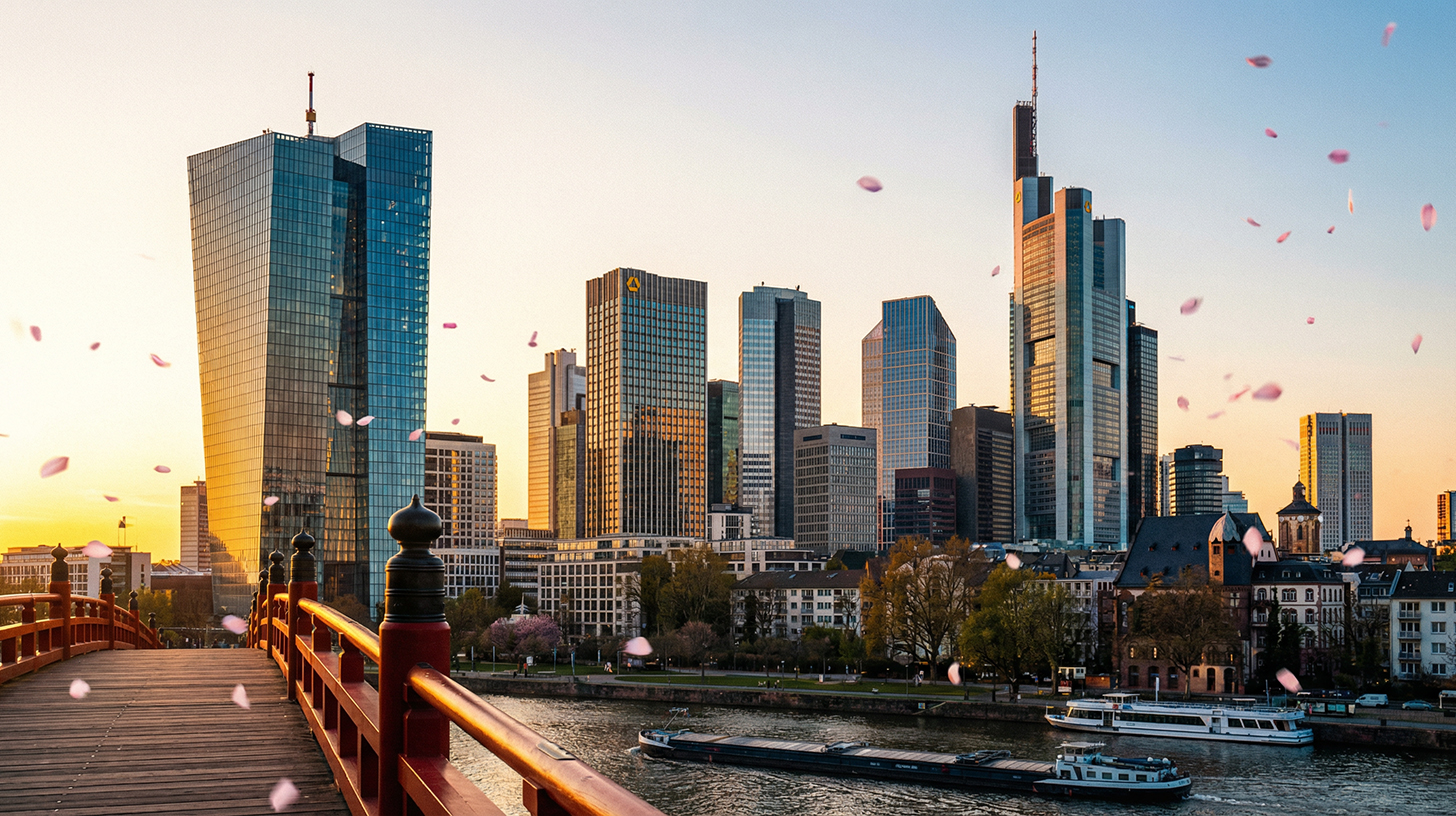
Universal banking strategy: A bitter pill for Paris – Why Japan's mega-banks are now focusing entirely on Frankfurt – Creative image: Xpert.Digital
The silent power shift: How Japan's financial elite is choosing Frankfurt as the new EU capital
Tokyo's quiet grab for the continent – How major Japanese banks are developing Frankfurt into a European power center
For a long time, Paris celebrated itself as the shining winner of Brexit. But away from the media spotlight, a tectonic shift is currently taking place in the European financial architecture: Japan's most influential banks – including giants like Mizuho and Sumitomo – are radically restructuring their European operations. Their new center of gravity is not Paris, but Frankfurt am Main.
While Frankfurt scores points with its immediate proximity to the European Central Bank (ECB) and a reliable fiscal policy, France is grappling with a historic debt crisis, political instability, and repeated credit rating downgrades. The consequence of this unequal contest: once-proud Parisian institutions are being systematically downgraded to mere branches by Asian players, while in Frankfurt, powerful universal banks are being forged, consolidating the entire banking and securities business under one roof. This quiet, major offensive from Tokyo is far more than just an organizational restructuring – it marks a fundamental reassessment of European financial center competition and cements Frankfurt's position as the true power center of continental Europe.
Paris loses, Frankfurt wins: The invisible power struggle over Europe's financial architecture
European financial center competition is undergoing a tectonic shift whose strategic implications can hardly be overestimated. While Paris has been celebrated for years as the supposed winner of the Brexit exodus, a quiet revolution is taking place beneath the surface: Japanese megabanks, among the world's largest financial institutions, are consistently focusing on Frankfurt am Main as their European center of gravity, systematically reducing their presence in France to mere branches. This strategic shift is far more than an organizational footnote. It marks a fundamental reassessment of European financial geography by some of the most important institutional players in the global capital market.
The Japanese major offensive on the Main
The latest development that clearly illustrates this dynamic concerns the Mizuho Financial Group, one of the world's most powerful financial conglomerates. In a restructuring process prepared since 2023, Mizuho merged its two existing EU entities in April 2025: Amsterdam-based Mizuho Bank Europe and Frankfurt-based Mizuho Securities Europe GmbH were combined to form a universal bank. The result is a fully integrated corporate and investment banking platform headquartered in Amsterdam with branches in Frankfurt, Madrid, and Paris. The Paris office was thus downgraded from an independent entity to a mere branch of the Dutch parent company.
Frankfurt, however, retains its status as the operational center for securities business in the European Union. The former Mizuho Securities Europe GmbH, headquartered in Frankfurt's Taunus Tower, served as the group's EU securities platform. As part of the reorganization, the branches in Brussels, Düsseldorf, Milan, and Vienna were closed, and all transactions were consolidated at the four remaining locations: Amsterdam, Frankfurt, Madrid, and Paris.
This step is not an isolated one. It is part of a pattern of strategic decisions by Japanese financial institutions that has taken shape since the Brexit vote in 2016 and is being implemented with increasing consistency.
The historical genesis: How Brexit turned Frankfurt Japanese
The story of Japanese banking in Frankfurt begins in the immediate aftermath of the British EU referendum. In the summer of 2017, investment bank Nomura Holdings became the first major Japanese institution to choose Frankfurt as its new EU headquarters. Daiwa Securities followed suit a few days later, and the decision by Sumitomo Mitsui Financial Group, Japan's third-largest bank, completed the trio. In remarkably quick succession, three of Japan's most important financial institutions had selected the Main River as their European base.
Hubertus Väth, then managing director of the Frankfurt Main Finance initiative, commented on the development at the time as a sign that Japanese banks had warned very early about the consequences of Brexit and had been the first to act. The Association of Foreign Banks predicted that Brexit would create 3,000 to 5,000 new jobs in Frankfurt.
Mizuho Financial Group, although already having a subsidiary in Amsterdam, also established a securities unit in Frankfurt in 2017, Mizuho Securities Europe GmbH, to manage its EU securities operations from there. This decision was explicitly made in the context of Brexit preparations and the need to continue providing reliable services to EU clients.
The universal bank transformation: Strategy behind the merger
The merger at Mizuho, announced in 2023 and completed in 2025, is more than just an organizational simplification. It follows an industrial logic that is likely to have a significant impact on the entire European banking sector. By combining banking and securities operations into a single universal bank, client service is radically simplified. European corporate clients and institutional investors will henceforth deal with a single Mizuho counterparty, instead of negotiating with two separate entities in two different jurisdictions.
The universal banking model also allows for more efficient capital allocation. A well-capitalized entity can offer lending, bond trading, equities, and advisory services from a single source, thereby overcoming the traditional fragmentation of the European banking market. Mizuho is thus positioning itself as a fully-fledged competitor in the European corporate and investment banking segment, capable of operating on an equal footing with the major American and European institutions.
The Sumitomo Offensive: From Broker to Universal Player
In parallel with the Mizuho reorganization, Sumitomo Mitsui Financial Group, Japan's second-largest bank by market capitalization, is significantly expanding its Frankfurt operations. SMBC Bank EU AG, founded in 2017 as a response to Brexit and a wholly owned subsidiary of Sumitomo Mitsui Banking Corporation, headquartered in Frankfurt's Main Tower, has developed into a substantial player in the European banking sector. With share capital of €5.1 billion and branches in Amsterdam, Dublin, Düsseldorf, Madrid, Milan, Paris, and Prague, SMBC EU has established a presence that far exceeds the initial 30 employees with whom SMBC Nikko Securities commenced operations in Frankfurt in 2019.
The investment banking division SMBC Nikko also merged with SMBC Bank EU in 2022 to form a universal bank, now offering banking and securities services under one roof. SMBC Bank EU AG is licensed by the European Central Bank and supervised by BaFin, underscoring the institution's growing importance within the European financial system.
Latest signal: Japanese asset manager focuses on Frankfurt
In the latest chapter of Japan's Frankfurt expansion, asset manager Sumitomo Mitsui DS Asset Management established a new subsidiary in Frankfurt am Main in February 2026. SMD-AM manages more than US$170 billion worldwide and aims to reach institutional investors across the EU, including pension funds, financial institutions, and public investors, through its Frankfurt branch.
Takashi Kume, CEO of the newly formed German financial center, described Frankfurt, with its strong international financial profile, as the ideal starting point for entering the European market. Frankfurt's Mayor Mike Josef hailed the new location as further proof of Frankfurt's attractiveness as a global financial hub, citing the presence of the ECB, Germany's largest stock exchange, and the excellent infrastructure.
The Frankfurt branch started with four employees and initially focuses on investment brokerage and the distribution of UCITS funds. SMD-AM was formed in 2019 from the merger of two asset management subsidiaries of the Sumitomo Mitsui Financial Group and the Daiwa Securities Group and offers investments in Japanese and global equities, bonds, high-yield bonds, and real estate debt.
Our EU and German expertise in business development, sales and marketing

Our EU and German expertise in business development, sales and marketing - Image: Xpert.Digital
Industry focus areas: B2B, digitalization (from AI to XR), mechanical engineering, logistics, renewable energies and industry
More information here:
A thematic hub offering insights and expertise:
- Knowledge platform covering global and regional economies, innovation and industry-specific trends
- A collection of analyses, insights, and background information from our key areas of focus
- A place for expertise and information on current developments in business and technology
- A hub for companies seeking information on markets, digitalization, and industry innovations
Europe's financial crown is slipping: Why a German location is now overtaking Paris
Frankfurt vs. Paris: A reassessment of an old rivalry
The Japanese decisions come at a time when the balance of power among European financial centers is being recalibrated. For years, Paris was considered the real winner of Brexit. The French capital attracted investors with an aggressive investment policy, and indeed, it succeeded in securing significant staff increases from major American institutions such as Bank of America and Goldman Sachs. In the ranking of global financial centers by the British consulting firm Z/Yen, Paris recently came in 14th place, ahead of Amsterdam in 16th and Frankfurt in 17th.
But this picture only tells half the story. In terms of sheer numbers of new businesses, Frankfurt was ahead from the start: More than 60 financial institutions applied for expansion or new establishment in Frankfurt after Brexit, and over 30 of them chose the metropolis on the Main River as their new EU hub. These included four of the six largest American banks and four of the six largest Japanese banks.
What has increasingly burdened Paris in recent years are the structural weaknesses of the French economy. In the fall of 2025, France was downgraded again by the rating agency S&P, this time from AA-/A-1+ to A+/A-1. This was already the second downgrade in a year and a half. S&P cited the most severe political instability since the founding of the Fifth Republic in 1958, persistently high deficits, and a worsening debt situation. The debt-to-GDP ratio is expected to rise to 121 percent by the end of 2028.
The International Monetary Fund expects France's debt-to-GDP ratio to climb from around 116 percent in 2025 to almost 130 percent by 2030, thus moving further and further away from the consolidation paths of many euro area countries. Rising interest payments are significantly exacerbating the burden: the French Treasury anticipates debt service costs of €59.3 billion in 2026, up from €36.2 billion in 2020.
This fiscal erosion has a direct impact on the attractiveness of Paris as a financial center. Institutional investors and international banks factor country risks into their location decisions, and a country with chronic deficits, political fragmentation, and repeatedly downgraded credit ratings loses confidence as a stable regulatory environment.
The ECB as Frankfurt's strategic trump card
Frankfurt's decisive structural advantage remains the European Central Bank. For banks that are, or could be, under the direct supervision of the ECB, the physical proximity to the supervisory authority is of considerable practical value. The informal communication channels that arise from personal presence, the ability to anticipate regulatory developments early on, and the simplified exchange in supervisory discussions are location factors that are not fully reflected in any ranking.
Furthermore, Frankfurt, as the seat of the European Insurance and Occupational Pensions Authority (EIOPA) and in close proximity to the German Federal Financial Supervisory Authority (BaFin), boasts a regulatory ecosystem that is unparalleled in Europe. For Japanese banks, whose business culture places great emphasis on long-term relationships and institutional reliability, this environment is a natural attraction.
The economic dimension: What Japan's banks mean for Frankfurt
The economic significance of Japanese banks' presence in Frankfurt extends beyond direct employment effects. Japanese banks are among the world's most active lenders to European companies and governments. The three Japanese megabanks, Mitsubishi UFJ Financial Group, Sumitomo Mitsui Financial Group, and Mizuho Financial Group, together have a balance sheet total of several trillion euros and are among the most systemically important financial institutions worldwide.
Their growing presence in Frankfurt strengthens the liquidity of the local interbank market, increases the depth of the bond market, and attracts complementary service companies, from law firms and consultancies to technology providers. Any major bank that shifts its operational focus to Frankfurt generates many times its own employment in the surrounding service sector.
Furthermore, the Japanese presence serves as a bridge between European and Asian capital markets. At a time when geopolitical tensions are reshaping global trade flows and the diversification of supply chains and capital flows is gaining importance, Frankfurt is increasingly acting as a hub for Japanese-European economic relations.
The regulatory policy perspective: Regulation as a location factor
The decision by Japanese banks to locate in Frankfurt rather than strengthen their presence in Paris also has a regulatory dimension. With its stable political order, fiscal discipline, and functioning rule of law, Germany offers an attractive framework for financial institutions planning for the long term. The debt brake, however controversial it may be in domestic political debate, sends an international signal of fiscal reliability.
France, on the other hand, is grappling with increasing political fragmentation, which is blocking legislative processes and preventing fiscal consolidation. The rating downgrades are not only a symptom but also an amplifier of this dynamic, as they increase financing costs and further restrict political room for maneuver.
For Japanese institutions, which traditionally pursue a long planning horizon and prioritize regulatory stability as a key location factor, this divergence between the two largest continental European economies is a crucial differentiating factor.
The future: Frankfurt's position in the new financial center structure
The strategic realignment of major Japanese banks in favor of Frankfurt is not a completed process, but rather part of an ongoing transformation. The trend toward universal banks, which combine banking and securities business under one roof, will continue and further increase the operational importance of the chosen main locations. Every additional function that is concentrated in one location increases its strategic indispensability and makes a later relocation more difficult.
Frankfurt faces the challenge of maintaining the momentum it has gained. The city must invest in educational infrastructure, housing, and quality of life to remain competitive in attracting international talent. Frankfurt University and the Frankfurt School of Finance and Management must further enhance their international visibility, and the city administration must actively promote the integration of international professionals and their families.
But the overall trend is clear: The Japanese financial world has made its strategic choice, and this choice is increasingly favoring Frankfurt. For Frankfurt as a financial center, this is a validation of its strengths; for Paris, it's a warning signal that extends beyond the financial sector.
Your global marketing and business development partner
☑️ Our business language is English or German
☑️ NEW: Correspondence in your native language!

Konrad Wolfenstein
I and my team are happy to be available to you as your personal advisor.
You can contact me by filling out the contact form here or simply call me at +49 7348 4088 965. My email address is: [email protected]
I'm looking forward to our joint project.
☑️ SME support in strategy, consulting, planning and implementation
☑️ Creation or realignment of the digital strategy and digitization
☑️ Expansion and optimization of international sales processes
☑️ Global & Digital B2B trading platforms
☑️ Pioneer Business Development / Marketing / PR / Trade Fairs
🎯🎯🎯 Benefit from Xpert.Digital's extensive, five-fold expertise in one comprehensive service package | BD, R&D, XR, PR & Digital Visibility Optimization

Benefit from Xpert.Digital's extensive, five-fold expertise in a comprehensive service package | R&D, XR, PR & Digital Visibility Optimization - Image: Xpert.Digital
Xpert.Digital possesses in-depth knowledge across various industries. This allows us to develop tailored strategies precisely aligned with the requirements and challenges of your specific market segment. By continuously analyzing market trends and monitoring industry developments, we can act proactively and offer innovative solutions. The combination of experience and expertise generates added value and provides our clients with a decisive competitive advantage.
More information here:










