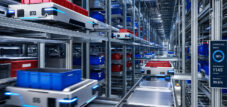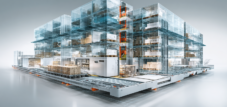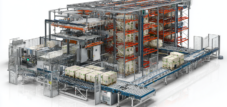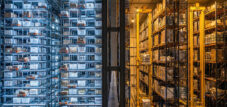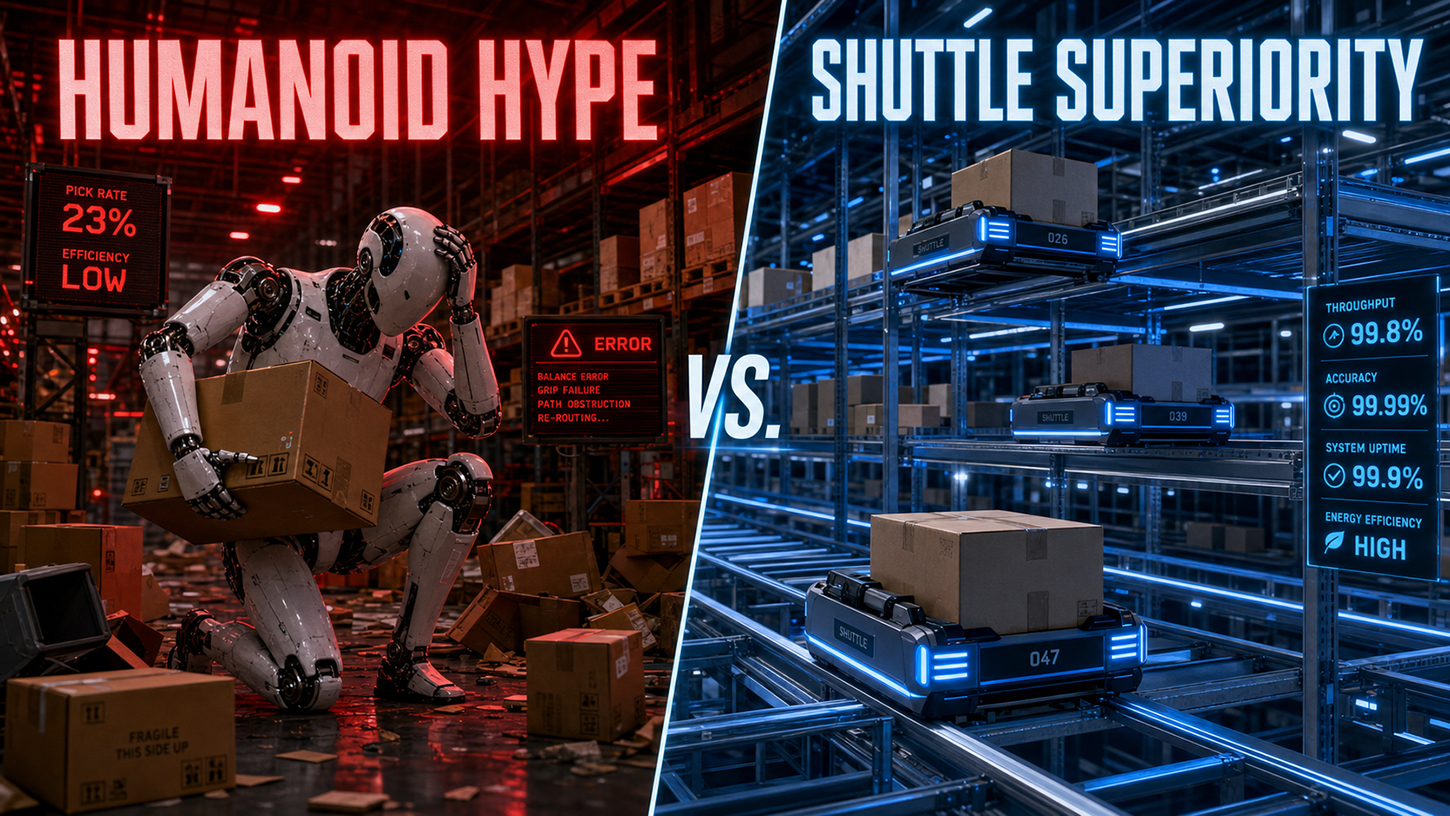
The robot hype trap? The technological superiority of the multi-level shuttle system with combined pushcart principle – Image: Xpert.Digital
Why the industry has been backing the wrong horse for years and burning millions in system architectures that already have their own bottleneck built in
Are AutoStore, Exotec & Co. reaching their limits? The hidden bottleneck of modern storage systems
The elegant illusion of cube storage: What is often kept quiet about in automated warehouses
Intralogistics is under enormous pressure: A chronic shortage of skilled workers, exploding space costs, and the rapid speed demands of e-commerce are inevitably forcing companies to automate. However, the confusing market of warehouse systems poses a dangerous and, above all, expensive investment trap. Lured by impressive space densities and robot-assisted hype – such as the currently ubiquitous cube storage solutions or futuristic 3D shuttles – many companies are investing large sums in system architectures that already have their own bottleneck built in.
Whether it's the extreme dependence on the ABC article structure, the lack of flexibility in load carriers, or the vertical lift as a constant, failure-prone bottleneck: almost all common systems reach their limits at a certain point, limits that cannot be overcome with even the largest budget. Those who focus solely on the lowest price per storage space will ultimately lose their strategic acumen. This article sheds light on the industry's convenient illusions and reveals why many decision-makers have been backing the wrong horse for years. Learn why the principle of architectural decoupling represents a true paradigm shift and why the multi-level shuttle system with a combined push-cart principle forms by far the most robust, fail-safe, and profitable foundation for AI-driven logistics in the coming decades.
This goes well with:

The principle of decoupling as an architectural paradigm shift
How the push trolley cuts the Gordian knot of intralogistics
To understand the superiority of the multi-level shuttle system with its push-cart principle, one must first grasp its operating principle in detail. In this system, compact shuttle vehicles not only move within a single level but simultaneously serve multiple racking levels. A single multi-level shuttle can typically serve two to six levels at once, with only a single guide rail integrated into the racking structure being required for, for example, five simultaneously served container levels. By vertically stacking several such multi-level shuttles on top of each other, small parts warehouses of any height can be equipped, significantly increasing throughput compared to a conventional storage and retrieval machine.
The key architectural difference compared to all other system categories lies in the combined trolley principle. The trolley, also known as a transfer car or distribution trolley, handles the horizontal transport of the shuttle or loading units along the aisle to the various storage channels. The shuttle itself then autonomously enters the respective channel to store or retrieve the goods. Vertical conveyors connect the different levels, with the crucial innovation being the decoupling of shuttle and lift movements through buffer zones. These buffer zones on each main level ensure that the shuttle and lift can operate independently, effectively decoupling their movements. In practice, this means that while the shuttle is still storing goods, the lift can already provide the next loading unit, and conversely, the shuttle doesn't have to wait for the lift while the goods are temporarily stored.
This architecture eliminates the most significant system disadvantage that affects virtually all competing technologies in some way: the performance-limiting bottleneck at a central interface. SSI Schaefer, for example, implements this principle under the names Navette and Schaefer Lift and Run. The Navette achieves speeds of up to 2.5 meters per second with an acceleration of 1.8 meters per second squared and can be stacked to a system height of up to 24 meters. The Schaefer Lift and Run system for pallets even reaches total heights of up to 45 meters within a temperature range of -28 to +35 degrees Celsius. Performance is around 500 double cycles per aisle, resulting in an excellent price-performance ratio due to the manageable complexity of the racking system, the machine itself, and the storage strategies.
The built-in bottleneck: Why cube storage systems fail due to their own architecture
The cube principle as an elegant illusion with an expensive downside
Cube storage systems like AutoStore follow a seemingly simple approach: bins are stacked on top of and next to each other without gaps in an aluminum grid, and robots move across the grid, retrieving bins using cable and gripping mechanisms. With over 1,600 systems installed worldwide and a documented system availability of 99.7 percent, AutoStore has undoubtedly set a new market standard. The storage density is impressive: storage capacity can be increased up to four times compared to a manual warehouse, and the modular design allows for relatively easy expansion with additional robots, ports, or bins.
However, behind this elegant surface lies an inherent design flaw that makes the cube storage concept a strategic risk in demanding logistics environments. The first and most serious drawback is its extreme dependence on the ABC distribution of the product structure. Because the containers are stacked on top of each other, robots must first move containers on top to access stock below. In practice, this means that only about ten percent of the stored assortment is directly accessible. A precise ABC classification is therefore essential. If demand patterns shift abruptly, for example due to seasonal fluctuations, unexpected market trends, or new product launches, system performance drops significantly because a massive number of restacking operations suddenly occur, dramatically reducing throughput.
The multi-level shuttle system with its pushcart principle simply doesn't have this problem. Every container, every pallet is directly accessible via the pushcart and the shuttle, regardless of its position in the rack. There is no stack dependency, no restacking, and no ABC sensitivity. Whether the demand structure changes completely within a quarter or a previously unknown item suddenly becomes a bestseller, the multi-level shuttle system responds with identical performance.
The second systemic disadvantage of cube storage concerns its physical limitations. Goods are restricted to container dimensions of typically 600 by 400 millimeters, with a maximum payload of 35 kilograms for AutoStore. The overall height of the system is limited to approximately 5.4 to 6.3 meters. It is exclusively a small parts storage system; pallet handling is inherently impossible due to its design. In contrast, multi-level shuttle systems achieve stacking heights of up to 24 meters for small parts and up to 45 meters for pallet handling, opening up a fundamentally different dimension of vertical space utilization.
The third disadvantage concerns throughput. The picking performance of an AutoStore robot is only about 25 storage or retrieval operations per hour at a speed of 3.1 meters per second. For an average throughput of 2,000 storage or retrieval operations per hour, up to 120 robots are therefore required, making the system extremely expensive. In contrast, a multi-level shuttle system achieves throughputs of 500 double cycles per aisle with a manageable number of vehicles, and this performance can be scaled linearly by adding more shuttles.
Finally, sensitivity to floor unevenness poses a significant practical problem. Since the bins in AutoStore stand directly on the floor, this can lead to costly floor renovations in brownfield projects, i.e., when retrofitting existing buildings. The multi-level shuttle system, with its guide rails integrated into the racking structure, is largely independent of floor quality and therefore considerably better suited for existing buildings.
The challengers in the Cube segment are not solving the fundamental problems
With the expiration of several AutoStore patents, companies like Jungheinrich (PowerCube), GridStore (with an increased height of 10.8 meters and a higher bin weight of 50 kilograms), Attabotics, and Intellistore have developed their own cube storage variants. While these address some weaknesses of the AutoStore concept, such as the dependence on floor leveling in the PowerCube (which allows robots to travel below the grid and hold the bins in place), the fundamental problem of stacking dependency and the associated ABC sensitivity remains in all cube storage variants. This is an architecture-related limitation that cannot be overcome through incremental improvements, but only through a fundamentally different system concept.
An additional, often underestimated risk factor with cube storage systems is fire safety. The densely stacked plastic containers pose particular challenges for fire protection. The British online supermarket chain Ocado, which operates its own cube storage concept, experienced two serious fires in Andover in 2019 and Erith in 2021. In systems where robots operate below the grid, such as the PowerCube, fire detection and suppression are considerably more difficult, as the source of the fire may be too far from sprinklers. Multi-level shuttle systems, with their open metal shelving structure, offer significantly better accessibility for sprinkler systems and other fire suppression systems.
The 1D Shuttle: Why half-automation creates whole problems
The one-dimensional dead end
The 1D shuttle represents the entry point into shuttle technology and moves exclusively along a single horizontal axis, namely within the depth of a storage channel. For all other operations, especially transfers between channels and levels, it relies on forklifts or stacker cranes. It is therefore a semi-automated system that marks the transition between manual warehousing and full automation.
The central weakness of the 1D shuttle compared to the multi-level shuttle with a trolley principle lies in its fundamental dependence on external transport equipment. While the multi-level shuttle system operates completely autonomously via the integrated trolley, performing all horizontal movements, channel accesses, and level changes without human intervention, the 1D shuttle requires a forklift or stacker crane for every operation outside its channel. This not only means a persistent need for personnel but also a systemic dependence on the availability and efficiency of manual transport equipment.
Another significant disadvantage is the lack of product flexibility. Since each channel can typically only hold one item and access is sequential according to the LIFO principle, the 1D shuttle is only suitable for reserve storage, buffer storage, or deep-freeze storage with a small number of high-volume items. The channels are filled with single-product items, which leads to inefficient space utilization when dealing with a high SKU diversity. In contrast, the multi-level shuttle with push trolleys offers direct access to every single storage location, regardless of the channel depth, thus enabling chaotic storage with maximum storage space efficiency.
In continuous operation, the 1D shuttle also exhibits a precarious failure pattern. Since typically only a few shuttle vehicles are in use, the failure of a single unit can temporarily paralyze operations in the affected area completely. The most frequent sources of malfunctions are defective batteries and problems with pallet load securing. In contrast, the multi-level shuttle system, with its numerous identical, independently operating vehicles, provides inherent redundancy: If one shuttle fails, the remaining units take over its tasks, and the defective vehicle can be replaced while operations continue.
The 2D shuttle: When the lift becomes the Achilles' heel problem
Horizontal freedom with a vertical bottleneck
The 2D shuttle extends the freedom of movement of the 1D shuttle by adding a second dimension, enabling lateral navigation between different channels or positions on the same level. In the container area, these are level-bound vehicles that operate within a single racking level and are transferred between levels via vertical lifts. Scalability is remarkable: adding more shuttles increases system performance without requiring additional aisles.
But this is precisely where the architectural weakness becomes apparent, making the 2D shuttle structurally inferior to the multi-level shuttle with its trolley principle: the vertical lift as a performance-limiting bottleneck and potential single point of failure. In level-bound shuttle systems, vertical conveyors ensure the vertical transport of loading units between levels; the system thus handles horizontal and vertical transport separately. The problem is that no matter how many shuttles operate horizontally and how high the theoretical throughput is on each level, the capacity of the shuttle systems is limited by the number and performance of the vertical lifts. The lift becomes the bottleneck through which all vertical material flows must pass.
In systems with only one siphon per aisle, its failure can result in a complete shutdown of the affected aisle. Even if a second siphon installation reduces this risk, the siphon remains the most vulnerable point of the entire system: it is the central element connecting all levels, and its performance degradation disproportionately reduces overall output.
The multi-level shuttle system with its trolley principle solves this problem through architectural decoupling. Buffer zones between the shuttle and the lift ensure that both system components operate asynchronously and independently. The lift doesn't have to wait for the shuttle, and vice versa. This decoupling maximizes the utilization of both components and eliminates the sequential bottleneck. Furthermore, lifts can be retrofitted at any time, allowing for a gradual increase in capacity without system modifications. In practice, this means that if throughput requirements increase, an additional lift is simply installed without having to modify the existing racking or shuttle infrastructure.
Another systemic advantage of the multi-level shuttle over the 2D shuttle lies in the efficiency of its movements. Since a single multi-level shuttle serves several levels simultaneously, the total number of vehicles required is significantly reduced. Unlike the level-bound 2D shuttle, which requires at least one dedicated vehicle per level, the multi-level shuttle typically covers two to six levels with a single vehicle. This not only lowers investment costs but also reduces the complexity of vehicle control and maintenance requirements.
LTW Intralogistics Solutions – Shuttle System

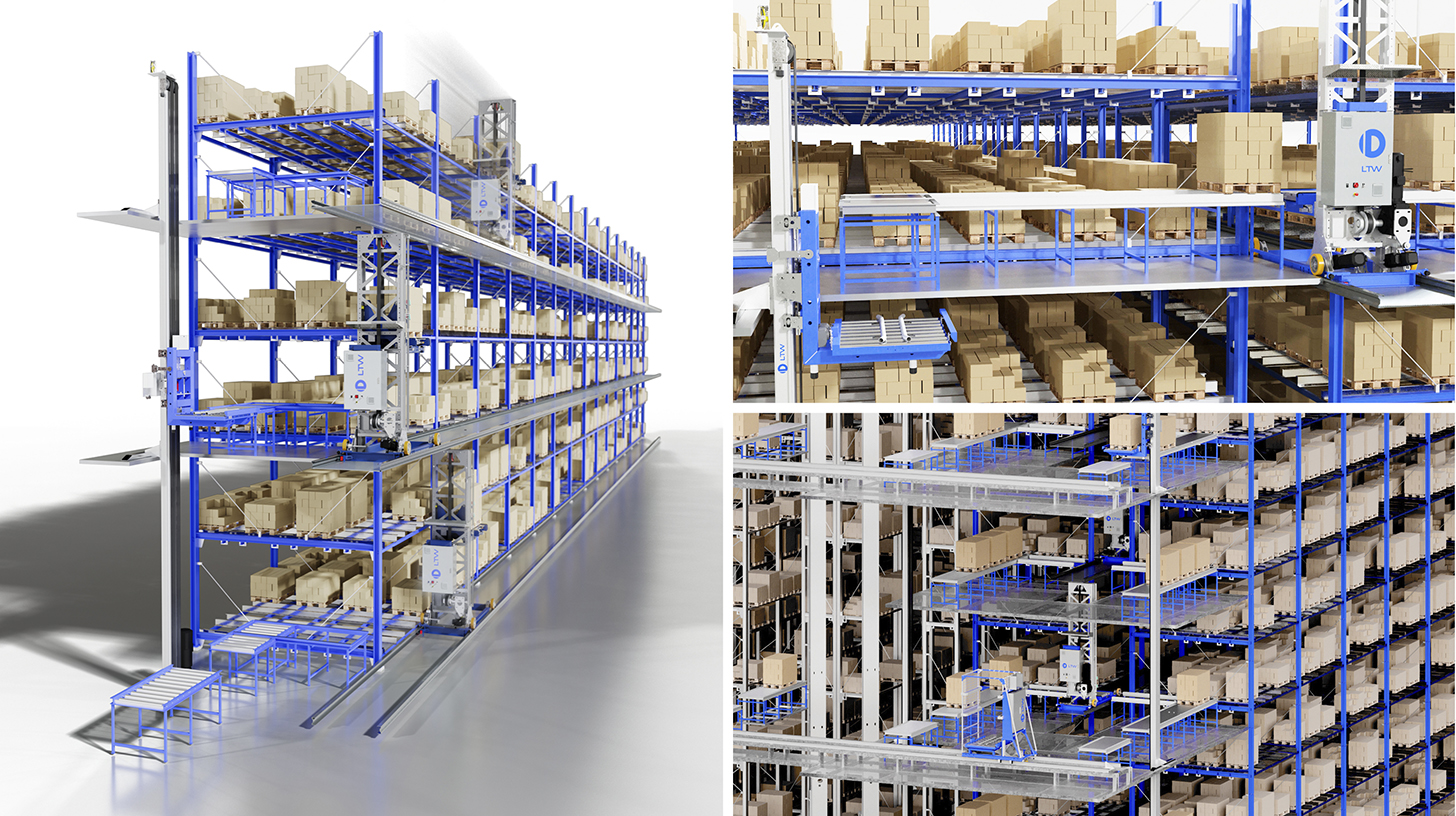
LTW Intralogistics Solutions – Shuttle System - Image: LTW Intralogistics GmbH
LTW offers its customers not individual components, but integrated complete solutions. Consulting, planning, mechanical and electrotechnical components, control and automation technology, as well as software and service – everything is networked and precisely coordinated.
In-house production of key components is particularly advantageous. This allows for optimal control of quality, supply chains, and interfaces.
LTW stands for reliability, transparency, and collaborative partnership. Loyalty and honesty are firmly anchored in the company's philosophy – a handshake still means something here.
Related to this:
The crucial question in logistics: Why decoupling is more important than 3D mobility
The 3D shuttle: Technological brilliance with an operational risk profile
When autonomous robots reach their systemic limits
The 3D shuttle, whose best-known example is Exotec's Skypod system, undoubtedly represents a technological quantum leap. The robots move in all three spatial dimensions, travel freely on the ground, climb vertically up rack frames using patented toothed rail systems, and access containers at heights of up to 14 meters. The integration of the storage and retrieval machine, container handling technology, and goods-to-person delivery into a single vehicle eliminates stationary conveyor pre-zones and performance-limiting shuttle lifts. The Skypod robots reach speeds of up to four meters per second and can complete approximately 22 to 30 double cycles per hour per robot.
Despite these impressive performance figures, the 3D shuttle concept has a number of substantial disadvantages compared to the multi-level shuttle with a sliding carriage principle, which cannot be ignored in a sober economic analysis.
The first and most obvious disadvantage is the exorbitant cost per vehicle. At €35,000 to €40,000 per Skypod robot, these autonomous units are the primary cost driver of the entire system. To achieve the throughput of a multi-level shuttle system with just a few vehicles operating simultaneously on multiple levels, a 3D system requires a large number of these expensive robots. The investment calculation tips in favor of the multi-level shuttle, especially for large facilities, as its vehicle costs per level served are significantly lower.
The second disadvantage concerns system maturity and vendor lock-in. The Skypod system was first presented at LogiMAT in Germany in 2019, and the first systems went into operation about six to seven years ago. Compared to multilevel shuttle systems, which have been in use for decades in a wide variety of configurations and whose technology is offered by numerous manufacturers, Exotec's solution is a relatively new system with limited application experience. Anyone implementing Skypod becomes tied to Exotec and its integrators, and there are currently only a few partners available on the German market. This vendor dependency represents a strategic risk that weighs heavily in a long-term investment decision spanning 10 to 20 years.
The third disadvantage is the stringent requirements for floor quality. The Skypod system tolerates a maximum slope of six millimeters over a length of 1.5 meters, a joint width of up to four millimeters, and an edge offset of up to two millimeters. These requirements can lead to considerable retrofitting costs in existing buildings. Multi-level shuttle systems, whose tracks are integrated into the racking structure, are largely independent of floor quality.
The fourth disadvantage concerns the fixed container formats. Exotec offers containers with a basic size of 650 by 450 millimeters in height classes of 220, 320, and 420 millimeters. This limitation restricts assortment planning. Multi-level shuttle systems like the Navette from SSI Schaefer offer a wider selection of load carrier options, including trays, cartons, and various container formats, allowing for more flexible adaptation to different product structures.
Exotec guarantees a system availability of 98 percent over ten years, which is lower than AutoStore's 99.7 percent. The higher mechanical complexity of the three-dimensionally moving robots is the decisive factor here. Multi-level shuttle systems achieve comparable or higher availability rates due to their modular architecture with independently maintainable individual components and the ability to shut down individual maintenance levels while the rest of the system remains operational.
Related to this:

The 4D shuttle: Total mobility as a cost trap
Why four-dimensional freedom does not automatically mean four-dimensional benefit
The term 4D shuttle describes shuttle systems that can move in four directions: forward, backward, left, and right. Supplemented by vertical movement via elevators, this effectively creates three-dimensional space coverage. Manufacturers such as Mecalux, myFABER, and Eurofork offer commercial implementations, while Chinese manufacturers like Nanjing 4D Intelligent Storage Equipment are entering the international market with competitive pricing models. The technical specifications are designed for heavy pallet handling: nominal loads of 1,500 to 2,000 kilograms at travel speeds of 1.2 meters per second under load and a positioning accuracy of plus/minus one millimeter.
Compared to the multi-level shuttle with a trolley principle, the 4D shuttle exhibits structural disadvantages that call its operational superiority into question. The fundamental problem lies in the complexity of the individual vehicle. A 4D shuttle must mechanically control four directions of travel, which makes the design considerably more complex and therefore more maintenance-intensive and prone to failure than a shuttle that simply moves within a channel and is transferred to the correct position via a trolley. The compactness and low energy consumption of the lightweight shuttle vehicles in the multi-level system contrast sharply with the heavier, more energy-intensive 4D vehicles, which have a weight of 342 to 420 kilograms.
Another disadvantage is the 4D shuttle's reliance on elevators for level changes. Just like with the 2D shuttle, this creates a potential bottleneck at the vertical conveyor interface. The multi-level shuttle system solves this problem through its integrated multi-level operation and decoupling via buffer zones. Instead of a heavy 4D shuttle having to enter an elevator to change levels, the multi-level shuttle serves multiple levels directly and, thanks to decoupled elevators with buffer zones, can achieve a significantly higher throughput per installed vertical conveyor.
The multi-level shuttle system, in its pallet configuration (for example, as the Schaefer Lift and Run), offers a combination of a push trolley and a flexible orbiter channel vehicle, which is particularly suitable for use in the beverage sector. The separate pallet conveyor levels for storage and retrieval enable parallelization of goods flows, which is not achievable with a 4D shuttle that must sequentially switch between storage and retrieval.
The overall economic calculation: Why the cheapest price per parking space does not necessarily mean the cheapest price per order
Investment costs, operating costs and the total cost of ownership
The investment decision for a storage system should not be reduced to a comparison of the acquisition costs per storage space. The decisive factor is the Total Cost of Ownership over the entire lifespan of the system, typically 15 to 20 years. Here, the multi-level shuttle system with its pushcart principle reveals its economic superiority in several dimensions.
Energy efficiency is a key factor. The compact, lightweight shuttle vehicles require significantly less energy for their horizontal movement than a complete storage and retrieval machine. Shuttle systems are typically more energy-efficient per storage and retrieval cycle because they separate the horizontal and vertical movements: A lightweight shuttle moves horizontally with low mass, while a separate, energy-optimized lift handles the vertical movement. Modern systems recover braking energy and make it available for further transport operations.
Scalability without system disruption is another economic advantage. While increasing performance in cube storage systems requires the use of additional, expensive robots, and each additional robot in 3D shuttle systems costs between €35,000 and €40,000, a multi-level shuttle system can be scaled using three independent levers: additional shuttles for increased horizontal throughput, additional lifts for increased vertical capacity, and additional rack modules for greater storage capacity. This three-pronged scaling approach enables a demand-driven, incremental investment strategy that minimizes the risk of overinvestment.
Maintenance costs also significantly differentiate the systems. While shuttle systems require maintenance for each individual shuttle and lift, the standardized, relatively simple vehicles of a multi-level shuttle system allow for quick replacement during operation. Cube storage systems require maintenance of the grid robots on the grid itself, which represents a considerable logistical challenge for systems with over a hundred robots. For 3D shuttle systems like Exotec, maintenance of the mechanically complex, three-dimensional robots is more demanding and relies more heavily on specialized manufacturer personnel.
The cross-manufacturer availability of multi-level shuttle technology also significantly reduces supplier risk. While cube storage systems and 3D shuttles are tied to specific manufacturers, numerous established intralogistics companies such as SSI Schaefer, Dematic, Klinkhammer, SMB International, and others offer multi-level shuttle systems based on the pushcart principle. This diversity of suppliers ensures long-term spare parts availability, enables a competitive maintenance market, and protects against technological and commercial dependence on a single manufacturer.
System availability and resilience: Why decoupling means survival insurance
The cost of five minutes of standstill
In modern logistics, even a five-minute system downtime incurs significant costs. Different warehouse technologies vary not only in their absolute availability values but also fundamentally in how they handle disruptions. The multi-level shuttle system with its push-cart principle offers architecturally superior resilience to failures.
The principle can be described in three layers of redundancy. The first layer is vehicle redundancy: Since several shuttles operate simultaneously in an aisle, the system automatically compensates for the failure of individual vehicles. The remaining shuttles take over the tasks of the failed vehicle, and the defective vehicle can be replaced during operation without shutting down the entire system. The second layer is lift redundancy: The decoupling between shuttle and lift via buffer stations ensures that a lift failure does not lead to an immediate shutdown of the affected aisle, as the buffers allow the shuttles to continue working temporarily. Furthermore, lifts can be retrofitted at any time. The third layer is level redundancy: Individual maintenance levels can be shut down while the rest of the system remains operational.
In comparison, while cube storage systems are redundant at the robot level, as failing robots are replaced by others, they suffer from the systemic weakness of grid dependency. If an area of the grid is blocked, for example by a fallen container or a stuck robot, specialized recovery robots like the Bin-ResQ must be deployed. With the 2D shuttle, the hoist is the most vulnerable point: a hoist failure can disproportionately reduce the performance of the overall system or, in systems with only one hoist per aisle, cause the affected aisle to shut down completely. While individual robots can be added or removed from Exotec's 3D shuttle without interrupting the system, the higher mechanical complexity of the three-dimensionally operating vehicles leads to a statistically higher probability of individual failures. The guaranteed system availability of 98 percent over ten years is significantly lower than the values achievable with proven multi-level shuttle systems.
Load carrier flexibility and versatility: The universal weapon of intralogistics
From small parts to pallets in one system family
An often underestimated strategic advantage of the multi-level shuttle system with a sliding trolley principle lies in its versatility across various load carrier classes. While cube storage systems and 3D shuttles are dedicated solutions for small parts and containers, and 1D and 4D shuttles are dedicated pallet solutions, multi-level shuttle systems exist in variants for both worlds.
The SSI Schaefer Shuttle family impressively illustrates this range: The Navette handles small parts with trays, containers, and cartons, with loads up to four times 35 kilograms. The Schaefer Tray System covers pallet layer storage with up to 200 kilograms per tray. The Schaefer Lift and Run variant addresses fully automated pallet storage with multi-deep storage. All three systems are based on the same fundamental principle of multi-level handling with a decoupled push carriage and vertical conveyor, enabling a uniform control architecture, shared spare parts pools, and a consistent operating concept.
For companies that require both small parts and pallet storage, such as in spare parts logistics, the food trade, or pharmaceutical distribution, this system family offers the unique advantage of an integrated overall solution. Instead of operating two fundamentally different technologies with varying control systems, maintenance requirements, and supplier relationships, a unified system concept can be implemented across all load carrier classes.
| criterion | Cube Storage | 1D Shuttle | 2D shuttle | 3D Shuttle | 4D Shuttle | Multi-level shuttle with push trolley |
|---|---|---|---|---|---|---|
| load carrier | Containers only | Only pallets | Containers or pallets | Containers only | Only pallets | Containers, trays, boxes and pallets |
| Maximum system height | approx. 6 m | Building-dependent | Up to 26 m | Up to 14 m | Building-dependent | Up to 24 m (container) / Up to 45 m (pallet) |
| Direct access to every article | No (only about 10%) | No (LIFO) | Yes (level-based) | Yes | Limited (channel depth) | Yes (via push trolley) |
| Lifter as bottleneck | No (no lifter) | No (external) | Yes (critically) | No (integrated into the robot) | Yes (elevators) | No (decoupled by buffer spaces) |
| Scaling performance | Add robot | Limited | Add shuttles | Add robot | Add shuttles | Add shuttles and/or lifts |
| Suitable for deep freezing | Restricted | Yes | Yes | Restricted (0-40°C) | Yes (down to -25°C) | Yes (down to -28°C) |
| Manufacturer dependency |
High (AutoStore ecosystem) | Low | Medium | High (Exotec) | Medium | Low (many providers) |
| ABC sensitivity | Very high | Medium | Low | No | Medium | No |
The various automated storage systems differ in key criteria. Regarding load carriers, cube storage and 3D shuttle systems are specialized for containers, while 1D and 4D shuttles move only pallets. 2D shuttles can handle both, but the multi-level shuttle with push trolleys offers the greatest flexibility, as it is suitable for containers, trays, cartons, and pallets.
The maximum system height ranges from approximately 6 meters for cube storage to building-dependent heights for 1D and 4D shuttles. Multi-level shuttles reach impressive heights of up to 24 meters for containers and 45 meters for pallets, while 2D shuttles can be up to 26 meters and 3D shuttles up to 14 meters high.
Direct access to every item is fully guaranteed with 2D shuttles (level-bound), 3D shuttles, and multi-level shuttles (via sliding carriages). In contrast, cube storage systems offer direct access to only about 10% of items, and 1D shuttles operate on a LIFO (last in, first out) principle. With 4D shuttles, access is limited by the channel depth.
A potential bottleneck caused by lifting mechanisms exists for 2D shuttles (critical) and 4D shuttles (elevators). For other systems, this problem is either non-existent (cube storage), solved through external placement (1D shuttle), integration into the robot (3D shuttle), or decoupling via buffer locations (multi-level shuttle).
Performance can be scaled by adding more robots to cube storage and 3D shuttles, additional shuttles to 2D and 4D shuttles, and both shuttles and lifts to multi-level shuttles. Scalability for 1D shuttles, however, is limited.
For use in deep-freeze environments, 1D and 2D shuttles are perfectly suitable. 4D shuttles (down to -25°C) and multi-level shuttles (down to -28°C) are also well-suited, while cube storage and 3D shuttles (0-40°C) have limited applicability.
Manufacturer dependency is low for 1D and multi-level shuttles due to the many providers, medium for 2D and 4D shuttles, and high for the ecosystems of AutoStore (Cube Storage) and Exotec (3D shuttle).
Finally, the ABC sensitivity analysis shows that cube storage systems are very sensitive to the distribution of fast-moving items (very high sensitivity). 3D shuttles and multi-level shuttles are unaffected, while the other systems exhibit low to medium sensitivity.
The future viability of the decoupled principle in AI-driven logistics
Why the architectural DNA of the multi-level shuttle is crucial for the next decade
Warehouse automation will be shaped by three megatrends in the coming years: the increasing integration of artificial intelligence into fleet management and order optimization, the growing modularization and the associated reduction in entry barriers, and the electrification and energy optimization of all system components. In all three dimensions, the multi-level shuttle system with its pushcart principle is architecturally better positioned than its competitors.
AI integration benefits from the decoupling between the shuttle and the lift, as intelligent algorithms can use the buffer spaces as a strategic optimization variable. Instead of merely optimizing the route of a single robot, as with cube storage or 3D shuttles, AI in a decoupled system can orchestrate the interaction between dozens of shuttles and multiple lifts simultaneously, thus achieving throughput gains that are inherently impossible in rigidly coupled systems. Modularization is already conceptually embedded in the multi-level shuttle: shuttles, lifts, rack modules, and buffer spaces are independent modules that can be added, removed, or replaced individually. Energy optimization benefits from the low moving mass of the shuttle vehicles and the possibility of regenerative braking.
Furthermore, the growing importance of cross-manufacturer standardization, for example via the VDA 5050 protocol, enables interoperable control of different vehicles within a single system. Multi-level shuttle systems, with their open, modular architecture, are ideally suited for this integration, while proprietary systems such as Cube Storage or Exotec Skypod remain bound to the closed ecosystem logic of their respective manufacturers.
The decisive design advantage: Summary of architectural superiority
The multi-level shuttle system with its combined push-cart principle, as a decoupled architecture, solves a problem that all other system categories exhibit to varying degrees: the inherent bottleneck that renders investments in performance improvements futile beyond a certain point. For cube storage, this is the stacking dependency and the associated ABC sensitivity. For 1D shuttles, it's the lack of autonomy and the reliance on manual transport. For 2D shuttles, it's the lift as a performance-limiting bottleneck. For 3D shuttles, it's the exorbitant vehicle costs, the limited system maturity, and the high manufacturer dependency. For 4D shuttles, it's the mechanical complexity of the individual vehicle and the existing elevator dependency.
The multi-level shuttle with its sliding carriage principle decouples critical system interfaces through buffer zones, eliminates the lift as a bottleneck, offers direct access to every storage location without ABC dependency, scales across three independent axes, is available in a broad system family for all load carrier classes, and is offered by numerous established manufacturers. It's not the system that generates the most headlines, but it's the system that provides the most solid architectural foundation for the next two decades of intralogistics. Companies facing an investment decision in warehouse automation would be well advised to include this architectural advantage in their evaluation matrix before being dazzled by the superficial elegance of proprietary systems.
Choosing the right technology for warehouse automation is not a matter of personal preference or a manufacturer's marketing budget. It's a matter of system architecture. And in this respect, the multi-level shuttle with a decoupled trolley principle offers the strongest solution.
Consulting - Planning - Implementation

Konrad Wolfenstein
I would be happy to serve as your personal advisor.
You can contact me at wolfenstein∂xpert.digital or
Just call me on +49 7348 4088 965 .
Your intralogistics experts
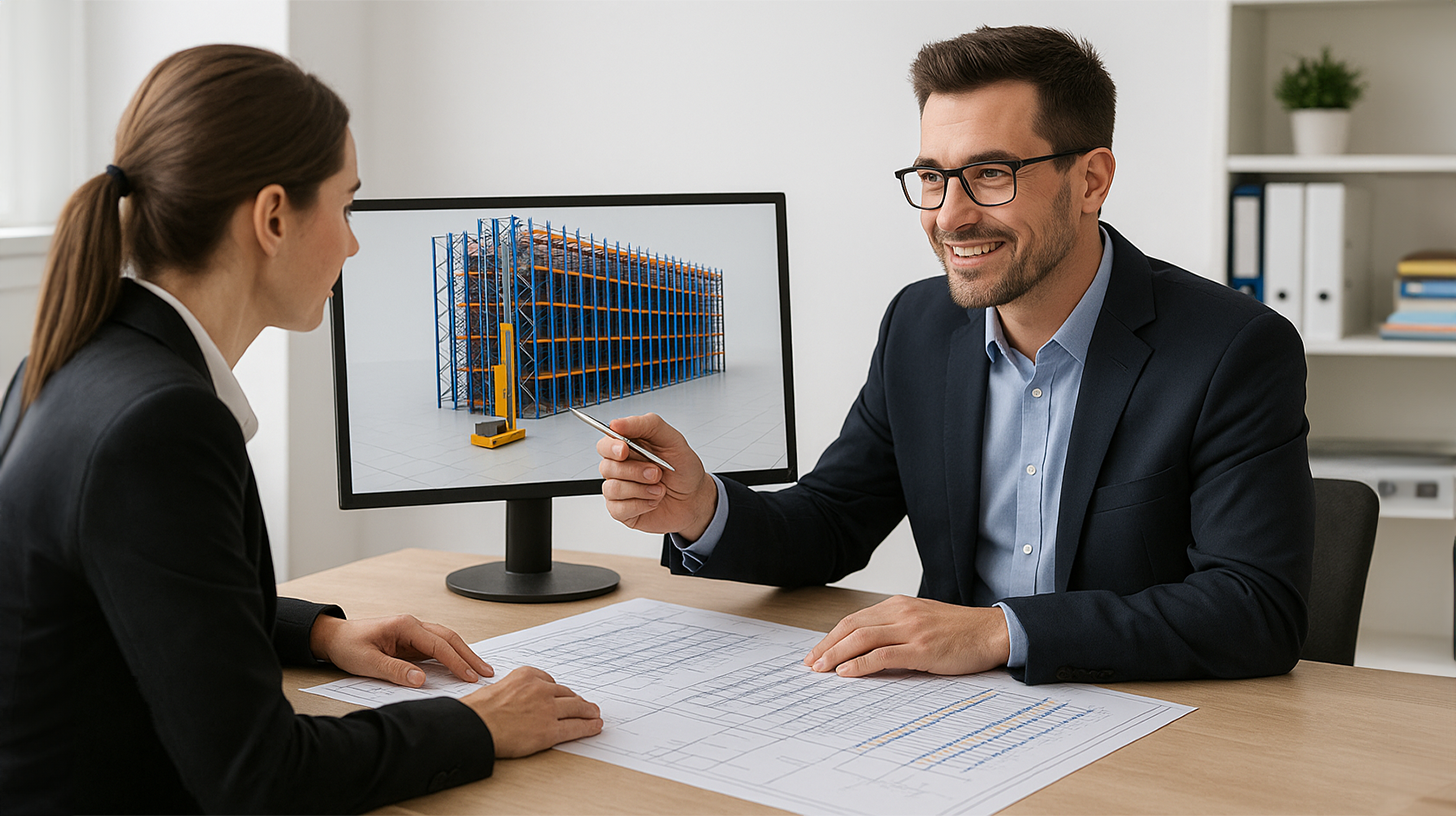
Consulting, planning and implementation of complete solutions for high-bay warehouses and automated storage systems - Image: Xpert.Digital
More information here: