
Consumer success as a deception | The great disillusionment: When artificial intelligence fails on the factory floor
Xpert pre-release

Available in 27 languages 📢
Prefer Xpert.Digital on GoogleⓘPublished on: January 11, 2026 / Updated on: January 11, 2026 – Author: Konrad Wolfenstein
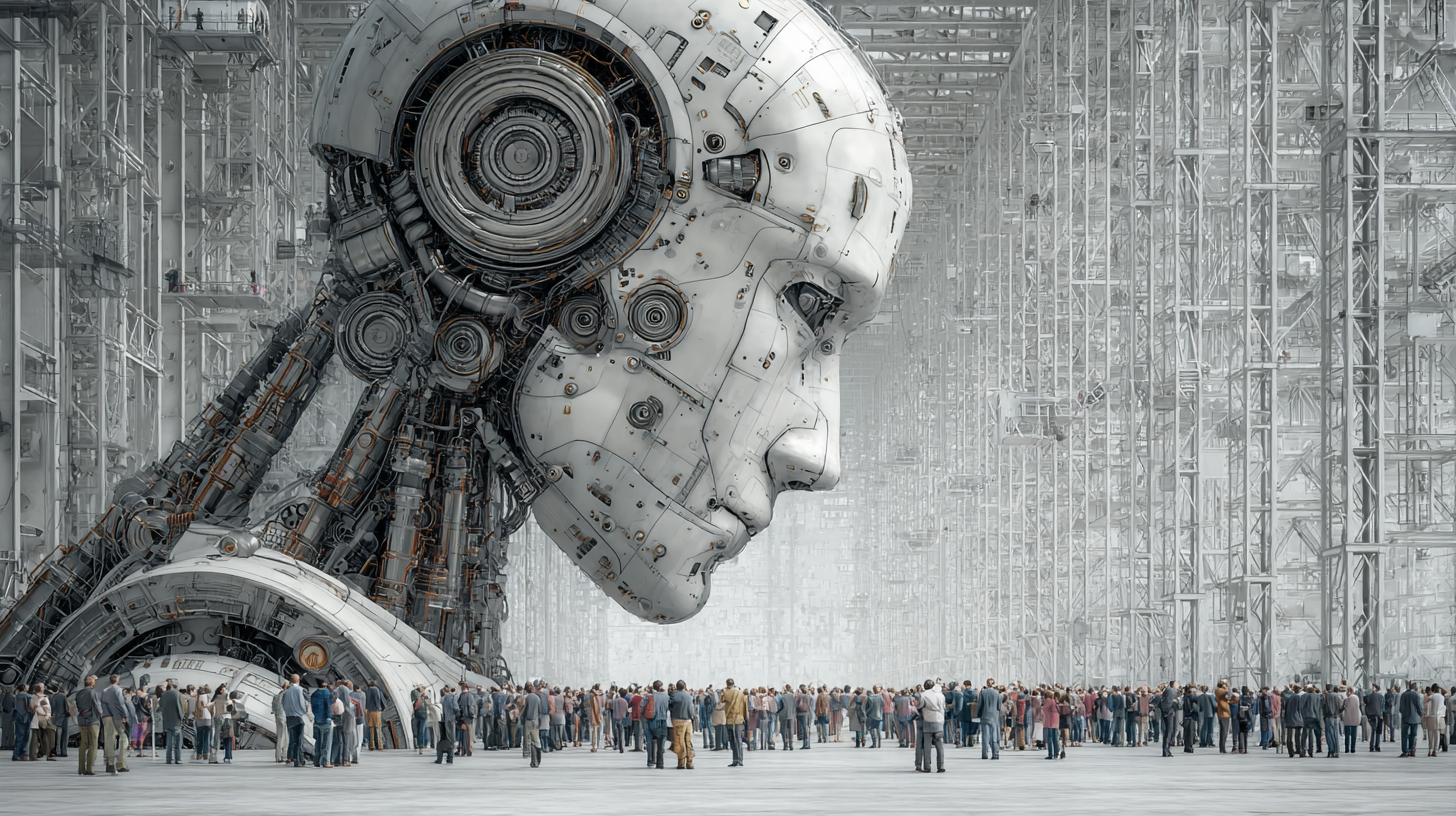
Consumer success as a deception | The great disillusionment: When artificial intelligence fails on the factory floor – Image: Xpert.Digital
Is an AI crash imminent in 2026? Investors warn of the most expensive bubble of all time
“Illusion of Thinking”: Why the ChatGPT Hype Crashed Against the Factory Floor
While the world is still marveling at ChatGPT's creative capabilities, a completely different drama is unfolding in the real economy. New data shows that the dream of an AI revolution in industry is threatening to become the most expensive disappointment in digital history.
There's a hangover after the gold rush. For three years, generative artificial intelligence has dominated the headlines, driven up stock prices, and suggested an era of limitless productivity. But anyone who looks behind the scenes of the glittering tech demos and sees where real value creation takes place—in the production halls, logistics centers, and balance sheets of industry—experiences a rude awakening.
What works as a useful chatbot in private life often fails spectacularly in the complex machinery of industrial manufacturing. The figures are alarming: While tech giants pump trillions into data centers, according to recent studies by MIT and McKinsey, 95 percent of AI implementations in companies are ineffective. Instead of the promised efficiency explosion, we are experiencing a cost explosion with no return on investment.
From the "learning gap" and a lack of data strategies to the capitulation of German SMEs: This article ruthlessly exposes why the AI bubble could be about to burst, why artificial intelligence often only simulates an "illusion of thinking," and why 2026 will be a pivotal year for the entire technology sector. An analysis of the widespread disillusionment—and the question of what will remain after the hype.
Suitable for:

Why the dream of the automated factory is becoming the most expensive disillusionment in digital history
After three years of unbridled hype surrounding ChatGPT and generative artificial intelligence, a turning point is emerging. What was heralded as a productivity revolution is increasingly revealing itself as the classic pattern of technological hyperbole: impressive demonstration effects collide with sobering business realities. While millions of people worldwide use artificial intelligence for text, images, and everyday digital tasks, the promised breakthrough has failed to materialize where the real economic value creation takes place—in production halls, assembly lines, and complex industrial processes.
The numbers speak for themselves. A McKinsey analysis from 2025 reveals the full extent of the discrepancy: While 78 percent of companies now use artificial intelligence in some form, an equally large proportion cannot detect any measurable benefit. The Massachusetts Institute of Technology goes even further in its comprehensive study, arriving at a damning conclusion: 95 percent of all enterprise AI implementations show no impact whatsoever on the profit and loss statement. Only five percent of pilot projects even make the leap from the testing phase to actual production readiness. What is emerging here is not a temporary adjustment difficulty, but a structural failure with deep-seated causes that will have far-reaching consequences.
Consumer success as a deception
The widespread acceptance of artificial intelligence in the private sphere has created a dangerous illusion. OpenAI reports a staggering 800 million weekly users of ChatGPT for September 2025, an eightfold increase since November 2023. In Germany, 64 percent of the population uses AI-powered chatbots or voice assistants at least once a week; among 16- to 29-year-olds, this figure rises to 89 percent. These impressive adoption rates convey the impression of a technology that has successfully established itself. However, this impression is fundamentally misleading when one considers the actual value creation.
Consumer use is concentrated on applications with low economic impact: answering everyday questions, creating text for personal purposes, and generating images for entertainment. 87 percent of users exclusively use free versions of the services. This fact alone illustrates the limited willingness to pay and thus the perceived economic value. While OpenAI generates an impressive estimated annual revenue of $12 billion, this success stems primarily from the sheer number of users and enterprise licenses, not from demonstrable productivity gains in the real economy.
The real test for artificial intelligence isn't in generating social media content or answering trivial questions, but in the complex environments of industrial manufacturing, logistics, and production control. Here, the systems must cope with physical processes, diverse product mixes, changing specifications, and complex machine ecosystems. And it is precisely here that the failures become apparent.
The productivity paradox returns
What is currently emerging is a worrying repetition of a phenomenon economists already know from the 1980s: the Solow Paradox. Nobel laureate Robert Solow famously observed in 1987 that the computer age is visible everywhere except in productivity statistics. This paradoxical situation repeated itself with digitalization in the 2000s. According to OECD data, despite massive investments in digitalization, productivity in Germany rose by only 0.7 percent annually between 2010 and 2018. Between 1992 and 2010, it had even fallen by 1.55 percent per year.
We are now witnessing a third iteration of this productivity paradox, this time with artificial intelligence as the supposed game-changer. A McKinsey analysis from 2025 shows that 92 percent of companies will increase their AI investments, yet only one percent has a mature implementation. In fact, 67 percent report that at least one AI initiative has decreased overall productivity. These figures reveal a devastating discrepancy between investment volume and realized returns.
The reasons for this recurring paradox are multifaceted. A fundamental challenge lies in the very nature of modern AI systems. The currently dominant Large Language Models are based on statistical pattern recognition in training data, not on systematic logical reasoning or genuine understanding. An Apple study from June 2025 succinctly summarized the issue: even so-called explainable AI, which outlines its problem-solving process step by step, merely generates an illusion of thinking. This fundamental limitation renders the systems unreliable for applications where precision and consistency are crucial—precisely the qualities indispensable in industrial manufacturing processes.
Failure in industrial reality
The implementation of artificial intelligence in production environments encounters a series of persistent obstacles that cannot be overcome by mere technological improvements. An MIT study identifies the so-called learning gap as the core problem: Most AI systems cannot learn from operational feedback, adapt to changing contexts, or improve over time. Ninety percent of surveyed enterprise users prefer human colleagues to artificial intelligence for complex, long-term projects because the systems require extensive input each time they are used and do not build a persistent context.
This structural deficiency is exacerbated by a number of organizational and technical factors. The German Economic Institute (IW) and various industry surveys paint a consistent picture: 76 percent of small and medium-sized enterprises (SMEs) struggle with insufficient data quality and fragmented data silos. 68 percent lack a well-developed AI strategy. 82 percent report significant skills gaps in AI. Germany currently has a shortage of 244,000 STEM professionals, including 29,500 IT specialists. These figures illustrate that the problem extends far beyond technological limitations.
For a manufacturing company to successfully implement AI, a whole cascade of prerequisites is required: high-quality, structured, and integrated data from various sources; technical infrastructure for capturing, storing, and processing this data; specialists with expertise in both data science and the specific production processes; organizational structures for change management and fostering acceptance; and clear governance frameworks for responsibilities and risk management. If even one of these elements is missing, the projects are highly likely to fail.
The reality in German manufacturing companies is sobering. A study by the University of Koblenz shows that while two-thirds of the 120 companies surveyed already report using AI, 80 percent of them have only been doing so for about two years. A closer look at actual manufacturing practices reveals that AI-based processes are still a distant prospect for most manufacturing companies. The biggest obstacle is the consolidation and availability of data, closely followed by the shortage of skilled workers, which further ties up already limited IT resources.
Cost explosion without return on investment
Parallel to the lack of operational benefits, investment costs are escalating to dizzying proportions. Global spending on AI data centers is estimated at $600 billion in 2025 and is projected to rise to between $3 and $4 trillion by 2030. This represents an annual growth rate of 46 percent. McKinsey even forecasts a need for $7 trillion by 2030 for data center infrastructure alone. OpenAI, through its Stargate initiative with Oracle and Softbank, is planning $500 billion worth of data centers. Meta CEO Mark Zuckerberg anticipates costs of $600 billion by 2028.
These enormous sums must eventually pay off. Sequoia Capital has calculated that the AI industry would need to generate $600 billion in annual revenue to justify current investments, a hurdle that seems almost impossible to overcome in the short term. Goldman Sachs has issued stark warnings that $1 trillion in AI investments may not deliver the expected returns. Analyst Jim Covello put it bluntly: Overdoing things the world has no use for, or isn't ready for, usually ends badly.
The energy component is particularly problematic. Capacity prices in the crucial PJM region in the US have climbed to $329 per megawatt-day for the 2026/2027 delivery year, an almost ninefold increase compared to 2025/2026. This critical pressure for efficiency is forcing hyperscalers to immediately adopt energy-efficient architectures. However, even with improved architectures, a burst moment looms in mid-2026, when capital expenditure-driven supply grows faster than monetized usage. In this scenario, the cost per token could approach zero, leading to a rapid devaluation of newly built inference capacity.
The situation is reminiscent of the dot-com bubble of the early 2000s, when massive investments in fiber optic cables led to overcapacity that was never fully utilized. Many of the newly built AI data centers could suffer a similar fate if demand doesn't develop at the projected pace. The Gartner Hype Cycle, a well-established forecasting tool for technology cycles, suggests that artificial intelligence could enter its third phase, the trough of disillusionment, in 2026. In this phase, limitations and high costs become glaringly apparent, scaling issues and a lack of viable business models lead to the failure of many projects and the disappearance of providers.
The German middle class is capitulating
While tech giants continue to pump billions into artificial intelligence, a remarkable trend is emerging in Germany's small and medium-sized enterprises (SMEs): a strategic retreat. A survey of 200 SMEs published in January 2026 by the management consultancy Horvath reveals that these companies will spend only 0.35 percent of their revenue on AI technologies in 2025, compared to 0.41 percent in 2024. This means that SMEs are investing about 30 percent less than the overall market, a gap that is widening.
The reasons for this development are revealing. Geopolitical tensions have unsettled many medium-sized companies and shifted their focus to cost optimization. More importantly, however, early AI applications may not have delivered the hoped-for efficiency gains. Heiko Fink, study director and member of the Horvath board, warns emphatically: If the AI transformation is not massively accelerated now, the technology gap will develop into an existential strategic risk.
The challenges facing small and medium-sized enterprises (SMEs) are multifaceted and deeply rooted. Bureaucratic hurdles and slow progress in digitalization significantly impair their ability to implement AI. Concerns regarding data protection and digital sovereignty further hinder adoption. A comprehensive AI study of SMEs from 2025 paints a dramatic picture: Although 86 percent recognize the relevance of AI, only 23 percent have successfully implemented concrete AI projects. Only 32 percent have a well-developed AI strategy, and a mere 19 percent have established a dedicated AI manager or team.
Data issues are proving to be a major Achilles' heel. 76 percent of small and medium-sized enterprises (SMEs) struggle with insufficient data quality and data silos between systems. 83 percent lack a comprehensive data strategy. 69 percent don't even know what data they need for AI applications. 58 percent lack data governance structures. These figures illustrate that the problem begins long before the actual AI implementation: There is a lack of fundamental digital infrastructure.
Added to this is the governance deficit. Although 91 percent consider AI security and compliance critical, 76 percent lack an AI governance framework. This discrepancy represents a significant legal and reputational risk, particularly with the EU AI Act, which came into force in August 2024. While the regulation creates a necessary framework for responsible AI use, many companies perceive it as over-regulation that puts them at a competitive disadvantage compared to the US and China. While European companies struggle through the jungle of new regulations, tech giants in North America and Asia continue to enjoy comparatively free rein.
A new dimension of digital transformation with 'Managed AI' (Artificial Intelligence) - Platform & B2B Solution | Xpert Consulting

A new dimension of digital transformation with 'Managed AI' (Artificial Intelligence) – Platform & B2B Solution | Xpert Consulting - Image: Xpert.Digital
Here you will learn how your company can implement customized AI solutions quickly, securely, and without high entry barriers.
A Managed AI Platform is your all-round, worry-free package for artificial intelligence. Instead of dealing with complex technology, expensive infrastructure, and lengthy development processes, you receive a turnkey solution tailored to your needs from a specialized partner – often within a few days.
The key benefits at a glance:
⚡ Fast implementation: From idea to operational application in days, not months. We deliver practical solutions that create immediate value.
🔒 Maximum data security: Your sensitive data remains with you. We guarantee secure and compliant processing without sharing data with third parties.
💸 No financial risk: You only pay for results. High upfront investments in hardware, software, or personnel are completely eliminated.
🎯 Focus on your core business: Concentrate on what you do best. We handle the entire technical implementation, operation, and maintenance of your AI solution.
📈 Future-proof & Scalable: Your AI grows with you. We ensure ongoing optimization and scalability, and flexibly adapt the models to new requirements.
More about it here:
AI revolution called off? The sobering results after the hype
Where artificial intelligence actually creates added value
Despite the largely sobering overall picture, there are areas and use cases where artificial intelligence demonstrably generates added value. However, these success stories are highly specific and follow recognizable patterns that differ significantly from the failed mass projects.
An IBM study from October 2025 shows that 62 percent of companies in Germany are already achieving significant productivity gains through AI. Almost half expect to see a measurable return on investment within twelve months, primarily through improved employee satisfaction, time savings, and increased revenue. An SAP study arrives at similar conclusions: The average ROI of AI investments is 16 percent in the first year and is expected to nearly double to 31 percent within two years. 64 percent of respondents stated they were satisfied with their current return on investment, higher than with any other technology investment.
These positive figures are considerably tempered, however, when one takes a closer look at where and how the value is created. The MIT study identifies a crucial pattern: Successful AI implementations focus on back-office automation, not on the grandiose promises of revolutionized production processes. Document automation, procurement processes, and risk assessments show the highest returns. Successful implementations save between two and ten million dollars annually by reducing business process outsourcing. Agency costs fall by 30 percent when AI tools take over creative and analytical tasks.
Suitable for:

A fundamental problem is revealed in the distribution of investments
More than half of generative AI budgets are spent on marketing and sales, even though back-office automation often generates higher returns. This misallocation is symptomatic of technology adoption driven by hype rather than rational cost-benefit analysis.
In industrial production itself, successes are sporadic and limited to specific applications. Predictive maintenance, which uses machine data to detect wear or failures early on, shows demonstrable success. Automakers like Volkswagen use AI in their factories to analyze sensor data, minimizing unplanned downtime. Ford uses AI to automate manufacturing processes such as welding and assembly. General Motors reduced downtime by 20 percent through predictive maintenance.
Quality control using computer vision is another area with documented success. AI-supported systems analyze camera images in real time and detect even microscopic defects, significantly increasing reliability. Analysis shows that a fully implemented AI infrastructure can deliver a 200 to 300 percent return on investment through defect reduction and faster inspection cycles. Supply chain and inventory optimization achieves a 150 to 250 percent ROI by preventing stockouts and improving supply chain management.
Crucially, these successes don't arise from simple plug-and-play implementation of standard AI solutions, but rather from deep, customized integration into specific processes, accompanied by significant change management and continuous adaptation. MIT data shows that external partnerships reach production readiness roughly twice as often as internal developments, 67 percent compared to 33 percent. Successful buyers treat AI providers not as software vendors, but as business partners, and measure success by business results rather than technical benchmarks.
The shadow AI economy as an indicator
A fascinating phenomenon emerges upon closer analysis of usage patterns: In 90 percent of the surveyed companies, employees use private AI tools for their work, even though only 40 percent of the companies have acquired official AI licenses. This so-called shadow AI economy demonstrates a fundamental contradiction: Individuals can successfully use AI if the tools are flexible and user-friendly. Institutional implementation, on the other hand, fails due to complexity, a lack of integration, and organizational barriers.
This parallel world of unofficial AI use has several implications. Firstly, it demonstrates that the technology itself can be beneficial if it is readily available. Secondly, it reveals a massive governance problem: 81 percent of companies have no guidelines for AI tool usage. 64 percent have data privacy concerns. 73 percent cannot measure productivity gains. 58 percent report quality issues with AI output. Without a holistic AI workplace concept, shadow IT and inefficient tool landscapes are a real risk.
The discrepancy between individual consumer use and failed enterprise implementation is symptomatic of the core problem of artificial intelligence in its current form. The systems are optimized for simple, individual use cases with low risk and complexity. However, they systematically fail when they need to be embedded in complex organizational contexts with high quality and reliability requirements. The so-called learning gap—the systems' inability to learn from feedback and adapt to contexts—makes them unsuitable for the long-term, complex projects that dominate industrial enterprises.
Industry-specific divergences
The MIT analysis reveals another crucial pattern: Only two of the nine industries studied—technology and media—show genuine structural changes through artificial intelligence. In seven other industries, including manufacturing, the transformation remains elusive despite significant pilot activity. This industry-specific divergence is not a coincidence but reflects fundamental differences in complexity and requirements.
Technology and media companies operate in digital environments with structured data, high process standardization, and short iteration cycles. Their business models are based on software and digital services, not on physical products with complex supply chains and manufacturing processes. They have large pools of data scientists and AI experts. Their organizational culture is geared toward rapid technology adoption. All of these factors favor successful AI implementation.
Manufacturing and industrial companies face entirely different challenges. Production environments are defined by nuances: variable product mixes, evolving specifications, fluctuating demand, and complex machine ecosystems. When AI models overlook these realities, false alarms proliferate and worker trust erodes. The Manufacturing Leadership Council estimates that most real-world manufacturing data remains untapped. When context is missed, AI is prone to costly errors, such as classifying process noise as defects or overlooking genuine signals for improvement.
Added to this is the problem of fragmented IT and OT landscapes. Decades-old architectures often isolate operational technology systems, which generate machine data, from information technology systems, which are responsible for process and business data. This fragmentation obscures crucial signals and means that AI models operate with a partial, outdated, or inconsistent view of shop-floor reality. Overcoming these structural barriers requires massive infrastructure investments that only pay off in the long term.
Deloitte's Smart Manufacturing Survey 2025 found that 92 percent of manufacturers believe smart manufacturing will drive future competitiveness, but 84 percent cannot automatically respond to data intelligence. An S&P Global survey reports that 42 percent of organizations abandoned most AI initiatives by 2025, compared to just 17 percent in 2024. A RAND report from 2024 concludes that over 80 percent of industrial AI projects fail, a figure attributed to process complexity, poor data quality, and a lack of real-world context.
The scale of broken promises
To fully grasp the extent of this disillusionment, it's worth looking back at the promises made in 2023 and 2024. In January 2025, OpenAI CEO Sam Altman triumphantly announced on his blog that they now knew how to construct artificial general intelligence. He claimed that AI agents would have a noticeable impact on company results later that same year. Then, in November 2025, Altman considered it a significant achievement that ChatGPT could finally handle dashes correctly. This discrepancy between aspiration and reality illustrates just how far apart expectations and actual capabilities were.
The Institute for Economic Research Consult, commissioned by Google, predicted that the use of generative AI could increase gross value added in the German manufacturing sector by up to 7.8 percent, equivalent to 56 billion euros. The reality, however, is quite different. Labor productivity in mechanical engineering and other areas of the manufacturing sector has remained virtually unchanged since 2018, increasing by a mere 0.4 percent annually. So far, there is no sign of an AI dividend.
McKinsey predicted AI would boost productivity with enormous potential for the global economy. Goldman Sachs, on the other hand, warned that despite its high costs, the technology was far from being useful. Excesses with things the world has no use for or isn't ready for usually end badly. The venture capital firm Sequoia and the hedge fund Elliott already see tech companies in bubble territory.
Critical voices in the scientific community are growing louder. Cognitive scientist Gary Marcus warns that while more and more companies are experimenting with the technology, they are not seeing any substantial improvements. A Forrester study predicts that around a quarter of planned AI investments will be postponed by 2026. The Boston Consulting Group paints a picture of stagnation bought at a high price: only a vanishingly small percentage of companies have so far been able to translate their immense investments into real added value.
The structural causes of failure
The analysis of failed AI projects reveals a consistent pattern of structural causes that cannot be remedied through iterative algorithm improvements. The primary obstacle is a lack of governance. Most companies treat artificial intelligence like just another IT project, rather than as an ecosystem requiring continuous maintenance. Clear responsibilities, risk management frameworks, and mechanisms for ongoing quality assurance are lacking.
The data maturity problem represents the second fundamental hurdle. A tech company analysis based on over 20,000 hours of research in more than 50 companies reveals that only 14 percent possess the necessary foundations for successful AI implementation. The majority struggle with fragmented data, inconsistent systems, and a lack of data governance. Without high-quality, structured, and accessible data, even the most advanced algorithms remain ineffective.
The skills gap further exacerbates the problem. Germany currently lacks 244,000 STEM professionals, including 29,500 IT specialists. For computer science experts, including data scientists and AI specialists, the skills gap is projected to reach 18,655 by 2027. The largest relative increase is expected among managers in IT network engineering and IT administration. Companies face the dilemma that they need expertise for successful AI implementation that is scarcely available on the market.
The change management deficit forms the fourth pillar of failure. Technical implementation is only half the equation. Without comprehensive change management, acceptance falls by the wayside. A financial services provider implemented a sophisticated fraud detection system, but it had little effect due to a lack of integration into the approval process, as employees regularly circumvented the system. Operators and engineers are often skeptical when AI recommendations don't align with shop-floor reality or originate from black-box systems that provide no transparent rationale.
Resource misallocation exacerbates these structural problems. More than half of generative AI budgets are spent on sales and marketing, even though back-office automation often generates higher returns. Companies chase moonshot projects without having established the fundamental digital infrastructure. They build on perfect demo data that immediately collapses under real-world conditions. They systematically underestimate the effort required for integration, maintenance, and continuous adaptation.
The next twenty-four months as a crossroads
The next two years will be crucial for the further development of artificial intelligence in production and industry. Several trends indicate that 2026 and 2027 will be a pivotal period in which winners and losers will clearly distinguish themselves.
The Gartner Hype Cycle suggests that artificial intelligence will enter the trough of disillusionment in 2026. During this phase, limitations and high costs become clearly apparent. Scaling problems and a lack of viable business models lead to the failure of many projects and the disappearance of providers. However, this phase is not a catastrophe, but rather a necessary market correction. Technologies that progress through the Hype Cycle reach the plateau of productivity after the trough of disillusionment, where real value creation occurs.
Investment dynamics point to a potential burst moment in mid-2026. If the supply, driven by capital expenditures, grows faster than monetized usage, the cost per token could approach zero. This would lead to a rapid devaluation of newly built inference capacity and force massive write-downs. Companies that realized too late that their AI investments were not generating a return will have to make painful adjustments.
At the same time, a new generation of AI systems is emerging, known as agentic AI. These systems possess persistent memory and iterative learning, thus directly addressing the learning gap that companies identify as a major obstacle. Early experiments with customer service agents that autonomously handle complete inquiries, or financial process agents that monitor routine transactions, demonstrate promising potential. Companies that invest now in adaptive, deeply integrated AI systems are creating competitive advantages that will be difficult to catch up with later.
The regulatory landscape will also play a crucial role. The EU AI Act establishes a binding legal framework with transition periods of six to 36 months and potentially substantial fines for non-compliance. While this creates compliance obligations and documentation burdens, AI Made in Europe could also be seen as a seal of quality. Companies that implement compliance requirements early on can position themselves as pioneers in the field of trustworthy AI. The question is whether European regulation will create the hoped-for head start in terms of trust or whether it will primarily act as a competitive disadvantage compared to the US and China.
What follows disillusionment?
The current disillusionment surrounding artificial intelligence in production and industry is not a temporary adjustment difficulty, but the inevitable result of inflated expectations encountering structurally incomplete technology. The systems currently referred to as AI are highly sophisticated tools for specific use cases, not universal problem solvers. They can recognize patterns in data, but cannot think systematically and logically. They can automate simple tasks, but cannot independently optimize complex production processes. They can support human expertise, but not replace it.
This realization does not signify the end of AI innovation, but rather the beginning of a more realistic phase. The companies that will succeed in the coming years are those that do not view artificial intelligence as a magic bullet, but as a tool that requires careful integration, continuous maintenance, and realistic expectations. They will not invest in moonshot projects, but in the fundamental digital foundations: data quality, system integration, skills development, and organizational change management.
The value creation of the coming years will primarily arise in narrowly defined use cases where the strengths of artificial intelligence, pattern recognition in large datasets, automation of repetitive tasks, and rapid processing of structured information come into play. Predictive maintenance will continue to gain importance. Computer vision-based quality control will become established. Back-office automation will deliver substantial cost savings. However, the vision of autonomous, self-optimizing factories will remain science fiction for the foreseeable future.
German SMEs are facing a strategic turning point. The current reluctance to invest in AI is understandable given the disappointing results of earlier projects. However, complete abstinence is not the answer. Companies that now create the fundamental prerequisites – data infrastructure, digital processes, and skills development – will be able to benefit from the next generation of AI systems once they are mature. Those who continue to wait and see risk falling behind completely.
The disillusionment surrounding artificial intelligence in production and industry is ultimately a necessary correction of inflated expectations. It forces us to confront uncomfortable realities: that technology alone does not bring about transformation, that organizational and human factors are at least as important as algorithms, and that sustainable value creation requires time and systematic work. Artificial intelligence has proven its added value for text and images. For the economic component in production and industry, this proof is still pending, and it remains to be seen whether and when it can be provided.
Your global marketing and business development partner
☑️ Our business language is English or German
☑️ NEW: Correspondence in your national language!

Konrad Wolfenstein
I would be happy to serve you and my team as a personal advisor.
You can contact me by filling out the contact form or simply call me on +49 7348 4088 965 (Munich) . My email address is: wolfenstein ∂ xpert.digital
I'm looking forward to our joint project.
☑️ SME support in strategy, consulting, planning and implementation
☑️ Creation or realignment of the digital strategy and digitalization
☑️ Expansion and optimization of international sales processes
☑️ Global & Digital B2B trading platforms
☑️ Pioneer Business Development / Marketing / PR / Trade Fairs
🎯🎯🎯 Benefit from Xpert.Digital's extensive, five-fold expertise in a comprehensive service package | BD, R&D, XR, PR & Digital Visibility Optimization

Benefit from Xpert.Digital's extensive, fivefold expertise in a comprehensive service package | R&D, XR, PR & Digital Visibility Optimization - Image: Xpert.Digital
Xpert.Digital has in-depth knowledge of various industries. This allows us to develop tailor-made strategies that are tailored precisely to the requirements and challenges of your specific market segment. By continually analyzing market trends and following industry developments, we can act with foresight and offer innovative solutions. Through the combination of experience and knowledge, we generate added value and give our customers a decisive competitive advantage.
More about it here:









