
Bill for Donald Trump: What would Greenland cost the USA at market prices?
Xpert pre-release

Available in 27 languages 📢
Prefer Xpert.Digital on GoogleⓘPublished on: January 11, 2026 / Updated on: January 11, 2026 – Author: Konrad Wolfenstein
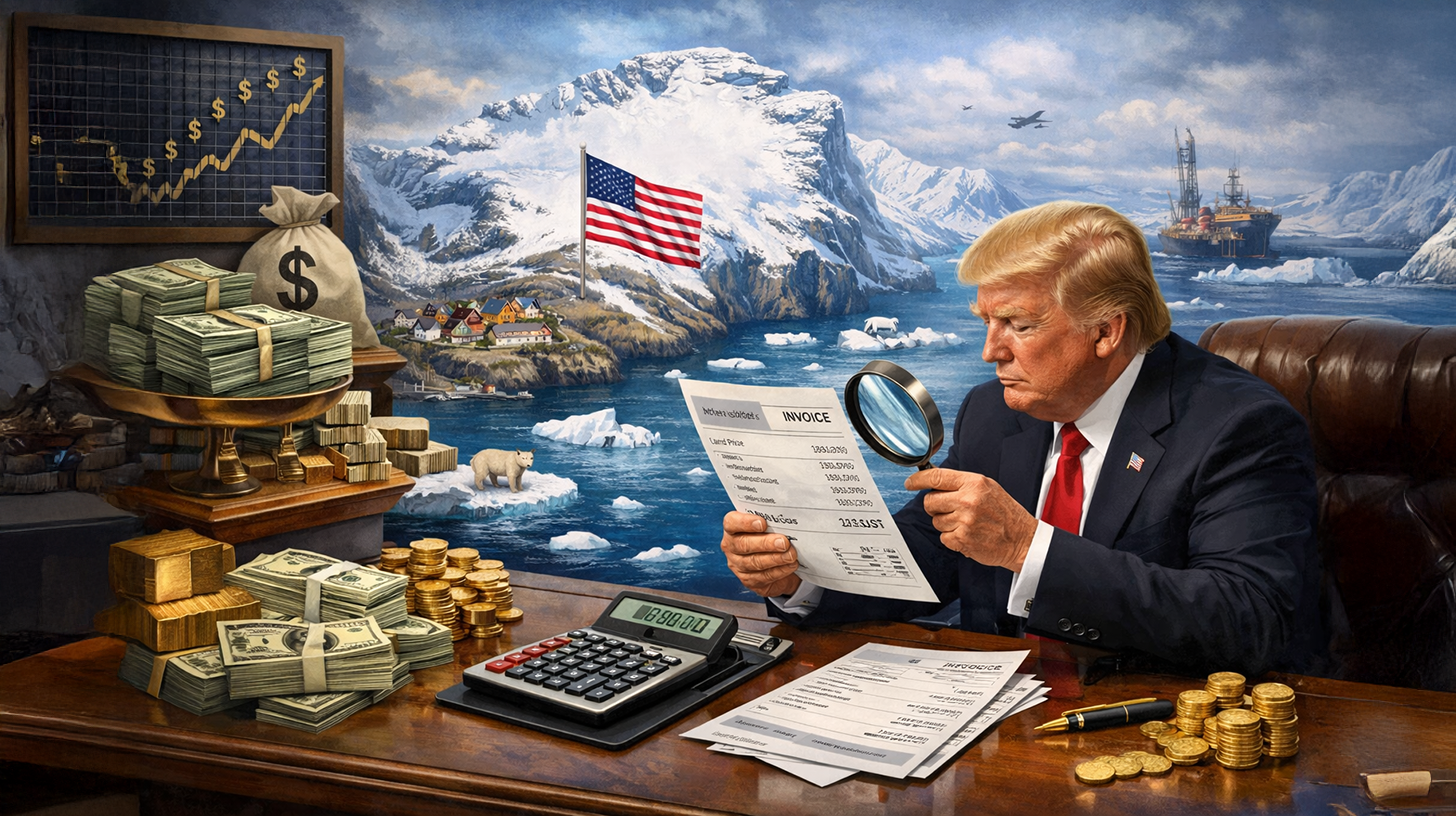
Bill for Donald Trump: What would Greenland cost the US at market prices? – Image: Xpert.Digital
Secret US plans: $100,000 for every Greenlander – but the true price is much higher at $4 trillion (Reading time: 37 min / No advertising / No paywall)
Rare Earth Giant in the Ice: Why Greenland is the key in the power struggle against China
When the American president proposes buying the world's largest island, it initially sounds like a real estate fantasy devoid of any basis in reality. But behind Donald Trump's persistent interest in Greenland lies far more than just eccentric rhetoric: it is the prelude to one of the fiercest geopolitical battles of the 21st century.
The discrepancy could hardly be greater: While Washington is reportedly considering "severance payments" of around $100,000 per inhabitant and a purchase price of approximately $5 billion, experts estimate the island's theoretical resource potential at an astronomical €3.76 trillion. This would put Greenland in the same league as tech giants like Nvidia or Apple. But these figures only tell half the story.
This report delves deep into the complex valuation logic of an island that is essentially not for sale. It illuminates the tension between the harsh economic reality—dominated by fishing and Danish subsidies—and the promising but difficult-to-access treasures buried beneath the surface. For beneath the melting ice lie precisely those rare earth elements that are indispensable for the global energy transition and modern weapons systems, and whose market is currently dominated by China.
At the same time, the analysis reveals the island's massive strategic importance: from the military bottleneck of the "GIUK Gap" to new shipping routes created by climate change-induced ice melt. Greenland is no longer a forgotten outpost, but rather the center of a new power triangle between the USA, Russia, and China. Read here why the calculations for Donald Trump—politically and economically—will probably never add up, and why Greenland has nevertheless become the most expensive bone of contention in world politics.
When geopolitics meets valuation logic: Trump's 5 billion fantasy and the 4 trillion reality
The world's largest island is not for sale, yet its price has been the subject of intense negotiations for weeks. Donald Trump's renewed push to acquire Greenland raises fundamental questions about territorial sovereignty, economic valuation methods, and the tectonic shifts in the global power structure. What might at first glance appear to be just another eccentric idea of the American president, upon closer examination reveals the contours of a new geopolitical era in which resource control, strategic geography, and climate change combine to create an explosive mix.
The impossible equation of an island valuation
When a real estate agent is tasked with determining the value of Greenland, they face a methodological dilemma that exposes the limitations of conventional valuation approaches. The analysis conducted by the Hamburg-based company Schenks on behalf of the Bild newspaper illustrates the range of this challenge: depending on the calculation method, the determined value fluctuates between a modest 10.5 billion euros and an astronomical 3.76 trillion euros.
The lower end of this valuation scale is based on the annual block grant that Denmark transfers to Greenland. This financial lifeline currently amounts to approximately 4.3 billion Danish kroner per year, which is roughly equivalent to 576 million euros. Projecting this amount over a 50-year period and applying standard discount rates of between three and five percent yields a present value of between 10.5 and 14.8 billion euros. This method essentially treats Greenland as a permanent recipient of subsidies and thus reflects its current economic situation, but not its untapped potential.
The medium valuation level is based on the physical land value. Greenland's total area comprises 2,166,086 square kilometers, of which only 410,449 square kilometers are ice-free. Assuming a price of €1.77 per square meter, this results in a theoretical land value of approximately €726 billion. However, this calculation proves to be largely theoretical. In reality, only about ten percent of the ice-free area is considered even remotely marketable. The vast majority of Greenland consists of inaccessible terrain without infrastructure, without transport links, and without the basic prerequisites for economic use. The idea of valuing these areas using Central European or North American land prices ignores the extreme climatic conditions and the complete absence of any development.
At the top end of the valuation scale is the resource-based calculation. Greenland's geological potential is extraordinary. The island has proven deposits of 25 of the 34 raw materials that the European Union classifies as critical. Particularly relevant are the rare earth deposits, the group of elements essential for high-performance magnets in electric motors, wind turbines, and defense technology. The two largest known deposits worldwide, Kvanefjeld and Kringlerne, are located in Greenland. Estimates put the existing reserves at 36.1 million tons of rare earths, of which, however, only 1.5 million tons would be economically recoverable by today's standards. Based on current market prices, the known resources have a theoretical value of up to €3.76 trillion. This sum is roughly seven times the German federal budget and is on the order of the market capitalization of the world's most valuable technology companies.
For comparison: Chipmaker Nvidia, which overtook Apple as the most valuable publicly traded company at the end of 2025, is valued at around 4.5 to 4.63 trillion US dollars. Apple itself is valued at approximately four trillion dollars, and Alphabet at 3.79 trillion. Greenland's theoretical resource value thus places it in the same league as the giants of the global technology industry. However, while Nvidia and Apple derive their valuations from functioning business models, established supply chains, and realized profits, Greenland's resource wealth remains largely hypothetical.
The profitability problem of Arctic raw materials
Greenland's central economic challenge lies not in the existence of mineral resources, but in their accessibility and economic viability. Most deposits are located in extremely inaccessible areas, often reachable only by helicopter. The infrastructure for industrial mining is largely lacking. Roads are practically nonexistent, ports are scarce and mostly not designed as deep-sea ports capable of handling large-scale raw material transport. Climatic conditions allow only short working windows each year, and even then, storms, ice drift, and extreme temperatures pose significant logistical obstacles.
Harald Elsner of the Federal Institute for Geosciences and Natural Resources sums up the problem: Greenland's raw materials are simply too expensive on a global scale. Transporting heavy mining equipment to remote regions incurs enormous costs. These would have to be recouped through correspondingly high global market prices, but for most deposits, this currently seems unlikely. The volatility of the commodity markets further exacerbates the risk. Investments in Greenlandic mining projects require long-term planning security and stable prices, both of which are rarely present in the cyclical commodity market.
Symptomatic of this reluctance is the small number of active mining licenses. Of approximately 900 known individual geological deposits, only eight have active licenses. The most recent license, granted in June 2025, went to the Canadian company Greenland Resources for the Malmbjerg molybdenum project in East Greenland. This deposit contains approximately 259,000 tons of proven molybdenum, making it one of the largest in the world. Pre-production investment costs are estimated at €700 million. The planned open-pit mine is expected to produce an average of 14,900 tons of the metal annually over a period of 20 years. The project is considered promising due to its favorable location on the east coast, its proximity to a natural deep-sea port, and the relatively close proximity of European customers. However, it also demonstrates the immense capital investments required even for comparatively well-developed deposits.
In recent years, the Greenlandic government has attempted to revitalize its resource sector. Licensing procedures have been accelerated, and potential investors receive support from the Mineral Resources Agency. In 2023, the European Union and Greenland signed a strategic resource partnership aimed at reducing Europe's dependence on Chinese supply chains. However, despite these efforts, a major breakthrough has yet to materialize. The combination of technical challenges, extreme climate, lack of infrastructure, and price risks deters most international mining companies from investing heavily in Greenlandic projects.
In addition, there is a political self-restraint: The Greenlandic government has banned the extraction of oil and natural gas to avoid further exacerbating climate change. While this decision may seem consistent from the perspective of global climate goals, it deprives Greenland of a potentially lucrative source of income. Large offshore oil and gas reserves are suspected to lie off the coast, the development of which could generate substantial revenue. However, the Greenlandic government has consciously chosen to extract only those resources needed for the green transformation. This stance reflects an awareness of the irony that climate change, which is causing Greenland's ice to melt, is itself fueled by fossil fuels.
Fishing as an economic reality
While dreams of resource extraction dominate the headlines, Greenland's current economy rests on a completely different foundation: fishing. More than 90 percent of Greenland's exports consist of fishery products. In 2024, their value amounted to the equivalent of €679.7 million. The fishing industry is considered the backbone of the Greenlandic economy and employs the majority of the working population. In 2017, the fishing sector, together with hunting and agriculture, employed an average of 23,217 people per month.
This dependence on a single economic sector makes Greenland vulnerable. Fish stocks are subject to natural fluctuations and the influence of climate change, which alters sea temperatures and thus the migration patterns of fish populations. Prices on international markets fluctuate, and the largest buyer is none other than Denmark, the former colonial power from which Greenland is gradually striving to emancipate itself. Approximately 50 percent of exports go to Denmark, and 60 percent of imports come from there. This economic interdependence stands in some tension with the political aspirations for independence.
Greenland's gross domestic product (GDP) in 2023 was approximately US$3.33 billion. With a population of around 56,000 to 57,000, this equates to a nominal GDP per capita of just under US$60,000, or roughly US$56,682 adjusted for purchasing power parity. These figures sound respectable at first glance and are comparable to those of developed economies. However, they do not reflect the structural weaknesses of the Greenlandic economy. The public sector employs about half of all workers, an indicator of the limited diversification of the private sector. The country's largest companies—Royal Greenland in fishing, KNI in wholesale and oil, Royal Arctic Line in shipping, Air Greenland in air transport, and Tusass in telecommunications—are all state-owned.
The service sector contributes the largest share to value creation, at approximately 63.6 percent, with tourism acting as the most important driver. Greenland has consciously sought to expand its tourism sector in recent years. A crucial milestone was reached with the opening of the expanded airport in Nuuk in November 2024. The new 2,200-meter runway enables direct flights from Copenhagen for the first time, taking about five hours. Previously, travelers had to fly to Kangerlussuaq and transfer there to small propeller planes with only 37 seats. Another international airport is scheduled to open in the second half of 2026 in Ilulissat, the town with the spectacular icebergs. The Scandinavian airline SAS and United Airlines plan to offer direct flights from Copenhagen and New York to Nuuk.
Greenland's tourism strategy for 2035 aims to double visitor numbers. Tourism is projected to account for 40 percent of exports and employ more than 2,000 people. Greenland is explicitly determined not to repeat Iceland's mistake, where mass tourism led to overcrowding. The famous Golden Circle, a popular day trip from Reykjavík to geysers, waterfalls, and national parks, serves as a cautionary tale. Instead, Greenland is focusing on microtourism: small-scale, exclusive experiences with limited numbers of participants. The idea is to preserve the unique character of the Arctic landscape while achieving a more even distribution of tourists throughout the year and across the different regions.
Our US expertise in business development, sales and marketing

Our US expertise in business development, sales and marketing - Image: Xpert.Digital
Industry focus: B2B, digitalization (from AI to XR), mechanical engineering, logistics, renewable energies and industry
More about it here:
A topic hub with insights and expertise:
- Knowledge platform on the global and regional economy, innovation and industry-specific trends
- Collection of analyses, impulses and background information from our focus areas
- A place for expertise and information on current developments in business and technology
- Topic hub for companies that want to learn about markets, digitalization and industry innovations
The strangulation point of world politics: Why this strait near Greenland is more important than ever before
Strategic geography and the GIUK gap
Greenland's value is not measured solely by its raw material reserves or tourism potential. The island's strategic location gives it geopolitical significance that is steadily growing in an increasingly multipolar world order. Greenland lies at the intersection of three oceans and controls vital sea lanes between Europe and North America. The sea area between Greenland, Iceland, and the United Kingdom, known as the GIUK Gap, is particularly important. This stretch of ocean forms a strategic chokepoint, which was intensively monitored during the Cold War and whose importance has recently been increasing again.
In the event of a military conflict, the Russian Northern Fleet would have to navigate the GIUK Gap to disrupt maritime supply lines between North America and Europe. Russian submarines regularly cross this zone, and their movements are closely monitored by NATO forces. NATO refers to the GIUK Gap as a critical point where significant damage could be inflicted in the event of a conflict. Military reconnaissance and the deployment of defensive resources in this region are therefore high priorities.
Located on Greenlandic territory is Thule Air Base, a US airbase established under a 1951 defense agreement between Denmark and the US. The base houses an early warning system for ballistic missiles and plays a central role in missile defense and space observation for the US and NATO. In fact, the 1951 agreement already grants the US extensive rights in Greenland. Danish security experts have noted that the US has virtually free rein in Greenland and could obtain almost anything it wants if it only asked politely. The question of why the Trump administration doesn't simply utilize the mechanisms of the existing defense agreement is certainly valid.
Climate change is further increasing Greenland's strategic importance. The melting ice in the Arctic is making previously impassable sea routes increasingly navigable. The Northeast Passage along the Russian coast is now navigable from June to September, although it still carries considerable risks. This route could drastically reduce transport times and costs between Europe and Asia and is developing into a new arena of geopolitical competition. China is actively pursuing interests in the Arctic as part of its polar strategy, also known as the Polar Silk Road, even though the country is not geographically Arctic. Russia has massively expanded its military presence in the region and reactivated old military bases. In 2021, the US published its first strategic plan to regain Arctic dominance and regularly conducts exercises under Arctic conditions.
In this geopolitical three-way struggle between the US, Russia, and China, Greenland has become a coveted prize. Control of the island means control of shipping lanes, surveillance capabilities, and access to raw materials. For the US, Greenland is an indispensable bridgehead, bridging the gap between North America and Europe. For Russia, the increasing Western presence in the Arctic represents a threat. For China, the region offers new trade routes and sources of raw materials. This constellation makes Greenland a focal point of the 21st century, even though the island itself remains sparsely populated and economically fragile.
The legal framework and the right to self-determination
The question of whether Greenland can be sold at all can be answered clearly from a legal perspective: No, not so easily. Greenland is not an uninhabited territory that can be traded arbitrarily between states. It is a self-governing part of the Kingdom of Denmark with its own government and parliament. The legal foundations of this autonomy were established in 1979 with the Homeland Act and expanded in 2009 with the Self-Government Act. The latter officially recognizes the Greenlandic people for the first time as a people within the meaning of international law and grants them the right to independence.
According to the Greenlandic Self-Government Act, the decision regarding potential independence rests solely with the Greenlandic people. Should such a desire arise, negotiations would commence between Denmark and Greenland. For independence to be granted, both the Greenlandic and Danish parliaments would have to approve it, and a referendum would have to be held in Greenland. Selling Greenland to a third country would also only be conceivable with the consent of the Greenlandic population, making the entire scenario highly improbable.
International law unequivocally prohibits territorial conquests and annexations. Article 2(4) of the UN Charter prohibits any threat or use of force against the territorial integrity or political independence of a state. This prohibition of the use of force is considered an absolute norm, a jus cogens, and was reaffirmed in UN Resolution 2625 of 1970. Accordingly, no territorial acquisition obtained through the threat or use of force can be recognized as legitimate. Furthermore, the right of peoples to self-determination protects the free choice of a population regarding its political status.
A transfer of territory would only be acceptable under international law if the population concerned consented to it voluntarily, for example, through a referendum and a subsequent international treaty. The historical US land purchases to which reference is occasionally made took place in a completely different legal and political context. The Louisiana Purchase of 1803 involved a largely uncontrolled territory under nominal French rule, acquired for $15 million, or about $7 per square kilometer. The Alaska Purchase of 1867 cost $7.2 million for approximately 1.6 million square kilometers, which is about $4.74 per square kilometer. Both transactions occurred at a time when modern international law did not yet exist and indigenous populations were disregarded in such deals. These precedents are not applicable to present-day Greenland.
The Danish government has repeatedly made it clear that Greenland is not for sale. Prime Minister Mette Frederiksen described Trump's idea of buying it in 2019 as absurd, which so angered the then-president that he canceled a planned state visit to Denmark. The Greenlandic government also rejected the proposal. Former Prime Minister Kim Kielsen and his successor, Jens-Frederik Nielsen, have emphasized that Greenland is not for sale and that the island's future is determined solely by the Greenlandic people.
The domestic political dynamics in Greenland
While the international debate rages over Trump's ambitions, a complex political discussion is taking place in Greenland itself about the island's future. Independence from Denmark is a long-held goal of many Greenlanders, but the question of the right time and practical implementation is dividing society. The governing parties are pursuing a gradual approach, initially focusing on economic diversification and creating a broader revenue base. The idea is to reduce financial dependence on Danish bloc subsidies before taking the step towards full independence.
However, there are also voices advocating for faster independence. The Naleraq party, for example, argues that the time is right for independence. Paradoxically, some Greenlanders see Trump's initiative as a historic opportunity. The attention Greenland is receiving due to American ambitions could be used to advance the independence debate. Some hope that independence, followed by close ties with the US, perhaps in the form of a free state association similar to Puerto Rico, could bring economic advantages.
Such considerations are not purely hypothetical. The model of free association already exists in the American context with several Pacific island states, such as the Marshall Islands, Palau, and Micronesia. These countries are formally independent but have treaty agreements with the US that grant them access to American development programs, defense guarantees, and, in some cases, work permits for their citizens. In return, they provide the US with military bases and strategic access.
Whether such a model could be applied to Greenland is questionable. Greenland's economic situation differs fundamentally from that of Pacific microstates. Greenland has a functioning, albeit one-sided, economy, a developed infrastructure in its urban centers, and a comparatively well-educated population. Its ties to Europe, particularly to the Nordic countries, are deeply rooted historically, culturally, and economically. An abrupt reorientation towards the USA would cause significant disruption.
Furthermore, public sentiment in Greenland is by no means uniformly pro-American. The colonial past under Danish rule has left scars. Scandals involving forced adoptions of Greenlandic children, forced contraception, and attempts at cultural assimilation continue to strain relations with Denmark. Many Greenlanders fundamentally distrust large external powers and see the American overtures as yet another attempt to instrumentalize the island without respecting the interests and rights of the local population. Trump's rhetoric, which portrays Greenland as a necessary acquisition for American security interests and does not rule out military options, has only reinforced this skepticism rather than alleviating it.
Denmark's strategic dilemma
For Denmark, the Greenland question represents a fundamental foreign and security policy dilemma. On the one hand, Greenland is the reason why this small northern European country of five to six million inhabitants is an Arctic power at all and holds a seat on the Arctic Council. The geographical extent of the Kingdom of Denmark is almost entirely due to Greenland. Without the island, Denmark would be reduced to its position as a medium-sized state in northern Europe, with limited geopolitical influence.
On the other hand, Denmark cannot maintain sovereignty over Greenland alone. The country's military resources are insufficient to defend the vast island against potential threats. At the same time, Copenhagen cannot relinquish effective control to the US without jeopardizing its own role as an Arctic state. This ambivalence leads to a policy of balancing acts. Denmark must, on the one hand, respect and support Greenland's aspirations for autonomy, and on the other hand, cultivate its strategic partnership with the US, without effectively relinquishing sovereignty over Greenland.
Recent reactions to Trump's threats show that Copenhagen has recognized the seriousness of the situation. In September 2025, the Danish government announced a comprehensive investment package of between €210 and €253 million for Greenland. This money is to be invested in infrastructure projects over the next four years, particularly in the neglected eastern part of the island. Specifically planned projects include a deep-sea port in Qaqortoq in the south and an airport in the tiny east coast town of Ittoqqortoormiit, which, despite its small population, is strategically important due to its location facing Europe. Furthermore, Copenhagen will cover all costs for Greenlanders requiring medical treatment in Denmark.
In parallel, Denmark has decided on a massive modernization of the Arctic Command, the Greenlandic component of the Danish armed forces. Billions are to be invested in the acquisition of new surveillance aircraft, naval vessels, and, for the first time, long-range missiles. This latter decision marks a paradigm shift in Danish defense policy. The long-range missiles are intended as a deterrent to Moscow, but also as a signal to Washington that Denmark takes its responsibility in the Arctic seriously.
A particularly noteworthy aspect of Denmark's new Greenland policy is the decoupling of financial support from conditions. Previously, grants to Greenland were tied to specific requirements, and cuts were threatened if the country took steps toward independence. Under the new agreement, funds are being provided for the first time without such conditions. Denmark is thus signaling its willingness to actively support Greenland on its path to independence, rather than hindering this process. This stance is remarkable and reflects a strategic reassessment. Copenhagen appears to have recognized that trying to keep Greenland within the kingdom by obstructing its emancipation is counterproductive. Instead, it is pursuing a policy of constructive partnership that helps Greenland become economically self-sufficient, in the hope that an independent or semi-autonomous Greenland will maintain close ties with Denmark.
The Chinese factor and global commodity dynamics
The debate surrounding Greenland's rare earths cannot be considered in isolation from China's dominance in this sector. China currently controls roughly 60 percent of global rare earth production and about 90 percent of processing. For some elements in this group, China effectively holds a monopoly. This market power allows Beijing to inflict significant damage on the West. In April 2025, China introduced export controls on seven of the 17 rare earth elements, including those essential for permanent magnets in electric motors and military equipment.
The United States ceased its own rare earth production decades ago due to environmental regulations and low global market prices. While China perfected the entire value chain, from mining and refining to the manufacture of high-performance magnets, Western countries became increasingly dependent on Chinese supplies. This dependence is perceived as a strategic risk in a time of growing geopolitical tensions. The global rare earth market is projected to reach eight billion US dollars by 2032, with demand driven by the energy transition, electric mobility, and digitalization.
From an American perspective, Greenland is therefore not only a strategic military base but also a potential supplier of critical raw materials that could reduce dependence on China. The US has compiled a list of 50 minerals it considers critical, and 39 of these are believed to be present in Greenland. The Mountain Pass mine in California, long the only Western source of rare earth elements, has been reactivated and is now producing at record levels. MP Materials, the company that operates the mine, officially ceased exporting concentrates to China in the third quarter of 2025 and is increasingly processing the material itself. Nevertheless, American production is far from sufficient to meet domestic demand.
Greenland could theoretically play a crucial role in supplying Western raw materials. The Kvanefjeld and Kringlerne deposits contain enough material to secure European demand for several decades. However, as already explained, developing these deposits is fraught with enormous challenges. Investment risks are high, the time until production begins is long, and profitability depends on stable commodity prices. To date, Western companies have not committed themselves to large-scale mining projects in Greenland because the effort simply isn't profitable.
The strategic raw materials partnership between the EU and Greenland, concluded in 2023, aims to address this issue. Between 2021 and 2027, the EU provided a total of €225 million to Greenland to support sustainable development, education, and the green transformation. Part of this funding is also indirectly earmarked for the development of the raw materials sector. The hope is that improved infrastructure, training of skilled workers, and more favorable conditions will attract more investors. Whether this strategy will be successful remains to be seen. Greenland faces competition from other raw material producers, who can often extract resources more cost-effectively. Australia, for example, is, along with China, the most important producer of rare earth elements, primarily through the company Lynas Rare Earths. Projects also exist in Brazil, which possesses the world's second-largest reserves, and in African countries.
Our global industry and economic expertise in business development, sales and marketing

Our global industry and business expertise in business development, sales and marketing - Image: Xpert.Digital
Industry focus: B2B, digitalization (from AI to XR), mechanical engineering, logistics, renewable energies and industry
More about it here:
A topic hub with insights and expertise:
- Knowledge platform on the global and regional economy, innovation and industry-specific trends
- Collection of analyses, impulses and background information from our focus areas
- A place for expertise and information on current developments in business and technology
- Topic hub for companies that want to learn about markets, digitalization and industry innovations
Checkmate in the Arctic: How Greenland became a decisive pawn in the game of the superpowers
Climate change as a catalyst and threat
Greenland's fate is inextricably linked to climate change. The Greenland ice sheet, the second largest on Earth after Antarctica, is melting at an accelerating rate. Between 1972 and 2023, it lost more than 6 trillion tons of ice, causing global sea levels to rise by approximately 17.3 millimeters. The acceleration of this process is particularly alarming. In the 1980s, the ice sheet lost about 60 billion tons of mass per year; by the 2010s, this figure had already risen to more than 245 billion tons annually. While the years 2023 and 2024 showed a slowdown in the rate of loss due to unusually cold temperatures and higher precipitation, this does not alter the long-term trend.
Climate change is progressing three to four times faster in the Arctic than the global average. Warming is not only causing the ice to melt, but is also altering its dynamics. Meltwater seeps into crevasses and lubricates the base of glaciers, increasing their flow velocity. At the same time, floating ice tongues are being melted from below by warmer seawater. These ice tongues, however, stabilize the ice sheet. If they melt, the glaciers can accelerate, and more ice flows into the sea. Scientists warn that the central-western part of the Greenland ice sheet could soon reach a tipping point. If this point is crossed, a self-reinforcing melting spiral will begin that cannot be stopped.
Another amplifying mechanism is the albedo effect. The less surface area is covered by ice and snow, the darker the surface becomes and the less sunlight is reflected. This causes the surface to warm up faster, which in turn accelerates melting. Added to this is the feedback loop via the Atlantic Meridional Overturning Circulation (AMOC). This massive ocean current transports warm water from the tropics northward and cold deep water back southward. It is driven by density differences in the ocean. Warm, saline surface water flows northward, cools, becomes denser, and sinks to deeper layers. However, the melting of the Greenland ice sheet is causing a massive influx of freshwater into the North Atlantic, which reduces the water's density and inhibits its sinking. Models show that the AMOC is already weaker than at any time in the past thousand years. Further weakening or even a collapse of the AMOC would have dramatic consequences for the European climate and could, paradoxically, lead to significant cooling in parts of Europe.
For Greenland itself, climate change has ambivalent effects. On the one hand, it threatens the traditional way of life of the Inuit, alters fish stocks, and endangers fragile Arctic ecosystems. On the other hand, it opens up economic opportunities. The melting of glaciers exposes new areas that could potentially be used for agriculture. Sheep farming is already practiced in southern Greenland, and warmer temperatures could facilitate the cultivation of crops. Accessibility to raw material deposits also improves as ice and permafrost recede. The newly emerging sea routes through the Arctic shorten trade routes and make Greenland a potential logistics hub between Europe, North America, and Asia.
This perspective, however, comes with considerable risks. The environmental costs of climate change are immense, and the economic opportunities could prove illusory if the global community is truly serious about decarbonization. An economic strategy based on fossil fuels or intensive resource extraction would be short-sighted and would leave Greenland vulnerable in the long run. The Greenlandic government has recognized this and is consciously focusing on sustainable tourism and the development of raw materials for the green transformation, not oil and gas. Whether this strategy succeeds and whether Greenland can truly become economically self-sufficient will be revealed in the coming decades.
Trump's offer and the logic of territorial expansion
Donald Trump's offer to buy Greenland must be seen in the context of his political philosophy and the American tradition of territorial expansion. Trump presents himself as a dealmaker, someone who solves complex problems through business transactions. In this logic, Greenland is an asset that can be acquired if the price is right. US officials, including White House staff, have reportedly discussed payments of between $10,000 and $100,000 per Greenlandic inhabitant to persuade them to secede from Denmark and join the US. With a population of 56,836 and an amount of $100,000 per capita, this would amount to a total of approximately $5.68 billion, or roughly €4.86 billion.
This figure is at the lower end of the aforementioned valuation range and roughly corresponds to the net present value method, which is based on the Danish block grant. However, it completely ignores the resource value and the strategic potential of the island. From a Greenlandic perspective, such an offer would likely be an insult. Converted to the hypothetical valuation of the island's mineral resources at €3.76 trillion, each Greenlander would theoretically be entitled to a share of over €66 million. The discrepancy between Trump's offer and the theoretical value of the island could hardly be greater.
Regardless of the specific sum, the fundamental question remains whether such a deal would even be morally and legally justifiable. The idea of inducing a population to change its nationality through financial incentives raises fundamental questions about sovereignty, self-determination, and the commodification of territories. Greenlandic identity is not for sale, and most Greenlanders are likely to have little interest in exchanging their homeland for a one-time payment, even a generous one.
Trump's rhetoric has barely changed since 2019. He speaks of the necessity of acquiring Greenland for American security and does not rule out military options. This threat, however implicitly formulated, is unacceptable under international law and has caused outrage internationally. The Danish Prime Minister reacted to Trump's latest remarks on Sunday with unusually strong words. She told the US very directly that it was absolutely pointless to talk about the necessity for the US to take over Greenland. The Greenlandic leadership has also made it clear that it will no longer tolerate any fantasies of annexation. Prime Minister Jens-Frederik Nielsen emphasized that they are open to dialogue and discussions, but that this must take place through appropriate channels and in compliance with international law.
The question remains why Trump is persisting with his Greenland strategy despite the considerable political costs. One possible explanation lies in domestic politics. Trump's voter base appreciates his unconventional foreign policy and his self-image as a tough negotiator. The Greenland offensive plays this role perfectly. It demonstrates strength, independence from diplomatic conventions, and the ambition to pursue American interests without regard for European sensitivities. Moreover, it distracts from domestic problems and generates media attention.
Another explanation is strategic in nature. The US is engaged in intensifying geopolitical competition with China and a resurgent conflict with Russia. In this context, Greenland appears as an indispensable component of American great power strategy. Should Trump actually succeed in bringing Greenland under American control, whether through purchase, a free state association, or some other arrangement, this would fundamentally strengthen the US strategic position in the Arctic. Control over the GIUK Gap would be secured, access to raw materials improved, and the ability to monitor and limit Russian and Chinese activities in the region significantly enhanced.
The European dimension and NATO
For Europe, Trump's Greenland offensive poses a significant challenge. Denmark is a member of the European Union and NATO. American pressure on Copenhagen to cede Greenland affects not only bilateral relations but the entire transatlantic relationship. Within NATO, there is confusion and, in some cases, outrage over Trump's rhetoric. The alliance is based on the principle of collective defense and respect for the sovereignty of its member states. For one NATO partner to pressure another to cede its territory fundamentally contradicts these principles.
The European Union has so far reacted cautiously. Many European politicians are hesitant to confront Trump directly, fearing a further deterioration of the already strained transatlantic relations. At the same time, there is a growing awareness that Europe must define and pursue its own strategic interests in the Arctic. The EU has concluded a resource partnership with Greenland, which binds Greenland to Europe and offers an alternative to exclusive dependence on the USA.
Some observers argue that Europe should use the Greenland issue as a wake-up call. The Arctic is important not only to the US and Russia, but also to Europe. Climate change, shipping lanes, and resource deposits directly affect European interests. However, a coherent European Arctic strategy that integrates military, economic, and environmental aspects is largely lacking. The Nordic countries, particularly Norway, Finland, and Sweden, have their own Arctic strategies, but a common EU position is underdeveloped. Trump's initiatives could force Europe to improve in this area and play a more active role in the region.
NATO also faces difficult questions. The GIUK Gap is of central importance to the alliance. Should Greenland actually fall under direct American control, this would shift the strategic balance within NATO. The US would become even more dominant, while European partners would lose further influence. On the other hand, the security of the GIUK Gap is vital for Canada, the United Kingdom, Norway, and the entire EU. A failure in this region would mean that Russian submarines could penetrate the Atlantic unhindered and threaten supply lines between North America and Europe. Therefore, some strategists argue, any necessary measure to secure this region must be acceptable.
The long-term perspective and the independence of Greenland
Regardless of Trump's ambitions, Greenland will emancipate itself from Denmark sooner or later. The question is not if, but when and under what conditions. The majority of Greenlandic society strives for independence, even if opinions differ on the pace and specific form this should take. The economic hurdles are considerable. Greenland would have to replace the Danish bloc subsidy, which currently accounts for about half of its state revenue. This would require either a drastic increase in its own economic output or the development of new sources of income.
The commodities sector could theoretically be such a source, but as explained, the practical hurdles are enormous. Tourism offers potential, but here too, expectations should be treated with caution. Greenland is expensive, difficult to reach, and has an extreme climate. It will never become a mass tourism destination like Spain or Thailand. Microtourism with affluent clientele can generate income, but it can hardly support the entire economy.
A realistic perspective for Greenland's future could lie in a phased approach to independence, coupled with strategic partnerships. Greenland could become formally independent but enter into close association agreements with Denmark, the EU, and potentially the US. Such agreements could include financial support, market access, and security guarantees, without Greenland having to relinquish its sovereignty. The model of free association practiced by the US with Pacific island states offers a useful example, although it cannot be directly applied to Greenland.
Crucially, Greenland must clearly define its own identity and interests. The danger lies in being caught in the crossfire between various external actors, each pursuing their own agenda. Denmark wants to maintain its role as an Arctic state. The USA strives for strategic dominance. China seeks access to raw materials and trade routes. Russia wants to secure its position in the Arctic. Amidst these geopolitical forces, Greenland must find its own path, one that serves the interests of its people.
The 56,000 to 57,000 Greenlanders are not pawns on a geopolitical board, even if they are often treated as such. They are people with their own dreams, hopes, and rights. Their colonial past has taught them that external powers do not automatically consider their interests. Greenland's future should therefore be shaped by the Greenlanders themselves, in a transparent, democratic process that includes all voices. International partners can and should support this process, but the decision must be made in Nuuk, not in Washington, Beijing, Moscow, or Copenhagen.
An unfinished story
The debate surrounding Greenland's value, future, and identity is far from over. It exemplifies the major shifts of the 21st century: climate change, which is redefining entire regions; the raw material demands of a growing global economy; geopolitical competition between major powers; and the question of self-determination and justice in a globalized world. Greenland, long a forgotten outpost on the edge of the world map, has moved to the center of these dynamics.
The island's value fluctuates between €10.5 billion and €3.76 trillion, depending on the investment method and assumed future scenarios. Ultimately, however, such figures have limited significance. Greenland's true value cannot be measured in euros or dollars. It lies in its strategic location, its natural resources, its unique natural environment, and above all, in the people who live there. Greenland is not an uninhabited piece of land that can be bought and sold like real estate. It is a home, a society, a nation in the making.
Donald Trump's $5 billion purchase offer may seem generous at first glance, but it completely misjudges reality. Greenland is not for sale, not for $5 billion, not for $5 trillion. The island's future will be determined by political processes, economic developments, and societal decisions, not by a deal resembling a real estate transaction. Whether Greenland will one day become independent, whether it will forge close ties with the US, Europe, or other partners, remains to be seen. The only certainty is that these decisions belong to the Greenlanders, and no one else has the right to dictate their fate. In a world increasingly dominated by power politics and economic interests, this reminder of the principles of self-determination and respect for the will of the people is perhaps the most important value of all.
Your global marketing and business development partner
☑️ Our business language is English or German
☑️ NEW: Correspondence in your national language!

Konrad Wolfenstein
I would be happy to serve you and my team as a personal advisor.
You can contact me by filling out the contact form or simply call me on +49 7348 4088 965 (Munich) . My email address is: wolfenstein ∂ xpert.digital
I'm looking forward to our joint project.
☑️ SME support in strategy, consulting, planning and implementation
☑️ Creation or realignment of the digital strategy and digitalization
☑️ Expansion and optimization of international sales processes
☑️ Global & Digital B2B trading platforms
☑️ Pioneer Business Development / Marketing / PR / Trade Fairs
🎯🎯🎯 Benefit from Xpert.Digital's extensive, five-fold expertise in a comprehensive service package | BD, R&D, XR, PR & Digital Visibility Optimization

Benefit from Xpert.Digital's extensive, fivefold expertise in a comprehensive service package | R&D, XR, PR & Digital Visibility Optimization - Image: Xpert.Digital
Xpert.Digital has in-depth knowledge of various industries. This allows us to develop tailor-made strategies that are tailored precisely to the requirements and challenges of your specific market segment. By continually analyzing market trends and following industry developments, we can act with foresight and offer innovative solutions. Through the combination of experience and knowledge, we generate added value and give our customers a decisive competitive advantage.
More about it here:










