The Toronto watershed: Mythbusting, Information Gain Score, and what Google really revealed about the future of SEO
Xpert Pre-Release

Available in 27 languages 📢
Prefer Xpert.Digital on GoogleⓘPublished on: May 6, 2026 / Updated on: May 6, 2026 – Author: Konrad Wolfenstein
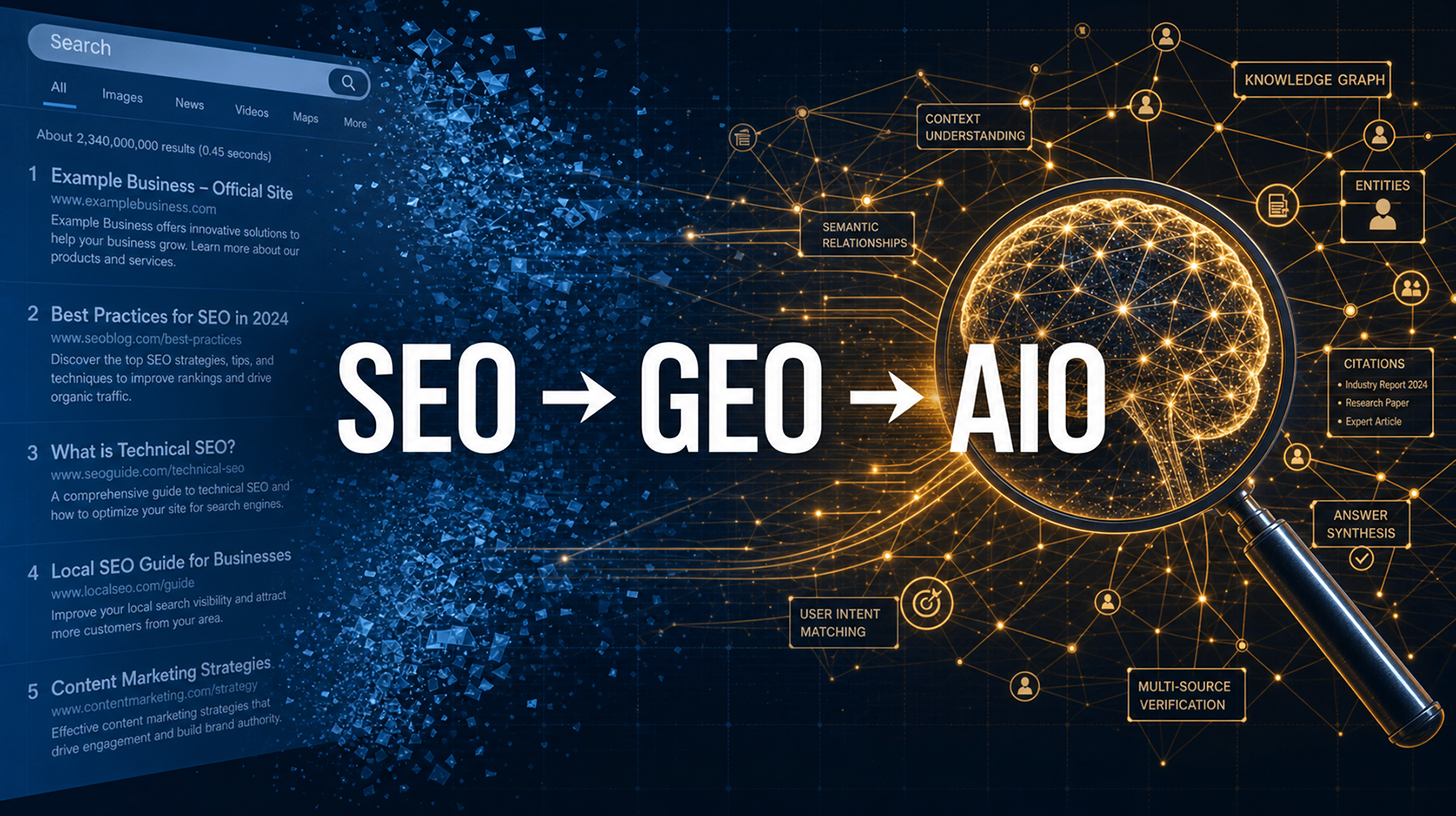
The Toronto watershed: Mythbusting, Information Gain Score, and what Google really revealed about the future of SEO – Image: Xpert.Digital
The rules of the game have changed: Why scaling without real substance is now a downfall
Replaceable or indispensable? How to survive the new Google filter
Those who don't know the rules of the game quietly lose market share
Search engine optimization is currently undergoing its biggest transformation since the invention of PageRank. For a long time, the unwritten rule in the SEO industry was: whoever best understands the algorithms and scales content most efficiently wins. But with the rapid rise of generative AI systems, the internet has been filled at breakneck speed with interchangeable mass content. Google's response to this is drastic and marks a fundamental paradigm shift, which was made unequivocally clear at the Google Search Central Live event in Toronto in 2026. It's no longer about mere keywords or sheer quantity, but about "information gain"—the genuine, non-copyable gain in information.
The industry's focus is increasingly shifting from traditional SEO to GEO (Generative Engine Optimization) and AIO (Artificial Intelligence Optimization). Those who don't understand that proprietary data, unique perspectives, and genuine human expertise are the new currency of visibility risk becoming completely invisible in the AI-driven search landscape. The following article analyzes the profound insights from Toronto, explains the mechanisms behind Google's new quality filters, and reveals which content strategies are the only ones that still work sustainably in the age of AI search.
From SEO to GEO to AIO: The silent revolution of search engine optimization
The turning point in Toronto: What Danny Sullivan really said
On April 21, 2026, the first Google Search Central Live event on Canadian soil took place in Toronto. Martin Splitt, Danny Sullivan, Daniel Waisberg, Annanya Raghavan, and Ryan Levering stood together on stage and gave the SEO industry what it had been demanding for years: clarity on how Google evaluates content in the age of AI. The message, which has since resonated through international industry forums, is as simple as it is far-reaching: “Good SEO is largely having great content for people.”
What might superficially read like a truism, upon closer analysis reveals a fundamental paradigm shift in the history of search engine optimization. Sullivan directly asked the practitioners present on which side of a dividing line their respective blogs stood: commodity or non-commodity, interchangeable or indispensable. The question was rhetorical, but it struck a chord with an industry that had for years mistaken quantity for quality. Google hadn't just raised the bar; the rules of the game themselves had been rewritten, stated Jean-Christophe Chouinard, who documented the slides from the event, thereby sparking a broad debate within the professional community.
The economic significance of this debate can hardly be overstated. The GEO market, meaning optimization for generative AI systems, grew to a total value of US$886 million by 2026, and according to market observers, this is only the beginning of an exponential growth curve. In parallel, 55 percent of all monitored websites experienced significant changes in visibility following the Google Core update in March 2026; websites with AI-generated mass content lost up to 80 percent of their organic traffic. Anyone who doesn't understand the signals from Toronto doesn't understand their own competitive position in a changing search landscape.
The Failure of the Masses: Why Scaling Without Substance Is Punished
The history of search engine optimization is largely a history of arbitrage. As soon as an algorithmic signal was identified, a market for its manipulation emerged. Keywords were optimized, backlinks were bought, text lengths were inflated, and finally, AI produced articles on an industrial scale that were syntactically correct but devoid of content. Google has systematically responded to this development with what is known internally as the "Scaled Content Abuse" algorithm.
This mechanism is essentially a safeguard against what Martin Splitt and the Google team describe as algorithmically enforced quality pressure: The lowered barriers to entry for content production through AI tools have forced Google to raise the bar for actual indexing. This means that the crucial filter is no longer crawling, but rather the selection process during indexing. Sawan Jha, an SEO practitioner, summed it up perfectly in the LinkedIn discussions surrounding the Toronto presentation: The real filter has quietly shifted from crawling to selection, which explains why so many pages exist without any impact.
The March 2026 core update painfully exposed this mechanism. Websites publishing hundreds of AI-generated articles daily without editorial review lost between 50 and 80 percent of their traffic. Pages using AI-generated translations as a scaling strategy were systematically penalized. And platforms that programmatically generated thousands of location-specific or product-related duplicate pages were hit the hardest. The pattern Google identified and penalized wasn't the AI itself, but the complete lack of any added value: no author, no primary source, no firsthand experience, no argument that wasn't already widely known.
The economic logic behind this is clear: If AI standardizes content to a commodity level, Google can simply ignore that level. What interests Google is the delta, the measurable information gain that a document provides compared to all existing documents on the same topic.
The Information Gain Score: The new currency system of visibility
The concept behind Sullivan's commodity-non-commodity slide has a precise technical name: Information Gain Score (IGS). Since 2022, Google has held a US patent (US11354342B2, originally an application from 2018) for a system that measures how much new, previously unseen information a document offers a user, relative to their previous searches and viewed documents on a topic. The score normalizes values between 0 and 1. Generic AI output that merely paraphrases the top five results tends toward zero. Original primary research, proprietary datasets, genuine case studies, and unique perspectives approach the maximum.
The economic significance of this score grows proportionally to the volume of AI-generated content online. In highly competitive niches, the IGS influences visibility in Google AI Overviews by up to 20 to 30 percent. Pages with a high IGS see traffic gains of 25 to 45 percent in research-intensive niches. And only 12 percent of the content from major publishers achieves an average IGS above 0.7, which explains why even established media companies are suffering from the recent updates.
For B2B publishers like the platform Xpert.Digital, which specializes in industrial logistics, the energy transition, and AI applications, this presents a concrete strategic opportunity: Those who possess primary data from real-world industrial projects, concrete implementation experience, and original market analyses are structurally in a better position than any competitor who merely synthesizes publicly available information sources. SEO agencies are now using entity gap audits with tools like SEMrush, Ahrefs, and InLinks to measure which unique entities and data points a page is missing compared to the competition and to systematically close these gaps. The InLinks platform recorded a 51 percent growth in the use of its entity gap features from the beginning of 2026.
Consensus versus knowledge gain: The axis that readjusts everything
Gianluca Fiorelli, an internationally renowned SEO strategist, published a guide on Advanced Web Ranking immediately after his Toronto presentation, describing a key axis for understanding modern visibility: the tension between consensus and information gain. Consensus—what everyone writes and says—is valuable for building trust and the EEAT signal, but it doesn't provide any new insights. Information gain only arises when a document goes beyond consensus, challenges it, or complements it.
Cyrus Shepard, founder of Zyppy SEO and one of the most cited analysts in US core update analyses, noted after the December 2025 update that the presence of proprietary data was the third strongest correlation factor for websites that performed well. For Danny Sullivan himself, this finding is confirmation of an existing reality, not a prediction of future developments: “IMO, lots of evidence this is spot-on, not where Google is going in the future, but where it already is now.” The search engine is already rewarding what many SEO practitioners had only expected in the future.
This has a direct economic consequence for content strategies. Content that merely reflects consensus, compiles "best-of" lists, or repeats standard advice fulfills an ordering function within the knowledge system, but is treated algorithmically as substitutable. The question every content team must ask is no longer: Are we ranking for this keyword? But rather: What measurable knowledge are we bringing into the world that wouldn't exist without us?
SEO, GEO and AIO: Three layers of a new reality
The terminological confusion that has built up in the industry since 2023 is symptomatic of a transitional phase in which old models are no longer fully effective and new ones are not yet stable. SEO, GEO, AEO, LLM SEO, AI Search Optimization: the abbreviations have multiplied faster than the underlying concepts have matured. Danny Sullivan addressed this situation directly in Toronto, without ending the debate.
The clearest analytical distinction can be found in the description of two optimization layers developed by Rankfor.AI CEO Dmitrij Žatuchin in his LinkedIn analysis: Retrieval-based visibility, meaning presence in AI Overviews, Perplexity, and ChatGPT with browsing functionality, is the fast track, measurable in weeks, and where classic SEO principles still apply directly. Parametric memory, meaning what a language model has already stored about a brand or topic in its weights, is the slow track, with an update cycle of three to six months. In a Nordic-Baltic study, around 67 percent of what AI systems said about a brand was attributed to parametric memory. GEO primarily addresses this second layer.
The practical implications are significant: Those who optimize only for quick results, focus solely on technical SEO, and aim for short-term ranking gains are ignoring the fact that the majority of what AI systems say about a brand, company, or topic is based on training data that is months or even years old. A Wellows study analyzing 2,400 AI Overview citations found that pages with strong EEAT signals were 2.3 times more likely to be cited. This means that authority and trust are not just Google ranking factors, but also drivers of AI visibility.
The figures from the AI Mode statistics further exacerbate the situation. In Google's AI Mode, available to all US users since March 2026, 93 percent of all search queries end without a single click on an external website. Only 14 percent of the URLs cited in AI Mode actually rank in Google's top 10. And AIO answers now contain an average of 13.34 sources, compared to about 6.82 in 2024, which, while increasing the number of potential citation positions, simultaneously intensifies the competition for each one.
The Economics of the Non-Substitutable: What Non-Commodity Content Means Economically
Mark Williams-Cook, an SEO expert with over two decades of industry experience, formulated a distinction in his LinkedIn analysis that is central to content strategies. Commodity content is superficial, widely available knowledge characterized by generality and easy replicability. Non-commodity content, on the other hand, is deeply rooted in direct experience, professional expertise, and real-world application; it provides analyses, case studies, or proprietary tests that cannot be duplicated without the author's specific background.
From a purely economic perspective, this distinction describes the transition from perfect to imperfect competition in the content market. Commodity content, like any commodity, is under price pressure because AI tools have made it virtually infinitely scalable. Non-commodity content, on the other hand—content based on proprietary data, unique experience, and non-replicable expertise—possesses a natural protection against algorithmic devaluation. This content simply cannot be scaled because its source is unique.
The strategic implication for companies in knowledge-intensive industries is direct: The content marketing of the future is no longer a game of volume, but a game of quality. Gus Pelogia, Senior SEO & AI Product Manager at Indeed, aptly illustrated this dilemma: A blog about Buenos Aires, which he once wrote from the perspective of a Brazilian expat, was non-commodity content in 2010. Today it would be a commodity because enough similar perspectives exist online. Even personal accounts become commodities once they are reproduced frequently enough. The challenge lies in continuously producing the next unique piece of knowledge, not just being original once.
For companies with access to proprietary data, such as logistics companies with real-world warehouse data, energy providers with real-time data from solar power plants, or AI service providers with validated implementation results, this presents a sustainable competitive advantage. Furkan Özkaya, Senior Technical SEO Specialist, aptly described the process in the LinkedIn discussion: AI-powered content creation can work well, but only if a human reads, fact-checks, edits, and enriches it with genuine expertise. This is a process that takes two to three hours per article, not a fully automated system for mass production.
🎯🎯🎯 Data-driven B2B industry hub as a quasi-in-house solution

The quasi-in-house solution: How Xpert.Digital closes operational gaps in B2B marketing and sales – Smart Content-Driven Business - Image: Xpert.Digital
Xpert.Digital is a data-driven B2B industry hub led by Konrad Wolfenstein . The company acts as an external, quasi-in-house solution for industrial partners, closing operational gaps in marketing, content, and sales – without requiring additional resources on the client side.
More information here:
Why content must be marketing today, not just technology: Lessons from Toronto
The Rich Results Paradox: Structured Data and the Difference That Remains Invisible
A technical detail from the Toronto presentations, which received little attention in the broader discussion, deserves separate economic analysis. Ryan Levering explained the difference between the Google Rich Results Testing Tool and the Schema Markup Validator. The former integrates into Google's internal indexing chain, while the latter merely validates the syntactic correctness of the schema markup against Schema.org standards.
This technical distinction is economically relevant because many website operators rely on the Schema Markup Validator, which provides no information about whether a page is actually eligible for rich results. The Rich Results Test, on the other hand, simulates Google's rendering pipeline and shows which rich result types can actually be generated. A schema can be syntactically perfect and still not trigger any rich result eligibility. For e-commerce sites that rely on star ratings, product prices, or FAQ rich snippets to achieve click-through rate (CTR) benefits, this difference directly impacts revenue.
The deeper message from Levering's explanation is structural: Google's indexing stack is multi-stage and not entirely transparent. The "Crawled – Currently not indexed" signal in Google Search Console is, in the vast majority of cases, not a technical rendering problem, but a quality signal. Google has crawled the page, evaluated the content, and actively decided not to index it because it doesn't offer sufficient added value. For content teams, this means: Technical correctness is a necessary, but not sufficient, condition for visibility.
The GEO terminology debate: Marketing term or new discipline?
In a LinkedIn discussion, Kristine Schachinger put forward a provocative thesis that calls the entire concept of GEO into question. She claimed that GEO is a marketing construct created by a venture capitalist who wanted to take over the SEO tools industry and couldn't position his own brand against "SEO," so he simply invented a new acronym. The spread of the term was then fueled by coordinated media work and social media activities.
This perspective has merit, but it doesn't go far enough. Regardless of who coined the term and what vested interests were at play, GEO describes a real, measurable phenomenon: the optimization of content not for a ranking list, but for citations by generative AI systems. And this optimization follows different rules than traditional SEO. Artur Ferreira of The GEO Lab articulated the core issue: the shift isn't from position to position, but from tracking rankings to understanding presence—when and why one appears, not just where.
Orit Mutznik, SEO Director for Organic Growth & AI Search, succinctly summarized the semantic debate: Google itself uses the terms SEO and GEO largely synonymously on slides and in job descriptions. The industry is fighting over terminology while the real change is already underway. The term is, in a sense, secondary. Those who fixate too much on the terminological question risk missing the essential point: The signals that generate visibility in AI systems are fundamentally different from the signals that determine Google rankings in the traditional SERP.
Two optimization layers, two time horizons, two strategies
Perhaps the clearest analytical contribution to strategic orientation came from Dmitrij Žatuchin in the LinkedIn discussions. He distinguished between two clearly separable optimization layers: retrieval-based visibility in AI-powered search systems such as AI Overviews, Perplexity, and ChatGPT with browsing, and parametric memory, i.e., what a language model has stored directly in its trained weights about an entity.
The first layer reacts quickly. Those who create high-quality, well-structured content that is crawled and indexed by Google, and who demonstrate strong EEAT signals, see measurable improvements in citation probability within weeks thanks to AI Overviews and similar RAG-based systems. The classic SEO tools—technical integrity, authority through backlinks, and in-depth content—still have a direct impact here.
The second layer is slow and expensive to change. It determines what ChatGPT answers to a question about a brand or company without triggering a web search. This answer is derived from training data that is months to years old. For 60 percent of all ChatGPT queries, no real-time web search is triggered at all; the answer is based entirely on parametric knowledge. For brands that are not represented, or are represented incorrectly, in these answers, this represents a structural visibility and reputation gap that cannot be closed with technical SEO optimization.
According to an Ahrefs study of 75,000 brands, the strongest single signal for AI citations is not domain authority or backlink profile, but brand search volume and parametric presence. A brand search score correlates with a citation probability of 0.334 in AI systems. YouTube mentions of a brand correlate even higher, at 0.737. These correlation values favor brand PR and multi-channel presence, not traditional on-page optimization.
The end of position tracking: From rankings to presence distributions
One of the most economically interesting observations from the discussions surrounding the Toronto conference concerns the infrastructure of SEO reporting itself. Dmitrij Žatukhin noted that the same search query, on the same day, can generate three different sets of citations in AI systems within three hours. Position as a single number thus loses its significance; it becomes a distribution.
This observation has far-reaching economic implications for the SEO tool industry. Traditional rank trackers, which have generated millions in revenue for years by measuring keyword positions, tend to measure the wrong thing in the AI-driven search landscape. What should be measured is not a position, but rather the probability of being cited over time. Seer Interactive found that the zero-click rate in AI mode is 93 percent; for traditional AI overviews, it's 83 percent. In this environment, the question "What position do we rank in?" is less relevant than the question "In how many AI-generated results on the topic do we appear?"
Artur Ferreira precisely described the paradigm shift: “The real shift is from tracking positions to understanding presence.” Who appears, when, and why: these are the strategic questions of the next generation of search optimization. Lopty Pascal, founder of Prezlo.io and former Google employee, added that the development is already moving beyond optimizing pages or content to optimizing entities. In an environment where agents become the interface, not only structure and ranking are relevant, but also identity and trust.
Mythbusting: What Google explicitly denied in Toronto
A dedicated set of slides from the Toronto conference focused on mythbusting, i.e., explicitly debunking misconceptions circulating in the SEO industry. Three points stand out:
First, Google clarified that there is no need to optimize content for “conversational keywords” or every conceivable synonym. Google’s natural language processing systems are sophisticated enough to understand the relevance of a page to numerous queries, even if exact phrases are not explicitly used. This clarification is economically significant because it undermines the keyword stuffing practice and the optimization for long-tail variations, which have consumed consulting budgets for years.
Secondly, Google confirmed that JavaScript can be used without problems, provided Google renders the page in the same way as a human. This includes modern single-page application architectures and resolves a long-standing uncertainty within the developer community.
Thirdly, and most clearly: Google sees no benefit in converting a page to Markdown format or creating an llms.txt file for SEO purposes. This aligns with independent analyses: A study of 300,000 domains found no measurable correlation between the presence of an llms.txt file and increased AI citations or traffic. Google's search team simply doesn't use these files, as John Mueller has publicly stated.
The strategic roadmap: Ten impulses for the new search landscape
Concrete strategic areas for action can be derived from the discussions at the Toronto conference, the LinkedIn debates of leading SEO and GEO practitioners, and the available research data. This is not about a checklist of technical measures, but rather a structural reorientation of content and communication strategy.
The first and most fundamental step is an audit of your own content portfolio along the commodity-non-commodity axis. Which content can be replaced by AI synthesis without loss of quality? This content is structurally at risk. Which content is based on proprietary data, unique experiences, or specific expert knowledge that cannot be easily duplicated? This content is the foundation of future visibility.
The second strategic step is the systematic development of primary research and proprietary data points. Companies operating in industries with measurable processes should view their internal data as a content resource. A logistics provider that publishes data on actual warehouse throughput times generates an information gain that no competitor can copy without access to the same data.
The third step is investing in author presence and entity building. Google and AI systems don't just evaluate documents, they evaluate entities. Authors with a verifiable profile, cross-platform presence, and proven expertise in a subject area are algorithmically favored sources. This means: LinkedIn presence, Wikipedia entries, guest posts on reputable platforms, and the consistent use of names and expertise signals across all digital channels.
The fourth strategic impulse concerns the technical infrastructure. Anyone using structured data should understand the difference between the Google Rich Results Test and the Schema Markup Validator. The former is the relevant testing tool for Google's indexing reality, not the latter. Pages that are not indexed despite being crawled primarily suffer from a quality issue, not a technical one.
Fifth, the measurement strategy needs to be reformed. The question “What position do we have for keyword X?” is outdated as a primary KPI. More relevant metrics include the citation rate in AI overviews, the share of AI-driven traffic in total traffic, the number of different platforms where the brand appears for relevant queries, and a qualitative analysis of what AI systems say about the brand.
The sixth point concerns the distinction between retrieval-based and parametric optimization. Short-term measures for AI overviews and RAG systems differ from medium- to long-term work on parametric presence—that is, what language models have stored about a brand in their training data. Both layers require different tactics and different time horizons for measuring success.
Seventh, content should be consistently enriched with first-person experiences. “I have, I have seen, I have built” is the signal that translates Google’s non-commodity concept and the EEAT principle into practice. Anecdotes from actual professional practice, concrete figures from real projects, specific mistakes and their lessons learned: this is the content that is favored algorithmically because it is not replicable.
Eighthly, AI-powered content creation is acceptable as a production tool, but human editorial oversight is not optional. Furkan Özkaya clearly stated: 2 to 3 hours per article for research, prompting, reading, fact-checking, and editing. This is the minimum effort required for content to survive in an AI-dominated search landscape. Fully automated systems for mass production are a direct path to the "scaled content abuse" category.
Ninth, a multi-platform presence is not a nice-to-have, but a structural factor for AI visibility. Brands present on four or more platforms are 2.8 times more likely to be quoted in ChatGPT responses. This includes professional forums, industry directories, review platforms, and third-party publications, not just the brand's own website.
Tenth, and this is perhaps the most fundamental transformation: Content marketing is no longer primarily a technical problem, but a strategic marketing one. Mohammad Junaid Baig put it aptly: AI systems are not autonomous; they compile information. To appear for relevant queries, you have to cover exactly what those queries need. No llms.txt, no Markdown schema, and no chunking will help if the actual content is missing. That's a marketing problem, not a technical one.
The big picture: Why the search landscape of 2026 is a taste of what's to come
The debate surrounding Google's Toronto presentation is not merely an academic discussion among SEO specialists. It touches upon the fundamental mechanisms by which companies gain online visibility, acquire customers, and maintain market share. A market where 93 percent of AI-generated search queries end without a click is a market where the logic of organic traffic as a growth driver is fundamentally challenged.
The structural winner in this landscape is not the company with the largest content output or the most keywords. The winner is the company perceived as an authority in algorithmic search: as a source that is cited, not just a page that is visited. This distinction is fundamental. A website that is visited is an SEO resource. A brand that is cited is an epistemic anchor in a system that curates and disseminates knowledge.
Danny Sullivan's slide wasn't a technical manual. It was an economic statement: In a market flooded with AI-generated commodity content, the irreplaceable is the only sustainable competitive advantage. For companies that understand content as a strategic asset—and that includes all those dependent on organic visibility—this isn't a warning, but an invitation. An invitation to show what they truly know. What they've truly experienced. And what no one else can know.
Your global marketing and business development partner
☑️ Our business language is English or German
☑️ NEW: Correspondence in your native language!

Konrad Wolfenstein
I and my team are happy to be available to you as your personal advisor.
You can contact me by filling out the contact form here simply call me at +49 7348 4088 965. My email address is [email protected]:or
I'm looking forward to our joint project.
☑️ SME support in strategy, consulting, planning and implementation
☑️ Creation or realignment of the digital strategy and digitization
☑️ Expansion and optimization of international sales processes
☑️ Global & Digital B2B trading platforms
☑️ Pioneer Business Development / Marketing / PR / Trade Fairs
B2B support and SaaS for SEO and GEO (AI search) combined: The all-in-one solution for B2B companies

B2B support and SaaS for SEO and GEO (AI search) combined: The all-in-one solution for B2B companies - Image: Xpert.Digital
AI search changes everything: How this SaaS solution will revolutionize your B2B ranking forever.
The digital landscape for B2B companies is undergoing rapid change. Driven by artificial intelligence, the rules of online visibility are being rewritten. For companies, it has always been a challenge not only to be visible in the digital mass, but also to be relevant to the right decision-makers. Traditional SEO strategies and managing local presence (geo-marketing) are complex, time-consuming, and often a battle against constantly changing algorithms and intense competition.
But what if there were a solution that not only simplified this process but also made it smarter, more predictive, and far more effective? This is where the combination of specialized B2B support with a powerful SaaS (Software as a Service) platform comes into play, specifically designed for the demands of SEO and GEO in the age of AI search.
This new generation of tools no longer relies solely on manual keyword analysis and backlink strategies. Instead, it leverages artificial intelligence to more accurately understand search intent, automatically optimize local ranking factors, and conduct real-time competitive analysis. The result is a proactive, data-driven strategy that gives B2B companies a decisive advantage: they are not only found, but perceived as the leading authority in their niche and location.
Here's the symbiosis of B2B support and AI-powered SaaS technology that transforms SEO and GEO marketing, and how your company can benefit from it to grow sustainably in the digital space.
More information here: