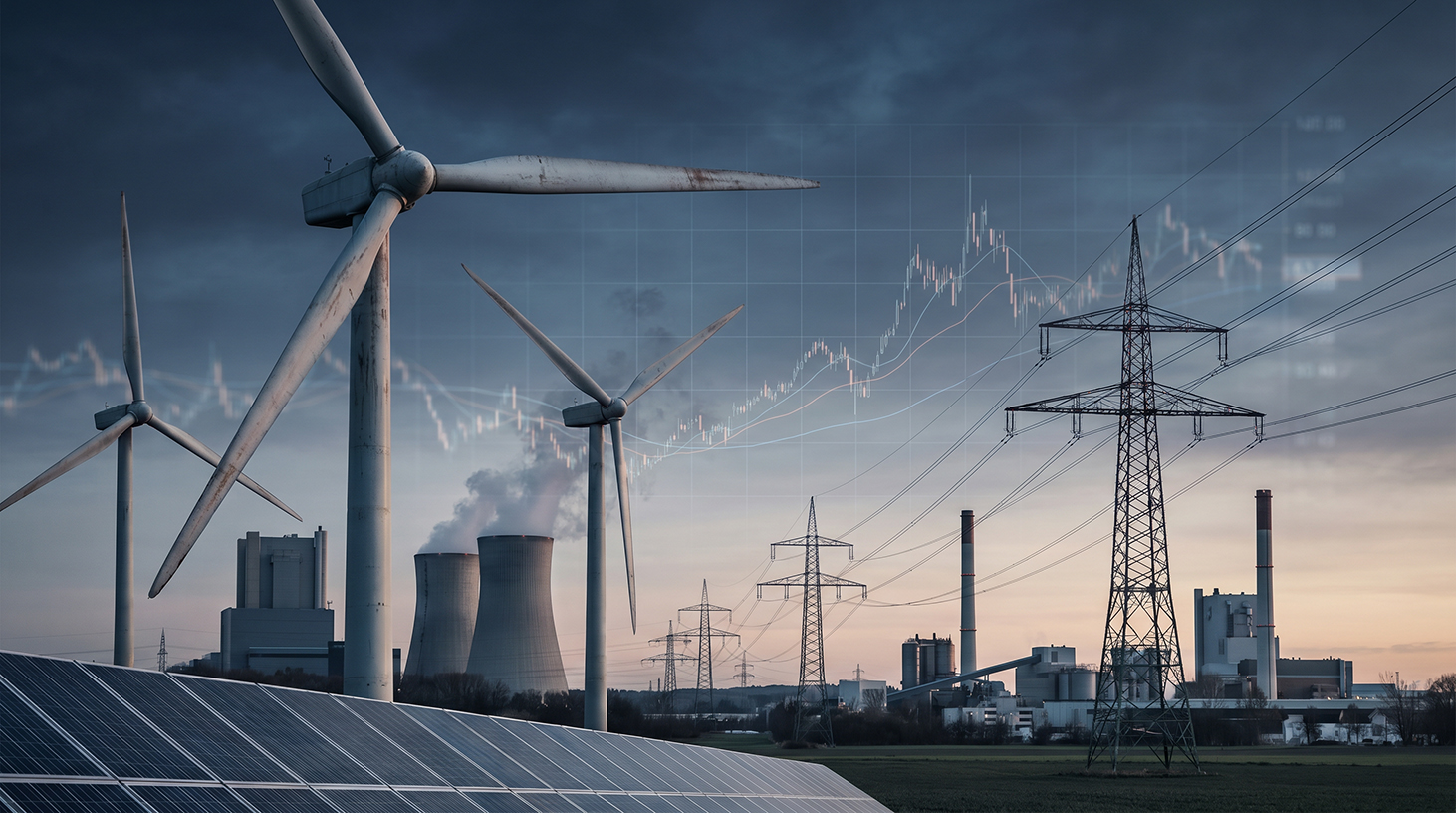
Cheap, clean, safe? The four major myths of the German energy transition fact-checked – Image: Xpert.Digital
The multi-billion-euro experiment: Why Germany's energy transition is crashing against reality
Electricity price illusion: Why wind and sun are cheap – and yet we still pay more
For almost a quarter of a century, Germans have been sold the energy transition in a familiar tone: it's clean, it makes them independent, it lowers costs, and the energy supply will remain secure anyway. But does this historic grand experiment—the complete transformation of a highly industrialized country to weather-dependent energy sources—stand up to physical and economic reality? A ruthless analysis, free from ideological trench warfare, paints a completely different picture. From exploding grid costs and hidden drivers of electricity prices to the new, dangerous dependence on Chinese supply chains and the grand illusion surrounding battery storage: the discrepancy between political wishful thinking and hard data has never been greater. This article takes stock and reveals why the real problem with the energy transition isn't its lofty goals, but its fundamentally flawed design. An essential fact check for anyone who wants to understand who will really foot the bill for the energy system of the future.
Why the most beautiful statements about clean, cheap and secure energy have failed for 25 years due to physics, economics and geopolitics
Since the passage of the Renewable Energy Sources Act in 2000, Germany's energy transition has been communicated in a very specific tone. It is clean, it makes us independent, it will be cheaper, and the energy supply is guaranteed anyway. For over a quarter of a century, these four sentences have formed the rhetorical backbone of a transformation that is historically unique in its scale: A highly developed industrial nation with a primary energy consumption of around 3,200 terawatt-hours and an export-oriented value chain is converting its entire energy system to weather-dependent generation. This is not a political detail, but a large-scale macroeconomic experiment with implications for competitiveness, distribution, public finances, and the foreign trade balance.
Economic integrity dictates a distinction between three categories: statements that withstand empirical scrutiny; statements that are true in individual segments but are misleadingly condensed within the systemic context; and statements that are simply false or have long since been refuted by the available data. This very distinction is regularly lacking in public debate. This analysis consistently applies this distinction without any ideological bias towards the left or right.
The price of good intentions: What electricity really costs in Germany
The claim that the energy transition will make electricity cheaper is untenable in its absolute form, but not simply nonsense in its relative form either. The truth lies in a price spread that is systematically obscured in the public debate. On wholesale markets, wind and solar power plants generate electricity at marginal costs close to zero, which actually results in very low or even negative spot market prices during hours of high renewable energy feed-in. This phenomenon is real. However, to conclude from this that the end-customer price will fall is a category error, because the end-customer price does not consist of the spot market, but rather of procurement, grid fees, levies, concession fees, taxes, and distribution margins.
The stark figures reveal a more nuanced picture. According to an international price analysis, the average German household electricity price in the first quarter of 2025 was around 38 cents per kilowatt-hour, ranking it fifth among the most expensive countries worldwide. SMARD reports a price of just under 18 cents per kilowatt-hour for medium-sized industrial companies in January 2025, while for privileged large consumers it was just over 11 cents. The figures collected by the German Association of Energy and Water Industries (BDEW) for 2025 for medium-sized industrial companies hovered around 15.9 cents, and for large industrial companies around 14.4 cents. The range of 30 to 40 cents mentioned in the original text is therefore accurate for households, but too high for industry. Nevertheless, the politically relevant point of comparison remains dramatic: Chinese industrial companies pay between 7 and 10 cents depending on the province, US industrial consumers in energy-intensive states often pay between 6 and 9 cents, and French companies operate in the range of 12 to 20 cents. The German industrial location thus operates structurally in the top price quartile of the OECD area.
This pricing structure implies a business logic that any controller in an energy-intensive company immediately understands. If electricity is 30 to 70 percent more expensive than the competition on average over the long term, higher productivity, better products, subsidies, or a favorable regulatory environment must compensate for this disadvantage. None of these conditions are currently comfortably met in Germany. The consequences are documented in surveys conducted by the German Chambers of Industry and Commerce, the VDMA (German Engineering Federation), and the Foundation for Family Businesses: A substantial proportion of companies are considering relocation, production cutbacks, or selling to strategic or financial investors. The specific percentages vary depending on the survey and the wording of the questions, but the basic pattern is robust: The price of energy has evolved from a peripheral location factor to a central business risk.
Between the coal crisis and CO₂ persistence: The uncomfortable climate balance sheet
The thesis that the energy transition is making the electricity system cleaner is empirically correct in its basic direction. CO₂ emissions from German electricity generation have fallen significantly since 1990, the specific emission intensity per kilowatt-hour generated has almost halved, and in 2024, for the first time, more than half of gross electricity consumption was covered by wind, solar, biomass, and hydropower. A portrayal that categorically claims that Germany, despite the expansion of renewable energy, has one of the dirtiest electricity systems in Europe distorts this reality.
However, the following remains a nuanced and true fact: In a comparison within Europe, Germany continues to rank behind France, Sweden, Switzerland, Norway, and Finland in terms of the CO₂ intensity of electricity generation—that is, behind those countries that rely predominantly on nuclear and hydropower. A French electricity mix often emits less than a tenth per kilowatt-hour of what an average German mix produces. Germany also fares worse than Spain and the UK in many measurement periods. The reason is not a weakness of renewables, but rather the politically imposed phase-out sequence: Nuclear power plants were shut down before coal-fired power plants, which increases the residual fossil fuel intensity during hours of low wind and solar feed-in. In economic terms, Germany has replaced a low-CO₂ balancing energy source with a high-CO₂ balancing energy source and has only partially compensated for this effect through additional capacity expansion. The result is a decarbonization curve that is more realistic, but flatter, than the official narrative suggests.
The shifted dependency: From Russian gas to Chinese value creation
The claim that Germany will become energy-independent through the energy transition is one of those statements that sounds consistent in theory but falls apart in practice due to the real structure of global supply chains. It is true that anyone who no longer consumes imported coal, imported natural gas, and imported uranium reduces their classic dependence on energy imports. It is equally true that a wind or solar farm, once built, produces energy regardless of geopolitical conditions. This finding is not marketing; it is physics.
The notion that this has eliminated the dependency is untrue. It has simply been shifted and reshaped. The industrial value chain behind renewables shows a dramatic concentration. Around 80 percent of global production capacity for photovoltaic modules and about 95 percent of wafer manufacturing is located in China; the situation is similar for battery cells and cathode materials, and even more pronounced for rare-earth magnets for wind turbines and electric motors. Added to this are dependencies on lithium from Chile and Australia, cobalt from the Democratic Republic of Congo, and copper and nickel from a manageable number of producing countries. From the perspective of national resilience, a dependency on fossil raw materials has thus been exchanged for a dependency on mineral raw materials, industrial hardware, and Chinese process industries. Whether this exchange is advantageous depends on the political stability of the new sources of supply. The empirical response so far is mixed, and in the case of China, rather sobering.
When calm winds become a systemic issue: The hidden side of security of supply
The statement that the supply is secure is probably the most interesting in the list. It is formally correct and substantively questionable at the same time. It is formally correct because, to date, no large-scale blackout in Germany has been attributable to a shortage of generation power, and the average unavailability per end consumer, measured in SAIDI minutes, remains low internationally. This is an achievement of the network operators, not of the political system.
The statement becomes substantially questionable when one looks behind the facade of the overall balance sheet. The number of grid interventions is the best early indicator system. The Federal Network Agency reports a volume of measures for grid congestion management of approximately 30,300 gigawatt-hours for 2024, with preliminary total costs of around €2.78 billion, compared to 34,300 gigawatt-hours and €3.34 billion in 2023. The 19,318 redispatch interventions per year mentioned in the original text correspond to the individual measures in the transmission grid and represent a plausible order of magnitude. However, current assessments from the distribution grid sector show that the frequency of interventions in so-called Redispatch 2.0 is increasing dramatically after the inclusion of smaller plants; initial evaluations from 2025 indicate a further doubling of the number of cases. These are not marginal phenomena, but rather the economic consequences of a system whose generation locations no longer match the consumption locations.
That periods of low wind and solar output are real is not a polemical claim, but a meteorological fact. Weeks-long periods of high pressure in winter with low wind yields and negligible solar output occur regularly. In December 2022 and November 2024, gas, coal, and biomass power plants, along with imports from France, the Netherlands, and Denmark, had to shoulder the residual load. That the system functions during such phases is a success of the coupled European markets and the remaining fossil fuel fleet, not proof of the autonomy of the German renewable energy system. What is economically relevant is that the residual capacity serves an insurance function that must be paid for, even if it only operates for a few hundred hours a year. This very financing issue is the fundamental design flaw of the German market architecture.
The two worlds of the energy system: electricity sector versus final energy
One of the most frequent distortions in the debate is the conflation of electricity generation share and primary energy share. While press releases stating that over half of Germany's electricity comes from wind and solar power are factually correct, this does not mean that half of Germany's energy consumption is climate-neutral. In 2024, the share of renewables in gross final energy consumption was around 22 percent, and in primary energy consumption, around 20 percent. The reason is simple: electricity is only one segment of the energy system. Heating in buildings, process heat in industry, transportation—especially freight transport, shipping, and aviation—continue to be supplied predominantly by fossil fuels.
This asymmetry gives rise to a strategic problem that is rarely openly discussed. Every sector coupling, i.e., the conversion of heating and transport to electricity, increases electricity consumption. If the energy transition in the heating and transport sectors is to be taken seriously, gross electricity consumption will rise from around 510 terawatt-hours today to between 750 and 1,000 terawatt-hours, depending on the model and assumptions regarding hydrogen. This means that generation, grids, and storage facilities must not only meet current demand but roughly double it within a timeframe of twenty to twenty-five years. The expansion currently underway, which is already considered ambitious, represents only a third of the way to achieving the desired outcome.
New: Patent from the USA – install solar parks up to 30% cheaper and 40% faster and easier – with explanatory videos!

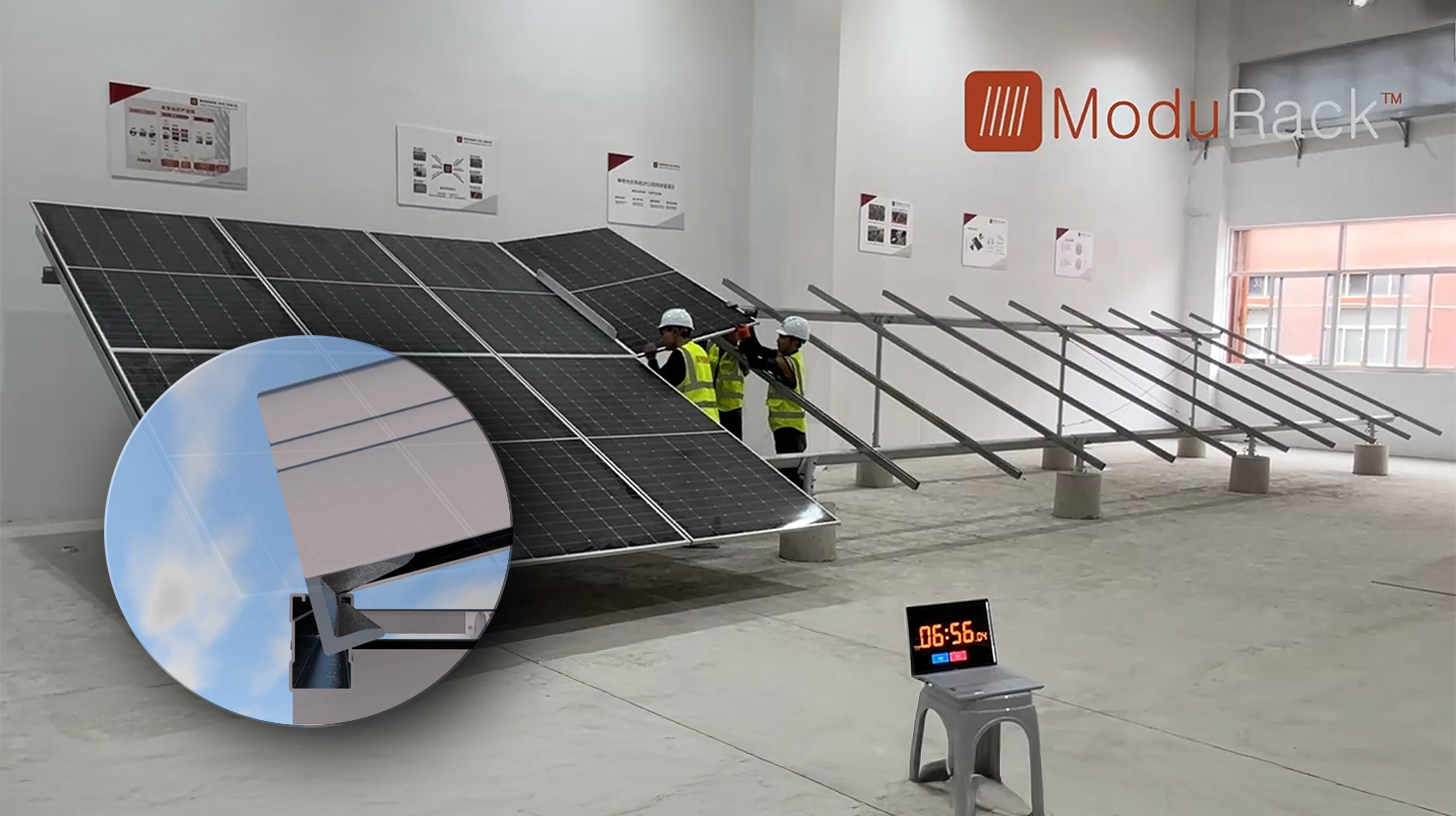
New: Patent from the USA – Install solar parks up to 30% cheaper and 40% faster and easier – with explanatory videos! - Image: Xpert.Digital
The core of this technological advancement is the deliberate departure from conventional clamp mounting, which has been the standard for decades. The new, more time- and cost-effective mounting system addresses this with a fundamentally different, more intelligent concept. Instead of clamping the modules at specific points, they are inserted into a continuous, specially shaped support rail and held securely in place. This design ensures that all forces – whether static loads from snow or dynamic loads from wind – are distributed evenly across the entire length of the module frame.
More information here:
Network expansion alert: Why thousands of kilometers of lines determine success or failure
The cost triangle: generation, networks, and the great unknown of backup
The discussion about system costs suffers from a methodological weakness. It is usually reduced to direct generation costs, i.e., the levelized cost of electricity (LCOE) of new wind or solar power plants, which now achieve prices between 5 and 8 cents per kilowatt-hour in auctions. This is an impressive price reduction, and it should be acknowledged. However, it is not what the overall system costs, because total system costs include generation, grids, storage, backup, balancing power, ancillary services, and the financing and opportunity costs of excess installed capacity.
A study commissioned by the German Chamber of Industry and Commerce and conducted by Frontier Economics estimates these costs for the period from 2025 to 2049 at between €4.8 and €5.4 trillion. The breakdown is revealing: €2.0 to €2.3 trillion is attributable to energy imports, €1.2 trillion to grid costs, €1.1 to €1.5 trillion to investments in generation facilities, and approximately €500 billion to their ongoing operation. When this sum is calculated per capita based on a population of nearly 84 million people with an average age of 24, the resulting per capita costs are in the low four-figure range per year. The €430 per capita figure cited in the original text is therefore a rather conservative estimate and refers to a narrower definition of system costs.
The grid expansion component is particularly revealing. The demand identified by the transmission system operators in the grid development plan encompasses, in the target scenario, several thousand kilometers of new high-voltage transmission lines, supplemented by considerably longer stretches in the distribution network. The figure of 16,800 kilometers of lines needed, with only 3,500 kilometers currently built, reflects the total scope of all measures when transmission and distribution networks are combined, and is realistic in this order of magnitude. Economically, the nominal mileage is less important than the permitting and construction time, which for major projects like SuedLink and SuedOstLink regularly exceeds a decade. The cost consequences of these delays are twofold: On the one hand, the infrastructure becomes more expensive due to inflation and congestion charges; on the other hand, redispatch costs rise because the grid is not available where generation takes place.
Gas-fired power plants as a bridge that shouldn't be one: The new fossil fuel dependency
Economic advisor Veronika Grimm has repeatedly pointed out in recent years that without a rapid expansion of dispatchable power plant capacity, the entire energy transition project is at risk. This position enjoys majority support within the Council of Economic Experts and the scientific energy policy community. The underlying reason is technically compelling: once the remaining nuclear power plants are shut down and the coal phase-out plans are adhered to, a gap in guaranteed capacity of around 20 to 50 gigawatts will emerge in the coming years, depending on the scenario. This gap cannot be closed in the short term with current technology, neither through batteries nor hydrogen.
The political compromise amounts to hydrogen-capable gas-fired power plants, initially fueled by natural gas and later converted to hydrogen. This is a tightrope walk from both an economic and climate policy perspective. On the one hand, the construction of new gas-fired power plants increases the fossil fuel infrastructure in a country that aims to reduce precisely this infrastructure. On the other hand, the operating models are not economically viable without a capacity market or government guarantees, because a power plant operating for only a few hundred hours per year cannot refinance its fixed costs through the spot market. The federal government is therefore moving towards a capacity mechanism that further increases system costs and is generally not attributed to renewables in public discourse, even though it would be unnecessary were it not for the volatility of renewable energy sources.
The battery illusion: Why storage (new: still) cannot replace a power plant
A persistent narrative claims that batteries and other storage systems will make fossil fuel backup infrastructure obsolete. This narrative conflates two entirely different tasks. Short-term storage solutions, such as lithium-ion batteries, pumped storage, or thermal storage, buffer power for hours up to a few days at most. They are technically mature and increasingly attractive from an economic standpoint, particularly for shifting solar power generation between day and night and for marketing balancing power. Their capital costs range from €100 to €400 per kilowatt-hour of usable storage capacity, depending on size and duration.
Long-term storage systems that need to bridge periods of low wind and solar power generation lasting one to two weeks are a completely different story. For Germany, plausible system models indicate a seasonal storage requirement of between 50 and 100 terawatt-hours. By comparison, all large-scale lithium-ion storage systems currently installed in Europe total less than 50 gigawatt-hours, roughly one-thousandth of the required capacity. The physically feasible solution is hydrogen, produced via electrolysis using surplus electricity, stored in caverns, and converted back into electricity in gas turbines. Each of these conversion steps loses energy, with overall efficiencies ranging between 25 and 40 percent. This means that for every kilowatt-hour of electricity actually used, two to four times that amount of renewable energy generation must be required upstream. Anyone who takes hydrogen seriously must significantly increase the expansion of wind and solar power, bring electrolyzer capacities into the three-digit gigawatt range, and create an infrastructure of pipelines and caverns that currently exists only in rudimentary form.
Related to this:

The plateau problem: When capacity grows without generation
A rarely examined phenomenon is the divergence between installed capacity and actual energy production. While installed wind and solar capacity has increased dramatically since 2015, gross electricity generation from these sources has grown more slowly due to increasing curtailment, grid congestion, and low full-load hours at new, less optimal locations. Furthermore, total electricity consumption has not increased as planned because industry, electric vehicles, and heat pumps are underperforming. The result is a system that appears rapidly growing in political discourse but shows a plateau in generation statistics.
From an economic policy perspective, this plateau is dangerous because it points to a structural limit of the current model. Every additional solar park built in southern Germany or wind farm in northern Germany generates electricity during peak hours that, due to a lack of transmission capacity, is either curtailed or exported at negative prices. The marginal economic benefit of additional capacity decreases, while the marginal costs for grids, storage, and backup systems increase. In economic terms, the system crosses the threshold of negative economies of scale.
The struggle for privileges: Distributional economics of a transformation
Every major transformation has its winners and losers, and the energy transition is no exception. Structural winners include developers of wind and solar farms, manufacturers of storage and grid technology, consulting firms in the regulatory environment, landowners whose land is needed for transmission lines, priority wind energy zones, or substations, and the export-oriented photovoltaic and battery industry in China. Structural losers include energy-intensive industries without preferential treatment, tenants without influence over heating and insulation decisions, commuters in rural areas without alternative public transportation options, and small and medium-sized enterprises that receive neither relief nor strategic flexibility.
These distributional effects are not mere side effects, but politically and economically relevant because they determine the acceptance of the transformation. If low-income households have to spend a larger share of their disposable income on energy, if regions with high industrial concentration suffer disproportionately from electricity price differences, and if, at the same time, subsidies flow into sectors where value creation takes place partly abroad, political erosion occurs, which is reflected in election results and parliamentary majorities. From an economic perspective, the energy transition is not just a climate project, but a massive redistribution project whose balance sheet, from a justice perspective, has so far been insufficiently transparent.
The European context: Why Germany does not decide the outcome alone
Germany's energy transition is often discussed as if it were taking place in a closed system. In reality, the German electricity sector is integrated into the European interconnected grid and its prices are determined by the price zones and trading flows on the Paris-based EEX subsidiary EPEX Spot, the exchanges in Oslo and Amsterdam, and cross-border capacity auctions. This integration is a huge economic advantage because it allows for imports during periods of low wind and exports during periods of surplus, usually at very low prices. At the same time, it poses a risk because political decisions made by neighboring countries, such as France's expansion of nuclear power or Poland's coal-fired power generation, directly impact the German system economy.
The interplay with France is particularly interesting. France's nuclear power fleet, which will be largely operational again by 2025 after prolonged outages, regularly exports significant quantities of electricity to Germany during the winter months. For the first time in a long while, net imports are documented in Germany's electricity trade balance for 2024. This simply means that the energy independence touted in Germany has been achieved by simultaneously shutting down domestic baseload generation and utilizing foreign nuclear power. From a European perspective, this is efficient; from a national perspective, it breaks with the narrative of increasingly producing one's own electricity.
What the data really says: An overall economic assessment
Examining the four promises cited at the beginning in light of the available data reveals an ambivalent yet clear picture. The promise of lower energy costs applies to the production costs of new plants, but not to end-user prices, neither for households nor for energy-intensive small and medium-sized enterprises (SMEs). The difference between generation costs and end-user prices is due to the system architecture of taxes, levies, grid fees, and market design, which has not become any leaner in twenty years. The promise of cleaner energy production applies to electricity generation, but in international rankings and in relation to total energy consumption, it is significantly less impressive than political communication suggests. The promise of independence has been partially fulfilled with regard to fossil fuel imports, but clearly violated with regard to raw materials, components, and industrial inputs. The promise of a secure supply holds true today, but the number of grid interventions, the level of redispatch costs, and the structural dependence on fossil fuel backup and imports show that this security is becoming increasingly expensive and increasingly fragile.
This doesn't mean the energy transition has failed, but it's also not on the path its proponents would like it to be. It's a half-finished project, in which the inexpensive parts—namely, the simple installation of solar and wind farms in good locations—have already been completed, while the expensive, difficult parts—storage, grids, backup power, sector coupling, securing raw materials, and European harmonization—still lie ahead. Any honest economic analysis must acknowledge that the marginal costs of the next ten percentage points of decarbonization will be significantly higher than those of the first fifty.
The direction is right, the pace is wrong, and the design least of all
A sober assessment does not lead to the conclusion that the energy transition should be abandoned. The global emissions trajectory, the declining production costs of renewable energies, and the geopolitical fragility of fossil fuel supply chains make decarbonization both an industrial necessity and a strategically sound move. However, it does lead to the conclusion that the current design of the German energy transition is neither cost-efficient nor compatible with industrial policy. Expanding renewable energy capacity without synchronous grid and storage expansion, curtailing low-carbon baseload power before fossil fuel baseload power, outsourcing the value chain to strategic competitors, neglecting a reliable capacity mechanism, and narrowing communication to the electricity sector are all avoidable design flaws. Each of these flaws comes at a price, and this price will only increase the longer it is ignored.
The statement that wind and sun don't send bills remains true in a narrow sense. However, the system behind them does send one—a large, distributed, and sometimes hidden bill. Identifying this bill, prioritizing it, and translating it into an economically viable design is the real task of the coming legislative periods. Those who consider this defeatist are confusing criticism with rejection. And those who deem it irrelevant haven't understood the project they're advocating for.
Your partner for business development in the fields of photovoltaics and construction
From industrial rooftop PV to solar parks and larger solar parking lots
☑️ Our business language is English or German
☑️ NEW: Correspondence in your native language!

Konrad Wolfenstein
I and my team are happy to be available to you as your personal advisor.
You can contact me by filling out the contact form here wolfenstein@xpert.digital:or simply call me at +49 7348 4088 965. My email address is
I'm looking forward to our joint project.