
The fatal AI fallacy: Why companies should never rely on just one language model

Available in 27 languages 📢
Prefer Xpert.Digital on GoogleⓘPublished on: May 15, 2026 / Updated on: May 15, 2026 – Author: Konrad Wolfenstein
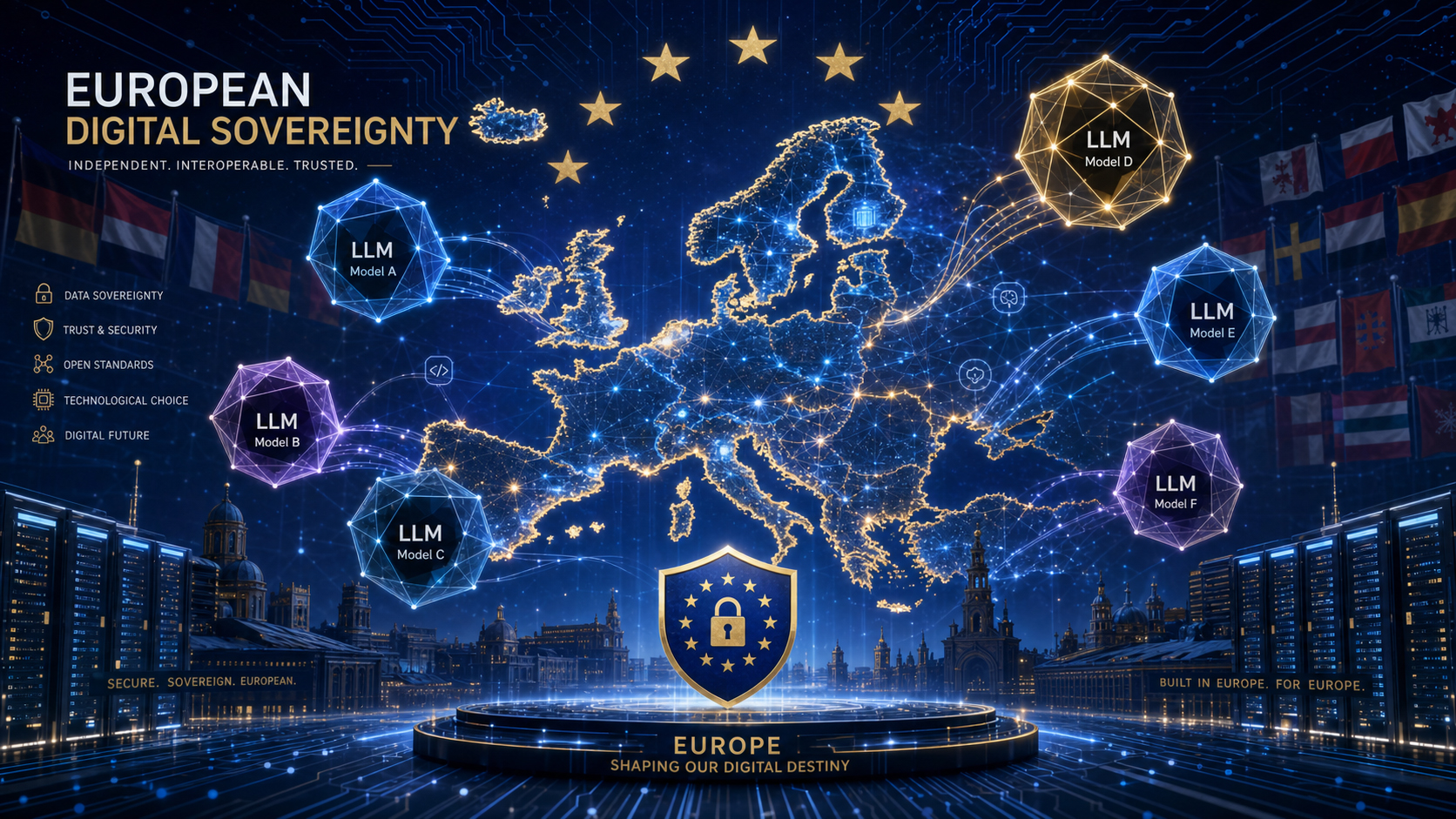
The fatal AI fallacy: Why companies should never rely on just one language model – Image: Xpert.Digital
The billion-dollar vision: How Europe can still save its digital sovereignty in the AI age
Despite the EU AI Act: Why Europe's economy is trapped in digital dependency
CLOUD Act vs. GDPR: The hidden danger for European AI and corporate data
In the age of artificial intelligence, Europe faces a dangerous paradox: While the continent has created the world's strictest regulatory framework for AI with the EU AI Act, its technological dependence on non-European providers is growing rapidly. Over 80 percent of digital infrastructure is imported – a structural weakness that, in times of global crises, unpredictable geopolitics, and extraterritorial laws like the US CLOUD Act, is becoming a real threat to European companies. But how can the balancing act between strict compliance, rapid AI innovation, and geopolitical pressure be mastered? The answer lies not in the risky race for the best single language model, but in a fundamental strategic shift. To remain competitive, companies need LLM-agnostic architectures and an infrastructure that guarantees true digital sovereignty. This article examines why blind "model fetishism" is a costly mistake, how to break free from this dependence, and why Europe's counterattack must begin right now.
Digital sovereignty in the AI age: Whoever controls the AI infrastructure controls the economy – and Europe is still playing the game with foreign cards.
Europe in the digital dependency trap.
Europe faces a structural paradox: it is the continent that has passed the world's strictest regulatory framework for artificial intelligence with the EU AI Act – and at the same time, the one most technologically dependent on non-European providers. More than 80 percent of digital technologies and infrastructure in Europe are imported. 70 percent of all AI base models used worldwide originate in the USA, and only 7 percent of global research spending in software and the internet goes to European companies. These figures are not abstract statistics – they describe a structural vulnerability that, in the current geopolitical climate, has become an acute economic and security threat.
The Bitkom study on digital sovereignty in 2025 underscores this picture with alarming clarity: 89 percent of German companies describe themselves as digitally dependent, with more than half even calling themselves "highly dependent." 57 percent estimate that they would only be able to survive for a maximum of one year without digital imports – and a mere 4 percent could compensate for a permanent loss of these imports. Particularly alarming: Although 67 percent of German companies regularly source digital technologies from the USA, only 38 percent still trust the supplier country – a drop of 51 percent that occurred in the first few months of 2025 alone.
Related to this:
Geopolitics as a wake-up call: When tech dependency becomes a weapon
The geopolitical drama of this dependency manifested itself in a symbolically significant Berlin summit in November 2025. German Chancellor Friedrich Merz and French President Emmanuel Macron jointly hosted the "Summit on European Digital Sovereignty" at the EUREF Campus in Berlin. Over 1,000 representatives from all 27 EU member states, as well as from business, academia, and civil society, came together – a signal of political seriousness that would have been almost unimaginable before. Merz succinctly summarized the core problem: "Digital sovereignty has its price, but the costs of digital dependency are even higher." Macron formulated the demand even more unequivocally: He did not want Europe to become a client or "vassal" of the USA or China.
This political shift in thinking didn't come out of nowhere. The new US administration under Donald Trump has made it unequivocally clear to Europe that technological dependence can be used as a geopolitical tool. The publisher of Handelsblatt described the situation as "sovereignty-washing"—the debate is often nothing more than a facade concealing real structural dependencies that cannot be subsidized away. A concrete example was the shutdown of Microsoft's email service at the International Criminal Court in The Hague following US sanctions—an incident that sent shockwaves through European authorities and companies. When business-critical infrastructure can be shut down at the push of a button by a foreign government, it is no longer a theoretical threat.
The legal minefield: CLOUD Act versus GDPR
The legal dimension of digital dependency is no less complex than the geopolitical one. With the US CLOUD Act of 2018, American authorities gained the right to demand the release of data from US companies – regardless of where that data is physically stored. The decisive factor is not the server location, but the question of control: whoever controls the data must hand it over – even if the servers are located in Frankfurt or Amsterdam. An expert report by the University of Cologne, commissioned by the German Federal Ministry of the Interior and made public in 2025 through a Freedom of Information Act (FOIA) request, confirms the far-reaching access of US authorities to data stored in European data centers as well.
This situation directly conflicts with the European General Data Protection Regulation (GDPR), which sets out clear requirements for third-country transfers in Article 48. The legal tension is not merely academic – it creates real compliance risks for every European company that uses cloud or AI services from US providers. To make matters worse, the CLOUD Act not only affects US parent companies, but potentially also purely European companies with relevant business connections to the US. This legal framework also allows US authorities access to trade secrets, patents, and competitively sensitive information. In short, anyone who considers data storage as the sole safeguard is making a dangerous mistake.
The EU AI Act: Regulation as a dual strategy
On August 1, 2024, the EU AI Act entered into force – the world's first binding regulatory framework for artificial intelligence. Its approach is risk-based: AI applications are classified into four risk categories, from minimal to unacceptable. High-risk systems – for example, in finance, medicine, or human resources – are subject to comprehensive requirements: risk management systems, documentation obligations, transparency and supervisory duties, as well as mandatory proof of AI competence for employees. Violations can result in fines of up to €35 million or 7 percent of global annual turnover.
The AI Act is more than just a compliance instrument, however. It pursues a strategic dual function: on the one hand, the protection of fundamental European rights and consumer safety, and on the other, the strengthening of technological sovereignty by establishing a European quality standard for trustworthy AI. Its practical implementation is taking place in phases: the rules for GPAI (General-Purpose AI) models, governance structures, and sanctions entered into force on August 2, 2025. Full application of the AI Act will come into effect on August 2, 2026 – a milestone that will require significant action from many companies. For many medium-sized enterprises, this means, in particular, that they must fully inventory, classify, and verify the compliance of their AI systems – a task that is virtually impossible without a structured platform architecture.
Particularly relevant in the context of platform architecture: The AI Act implicitly emphasizes transparency, documentability, and technical controllability. AI systems based on a single proprietary model infrastructure, whose internal logic the operator does not disclose, are structurally less able to meet these requirements than modular, openly documented systems. The regulation thus creates an indirect incentive for LLM-agnostic architectures, which preserve full documentation and adaptability for the company.
The strategic error of model fetishism
In recent years, many European companies have built their AI strategy around a central question: Which model is the best? GPT-4 or Claude? Gemini or Mistral? This question leads to a fatal decision-making logic – because it treats a dynamic technology field like a static procurement process. The reality of the LLM market is different: The title of the most powerful model currently changes hands every few weeks or months. Anyone who bases their AI architecture on a single model today is building on a shifting foundation.
Vendor lock-in in the AI context is even more profound than in traditional software. Training data, conversation histories, specific prompt formats, and deeply embedded integrations create a dependency that cannot be easily resolved by simply terminating a contract. Companies that have built business-critical processes on proprietary model functions face migration costs when switching providers, which can easily add six months to a year to the project's workload. The direct license costs are often the least of their problems: the real costs arise from missed opportunities for innovation, operational risks associated with price increases or API changes, and the strategic limitation of not being able to flexibly adapt to compliance requirements.
The VMware-Broadcom example held up a stark mirror to the IT industry: After the acquisition, thousands of enterprise customers suddenly found themselves confronted with new pricing and licensing models that doubled or tripled their budgets – with no realistic possibility of switching in the short term. A similar scenario threatens AI dependencies, only with even more complex consequences, since AI infrastructure is now integrated more deeply into core business operations than virtualization layers ever were.
🤖🚀 Managed AI Platform: Faster, safer & smarter to AI solutions with UNFRAME.AI

Managed AI Platform - Image: Xpert.Digital
Here you will learn how your company can implement customized AI solutions quickly, securely and without high entry barriers.
A managed AI platform is your all-inclusive, worry-free solution for artificial intelligence. Instead of dealing with complex technology, expensive infrastructure, and lengthy development processes, you receive a ready-made solution tailored to your needs from a specialized partner – often within just a few days.
The key advantages at a glance:
⚡ Rapid implementation: From idea to ready-to-use application in days, not months. We deliver practical solutions that create immediate added value.
🔒 Maximum data security: Your sensitive data stays with you. We guarantee secure and compliant processing without sharing data with third parties.
💸 No financial risk: You only pay for results. High upfront investments in hardware, software, or personnel are completely eliminated.
🎯 Focus on your core business: Concentrate on what you do best. We take care of the entire technical implementation, operation, and maintenance of your AI solution.
📈 Future-proof & scalable: Your AI grows with you. We ensure continuous optimization and scalability, and flexibly adapt the models to new requirements.
More information here:
Sovereign AI architectures for regulated industries
LLM agnosticism as a structural response
The strategic consequence of this analysis is clear: not to choose the best model, but to build an architecture that can utilize the best available model at any given time. LLM-agnostic platforms decouple business logic from the specific language model. Models become interchangeable components within a higher-level system. This architectural decision has far-reaching practical consequences: it enables the use of different models for different use cases—a high-performance model for complex reasoning tasks, a cost-effective option for high-volume routine tasks, and an open-source alternative to meet specific compliance requirements.
The comparison with cloud transformation is insightful. When companies began to move from single-cloud approaches to multi-cloud strategies, they realized that flexibility is not at odds with efficiency, but rather its prerequisite. LLM agnosticism follows the same logic. Those who host their AI workflows, agents, and models in an infrastructure that functions independently of the specific language model protect their investments in the long term—regardless of which vendor releases the most powerful model tomorrow.
Particularly in the European regulatory environment, this flexibility unfolds an additional strategic value: Companies can quickly switch to European models like Mistral when legal requirements change, implement on-premises deployments, or operate air-gapped environments – without having to rebuild their entire AI application architecture. This is not a theoretical possibility, but a real operational requirement in regulated sectors such as finance, healthcare, and public administration.
Almost half of German companies are already rethinking their cloud strategy, often due to concerns about rising costs and growing dependencies. Modular, technology-agnostic platforms reduce dependence on a single technology stack by over 90 percent – and at the same time offer the possibility of starting small with pilot projects and gradually scaling the solution company-wide.
The principle of sovereignty in practice: What it really means
There is a widespread misinterpretation of digital sovereignty: it is treated as a question of server location – as if European data centers alone were sufficient. This is a dangerous misconception. You can host everything locally, operate a European model like Mistral, and still possess zero operational sovereignty if someone else built the AI strategy and the infrastructure cannot be further developed without local expertise. Infrastructure without capability transfer is just infrastructure – the dependency remains, the knowledge gap remains.
True digital sovereignty in AI practice means being able to answer four specific questions positively: Can a company switch cloud providers without losing operational continuity? Can it deploy in an air-gapped environment if a regulator requires it? Can it change the LLM behind its agents without rebuilding workflows from scratch? And does the intelligence that the AI builds actually belong to the company itself? Anyone who cannot answer even one of these questions with a clear "yes" has a structural sovereignty problem—regardless of where their servers are located.
Ninety-three percent of Europeans distrust Chinese AI providers, and 84 percent express concerns about how US companies handle their data. This trust is not an abstract sentiment—it's a market dynamic that gives companies offering genuine control architectures a structural competitive advantage. In this context, sovereignty is not just a compliance issue, but a key selling point.
Europe's strategic counterattack strategy: EuroStack and the 300 billion vision
At the political level, Europe has begun to shift from a defensive to a proactive role. The EuroStack initiative, supported by a cross-party coalition in the European Parliament and studies by the Bertelsmann Foundation in collaboration with the Mercator Foundation, UCL IIPP, and CEPS, outlines a comprehensive vision of an independent European digital infrastructure – from connectivity and cloud systems to AI and digital identities. The concept is explicitly industrial policy-oriented: it aims not only at technological independence but also at strengthening the competitiveness of European industry and building resilient infrastructures.
In parallel, the European Commission has proposed a €300 billion investment program for European AI. Between €30 and €60 billion are expected to come from the EU budget, with a further €50 to €60 billion from member states – the lion's share of around €200 billion is to be contributed by private investors. This is complemented by the "Chips Act 2.0," which aims to double the European market share in semiconductors to 20 percent by 2030. At the Berlin Digital Sovereignty Summit in November 2025, companies pledged investments of over €12 billion for Europe's digital landscape.
However, critical voices urge a realistic assessment. Ralph Dommermuth, CEO of 1&1 and Ionos, and one of the foremost experts on German digital infrastructure, warned that the train has long since left the station in key areas – the US lead in cloud computing, AI, and infrastructure is virtually insurmountable. Europe cannot decide whether it remains dependent on US tech giants, but it can decide how dependent it becomes. This pragmatic realism is more important than political rhetoric about voluntarism: The goal is not to catch up on every technological gap, but to build strategic resilience for the most critical infrastructure sectors.
The AI market as a growth engine – with sovereignty as a competitive advantage
Amidst all the geopolitical debates, the economic core should not be overlooked: The European AI market is one of the most dynamic growth markets of the decade. The market volume for AI in Europe was estimated at around US$53 billion in 2024 and is projected to grow to over US$337 billion by 2032 – an average annual growth rate of over 26 percent. Other estimates are even more optimistic: The overall AI market could quintuple to over €758 billion by 2030. For Germany alone, AI could boost its gross domestic product by 11.3 percent by 2030.
In this context of growth, digital sovereignty is not a hindrance to innovation, but rather a structural differentiator. The Federal Ministry for Digital Affairs and Public Sector Modernization aptly puts it: Digital sovereignty does not mean isolation, but rather self-reliance – strengthening the capacity to act and reducing critical dependencies. Companies that invest early in sovereign AI architectures not only gain regulatory certainty, but also build trust – the scarcest commodity in the B2B AI market. 87 percent of German companies consider digital independence a key strategic goal; they are looking for providers and platforms that make this goal practically achievable.
At the same time, market dynamics show that only 13.3 percent of German companies are currently using AI technologies productively – indicating enormous growth potential that will primarily materialize where trust, compliance, and technological flexibility converge. This very combination is the promise of LLM-agnostic platforms: rapid deployment to production without paying the price of dependency.
Architectures for the sovereignty of tomorrow
Anyone developing an AI strategy for European companies today must address several dimensions simultaneously that were previously considered independently: technological flexibility, legal compliance, operational resilience, and geopolitical risk minimization. In this context, LLM-agnostic platforms are not simply a technical preference – they are the architectural answer to a structurally altered risk landscape.
The practical recommendations for companies are clear: They should define an exit strategy for each AI component before the project starts, regularly test alternative models, maintain full control over their training data, and implement abstraction layers between business logic and AI services. Multi-LLM strategies not only reduce dependence on a single vendor but also enable optimization based on cost, performance, and compliance requirements, depending on the use case.
The EU has established the regulatory and political framework with the AI Act, the GDPR, and ongoing investment programs. Now it's up to companies to derive an architectural strategy from this framework. The transition from experimental mode to production-ready AI applications at an industrial scale will reward those in Europe who have embedded control and flexibility as core design principles – not as an afterthought. The crucial question is no longer: Which model do we choose? It is: Which architecture gives us the freedom to choose the right one at any given time?
Consulting - Planning - Implementation

Konrad Wolfenstein
I would be happy to serve as your personal advisor.
me at wolfenstein∂xpert.digital contact
Just call me on +49 7348 4088 965 .





