
When Meta was still a corporate partner – a look back at the enterprise VR ecosystem that was long considered a blueprint
Xpert Pre-Release

Available in 27 languages 📢
Prefer Xpert.Digital on GoogleⓘPublished on: June 2, 2026 / Updated on: June 2, 2026 – Author: Konrad Wolfenstein
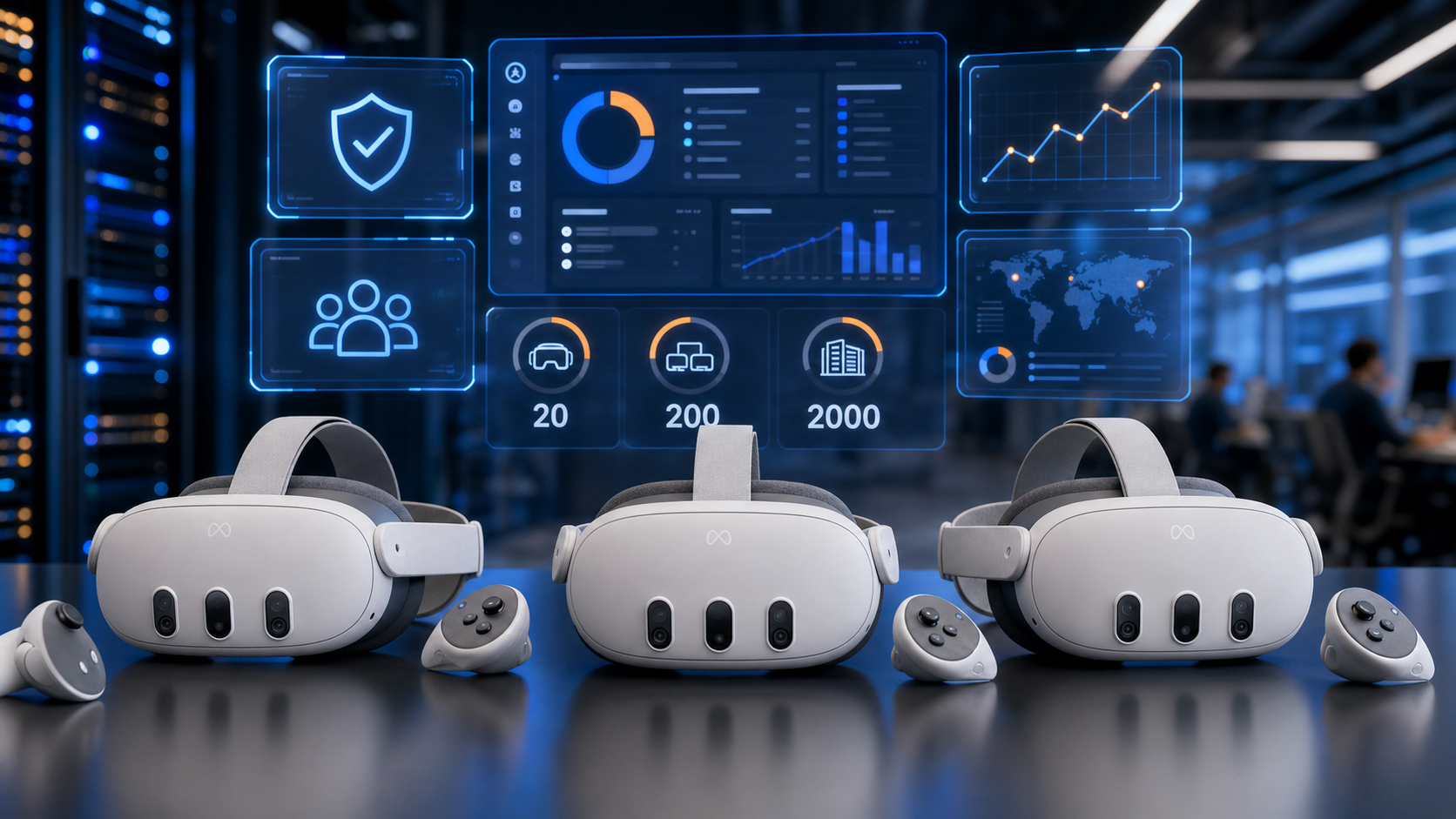
When Meta was still a corporate partner – a look back at the enterprise VR ecosystem that was long considered a blueprint – Creative image: Xpert.Digital
After the meta-earthquake: What companies now need to learn from the VR retreat
The end of an era: Why Meta really pulled the plug on its enterprise VR system
Meta Quest in the company: The 3 most expensive rollout mistakes (and how to avoid them)
For a long time, Meta's enterprise VR ecosystem was considered the undisputed gold standard for the professional use of virtual reality. From its initial steps with "Oculus for Business" to the highly complex management suite "Meta Horizon Managed Services" (HMS), the tech giant offered a blueprint for how companies could manage hardware and software in a scalable way. But on February 20, 2026, Meta surprisingly pulled the plug and discontinued the commercial sale of its business solutions. What remains is a system in maintenance mode—and a valuable lesson for the IT world. This article takes a comprehensive, retrospective look at the platform architecture, rollout scenarios, and economic return-on-investment logic that shaped Meta's VR strategy for years. It serves as a reference work for anyone who wants to understand why the system worked so well, where its hidden cost drivers lay, and what lessons companies absolutely must learn for future, platform-independent infrastructures.
Meta Quest in enterprise use: 20, 200 or 2,000 devices?
A platform question that went beyond the choice of device
For years, companies wanting to deploy MetaQuest VR headsets faced a decision that went far beyond simply choosing the device model. The truly strategically crucial question wasn't which headset to buy, but how many. This number determined the necessary management infrastructure, the applicable licensing models, how GDPR compliance was ensured—and whether the in-house IT team could handle the task or whether specialized MDM service providers had to be brought in. The number of units was therefore not a secondary operational detail, but a primary governance decision with significant financial implications.
With its Quest product line—Quest 2, Quest 3, Quest 3S, and Quest Pro—Meta had created a VR platform that achieved widespread adoption in both the consumer and enterprise sectors worldwide. The devices were standalone, meaning they didn't require a connected PC, and supported hand tracking, mixed-reality passthrough, and a growing ecosystem of business applications. Meta offered a dedicated management system for enterprise customers, which evolved and reinvented itself several times over the years—until this system was finally discontinued in its commercial form in early 2026.
How it all began: From Oculus for Business to a mature enterprise suite
A platform in constant flux
The story of Meta Enterprise's VR headset tool began in 2017 with the launch of Oculus for Business—a package specifically configured for businesses, starting with a $900 SKU of the then-current Oculus Rift. Enterprise SKUs of the Oculus Go and Oculus Quest followed in subsequent years. In 2019, the program was officially unveiled at the F8 developer conference, with concrete use cases from industry and logistics: Johnson & Johnson used VR for surgical training, Farmers Insurance for soft skills development, and DHL and ExxonMobil for training in high-risk areas.
In late fall 2023, Meta replaced the existing program with Meta Quest for Business—a completely redesigned enterprise management platform built from the ground up for the Quest generation. A final rebranding took place in February 2025: The program was renamed Meta Horizon Managed Services (HMS), simultaneously opened to third-party MDM partners such as ArborXR and ManageXR, and made a mandatory component for all new enterprise deployments. Finally, in January 2026, Meta announced that it would discontinue the commercial offering on February 20, 2026.
What Meta Horizon Managed Services achieved at the height of its development
At its peak, HMS was a complete enterprise management suite for MetaQuest VR headsets. The core offering consisted of two subscription tiers: Individual Mode for $15 per month per headset, designed for devices with a personally assigned user, and Shared Mode for $24 per month per headset, which allowed for the same shift deployment without requiring a personal account. A lifetime license option was also available for educational institutions at $499.99.
Key features included centralized Wi-Fi enrollment without a personal Meta account or developer mode, shared mode for shift work, integration of enterprise identity providers via SAML and OAuth, centralized policy management for security settings and PIN access control, app distribution via the Meta Horizon App Lab, and official MDM integration with ArborXR and ManageXR. Administrators managed all devices through Meta's central admin center or established enterprise user management platforms such as Microsoft Intune.
The market for which Meta carried out the rollout: figures and growth dynamics
Global Enterprise VR Market on a Growth Trajectory
The global enterprise AR and VR market was valued at $42.8 billion in 2025 and projected to grow to $198.6 billion by 2034, representing a compound annual growth rate (CAGR) of 18.6 percent. The enterprise VR training segment alone reached a market value of approximately $11 billion in 2026 and was projected to exceed $212 billion by 2035, with a CAGR of nearly 45 percent. These figures corresponded with an empirically proven return on investment (ROI) that distinguished VR training from traditional training formats.
The logic of returns: When VR training was economically superior
A Forrester study from 2025 on the overall economics of VR deployment provided solid figures for the business case. According to the study, companies using MetaQuest for enterprise training achieved a return on investment of 219 percent over three years with a payback period of less than six months. The study was based on a composite organization with 10,000 employees, 3,300 of whom received VR training. Total costs amounted to $1.9 million, compared to a value of $6.1 million, resulting in a net present value of $4.2 million.
Cost reduction was the strategically decisive factor: VR training costs per learner fell to around US$115 over three years—approximately 50 percent below the costs of traditional classroom training. VR reached the break-even point compared to classroom training once it scaled to 375 learners. At 3,000 learners, it was 52 percent cheaper, and at 10,000 learners, 64 percent cheaper. Intel reported a VR ROI of 300 percent for its security training program over five years.
The three rollout scenarios in historical review
The following scenarios describe how companies typically proceeded during the active HMS phase — according to the number of devices, management architecture, costs, and strategic risk profile.
Scenario A: 15 to 25 devices — The controlled pilot project
A rollout of 15 to 25 headsets was the typical starting size for companies piloting VR technology—whether for employee training, onboarding, product visualization, or remote collaboration. At this scale, there were no high ongoing costs: The devices were registered via Wi-Fi through a central company account; no personal meta-account was required. The shared mode allowed headsets to be passed between shifts without any reset effort.
For this pilot project, the basic HMS configuration was perfectly adequate. Those with more advanced requirements, such as custom apps, detailed usage monitoring, or granular policies, could add ArborXR or ManageXR. The IT workload with 20 devices was manageable, the administrative overhead was low, and experience showed that an IT administrator only needed a few hours to learn the Admin Center.
| Cost category | Costs until Feb. 2026 (approx.) |
|---|---|
| Meta Quest 3S 128 GB | approx. 299–350 EUR/device |
| Meta Quest 3 512 GB | approx. 549–599 EUR/device |
| HMS Individual Fashion | $15 per device per month |
| HMS Shared Mode (Add-on) | $24 per device per month |
| ArborXR/ManageXR (optional) | approx. 7–10 EUR/device/month |
| Content Development (1 Module) | EUR 50,000–150,000 (one-time costs) |
The strategic trap at the pilot level was well-known and often fatal for the entire VR program: Those who failed to define quantifiable metrics during the pilot phase—such as reductions in training time, error rates, and costs per trainee—provided management with no reliable basis for deciding on the next step. A pilot project without metrics was not a strategic experiment, but a subsidized gimmick.
Scenario B: 100 to 300 devices — Operational scaling as a system test
A rollout of 100 to 300 devices marked the transition from pilot project to full operational implementation. From around 200 devices onward, the economies of scale in VR training significantly exceeded the total operating costs of traditional training formats for the first time. At the same time, this resulted in a level of complexity that could no longer be managed with simple HMS management alone.
In this scenario, a professional MDM system was not optional, but essential. ArborXR and ManageXR enabled batch provisioning of hundreds of devices, remote deployment of apps and content, live monitoring of device health, battery level, and usage activity, as well as kiosk locking, which restricted devices to specific applications. ManageXR held SOC 2 Type 2 and ISO 27001 certifications, a crucial selection criterion for regulated industries.
The governance architecture gained strategic importance at this level. Questions that had to be answered before the first order was placed included: Who in the company is responsible for the VR platform—IT, HR, or a dedicated Learning & Development unit? How is user authentication handled? What data is stored on the devices, what data in the cloud, and in which data centers?
| Cost category | 200 devices / 3 years (approx.) |
|---|---|
| Hardware Quest 3S 128 GB | approximately 60,000–70,000 EUR |
| HMS Shared Mode ($24 x 200 x 36 mo.) | approximately USD 165,000 |
| MDM license ArborXR/ManageXR (additional) | approx. 14,000–17,000 EUR |
| Internal IT administration (partially) | approximately 15,000–25,000 EUR/year |
| Content development (3–5 modules) | 150,000–500,000 EUR |
| Maintenance/replacement (~10% per year) | approximately 6,000–7,000 EUR/year |
The hidden cost drivers weren't the hardware, but rather the content and IT governance. Developing a complete VR training module started at €50,000, depending on complexity, and could exceed €1 million for high-security applications. Companies developing content internally needed a dedicated VR development team. Outsourcing created dependencies on agencies and required careful negotiation of handover protocols, usage rights, and update contracts.
Scenario C: 500 to 2,000+ devices — The strategic infrastructure decision
Once a fleet size reached several hundred devices, VR ceased to be merely a training measure—it became a strategic infrastructure, falling into the same governance category as ERP systems or production facilities. This scenario presented new operational challenges: content versioning across multiple locations, country-specific localization, auditability of all training completions for compliance purposes, integration with existing HR and LMS systems, and lifecycle management of devices across multiple hardware generations.
The vendor lock-in aspect was not to be underestimated at this level. Companies that relied on HMS as a dedicated enterprise system had invested in a platform architecture whose further development was solely the responsibility of Meta. When Meta announced the discontinuation of its commercial offering in January 2026, a familiar weakness of all proprietary enterprise platforms was revealed to these companies: Investment security had a single source—and that source had changed its strategy without warning.
| Cost category | 1,000 devices / 3 years (approx.) |
|---|---|
| Hardware Quest 3S 128 GB | approximately 300,000–350,000 EUR |
| HMS Shared Mode ($24 x 1,000 x 36 mo.) | approximately USD 820,000 |
| Enterprise MDM license (third-party provider) | approximately 70,000–100,000 EUR |
| IT Administration (dedicated team) | from EUR 120,000/year |
| Content Development (10+ Modules) | 500,000–2,000,000 EUR |
| Integration (LMS, HR, LDAP/SSO) | 30,000–150,000 EUR one-time payment |
The potential for cost optimization at this level was considerable. Bulk orders of large quantities of equipment enabled purchasing conditions that were 15 to 25 percent below the retail price. The enterprise SKUs brought another practical advantage: a 3-year manufacturer's warranty, which was not included with consumer devices. This difference in warranty coverage was a serious cost factor for companies with large fleets and long maintenance cycles.
🎯🏢🥽 Enterprise XR Solution Hub for B2B projects – from digital twins to customized extended reality solutions

Enterprise XR Solution Hub for B2B projects – from digital twins to customized mixed reality solutions – Image: Xpert.Digital
Xpert.Digital acts as a holistic Enterprise XR Solution Hub, seamlessly integrating high-performance Pimax hardware into industrial B2B workflows. From digital twin analysis in engineering ("top floor") to immersive training on the production floor ("shop floor"), companies receive a customized, comprehensive solution including strategic consulting and support.
More information here:
Three lessons from the meta-enterprise ecosystem for your VR roadmap
The MDM ecosystem: ArborXR and ManageXR as supporting pillars
Quest MDM after 2026: New opportunities instead of costly dependencies
Two platforms, one ecosystem
ArborXR and ManageXR were the two MDM solutions officially recognized by Meta as partners for MetaQuest devices. Both platforms offered core features such as centralized app deployment, kiosk locking, live monitoring, and bulk provisioning. Until MHMS became mandatory in 2025, it was possible for companies to run consumer Quest devices with a developer account and third-party MDM without any Meta fees—a model many companies deliberately chose to avoid the Oculus for Business or Quest for Business subscription costs.
After the introduction of MHMS as a mandatory layer, the cost structure changed fundamentally. The pricing structure of third-party MDMs was as follows: ArborXR charged approximately $84 per device per year in the Starter segment, and ManageXR approximately $67 per device per year for the Essential tier. In addition, there was the HMS license fee of $15 to $24 per device per month, which significantly increased the overall administrative costs compared to the old workaround model.
| criterion | ArborXR | ManageXR |
|---|---|---|
| Pricing structure entry | ~84 USD/device/year | ~$67/device/year |
| Security certification | Enterprise-grade | SOC 2 Type 2, ISO 27001 |
| Kiosk fashion | Yes | Yes |
| Global Partner Status | Officially | Officially |
| Device compatibility | Multi-platform | Meta-focused |
| Lifetime EDU license | No | Available ($499.99) |
GDPR compliance in the VR context: What applied back then
Data protection was not a marginal issue — not even in the pilot project
VR headsets in a corporate environment collected a range of personal and behavioral data: training results, reaction times, error rates, attention patterns, and, in some applications, biometric characteristics such as hand gestures or eye movements. According to the GDPR, this data was classified as personal data as soon as it could be attributed to an identified or identifiable natural person. For companies conducting VR training with the evaluation of learning outcomes, a data protection impact assessment in accordance with Article 35 of the GDPR was mandatory.
The practical consequence for the VR rollout was: data protection audit before deployment, not after. This included selecting the data storage region in the MDM platform, configuring data retention periods, obtaining user consent for processing training performance data, and verifying whether the US provider was subject to the EU-US Data Privacy Framework and whether corresponding transfer impact assessments were documented.
What was discontinued — and what remains of this platform architecture
The cut from February 20, 2026
The strategic decision that Meta announced on January 14, 2026, and implemented on February 20, 2026, was remarkable in its precision: Meta did not discontinue HMS itself, but only the commercial distribution model surrounding HMS. Specifically, the following were discontinued: the sale of the commercial business and EDU SKUs (Meta Quest 3 512 GB, Meta Quest 3S 256 GB, Meta Quest 3S 128 GB), the sale of HMS annual licenses, and Meta Horizon Workrooms as a VR collaboration app. At the same time, HMS remained usable as a free product—the previous monthly fees of $15 to $24 were completely eliminated.
Meta officially justified this move by citing its focus on consumer hardware and its goal of advancing the virtual reality market as a whole. The real strategic message, however, was clearer: Meta wanted to remain the market leader in the consumer VR segment—not operate as a dedicated enterprise IT provider. The move was economically rational; consumer volume is many times greater than enterprise volume, and enterprise support incurred disproportionately high support costs.
What will remain in operation until 2030
HMS was placed in maintenance mode after February 20, 2026: Existing features remained fully functional, security fixes and support were guaranteed, but new feature development was discontinued. All existing deployments were fully supported until January 4, 2030. New deployments could continue to use consumer devices in conjunction with the free HMS. ArborXR and ManageXR remained official MDM partners. Geographic restrictions for HMS enrollment were relaxed, allowing for broader international adoption.
Investment security viewed in retrospect
What the model could do — and where it failed
The Meta Enterprise ecosystem, as it existed until early 2026, was remarkably well-designed for its level of maturity. It offered a clear hardware line with a dedicated warranty, a manageable subscription structure with defined feature levels, official MDM partnerships with two specialized third-party providers, and an admin center that was manageable even for mid-sized IT teams. The combination of consumer-level hardware pricing and enterprise-level management functionality was a strength that no direct competitor offered in this form.
The structural weakness of the model lay not in its function, but in its dependency structure. Companies that relied on HMS as their central management system built their VR infrastructure on a proprietary layer, the further development and maintenance of which was solely the responsibility of a single vendor. When Meta changed its strategy, there was no negotiating partner and no alternative on the same platform level. The lesson here is timeless: Enterprise VR infrastructure intended for long-term strategic operation must be platform-agnostic—with open content formats, device-independent MDM solutions, and clear contractual agreements for data sovereignty and exit strategies.
Decision matrix — what the model looked like until 2026
| criterion | ~20 devices | ~200 devices | ~2,000 devices |
|---|---|---|---|
| MDM requirement | HMS base sufficient | ArborXR/ManageXR mandatory | Enterprise MDM + dedicated team |
| HMS costs per month | 15–24 USD/device | 15–24 USD/device | 15–24 USD/device |
| Enterprise SKU Advantage | 3-year warranty | 3-year warranty | Significant (exchange rate) |
| GDPR risk | Small amount | Medium | High |
| Vendor lock-in risk | Small amount | Medium | High |
| ROI period | 12–24 months | 6–18 months | 6–12 months |
Three lessons that will last
Looking back at the Meta Enterprise ecosystem, three invariant insights can be derived that also apply to future platform decisions.
The first key takeaway: Metrics determine progress. No VR rollout should be approved without predefined key performance indicators (KPIs). The Forrester metric—training time, error rate, cost per trainee, savings through reduced travel and trainer expenses—is a proven evaluation framework. Without measurement, there is no learning; without learning, there is no improvement.
The second finding: Infrastructure scales, but content doesn't automatically. The most frequent misinvestment in VR rollouts wasn't in the hardware, but in the content. A single VR training module only became profitable with a sufficiently large group of learners. Poorly maintained, outdated, or geographically dispersed content became a bottleneck for the entire program. Content governance is therefore a leadership responsibility, not an IT responsibility.
The third insight: Platform independence is not a luxury, but resilience. Every major VR rollout should have been designed to allow for a platform switch within three to five years without a complete content rebuild. This requires conscious architectural decisions regarding content formats, MDM selection, and data structures. Those who built with open standards had significantly more freedom after the Meta withdrawal than those who had fully committed to the HMS ecosystem.
The Meta Enterprise ecosystem, in its mature phase, was one of the most powerful and accessible VR management infrastructures the market had ever seen. Its commercial discontinuation in early 2026 does not diminish the validity of the strategic insights that can be gained from its use.
Your global marketing and business development partner
☑️ Our business language is English or German
☑️ NEW: Correspondence in your native language!

Konrad Wolfenstein
I and my team are happy to be available to you as your personal advisor.
You can contact me by filling out the contact form here simply call me at +49 7348 4088 965. My email address is [email protected]:or
I'm looking forward to our joint project.
☑️ SME support in strategy, consulting, planning and implementation
☑️ Creation or realignment of the digital strategy and digitization
☑️ Expansion and optimization of international sales processes
☑️ Global & Digital B2B trading platforms
☑️ Pioneer Business Development / Marketing / PR / Trade Fairs
🎯🎯🎯 Data-driven B2B industry hub as a quasi-in-house solution

The quasi-in-house solution: How Xpert.Digital closes operational gaps in B2B marketing and sales – Smart Content-Driven Business - Image: Xpert.Digital
Xpert.Digital is a data-driven B2B industry hub led by Konrad Wolfenstein . The company acts as an external, quasi-in-house solution for industrial partners, closing operational gaps in marketing, content, and sales – without requiring additional resources on the client side.
More information here:





