Mecanum wheels, the crazy drive system: The silent transformation of intralogistics, robotics and precision automation – Image: Xpert.Digital
The secret of sideways and omnidirectional robots: Why a 50-year-old invention is crucial for logistics today
Lack of space in the warehouse? How the unassuming "Swedish wheel" is saving the future of industry.
Up to 90 tons in the smallest space: The astonishing technology behind the world's most powerful transporters
Imagine a multi-ton vehicle that seemingly defies the laws of physics, rotating on the spot and effortlessly gliding sideways from a standstill. What at first glance appears to be a special effect from a science fiction film is actually the result of an ingenious Swedish invention from the 1970s: the Mecanum wheel. Originally researched by the US military for aircraft carriers, this unassuming design has long since made the leap into the civilian sector. In times of chronic space constraints in metropolitan areas, rapidly increasing pressure for automation, and a global boom in e-commerce, this technology is now a key factor in determining how efficiently factories and warehouses can be operated. But who is leading the way in this highly complex market of the future? A look at the global competitive landscape reveals a fascinating picture: While German manufacturers excel with millimeter-precise solutions for the most demanding heavy-duty applications, Chinese suppliers are flooding the market with scalable components, and American tech pioneers are focusing on AI-driven fleet management systems. Immerse yourself in the world of omnidirectional intralogistics and discover why a wheel that seems completely "wrong" in its design has forever changed the logic of movement.
Related to this:

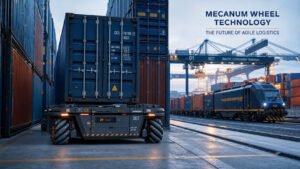
Germany, China, or the USA? Who truly dominates the multi-billion-dollar omnidirectional robot market?
A wheel changes the logic of movement
Few mechanical inventions have so profoundly changed our understanding of how machines move in space as the Mecanum wheel. It was invented in 1972 by the Swedish engineer Bengt Erland Ilon, who worked for the company Mecanum AB and filed a patent for it in the United States. For this reason, the design is often referred to in technical literature as the Ilon wheel or Swedish wheel. The US Navy recognized the potential of this invention early on, purchased the patent, and commissioned research in Panama City, Florida, during the 1980s to improve the flexibility of moving goods on ships. It wasn't until 1997 that several civilian companies, including the American firm Airtrax, acquired the rights to use the technology for relatively small sums, enabling them to develop omnidirectional forklifts capable of maneuvering in confined spaces such as aircraft carrier decks.
The operating principle is inconspicuous at first glance, but its effect is profound. A Mecanum wheel consists of a central rim on which several freely rotating, barrel-shaped rollers are arranged at an angle of forty-five degrees. Each of these rollers carries no driving force on its own, but by cleverly arranging several such wheels on a vehicle, force vectors can be generated in any direction. If all wheels rotate in the same direction, the vehicle moves straight ahead. If the front and rear axles rotate in opposite directions, the vehicle shifts sideways without requiring a conventional steering input. This characteristic makes the Mecanum wheel the only drive system that can change the direction of movement in real time without first adjusting the vehicle's orientation.
Why warehouses suddenly move sideways
The practical relevance of this physical property becomes particularly clear in the context of modern intralogistics. Conventional swivel casters generate abrupt force peaks with every change of direction, making precise positioning difficult and leading to time losses in confined storage environments. Mecanum wheels do not have this effect, as they allow for spontaneous changes of direction with consistent rolling friction. This represents a decisive advantage for automated guided vehicles (AGVs), autonomous mobile robots, and heavy-duty platforms: they can turn, shift laterally, or navigate diagonally without requiring the turning radius necessary for conventional vehicles. In narrow aisles, densely packed distribution centers, or production lines with changing layouts, this mobility proves to be highly economically relevant because it enables shorter cycle times, reduced footprint, and higher throughput rates.
From an economic perspective, Mecanum technology addresses the shifts in global supply chain requirements seen in recent years. The increasing shortage of skilled workers in warehousing and logistics, rising labor costs in Western industrialized nations, and the trend toward smaller, more customized shipments in e-commerce are all intensifying the pressure to automate transport processes within factories and warehouses. Simultaneously, the densification of urban logistics spaces is forcing operators to achieve higher throughput with less space. This is precisely where omnidirectional mobility demonstrates its economic value, as it allows for more intensive use of existing warehouse layouts without structural modifications.
From niche product to industrial standard component
What is remarkable about the development of Mecanum technology is its long journey from a niche military application to a mass-market civilian component. For decades, the Mecanum wheel remained a technical curiosity, primarily used in research laboratories and specialized applications such as stage technology or medical technology. It was only with the rise of automation in Industry 4.0 and the rapid proliferation of autonomous mobile robots in warehousing and manufacturing that the technology experienced an economic boom. Today, it is an integral component of numerous heavy-duty transport platforms, collaborative robot chassis, and specialized conveyor systems.
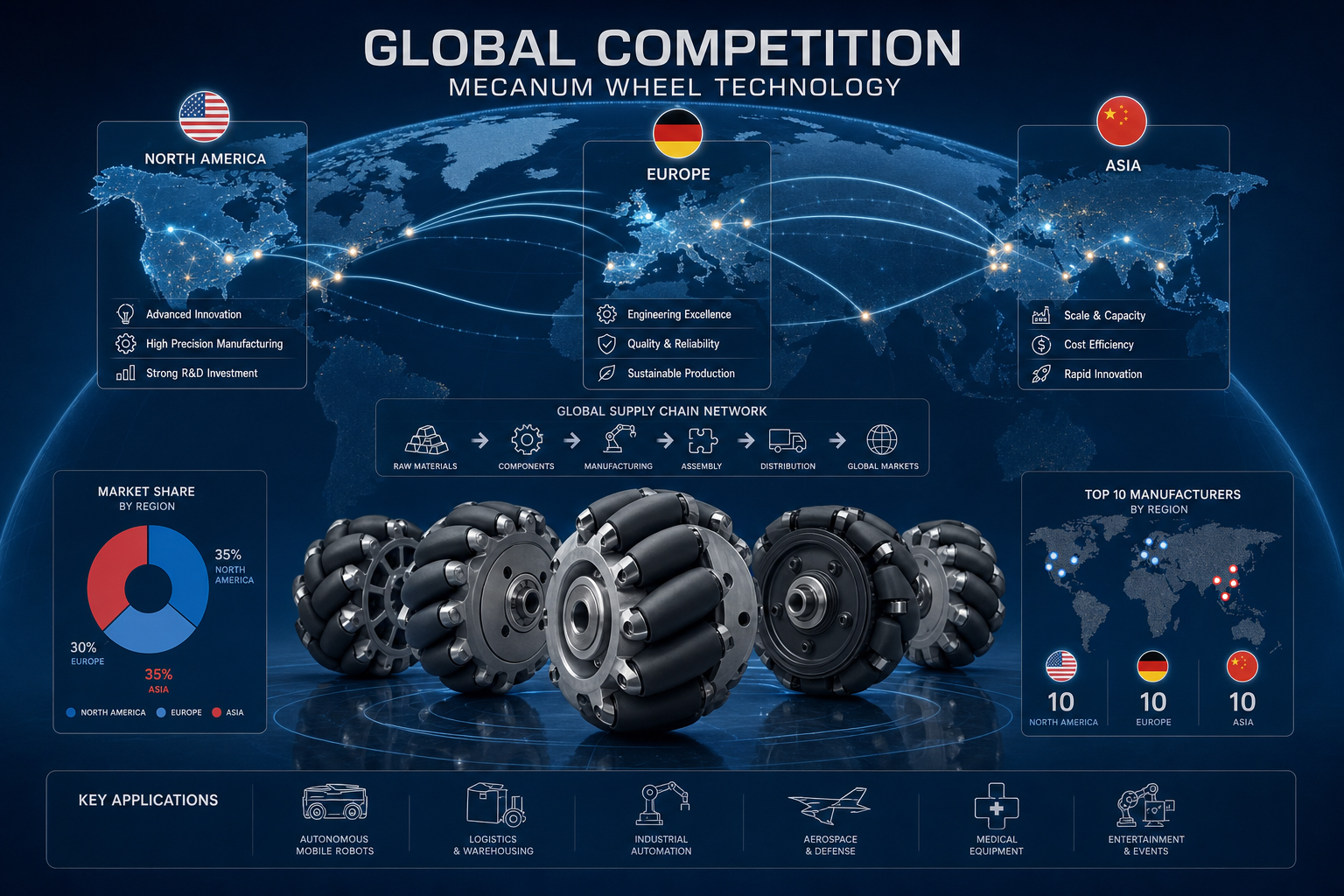
This market maturity has simultaneously given rise to a global competitive landscape that differs significantly between major economic regions. While in Germany the focus is on engineering-driven precision manufacturing and integration into complete system solutions, China is dominated by a broad, price-aggressive supplier industry that primarily produces individual wheel components and AGV kits in large quantities. In the United States, on the other hand, value creation is more concentrated on specialized applications with high payloads and on software-driven complete systems for autonomous fleets.
Ranking of the eleven most important providers worldwide
The following analysis ranks the ten most important manufacturers of Mecanum technology in the fields of robotics, automation, and intralogistics, with a particular focus on German, then Chinese, and finally American companies. The ranking takes into account the technological depth, market significance, industrial maturity, and international reach of the respective solutions.
| Rank | Pursue | Country of origin | focus |
|---|---|---|---|
| 1 | KUKA (omniMove) | Germany | Heavy-duty platforms up to ninety tons |
| 2 | ek robotics / NEURA Mobile Robots | Germany | Driverless transport systems, complete AGV fleets |
| 3 | MIAG Fahrzeugbau GmbH | Germany | Specialist for explosion-proof industrial trucks and innovative transport systems |
| 4 | Nabtesco Germany | Germany | Drive units with integrated cycloidal gearbox |
| 5 | metron / DONKEYmotion | Germany | Compact Mecanum chassis in a modular system |
| 6 | Hangzhou Zhilan Technology | China | Series production of Mecanum wheels and AGV components |
| 7 | Qingdao Daao Technology | China | Heavy-duty Mecanum wheels for AGVs and AMRs up to eight tons |
| 8 | Zhejiang Tongzhu Technology (TZBOT) | China | Complete AGV drive units and wheel modules |
| 9 | Heavy Duty AGV Manufacturer (Air Cushion and Mecanum Platforms) | China | Heavy-duty platforms from 0.5 to 1,400 tons |
| 10 | Kornylak Corporation | USA | Conventional industrial rollers and Mecanum wheels since 1946 |
| 11 | OTTO Motors / Vecna Robotics | USA | Software-driven autonomous fleet systems for heavy industry |
German suppliers: Precision as a competitive advantage
In the German market, Mecanum technology has established itself primarily through the combination of engineering precision and industrial system integration. KUKA, with its omniMove platform, is considered the most prominent example of this philosophy. The Augsburg-based company has developed its own drive technology based on the Mecanum wheel, in which each wheel consists of two rims and nine free-running, barrel-shaped rollers mounted at the typical 45-degree angle. The resulting transport platforms achieve load capacities of up to 90 tons and a positioning accuracy of just a few millimeters, making them particularly attractive for transporting large components in the aerospace and automotive industries. KUKA Mecanum technology is also used in cleanroom applications in semiconductor manufacturing, for example, in the automated handling of sensitive wafer cassettes.
The second major German supplier, ek robotics, boasts over sixty years of experience in automating material flows and, with more than ten thousand vehicles delivered, is one of the established European market leaders for automated guided vehicles (AGVs). Following its acquisition by the NEURA Robotics Group in 2025, the company recently rebranded as NEURA Mobile Robots and is increasingly combining classic AGV technology with AI-supported control software. The X Move transport platform, in particular, demonstrates how German manufacturers are merging AGV and AMR technologies to enable flexible switching between linear and free navigation.
MIAG Fahrzeugbau GmbH: The specialist for the highest safety standards. MIAG Fahrzeugbau GmbH, based in Braunschweig, Germany, serves a highly specialized yet crucial segment of intralogistics. While the broader market for industrial trucks focuses on throughput and connectivity, MIAG has established itself for decades as a globally sought-after expert in explosion protection. The company develops and manufactures explosion-proof industrial trucks and innovative transport systems, which are approved for use in highly sensitive Ex zones 1, 2, 21, and 22 according to the European ATEX Directive. The certification of the equipment – from compact hand-operated pallet trucks to heavy-duty diesel or electric forklifts – is carried out in close cooperation with the German National Metrology Institute (PTB), located at the same site. For industries such as chemicals, petrochemicals, and pharmaceuticals, where highly volatile mixtures can form from gases, vapors, or dusts, MIAG supplies customized special-purpose equipment that is safety-tested not only for individual components but also as a complete system. This extreme niche expertise makes the long-established company an indispensable player in the German automation and logistics landscape.
Another important company is Nabtesco Germany, a global market leader in gearboxes for industrial robots, which is complementing its Mecanum-gear drive units with a patented cycloidal gear technology. This combination promises particularly compact, low-maintenance solutions for mobile automation concepts that require high precision in confined spaces.
The German field is rounded out by imetron Gesellschaft für industrielle Mechatronik from Umkirch near Freiburg, which offers a modular system for small and medium-sized Mecanum vehicles under the DONKEYmotion brand. In collaboration with Dortmund University of Applied Sciences and Arts, the company developed compact wheel drive units with a diameter of only 190 millimeters, which, despite their small size, achieve a load-bearing capacity of over 270 kilograms per wheel. This research collaboration exemplifies how closely academic innovation and the manufacturing expertise of medium-sized companies are intertwined in Germany.
🎯🎯🎯 Data-driven B2B industry hub as a quasi-in-house solution


The quasi-in-house solution: How Xpert.Digital closes operational gaps in B2B marketing and sales – Smart Content-Driven Business - Image: Xpert.Digital
Xpert.Digital is a data-driven B2B industry hub led by Konrad Wolfenstein . The company acts as an external, quasi-in-house solution for industrial partners, closing operational gaps in marketing, content, and sales – without requiring additional resources on the client side.
More information here:
Intralogistics of the future: How Germany, China and the USA are competing for the market for mobile robots
Chinese suppliers: Scaling as a strategic weapon
While system integration is the primary focus in Germany, a diverse supplier industry has established itself in China, specializing in the cost-effective mass production of Mecanum wheels and complete AGV drive units. Hangzhou Zhilan Technology is among the best-known manufacturers, covering the entire spectrum from Mecanum wheels and omnidirectional wheels to AGV components. Qingdao Daao Technology from Shandong Province is similarly broadly positioned, specializing in heavy-duty Mecanum wheels for load capacities between one hundred and eight thousand kilograms per wheel, thus specifically serving the market for heavy-duty AGVs and autonomous mobile robots.
Zhejiang Tongzhu Technology, better known under the brand name TZBOT, has been producing a comprehensive range of AGV drive units since its founding in 2015. These include Mecanum wheels with integrated servo motors and complete suspension systems for payloads up to one ton. The Chinese market also features suppliers specializing in extreme payload ranges. One example is manufacturers of heavy AGV platforms that offer both Mecanum wheel and air cushion systems, covering payloads from half a ton to over 1,400 tons, making them attractive for applications in the aerospace and rail vehicle industries.
The competitive strategy of Chinese suppliers differs fundamentally from that of German suppliers. Instead of focusing on highly integrated complete solutions, many Chinese manufacturers offer standardized wheel modules and drive units available in a wide variety of options. These are sold internationally via trading platforms and serve as cost-effective components for system integrators worldwide. This strategy has led to a massive price erosion of standard components in recent years and has significantly facilitated access to Mecanum technology for smaller robotics startups. At the same time, the technological depth of complex overall systems, such as intelligent fleet management or high-precision sensor integration, often lags behind that of Western suppliers.
American providers: From naval history to an AI-powered fleet
The United States holds the historical roots of civilian Mecanum use, as the U.S. Navy acquired the original patent and first systematically researched the technology in the 1980s. Kornylak Corporation, based in Hamilton, Ohio, a family-owned company with roots dating back to 1946, is among the oldest industrial suppliers of Mecanum wheels in North America and has specialized for decades in conveying and material handling solutions, including multi-axis, omnidirectional wheel systems for conveyors and robotics. Airtrax, another historically significant American pioneer based in New Jersey, acquired the rights to the technology from the Navy in 1997, along with other companies, and developed omnidirectional forklifts that remain in production today.
However, the American market has shifted significantly toward software-driven, integrated systems in recent years. OTTO Motors, originally founded as a Canadian company, now maintains a major American location in San Jose and was acquired by Rockwell Automation in 2023, underscoring the strategic importance of autonomous mobile robots for American industrial automation. Vecna Robotics complements the American field with autonomous pallet trucks and tow vehicles that enable close collaboration between robots and human employees in warehouse environments through AI-powered orchestration software. This development demonstrates that the American competitive advantage lies less in the mechanical design of the wheels themselves, but rather in the intelligent networking of entire robot fleets and their seamless integration into existing production and logistics systems.
Strategic differences between the three economic regions
A comparison of the three regions reveals three fundamentally different industrial logics. German manufacturers pursue a strategy of vertical integration, offering mechanics, drive technology, control software, and system design from a single source, which translates to high margins but also higher entry-level prices for customers. Chinese suppliers, on the other hand, focus on horizontal scaling, producing standardized components in large quantities and at low costs, making them globally competitive, particularly in the mid-range and lower price segments. American companies, meanwhile, are increasingly positioning themselves as providers of intelligent, comprehensive solutions, where the Mecanum hardware itself is just one component within larger, AI-supported automation platforms.
This differentiation has direct economic consequences for investment decisions in intralogistics. Companies that rely on the highest precision, reliability, and durability in heavy-duty applications, such as in the automotive or aerospace industries, prefer German system solutions, even if these are more expensive to purchase. Operators with limited budgets and a need for standardized components for small to medium loads are increasingly turning to Chinese suppliers, leading to a noticeable shift in global value chains in this segment. Finally, American suppliers are gaining importance, particularly where customers are looking not just for individual vehicles, but for entire software-controlled robot fleets with dynamic task distribution.
Limits and unresolved challenges of technology
Despite its economic advantages, Mecanum technology is not a panacea for every automation task. Compared to conventional wheels, the diagonal roller design generates higher rolling resistance and lower efficiency, directly impacting the energy consumption of mobile robots. Furthermore, the individual rollers and bearings are subject to greater mechanical wear, particularly in dusty or uneven environments, which can increase maintenance costs compared to conventional drive systems. Therefore, the technology is generally less suitable for outdoor use on unpaved surfaces or in heavily soiled areas than for operation in smooth, clean indoor environments, for which it was originally designed.
Another economic aspect concerns the complexity of the control software. Since all wheels in omnidirectional vehicles must be controlled independently to generate the desired combination of translation and rotation, the demands on control technology and sensors are significantly higher compared to simpler differential drives. This explains why, particularly in the Chinese mass market, many suppliers deliver only hardware components, while the actual value creation in intelligent control often remains with specialized software providers or system integrators in Europe and North America.
The future of intralogistics: Why Mecanum technology is becoming a decisive competitive advantage
The economic importance of Mecanum technology is expected to increase further in the coming years, driven by the ongoing expansion of automated warehousing and production environments, as well as by the demographic-related shortage of skilled workers in numerous industrialized nations. At the same time, the already visible division of labor between the three major economic regions is expected to solidify further: Germany as a provider of highly integrated precision solutions for demanding industrial applications, China as a global mass supplier of standardized components, and the United States as a pioneer in the software-based networking of entire robot fleets. For companies looking to invest in this area, the crucial question in the future will be less about which wheel is technically the best, but rather which overall system will most efficiently elevate their supply chain to the next level of automation.
📈🚀 From visibility to trust 👀🤝 Your scalable path with Xpert.Digital

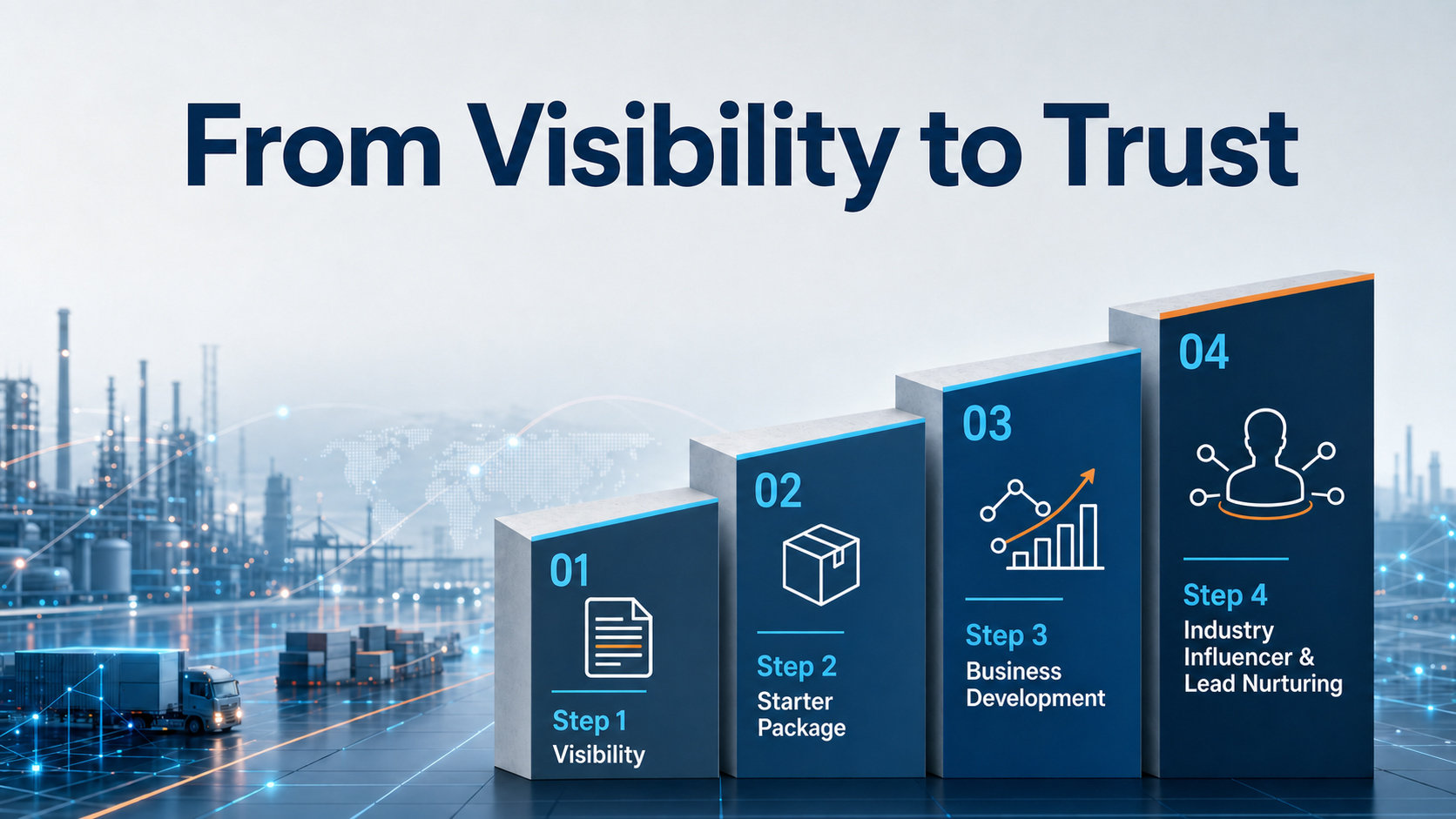
From visibility to trust: Your scalable path with Xpert.Digital - Image: Xpert.Digital
In industrial B2B, sustainable business relationships rarely emerge overnight. They develop step by step – through visibility, professional relevance, recurring touchpoints, and growing trust. Xpert.Digital's 4-stage model addresses precisely this: It offers a structured path that begins with a manageable entry point and can evolve into deeper collaboration in business development if needed.
Instead of relying on loud marketing promises, this model puts the relationship at the forefront. Companies start with clearly defined, easily calculable measures and then decide, based on their own experience, how far they want to expand the collaboration. A key factor for this undisturbed trust-building process: The platform completely avoids annoying advertising ads, so the editorial focus remains solely on the companies' expertise.
More information here:
Consulting - Planning - Implementation

Konrad Wolfenstein
I would be happy to serve as your personal advisor.
You can contact me at wolfenstein∂xpert.digital or
Just call me on +49 7348 4088 965 .