
Taiwan's Rare Earth Independence: Strategic Repositioning in Global Raw Materials Geopolitics

Available in 27 languages 📢
Prefer Xpert.Digital on GoogleⓘPublished on: October 12, 2025 / Updated on: October 12, 2025 – Author: Konrad Wolfenstein
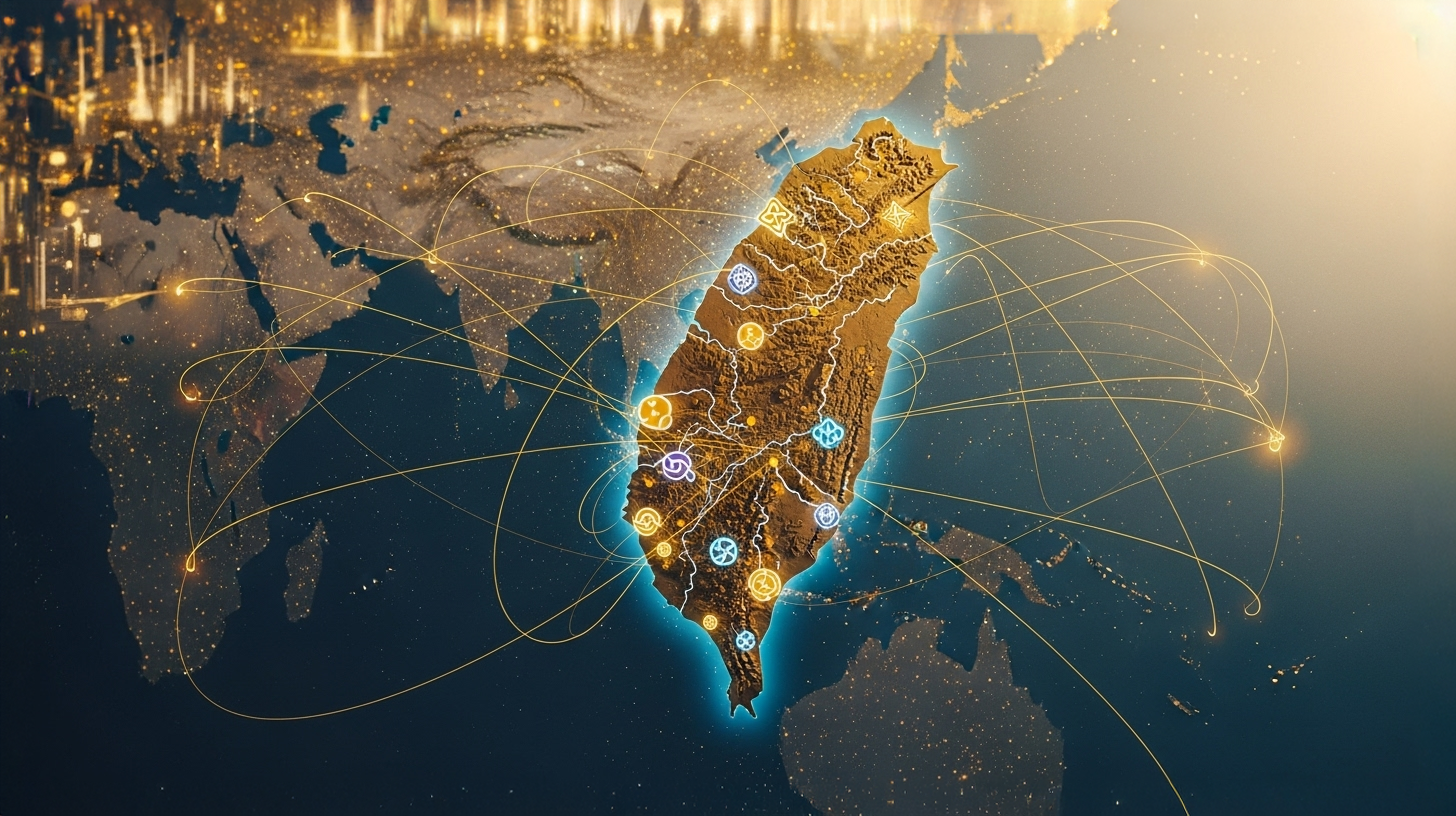
Taiwan's Rare Earth Independence: Strategic Repositioning in Global Raw Materials Geopolitics – Image: Xpert.Digital
China's most powerful weapon? How Taiwan is breaking free from its stranglehold on rare earths
No fear of embargoes: This is why Taiwan's chip industry just shrugs its shoulders at China's threats
Taiwan's recent announcement that it will no longer rely on China for most of its rare earths needs marks a significant turning point in global raw materials geopolitics. This strategic repositioning of the island, a world-leading semiconductor producer, reflects not only the escalating geopolitical tensions between the US and China, but also the fundamental transformation of global supply chains for critical materials.
This development highlights how Taiwan, despite its geographical proximity to China and its historical dependence on Chinese raw materials, has developed a diversified procurement strategy that relies primarily on Europe, the United States, and Japan. This analysis examines the complex dimensions of this strategic realignment, its historical roots, current challenges, and far-reaching implications for the global technology industry and international security architecture.
Roots of Dependence: China's Rise to a Raw Materials Superpower
The history of rare earths as strategic resources dates back to the 19th century, but their geopolitical importance only crystallized during the Cold War. Military research in the 1960s, particularly by the US Air Force, led to the development of samarium-cobalt magnets for radar systems and later to yttrium-aluminum garnet lasers for missile guidance systems. These developments laid the foundation for the strategic importance of these elements today.
China began systematically expanding its position in the rare earth sector as early as the 1990s. Deng Xiaoping's famous 1992 statement, "The Middle East has oil, but China has rare earths," clarified Beijing's strategic vision for these resources. Through government subsidies, relaxed environmental regulations, and massive investments in processing technologies, China was able to continuously expand its market position. By 2010, the country controlled 97 percent of global rare earth production.
The turning point came with the Senkaku/Diaoyu Islands dispute between China and Japan in 2010. In response to the arrest of a Chinese captain by Japan, China implemented a de facto embargo on rare earth exports to Japan. Although China officially denied this, this episode led to dramatic price increases of up to 500 percent for certain elements and raised awareness among the international community about the vulnerability of their supply chains.
Taiwan, as a major consumer of these materials for its semiconductor industry, recognized the strategic risks of this dependence early on. Since 2002, the Taiwanese Environmental Protection Agency has been working to promote the sustainable use of precious metals and develop recycling infrastructure. The establishment of the Taiwan Rare Earths and Rare Resources Industry Alliance (TRERRIA) in 2018 marked the beginning of a systematic diversification strategy.
The Building Blocks of Autonomy: Taiwan's Multidimensional Strategy
Taiwan's current rare earth strategy is based on four key pillars that enable a comprehensive reorientation of raw material procurement.
Suitable for:

The first pillar is the geographical diversification of supply sources
Taiwan now imports the majority of its rare earths from Europe, the US, and Japan, marking a significant shift from its historical reliance on China. This diversification was driven not only by geopolitical considerations, but also by the higher quality standards and more reliable supply chains of these alternative sources.
The second pillar includes technological innovation in the recycling sector
Taiwan has become a pioneer in urban mining, a technology for extracting rare earth elements from electronic waste. The recycling company Lianyou Metals exemplifies this development through its expansion into the production of sodium tungstate and battery-grade cobalt sulfate. This technology makes it possible to extract up to 70 times more gold from one ton of electronic waste than from conventional mining.
The third pillar consists of strategic international partnerships
The ten-year agreement between Brazilian Rare Earths Limited and Carester SAS, in which Taiwanese companies participate, demonstrates this strategy. The agreement secures Taiwan's access to heavy rare earths such as dysprosium and terbium from Brazilian sources. In parallel, collaborations with India are being explored, particularly between Taiwanese semiconductor companies such as Powerchip and Indian conglomerates such as the Tata Group.
The fourth pillar is political and regulatory support
The Taiwanese Ministry of Environmental Protection plans to rename the Resource Recycling Act to the Resource Circulation Promotion Act to emphasize life cycle management and cross-sector cooperation. In addition, a National Resource Circulation Plan has been developed that will impose stricter labeling requirements for recycled products.
The critical link: Rare earths and Taiwan's semiconductor dominance
Taiwan's current market position in the global rare earth ecosystem is characterized by a remarkable transformation. Although Taiwan accounts for only 2.49 percent of global rare earth imports, the strategic importance of these materials to the Taiwanese economy is exceptionally high. The semiconductor industry, which controls over 50 percent of the global market share and accounts for 30 percent of Taiwan's exports and 14 percent of GDP, is fundamentally dependent on a stable supply of these materials.
Taiwan Semiconductor Manufacturing Company (TSMC), the world's largest contract manufacturer of semiconductors, produces the majority of advanced chips essential for artificial intelligence applications. However, the recent Chinese export restrictions, which took effect on October 9, 2025, and include five additional rare earth elements, have no direct impact on TSMC's semiconductor production, as these specific materials are not used in its semiconductor processes.
The Taiwanese Ministry of Economic Affairs emphasizes that most of the rare earth derivatives required locally are sourced from Europe, the United States, and Japan. This diversification has given Taiwan a certain immunity from Chinese export restrictions, although indirect impacts on global supply chains still need to be monitored.
The rare earth minerals market in Taiwan is expected to grow from $7.9 billion in 2025 to $12.8 billion by 2031, driven by electric vehicles, wind turbines, and semiconductors. These growth projections underscore the critical importance of a secure and diversified supply.
From global partner to local recycling: strategies in action
Two exemplary case studies illustrate the practical implementation of Taiwan's rare earth strategy and its far-reaching implications.
The first case study concerns the Brazilian-French partnership model with Taiwanese participation
The agreement between Australian-listed Brazilian Rare Earths (BRE) and France's Carester SAS, announced in October 2025, establishes a ten-year supply agreement for up to 150 tons of dysprosium and terbium annually from Brazilian production. Carester will also provide technical expertise for BRE's planned separation facility at the Camaçari industrial complex in Bahia. This agreement is timed to allow Western countries to reduce their dependence on the China-dominated supply chain. Carester's own rare earth separation and recycling facility in France, currently under construction, has more than €216 million in support from the French government and Japanese partners.
The strategic importance of this agreement lies in securing a long-term dysprosium-terbium source in Brazil, which can meet an estimated 10 percent of Western demand. This partnership diversifies the supply for Europe's magnet industry while bringing technical expertise to South America. Taiwan benefits indirectly through improved market stability and reduced geopolitical risks in the global supply chain.
The second case study focuses on Taiwan’s urban mining initiative using the example of Lianyou Metals
The company anticipates increased supplies of sodium tungstate and battery-grade cobalt sulfate for 2025, driven by global ESG demand. The Taiwanese Urban Mining initiative focuses on extracting rare earth elements from discarded electronics and industrial waste. This technology enables materials to be extracted with up to 100 times greater efficiency than traditional mining.
A Finnish consortium consisting of the University of Jyväskylä, Alva, Elker, and Tapojärvi Oy has developed an innovative hydrometallurgical method that serves as a model for Taiwanese initiatives. The company's competitive advantage lies in a hydrometallurgical process developed over many years that is environmentally friendly and economically viable. Currently, only an estimated one-fifth of all electronic waste is collected and recycled, highlighting enormous potential for expansion.
Our global industry and economic expertise in business development, sales and marketing

Our global industry and business expertise in business development, sales and marketing - Image: Xpert.Digital
Industry focus: B2B, digitalization (from AI to XR), mechanical engineering, logistics, renewable energies and industry
More about it here:
A topic hub with insights and expertise:
- Knowledge platform on the global and regional economy, innovation and industry-specific trends
- Collection of analyses, impulses and background information from our focus areas
- A place for expertise and information on current developments in business and technology
- Topic hub for companies that want to learn about markets, digitalization and industry innovations
Taiwan's plan against dependence: The new rare earth strategy
Between success and vulnerability: The remaining risks
Despite strategic successes in diversifying its rare earth supply, Taiwan continues to face significant challenges of both a structural and geopolitical nature.
The primary structural challenge lies in Taiwan's limited recycling capacity compared to advanced programs in Japan and France. The French-Japanese Lacq plant, for example, recycles 800 tons of magnets annually and produces 620 tons of rare earth oxides, equivalent to 15 percent of global demand. Taiwan must close this infrastructure gap to achieve its independence goals.
Geopolitical risks remain despite diversification. China could impose further restrictions or use alternative means of pressure in retaliation for diversification efforts. The recent Chinese export controls, introduced in October 2025, demonstrate Beijing's willingness to use its rare earth dominance as a geopolitical tool. These controls require foreign companies to apply for licenses for products containing even minimal amounts of Chinese rare earths, potentially disrupting global technology supply chains.
Technological substitution remains another critical challenge. While research into rare earth-free motors is progressing experimentally, practical alternatives for many applications are not yet available. The Fraunhofer lighthouse project "Critical Rare Earths" is working on material substitutions, but systematic progress will still take years before industrial implementation.
Economic vulnerability due to price volatility poses an additional risk. Historical precedents such as the 750 percent price increase during the 2010-2011 crisis illustrate the vulnerability to market manipulation. Taiwan must build strategic reserves and develop hedging mechanisms to cushion such shocks.
The environmental impacts of alternative procurement sources can, paradoxically, be higher than those from Chinese sources, as China has historically accepted lower environmental standards. New mining projects in democratic countries are subject to stricter environmental regulations, increasing project development costs and timelines.
A new global raw materials race
The future of the global rare earth landscape is shaped by several converging trends that pose both opportunities and threats for Taiwan.
The increase in demand will be dramatic. Magnetic rare earths are expected to increase from 59 kilotons in 2022 to 176 kilotons in 2035, driven by strong growth in electric vehicles and wind energy. The International Energy Agency predicts that demand for neodymium, praseodymium, and dysprosium in permanent magnets will increase four- to sevenfold by 2040.
Technological breakthroughs in recycling will fundamentally change market dynamics. The rare earth recycling market will grow at a compound annual growth rate of 12.4 percent and could reach $18 billion by 2030. Innovations such as molecular recognition and flash heating isolation methods will drastically improve efficiency. The flash heating method, developed in 2022, can extract rare earths from fly ash in one second at 3,000 degrees Celsius, recovering twice as much material as conventional methods.
Geopolitical fragmentation will lead to structural bifurcation. China will increasingly localize its value chain, while the US and allies will accelerate theirs. This development will result in two parallel global supply chains, resulting in a loss of efficiency but increased strategic autonomy.
New mining areas will diversify the geographical distribution of production. Greenland's Tanbreez project was recognized as a leading rare earth project in 2025, with estimated reserves and offtake agreements already secured with US partners. Brazil's Serra Verde mine began commercial production in 2024 and will produce 5,000 tons of rare earth oxides annually by 2026.
Defense applications will receive strategic priority. The U.S. Department of Defense has set specific timelines for eliminating Chinese materials from magnet supply chains by 2027 and provided targeted funding for domestic rare earth processors. This development will create premium pricing for non-Chinese sources and accelerate investment in alternative supply chains.
Circular economy models will become standard practice. Taiwan will institutionalize its position as a leader in urban mining through the planned renaming of the Resource Recycling Act to the Resource Circulation Promotion Act. International collaborations such as the EU-Taiwan partnerships will focus on circular economy practices and position Taiwan as a key innovator in supply chain resilience.
Taiwan's blueprint for technological sovereignty
Taiwan's strategic repositioning in global rare earth geopolitics represents a fundamental transformation from dependence to autonomy, with far-reaching implications for the international raw materials landscape and technological security. The successful diversification of procurement sources away from China toward Europe, the US, and Japan, combined with innovative recycling technologies and strategic international partnerships, demonstrates how mid-sized technology nations can systematically reduce their vulnerabilities in critical supply chains.
The historical development of rare earths, from their first military applications during the Cold War to their current central role in the digital and green transformation, illustrates the evolutionary importance of these materials for technological sovereignty. Taiwan's proactive response to the Chinese export restrictions of 2010 and the continuous development of alternative supply strategies exemplify how geopolitical challenges can be transformed into strategic opportunities.
The core components of Taiwan's strategy—geographical diversification, technological innovation, international partnerships, and regulatory support—form a coherent framework that can serve as a model for other nations. In particular, its pioneering work in urban mining and the development of circular economy models position Taiwan as an innovation leader in sustainable resource extraction.
However, the identified challenges, particularly structural deficiencies in the recycling infrastructure and ongoing geopolitical risks, underscore that the transformation process requires continuous effort and adjustment. The projected tripling of demand for magnetic rare earths by 2035 will pose new challenges to both Taiwan's procurement strategies and global market dynamics.
Ultimately, Taiwan's rare earth independence illustrates a paradigmatic shift in 21st-century global resource geopolitics, in which technological innovation, strategic partnerships, and sustainability are redefining traditional concepts of resource dependence and geopolitical leverage. This development will profoundly shape the international debate on critical materials, supply chain resilience, and technological sovereignty, establishing Taiwan as a strategic player in the global technology economy.
Your global marketing and business development partner
☑️ Our business language is English or German
☑️ NEW: Correspondence in your national language!

Konrad Wolfenstein
I would be happy to serve you and my team as a personal advisor.
You can contact me by filling out the contact form or simply call me on +49 7348 4088 965 (Munich) . My email address is: wolfenstein ∂ xpert.digital
I'm looking forward to our joint project.
☑️ SME support in strategy, consulting, planning and implementation
☑️ Creation or realignment of the digital strategy and digitalization
☑️ Expansion and optimization of international sales processes
☑️ Global & Digital B2B trading platforms
☑️ Pioneer Business Development / Marketing / PR / Trade Fairs
B2B support and SaaS for SEO and GEO (AI search) combined: The all-in-one solution for B2B companies

B2B support and SaaS for SEO and GEO (AI search) combined: The all-in-one solution for B2B companies - Image: Xpert.Digital
AI search changes everything: How this SaaS solution is revolutionizing your B2B rankings forever.
The digital landscape for B2B companies is undergoing rapid change. Driven by artificial intelligence, the rules of online visibility are being rewritten. It has always been a challenge for companies to not only be visible in the digital masses, but also to be relevant to the right decision-makers. Traditional SEO strategies and local presence management (geomarketing) are complex, time-consuming, and often a battle against constantly changing algorithms and intense competition.
But what if there were a solution that not only simplifies this process, but makes it smarter, more predictive, and far more effective? This is where the combination of specialized B2B support with a powerful SaaS (Software as a Service) platform, specifically designed for the needs of SEO and GEO in the age of AI search, comes into play.
This new generation of tools no longer relies solely on manual keyword analysis and backlink strategies. Instead, it leverages artificial intelligence to more precisely understand search intent, automatically optimize local ranking factors, and conduct real-time competitive analysis. The result is a proactive, data-driven strategy that gives B2B companies a decisive advantage: They are not only found, but perceived as the authoritative authority in their niche and location.
Here's the symbiosis of B2B support and AI-powered SaaS technology that is transforming SEO and GEO marketing and how your company can benefit from it to grow sustainably in the digital space.
More about it here:










