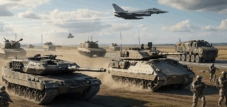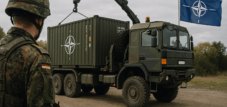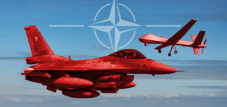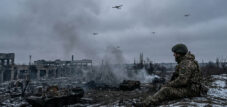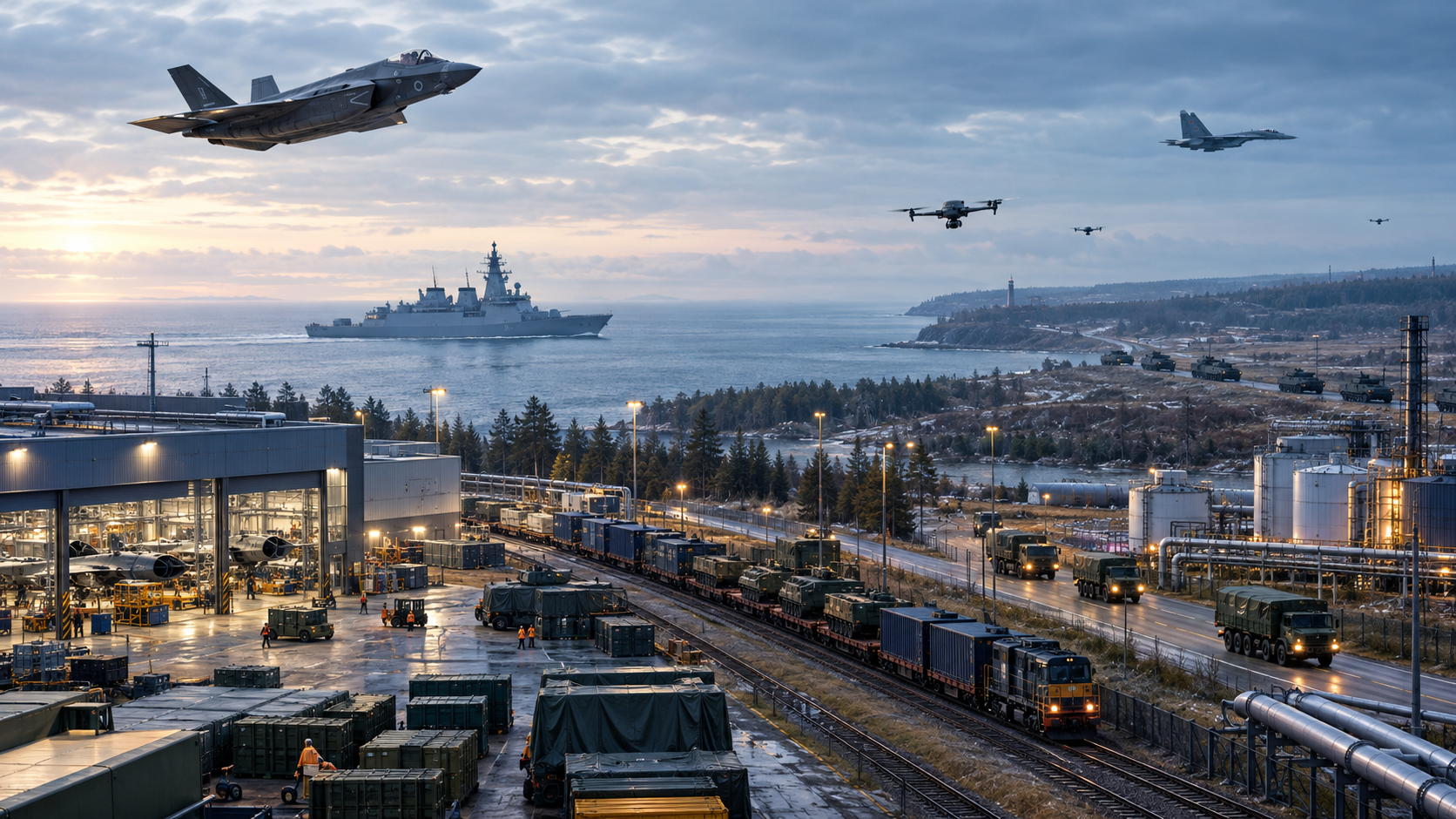
NATO versus Russia: Superiority on paper, vulnerability in reality – a creative image on the topic, created with AI: Xpert.Digital
NATO vs. Russia: The reality behind military superiority
Europe's security challenges: Between resources and operational capability
NATO military budget: Figures that speak for themselves, but don't explain everything
Geopolitical tensions between NATO and Russia have increased significantly in recent years, particularly since the Ukraine conflict. While NATO possesses a clear superiority in terms of resources, technological capabilities, and financial means, the reality is often more complex. The gap between theoretical potential and actual operational capability is crucial for the European security architecture. Russia has found ways to challenge NATO's military strengths through targeted strategies and hybrid warfare, while the European defense industry struggles with fragmentation and slow production capacities. The challenge for NATO is not only to mobilize its apparent resources but also to deploy them effectively and rapidly to repel potential attacks. In this context, it is essential to understand the dynamics and challenges shaping military relations between NATO and Russia, as well as the measures that must be taken to safeguard European security.
Europe's biggest security risk is not Moscow's strength, but the gap between billions in resources and operational capability
NATO is significantly superior to Russia in almost every macroeconomic category and in many military ones. The alliance boasts a much larger economy, higher defense spending, more modern air forces, a stronger navy, broader technological capabilities, and a global intelligence and logistics infrastructure. However, anyone who concludes from this that Europe can relax militarily is confusing statistical potential with immediately available combat power. The central question is not how many billions, aircraft, or soldiers the 32 member states can collectively contribute. The crucial question is which forces are actually deployable at the right time, in the right place, and under realistic political conditions.
This is precisely the crux of the strategic problem. Russia does not need to defeat the entire NATO alliance to destabilize the European security order. It is enough to create localized and temporal advantages, slow down political decision-making processes, disrupt critical infrastructure, and sow doubt about alliance solidarity. NATO, in turn, must not only possess more resources but also credibly demonstrate its ability to rapidly pool, protect, supply, and deploy these resources over extended periods. Deterrence, therefore, does not arise from spreadsheets but from Moscow's understandable expectation that an attack would fail and incur disproportionately high costs.
The statement that the alliance is clearly militarily superior to Russia is correct in the overall strategic context. However, it remains incomplete without considering four qualifications. First, a significant portion of this superiority is tied to American capabilities. Second, European armed forces and arms markets remain highly fragmented. Third, despite heavy losses, Russia possesses extensive combat experience, industrial adaptability, and geographical advantages on its own periphery. Fourth, Moscow is deliberately shifting the competition to the realm below the threshold of an explicit Article 5 scenario. The economic challenge, therefore, lies not only in spending more money, but in generating tangible military impact from that money in a timely manner.
The numbers speak for the alliance
The magnitude of the material superiority is clear. In 2025, the 32 NATO members together spent approximately US$1.58 trillion on their armed forces. This represented about 55 percent of global military spending. Russia, in the same year, spent an estimated US$190 billion. In purely nominal terms, the alliance's budget was thus more than eight times larger. Even the European NATO states together reached around US$559 billion, significantly exceeding Russia's spending. Furthermore, North America and Europe possess considerable economic depth, capital markets, research landscapes, and industrial breadth.
The structure of the armed forces also speaks in NATO's favor in many areas. The alliance possesses a large number of modern multirole combat aircraft, including a growing fleet of F-35s with stealth capabilities, networked sensors, and advanced target acquisition. At sea, the allies have a significantly larger number of modern destroyers, frigates, nuclear-powered and conventional submarines, and aircraft carriers. In addition, they have strategic bombers, aerial refueling capabilities, early warning aircraft, satellite reconnaissance, long-range precision weapons, and integrated command and control structures. No single one of these categories alone would decide a war, but together they constitute a qualitative and quantitative superiority that Russia would find difficult to overcome in a protracted, large-scale conventional conflict.
The difference in spending, however, cannot be directly translated into military performance. Russian wages, production costs, and state-controlled prices are lower. In certain sectors, a dollar of defense spending in Russia buys more personnel hours, ammunition, or basic platforms than in Western Europe or North America. At the same time, NATO countries allocate a portion of their budgets to significantly more expensive personnel systems, pensions, advanced technology, and global commitments. Nevertheless, the difference is too large to be explained by purchasing power alone. Russia's advantage lies not in greater overall capability, but in the concentration of scarcer resources in a narrowly defined strategic area and in its willingness to mobilize a significantly larger share of its national economic output.
In 2025, Russia spent approximately 7.5 percent of its gross domestic product and about one-fifth of its government spending on the military. NATO countries together possess far greater resources, but predominantly operate in peaceful economies. This creates an asymmetrical relationship: the West is wealthier, while Russia is more mobilized. This distinction explains why an economically smaller power can be more dangerous in the short term than a simple budget comparison would suggest.
Money alone does not create fighting power
Defense spending is initially a financial input. Military effectiveness only materializes when this translates into combat-ready units, fully stocked ammunition depots, secure command and control networks, available spare parts, trained personnel, and reliable logistics. Years often pass between a political budget decision and the realization of military capability. New factories require permits, machinery, skilled workers, and long-term contracts. Complex weapons systems must be developed, produced, tested, deployed, and integrated into existing units. Therefore, a rapidly rising spending curve in the early years can reveal more about political will than about immediately available strength.
European states have significantly increased their defense budgets. In 2025, the European allies and Canada increased their real spending by approximately one-fifth compared to the previous year. According to internationally comparable calculations, Germany reached about US$114 billion, making it the largest military spender among the European NATO members. At the same time, for the first time, all alliance partners met the previous target of at least two percent of gross domestic product as defined by NATO. This shift in financial policy is strategically significant, but it does not immediately eliminate the deficits that have accumulated over decades.
In 2025, NATO member states agreed to allocate five percent of their annual economic output to defense and security-related tasks until 2035. Of this, at least 3.5 percent is to be invested in core military capabilities; up to 1.5 percent can be allocated to critical infrastructure, networks, civil defense, innovation, and the industrial base. This new target is more than just a budget target. It broadens the concept of defense to include the prerequisites without which modern armed forces cannot function: ports, railways, bridges, energy supply, digital networks, storage facilities, cybersecurity, and industrial reserves.
Economically, however, the target still carries risks. If expenditures are merely relabeled, a high rate of increase in capacity will occur without a corresponding gain in capability. If national approaches continue, procurement becomes more expensive due to small production runs and parallel systems. If contracts are awarded on short notice and later reduced, manufacturers will not invest in new capacity. Therefore, the quality of the expenditure is crucial. An additional euro achieves the greatest safety benefit when it closes a specific gap, is deployed jointly with partners, and enables long-term, predictable production.
Europe's arms industry remains the bottleneck
The European defense industry boasts technologically advanced companies, but it still cannot deliver many systems in the required quantities and at the necessary speed. Decades of low demand have resulted in small production lines, limited inventories, and a strong focus on highly complex platforms produced in limited numbers. National procurement policies have exacerbated this fragmentation. Europe has developed and operates numerous different tank, artillery, aircraft, missile, and radio systems. While this diversity can foster innovation, it complicates maintenance, joint logistics, ammunition compatibility, and economies of scale.
The industrial lag is not the same as a lack of technical expertise. The problem lies primarily in the capacity for mass production. A company doesn't build a new munitions factory simply because a minister announces rising demand. It needs multi-year contracts, reliable purchase volumes, secured financing, and access to energy, intermediate products, and skilled labor. Explosives, propellants, specialty chemicals, semiconductors, optical systems, and certain raw materials are particularly critical. The supply chain is only as resilient as its weakest link. Additional final assembly lines are of little use if detonators, rocket motors, or electronic components are unavailable.
The EU estimates the modernization and investment needs that have accumulated over the years at up to €800 billion by 2030. Such a sum can significantly strengthen Europe's industrial base, but it could just as easily be lost in isolated national projects. The economic leverage lies in pooled demand. Joint procurement increases production volumes, reduces unit costs, standardizes standards, and improves negotiating power with manufacturers. Politically, it remains challenging because governments want to safeguard jobs, technological control, and industrial value creation within their own borders.
A sound industrial policy must therefore combine security and competition. Persistent monopolies generate high prices and weak incentives for innovation. Purely short-term price competition, on the other hand, prevents investment in reserves and scaling. Multi-year framework agreements, multiple qualified suppliers, interoperable standards, and targeted stockpiling of critical components are sensible approaches. Defense production should not be viewed as an isolated sector. Mechanical engineering, automation, software, sensor technology, logistics, energy, and civilian drone technology form an industrial ecosystem that must be capable of rapid transformation in a crisis.
Europe's strength depends on America
NATO's military superiority is not synonymous with European independence. A large portion of the crucial capabilities is provided by the United States. These include strategic reconnaissance, satellite data, aerial refueling, heavy airlift, integrated air and missile defense, long-range precision strikes, electronic warfare, and parts of the secure command and control architecture. These so-called strategic enablers ensure that individual weapon systems function as a unified operational network.
The dependency is often underestimated because Europe's armies possess modern tanks, aircraft, and ships. However, a fighter jet has only limited effectiveness if targeting information is lacking, the tanker fleet is too small, or enemy air defenses cannot be suppressed. A mechanized unit is only as fast as its bridges, railcars, spare parts supply, and political approval to march. Military power arises from a system of systems. Within NATO, the United States has thus far provided a significant portion of the connecting elements.
This leads to two different scenarios for assessing Russia. With full American participation, NATO possesses overwhelming conventional strength. With a significant redeployment of American forces to the Indo-Pacific region, Europe would remain economically and in many military categories superior to Russia, but would be less able to utilize these advantages effectively. The deficit would not primarily be the number of available soldiers or vehicles, but rather the ability to rapidly launch, coordinate, and supply a high-intensity war over long distances.
European rearmament should therefore not attempt to replicate all American capabilities nationally. That would be expensive and create new duplications. Priority should be given to capabilities where a lack of American support would compromise overall operations: space reconnaissance, secure communications, aerial refueling, strategic transport, missile defense, electronic warfare, and long-range precision weapons. A stronger European pillar within NATO would not represent a departure from the US, but rather an insurance policy against shifts in political and geographical priorities in Washington.
Russia is weakened and at the same time more dangerous
The war against Ukraine has inflicted significant losses on Russia in personnel, vehicles, aircraft, ships, and high-value equipment. Some of the previously available forces from the Western military sphere have been tied down or depleted. As a result, Russia's position around Kaliningrad has also become relatively weaker, while NATO has expanded its presence in the Baltic region and gained geographical depth through the accession of Finland and Sweden. The Baltic Sea is now more closely surrounded by NATO states, and the alliance can more closely integrate surveillance, air defense, and maritime forces regionally.
At the same time, it would be a grave mistake to view Russia as permanently worn down and incapable of learning. The Russian armed forces have learned painful but effective lessons in several areas. They have integrated drones more deeply into reconnaissance and fire control, developed more resilient navigation solutions, extended electronic warfare to lower levels, and adapted their attack tactics. Instead of large armored columns, they more frequently employ small infantry groups supported by drones, glide bombs, and artillery. This adaptation does not replace strategic superiority, but it does increase the danger on the battlefield.
Added to this is the Russian war economy. The state can centrally concentrate demand, politically enforce production targets, and more easily externalize civilian costs. The system is inefficient, burdened by sanctions and technological bottlenecks, and associated with significant long-term losses in prosperity. For a few years, however, it can produce large quantities of relatively simple weapons, ammunition, and drones. Authoritarian mobilization does not create a superior overall economy, but it can generate mass production more quickly in selected sectors.
Russia's advantage also lies in its willingness to take risks. Democratic states carefully weigh up personnel losses, budgetary costs, and domestic political acceptance. The Russian leadership can maintain higher casualty figures and economic burdens for longer periods through repression, information control, and fiscal prioritization. This difference should not be misinterpreted as unlimited resilience. However, it does alter the time horizons. Deterrence must take into account that Moscow may assess costs differently than Western governments.
Hub for Security and Defense - Advice and Information


Hub for Security and Defense - Image: Xpert.Digital
The Security and Defence Hub offers expert advice and up-to-date information to effectively support companies and organizations in strengthening their role in European security and defence policy. Working closely with the SME Connect Defence Working Group, it particularly promotes small and medium-sized enterprises (SMEs) that wish to further develop their innovative capacity and competitiveness in the defence sector. As a central point of contact, the Hub thus creates a crucial bridge between SMEs and European defence strategy.
Related to this:
Russia is weakened, but should not be underestimated
Deterrence will be decided on the eastern flank
NATO defends a large and geographically diverse territory. Russia, on the other hand, can concentrate its military planning on a few strategic directions. The Baltic states, the border with Finland, the Belarusian region, and the Baltic Sea approaches remain particularly sensitive. The full strength of the alliance is not immediately available in these areas. A potential aggressor could attempt to create a fait accompli through surprise, local superiority, and electronic jamming before NATO can deploy substantial reinforcements.
Therefore, the notion of a linear balance of power is misleading. For deterrence, what matters is not whether NATO possesses more battle tanks or aircraft overall, but whether it can deploy sufficient forces quickly enough to a threatened sector. Troops stationed at the front have more than just tactical value. They signal that an attack would affect multiple alliance members from day one, thereby triggering a coordinated response. Reinforcement plans, exercises, and prepared infrastructure must make this signal credible.
Kaliningrad illustrates the dual logic of the situation. The Russian exclave is militarily significant but geographically vulnerable. Situated between Poland and Lithuania, it is separated from mainland Russia and, in a conflict, can only be supported by sea, air, or through Belarus. Modern reconnaissance and precision weapons increase the threat to bases located there. At the same time, Russia possesses air defense, coastal defense, electronic warfare, and long-range systems in and around Kaliningrad. The region is therefore neither an impregnable Russian outpost nor an easily neutralized target.
For NATO, it is crucial not to allow defensive strength to tip into offensive ambiguity. Exercises must be realistic, but transparent enough to limit misinterpretations. Russia has no objective reason to expect a NATO attack on Kaliningrad as long as it does not initiate a conflict itself. Nevertheless, the Russian leadership can exploit threat narratives domestically or misinterpret military movements. Credible deterrence therefore requires both: visible defense capabilities and stable communication channels to prevent unintended escalation.
The invisible front has long been active
Because an open conventional attack on NATO would be extremely risky for Russia, competition below the threshold of war is gaining importance. Sabotage, arson, cyberattacks, disinformation, espionage, GPS jamming, and attacks on critical infrastructure can generate high costs without automatically triggering a military response from the alliance. These methods exploit legal gray areas, difficult evidentiary challenges, and differing national jurisdictions.
The term "hybrid attack" describes the combination of military, intelligence, economic, and informational means, but its language can obscure concrete acts. An arson attack remains an arson attack, sabotage remains sabotage, and an explosive device remains an explosive device. Precise terminology is politically important because it clarifies responsibilities and possible responses. At the same time, a distinction must be made between established state responsibility, strong circumstantial evidence, and mere suspicion. A democracy must not compromise the rigor of its evidence, especially when the adversary deliberately operates with concealed structures, recruited petty criminals, or disposable agents.
The foiled attack at Leipzig/Halle Airport in 2026 marks a dangerous escalation. A drone equipped with military explosives was discovered and defused in the immediate vicinity of Ukrainian Antonov cargo planes. Following an evaluation of police and intelligence findings, German authorities held Russian state actors responsible. Had the explosive device detonated near fully fueled transport aircraft, it could have cost lives, severely damaged the airport, and temporarily paralyzed a major logistics hub.
This case demonstrates that civilian and military infrastructure are becoming increasingly blurred. A cargo airport, a parcel center, a submarine cable, or a substation can all become part of strategic supply. Economic resilience is therefore an integral part of defense. Companies need improved access controls, drone detection, emergency plans, and reporting channels. The state must share information more quickly, equip investigative agencies, and consistently assign responsibility. Deterrence below the threshold of war stems from a high probability of detection, robust infrastructure, and predictable political, legal, and economic costs.
Drones are changing the cost calculation of war
The war in Ukraine has demonstrated how radically inexpensive unmanned systems are transforming the military economy. Small reconnaissance drones provide units with near real-time situational awareness. FPV drones attack vehicles, positions, and individual soldiers at a fraction of the cost of traditional precision munitions. Larger, expendable drones can threaten power plants, depots, or airfields from hundreds of kilometers away. Their strategic value lies not only in individual hits but also in the ability to overwhelm enemy defense systems through sheer numbers.
This creates an unfavorable cost ratio. If a cheap drone is countered with an expensive surface-to-air missile, the defender can be tactically successful but still at an economic disadvantage. Modern air defense remains indispensable against ballistic missiles, cruise missiles, and manned aircraft. However, against large numbers of small targets, it requires more cost-effective additions: electronic jamming, automatic cannons, directed energy, interceptor drones, passive defenses, and networked sensors. Crucially, a tiered system is needed that assigns the most cost-effective defense method to each target.
NATO possesses leading technology, but its procurement logic is often tailored to a few high-quality platforms. Modern warfare also demands scale, short innovation cycles, and the willingness to modify systems every few months rather than decades. Disposable combat drones and less expensive cruise missiles are therefore not merely supplements to traditional armed forces. They alter the relationship between reconnaissance, effectiveness, and production capacity. Software updates, modular designs, and off-the-shelf components are becoming strategic factors.
Europe can draw on a broad civilian industry in this endeavor. Robotics, automation, mechanical engineering, telecommunications, artificial intelligence, and logistics software provide a strong foundation. The challenge lies in the rapid transfer of civilian innovation into robust military products. This requires accelerating testing, certification, procurement, and financing without compromising safety standards. Simultaneously, secure supply chains for motors, chips, cameras, batteries, and radio modules are essential. A European drone strategy that permanently sources key components from potentially unreliable third countries would only appear sovereign.
Logistics is Europe's underestimated weapon
Military superiority is only valuable if forces can be moved and supplied. Europe's roads, railways, ports, and airports are densely developed, but were primarily designed for civilian efficiency, not for the rapid transport of heavy units. Bridges may be too weak, tunnels too narrow, railway profiles unsuitable, and border procedures too slow. Different permits for hazardous materials, night travel, or military transports cost time. In peacetime, such obstacles appear bureaucratic; in a crisis, they can influence the outcome of the first few days.
The EU and NATO have identified four priority mobility corridors and are investing in infrastructure with dual civilian and military uses. Estimates for adapting key road, rail, port, and airport networks reach into the high tens of billions of euros and, in some cases, even higher. Rail hubs, port handling, fuel supply, storage, repair facilities, and secure digital traffic management are particularly important. Investments in these areas simultaneously increase civilian resilience and can strengthen regional economies.
Due to its location, Germany plays a key role. It is not only a potential staging area, but above all a logistical hub for reinforcements towards the eastern flank. The NATO Support Command in Ulm coordinates the movement and supply of forces in Europe. Airports like Leipzig/Halle, major North Sea ports, rail connections, and motorway networks are therefore part of the deterrence architecture. Their vulnerability makes it clear why the protection of critical infrastructure cannot be considered separately from military planning.
Economically, military mobility is a more productive component of increased security spending than many purely national prestige projects. A reinforced bridge, a high-performance port, or a redundant energy grid also provides everyday benefits. However, the concept of dual-use should not be used to arbitrarily include infrastructure that was already planned. Projects should be prioritized based on specific military requirements: load-bearing capacity, throughput, redundancy, repairability, and protection against cyberattacks or sabotage.
The nuclear dimension limits any comparison
Any statement about clear military superiority must take the nuclear dimension into account. Russia and the United States together possess the vast majority of the world's nuclear weapons. At the beginning of 2026, Russia was estimated to have around 5,420 warheads, the US around 5,042. Not all were deployed or operational, but both countries retained the capability for a devastating second strike. The UK and France supplement NATO's nuclear deterrent with smaller national arsenals.
This renders the idea of a completely controllable major war meaningless. Conventional superiority does not automatically protect against nuclear escalation. Russia can use nuclear threats to influence political decision-making, hinder support for partners, or, in a crisis, attempt to split the alliance. NATO must therefore be conventionally strong enough to avoid facing the choice between defeat and nuclear escalation early on.
At the same time, it would be wrong to infer political passivity from the nuclear risk. A credible conventional defense, in particular, reduces the incentive to test the alliance through limited attacks. Clearly communicated red lines, robust consultation mechanisms, and a graduated response capability are crucial. Deterrence works when the adversary can expect neither a swift conventional victory nor political paralysis.
For Europe, the American nuclear guarantee remains crucial. France and Great Britain possess independent systems, but their arsenals are significantly smaller than Russia's. A European debate about a stronger role for these two powers is worthwhile, but it will not replace American extended deterrence in the short term. The economic consequence is to develop conventional capabilities so that Europe's defense is less dependent on an immediate threat of nuclear escalation.
Upgrading comes at a price, but so does uncertainty
Increased defense spending ties up significant government resources. With a target of five percent of GDP, it inevitably competes with social spending, education, infrastructure, climate protection, and tax cuts. Even if 1.5 percentage points are allocated to broader security and resilience tasks, the fiscal burden remains substantial. Countries with high debt and weak growth will face difficult distributional decisions.
However, the economic assessment must not end with budgetary costs. Security is a prerequisite for investment, trade, and functioning supply chains. A credible defense of Europe reduces the risk of extreme damage, which in the event of conflict would amount to many times the annual defense expenditure. Even limited sabotage of energy, data, or transport networks can disrupt production and erode trust. Defense is therefore, in part, an insurance policy: ideally, the expensively developed capability is never used because its very existence prevents an attack.
Not every military expenditure strengthens the economy equally. Imports quickly create capabilities but lead to lower domestic value creation and long-term dependence on maintenance, ammunition, and software. Domestic development secures technology and employment but can be expensive and slow. The best solution often lies in European cooperation with a clear division of labor, open interfaces, and sufficiently large production runs. Industrial policy objectives must not obstruct military urgency; conversely, mere urgency must not create lasting dependence.
Additional demand can utilize existing capacities, accelerate innovation, and strengthen regions. However, it can also draw skilled workers and capital away from civilian sectors, drive up prices, and protect inefficient suppliers. A sustainable security economy therefore requires priorities. Europe should not develop every platform itself, but it should master critical key technologies, munitions, spare parts, and digital sovereignty. The crucial factor is not maximum self-sufficiency, but the ability to remain operational even under disrupted trading conditions.
The right lesson from superiority
NATO, as a whole, is conventionally far superior to Russia. This is an important point because excessive fear can be just as dangerous as complacency. It can paralyze societies, distort investments, and lend additional weight to Russian intimidation. Moscow lacks the economic foundation to engage in a prolonged, open arms race on equal footing with North America and Europe. A direct, large-scale attack on the alliance would pose an extreme military and political risk for Russia.
But superiority remains credible only if it is cultivated. Europe must modernize its armed forces, conduct regular exercises in realistic scenarios, build up reserves, and scale up industrial production. It must strengthen its eastern flank without encouraging unintended escalation. It must protect civilian infrastructure, because that is precisely where the adversary looks for cost-effective vulnerabilities. And it must integrate drones, electronic warfare, artificial intelligence, and low-cost precision weapons into its procurement and command structures much more quickly.
The most politically convenient misinterpretation would be to conclude from NATO's superiority that Russia has no other options. Russia certainly does have options, but they are predominantly below the level of a classic large-scale war: sabotage, cyberattacks, covert operations, disinformation, economic pressure, and nuclear intimidation. Precisely because conventional deterrence is effective, the conflict is shifting into these areas. The response cannot be solely military. Police, intelligence services, businesses, municipalities, and operators of critical infrastructure are equally part of the security architecture.
The strategically correct perspective is therefore this: NATO is strong enough to deter Russia, but not so invulnerable that it can forgo adaptation. Its greatest reserve lies not in even larger abstract sums of money, but in better coordination. Common standards, long-term orders, secure logistics, interoperable systems, and faster decision-making processes can generate significantly greater impact from existing resources.
Europe's real task is to close the gap between its economic potential and its military capabilities. If this succeeds, Russia's capacity for intimidation will diminish without Europe having to embark on a ruinous course of war. If it fails, Moscow, despite its clear inferiority, can continue to exploit local weaknesses, political disunity, and unprotected infrastructure. The crucial figure, therefore, is not the next percentage target. What matters is how much credible defense capability Europe gains from each additional euro.
Consulting - Planning - Implementation

Markus Becker
I would be happy to serve as your personal advisor.
Head of Business Development
Chairman SME Connect Defense Working Group
Consulting - Planning - Implementation
Konrad Wolfenstein
I would be happy to serve as your personal advisor.
You can contact me at wolfenstein∂xpert.digital or
Just call me on +49 7348 4088 965 .