
Suitable energy mix for smaller communities

Available in 27 languages 📢
Prefer Xpert.Digital on GoogleⓘPublished on: January 23, 2020 / Updated on: August 17, 2020 – Author: Konrad Wolfenstein
Switch to English version
Fraunhofer tool for the municipal energy transition

© Fraunhofer IOSB-AST/Martin Käßler
Solar energy, geothermal energy, or photovoltaics – which form of energy supply is best suited for the community? Representatives of smaller municipalities are faced with a vast amount of information, which often exacerbates the existing uncertainty. A new online tool from Fraunhofer now sheds light on this complex landscape and determines the individually optimal energy mix, including available funding opportunities.
© Open Data Thüringen | virtualcitySYSTEMS GmbH | Layout: Daniel Cebulla (JENA-GEOS®-Ingenieurbüro GmbH)
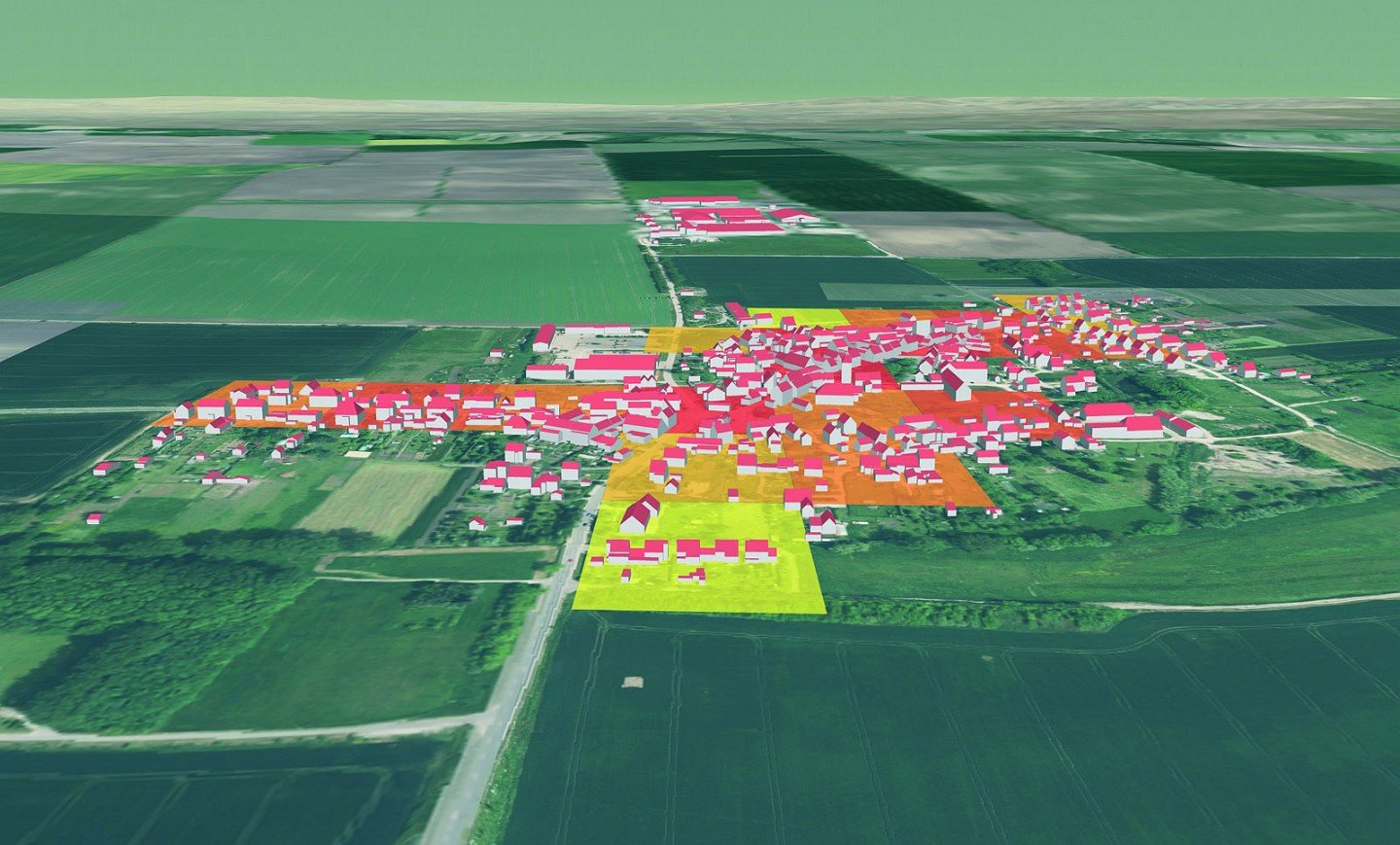
Visualized heating demand of the municipality of Neumark (486 inhabitants) on a 100 x 100 m grid. Dark colors indicate high heating demand. The results were estimated based on building structures.
The energy transition is upon us. Representatives of small communities, however, are often unsure what this transition might look like for them. Solar energy, photovoltaics, or geothermal energy? What makes sense, and to what extent can these technologies contribute to the community's energy supply? What about potential subsidies?
Software tool analyzes needs and possibilities
This is where a tool from the Applied Systems Technology AST division of the Fraunhofer Institute for Optronics, System Technologies and Image Processing IOSB comes into play, developed by researchers in the "Energy Technology and Economic Modeling modTRAIL" project. "Our software allows mayors of smaller municipalities to learn about the technical possibilities in the area of the energy transition and the corresponding funding opportunities – tailored to their specific municipality," says Liane Rublack, a scientist at Fraunhofer IOBS-AST. "Heat and electricity do not have to be generated entirely from renewable sources; rather, the tool relies on an energy mix of conventional and renewable generation facilities."
In four pilot municipalities in Thuringia with fewer than ten thousand inhabitants – specifically Kahla, Werther, Neumark, and Großobringen – researchers are already testing the tool. For decision-makers in these municipalities, the process works as follows: They first enter the name of their municipality and then receive detailed information about the electricity and heating demand in their town. Next, they specify their preferences for future electricity and heating supply. Which technologies would they like to utilize, and which would they prefer to exclude? Numerous options are available, such as solar and wind energy, electricity and heat storage, oil and gas condensing boilers, air-source heat pumps, and geothermal heat pumps. The tool also inquires about preferences regarding other factors. Is minimizing CO2 emissions the priority, or is it more about energy procurement costs? As a result, mayors and other decision-makers receive information on what an energy and plant mix could look like that meets the specified targets, for example, consisting of photovoltaic systems, electricity and heat storage, and combined heat and power plants. The information also includes the costs for installation and operation, energy procurement costs, the amount of CO2 emissions, and funding opportunities.
“With our tool, we want to get the ball rolling and show mayors of small communities the potential that renewable energy sources offer their towns,” explains Rublack. The researchers at Fraunhofer IOSB-AST used standard load profiles for households and the time series data for renewable energy sources provided by the German Meteorological Service (DWD) – in this case, data from the Thuringian weather station near Erfurt-Weimar – as the basis for the tool. The necessary data for municipalities with fewer than 10,000 inhabitants in Thuringia is already stored in the system. However, the tool can also be used in other German states with the corresponding data.
Overcoming entry barriers
This optimization model will be integrated as a module into the online software of the collaborative project TRAIL. The specific goal of the collaborative project "Transformation in Rural Areas (TRAIL)" is to provide an easy-to-use tool that motivates a large number of smaller municipalities to engage intensively with the issues of efficient energy supply. In particular, the project aims to overcome the initial barriers to entry, which are limited in terms of personnel and financial resources. An online software tool will be developed that, primarily based on publicly accessible GIS data, census data, and other existing databases, will generate initial data on electricity and heat consumption in the municipalities and suggest recommendations for further action.
© Fraunhofer IOSB-AST/Martin Käßler
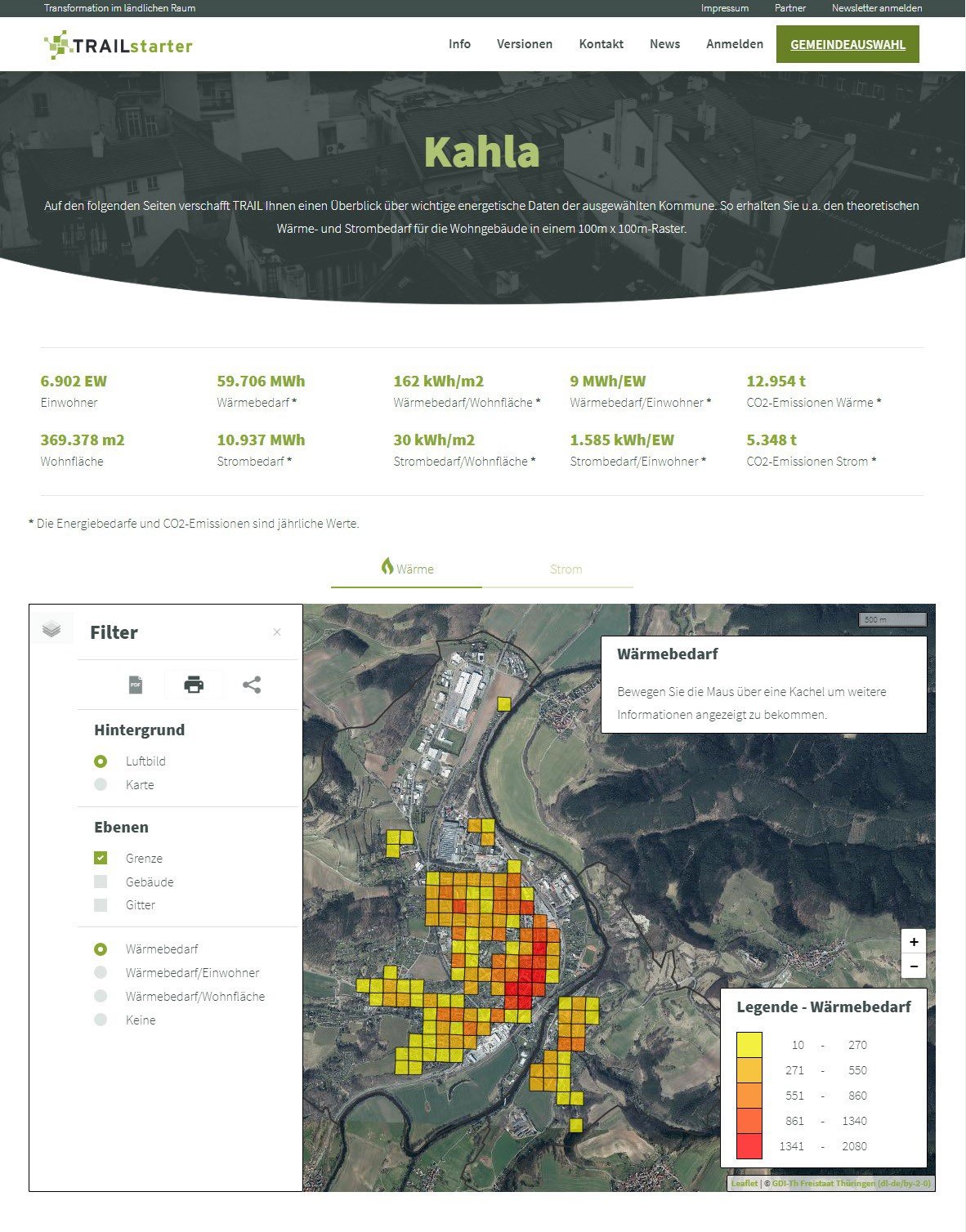
The innovative online tool TRAILstarter enables participating municipalities to develop measures for their regional energy transition: www.trail-energie.de
© Fraunhofer IOSB-AST/Martin Käßler
Solar energy, geothermal energy or photovoltaics – which form of energy supply is best suited to the community? Representatives of smaller communities are faced with a vast amount of information, which in many cases increases the existing uncertainty. An innovative online tool from Fraunhofer is now shedding light on this jungle and determining the optimal energy mix for each individual, including funding options.
© Open Data Thüringen | virtualcitySYSTEMS GmbH | Layout: Daniel Cebulla (JENA-GEOS®-Ingenieurbüro GmbH)
Visualized heat demand of the community Neumark (486 inhabitants) in a 100 x 100 m grid. Dark colors indicate a high heat demand. The results were estimated based on the building structures.
The energy turnaround is imminent. However, representatives of small communities are often wondering what exactly this could look like for them. Solar energy, photovoltaics or geothermal energy? What makes sense and to what extent can these technologies contribute to the community's energy supply? What about possible subsidies?
Software tool analyzes needs and possibilities
This is where a tool from the Applied Systems Technology AST unit of the Fraunhofer Institute for Optronics, Systems Engineering and Image Exploitation IOSB comes into play, which researchers have developed in the “modTRAIL energy technology and economic modeling” project. “With our software, mayors of smaller communities can inform themselves about the technical possibilities in the field of energy system transformation and the corresponding subsidies – and this information is individually tailored to the community,” says Liane Rublack, scientist at Fraunhofer IOBS-AST. “Heat and electricity do not have to be generated one hundred percent from renewable sources, but the tool focuses on an energy mix of conventional and renewable generation plants.
The researchers are already testing the tool in four model communities in Thuringia with fewer than ten thousand inhabitants – to be more precise in Kahla, Werther, Neumark and Großobaren. For the decision-makers in the municipalities, the situation is as follows: They first enter the name of their municipality and then receive more detailed information on the electricity and heat requirements in their town. Then they enter their wishes for the future electricity and heat supply. Which technologies would they like to rely on, which ones would they rather leave out? There are numerous options to choose from, such as solar and wind energy, electricity and heat storage, oil and gas condensing boilers, air heat pumps and geothermal heat pumps. The tool also queries requests regarding other factors. Is the focus on minimizing CO2 emissions or rather the purchase costs of the energy? As a result, the mayors or other decision-makers receive information on what an energy and plant mix could look like that meets the specified targets, eg consisting of photovoltaic systems, electricity and heat storage and combined heat and power plants. The information also includes the costs for installation and operation, energy procurement costs, the amount of CO2 emissions and possibilities for subsidies.
“With our tool, we want to get the ball rolling and show mayors of small communities the potential that renewable energy sources offer for their community,” explains Rublack. The Fraunhofer IOSB-AST researchers used standard load profiles for households as well as the time series for renewable energy sources stored by the German Weather Service – in this case the Thuringian weather station near Erfurt-Weimar – as the basic data for the tool. For communities with less than 10,000 inhabitants in Thuringia, the necessary data is already stored in the system. However, the tool can also be used with the corresponding data in other German states.
Overcoming barriers to entry
This optimization model is to be integrated as a component (module) into the online software of the joint project TRAIL. The concrete objective of the joint project “Transformation in Rural Areas (TRAIL)” is the availability of an easy-to-use tool that helps to motivate a large number of smaller communities to deal intensively with the issues of efficient energy supply. In particular, the project aims to overcome the entry barriers that are seen in the limited human and financial resources. An online software tool will be developed, which primarily uses publicly accessible GIS data, census data and other existing databases to generate initial statements on electricity and heat consumption in the municipalities and to suggest recommendations for further action.
© Fraunhofer IOSB-AST/Martin Käßler
Using the innovative online tool TRAILstarter, the participating municipalities can derive measures for their regional energy system transformation: www.trail-energie.de
Keep in touch







