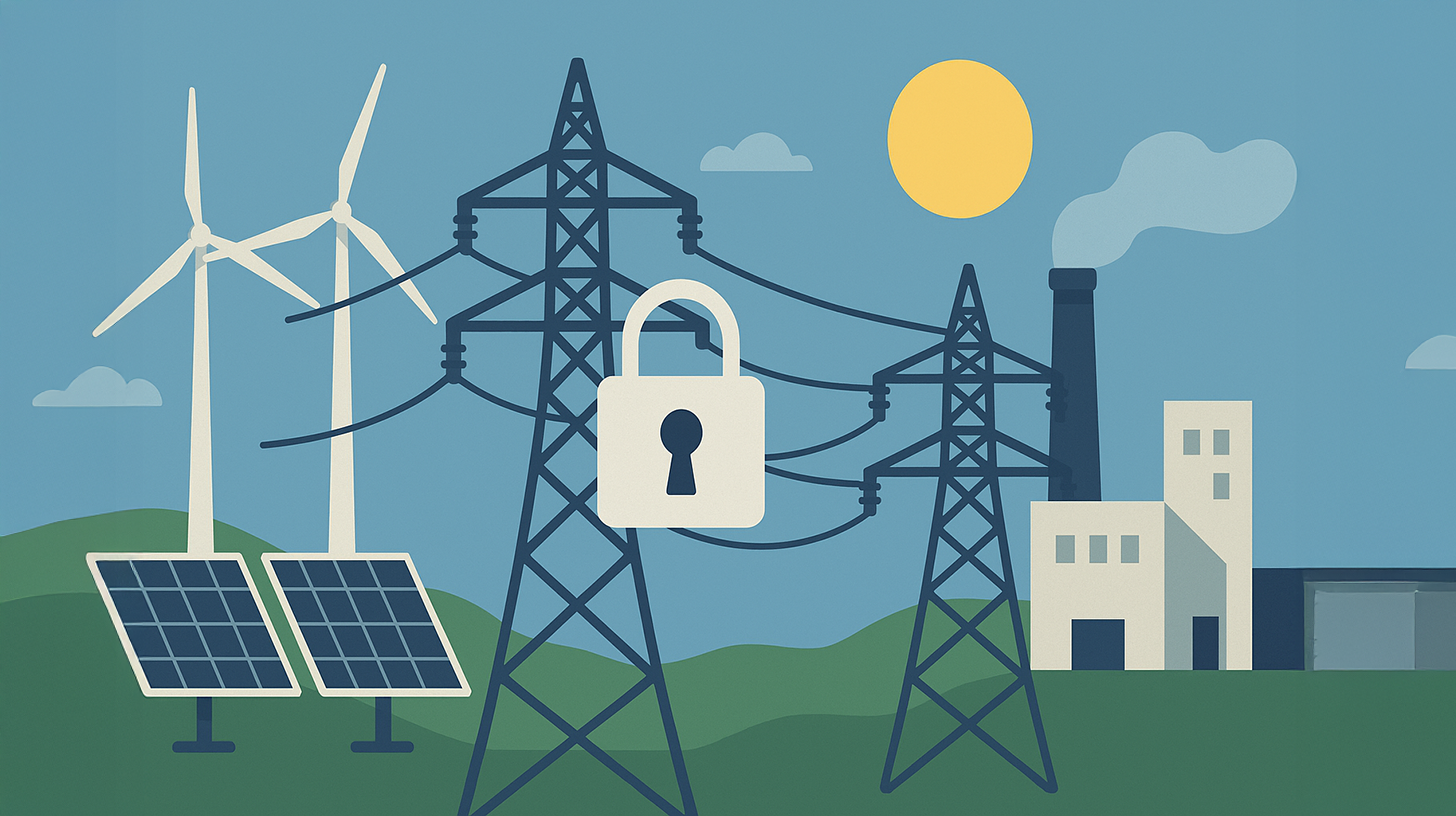
The billion-dollar blind flight: How missing data in the power grid determines the success or failure of energy projects – Image: Xpert.Digital
Network expansion plan: A goldmine: Developers secure the best locations with data from deepeeper.technology
83 formats, zero standards: Why Germany's electricity grid planning is becoming a matter of destiny for project developers
Wind, solar & storage: How a hidden data chaos is slowing down the energy transition – and how to solve it
Anyone planning wind, solar, or storage projects today without grid expansion plans is flying blind. Knowing where distribution network operators are building new substations or where they foresee bottlenecks is crucial for the entire project's success. The good news: Germany's 83 largest grid operators, covering the majority of the country, make this data publicly available. The bad news: they do so in 83 different formats – from PDFs to Excel spreadsheets. To spare project developers and investors this format chaos, deepeeper.technology has digitized and harmonized all the plans and combined them into a single map. The perfect data foundation for smart decisions.
More information here:
When transparency suddenly becomes worth billions
Eighty-three of Germany's 787 distribution network operators publish a grid expansion plan. At first glance, this sounds like a technical formality, likely of interest only to regulatory specialists. But anyone who grasps the economic significance of this number recognizes that these documents are not bureaucratic reports. They are navigational maps for billions of investment decisions that will have to be made in the next two decades. Every project developer currently planning a wind, solar, or battery storage site needs a single, fundamental piece of information: Where does the responsible grid operator plan to build new substations, and where does it itself foresee bottlenecks? The answer to this question determines the success or failure of a project long before the first sod is turned.
A network under extreme pressure: The dimensions of the challenge
The German electricity grid is facing a stress test of historic proportions. According to calculations by the Institute for Macroeconomics and Business Cycle Research (IMK) of the Hans Böckler Foundation, investments of around €651 billion will be necessary by 2045 for the expansion of the electricity grid infrastructure alone—€328 billion for the transmission networks and €323 billion for the distribution networks. By comparison, the consulting firm ef.Ruhr estimated the total costs at around €732 billion. The range of estimates reflects deep uncertainty about the pace of future energy consumption, not about the magnitude itself.
The figures behind this investment burden are impressive. Currently, around €15 billion is invested annually in electricity grids in Germany. To achieve the goal of climate neutrality by 2045, this amount would have to rise to €34 billion annually—an increase of 127 percent. Meanwhile, electricity consumption is projected to climb from the current 533 billion kilowatt-hours to between 1,000 and 1,300 billion kilowatt-hours in 2045, driven by the electrification of transport, industry, and building heating, as well as by the explosive growth of data centers. The distribution network operators themselves anticipate 425 gigawatts of installed photovoltaic capacity in 2045—almost four times the approximately 117 gigawatts currently connected to the grid—and a tripling of onshore wind power capacity to around 175 gigawatts.
Related to this:


From planning obligation to strategic resource: What Section 14d of the German Energy Industry Act (EnWG) really means
The legal framework for grid expansion plans didn't emerge from thin air. Section 14d of the German Energy Industry Act (EnWG) obligates electricity distribution network operators with more than 100,000 directly or indirectly connected customers to prepare a grid expansion plan every two years and submit it to the Federal Network Agency. The approximately 80 distribution network operators required to report published their plans for the first time on the joint platform VNBdigital on May 1, 2024, where they are also publicly accessible. However, the legally binding obligations only take effect on the deadline of October 31, 2026, by which the updated plans for the next round must be submitted.
The information contained in these plans is of paramount strategic importance for the entire energy sector. The documents describe the specific expansion projects for the high-voltage and medium-voltage grids for the years 2028 and 2033, as well as scenarios extending to 2045. They include details on planned new substations, line expansion, anticipated grid bottlenecks, and the projected costs of the measures. To create a comparable planning basis, the grid operators also coordinate within six regional planning groups—North, East, Central, West, Southwest, and Bavaria—and develop joint regional scenarios, which are updated every two years. These scenarios were first published in June 2023 and form the common planning basis for the individual grid expansion plans.
The economic logic behind the information advantage
For project developers in the renewable energy and battery storage sectors, access to this planning data is not merely an academic interest, but a tangible economic necessity. This stems from a fundamental asymmetry between the speed of project development and the implementation time required for grid expansion. A ground-mounted photovoltaic system can be erected in five months, while expanding a distribution network takes seven to ten years. For battery storage systems, structural delays in component supply are an additional factor: transformers—the heart of every grid connection point—have delivery times of 24 to 36 months, depending on their power rating, because there are only a few manufacturers worldwide.
Anyone planning to develop a battery storage system in Lower Saxony needs to know well in advance whether the responsible grid operator is planning a new substation at a specific location by 2028—or not. Without this information, every project development plan becomes a shot in the dark, posing a significant capital risk. A project that relies on grid connection capacity that won't be available at the planned location until after 2030 is economically worthless—or requires a costly relocation. Conversely, areas where the grid operator has identified bottlenecks and is planning grid expansion in the near future are particularly attractive for storage projects: Not only is a grid connection guaranteed there, but the economically viable use of the storage system as an ancillary service provider is also more likely.
The distribution network operator Bayernwerk Netz has already made concrete use of this potential, tendering in 2024 for a battery storage system at an identified bottleneck point. Its capacity is intended to support the local distribution network and specifically compensate for bottlenecks. This model is groundbreaking: Under current law, network operators are not permitted to own or operate their own storage facilities, but they can tender for the required storage capacity at bottleneck points and purchase it as a service. For project developers who identify bottlenecks early on, this opens up not only guaranteed grid connection points but also long-term revenue models.
The structural problem: 787 operators, 83 formats, zero standards
Despite the public availability of the network expansion plans, the fundamental problem remains: The 83 network operators required to report—a subset of the approximately 787 to 866 distribution network operators active in Germany, with the exact number varying depending on the data collection method and reference date—publish their plans in completely different formats. PDFs without a machine-readable structure, interactive maps with proprietary interfaces, Excel spreadsheets without standardized data schemas: The intended transparency fails in practice due to the lack of data comparability.
The Federal Network Agency has the legal authority to issue regulations pursuant to Section 29 Paragraph 1 of the Energy Industry Act (EnWG) to establish uniform formats and data specifications in order to improve the comparability of plans. While announcements to this effect have been made, binding standards have not yet been implemented nationwide. Until this happens, every project developer or investor seeking a supra-regional market overview must manually evaluate 83 heterogeneous data sources—a process that is not only extremely time-consuming but also requires considerable expertise to interpret the data correctly.
Furthermore, the approximately 700 smaller network operators, who are not subject to the reporting requirements of Section 14d of the German Energy Industry Act (EnWG), are required to transmit certain network data to their respective upstream network operators, but do not publish their own network expansion plans. The gaps in the planning map are therefore not geographical, but structural: In many urban and small-town network areas, there is simply no publicly accessible planning basis.
New: Patent from the USA – install solar parks up to 30% cheaper and 40% faster and easier – with explanatory videos!

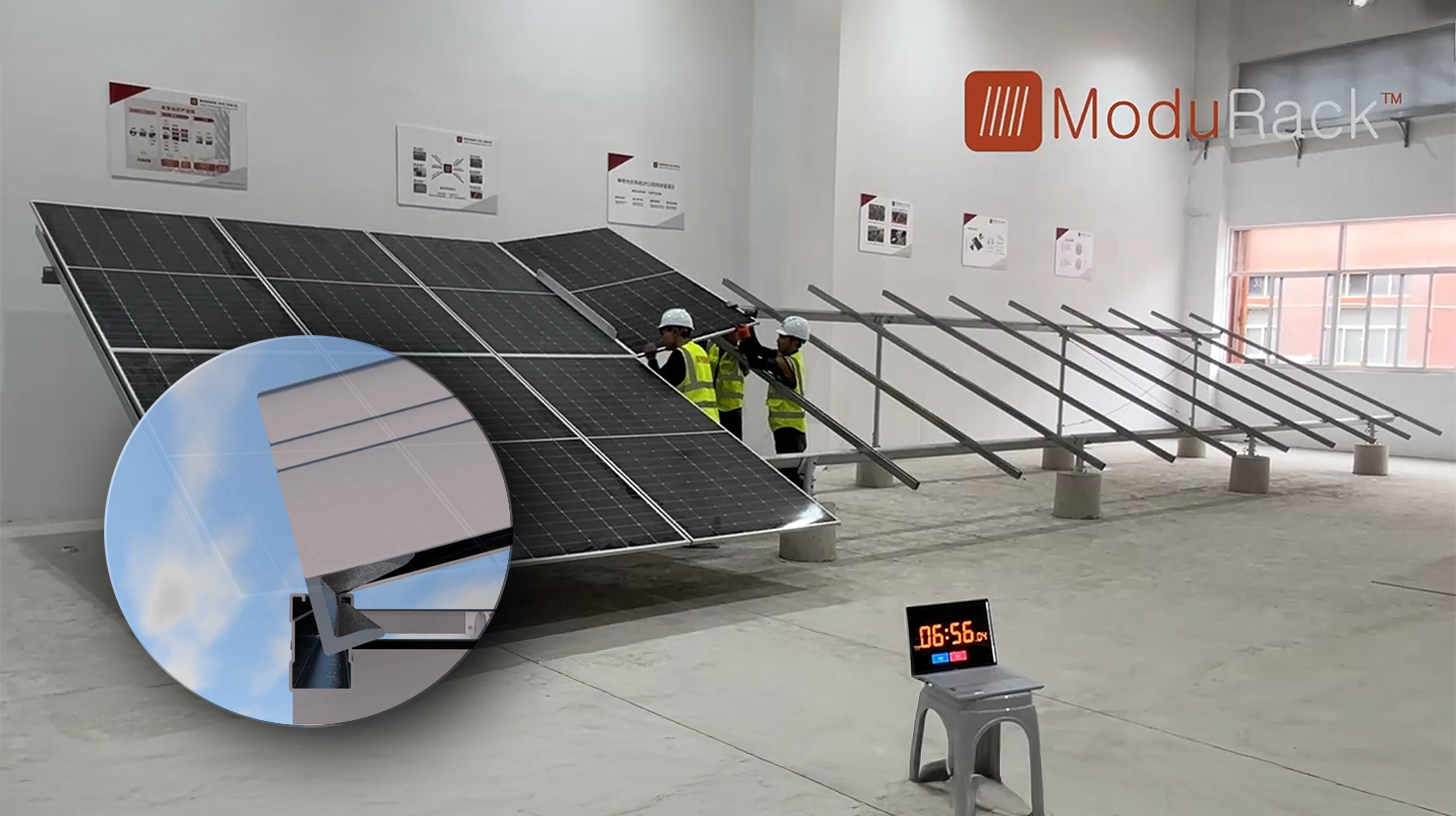
New: Patent from the USA – Install solar parks up to 30% cheaper and 40% faster and easier – with explanatory videos! - Image: Xpert.Digital
The core of this technological advancement is the deliberate departure from conventional clamp mounting, which has been the standard for decades. The new, more time- and cost-effective mounting system addresses this with a fundamentally different, more intelligent concept. Instead of clamping the modules at specific points, they are inserted into a continuous, specially shaped support rail and held securely in place. This design ensures that all forces – whether static loads from snow or dynamic loads from wind – are distributed evenly across the entire length of the module frame.
More information here:
How artificial intelligence is transforming from a cost factor into a decisive competitive advantage
The hidden price of lack of transparency: billions for bottleneck management
The economic relevance of improved grid planning and transparency becomes strikingly clear when considering the ongoing costs of grid congestion management. In 2024, the total costs for measures to stabilize the German electricity grid amounted to €2.776 billion—a decrease of 17 percent compared to 2023 (€3.335 billion), but still a considerable economic burden. At the height of the energy crisis in 2022, these costs had even reached €4.2 billion.
Particularly revealing is the structural shift within these costs: The distribution network's share of redispatch volumes for renewable energy plants rose from 20 percent in 2023 to 26 percent in 2024. This means that the grid bottleneck is increasingly occurring not on the supra-regional high-voltage transmission lines, but in the local and regional distribution network—precisely where the distribution network operators' grid expansion plans provide the crucial planning basis. Curtailment of photovoltaic plants nearly doubled in 2024 compared to the previous year, reaching 1,389 gigawatt-hours, with Bavaria alone responsible for 986 of these gigawatt-hours. Compensation payments to affected plant operators totaled €554 million.
These figures are not an abstract regulatory phenomenon. They are the price of planning that lags behind the dynamics of the energy system. Every gigawatt-hour that cannot be fed into the grid is economically lost energy from already constructed and financed facilities. The societal costs of these misinvestments in site planning are substantial—and could be significantly reduced by better, earlier available planning data.
Related to this:

The digital lever: When planning becomes a platform
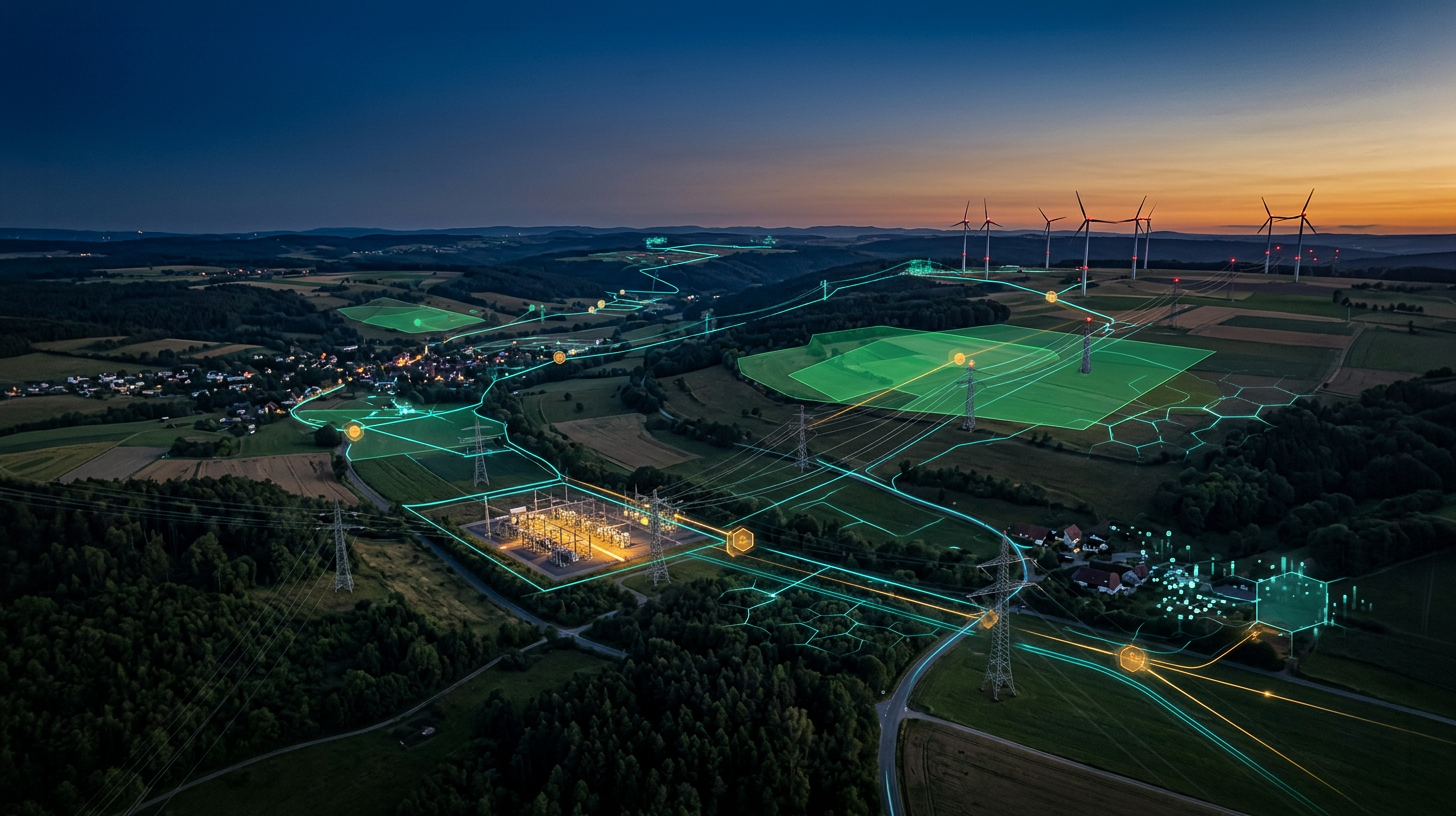
The market is responding to the data gap between legal transparency requirements and practical usability. Technology companies like deepeper.technology have begun digitizing, harmonizing, and georeferenced machine-readable versions of all 83 published grid expansion plans. The goal: a single database where project developers, investors, and energy suppliers can immediately see where planned grid expansion and project development align—and where they don't.
The economic logic of this approach is compelling. Instead of 200 project development teams in Germany each individually evaluating the same 83 PDFs and transferring them into internal maps, a collective knowledge base is created, making the market as a whole more efficient. For site screening, this means a significant acceleration: Where it currently takes weeks or months to obtain a realistic assessment of the grid connection situation at a location, georeferenced planning data could reduce this analysis to hours or minutes. In a recent analysis on the digitalization of electricity grids, dena also emphasized that a solid data foundation and more precise modeling capabilities have a positive impact on the overall quality of grid expansion planning.
Structural bottlenecks in the planning and approval system
The benefits of better planning data are immediately apparent, but they alone do not solve the deeper structural problem: Even if all 83 grid expansion plans were digitally available and perfectly comparable, the planned grid expansion could only be implemented as quickly as the permitting system allows. This reveals one of the most serious weaknesses of Germany's energy transition. The total requirement for expanding the transmission grid is set at approximately 16,800 kilometers. By the end of 2025, around 4,100 kilometers were still in ongoing or preliminary permitting processes, while the process was completed or no longer required for around 4,700 kilometers. In 2025, the Federal Network Agency approved around 2,000 kilometers of power lines—about 45 percent more than in the previous year, which can certainly be considered progress.
In the distribution grid, where the majority of renewable energy sources are connected, the challenges are even more complex because permitting processes are decentralized at the state level and the institutional capacities of the responsible authorities vary considerably. In Berlin-Brandenburg alone, applications were submitted for over 60 new data centers in 2024, with a combined electricity demand of 9,000 megawatts—while the grid in this region can currently only provide 2,400 megawatts. This extreme discrepancy between demand and grid capacity is not an isolated case; it reflects a systemic backlog that extends across all grid levels.
What the regional scenarios reveal about the future
The regional scenarios updated for 2025 by the 82 reporting distribution network operators—which for the first time included smaller operators with fewer than 100,000 customers—paint a picture of future supply demand that foreshadows dramatic increases. On the generation side, in addition to the already mentioned multiplication of solar and wind power capacity, extreme growth is also expected in data centers: from 2 gigawatts of connected capacity today to 37 gigawatts by 2045. On the consumption side, the scenario for the northern planning region forecasts an increase in demand for electromobility from 0.5 gigawatts today to almost 13 gigawatts.
These scenarios form the common planning basis for the grid expansion plans that distribution network operators must submit in October 2026. They define the demands the grid will have to meet—and thus also where infrastructure expansion will be particularly urgent and lucrative for project developers and investors. The scenario extending to 2045 is not merely a non-binding outlook: it is the regulatory framework within which network operators must justify their expansion needs and warrant their investments.
The competition for the best location: Those who plan early win
In a market characterized by limited grid connection capacity and increasing feed-in power, the quality of site analysis is increasingly determining a project's profitability. The trend toward a reduction in grid connection capacity in existing grid areas, coupled with grid expansion in other regions, creates a constantly shifting mosaic of opportunities and risks. Project developers who systematically and in real time monitor which grid expansion measures are planned, where, and when, can secure land before the rest of the market has anticipated grid development in a particular area.
The grid connection reservation, issued after a positive response from the grid operator to a binding request, typically secures a connection capacity for six months. Those wishing to make optimal use of this timeframe must be certain, even before submitting the request, that sufficient grid capacity will be available at the intended location not only today, but throughout the entire project duration—or is in the process of being developed. The grid expansion plans are not merely reactive documents describing the current status; they are forward-looking planning tools that offer investors the rare opportunity to act in accordance with the grid operators' infrastructure plans, rather than simply following them.
Regulatory development: On the way to true data standardization
The Federal Network Agency has announced plans to develop standardized formats and data specifications for grid expansion plans. If these standards are consistently implemented, this would significantly improve market information, far exceeding current capabilities. Standardized, machine-readable grid expansion plans with uniform georeferencing would enable not only private technology service providers but also public planning authorities and municipalities to coordinate energy projects and grid expansion from the outset. The digital transformation of the energy sector is therefore not merely a matter of individual companies' efficiency, but a systemic challenge that will enhance the entire framework for investment decisions.
Furthermore, fundamental regulatory questions arise regarding the long-term financing of grid expansion, which currently remain unresolved. Distribution network operators need a regulatory framework that enables them to procure and refinance the necessary investments. The incentive regulation that currently determines grid fees and thus the operators' financing capacity is not yet consistently aligned with the investment needs of the energy transition. Significant reform is needed here, extending far beyond the technical issue of data formats.
Planning transparency as a system requirement
The 83 publicly available grid expansion plans are more than just reports. They are the interface between the physical reality of the electricity grid and the investment decisions that will determine whether Germany achieves its goal of climate neutrality by 2045. The investment requirement of up to €651 billion, which must be mobilized by that year, will only be used efficiently if capital flows are directed to locations where grid and generation are systematically aligned. Every euro that flows into a location without sufficient or timely grid capacity is a euro that could have accelerated the energy transition elsewhere.
The harmonization and digitization of grid expansion plans is therefore not a downstream service for data specialists—it is an infrastructure for infrastructure investments. In a system that recognizes 83 different formats for 83 different grid operators but lacks a common machine-readable language, a portion of the strategic value of these planning documents remains untapped. The stakeholders who close this gap not only create added value for their clients but also contribute to the overall systemic efficiency of an energy transition that no longer has time for flying blind.
Your partner for business development in the fields of photovoltaics and construction
From industrial rooftop PV to solar parks and larger solar parking lots
☑️ Our business language is English or German
☑️ NEW: Correspondence in your native language!

Konrad Wolfenstein
I and my team are happy to be available to you as your personal advisor.
You can contact me by filling out the contact form here wolfenstein@xpert.digital:or simply call me at +49 7348 4088 965. My email address is
I'm looking forward to our joint project.