
DAX breaks through 25,000 points: Stock market success without economic substance?
Xpert pre-release

Language selection 📢
Published on: January 7, 2026 / Updated on: January 7, 2026 – Author: Konrad Wolfenstein
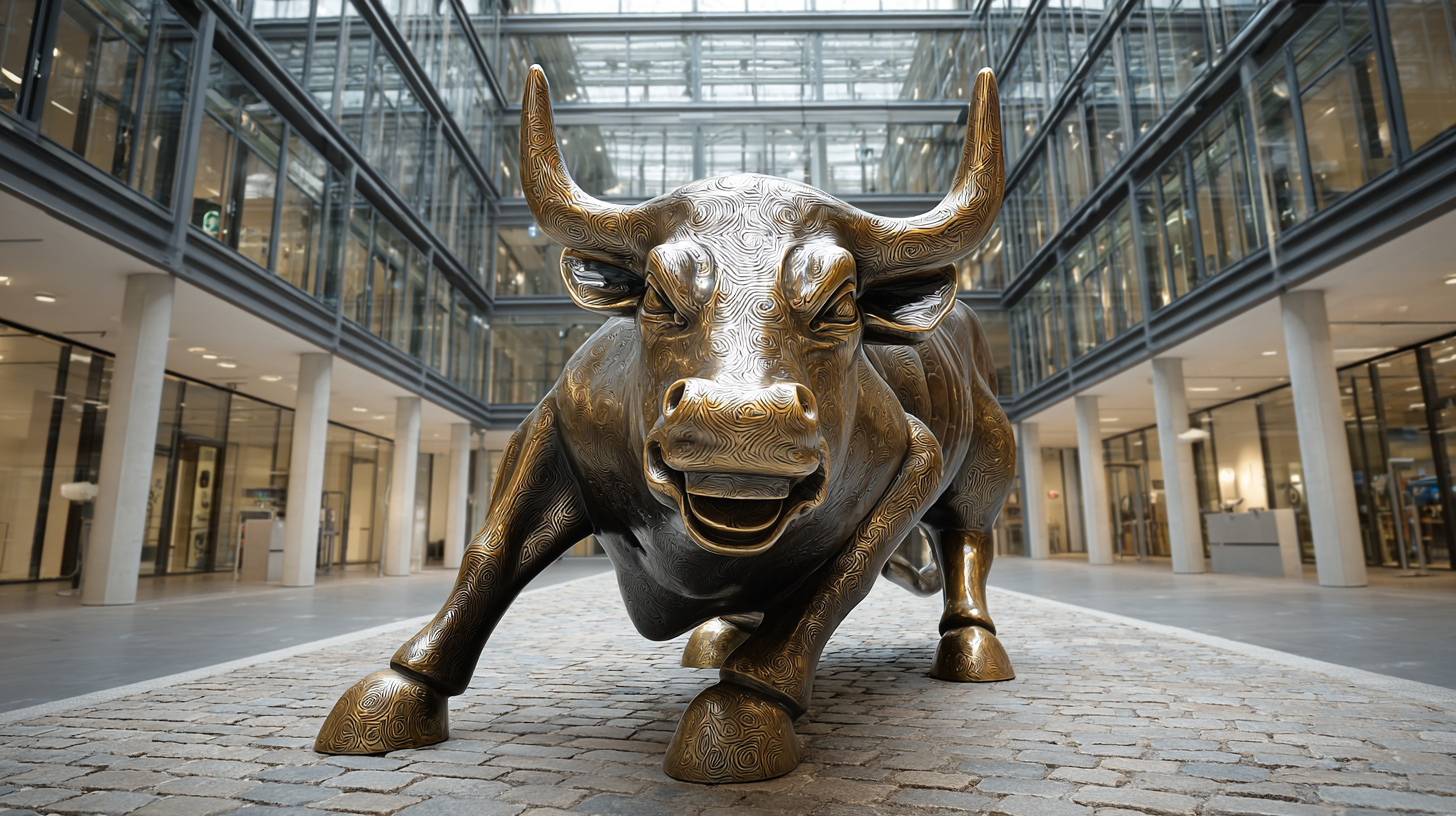
DAX breaks through 25,000 points: Stock market success without economic substance? – Image: Xpert.Digital
The great paradox: record profits and recession – the structure of the DAX rally
Price-to-earnings ratio, dividends & billions in defense spending: The real drivers of the 25,000-point explosion
On the morning of January 8, 2026, the DAX broke through the 25,000-point mark for the first time. But while champagne corks popped on the stock exchange, the German real economy struggled with a hangover, recession, and structural crises. How does that add up?
It's a scenario that, at first glance, defies all normal logic: Germany's most important stock market barometer is racing from record to record, while economic output is shrinking and the forecasts for domestic industry remain bleak. The gap between the glittering stock tickers in Frankfurt and the grim reality in the factory halls of small and medium-sized enterprises has rarely been as wide as it is today.
Is this soaring stock market a deceptive warning sign of an impending bubble, fueled by money desperately seeking investment opportunities and the hope of billions in government aid? Or is it proof that Germany's top corporations have long since broken free from their home base and operate as global players according to their own rules?
This analysis delves deep into the structure of this contradiction. We examine why "German Angst" plays no role on the stock market, the significance of interest rate policy and massive share buybacks, and why the DAX now has more to do with the global economy and US investors than with the economic situation at home. Find out whether the 25,000-point record is a harbinger of economic recovery – or a dangerous decoupling that could prove costly for investors.
If the real economy is stagnating, why are stock prices exploding?
On Wednesday morning, January 8, 2026, the German benchmark index DAX achieved a historic breakthrough. For the first time in its history, Germany's most important stock market barometer surpassed the symbolic 25,000-point mark, marking another record in a remarkable series. The index rose by around half a percent in early trading to 25,003.73 points, continuing its success story, which had already caused a stir in 2025 with 34 record highs. But while champagne corks are popping on the stock exchanges, the mood in the German real economy is, at best, bleak. Economic output shrank by 0.2 percent in 2024, and leading economic institutes are predicting, at best, stagnation for 2025. This glaring contradiction raises a fundamental question: Is the DAX record a good sign for a future economic recovery, or does it reveal a dangerous disconnect between financial markets and the actual economic situation?
The structure of a contradiction
The German economy is experiencing its longest period of stagnation in decades. Over the past five years, real GDP growth has been a mere 0.1 percent – meaning that economic output at the end of 2024 will be practically at the same level as in 2019. This persistent slump is not a temporary phenomenon, but rather an expression of deep-seated problems in the economy's structure. The Institute for Macroeconomics and Business Cycle Research forecasts growth of just 0.2 percent for 2025, while the unemployment rate is expected to rise to 6.1 percent. The German Council of Economic Experts puts it succinctly: Germany's actual production potential is more than 5 percent below the figure projected for 2024 in 2019.
Parallel to this prolonged economic downturn, the stock markets experienced a veritable boom. The DAX price index, which excludes dividends paid out, rose by an impressive 38 percent from the beginning of 2024 to mid-2025. This development appears all the more remarkable given that analysts' expected profits for DAX companies increased by a mere 4 percent during the same period. The price gains are therefore based almost entirely on investors' willingness to pay more for the shares, and not on improved corporate profitability. The DAX's price-to-earnings ratio (P/E ratio) rose from 11 at the beginning of 2024 to 15 in mid-2025, compared to an average of 13 over the previous ten years.
These figures illustrate a phenomenon that has long concerned experts: the increasing disconnect between financial markets and the real economy. Over the past ten years, the DAX has more than doubled, while the real economy grew by a meager 12 percent during the same period. Stock markets have largely decoupled from the actual economy and follow their own rules, which have less to do with productivity and value creation than with money flows, higher valuations, and shifts in the global financial system.
The global DNA of the German leading index
The key to understanding this contradiction lies in the fundamental transformation of the DAX companies themselves. While the leading German stock index is geographically based in Germany, it has long since become a global entity economically. The 40 companies listed in the DAX generate more than 80 percent of their revenue outside Germany. Only 18 percent of their revenue now comes from their domestic market, while the USA (22 percent) and China (10 percent) have become some of their most important sales markets.
This international focus explains why the DAX index is largely detached from the German domestic economy. For most DAX companies, the weak German economy does not pose an existential threat – they simply operate elsewhere. The mechanical engineering and electrical engineering group Siemens, the insurance giants Allianz and Munich Re, the software company SAP, and the automotive manufacturers generate the vast majority of their profits in international markets. The DAX is therefore less a reflection of the German economy than a list of German corporations with global operations.
This divide becomes even clearer when examining the ownership structure. In 24 of the 40 DAX companies, more than half of the shares are held by foreign investors. The diagnostics group Qiagen has the highest foreign ownership share at 93 percent, followed by the chemical distributor Brenntag at 88 percent and the aerospace supplier MTU Aero Engines at 83 percent. The share of North American investors, primarily from the USA, rose steadily from 17.3 percent in 2010 to 23.3 percent in 2022. The largest individual shareholders are the US asset managers BlackRock and Vanguard, which together have invested around 130 billion US dollars in DAX companies.
This internationalization has far-reaching consequences. DAX stocks are increasingly traded according to global standards, not according to the state of the German economy. When international investors want to invest, the DAX doesn't primarily compete with German SME bonds or real estate, but with the US S&P 500 index, the French CAC 40, or Asian stock markets. And in this comparison, the DAX, with a price-to-earnings ratio of 15 compared to the S&P 500 (P/E ratio of 19), even appears relatively cheap – the discount of German stocks compared to US stocks reaches almost 40 percent, a record high, while the historical average is around 20 percent.
Monetary policy as a driver of stock prices
Besides the global orientation of DAX companies, the monetary policy of central banks plays a crucial role in the stock market boom. The European Central Bank (ECB) lowered its key interest rate from 4.5 percent to 2.0 percent in 2024 and 2025. This drastic easing fundamentally changed the conditions for investments. In an environment where government bonds and fixed-term deposits offer hardly any returns, interest shifts massively in favor of equities.
This phenomenon is often described in the financial industry with the principle "There Is No Alternative" (TINA). When safe interest rates are low, fixed-income securities become unattractive to many investors. Those who don't invest their money in stocks miss out on potential returns. At the same time, the intrinsic value of companies increases because future profits are valued more highly in times of low interest rates. A company that generates stable revenues is mathematically worth significantly more at an interest rate of 2 percent than at 4.5 percent.
In addition, there is the so-called wealth effect. Rising stock prices increase investors' perceived wealth, which tends to lead them to spend and invest more money. This self-reinforcing mechanism can certainly help the economy. However, it also carries significant risks: Should the stock markets crash, the feeling of being poorer could lead to less consumption and negatively impact the real economy.
Monetary policy operates not only through interest rates but also through direct market interventions. Although the ECB ended its large-scale bond purchases in 2022, it still held bonds worth approximately €2,337 billion on its balance sheet at the end of 2025. This massive injection of money kept financing conditions exceptionally favorable for years and systematically channeled capital into riskier investments such as equities.
The hope for government financial aid
Another key driver of the DAX's soaring performance is the expectation of massive government investment programs. After years of austerity in public spending, German politics executed a historic U-turn in March 2025. An amendment to the Basic Law (Germany's constitution) created the legal framework for a special fund of €500 billion. This money is to be invested in infrastructure and climate protection over twelve years. Of this, €100 billion is earmarked specifically for states and municipalities to modernize education, transportation, energy, digitalization, and healthcare.
In addition, a special rule for defense allows for the permanent financing of military spending through loans, even above the usual limits. The German government plans to increase defense spending to 3.5 percent of economic output, which is three times the long-term average.
Market observers see these government bailouts as a major reason for rising share prices. Jochen Stanzl of Consorsbank cites the prospect of an economic boost through billions in infrastructure and defense spending as one of the three most important factors driving the DAX's rise. Investors had already begun betting on an economic recovery through these debt-financed investments by the end of 2025.
The economic logic behind this is quite understandable. Massive government spending on dilapidated bridges, schools, and energy systems could increase the efficiency of the German economy in the medium term and generate growth. Calculations by the Institute for Macroeconomics show that, if these construction projects are implemented successfully, economic strength could be permanently boosted. At the same time, the spending on defense would create direct orders, from which the defense industry, heavily represented in the DAX, would particularly benefit. The defense company Rheinmetall, now a major player in the DAX, already achieved record profits in 2025 and is likely to profit further from the planned increases.
However, this gamble on the future is fraught with considerable uncertainty. Implementing such a massive program faces enormous practical hurdles: a shortage of skilled workers, construction bottlenecks, lengthy approval processes, and bureaucracy could significantly delay the disbursement of funds. Furthermore, there is potential for conflict with EU debt rules, which actually encourage austerity – a goal that is difficult to reconcile with special funds financed by loans.
The mechanical component: dividends and share buybacks
Besides these major economic factors, there is an often underestimated technical component to the share price increase: the massive return of capital to shareholders through dividends and share buyback programs. DAX companies are expected to distribute €52.8 billion in dividends for the 2024 fiscal year – a new record. This is all the more remarkable given that the actual profit of all DAX companies in 2024 was only €96 billion, 21 percent lower than the previous year.
The high payout despite stagnant or declining profits demonstrates that shareholder satisfaction is a top priority. Companies maintain or even increase their dividends in challenging years to support the share price and keep long-term investors happy. This strategy is complemented by share buybacks. Sixteen DAX companies are currently conducting such programs, with an estimated volume of €17 to €20 billion for 2025. Adding dividends and buybacks together, the total amounts to nearly €70 billion.
Share buybacks directly support the share price because they reduce the supply of available shares. If demand remains constant, a lower supply automatically leads to higher prices. Furthermore, earnings per share appear more favorable because they are spread across a smaller number of shares. This makes the stock seem cheaper and more attractive to investors – which in turn stimulates demand.
Critics, however, see a fundamental problem in this use of money. Instead of investing profits in research, development, and expanding production, they are paid out to shareholders or used to buy back company shares. This may boost the share price in the short term, but it does not help to secure long-term competitiveness. The focus on so-called "shareholder value," that is, the benefit to shareholders, often leads to a concentration on quick profits and cost reductions instead of long-term innovation and growth.
This criticism becomes even clearer when one takes a closer look at profit development. In the first quarter of 2025, the operating profit of DAX companies shrank by a total of 8.1 percent. The decline was particularly severe in the automotive sector, where operating profit plummeted by 42 percent. While experts expect net profit of around €115 billion for the full year 2025, which is historically high, this figure is based on the recovery of a few companies such as SAP, Siemens, Rheinmetall, and the insurance sector, while large parts of the index stagnate or shrink.
Our EU and Germany expertise in business development, sales and marketing

Our EU and Germany expertise in business development, sales and marketing - Image: Xpert.Digital
Industry focus: B2B, digitalization (from AI to XR), mechanical engineering, logistics, renewable energies and industry
More about it here:
A topic hub with insights and expertise:
- Knowledge platform on the global and regional economy, innovation and industry-specific trends
- Collection of analyses, impulses and background information from our focus areas
- A place for expertise and information on current developments in business and technology
- Topic hub for companies that want to learn about markets, digitalization and industry innovations
The German Paradox: Why the stock market rejoices while the economy suffers
The cracks in the foundation of the German economy
The persistent weakness of the German real economy is not a normal up and down, but a fundamental problem. The Ifo Institute speaks of a "structural crisis" triggered by a mix of profound changes: climate protection, digitalization, an aging society, and China's new role in the world. Germany is particularly hard hit by these changes compared to other countries.
The transition to climate neutrality is hitting the heart of the German economy – energy-intensive industry. Industry still accounts for 19 percent of Germany's economic output, significantly more than in other developed countries. Following the energy price shock caused by the war in Ukraine, sectors such as chemicals, steel, and aluminum are facing permanently higher costs. Many companies have reduced production or relocated it abroad.
The aging of society is putting a greater strain on the German economy than on most of its competitors. The number of available workers will begin to shrink from 2026 onwards, which will reduce potential economic growth to just 0.4 percent by the end of the decade. The resulting skills shortage will lead to more work for each individual, increased stress, and decreased productivity.
Productivity in Germany has stagnated since 2017. Output per hour worked has remained virtually unchanged for seven years. Experts cite the shift towards service sector jobs, which are often less productive, as well as increasing bureaucracy, poor infrastructure, and a lack of digitalization as the main reasons for this stagnation.
However, the growing pressure from China is particularly serious. A survey conducted by the German Economic Institute (IW) among 350 German companies paints an alarming picture: Competition from China is increasing sharply. Between 70 and 90 percent of the surveyed companies report that Chinese competitors are offering products at significantly lower prices. Approximately 55 to 70 percent suspect government subsidies as the cause. As a result, many companies fear losing market share and facing profit losses.
China has transformed from student to master. The country is no longer just a factory for cheap goods, but is increasingly penetrating sectors where German industry has traditionally been a leader: mechanical engineering, electrical engineering, and automotive manufacturing. German companies are losing ground. German exports fell by 1.7 percent in 2024, while Chinese exports increased significantly.
The big gap: More expensive stocks without higher profits
The DAX's gains since the beginning of 2024 are based almost entirely on the fact that stocks are valued more highly, not on higher profits. This raises questions about the sustainability of the stock market boom. A price-to-earnings ratio of 15 is significantly above average and signals that investors are willing to pay an increasingly higher price for every euro of corporate profit.
This rise in valuations has several causes. First, low interest rates make stocks comparatively more attractive. Second, investors are pricing in optimistic hopes – for government stimulus programs, a global economic recovery, and the effects of artificial intelligence. Third, the mechanical support provided by dividends and share buybacks is also helping.
The downside is that there's hardly any room left for disappointment. At current prices, expectations are already high. Should the hoped-for boost from the infrastructure program fail to materialize, or should profits disappoint, share prices could fall. Experts warn that the phase in which stocks simply become more expensive is likely coming to an end. In the future, genuinely rising profits will have to drive the DAX.
But this is precisely where the problem lies: Experts consider such a tailwind from corporate profits unlikely in the coming months. The global economy is uncertain, and the strong euro is putting a strain on export-dependent companies. Analysts do not expect profit expectations to rise sustainably until autumn.
Experience shows that things rarely go well when share prices and actual profits diverge so drastically. Either profits need to catch up – which requires a significant economic recovery – or share prices need to correct downwards. Economic principles teach us that while debt and government spending can provide short-term relief, they pose long-term risks if the debt burden becomes too large.
The dominance of the financial markets
The paradox of a booming DAX during a stagnant economy reveals a larger trend: Financial markets are increasingly dominating events. Economic activity is becoming ever more aligned with the logic of the stock market.
Financial markets have strayed from their original purpose – providing the economy with money for investment. Instead, speculation and the pursuit of quick profits dominate. The coronavirus crisis demonstrated this: while the real economy collapsed, many financial players made record profits.
This decoupling poses risks. If values in the financial system continue to rise without corresponding value creation in the real economy, bubbles form. When these bubbles burst, the consequences can be devastating – as the 2008 financial crisis demonstrated. Furthermore, if wealth becomes concentrated in the hands of a few who profit from stock market gains, it can jeopardize social cohesion.
In Germany, this is evident in the fact that many DAX-listed companies primarily focus on their share price. Shareholder benefits are often more important than the interests of employees or society. This leads to short-term quarterly results being prioritized over long-term investments in innovation and employees.
Unequal distribution: Technology and finance at the forefront
Another reason for the DAX's success is its composition. Technology companies make up almost a third of the DAX's value. The most important member is SAP with a share of 14 percent – the software company alone thus accounts for more than a tenth of the entire index.
Technology companies are particularly benefiting from digitalization and the promise of artificial intelligence. SAP, Siemens, Infineon, and Siemens Energy recorded strong share price gains, pulling the entire index upward. SAP alone accounted for almost half of the DAX's total gains in one year.
Banks and insurance companies are also strongly represented. Corporations like Allianz and Munich Re made record profits in 2025. They benefit from higher interest rates on their invested money and high demand for insurance.
This success, however, is unevenly distributed. While tech and financial companies are thriving, traditional industries are struggling. The automotive industry, once the pride of the German economy, has suffered massive profit declines. The chemical industry is also struggling with high energy costs and competition from China.
Smaller and medium-sized companies listed on the MDAX and SDAX are performing significantly worse than the giants in the DAX. This shows that smaller firms are more dependent on the German domestic market and are less able to benefit from global business than large corporations.
A good omen or a dangerous deception?
The central question remains: Does the DAX record herald better times ahead, or is it an illusion that will soon burst?
The optimistic view is supported by the fact that stock markets often anticipate future trends. The DAX's rise could signal that investors expect a recovery in Germany starting in 2026. Forecasts support this: institutions predict a noticeable return to economic growth in 2026.
Furthermore, the planned investments in infrastructure and defense could indeed bring about change. After years of austerity, the government is now spending a lot of money. If these funds are used wisely, this could strengthen the economy in the long term.
The DAX is also not yet overvalued compared to other international markets. It is still more attractively valued than the American stock market. Therefore, there is still room for growth if the outlook improves.
However, the counterarguments carry significant weight. The share price gains are based almost entirely on hope and higher valuations, not on actual profits. This is a warning sign. Earnings expectations for 2025 have been continually lowered recently – the outlook has become bleaker for most DAX companies.
The fundamental problems – lack of growth, expensive energy, skilled labor shortage, and competition from China – remain unresolved. The government's construction program carries risks during implementation. Furthermore, there is a danger that the high level of debt will become a problem in the long run.
History teaches caution. There have been repeated periods when the stock market became detached from reality – such as the dot-com bubble around the year 2000. Often, the euphoria was followed by a painful crash as soon as it became clear that expectations had been inflated.
The ambivalent answer
The DAX's record high of 25,000 points is neither entirely good nor entirely bad – it reflects the contradictions of our time. On the one hand, it demonstrates the strength of major German corporations, which are successful worldwide and no longer solely dependent on Germany. On the other hand, it shows how far removed these global giants have become from the weakening domestic economy.
The record high is a good sign because it demonstrates the confidence of international investors and offers hope for the effectiveness of government investments. If the measures prove successful, a recovery could follow that would justify the high prices.
At the same time, the record is risky because it's based on a gamble: share prices have far outpaced actual profits. Either profits must now rise, or share prices will fall. At current prices, there's little room for error.
The answer, therefore, is not black and white: neither pure euphoria nor panic is warranted. The record high illustrates how the global economy has changed – corporations operate globally, financial markets wield enormous power, and expectations drive stock prices. For investors, this presents opportunities due to the global strength of these corporations, but also risks stemming from high valuations and unresolved problems in Germany.
The truth lies in the details – not just in the German economy, but also in global markets, monetary policy, and future expectations. The DAX is no longer a simple barometer of the German economy, but a complex system reflecting global financial flows. Whether this turns out well depends on whether policymakers solve the problems and whether companies can actually increase their profits. The coming period will show whether the stock market is right – or whether it has become too detached from reality.
Your global marketing and business development partner
☑️ Our business language is English or German
☑️ NEW: Correspondence in your national language!

Konrad Wolfenstein
I would be happy to serve you and my team as a personal advisor.
You can contact me by filling out the contact form or simply call me on +49 7348 4088 965 (Munich) . My email address is: wolfenstein ∂ xpert.digital
I'm looking forward to our joint project.
☑️ SME support in strategy, consulting, planning and implementation
☑️ Creation or realignment of the digital strategy and digitalization
☑️ Expansion and optimization of international sales processes
☑️ Global & Digital B2B trading platforms
☑️ Pioneer Business Development / Marketing / PR / Trade Fairs
🎯🎯🎯 Benefit from Xpert.Digital's extensive, five-fold expertise in a comprehensive service package | BD, R&D, XR, PR & Digital Visibility Optimization

Benefit from Xpert.Digital's extensive, fivefold expertise in a comprehensive service package | R&D, XR, PR & Digital Visibility Optimization - Image: Xpert.Digital
Xpert.Digital has in-depth knowledge of various industries. This allows us to develop tailor-made strategies that are tailored precisely to the requirements and challenges of your specific market segment. By continually analyzing market trends and following industry developments, we can act with foresight and offer innovative solutions. Through the combination of experience and knowledge, we generate added value and give our customers a decisive competitive advantage.
More about it here:










