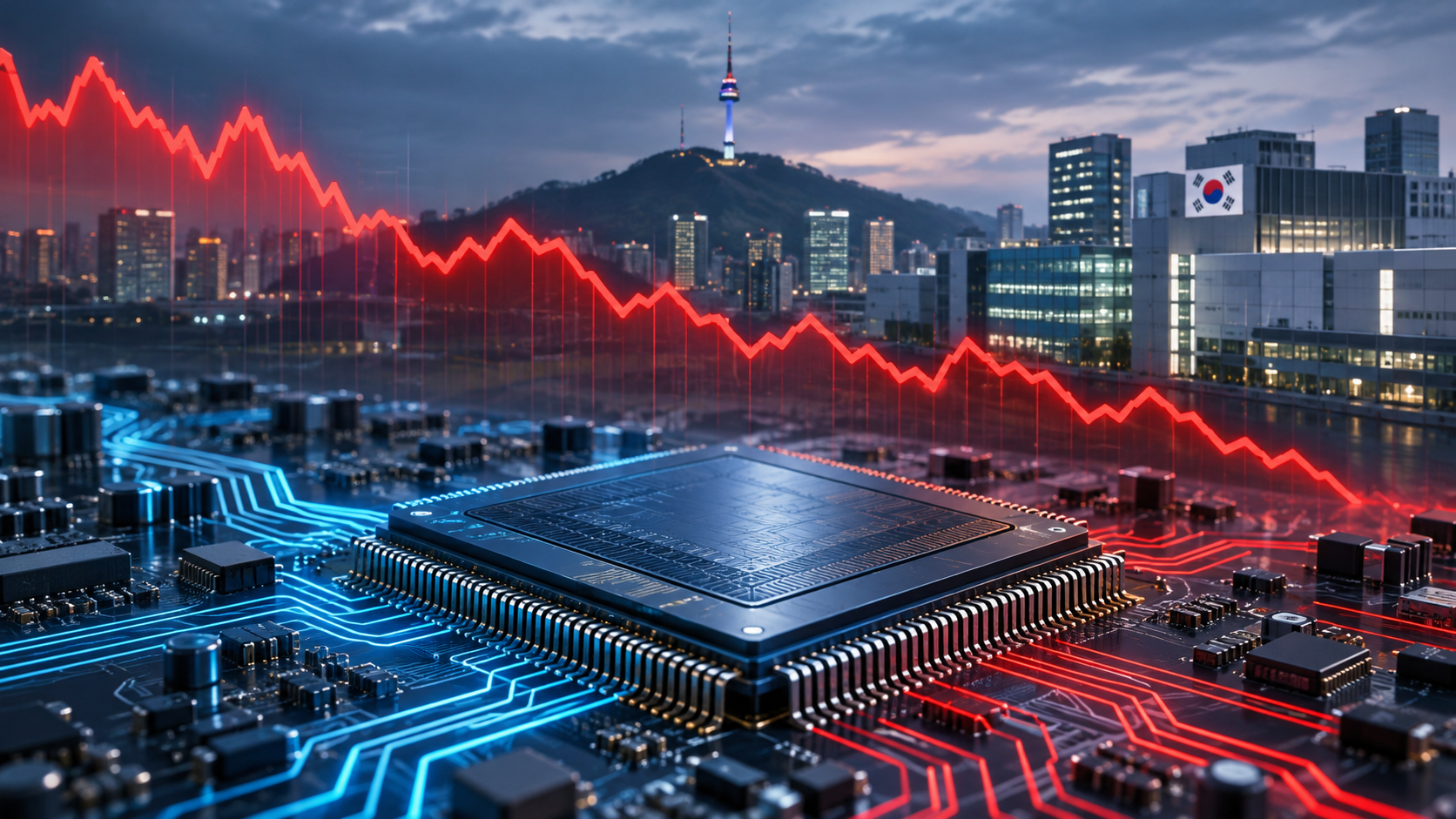
South Korea's AI boom is faltering: Why the chip's success is becoming a danger to the entire economy – Creative image on the topic, featuring AI: Xpert.Digital
Almost half of South Korea's exports are chips: How vulnerable the AI boom has made South Korea
AI stocks under pressure: What the stock market crash means for South Korea's economy
Records, risks, market crash: South Korea's dangerous bet on the AI boom
South Korea is among the big winners of the global AI boom: its semiconductor manufacturers supply key components for modern data centers, and the industry's export revenues have risen sharply. But this success has a downside. A growing portion of the economy and the stock market now depends on a few companies and on whether the multibillion-dollar investments in artificial intelligence will actually generate lasting profits. This dependency became particularly evident when the Kospi fell sharply on November 23, 2026, dragging down the shares of Samsung Electronics and SK Hynix. While the price decline doesn't prove that the AI revolution is over, it does demonstrate how quickly high expectations, uncertain financing, and a strong focus on semiconductors can become a liability. For South Korea, therefore, more than just the next stock market movement is at stake: the crucial question is whether its technological lead can be translated into widely shared, sustainable long-term prosperity.
South Korea's AI gamble: When the chip boom becomes a risk for an entire economy
The future can be bright – and still ruin its investors
South Korea's stock market crisis poses an uncomfortable question: What happens when an economy benefits particularly strongly from a technological revolution and, precisely because of this, becomes especially vulnerable? The country is among the most important industrial winners of the global expansion of artificial intelligence. Without high-performance memory chips manufactured in South Korea, many modern AI data centers could neither be built on the planned scale nor operated economically. Yet the very specialization that has driven up export revenues, corporate profits, and share prices is now amplifying the consequences of any disappointment.
On November 23, 2026, the Korean benchmark Kospi index fell 3.31 percent, closing at 4,708.54 points. It had dropped as low as 4,586.80 points earlier that day. Samsung Electronics lost 3.06 percent, and SK Hynix 2.52 percent. Compared to its record closing level in June, the overall index had thus nearly halved in value. This is more than just a typical fluctuation in an already volatile technology market. It represents a reassessment of earnings expectations, financing conditions, and economic interdependencies.
Nevertheless, it would be premature to conclude from this that the AI age is over. A technology can be economically significant while its providers are overvalued. An industry can grow in the long term and suffer from overcapacity in the short term. And a country can be exceptionally well-positioned industrially without being protected against financial market shocks.
The crucial question, therefore, is not simply whether an AI bubble will burst. It is which parts of the current boom are based on sustainable demand, which on pre-emptive investments, and which on expectations that can only be fulfilled under very favorable conditions. For South Korea, far more than the performance of individual stocks is at stake.
From stock market darling to focal point of global uncertainty
The recent sell-off didn't occur in isolation in Seoul. It was part of an international reassessment of technology-oriented business models. On Friday, November 20, the US technology index Nasdaq Composite fell by around 5.3 percent. The American semiconductor index even plummeted by 10.73 percent. When Asian stock markets opened after the weekend, they had to retrospectively price in this deterioration in expectations. South Korea was hit particularly hard because its major listed companies are directly linked to the global wave of AI investment.
During trading in Seoul, a protective mechanism was triggered that temporarily suspended certain automated selling programs. This so-called sidecar measure is distinct from a complete halt to all stock market trading. Its purpose is to slow the immediate transmission of sharp movements in the futures market to the spot market. It buys time for processing new information but does not eliminate the economic reasons for falling prices.
This distinction is important because technical safeguards are easily misinterpreted as a sign of a comprehensive system failure. In fact, they can actually help to limit disorderly price movements. At the same time, their activation indicates that selling pressure has reached an intensity where normal market mechanisms require additional safeguards.
Furthermore, there is a striking convergence of euphoria and fear. A spectacular IPO can be followed within a few days by sharp losses across the entire technology sector. This is not a contradiction. Different investors assess the same future prospects differently, and new information changes not only profit expectations but also the willingness to pay a high price for uncertain gains.
Why a major IPO doesn't necessarily prove an economic breakthrough
Anthropic's IPO illustrates the scale of the capital investment. The company placed 980 million shares at $83 each, raising approximately $81.3 billion through the initial public offering. This was supplemented by separate investments of $26 billion from major technology companies. The total financing volume reached $107.3 billion. This distinction is economically significant: IPO proceeds, additional equity financing, and company valuation are distinct entities.
A high offering price initially shows that investors are willing to provide a company with substantial funds. It does not yet prove that the company will generate an adequate return with these funds. Likewise, a share price increase on the first day of trading does not mean that the company's long-term value has already been reliably determined.
This distinction is particularly important for AI providers. They require substantial sums for computing power, research, personnel, and the ongoing operation of their systems. Despite rapidly increasing revenues, Anthropic is not yet profitable and has expenditure commitments of approximately $900 billion for the coming years. Such commitments do not automatically equate to immediate payments. However, they illustrate the scale of future revenues and funding opportunities required for the strategy to succeed.
This shifts the central evaluation question. The decisive factor is no longer solely how efficient a model is or how quickly its user numbers grow. The decisive factor becomes what portion of this growth remains as freely available cash surplus after deducting all costs.
A company can multiply its revenues and still generate additional capital requirements if its expenses increase even faster. For suppliers, this capital requirement initially appears as demand. For the overall system, it becomes a risk as soon as financing becomes more difficult.
South Korea's strength is real – so is its concentration
South Korea's position in the AI boom is not solely based on a successful stock market narrative. The country possesses an industrial base that is crucial for modern data centers. Samsung Electronics and SK Hynix are among the leading manufacturers of memory semiconductors. High-performance memory solutions are an essential component of the systems used to train and operate large AI models.
The economic success is evident in the export data. In the first ten months of 2026, semiconductors accounted for 42.7 percent of South Korean goods exports. In the first twenty days of November, this figure was even higher, reaching 49.7 percent. Semiconductor exports reached US$38.5 billion in this short period, out of total exports of US$77.4 billion. Such a short observation period cannot be directly extrapolated to an entire year. However, it illustrates how significantly the export structure has become more concentrated.
These figures do not mean that half of Korea's total economic output consists of chips. Exports, industrial value added, market capitalization, and contribution to economic growth measure different things. Mixing them together creates an exaggerated picture of dependence.
The actual concentration, however, remains considerable. When a single product group accounts for a large share of export earnings, changes in its prices and sales volumes affect the trade balance, corporate profits, investments, and tax revenues. If, at the same time, the corresponding companies dominate the stock market, an additional financial transmission channel is created.
South Korea therefore faces not just one industry risk. It faces several closely interrelated risks that can have a positive effect during an upswing and a negative effect during a downturn.
Why memory chips are more than just interchangeable mass-produced goods
The economic importance of South Korean manufacturers can only be understood by differentiating between various types of semiconductors. AI accelerators handle large amounts of parallel calculations. Memory chips provide the necessary data. Powerful computing units can only realize their full potential if information is moved quickly enough between the processor and memory.
High-bandwidth storage, often referred to as HBM, is particularly important. In simple terms, it refers to tightly integrated storage solutions that provide large amounts of data at high speed. Manufacturers gain a competitive edge not only from a product's theoretical performance. Manufacturing quality, yield, energy consumption, reliability, and successful integration into complex overall systems are equally crucial.
These requirements create barriers to entry. A new competitor cannot quickly build a factory and immediately supply equivalent products in any quantity. This can lead to temporarily high margins and a strong negotiating position.
However, this does not guarantee a lasting shortage from an economic perspective. High profits, in particular, create strong investment incentives. Existing suppliers expand their capacities, customers seek additional sources of supply, and technological improvements change the material requirements per unit of computing power.
The crucial uncertainty therefore lies in the timing. Capacities are built up based on multi-year expectations. Demand can change much more rapidly. Even a structurally growing market can therefore experience phases in which supply temporarily increases more than actual, solvent demand.
This is particularly relevant for South Korea: Technological leadership protects against some competitors, but not against every investment cycle.
The dangerous difference between price boom and volume growth
A data-driven analysis must differentiate why export revenues increase. If a country sells more chips, its real production improves. Conversely, if prices rise primarily, nominal revenues may increase significantly without a corresponding increase in the production of additional goods.
Both developments can be economically advantageous, but their effects differ. Higher volumes require production capacity and can support employment and investment. Higher prices initially improve revenue per unit and, under favorable conditions, company margins. However, they can decline more quickly than established production capacity.
A study by the South Korean Parliamentary Budget Office illustrates this difference. Compared to an earlier forecast, the additional effect of robust semiconductor exports on real growth in 2026 was estimated at approximately 0.8 percentage points, while the effect on nominal growth was estimated at about 6.6 percentage points. These are forecast revisions based on certain assumptions, not a statement that the entire industry will contribute only this amount. However, the large difference demonstrates the importance of price developments.
This structure presents a particular risk of setbacks. Export volumes may continue to rise, while export revenues stagnate or decline due to falling prices. Real economic output will not necessarily shrink immediately. Nevertheless, profits, tax revenues, and international purchasing power could come under pressure.
A published sensitivity estimate suggests that a 10 percent drop in semiconductor prices could reduce the total value of Korean exports by 4.3 percent. This is not a reliable prediction, but rather a calculated representation of market concentration. It illustrates how significantly a single price cycle can now impact the entire foreign trade.
When technological enthusiasm becomes a valuation bubble
Not every high stock price indicates a bubble. Companies may appear expensive and later justify their valuation through exceptional profits. Conversely, a stock may still be overvalued after a sharp price drop if expected profits decline even faster.
A bubble becomes more likely when investors systematically underestimate risks, treat extrapolated growth rates as virtually certain, and increasingly justify valuations with further price increases rather than future cash flows. In the AI sector, this danger arises from the combination of a credible technological disruption with a difficult-to-determine distribution of economic benefits.
Because significant societal benefits don't automatically translate into equally large profits for every provider. If AI software reduces the cost of many work processes, customers can benefit. However, if competitors simultaneously lower the prices of AI services, the model developers may end up with a smaller margin than expected.
The same applies along the supply chain. Data centers, cloud providers, semiconductor manufacturers, and application companies cannot all achieve consistently exceptionally high returns if end customers do not make correspondingly high additional expenditures or realize productivity gains.
The question of an AI bubble must therefore be answered according to the value chain. Individual applications may be economically viable, while certain data center projects are oversized. Some chip manufacturers may hold strong market positions, while their stocks temporarily require excessively high profit increases.
A stock market crash does not disprove technological progress. It can mean that investors misjudged its economic return, timing, or distribution.
The interconnectedness of financing turns customer demand into a testing problem
The valuation becomes particularly challenging when investors, suppliers, and customers are closely intertwined. If a semiconductor manufacturer invests in an AI company that subsequently purchases large quantities of its products, this results in actual deliveries and potentially legitimate economic benefits. Nevertheless, the question remains: how independent is demand from the supplier's financing?.
Similar questions arise with guarantees for data center projects, investments in cloud providers, or long-term offtake agreements. Such arrangements can facilitate the development of new infrastructure. However, they can also lead to several companies becoming economically dependent on the same as-yet-unproven end-user demand.
In connection with Nvidia, such financing interrelationships are now receiving more attention. Reports indicate investments in AI companies and cloud providers, as well as guarantees related to data center projects. This does not automatically imply improper accounting practices. However, it makes it more difficult to assess how much demand stems from sustainably viable business models and how much is enabled by additional capital.
For a dispassionate analysis, cash flows are therefore more important than mere sales records. Are invoices actually being paid? How much are receivables increasing? What guarantees exist beyond the immediately visible supplier relationship? How dependent are customers on further rounds of financing?
As soon as investors start asking these questions more critically, a growth chain previously considered secure can be reassessed. This is relevant for Korean suppliers, even though they may not be directly involved in the respective financing agreements. The crucial factor is whether their customers can continue to finance their investment plans.
Nvidia combines corporate risks and geopolitical conflicts
The uncertainty surrounding Nvidia has several layers that must be carefully distinguished. These include possible violations of export controls, questions about regional revenue reporting, reports of an investigation by the US Securities and Exchange Commission, and the leadership question at the top of the company.
According to reports from November 20, US Securities and Exchange Commission (SEC) officials are investigating potential accounting irregularities at Nvidia. The exact scope of the investigation has not been publicly clarified. Simultaneously, US authorities are investigating possible export control violations at the Singapore-based company Megaspeed in connection with alleged shipments of high-performance AI chips to China. An investigation does not constitute proof of a legal violation; nor can suspicions against a customer simply be presented as established misconduct by its supplier.
Nevertheless, this creates uncertainties relevant to valuation for investors. Stricter controls can delay deliveries, limit sales opportunities, or incur additional auditing costs. Changes in the regional presentation of sales figures can also raise questions about where economic demand actually originates and what legal framework governs it.
The billing address, company headquarters, delivery location, and actual place of use of a chip are not identical. Therefore, high sales volume invoiced via Singapore does not automatically mean that the corresponding products were used there or illegally entered China.
The economic danger lies precisely in the fact that a lack of transparency conflates different risks. Investors then find it difficult to assess legal, operational, and accounting uncertainties separately and, as a precaution, demand a higher risk discount.
Our Asia expertise in business development, sales and marketing

Our Asia expertise in business development, sales and marketing - Image: Xpert.Digital
Industry focus areas: B2B, digitalization (from AI to XR), mechanical engineering, logistics, renewable energies and industry
More information here:
A thematic hub offering insights and expertise:
- Knowledge platform covering global and regional economies, innovation and industry-specific trends
- A collection of analyses, insights, and background information from our key areas of focus
- A place for expertise and information on current developments in business and technology
- A hub for companies seeking information on markets, digitalization, and industry innovations
Why the return of a founder does not replace an audit
Why the return of a founder does not replace an audit
On November 23, Nvidia announced that Jensen Huang was returning as President, Chief Executive Officer, and board member, effective immediately. The stock reacted with a surge of approximately 31.5 percent in regular trading. Such a strong move demonstrates the importance investors place on the company's leadership and the expectation of strategic continuity.
However, this reaction should not be mistaken for a definitive solution to all problems. A personnel decision can change expectations, reassure important customers, and increase a company's perceived ability to act. But it does not answer open questions regarding export controls, sales quality, or long-term demand.
Furthermore, several mechanisms often come into play during sharp price corrections. Investors who have bet on falling prices have to close their positions. Other market participants buy because they suspect the previous sell-off was overextended. Still others react to technical trading signals.
This leads to an important distinction: A stock can recover strongly without its long-term risk decreasing to the same extent. Likewise, a previously sharp price decline may have been partly exacerbated by liquidity needs and market positioning, not solely by new information about the company's operations.
For South Korea, this means that positive news from the US can provide short-term relief. However, sustainable stabilization requires a more robust foundation: reliable investment plans, transparent financing, actual customer solvency, and sufficiently profitable end-use applications.
The stock market is more broadly tradable than the economy is diversified
A stock index can easily give the impression of a broadly diversified investment. In reality, its risk structure depends on the companies it includes and their weighting. In the Kospi, Samsung Electronics and SK Hynix now account for almost half of the index's weight. Therefore, anyone buying the entire market also acquires a significant stake in the global memory chip cycle.
This does not mean that South Korea's economy consists solely of semiconductors. The country has other strong industries and services. However, these sectors are not automatically reflected on the stock market in proportion to their overall economic importance.
The result is a double concentration. On the one hand, the profits of large index companies depend on similar international investment trends. On the other hand, numerous investors react simultaneously to the same news. A cut in American data center budgets can therefore affect several heavyweights at the same time.
Therefore, different Korean stocks do not necessarily offer effective risk diversification. The crucial factor is whether their returns are based on different economic sources. Companies from seemingly different sectors may be more closely linked through shared customers, financing conditions, or investment cycles than their industry classification would suggest.
This leads to a fundamental point for the economic policy debate: A rising national stock index is not a complete measure of the health of an economy. It can reflect the exceptional success of a few companies, while other companies and households benefit significantly less.
Wealth policy between real estate frustration and stock market promises
President Lee Jae-myung has made the stock market a key component of his economic narrative. The underlying idea is understandable: if private wealth is heavily tied up in the real estate market, greater participation in productive businesses can open up additional investment opportunities. It can provide companies with equity capital and enable households to build wealth more broadly.
The political difficulty arises when promoting a long-term equity culture becomes an expectation of permanently rising share prices. A state can promote transparent markets, better corporate governance, and fairer investor rights. However, it cannot guarantee reliable stock market profits.
Following the recent losses, pressure is mounting on the government. The preceding rise in share prices had been perceived as an economic policy success; consequently, the setbacks are now also being attributed to political factors. According to estimates by a bank economist, the losses in equity holdings by Korean households could reach a total of 563 trillion won in the second half of 2026, reducing consumption by 8.4 trillion won. These are model-based estimates, not fully observed losses. However, they illustrate the potential magnitude of the wealth impact.
Furthermore, owning stocks alone does not solve distribution problems. Those who already have substantial savings are better able to withstand greater fluctuations and buy more during crises. Households with limited reserves may have to sell at unfavorable times.
A sustainable asset policy must therefore differentiate between access to the capital market and the assumption of concentrated risks. Key factors include the investment horizon, costs, debt levels, liquidity reserves, and actual diversification.
How stock market losses can become an economic burden
Stock market losses do not automatically wipe out current income to the same extent. A decline in stock valuation initially represents a change in the assessment of future returns. Nevertheless, it can directly influence economic behavior.
Households feeling poorer or facing losses postpone major purchases. Companies may react to lower share prices with more cautious investments, especially if they are looking to raise new equity capital. Financial institutions review collateral and credit risks. Suppliers become more hesitant when key customers reconsider their orders.
For South Korea, a potential correlation is particularly problematic. If semiconductor prices and stock prices fall simultaneously, export revenues, corporate profits, and private assets can all come under pressure at the same time. Consumer spending would then not only have to cope with a stock market shock, but also potentially weaker income prospects.
However, the transition is not inevitable. Large companies can have substantial cash reserves. Long-term customer contracts can cushion short-term fluctuations. And a decline in inflated valuations may initially have little impact on ongoing production.
Therefore, the economic situation should not be judged solely on the stock market or solely on export records. A more meaningful approach is to consider a combined analysis of order intake, inventory levels, investment plans, credit conditions, consumption, and employment.
The critical point would be reached if financial uncertainty and operational slowdown reinforced each other. Then, a valuation correction would turn into a broader economic downturn.
What a stabilization fund can and cannot do
The South Korean government has announced preparations for a stabilization fund and other emergency measures. Finance Minister Lee Hyoung-il emphasized that additional instruments were available, but remained cautious about actually activating the fund. At the same time, he pointed to long-term orders from major chip manufacturers and continued expected investments in American AI data centers.
Such a fund can be useful when markets are temporarily suffering from a lack of liquidity or when forced sales trigger significant price distortions. It can provide additional demand and reduce the risk of a short-term panic becoming self-reinforcing.
Its limitations are equally clear. If expected corporate profits remain persistently lower, a fund cannot offset this loss in value. If it nevertheless attempts to defend a certain share price level, it assumes economic risks that were previously borne by private investors.
This creates a conflict of objectives. Acting too hesitantly can exacerbate a liquidity crisis. Overly generous support can create expectations that the state will continue to limit losses in the future. This, in turn, may encourage precisely the risk appetite that makes future crises more likely.
A convincing stabilization policy must therefore clearly distinguish between functioning markets and high prices. Its legitimate aim is orderly trading under reliable rules, not the guarantee of previous record highs.
Equally important is transparency regarding the scope, financing, and purpose of potential interventions. Vague promises of rescue may provide short-term reassurance, but in the long run create additional uncertainty about the risks that public or publicly funded institutions assume.
Interest rates and exchange rates increase uncertainty
The valuation of high-growth technology companies is particularly sensitive to changes in financing costs. A large part of their expected value lies in profits that are only expected to be generated in later years. If these future profits are converted to present value using a higher interest rate, their current calculated value decreases.
A central bank doesn't actually have to raise interest rates. Even a change in expectations about how long interest rates will remain high can influence valuations. Equally important is the risk premium that investors demand in addition to safe interest rates. If uncertainty about business models or balance sheets increases, this premium can rise, even if the general key interest rate remains unchanged.
For Korean companies and investors, the exchange rate is an additional factor. A weaker won can increase export earnings when converted into US dollars. At the same time, it makes imported energy, machinery, and other intermediate goods more expensive. For foreign investors, currency losses can also reduce returns on stocks.
Therefore, it would be too simplistic to view a devaluation as inherently advantageous for the export sector. Its impact depends on how sales, costs, liabilities, and hedging transactions are distributed.
During periods of financial stress, movements in the financial markets can reinforce each other: foreign investors reduce their equity holdings, the exchange rate comes under pressure, and other investors hedge their positions. This does not necessarily lead to a currency crisis. However, it illustrates why an open, export-oriented economy cannot consider international financing conditions independently of its industrial policy.
The third AI pole will not arise solely from better chips
South Korea's ambition to become a leading AI hub alongside the US and China has a sound industrial basis. Semiconductor expertise, large technology companies, and efficient production structures provide essential prerequisites.
However, a country's position in the AI economy is not solely determined by its hardware exports. Other factors include models, software platforms, data access, computing infrastructure, skilled workers, funding, and the ability to translate AI into productive applications.
This is precisely where a strategic choice lies. South Korea can try to establish an independent position on as many levels as possible. This expands its options, but ties up considerable resources and carries the risk of creating expensive capacities without sufficient demand.
Or the country could focus more strongly on selected areas where it has particular strengths. These include industrial applications where technical production expertise, quality data, and existing customer relationships can provide an advantage. The economic benchmark would then not be whether every national model is at the forefront of the world, but whether companies measurably improve their productivity and competitiveness.
Such a strategy would be less spectacular than the promise of a complete national AI ecosystem. But it could be more robust. Economic sovereignty doesn't come from producing every technology entirely in-house. It also comes from essential capabilities, multiple reliable partnerships, and avoiding one-sided dependencies.
Diversification does not mean withdrawing from a successful industry
To conclude from the crisis that South Korea must scale back its semiconductor industry would be economically misguided. The country should not carelessly abandon its internationally competitive specialization. The task is to translate the benefits of this strength into additional economic pillars.
This includes enabling productivity gains outside of large export corporations. If AI merely increases demand for Korean chips, the economic benefits will remain highly concentrated. If the same technology simultaneously makes smaller businesses, logistics processes, industrial maintenance, development, and administration more efficient, its impact will broaden.
The key is implementation. Simply purchasing software doesn't automatically generate a productivity boost. Companies need to adapt processes, organize data, train employees, and clarify responsibilities. It is precisely these organizational investments that often determine whether technological possibilities translate into economic results.
Capital allocation is also important. Exceptional profits from an export boom can flow into increasingly similar capacities, thereby increasing dependence. However, they can also finance research, new business models, and the modernization of other sectors of the economy.
Diversification therefore does not mean abandoning leading industrial positions. It means ensuring that a period of weakness in the leading industry does not simultaneously place an undue burden on exports, equity investments, consumption, and the government budget.
Three development paths instead of one seemingly certain forecast
A first plausible scenario is an orderly valuation correction. Demand for AI computing power continues to grow, but more slowly than previously assumed by the stock markets. Excessive stock valuations fall, while the operating businesses of many companies remain viable. For South Korea, this would be painful, but fundamentally manageable. The industry could continue to expand, though without reaching previous record highs.
A second scenario is a pronounced investment pause. Large customers postpone data center projects, financing becomes more selective, and additional production capacity meets weaker orders. Semiconductor prices and margins could then come under pressure. The strain would then spread more widely from the stock market to investments, suppliers, and consumer spending.
A third scenario would be a broader crisis of confidence. This would require several problems to coincide: disappointing end-customer revenues, difficulties in securing key financing, tightened trade restrictions, or significant new insights into corporate risks. Such a development would be considerably more difficult to counteract with market-supporting measures.
None of these scenarios can be derived from a single trading day alone. Likewise, a strong countermovement does not justify the certain assumption of a sustained recovery.
The economically sound approach, therefore, does not consist of maximum optimism or blanket pessimism. It consists of preparing for different developments and limiting those dependencies that would be detrimental in several unfavorable scenarios simultaneously.
How the sustainability of the AI boom can be measured in the future
For future development, some sober key figures are more important than the loudest price targets. For AI providers, the crucial factor is whether paying customers remain, increase their spending, and derive economic benefit from the applications. Revenue growth is particularly resilient when it doesn't have to be bought at the price of ever-increasing discounts or additional financing.
For data center operators, actual utilization, available power supply, financing costs, and contractual security are crucial. An announced facility is not yet a completed facility; a completed facility is not yet a profitably utilized facility.
For semiconductor manufacturers, average selling prices, inventory levels, capital expenditures, and customer concentration deserve special attention. High order backlogs are valuable but must be assessed in the context of delivery dates, contract terms, and potential changes.
For South Korea as a whole, it is also crucial whether export successes translate into broader domestic growth. Are investments and incomes rising outside of a few large companies? Is the productivity of smaller businesses improving? Will private consumption remain stable? Are new sources of economic income emerging?
These questions prevent a single indicator from becoming a substitute for a comprehensive analysis. Record exports can coincide with financial vulnerability. Falling stock prices can occur despite ongoing production records. Only the interplay of the data reveals whether a correction primarily affects financial expectations or has already altered real economic dynamics.
The real test begins after the euphoria
South Korea's problem is not that it has become too successful in a key future industry. The problem lies in the fact that industrial strength, stock market valuation, and political expectations have become too closely intertwined. What appeared to be a cohesive success story during the boom reveals its disparate components during the downturn.
Semiconductor expertise remains a valuable location advantage. Demand for high-performance data processing can continue to grow. At the same time, individual business models may fail, investment plans may be reduced, and stock valuations may remain permanently below previous highs.
A convincing economic policy response must simultaneously acknowledge these possibilities. It should safeguard functioning markets without defending every valuation. It should strengthen the chip industry without underestimating its risks. And it should promote private wealth accumulation without equating national stock prices with economic security.
Whether the current developments will be retrospectively classified as a burst AI bubble, a sharp interim correction, or the beginning of a longer industry downturn cannot yet be definitively determined. The structural lesson is already clear: an economy does not become resilient simply by producing products that are indispensable for the future.
It becomes resilient when it translates exceptional successes into broader productivity, sustainable incomes, and multiple independent sources of growth. For South Korea, this will determine whether its AI gamble leads to lasting prosperity gains – or whether a large portion of its returns will be lost in the next global investment cycle.
🎯🎯🎯 Data-driven B2B industry hub as a quasi-in-house solution

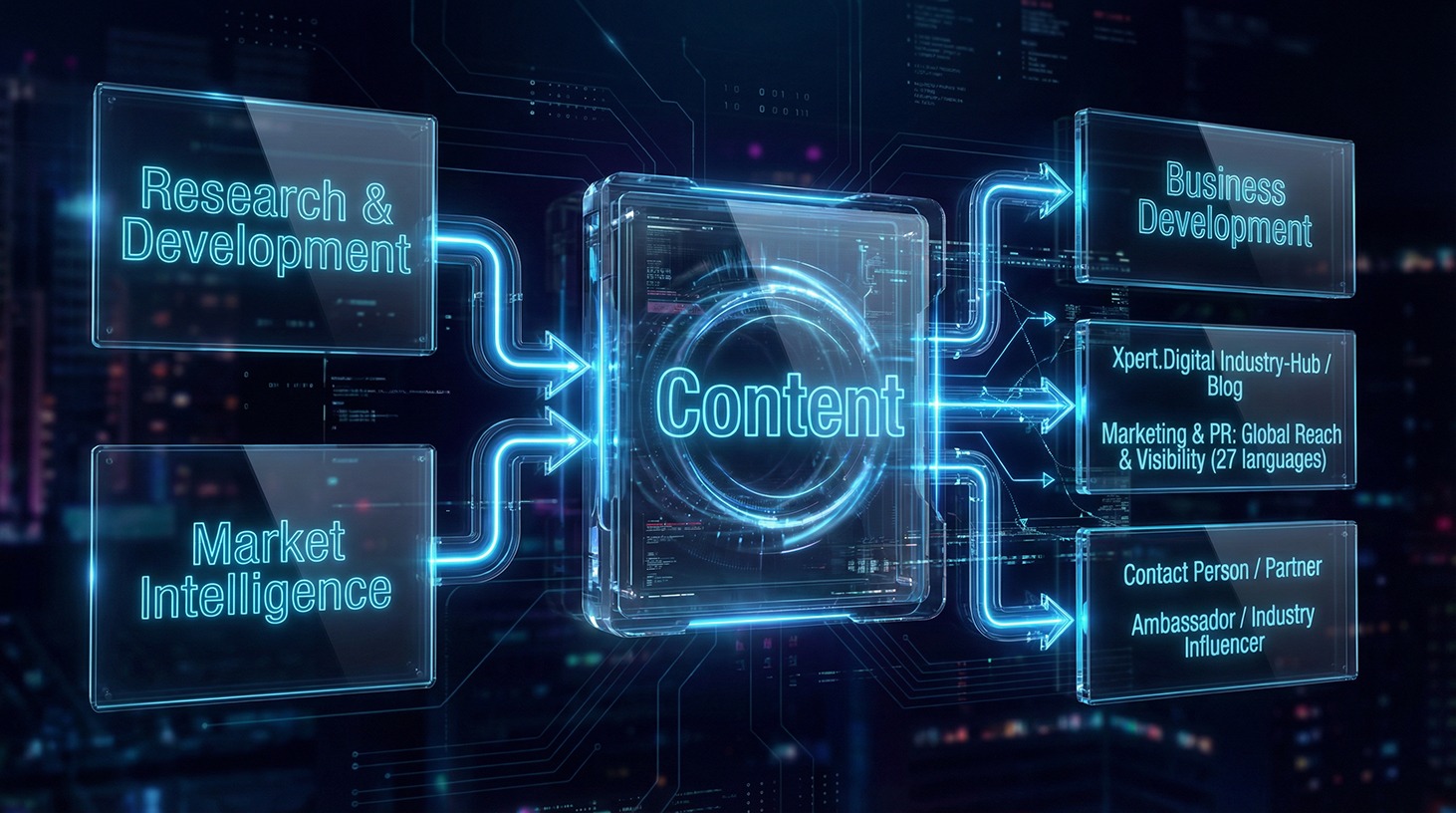
The quasi-in-house solution: How Xpert.Digital closes operational gaps in B2B marketing and sales – Smart Content-Driven Business - Image: Xpert.Digital
Xpert.Digital is a data-driven B2B industry hub led by Konrad Wolfenstein . The company acts as an external, quasi-in-house solution for industrial partners, closing operational gaps in marketing, content, and sales – without requiring additional resources on the client side.
More information here:
Your global marketing and business development partner
☑️ Our business language is English or German
☑️ NEW: Correspondence in your native language!

Konrad Wolfenstein
I and my team are happy to be available to you as your personal advisor.
You can contact me by filling out the contact form here wolfenstein@xpert.digital:or simply call me at +49 7348 4088 965. My email address is
I'm looking forward to our joint project.