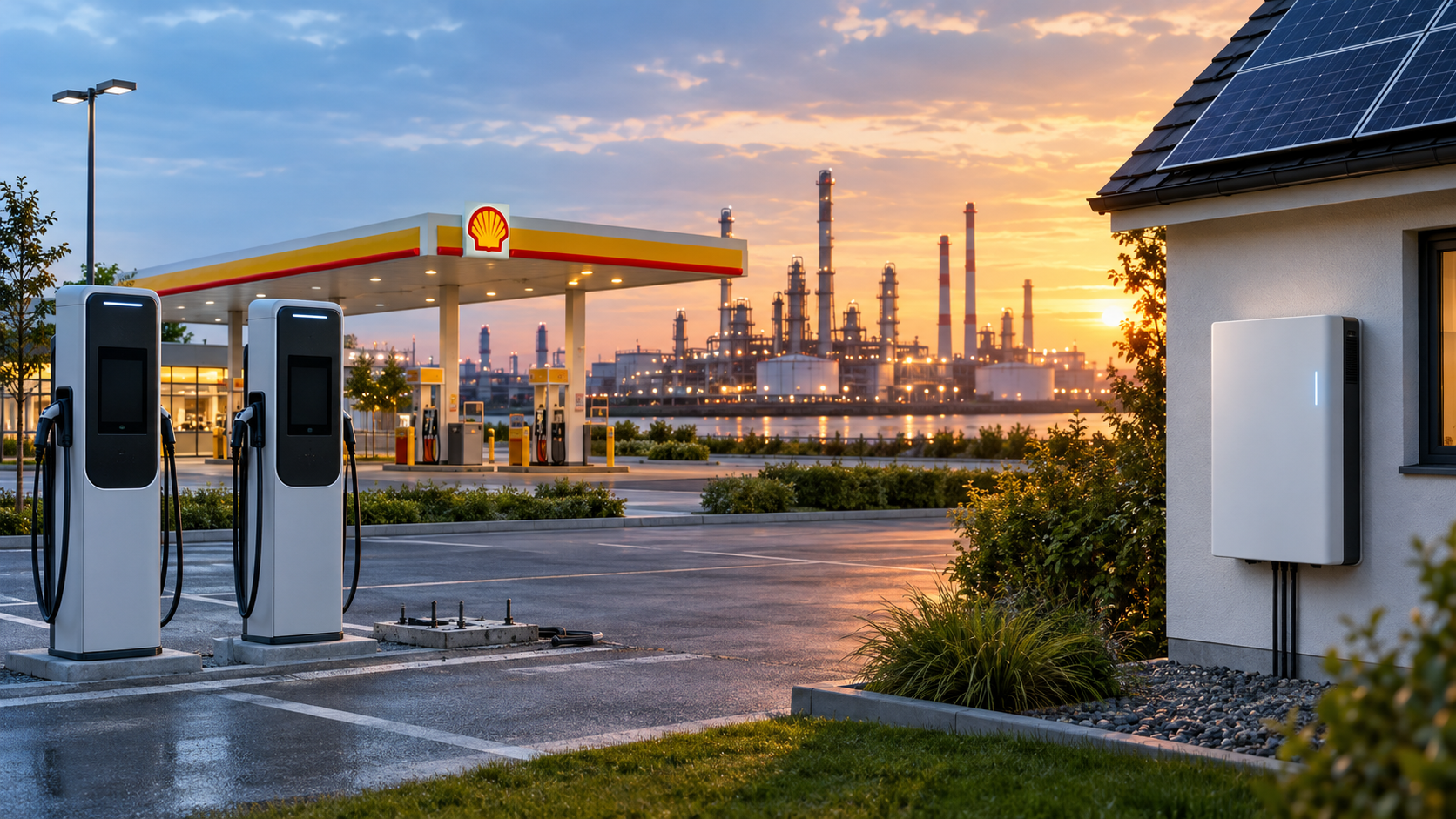
Solar insolvency and Volta sale: Shell withdraws from green businesses – What customers need to know now – Creative image on the topic, with AI: Xpert.Digital
Charging stations, storage, software: When Shell's energy transition investments falter
Shell, Volta and Sonnen: What's behind their withdrawals from green technologies
Green technology bought – and then abandoned? What the Shell cases really show
Shell invested in charging infrastructure, battery storage, and digital energy services – but several of these businesses were later restructured, sold, or discontinued. The consequences range from the necessary software migration for municipal charging stations to uncertainty for customers of the storage manufacturer Sonnen. The story is more nuanced than the accusation that an oil company deliberately eliminated green competitors: In Volta's case, a significant portion of the business was later agreed upon for acquisition, and in Sonnen's case, an insolvency filing is not synonymous with a completed liquidation. However, these cases highlight a fundamental risk: Those who invest in a technical system for the long term can remain dependent on software, services, and business models that a company later abandons. What exactly happened at Greenlots, Volta, and Sonnen – and what operators and customers should now be aware of.
Shell's green U-turn: When future technologies fail due to profitability
Green bought, risk sold – the bill remains
The stories of Shell, Greenlots, Volta, and Sonnen illustrate a fundamental conflict inherent in the energy transition: customers invest in long-lasting technology, while companies can change their strategic priorities at any time. What begins as a step towards a climate-friendly future can later end in software shutdowns, divestitures, or sweeping restructuring. The economic consequences then affect not only the original investors but also households, communities, employees, and business partners.
The situation is more complex than the narrative of an oil company systematically buying up and then eliminating green energy competitors. In the case of Sonnen, Shell's complete takeover occurred in 2019, not in 2018; in the case of Volta, the announced shutdown was later followed by an agreement for another operator to take over significant parts of the network. These differences are crucial because an objective assessment must distinguish between verifiable decisions, economic reasons, and presumed intentions.
The most compelling accusation, therefore, is not that a deliberate obstruction of the energy transition has been proven. It lies in a structural problem: long-term customer investments can lose value due to short-term owner decisions. A credible energy transition thus requires not only capital for new technologies, but also rules and business models that ensure their long-term viability.
Three cases, different fracture points
Greenlots, Volta, and Sonnen represented different building blocks of an electrified energy system: software for charging infrastructure, a public charging network with advertising, battery storage, and networked energy services. The economic problems that became apparent during their withdrawal or changes of ownership were correspondingly diverse.
In the case of Greenlots, or rather Shell Sky, the issue was the discontinuation of a digital operating platform for charging devices from third-party owners. In the case of Volta, the closure of a combined charging and media business was initially announced, before a takeover of significant assets was later agreed upon. In the case of Sonnen, the sale by Shell in the summer of 2026 was followed by a confirmed insolvency filing by the German company in October.
A software shutdown, an infrastructure sale, and a bankruptcy filing are not economically identical processes. They can have different causes and require different solutions. What they have in common, however, is that the long-term use of a facility depends on decisions that its owner can only influence to a limited extent.
For a household, it's of secondary importance whether a digital function is discontinued due to lack of profitability, a new corporate strategy, or financial difficulties. What matters is which services are retained, what alternatives exist, and who bears the additional costs. This perspective is often missing when corporate decisions are described solely as portfolio optimization.
Greenlots: The plug is in the cloud
Shell acquired Greenlots in January 2019; the company developed, among other things, software for managing charging infrastructure for municipalities, businesses, vehicle fleets, and energy suppliers. The technology was intended not only to enable individual charging processes but also to organize the operation of larger networks.
In late December 2024, it was announced that Shell would discontinue support for its Shell Sky platform for third-party commercial chargers in the US and Canada on April 30, 2025. This did not mean the end of Shell's entire international charging operation. It affected a specific business model: providing a digital operating environment for third-party infrastructure.
This distinction is important from an economic perspective. A municipality may have purchased a charging station, paid for the grid connection, and set up the parking spaces. Nevertheless, its regular operation may depend on an external platform. Without suitable software, authorization, billing, monitoring, and other functions can be impaired, depending on the system.
Ownership of the hardware does not automatically imply control over its full usability. A physically intact device can lose economic value if its digital operating foundation is lost.
However, this does not mean that every affected charging station will necessarily become permanently unusable. Shell Sky used the open communication protocol OCPP, which in principle made migration to other compatible management platforms possible. The crucial question was therefore not only whether a switch was technically feasible, but how quickly and at what cost it could actually be implemented.
Seattle reveals the cost of the move
Seattle City Light, the municipal energy provider, had to migrate 72 public charging points to a new management platform, including 14 DC fast chargers and 58 slower chargers at a total of 37 locations. Following a pilot phase in February 2025, the wider migration began in March; the last charging point switched to ChargePoint in June.
This example demonstrates that discontinuing a software platform does not necessarily mean the end of the connected infrastructure. Open technical standards can protect existing investments and enable continued operation.
At the same time, the switchover wasn't a free, automatic process. Seattle deployed a project team as well as external contractors and technicians to manage the transition within a few months. A successful provider change therefore required organizational capacity, technical work, and communication with users.
This is precisely where the problem lies for smaller operators. A city with its own technical department has different resources than a single business with just a few charging points. The same strategic withdrawal by a software provider can therefore have very different economic consequences.
Against this backdrop, OCPP is an important safeguard, but not a complete substitute for careful contract drafting. Operators should not only demand formal support for open protocols. They also need access credentials, sufficient documentation, exportable operational data, and a traceable migration path. Only this combination transforms theoretical openness into a practically usable alternative.
Volta: The shutdown was not the final chapter
Shell completed the acquisition of Volta in March 2023 for an equity purchase price of approximately US$169 million. The deal at that time included more than 3,000 charging points in 31 US states and territories, as well as a development pipeline of more than 3,400 additional charging points.
Volta combined charging infrastructure with digital outdoor advertising: screens at the stations were intended to generate additional revenue and thus support the financing of the charging service. The locations included shopping centers, supermarkets, and pharmacies.
In August 2025, the planned closure of Volta Charging and Volta Media was announced; this included dismantling a network of more than 2,000 charging stations and discontinuing the media business in November, affecting approximately 190 employees. Opportunities to apply for positions in other Shell divisions were announced for some of the employees.
This decision was momentous. However, it should not stand as the complete description of what happened next.
In November 2025, Australian charging and media provider JOLT agreed to acquire a significant portion of Shell's Volta Media Network. The announced transaction encompassed thousands of charging and media locations; its closing was initially scheduled for January 1, 2026, and was subject to conditions.
This does not prove either the continued operation of every single former Volta site or the complete implementation of the original decommissioning plans. However, one thing is clear: the blanket statement that Shell dismantled the entire network without replacement ignores the subsequently agreed transfer of significant parts. This development, in particular, considerably alters the economic assessment.
A weak business is not worthless
The subsequent JOLT agreement highlights an important distinction: A business can be unattractive to an owner without becoming economically worthless under every conceivable operator.
Shell wanted to focus more on fast-charging at its own or branded locations for public charging. JOLT, on the other hand, explicitly pursues a combined business model of charging infrastructure and digital out-of-home advertising. Assets that no longer fit the strategy of one company may be better placed organizationally in the other.
This doesn't prove that JOLT will make a profit with every acquired location. However, it shows why a closure shouldn't be judged solely on the basis of previous corporate affiliation.
Volta reported a loss of approximately US$140 million for 2024; this figure should be understood as a published estimate and not as a separately audited annual report. Such a financial burden provides a justifiable reason for restructuring or sale.
However, this does not automatically mean that all locations contributed the same amount to the losses. A network typically contains varying site qualities, contractual terms, and investment needs. Without corresponding individual data, neither a complete continuation nor a complete dismantling can be convincingly justified.
It is therefore economically sensible to examine whether partial sales, changes of operator, or technical adjustments could yield more value than a single, unified transaction. The subsequent agreement with JOLT at least demonstrates that such a transfer option did indeed exist.
Why advertising doesn't automatically finance the store
Volta's basic principle initially sounds attractive: people charge their vehicles while shopping, retailers gain an additional service, and advertisers finance part of the infrastructure.
The difficulty lies in merging two separate markets. An attractive charging location is not automatically a particularly valuable advertising location. Conversely, a highly visible screen can be economically viable, while the connected charging station is underutilized.
When it comes to charging, factors such as connection costs, electricity consumption, capacity utilization, and technical availability are important. In the advertising business, reach, target group quality, marketing, and measurable impact are crucial. Anyone offering both services needs corresponding expertise in both areas.
Additional revenue streams can improve profitability. However, they can also create additional costs and organizational complexity. It becomes particularly problematic when optimistic expectations from one area mask the inadequate profitability of another.
A sound investment analysis must therefore examine separately the actual economic contribution of charging capacity and advertising. Furthermore, it should be evident whether the overall system remains viable even with weaker advertising revenue or slower growth in electromobility.
The failure of a single provider does not fundamentally invalidate the combined model. Likewise, the acquisition by a specialized competitor does not prove its long-term success. What matters are the actual costs, contracts, and revenues, not the attractiveness of the original business idea.
Sun: The famous name offered no protection
For a precise understanding of Sonnen, the correct chronology is key. Shell acquired a stake in the energy storage company in May 2018; the full takeover was agreed upon in February 2019. The common assertion that Sonnen was fully acquired in 2018 therefore conflates two distinct events.
The company was among the pioneers of smart home energy storage, combining its battery technology with digital energy services and the networking of households. Its economic significance therefore lay not solely in the sale of individual devices. Sonnen stood for the possibility of integrating decentralized systems into a controllable energy system.
In August 2026, Shell confirmed the completed sale to Tiven, the family office of Gert Purkert, a co-founder of Aurelius. The connection to Aurelius must not lead to all the companies involved being treated as legally or economically equivalent.
On October 22, 2026, Sonnen GmbH's insolvency application was confirmed; the approximately 400 remaining employees at the headquarters were informed of the developments. Business and services were initially to continue for more than 150,000 existing customers, while liquidation or self-administered insolvency proceedings were planned for numerous subsidiaries.
However, filing for insolvency is not the same as having completed a liquidation. Furthermore, the announced continuation of customer business is not a comprehensive guarantee that all existing services will remain unchanged for the entire lifespan of the equipment.
Behind the pioneer image lay heavy losses
The available financial figures for Sonnen GmbH already show a significant economic deterioration before the change of ownership. Documents filed with the lobby register for 2024 show a turnover of approximately €78.4 million, compared to approximately €263.5 million in 2023; at the same time, the net loss increased from approximately €8.8 million to approximately €106.6 million.
The decline in revenue thus amounts to approximately 70 percent. It is particularly striking that the reported annual loss for 2024 was higher than the revenue for the same year.
The significance of these figures must be clearly defined. The attached file is labeled as a draft and pertains to Sonnen GmbH, not automatically to all companies within the international group. Therefore, it should not be treated as a fully audited consolidated financial statement without careful examination.
Despite this limitation, a serious problem becomes apparent. Personnel expenses in 2024 amounted to approximately €52.3 million, only slightly below the previous year's level, even though sales revenues declined significantly. This indicates a cost structure that could not be adapted to the weaker business performance nearly quickly enough.
However, a net loss for the year is not the same as a direct cash outflow. Depreciation, write-downs, and other accounting effects can influence the result. Without further information, it is therefore impossible to reliably determine what proportion of the losses was attributable to ongoing production, organizational problems, or special circumstances.
However, the figures clearly contradict the notion that high demand in previous boom years automatically created a permanently profitable company.
New: Patent from the USA – install solar parks up to 30% cheaper and 40% faster and easier – with explanatory videos!

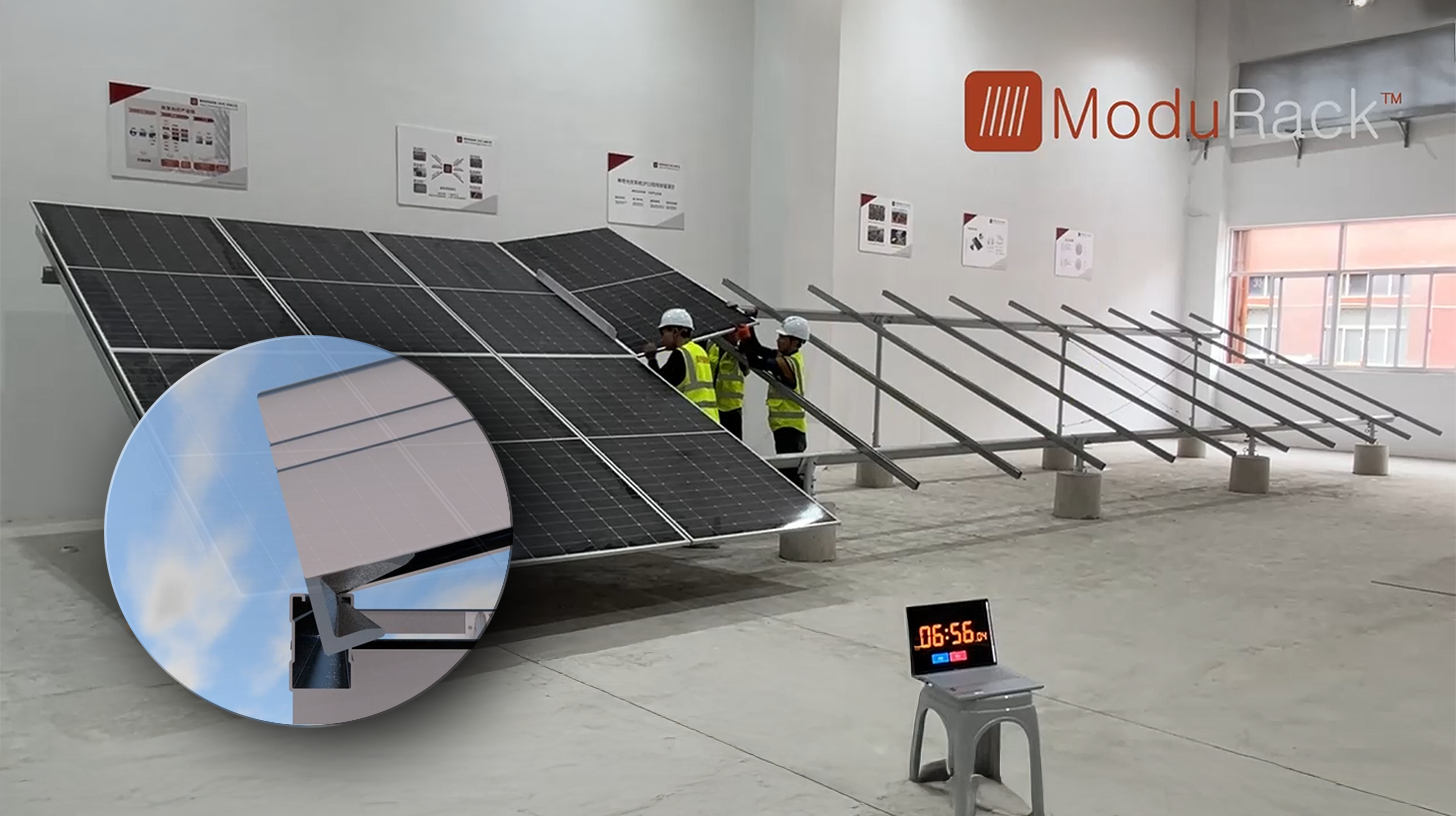
New: Patent from the USA – Install solar parks up to 30% cheaper and 40% faster and easier – with explanatory videos! - Image: Xpert.Digital
The core of this technological advancement is the deliberate departure from conventional clamp mounting, which has been the standard for decades. The new, more time- and cost-effective mounting system addresses this with a fundamentally different, more intelligent concept. Instead of clamping the modules at specific points, they are inserted into a continuous, specially shaped support rail and held securely in place. This design ensures that all forces – whether static loads from snow or dynamic loads from wind – are distributed evenly across the entire length of the module frame.
More information here:
The need for an orderly retreat in the energy transition
The storage market is still growing
The crisis of one well-known manufacturer is not the same as a crisis of the entire technology. In Germany, around 493,000 new stationary battery storage systems with a combined capacity of 8.2 gigawatt-hours were registered for the first nine months of 2026; taking into account expected late registrations, the number of installations was estimated at around 534,000.
The newly installed capacity was thus 91 percent higher than in the same period of the previous year. Large-scale storage systems saw particularly strong growth: their newly installed capacity increased from around 0.9 to 3.8 gigawatt-hours in the comparison under review.
The segment of home storage systems between five and 20 kilowatt hours also increased; the number of newly registered systems rose from around 261,000 to 303,000, and the associated capacity from about 2.6 to 3.2 gigawatt hours.
This means that Sonnen's crisis cannot be convincingly explained by a general collapse in storage demand. However, a growing overall market does not protect individual companies from losses.
Manufacturers can lose market share, incur excessively high costs, or offer products whose price-performance ratio is no longer convincing. Furthermore, home storage systems, commercial storage systems, and large grid-connected systems differ significantly in terms of sales, financing, and technical requirements.
A supplier with a strong position among private households does not automatically benefit from the boom in large battery storage systems. Technological proximity is no substitute for suitable products or the ability to serve new customer groups economically.
Falling battery prices increase the pressure
International price developments are intensifying this pressure to adjust. The average price for lithium-ion battery packs fell to US$115 per kilowatt-hour in 2024 and was US$108 in 2025; for stationary storage packs, an average of around US$70 per kilowatt-hour was determined for 2025.
These figures should not be confused with the end-customer price of a fully installed home energy storage system. Inverter, control system, installation, sales, and service are not fully included.
Nevertheless, falling battery prices are changing the competitive landscape. Customers expect more affordable offers, competitors can price new systems more cheaply, and older inventories may lose value.
This creates a difficult transition for manufacturers. Existing organizations were often built based on previous price and growth assumptions. If sales prices fall faster than administrative, development, and distribution costs, margins come under pressure.
High technical standards alone are not enough. Premium prices must be justified by demonstrable advantages, such as particularly good integration, reliable service, or additional economic applications.
The insolvency of an established provider in particular reveals an unpleasant limit: A long warranty promise and a well-known brand can create trust, but they do not replace sustainable financing for the service business.
The US business contradicts the total shutdown
Sonnen's development in the US necessitates further differentiation. The US unit reported a doubling of its sales and a tripling of its production in October 2026 compared to the previous year; deliveries of more than 180 megawatt-hours of home storage capacity were expected for the full year.
These figures are based on company data and, in some cases, expectations, not on final audited annual results. Nevertheless, they do not support the blanket notion that all parts of the Sonnen Group have become equally economically insignificant.
Virtual power plants were cited as a key driver of growth; according to the company, more than 6,000 households in Texas were already integrated into such a model.
A virtual power plant combines decentralized systems and markets their collective controllability. Economically, this can generate more than the sum of individual storage systems, which only increase a household's own consumption.
Whether these added benefits actually become profitable depends on the specific market. Relevant factors include access, remuneration rules, technical availability, and the distribution of revenue between operators and households.
The US example proves neither a guaranteed rescue nor the fundamental superiority of any particular business model. However, it demonstrates that the same basic technical idea can produce very different results under different market conditions. A sound restructuring must take such differences into account.
Shell's capital follows return expectations
For Shell, new energy services are competing with established business areas for capital. The central management question is not solely which technology is socially desirable, but which investment promises an appropriate risk-adjusted return.
In 2025, the company generated operating cash flow of approximately US$42.9 billion and made cash-effective investments of approximately US$20.9 billion. At the same time, approximately US$22.4 billion was returned to shareholders, including US$13.9 billion for share buybacks and US$8.5 billion in dividends.
These figures show that Shell as a whole had considerable financial resources. However, they do not prove that every loss-making investment could have been sustainably restructured through additional financing.
The key distinction is this: A company can absorb further losses without thereby financing a viable future. The crucial factor is whether additional funds offer a realistic prospect of a sustainable business model.
Conversely, high dividend payouts are not a natural law requirement. They are part of an active capital allocation strategy. When a corporation returns substantial funds to shareholders while simultaneously reducing certain future-oriented businesses, it reveals its priorities.
This is understandable from a corporate management perspective focused on return on capital. However, it should not be confused with the expectation that a financially strong owner will sustain any technology through any lengthy start-up and crisis phases.
No complete abandonment of electromobility
Another figure contradicts an undifferentiated narrative of withdrawal. The number of public charging points owned by Shell or operating under its brand increased from approximately 73,000 at the end of 2024 to approximately 88,000 at the end of 2025.
This metric is not the same as the total number of charging points reachable via roaming. Nor does it automatically describe only fully owned locations.
However, this development shows that Shell has not completely abandoned public charging. Rather, the company has changed its choice of business models and focused more strongly on areas that fit its own strategy.
For an established mobility provider, owning or operating branded fast-charging stations can offer several advantages: direct customer contact, control over the service, and additional revenue from other services. In contrast, a software platform for third-party operators or an advertising-financed charging network requires a different economic and organizational approach.
From a macroeconomic perspective, this focus remains ambivalent. An additional fast-charging hub does not automatically replace slower charging at a residential or shopping location. Different charging options meet different needs.
Therefore, the sheer number of installed charging points is only of limited significance. Location, accessibility, price, and reliability also play a crucial role in the quality of the charging service. A growing overall network can simultaneously lead to the loss of locally important services.
Intention and effect are not the same
The suspicion that established companies might acquire young competitors to limit a threat to their existing business is, in principle, a matter for economic debate. However, in this specific case, this does not yet prove a deliberate strategy of prevention.
This would require additional information. This could include internal decisions, deliberately blocked transfer options, or solid evidence that a promising business was intentionally devalued despite realistic alternatives.
Furthermore, the likely development without an acquisition must be considered. A start-up that would have failed earlier without new capital does not automatically become a victim of an anti-competitive strategy simply because it later closes down.
Conversely, multi-year financing does not eliminate every possible future obstacle. Investments may initially be strongly focused on growth and later give way to a more defensive strategy.
For the assessment, therefore, the distinction between motive and effect is crucial. A company can negatively impact the energy transition without intentionally trying to prevent it. If sites are abandoned, digital services discontinued, or services rendered unreliable, real disadvantages can arise, even if the decision is economically justified from the company's perspective.
This more precise critique is stronger than a blanket accusation of sabotage. It focuses on demonstrable consequences and on the question of how similar risks can be limited in the future.
The invisible costs of withdrawal
A consolidated financial statement primarily shows costs incurred by the company itself. A macroeconomic financial statement goes further.
An operator may have to implement a new software platform. A site partner may lose a contract for which they have already provided space or made structural adjustments. A household may have to expect higher maintenance costs or the loss of additional compensation.
Not every one of these disadvantages automatically constitutes legally compensable damage. Nevertheless, they can be significant economically.
The shifting of risks becomes particularly problematic when customers could hardly recognize them at the time of the original purchase. A well-known corporate logo can convey a sense of stability, even though the specific contract does not contain any corresponding long-term safeguards.
This creates a gap between perceived security and the actual promised performance. This gap can influence investment decisions and later damage trust.
The appropriate response is not to continue every loss-making venture indefinitely. Rather, an orderly exit strategy should be part of the business model. Sufficient lead times, transfer options, and clear lines of responsibility can significantly reduce subsequent costs.
The economic quality of a system is therefore not only evident in normal operation. It is also evident in how well customers and partners cope with a change in strategy by the provider.
Sun customers need clarity, not panic
For existing customers, it is important to understand that an insolvency filing does not automatically mean an immediate technical shutdown. According to the initial plan, Sonnen's existing customer business should continue.
This does not imply the need for a precautionary storage replacement, nor does it guarantee that all services will remain unchanged in the long term. Therefore, a structured inventory is advisable.
Purchase and installation contracts, invoices, proof of payment, warranty conditions, commissioning documents, and maintenance logs should be backed up independently of any customer portal. Serial numbers, error logs, and previous correspondence are also helpful.
The precise identity of the contracting parties is particularly important. Equipment sales, installation, electricity supply, and participation in a virtual power plant can be legally distinct services provided by different companies. Even within the Sonnen structure, storage production and certain energy services were assigned to different companies.
Anyone still waiting for an ordered system should clarify the delivery status and further processing in writing. Additional unsecured advance payments generally increase the financial risk; however, this does not give rise to a blanket right to withhold all contractually owed payments.
Customer communication also deserves a dispassionate assessment. It cannot be reliably determined whether all affected parties were informed immediately by the relevant deadline. Therefore, incomplete information should not be replaced by unsubstantiated certainties. Especially in this situation, concrete details regarding service, contact persons, and payment methods are more important than general reassurances.
Guarantee promises are not a default insurance
Statutory liability for defects and manufacturer's warranty must be considered separately. Warranty claims are generally directed against the seller or the contractual partner responsible for the agreed service, not automatically against the manufacturer.
If an independent specialist company sold the system, the manufacturer's insolvency does not automatically eliminate its own obligations to the customer. However, obtaining spare parts or technical support may become more difficult.
General statements regarding warranty periods are risky. Newly purchased goods are typically covered by a two-year warranty; for photovoltaic systems, longer periods may apply depending on the type of contract and installation situation. The decisive factor is the legal classification of the specific contract.
It would be equally wrong to claim that a voluntary guarantee does not, in principle, establish any legal claim. The decision to offer a guarantee is initially voluntary; however, if it is validly issued, it can create legally binding rights.
In insolvency proceedings, the problem often lies in enforceability. A legally valid claim can be worth significantly less economically if the debtor is not sufficiently solvent.
The insolvency of the seller and the insolvency of the manufacturer must also be distinguished: Claims arising from a manufacturer's warranty may remain unaffected by the insolvency of a legally independent dealer.
This leads to an important lesson for future purchasing decisions. It's not just the length of a warranty that matters, but also who issues it, what services it covers, and whether additional insurance is available.
Electricity remains available, but additional benefits are not necessarily guaranteed
In principle, the insolvency of the supplier does not automatically create a special right of termination under an electricity supply contract; as long as supply continues, the agreed contract terms and notice periods apply.
Prematurely terminating or unilaterally stopping ongoing payments can therefore cause new problems. Changes to payment processing should be reviewed based on reliable notifications.
If the supply is indeed interrupted, the local default or substitute supplier takes over for standard household connections. The insolvency of the previous supplier therefore does not normally mean that the household will suddenly be without electricity.
Financially, the situation can still be disadvantageous. Substitute supply is often more expensive than a regular tariff; customers can switch to a new supplier without observing a notice period.
When switching energy suppliers, the meter reading should be documented and communicated to the relevant parties. This makes it easier to distinguish between consumption from the previous and future suppliers.
This power supply guarantee, however, does not replace other services. It does not guarantee the continued operation of a specific app, nor does it guarantee revenue from a virtual power plant.
A household can therefore continue to receive a reliable electricity supply while simultaneously losing the economic advantages that were important for the original storage investment. Especially with bundled offers, the basic technical functionality, electricity tariff, warranty, and marketing agreement must be examined separately.
The energy transition needs an orderly phase-out
The political and economic lesson from these cases is not to prevent every takeover by an established energy company. Such buyers can provide capital, market access, and industrial capabilities that young companies lack.
What is needed is stronger protection for long-term customer investments. Anyone selling technology designed for many years should be required to explain how its essential functions can be maintained in the event of a change of ownership, business closure, or insolvency.
For digitally controlled infrastructure, this includes open interfaces, data access, documented migration paths, and appropriate transition periods. For particularly critical software, suitable documentation or source code repositories can also be beneficial. However, this is only helpful if another operator can actually take over the system legally and technically.
Long-term service commitments should also be evaluated more transparently. Customers must be able to distinguish whether a promise depends solely on the manufacturer's future solvency or is additionally secured.
Such safeguards incur costs. This is not an argument against them, but rather makes visible a previously often hidden aspect of the investment.
This creates a concrete competitive opportunity for companies. Those who offer continued operating rights, reliable service, and genuine transferability are not just selling technology, but also reduced risk.
The decisive measure for a credible energy transition is therefore not how many green companies a corporation acquires. What matters is whether the infrastructure already paid for remains usable even if its strategy changes. Future viability doesn't begin with the acquisition promise. It is demonstrated by what still functions after the owner's departure.
Your partner for business development in the fields of photovoltaics and construction
From industrial rooftop PV to solar parks and larger solar parking lots
☑️ Our business language is English or German
☑️ NEW: Correspondence in your native language!

Konrad Wolfenstein
I and my team are happy to be available to you as your personal advisor.
You can contact me by filling out the contact form here wolfenstein@xpert.digital:or simply call me at +49 7348 4088 965. My email address is
I'm looking forward to our joint project.