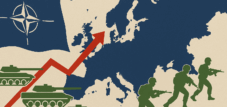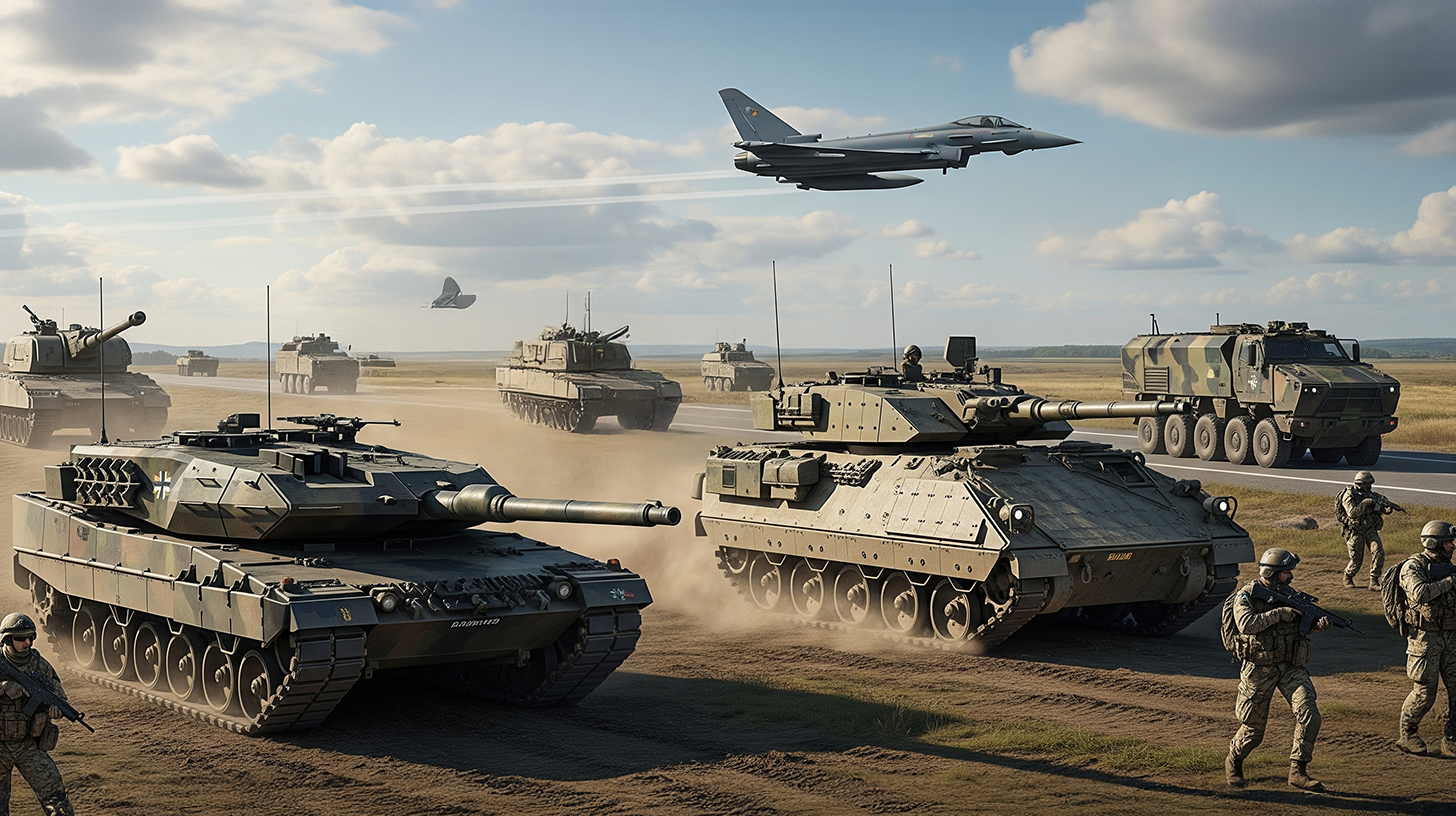
What measures are Europe and NATO taking in response to the "Zapad-2025" military exercise by Belarus and Russia? – Creative image: Xpert.Digital
Military exercise Zapad-2025: Is there a risk of escalation on Europe's eastern border?
The threat situation posed by Sapad-2025
The Russian-Belarusian military exercises "Zapad-2025" (meaning "West"), planned for September 2025, pose a serious challenge to European security. Initial announcements indicated that approximately 13,000 soldiers would participate in the exercises, although Western intelligence agencies estimate the number to be significantly higher, up to 100,000 troops.
The exercises are particularly worrying because the previous Zapad maneuvers in 2021, involving 200,000 soldiers, served as preparation for a potential Russian invasion of Ukraine. Security experts like military historian Sönke Neitzel warn that "this summer could be the last summer we experience in peace." The greatest concern is not a new attack on Ukraine, but rather possible aggression against NATO members such as Poland or the Baltic states.
Although Belarus announced in May 2025 that it would scale down the exercises and move them inland, it later threatened to reverse this decision in light of NATO activities. These contradictory signals are interpreted as part of a deliberate strategy to unsettle the West.
NATO military response
Increased presence on the eastern flank
NATO has significantly increased its military presence on its eastern flank. Germany plays a key role in this with the deployment of Panzer Brigade 45 to Lithuania. This brigade comprises up to 5,000 soldiers and represents the first permanent deployment of German troops abroad since World War II. The brigade is scheduled to be fully operational by 2027 and is equipped with state-of-the-art Leopard 2A7 main battle tanks and Puma infantry fighting vehicles.
In addition, since 2017 Germany has led the multinational NATO Battlegroup in Lithuania, currently comprising approximately 1,700 soldiers. This Enhanced Forward Presence (eFP) serves as a deterrent and was established following Russia's annexation of Crimea in 2014.
Related to this:

Large-scale maneuvers as a response
As a direct response to Zapad-2025, the German Armed Forces, together with 13 other NATO states, are conducting the "Quadriga 2025" exercise series. During the core exercise period from August to September 2025, approximately 8,000 German soldiers will practice protecting the Baltic Sea region under wartime conditions. The main focus areas are:
- The relocation of troops and equipment to Lithuania
- Crossing strategically important rivers such as the Vistula
- Securing the Suwalki Gap, the narrow corridor of only 100 kilometers between Poland and Lithuania
Germany is deploying Eurofighter jets to Poland for the first time to secure its airspace during Russian exercises. Poland is planning its own large-scale maneuvers with 34,000 troops in response to Zapad-2025, while Lithuania is conducting its national defense exercise, "Thunder Strike.".
Strategic defense planning
NATO has adopted new capability targets, classified as top secret, which envisage a massive military buildup. The priorities are:
- Long-range weapons systems and air defense
- Mobile Land Forces
- Protection of critical infrastructure
- Cyber and space capabilities
Germany plans to increase its defense spending to €152.8 billion by 2029. NATO member states aim for defense spending of 5 percent of their gross domestic product in the medium term.
Political and diplomatic measures
EU defense initiatives
The European Union has launched comprehensive defense initiatives with the "ReArm Europe" plan and the "Readiness 2030" White Paper. The package includes:
- The mobilization of up to 800 billion euros for defense investments
- The new EU instrument SAFE (Security Action For Europe) with 150 billion euros for joint armaments projects
- Activating the escape clause in the Stability and Growth Pact for national defence spending
Strengthening NATO through new members
The accession of Finland (April 2023) and Sweden (March 2024) to NATO significantly strengthens the alliance. This extended NATO's border with Russia by 1,340 kilometers. Both countries bring modern, well-equipped armed forces, including Finland's order of over 60 F-35 fighter jets.
Coordinated deterrence strategy
NATO pursues a strategy of "credible deterrence." Key elements include:
- The reaffirmation of the mutual assistance obligation under Article 5 of the NATO Treaty
- The development of new defense plans for different threat scenarios
- Reducing reaction times through advanced presence
Protection against hybrid warfare
Defense against sabotage and cyberattacks
Europe faces an increasing hybrid threat from Russia. The attacks include:
- Acts of sabotage against critical infrastructure such as Baltic Sea cables
- Cyberattacks on government institutions
- Drone flights over military restricted areas
- Espionage activities
Germany is therefore building up homeland defense regiments from reservists to protect critical infrastructure in case of emergency. The EU is also planning a National Security Council with expanded powers to counter hybrid threats.
Combating disinformation
Russia is conducting massive disinformation campaigns against Germany and Europe. The "Doppelgänger" campaign uses fake news sites and over 50,000 social media accounts to spread misinformation. The "Storm-1516" campaign was also activated for the 2025 German federal election.
The countermeasures include:
- Educating the public about disinformation methods
- Use of artificial intelligence to detect fake news
- Increased cooperation between security authorities and the media
- Deletion of identified disinformation accounts
Special challenges
The Iskander threat
The deployment of Russian Iskander missile systems in Belarus is of particular concern. These systems can be equipped with nuclear warheads and have an official range of 500 kilometers, although newer versions could reach up to 1,000 kilometers. From Belarus, this would put large parts of Germany within range.
The Suwalki vulnerability
The Suwalki Gap between Poland and Lithuania is considered the "most dangerous place in the world." Russia could theoretically occupy this corridor from Belarus and Kaliningrad within 30 to 60 hours, thereby cutting off the Baltic states from the rest of NATO. Securing this strategically critical region is therefore a top priority.
Europe's defense capabilities without the USA
Given the uncertainty surrounding future US support, Europe must strengthen its own defense capabilities. Analyses show that without the US, Europe would need approximately 300,000 additional troops and an extra €250 billion annually for defense. Critical capability gaps exist in:
- Strategic air transport and aerial refueling
- Satellite-based reconnaissance
- Long-range precision weapons
- Integrated air and missile defense
Long-term strategies
Expansion of the defense industry
Europe is investing heavily in expanding its arms industry. Priorities include:
- Joint European armaments projects
- Reduction of approval processes from years to 60 days
- Building up strategic munitions reserves
- Development of new technologies such as drone defense systems
Related to this:
- Analysis of the security and resilience of rail and road infrastructure against sabotage and attacks

Strengthening societal resilience
The Baltic states are building a "Baltic Defence Line" with bunkers, tank barriers, and minefields along the border with Russia. At the same time, the civilian population is being prepared for potential crises through:
- Evacuation plans for border regions
- Building up emergency reserves
- Training courses on protection against cyberattacks
- Strengthening psychological resilience against disinformation
Between deterrence and escalation: Europe's security policy challenge
Europe's and NATO's response to Zapad-2025 demonstrates a comprehensive realignment of security policy. The measures range from massive military buildup and the expansion of collective defense to protection against hybrid threats. This makes it clear that Europe's security can no longer be taken for granted.
The deployment of German troops in Lithuania, the conduct of counter-measures, and the massive increase in defense spending send a clear signal of resolve. At the same time, preparations for various threat scenarios demonstrate that Europe has learned the lessons of the Russian attack on Ukraine.
The greatest challenge remains striking a balance between credible deterrence and avoiding uncontrolled escalation. Europe must strengthen its defense capabilities without spiraling into an arms race that ultimately serves no one's security.
Related to this:
Consulting - Planning - Implementation

Markus Becker
I would be happy to serve as your personal advisor.
Head of Business Development
Chairman SME Connect Defense Working Group
Hub for Security and Defense - Advice and Information
Hub for Security and Defense - Image: Xpert.Digital
The Security and Defence Hub offers expert advice and up-to-date information to effectively support companies and organizations in strengthening their role in European security and defence policy. Working closely with the SME Connect Defence Working Group, it particularly promotes small and medium-sized enterprises (SMEs) that wish to further develop their innovative capacity and competitiveness in the defence sector. As a central point of contact, the Hub thus creates a crucial bridge between SMEs and European defence strategy.
Related to this: