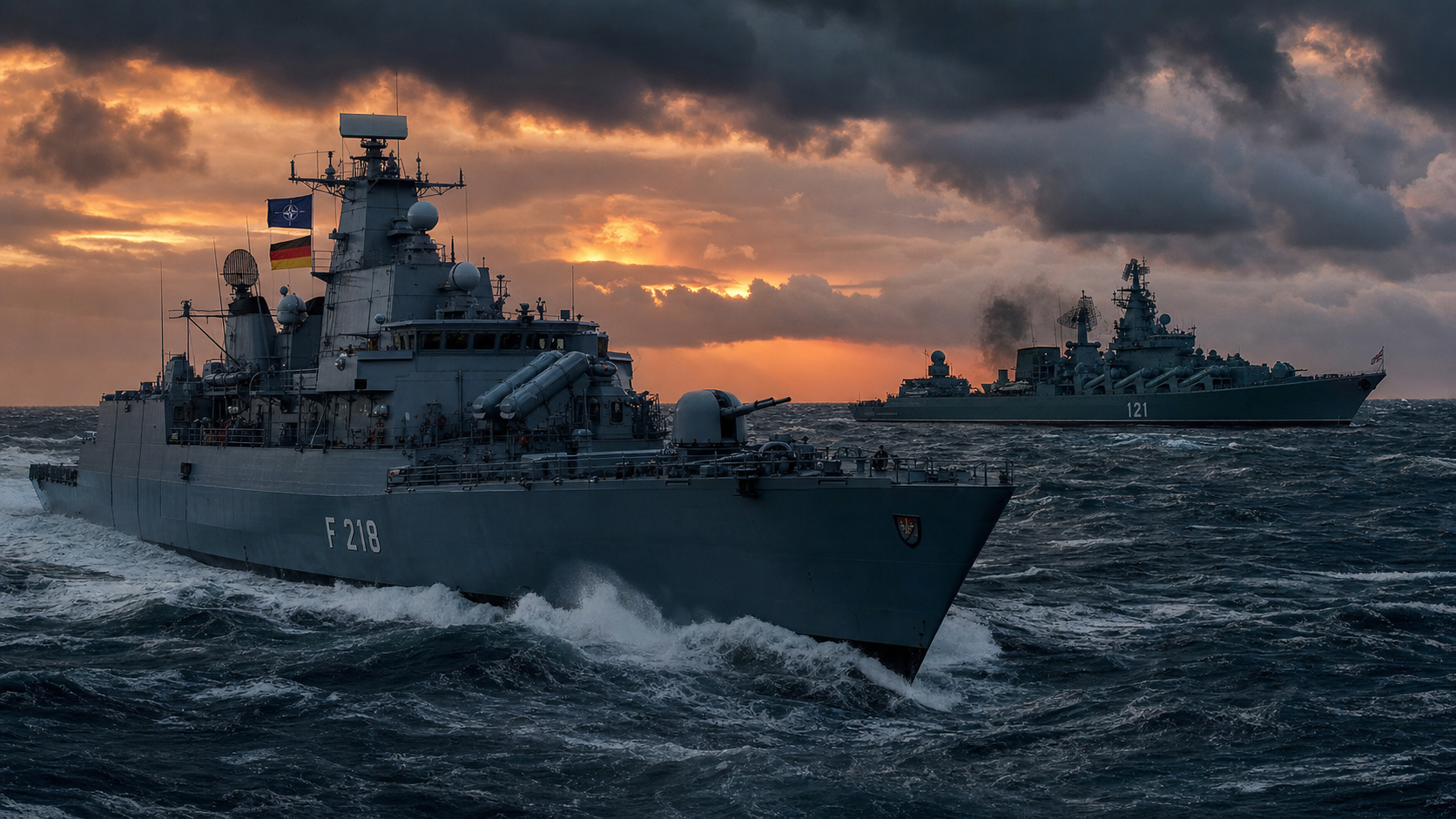
Russia's new power game – the Baltic Sea, Armenia and the costs of confrontation – Creative image: Xpert.Digital
Warships and shadow fleet: How Russia is turning the Baltic Sea into the stage for a hybrid war
“Like in Ukraine”: Putin’s cold-blooded threat against Armenia alarms Europe
Destroyers off Fehmarn, threats in the Caucasus: Putin's explosive two-front plan
Russia is escalating its geopolitical course in two crucial theaters of operations, retesting the West's red lines: While a heavily armed Russian destroyer in the Baltic Sea, just off the German coast, is triggering NATO's heightened alert, Vladimir Putin is issuing open threats against Armenia. Both developments—the military show of force in European waters and the aggressive rhetoric in the Caucasus—are not isolated incidents, but rather part of a precisely choreographed, hybrid strategy by Moscow. The Kremlin is demonstrating unequivocally that, despite the grueling war in Ukraine, it is willing and able to defend its spheres of influence and economic lifelines by any means necessary. Whether through the military protection of its sanctions-evading shadow fleet, acts of sabotage against critical underwater infrastructure, or the threat of a "Ukrainian scenario" for dissenting neighbors, the global confrontation is reaching a new level of escalation. But this power play comes at a price—one that all players on the geopolitical chessboard will ultimately pay.
Related to this:


When warships replace geopolitics: Moscow's escalation comes at a price – and everyone is paying it
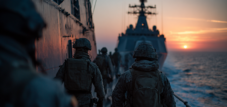
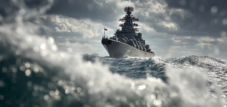
Between Fehmarn and Lübeck Bay, a military exercise has been taking place since the beginning of May 2026 that goes far beyond mere naval practice. The Russian destroyer "Severomorsk"—163 meters long, 7,400 tons, armed with torpedoes, missiles, and naval guns—took over the position off the German coast previously held by the missile corvette "Stavropol," which had been patrolling there since the end of April. The destroyer left the port of Baltiysk in Kaliningrad on May 4 and assumed its new position a few days later. The symbolic and strategic significance of this maneuver can hardly be overstated: For the first time in over a year, two large Russian destroyers were operating simultaneously in the immediate vicinity of German waters.
Russia officially justifies this stance with the protection of its merchant fleet. Artem Bulatov, Special Representative at the Russian Foreign Ministry, had previously stated unequivocally in an interview that escorting Russian-flagged merchant ships with naval warships was a seriously considered option. This follows several incidents in which Russian-connected merchant ships were stopped by Western authorities while transiting the Baltic Sea. What is publicly presented as a protective measure is in reality a precisely choreographed act of geopolitical signaling: Russia is demonstrating its willingness and ability to defend its economic interests by military means – even in the middle of a sea lane lined with NATO members.
NATO reacted immediately. Under the command of Vice Admiral Maryla Ingham, NATO's Standing Naval Force 1 was deployed to the Baltic Sea. The German frigate "Sachsen," which had previously taken on ammunition in Kiel, is serving as the flagship. Additionally, the French guided-missile frigate "Auvergne" was dispatched and directly targeted the "Severomorsk." Paris also sent a patrol boat and a reconnaissance vessel. Thus, two heavily armed military groups are facing each other in one of the world's busiest shipping lanes – in an area of central strategic importance for European energy supply, data transmission, and trade.
The Baltic Sea as the scene of a hybrid war
What is often perceived by the public as mere "muscle flexing" is in reality the military dimension of a hybrid conflict that has been escalating for years. Since the start of Russia's war of aggression against Ukraine in February 2022, critical infrastructure in the Baltic Sea has been repeatedly damaged. The list of incidents is alarmingly long: In the fall of 2023, the Balticconnector gas pipeline between Finland and Estonia was severed, and data cables in the strait were damaged. In November 2024, two more submarine cables were cut within 48 hours – the C-Lion1 connection between Germany and Finland, and a cable between Sweden and Lithuania. Shortly afterward, the Estlink 2 power cable between Estonia and Finland was damaged. Western security agencies directly link these incidents to Russian shadow fleet vessels, which are being used as tools of hybrid warfare.
The economic dimension of these acts of sabotage is considerable. Submarine cables currently carry around 95 percent of global internet traffic. The targeted destruction of this infrastructure can severely disrupt financial transactions, telecommunications networks, and critical supply systems. While the damage from individual incidents may initially appear limited—the connections disrupted in November 2024 were quickly rerouted—the structural effect of the ongoing threat is more difficult to measure: it necessitates massive investments in surveillance, redundancies, and protection. In response, Germany, Norway, and other NATO partners have proposed the creation of five regional CUI (Critical Underwater Infrastructure) hubs, designed to generate real-time situational awareness and enable early detection of sabotage.
On January 14, 2025, the NATO Baltic states decided on the Baltic Sentry mission at a special summit in Helsinki. The operation is under the command of the Joint Forces Command Brunssum and comprises warships, submarines, reconnaissance aircraft, satellites, and drones. Thirteen nations are participating: in addition to Germany, these include Denmark, Estonia, Finland, France, the United Kingdom, Italy, Latvia, Lithuania, the Netherlands, Norway, Poland, and Sweden. NATO Secretary General Mark Rutte made it clear that ships posing a threat to critical infrastructure would face boarding and arrest under international maritime law. The message to Moscow is unequivocal: the Western alliance will not accept the unrestricted use of the Baltic Sea as an instrument of hybrid warfare without protest.
Shadow Fleet and Sanctions Violation: The Economic Achilles Heel
Alongside the military dimension, an economic conflict is unfolding in the Baltic Sea, the scale of which is often underestimated by the public. The Russian shadow fleet—a network of an estimated 1,300 ships worldwide, which, according to the European Policy Centre, handle more than twelve percent of global maritime trade—is the central instrument Russia uses to circumvent Western oil sanctions. While in the spring of 2022 approximately 20 percent of Russian crude oil exports were transported by ship via tankers without connections to Western countries, this figure has now risen to 85 to 90 percent for crude oil and 35 to 45 percent for petroleum products. The core Western instrument for weakening the Russian state budget—the oil price cap—has thus become virtually ineffective for crude oil exports.
The financial consequences for the West are severe. Since the introduction of the price cap, Russia has earned almost €15 billion in additional revenue from exporting crude oil via its shadow fleet tankers, according to data from the Federal Agency for Civic Education – almost two-thirds of that since the beginning of 2024 alone. These revenues flow directly into financing the war effort. The shadow fleet tankers transport an estimated four million barrels of oil per day, enabling Russia to largely maintain its energy exports despite unprecedented Western sanctions. The deployment of warships along the Baltic Sea transit routes is therefore not a secondary matter, but directly linked to protecting these revenue streams.
In response, the outgoing US administration under Joe Biden imposed what it described as its toughest sanctions to date against Russia's energy sector in January 2025. A total of 183 ships – 143 of them oil tankers – were sanctioned. These vessels had transported more than 530 million barrels of Russian crude oil the previous year, representing approximately 42 percent of Russia's total seaborne crude oil exports. Leading cargo analyst Matt Wright of Kpler estimated that these sanctions would significantly reduce the fleet of ships available for deliveries from Russia in the short term and drive up freight costs. The US Treasury Department stated that the measures would cost Russia several billion dollars each month. Whether this calculation proves correct depends, not least, on whether other countries – particularly China and India, the main buyers of Russian oil – are willing to respect or circumvent these sanctions. Sanctioned Russian tankers have increasingly been escorted by armed warships in recent months, escalating the overall conflict in the Baltic Sea to a new level.
Hub for Security and Defense - Advice and Information

Hub for Security and Defense - Image: Xpert.Digital
The Security and Defence Hub offers expert advice and up-to-date information to effectively support companies and organizations in strengthening their role in European security and defence policy. Working closely with the SME Connect Defence Working Group, it particularly promotes small and medium-sized enterprises (SMEs) that wish to further develop their innovative capacity and competitiveness in the defence sector. As a central point of contact, the Hub thus creates a crucial bridge between SMEs and European defence strategy.
Related to this:
Armenia between the EU and Russia: Putin's warning as a geopolitical wake-up call
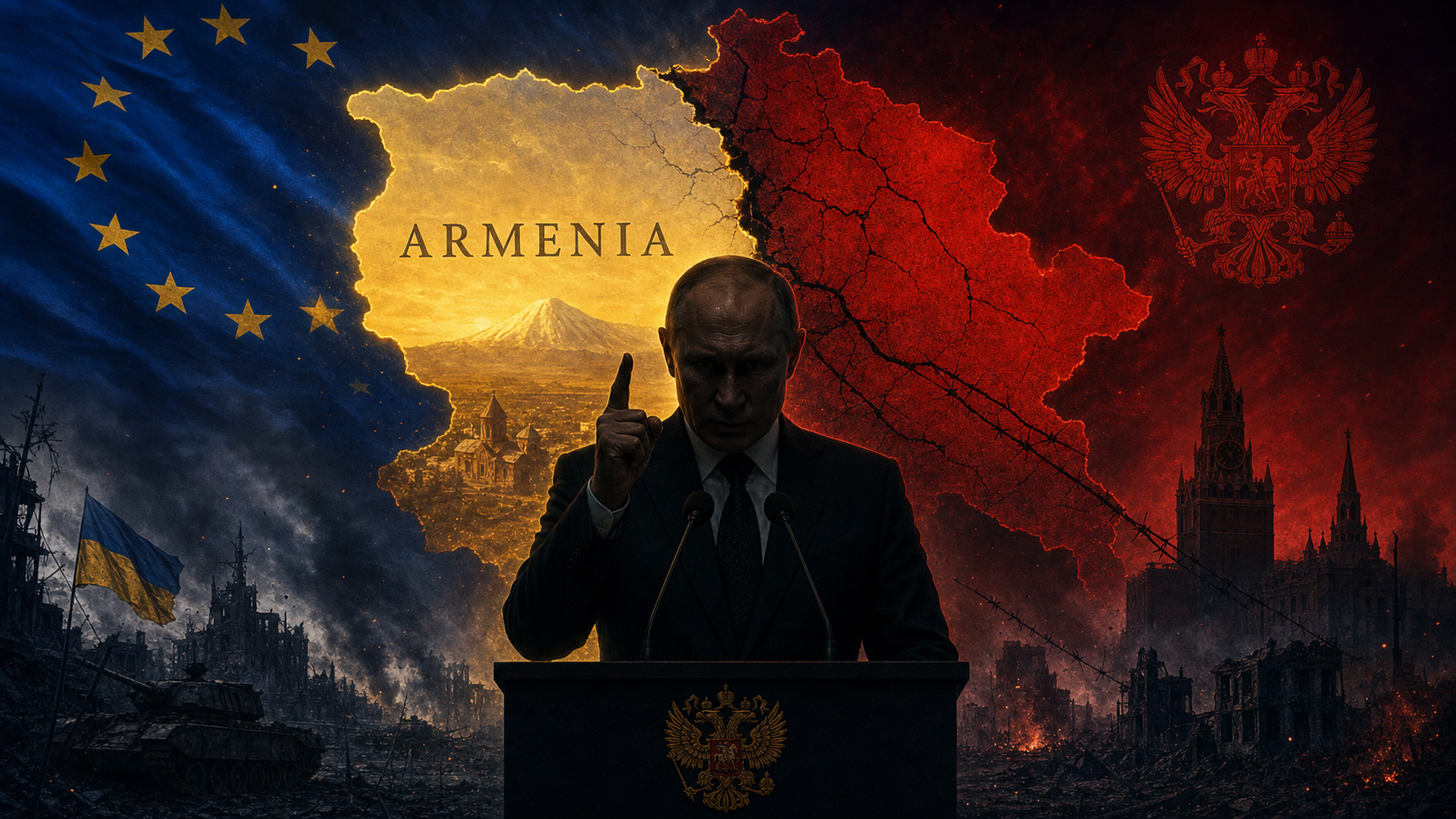
Armenia between the EU and Russia: Putin's warning as a geopolitical wake-up call – Image: Xpert.Digital
Armenia at a crossroads: Putin's threat as a geopolitical lesson
Just days after the reports of the Russian destroyer off the coast of Fehmarn, Vladimir Putin issued a warning to a completely different target: Armenia. The occasion was a summit of the European Political Community in the Armenian capital, Yerevan, attended by numerous European heads of state and government – including Ukrainian President Volodymyr Zelenskyy. In 2025, Armenia's parliament passed a law by a large majority that provides for the start of an EU accession process. The EU reacted positively: In May 2026, at their first bilateral summit in Yerevan, the EU and Armenia agreed to enhanced cooperation in the areas of connectivity, security, and defense. Brussels plans to invest €1.5 billion in Armenia under the Global Gateway program and has already launched a €270 million resilience and growth plan.
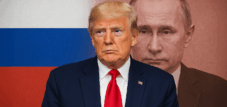
Putin's reaction was prompt and calculatedly threatening. At a press conference, he declared it would be "perfectly logical" to let the Armenian population decide on EU membership in a referendum – and announced that Russia would "make its own decision" based on the result. What sounds like a democracy-conscious formulation is in reality an unambiguous threat: The example of Ukraine shows how Russia has made its "own decision" in similar cases. Putin himself drew this parallel by pointing out that the war against Ukraine also began with Kyiv's desire to move closer to the EU. As recently as 2013, Moscow had put so much pressure on then-Ukrainian President Yanukovych that he halted the EU Association Agreement – which triggered the mass protests of the Maidan and ultimately set in motion the spiral leading to the current war.
Even before Putin's public statement, Russia had put pressure on Armenia through several diplomatic channels. Russian Deputy Prime Minister Alexei Overchuk warned that Armenia risked losing duty-free access to the Russian market and other economic privileges. Deputy Foreign Minister Mikhail Galusin described simultaneous membership in the Eurasian Economic Union and the EU as technically impossible. The Russian Foreign Ministry, under Maria Zakharova, stated that the country was being drawn into an "anti-Russian orbit." Moscow's message is clear and consistent: Armenia's pro-Western course is not only politically unacceptable but will have economic and potentially far-reaching consequences.
Armenia's economic dependence: stronger than it appears
To fully understand the impact of Putin's threats, it is essential to examine Armenia's economic structure. Armenia has traditionally been heavily dependent on Russia in trade, energy, investment, and remittances. Russia is typically the primary destination for Armenian exports and, at the same time, its largest supplier of imports. In the energy sector, Armenia is structurally reliant on Russian gas and oil imports. Russian direct investment and remittances from Armenian migrant workers in Russia play a significant role in Armenia's GDP. Simultaneously, Russian tourists have traditionally been a vital source of revenue for the service sector.
Russia pointed out that trade between Armenia and the Eurasian Economic Union (EAEU) reached $13 billion, a 53 percent increase last year. By comparison, Armenia's trade with the EU reached only $2 billion during the same period – a 24 percent decline. While these figures initially appear clear-cut, they require further clarification. The rise in trade with the EAEU was largely the result of transit transactions – multi-billion-dollar re-imports and re-exports of precious stones, gold, and other goods between Russia, India, Hong Kong, and the UAE via Armenia. New EAEU customs regulations, effective from 2025, restrict precisely these transit transactions, which is why Armenia's goods exports and imports are expected to decline by at least a third by 2025.
Armenia's economic dynamics nevertheless demonstrate remarkable independence. Between 2022 and 2024, the economy grew by an average of 8.9 percent annually – initially driven by the influx of Russian capital refugees and IT specialists who left Russia after the start of the war and mobilization. Economic growth slowed to 5.9 percent in 2024 after these one-off effects subsided. For 2026, the Central Bank of Armenia anticipates real growth of between 4.4 and 4.9 percent, while the IMF forecasts 4.5 percent. Gross fixed capital formation is expected to increase by up to ten percent in 2025 and 2026 – reaching a volume of over six billion US dollars annually, three times higher than in the pre-COVID year of 2019.
The strategic logic behind the threats
Putin's warning to Armenia follows an internal logic that transcends the specific case and must be understood as part of an overarching Russian doctrine. Since the collapse of the Soviet Union, Moscow has systematically attempted to maintain the post-Soviet space as its exclusive sphere of influence. Any rapprochement between former Soviet republics and Western structures—be it the EU or NATO—is perceived as an existential threat to its own geopolitical position. This doctrine has been applied in Ukraine, Georgia, and Moldova. Armenia would be the next chapter in this story.
The mechanism is always the same: First, economic pressure is exerted through trade restrictions, energy price increases, and the freezing of preferential treatment. This is followed by diplomatic warnings, and finally—if the pressure proves ineffective—implicit or explicit military scenarios are invoked. This escalation path is not unique to Armenia. It closely resembles the pattern Moscow employed against Ukraine in the years prior to 2014. The crucial difference then is that Armenia is significantly smaller, more economically vulnerable, and lacks a direct land border with a NATO member state—a structural limitation of its defense options.
The geopolitical context, however, makes the situation more complicated than it initially appears. Armenia is still a member of the Eurasian Economic Union and has enjoyed real economic benefits from this membership. A complete break with Russia would be painful in the short term and would require significant structural adjustments. At the same time, the EU is clearly striving to underpin Armenia's pro-Western course with concrete economic commitments. The EU's €270 million Resilience and Growth Plan, as well as the promised €1.5 billion from the Global Gateway program, signal that Brussels is offering not only words but also financial support this time. Whether this will be enough to neutralize Russian pressure tactics will be one of the crucial geopolitical questions of the coming years.
Two escalations, one strategy: What connects Fehmarn and Yerevan
It would be a mistake to view the events in the Baltic Sea and the threats against Armenia as separate incidents. They are expressions of one and the same strategic orientation by Moscow: the demonstration of strength and capability in the post-Soviet space and in the adjacent maritime areas. The Russian Navy is sending the same message to NATO that Putin is verbally addressing to Armenia: those who distance themselves from Russia will pay a price.
This simultaneity is no coincidence. Despite all the military losses and economic burdens, Russia has developed a political strategy from the Ukraine war that operates on several escalation levels simultaneously. In the maritime sphere, the combination of shadow fleet tankers and escorting warships creates a gray zone in which international maritime law is systematically stretched. In the post-Soviet space, economic dependencies are used as political leverage. And in media communication, parallels to Ukraine are deliberately drawn—not as a description of reality, but as a threat intended to induce target states to censor their foreign policy decisions.
The Western response to both challenges is still in the early stages of coordination. In the Baltic Sea, Baltic Sentry has enabled a structured multilateral response that is proving to be a deterrent. In the Caucasus, however, Western responsiveness is limited: Armenia lies outside NATO territory, and EU instruments—economic aid, association agreements, investment programs—are designed for the long term and offer no short-term protection against Russian pressure. The structural dilemma is that Russia can act within short timeframes, while Western institutions are not designed for rapid responses.
The cost of confrontation: Who ends up paying the bill?
A sober economic analysis of the current escalation dynamics leads to a sobering conclusion: The costs of the confrontation are borne by all sides – but in very different ways. Russia finances its military presence in the Baltic Sea and its political pressure strategy in the Caucasus with revenues from energy exports. As long as the shadow fleet functions and China and India continue to purchase Russian oil at market prices, this source of funding remains stable. While Western sanctions have had an effect – the US sanctions of January 2025 noticeably increased freight costs for Russian oil – they have not stopped the flow of petrodollars. Since the introduction of the price cap, Russia has generated almost €15 billion in additional revenue.
NATO member states are bearing the costs of the significantly increased military expenditure in the Baltic Sea. Operation Baltic Sentry is permanently tying up ships, personnel, reconnaissance capabilities, and support infrastructure from 13 nations. Germany faces a particular challenge: After decades of underfunding, its own navy lacks sufficient capacity to comprehensively monitor all suspicious oil tankers. The strategic challenge lies in the fact that Russia, with comparatively limited resources—a handful of warships and a few hundred shadow fleet tankers—can provoke a multilateral NATO response that ties up many times more resources.
Armenia may well pay the highest short-term price if it continues on its current EU course. Russian economic pressure—rising gas prices, trade restrictions, and the termination of preferential treatment within the Eurasian Economic Union (EAEU)—would hit a country whose growth still depends heavily on Russian capital inflows and remittances. At the same time, the long-term economic prospects of closer EU ties—greater legal certainty, better market access, investment programs, and technology transfer—are significantly more attractive than permanent membership in an EAEU that Armenia has thus far used more as a transit hub than as a genuine economic partner.
What escalation is truly imminent?
The most honest assessment of the current situation is uncomfortable: The risk of a direct military escalation between NATO and Russia in the Baltic Sea is limited in the short term. Neither side has an interest in a confrontation that could spiral out of control. But the risk of a slowly escalating situation—more incidents, more sabotage, more transgressions in the legal gray area—is considerable and is considered real by Western security experts. The Russian naval operations ahead of BALTOPS 2025 in the spring of last year had already made it clear that Moscow systematically uses its reconnaissance presence to observe NATO maneuvers and develop counter-strategies.
The risk situation is different for Armenia. A direct Russian military attack on Armenia would extend the logic of the Ukraine war to an even more exposed country and would entail considerable strategic risks for Russia. More likely is gradual economic pressure combined with political destabilization—a scenario that the EU and the West have so far been less able to counter effectively than an open military threat. The parallel to Ukraine is precise, but with one crucial difference: unlike Ukraine in 2013, Armenia in 2026 faces an EU that has learned from its mistakes and will act sooner and more decisively this time.
The common message of both events—the destroyer off Fehmarn and the threats against Yerevan—is that despite all the economic burdens of sanctions and despite the grueling war in Ukraine, Russia is neither willing nor able to abandon its imperial doctrine. For Europe, this means that the costs of security will remain permanently higher than during the decades of détente. The question is not whether Europe is prepared to bear these costs. The question is whether it is strategically united enough to use them effectively.
Consulting - Planning - Implementation

Markus Becker
I would be happy to serve as your personal advisor.
Head of Business Development
Chairman SME Connect Defense Working Group
Consulting - Planning - Implementation
Konrad Wolfenstein
I would be happy to serve as your personal advisor.
You can contact me at wolfenstein∂xpert.digital or
Just call me on +49 7348 4088 965 .