
Defense budget: Rising expenditures and persistent dissatisfaction – why is the money still not enough?
Xpert Pre-Release

Available in 27 languages 📢
Prefer Xpert.Digital on GoogleⓘPublished on: August 18, 2025 / Updated on: August 18, 2025 – Author: Konrad Wolfenstein
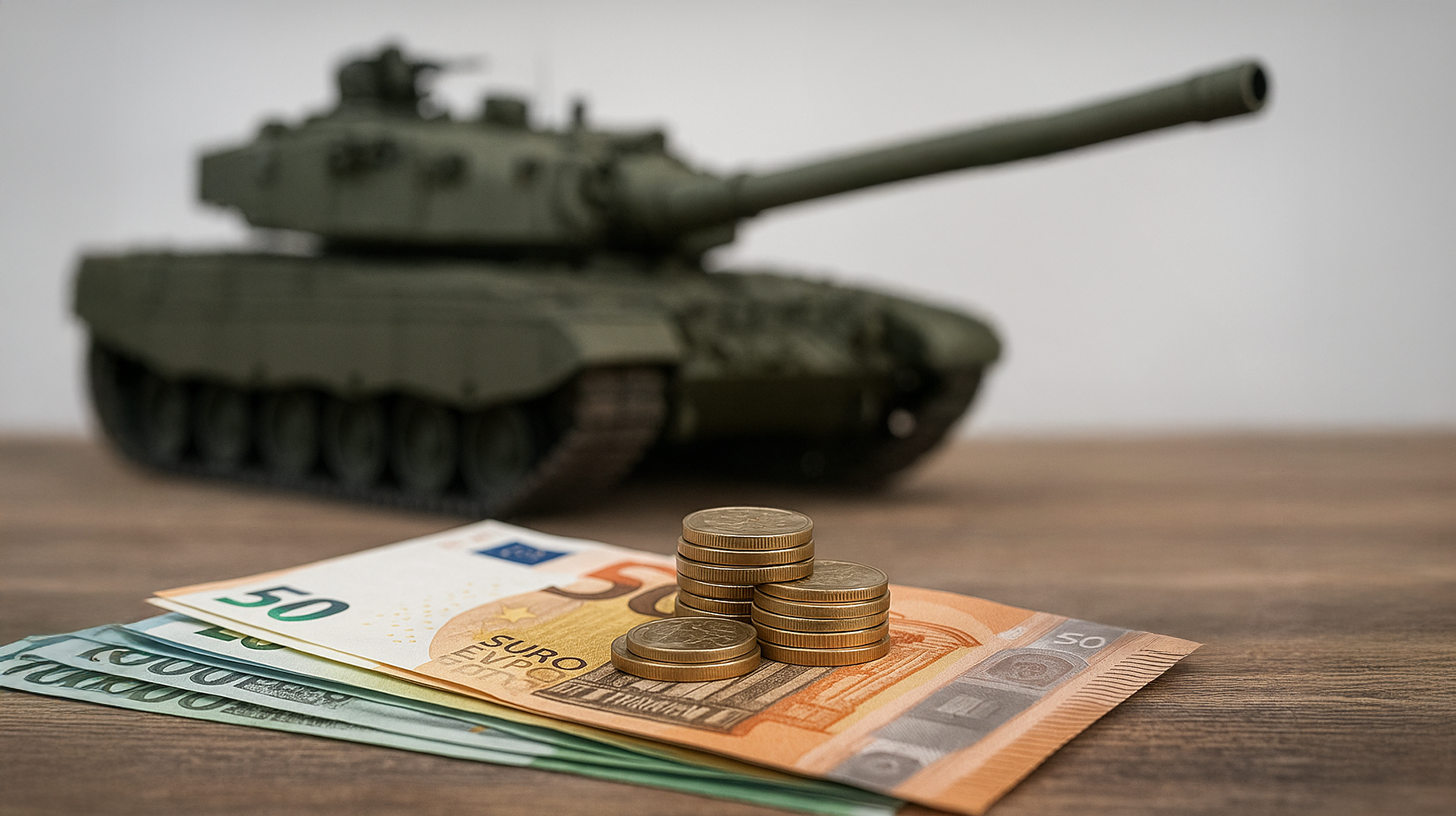
Defense budget: Rising spending and persistent dissatisfaction – why is the money still not enough? – Image: Xpert.Digital
Germany's army is changing: This is why record sums are now being invested in defense
A bottomless pit? Where the billions in the new defense budget are really going
In recent years, defense budgets in Germany and numerous NATO countries have increased significantly. Nevertheless, public and political dissatisfaction with the level of funding remains high. The debate surrounding defense spending and adherence to NATO's two percent target has long since transcended the budget debate, driven by strategic, security policy, and societal developments. A neutral observer would ask the following questions in this context: Why are defense expenditures rising? What is the rationale behind NATO's two percent target? Are the increased funds sufficient? What problems remain unresolved? The following question-and-answer sections systematically examine these issues.
What is meant by the defense budget and how has it developed in Germany?
The defense budget is the portion of the federal budget allocated for the expenditures of the German Armed Forces and the military defense of Germany. It includes funds for operations, investments, equipment replacement, personnel, and research within the armed forces.
In Germany, the defense budget remained relatively constant or increased only slightly for many years. In the 2021 fiscal year, it stood at €46.93 billion, representing an increase of approximately 2.8 percent compared to 2020. In subsequent years, funding was further increased, particularly in light of the changed security situation following the Russian attack on Ukraine and the increased demands from NATO. The defense budget for 2024 is €51.95 billion, and €62.43 billion is planned for 2025 – not including the special fund for the German Armed Forces. Including this special fund, expenditures for the German Armed Forces will rise to €86.49 billion in 2025.
Why are defense spending increasing in Germany and other NATO countries?
The increases in defense spending result from various factors. Following the Russian attack on Ukraine, it became clear that many European states needed to strengthen their defense capabilities. As part of its "Zeitenwende" (turning point) policy, Germany committed itself to making its armed forces more efficient and ready for deployment.
Another reason for the increase is NATO's two percent target, which stipulates that member states spend at least two percent of their gross domestic product (GDP) on defense. This was compounded by increased expectations within the alliance, particularly from the US, which demanded a greater contribution from its European partners. Countries like Poland, Estonia, and the United Kingdom are even investing significantly more than this figure. In 2024, the German government announced for the first time that it would meet the two percent target, spending around €90 billion on defense, equivalent to approximately 2.12 percent of its GDP.
What exactly is the two percent target and why is it controversial?
The two percent target was agreed upon as a guideline at the 2014 NATO summit in Wales. It was intended to ensure that all NATO members committed to a minimum level of defense spending. The agreement was initially formulated less bindingly – states were to "move towards the target." It was only at the 2023 summit in Vilnius that the two percent mark was established as a legally binding minimum.
The target is controversial primarily because it focuses solely on the level of expenditure and not on efficiency or actual security needs. Critics argue that the amount alone says nothing about military capability or the wise use of resources.
How is the defense budget structured and which areas benefit the most?
The defense budget is divided into four basic categories: operating expenses, operator contracts for the further development of the Bundeswehr, investment expenses and supply expenses.
For example, substantial funds are earmarked for military procurement in 2025. The largest single item is personnel costs, which will increase from €22.47 billion in 2024 to €23.89 billion in 2025. Funding for military procurement will jump from €15.2 billion (2024) to €21.64 billion (2025). This will benefit, for example, the acquisition of ammunition, vehicles, aircraft, digitalization projects, and other systemically important areas. Funding for research and technology, however, will decrease slightly from €565 million to €500 million.
The structure of the defense budget has thus shifted, with investments in equipment and materiel taking center stage. At the same time, more than 10,000 military and 1,000 civilian positions are to be created.
What role do special funds and new financing instruments play?
Following the outbreak of the war in Ukraine, a special fund for the German armed forces was established, initially with €100 billion. The German government plans to create further special funds for defense and infrastructure in the coming years, in addition to the regular budget. Around €24 billion from this special fund is expected to be allocated in 2025.
Furthermore, in March 2025, the debt brake for defense and security spending was partially suspended. Funds exceeding the threshold of one percent of GDP may be financed through borrowing and are therefore exempt from the previous budgetary regime. Looking ahead, an additional special fund of up to €500 billion is planned for infrastructure projects.
These changes lead to significantly greater flexibility and raise questions regarding long-term sustainability and debt servicing, as the loans taken out must be serviced. For 2025 alone, €33.2 billion is earmarked for debt servicing.
Hub for security and defense - advice and information

Hub for security and defense - Image: Xpert.digital
The hub for security and defense offers well-founded advice and current information in order to effectively support companies and organizations in strengthening their role in European security and defense policy. In close connection to the SME Connect working group, he promotes small and medium -sized companies (SMEs) in particular that want to further expand their innovative strength and competitiveness in the field of defense. As a central point of contact, the hub creates a decisive bridge between SME and European defense strategy.
Suitable for:
German Armed Forces Financing: The rocky road to a modern defense architecture
Why does dissatisfaction persist despite increasing resources?
Despite increased funding, dissatisfaction with the level of defense spending persists at the political, military, and societal levels. Various reasons are cited:
1. Structural deficits and need for improvement
Many experts, relevant studies, and even representatives of the German Armed Forces argue that decades of neglect of the armed forces cannot be compensated for by a few years of increased spending. There is a lack of operational equipment, modern infrastructure, and strategic planning.
2. Efficiency and use of resources
Criticism is directed not only at the absolute amount of funding, but above all at the efficiency of its use. Procurement projects often take years, and bureaucracy hinders modernization.
3. Expectations and international comparisons
In international comparison, Germany has only recently reached the upper middle of NATO spending. Countries like Poland and the USA invest significantly more in defense. Furthermore, there is growing pressure to raise the target from 2 percent to 3.5 or even 5 percent.
4. Internal and external challenges
The German Armed Forces face complex tasks: from national and collective defense to cyber defense and deployments abroad. Many of these areas are underfunded, and the constant adjustments to the budget do not provide a sustainable solution.
What demands and reform proposals are there in the political debate?
In Germany and other NATO countries, calls are growing to further increase defense spending. Representatives from various parties and expert circles are discussing target figures of three percent or more of GDP. For example, at the beginning of the year, the Green Party's chancellor candidate, Robert Habeck, spoke of a target of 3.5 percent, which would correspond to a tripling of the defense budget. The CSU has set a target of three percent for the next ten years.
At the same time, there are political initiatives to decouple defense and security financing from strict budgetary discipline. Reforming the debt brake and linking funds to the country's security needs are central elements of this debate.
What does the defense budget mean for the future of the armed forces and the security of Germany?
A consistent increase and sustainable funding of the defense budget is essential for the German Armed Forces and other components of the German security architecture to reliably fulfill their tasks. There is an urgent need to modernize equipment, ammunition stockpiles, and infrastructure. Increased funding will enable the implementation of key projects, accelerate personnel growth, and allow for the fulfillment of alliance obligations. The increased budget also sends a signal to international partners and signifies Germany's assumption of expanded responsibilities within NATO.
However, numerous challenges remain: Effectiveness depends on how the funds are used, how quickly the reforms take effect, and whether Germany is prepared to contribute to international security with further increases.
Are there still concerns regarding social support and sustainability?
Public support for increased defense spending is traditionally weaker in Germany than in other NATO countries. The debate surrounding social spending, infrastructure, and education investments competes with the need to strengthen defense systems. Financing through new debt is viewed critically by some experts and segments of the public, as the long-term costs and the competition with other government responsibilities must be considered.
Are there historical comparisons and international differences?
Historically, the federal government invested similar sums in the reconstruction of East Germany after reunification as it does today – with lasting effects on the economy and society. The current special fund for defense and infrastructure is therefore not a new development, but rather a reflection of the changed global security situation.
Defense spending varies considerably among NATO countries: Poland invests over 4 percent of its GDP in defense, while the US spends around 3.4 percent. Estonia, Greece, the UK, and the US were long the top spenders, while countries like Luxembourg, Spain, and Belgium lagged significantly behind. It was only after the Russian attack on Ukraine that European investment behavior changed dramatically.
What is the forecast for the coming years?
The medium-term financial plan foresees a further increase in funding. According to the Federal Ministry of Defense, budget line 14 is slated to rise from approximately €62.43 billion (2025) to €152.83 billion (2029). This would ensure the Bundeswehr (German Armed Forces) is permanently capable of actively fulfilling its obligations, tasks, and alliance commitments.
Further developments depend on the security situation, political decisions, and the successful completion of the current reforms.
What role does increasing efficiency play in the German Armed Forces?
Defense capability is not solely determined by the size of the budget, but by how effectively those funds are invested in the structure, modernization, and operational readiness of the armed forces. Optimizations in procurement, digitalization, and personnel management are crucial in this regard. Dissatisfaction often arises where financial resources are increased but not effectively or promptly utilized in practice. For example, the German Armed Forces have repeatedly criticized lengthy and inefficient processes in their materials management over the past few years.
Defense budget: between aspiration and reality
Although the defense budget has increased significantly in recent years and Germany has reached NATO's two percent target for the first time, there is persistent dissatisfaction with the size and effectiveness of the funds. The political and social debate revolves equally around the need for further increases and the efficiency of budget allocation. While the German government is massively increasing resources and establishing new financing instruments, the future viability of German defense remains contingent on the implementation of sustainable reforms, modernization, and public support.
The next few years will show whether the adopted reforms and the increase in the budget actually lead to a high-performing, modern and mission-oriented defense, or whether structural deficits and new challenges further fuel the ongoing dissatisfaction.
Advice - planning - implementation

Markus Becker
I would be happy to serve as your personal advisor.
Head of Business Development
Chairman SME Connect Defense Working Group
Advice - planning - implementation
Konrad Wolfenstein
I would be happy to serve as your personal advisor.
contact me at wolfenstein ∂ xpert.digital
Just call me on +49 7348 4088 965 (Munich) .





