
Renewable energies: Now it's all about energy storage systems

Available in 27 languages 📢
Prefer Xpert.Digital on GoogleⓘPublished on: November 30, 2020 / Updated on: August 21, 2024 – Author: Konrad Wolfenstein
Research in the field of energy storage is of great importance – significant market development potential – opportunities for post-EEG plants
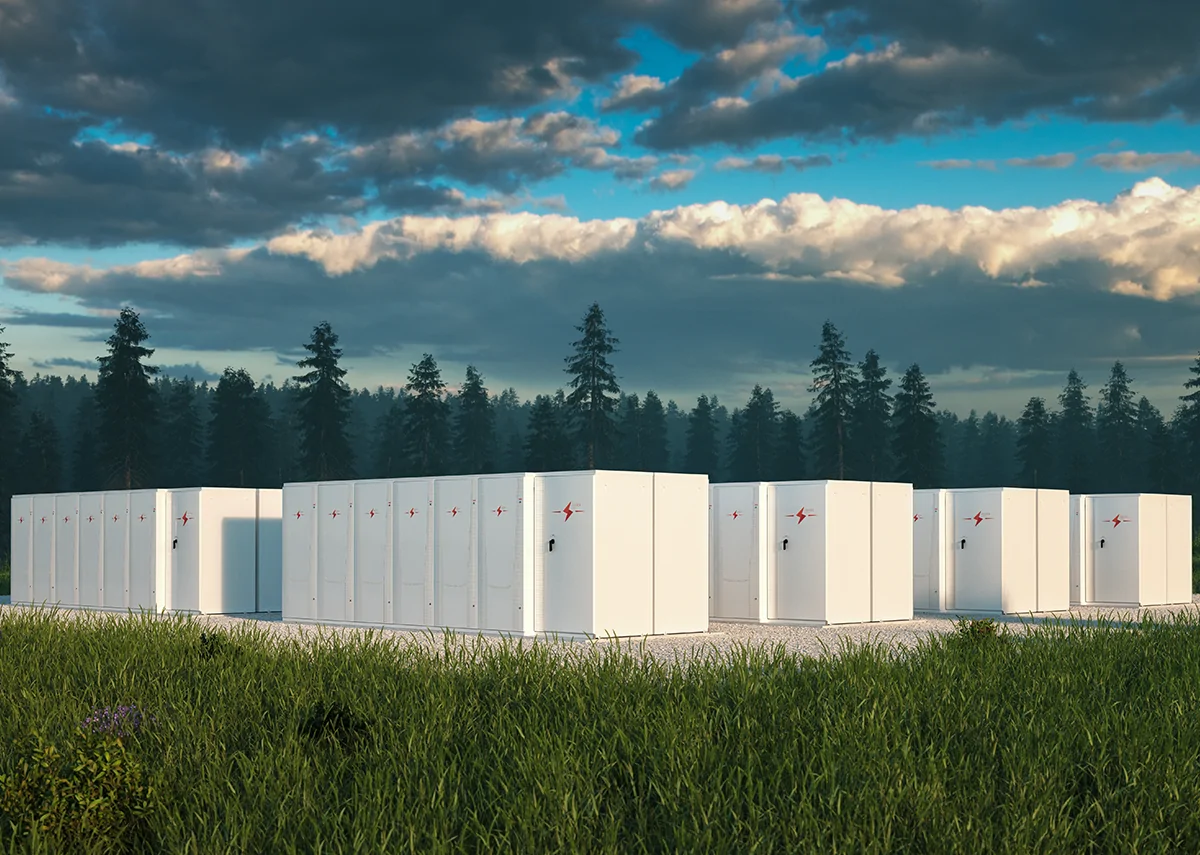
Renewable energies: Now it all comes down to energy storage systems – Image: petrmalinak|Shutterstock.com
The renewable energy market is growing. Global investments in renewable energy have almost doubled in the last ten years. While we are experiencing the biggest boom worldwide, these investments are declining in Germany, except for photovoltaics. In 2019, around 11 billion euros were invested in Germany. The focus of these investments was on solar energy.
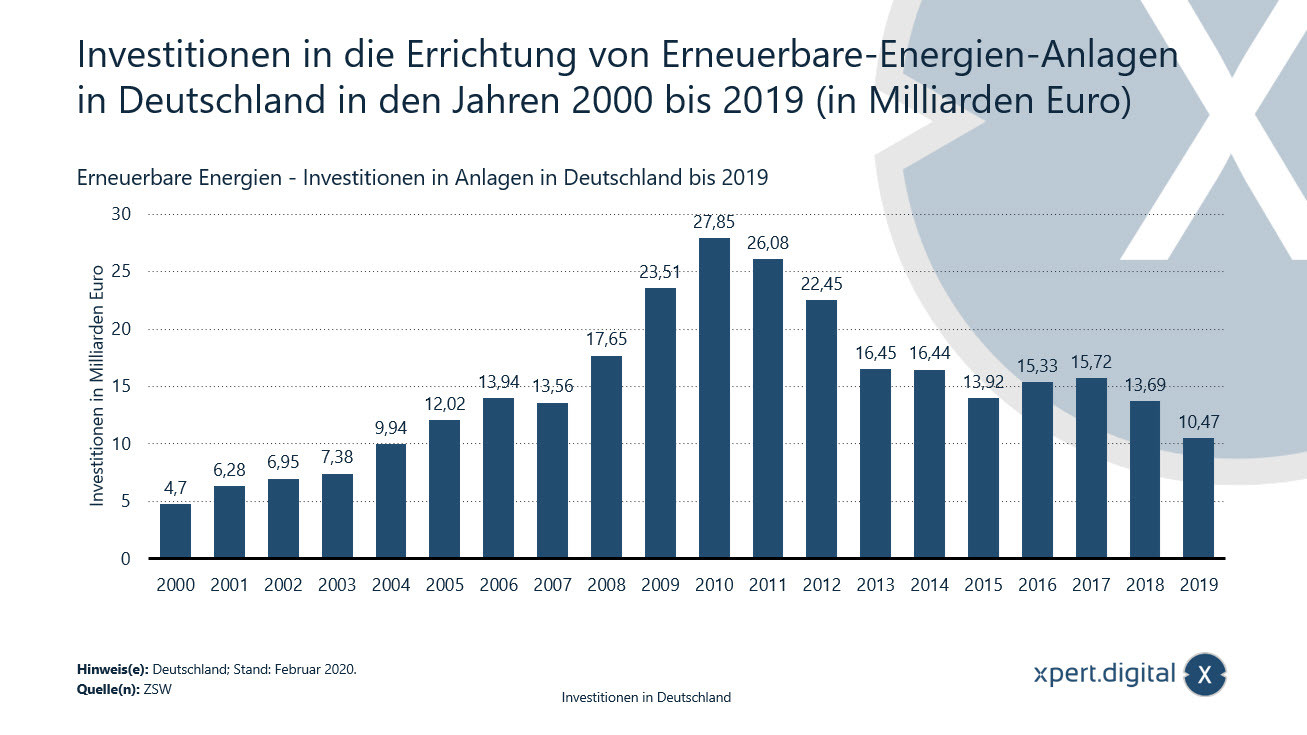
Investment in the construction of renewable energy plants in Germany – 2000 to 2019 – Image: Xpert.Digital
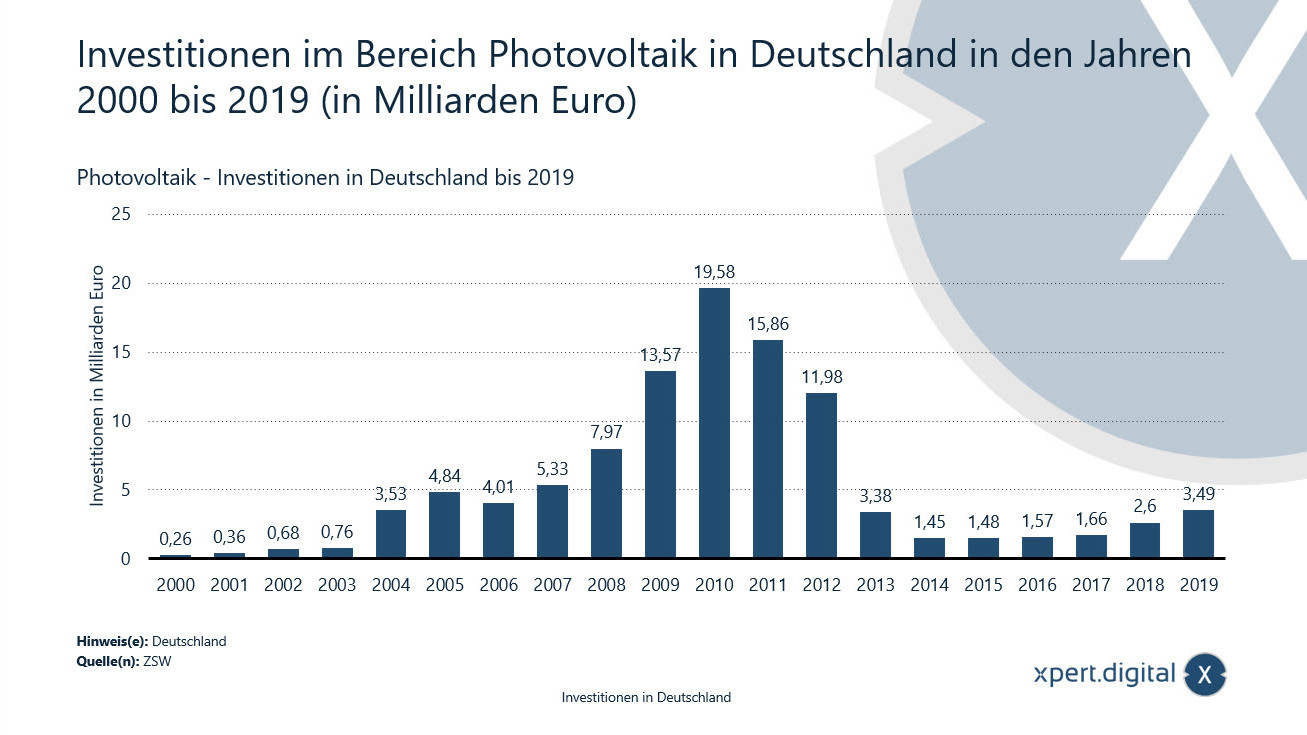
Investment in photovoltaics in Germany – 2000 to 2019 – Image: Xpert.Digital
Since 2014, the market for photovoltaics in Germany has been developing upwards again.
Global investments in wind energy technologies amounted to approximately US$143 billion in 2019. Investments in solar energy technology most recently stood at US$141 billion.
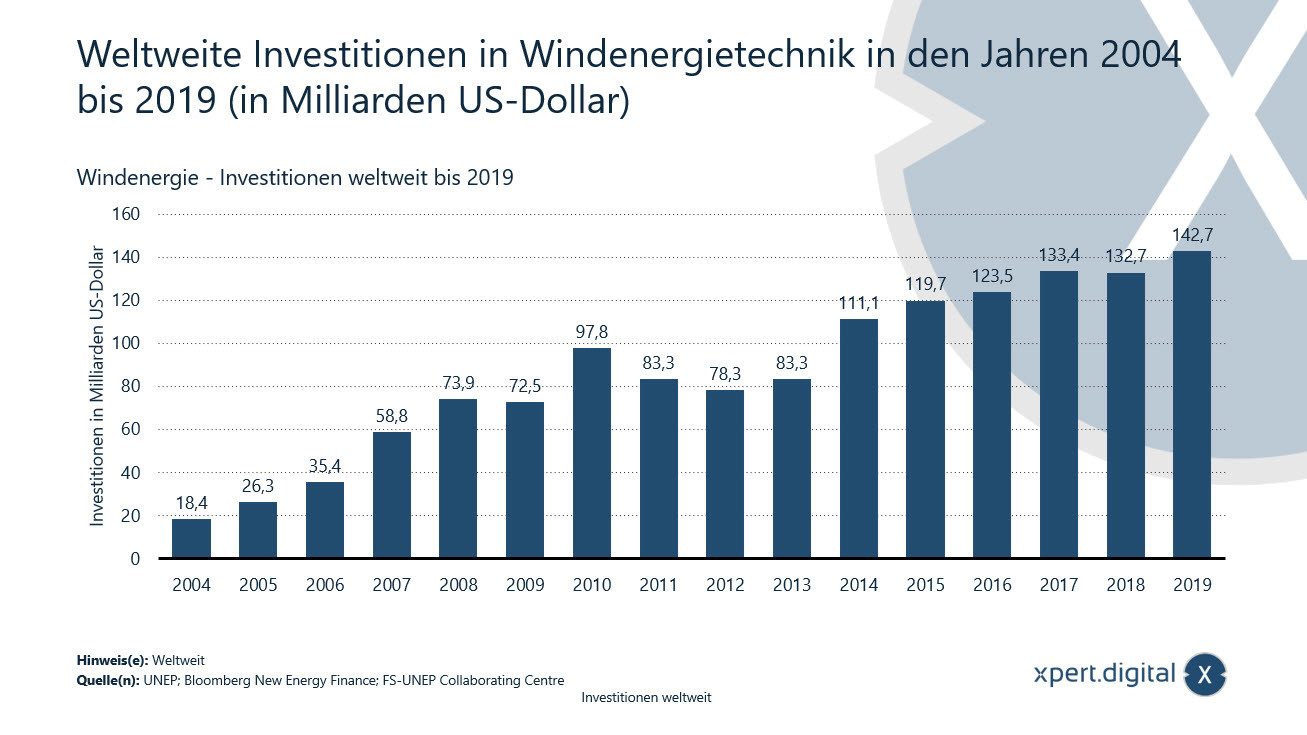
Global investment in wind energy technology – 2004 to 2019 – Image: Xpert.Digital
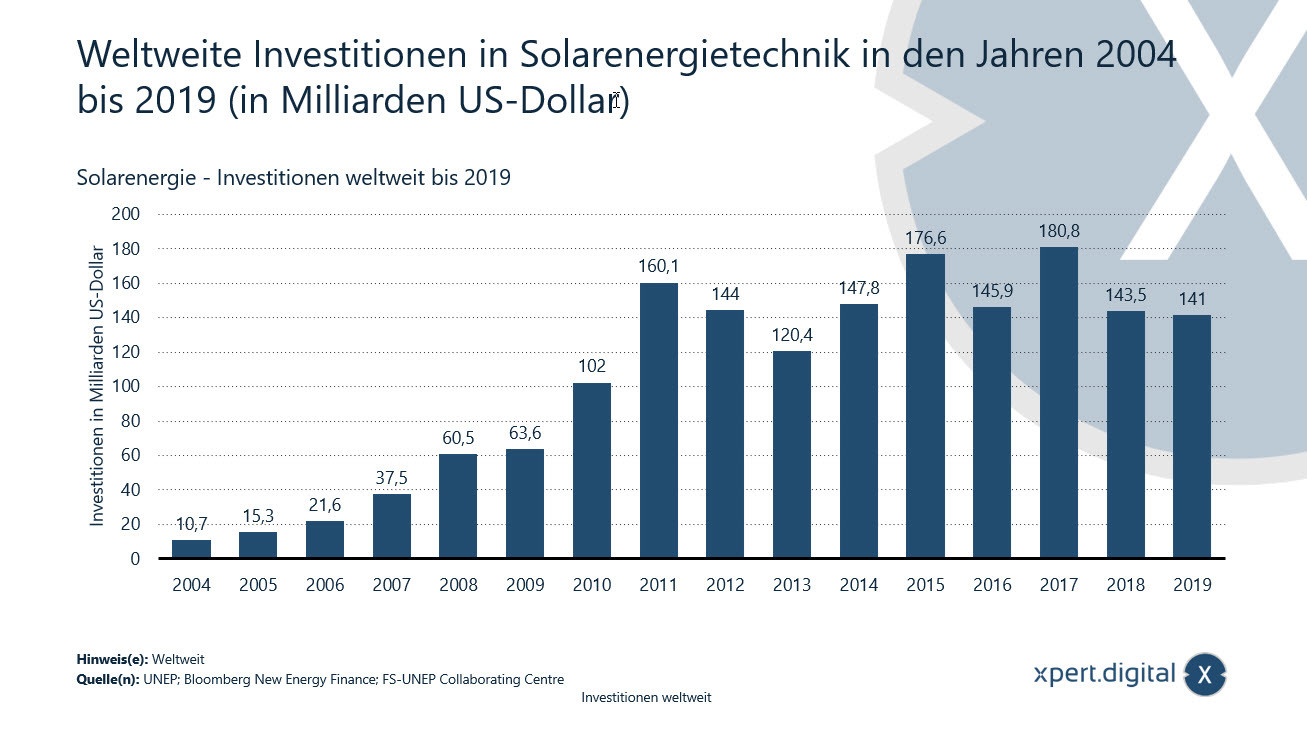
Global investment in solar energy technology – 2004 to 2019 – Image: Xpert.Digital
Even though the figures for renewable energies in Germany are currently declining, it should not be overlooked that Germany is the country with the highest share (52%) of renewable energies in relation to fossil fuels worldwide.
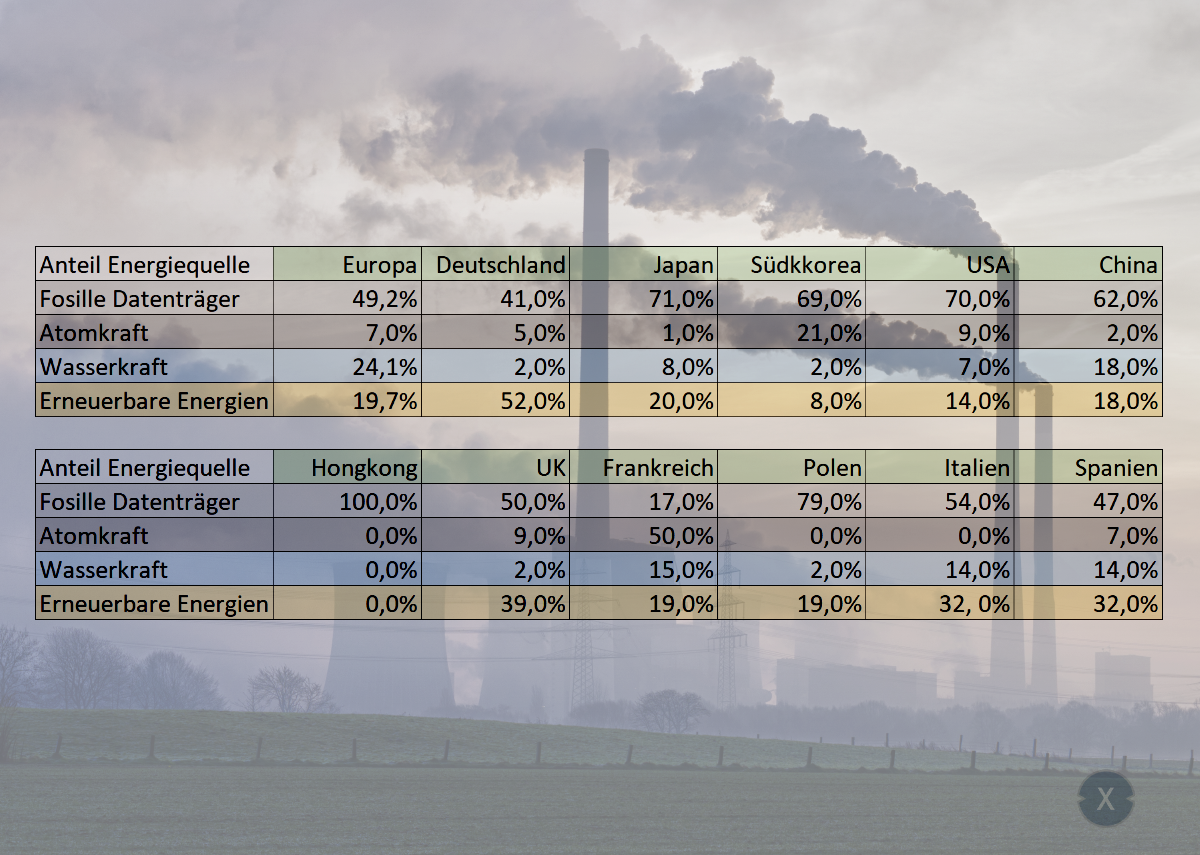
Global overview: Share of renewable energies compared to other energy sources – Image: Xpert.Digital
In terms of renewable energy consumption and supply, Germany ranks third with 224 terawatt hours, after China and the USA. This is ahead of India and Brazil, which are considerably larger in terms of population and land area.
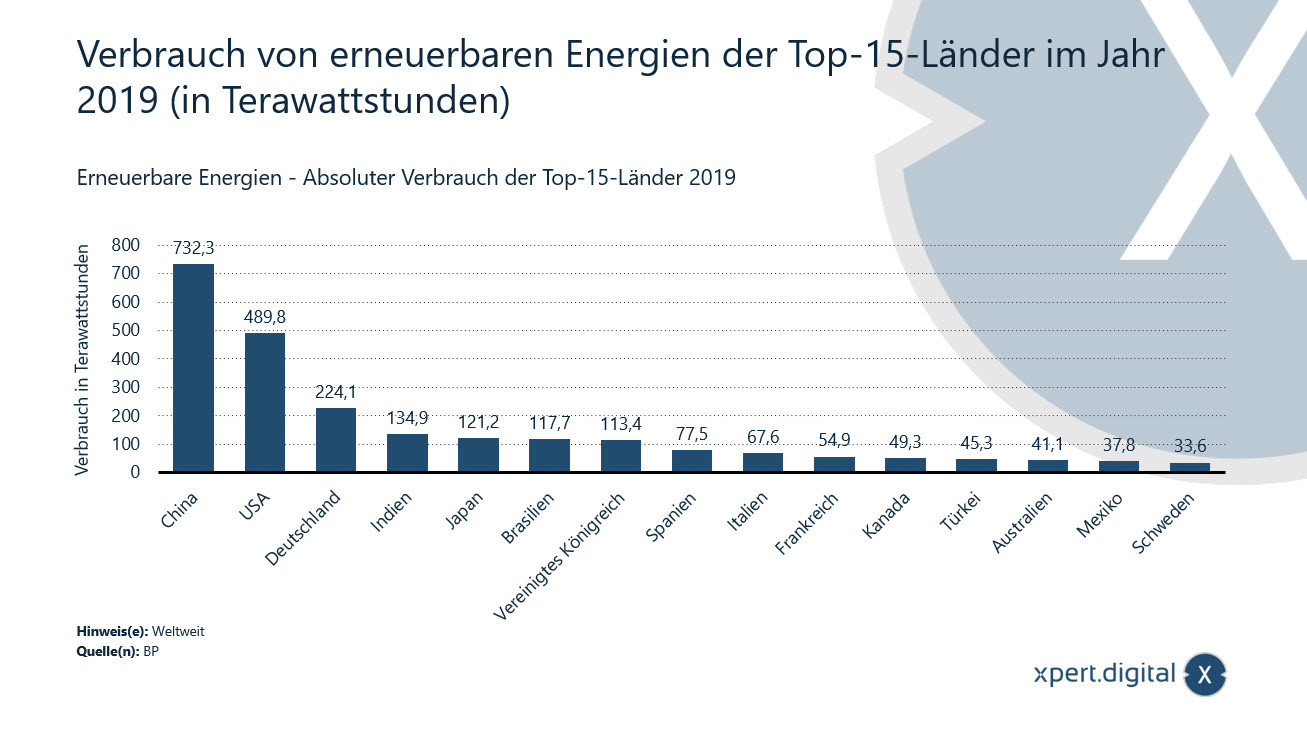
Renewable energy consumption in the top 15 countries in 2019 – Image: Xpert.Digital
In November 2020, Germany generated 54% of its electricity from renewable energy sources. The annual average from December 2019 to November 2020 was 52.46%.
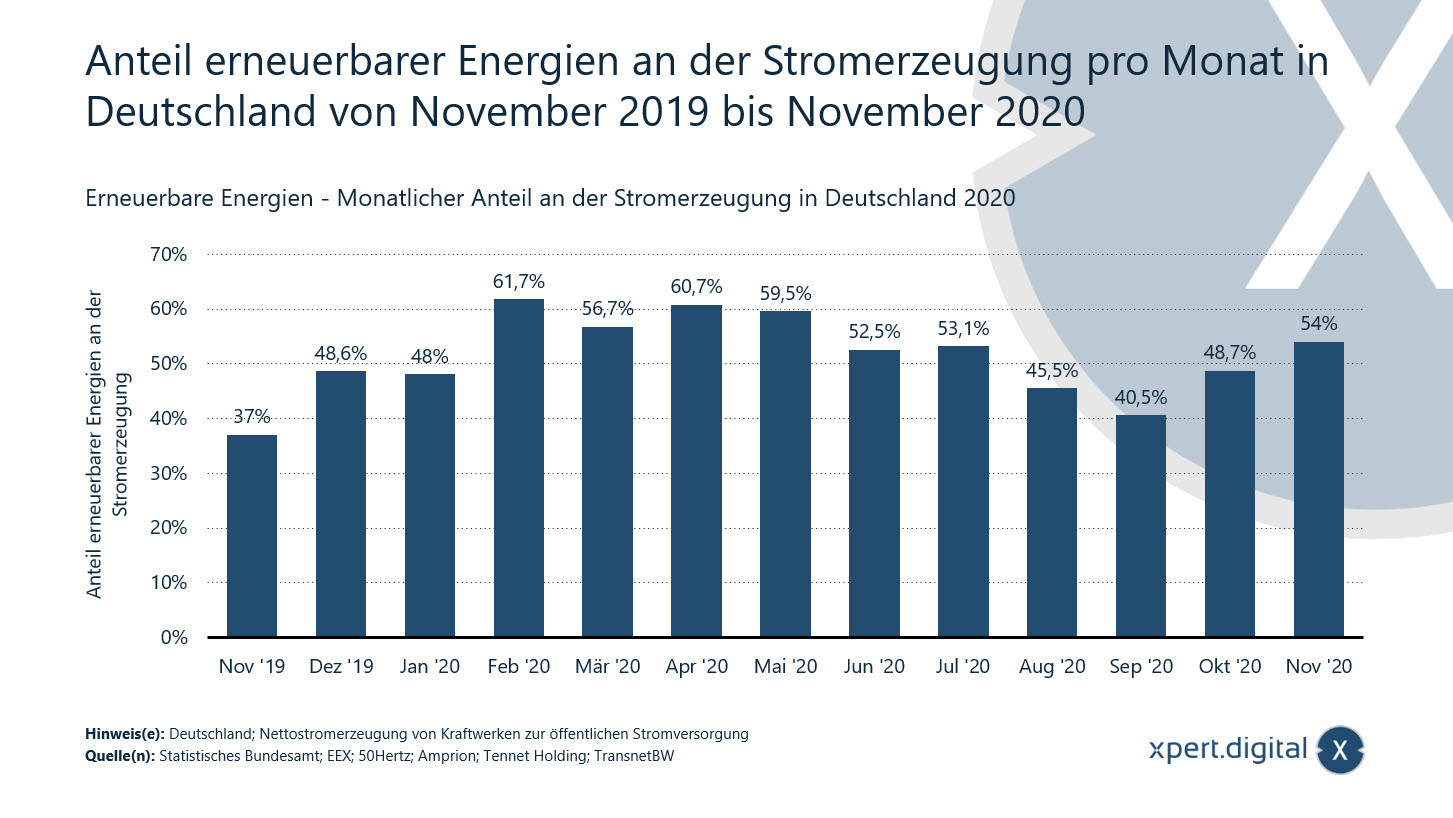
Share of renewable energies in the electricity supply in Germany – 2019-2020 – Image: Xpert.Digital
However, this is not a constant performance. Fluctuations range from 37% in November 2019 to a peak of 61.7% in February 2020. This problem will only intensify in the near future with the further expansion of renewable energies.
The nationwide electricity grid is also changing with the rise of renewable energies. While centralized power generation grids have dominated until now, the trend is shifting towards decentralized generation facilities. This applies to generation from renewable sources such as photovoltaic systems, solar thermal power plants, wind turbines, and biogas plants.
“Generating electricity from solar and wind power plants makes the supply system significantly more fragmented and weather-dependent than operating conventional power plants,” says Prof. Dr. Clemens Hoffmann, head of the Fraunhofer IEE.
Suitable for:
This leads to a significantly more complex structure, primarily in the areas of load control, voltage regulation in the distribution network, and maintaining grid stability. Smaller, decentralized generation plants, unlike medium to large power plants, also feed directly into lower voltage levels such as the low-voltage or medium-voltage networks.
With the increasing share of renewable energies, it becomes more important to align fluctuations in energy production with fluctuations in energy consumption by balancing them with energy storage systems.
Therefore, the possibility of storing electrical energy using energy storage systems or storage power plants will play a significant role in the coming years.
In 2018, the capacity of energy storage systems was around 17 gigawatt hours. According to an estimate by Bloomberg New Energy Finance (bnef.com), this capacity is expected to exceed 2,800 GWh in about 20 years.

Global energy storage capacity – 2018 and 2040 – Image: Xpert.Digital
Large-scale battery storage systems are already being used in Germany for grid stabilization. In 2017, their capacity was around 250 megawatt hours.
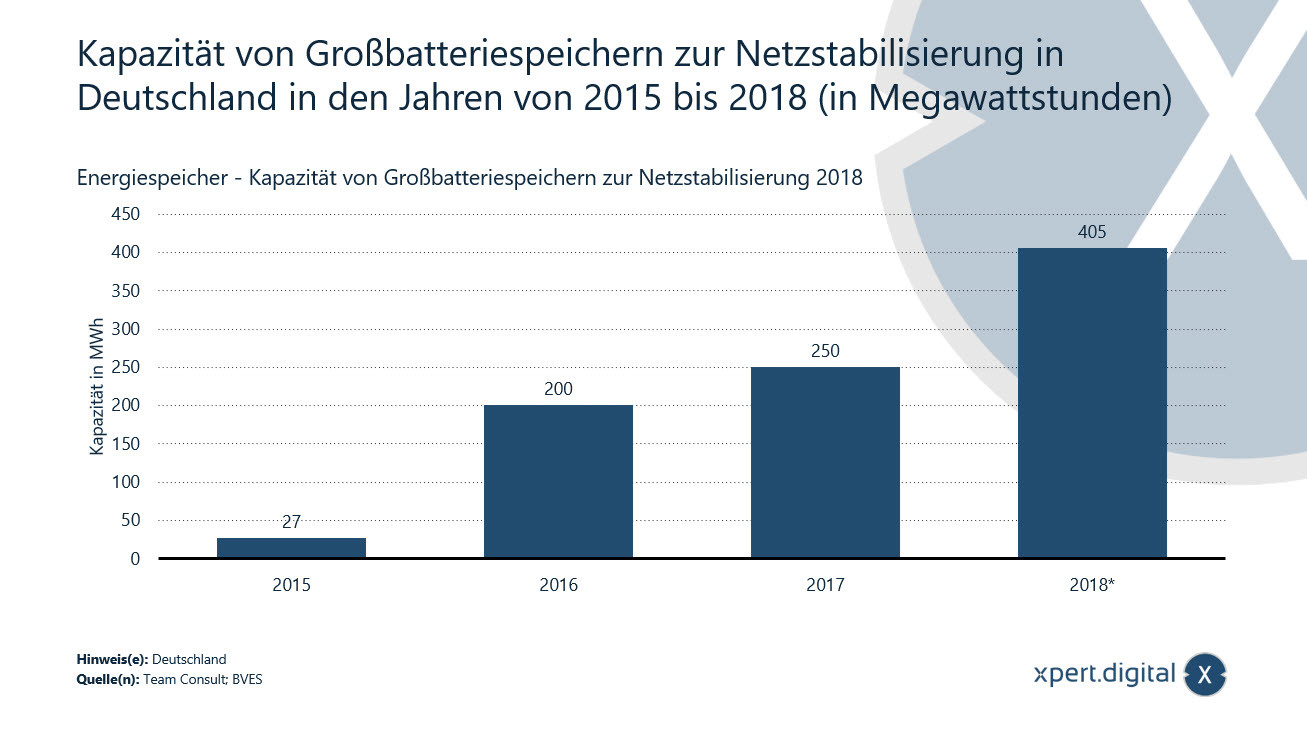
Capacity of large-scale battery storage systems for grid stabilization in Germany – Image: Xpert.Digital
In comparison, the capacity of home battery storage systems in Germany in 2017 was 545 megawatt hours.
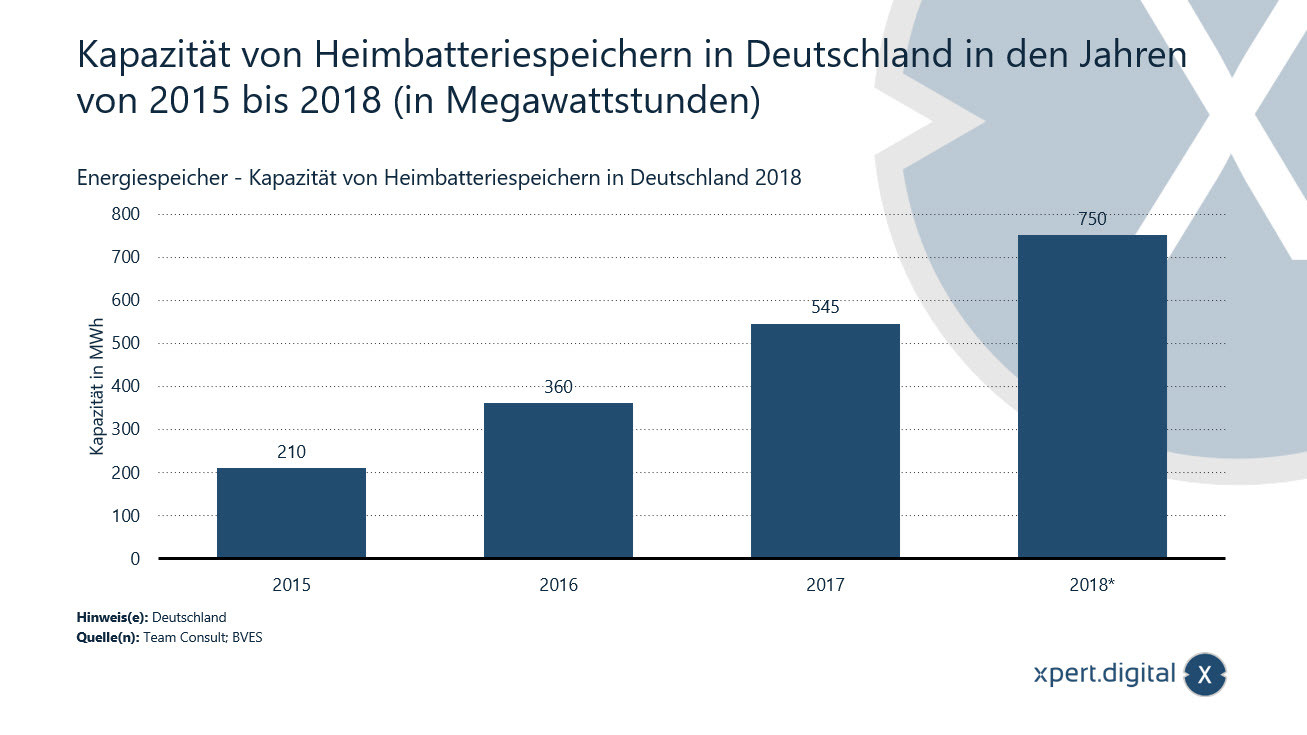
Capacity of home battery storage systems in Germany – Image: Xpert.Digital
To successfully implement the energy transition, research in the field of energy storage is of paramount importance. The sooner efficient energy storage becomes possible, the sooner fluctuations in the electricity grid can be balanced and the shift away from fossil fuels can be achieved. In 2019, the German government provided approximately nine million euros in funding for electrochemical storage systems.
Suitable for:
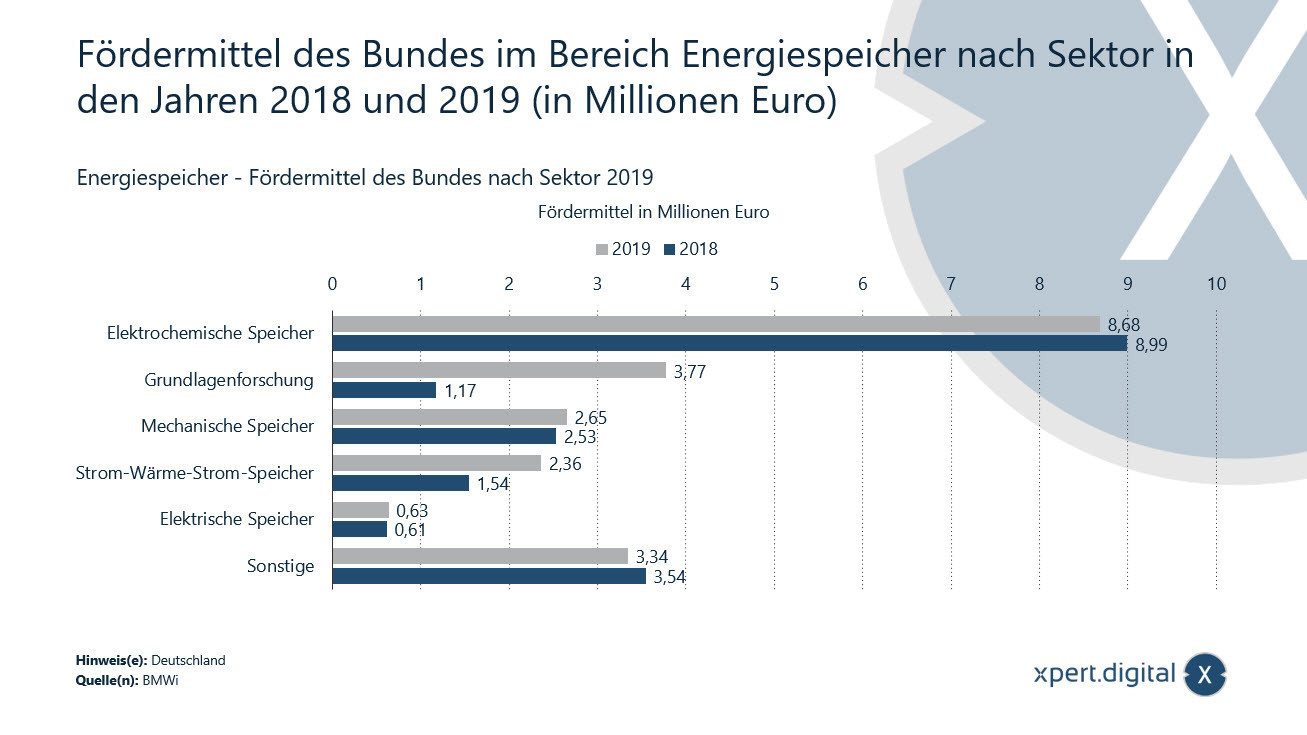
Federal funding for energy storage by sector – 2018 and 2019 – Image: Xpert.Digital
While the market for solar modules is already highly competitive, and considering the capacity requirements of energy storage systems, it quickly becomes apparent that there is still a great deal of market development potential here.
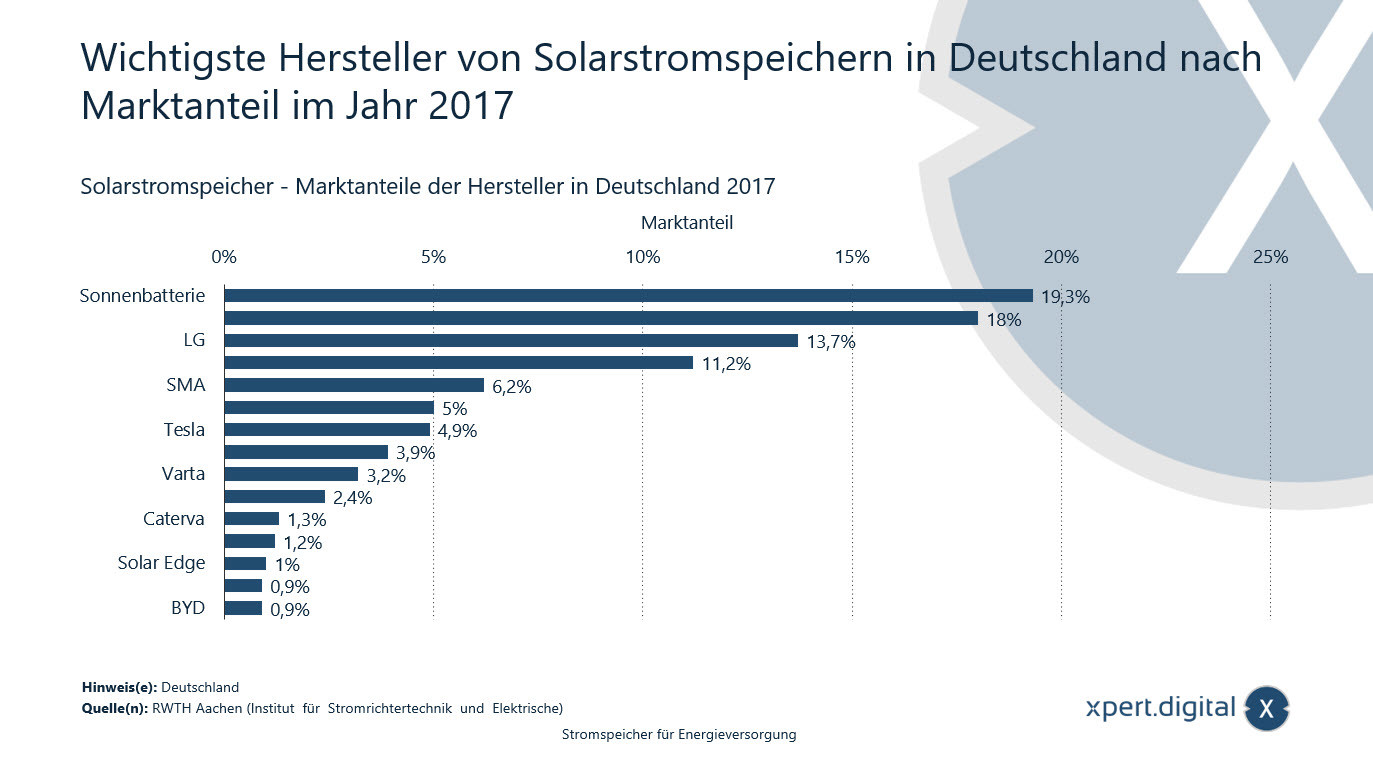
Leading manufacturers of solar power storage systems in Germany by market share – Image: Xpert.Digital
Only storage systems eligible for KfW funding are considered here. Manufacturers whose storage systems are not eligible for KfW funding are not listed. In 2017, SMA's market share for solar power storage in Germany was approximately six percent. Sonnenbatterie: The company has operated as Sonnen GmbH since November 2015.

Total number of installed photovoltaic energy storage systems in Germany – Image: Xpert.Digital
In 2018, according to a forecast, around 100,000 photovoltaic systems with solar power storage were installed in Germany. The number of installed systems is increasing significantly every year – in 2013, only 5,000 solar power storage systems were counted in Germany.
Suitable for:
In an interview with Focus Online , Oliver Koch, CEO of Sonnen GmbH, describes the networking of batteries and the virtual power plant as a clean and decentralized energy system: “Households replace power plants and electricity is produced decentrally.” According to Mr. Koch, a zero-euro electricity bill is possible.
Mr. Koch recommends that plant operators whose EEG subsidies are about to end should recalculate the situation and consider using the electricity they produce themselves in the future.
We already suggested this option back in September: What to do? Subsidies for old photovoltaic systems are expiring.
The Tübingen municipal utility company is demonstrating that there is another way: Starting in 2021, they are offering operators of post-EEG (Renewable Energy Sources Act) solar installations six cents per kilowatt-hour. Lechwerke AG recommends technical adjustments to solar installations and consuming the solar power themselves in the future. A suitable storage solution should make the solar installation even more efficient.
However, the future direction remains unclear. The draft amendment to the Renewable Energy Sources Act (EEG) contains an important change for post-EEG installations: a temporary exemption is planned for small-scale PV systems that feed all their electricity into the grid. A transitional arrangement is to be introduced for systems up to 100 kWp, allowing them to continue feeding their electricity into the grid until 2027. However, all electricity must be fed into the grid; self-consumption is excluded.
Keep in touch








