
Rapid network digitization instead of new hurdles: Why the EEG 2027 jeopardizes the energy transition before it is completed
Xpert Pre-Release

Language selection 📢
Published on: March 20, 2026 / Updated on: March 20, 2026 – Author: Konrad Wolfenstein
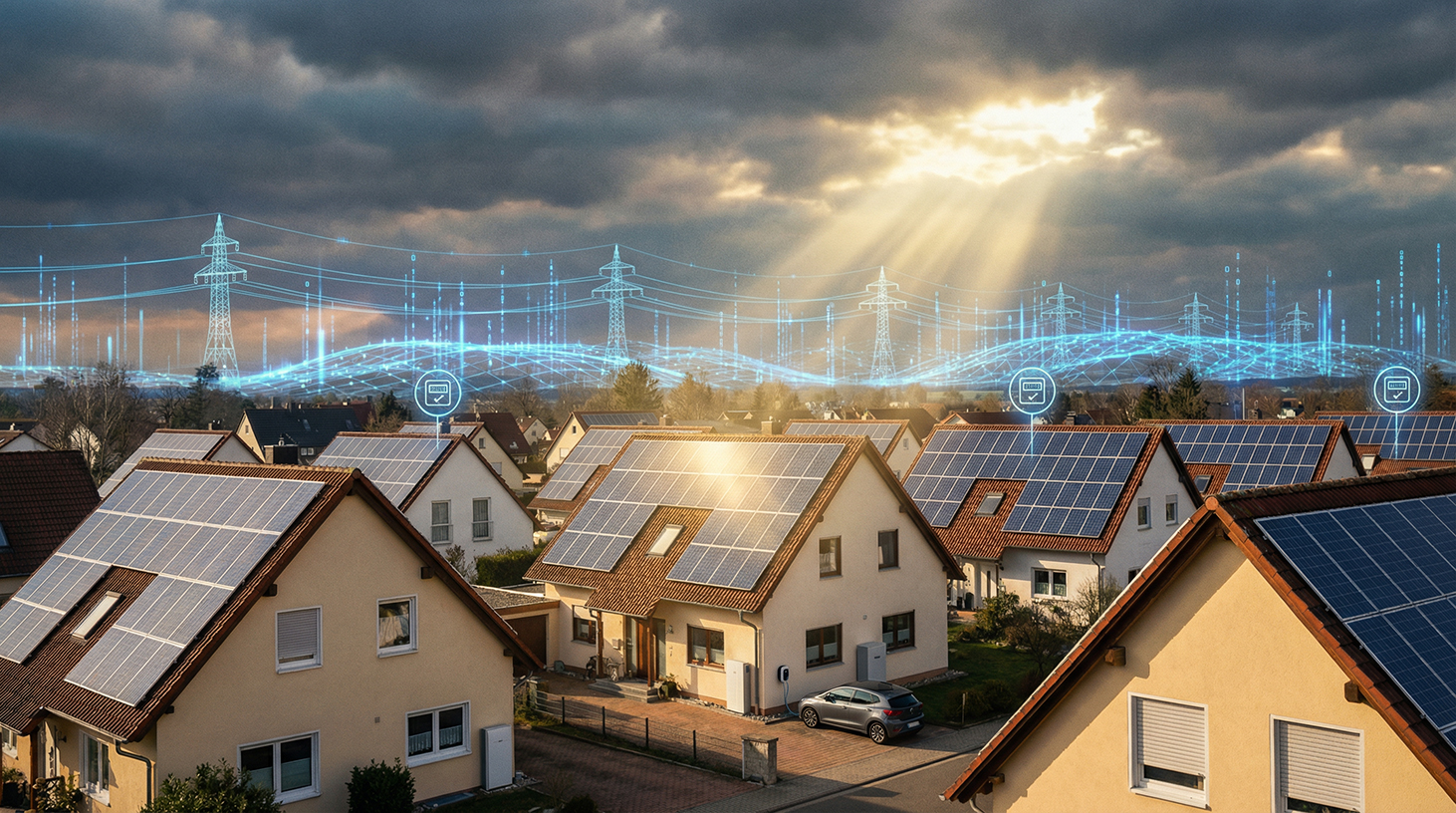
Rapid network digitization instead of new hurdles: Why the EEG 2027 jeopardizes the energy transition before it is completed – Image: Xpert.Digital
Solar shock: Why photovoltaics without storage could soon become a losing proposition
Austria leads the way, Germany fails: Why the smart meter shortage jeopardizes the solar energy future
Feed-in tariffs on the brink of extinction: What the new draft of the Renewable Energy Sources Act (EEG) means for your roof
A controversial draft bill for the 2027 amendment to the Renewable Energy Sources Act (EEG) is currently causing considerable unrest in the energy sector and among private property owners. The Federal Ministry for Economic Affairs and Climate Action is apparently planning a radical paradigm shift: For new photovoltaic systems with a capacity of less than 25 kilowatts, the fixed feed-in tariff is to be completely eliminated from January 1, 2027. Instead, a drastic reduction of feed-in capacity to 50 percent is threatened – effectively making battery storage mandatory – along with a nationwide requirement for direct marketing of the generated electricity. However, while policymakers are eager to prematurely cut subsidies, the essential infrastructure for implementing this change is lacking. The sluggish rollout of smart meters and the obstructionist stance towards innovative concepts like energy sharing make the new regulations an insurmountable obstacle for private system operators. The following article analyzes in depth why this planned “market pressure without market infrastructure” not only massively jeopardizes investments in private rooftop systems, but also puts the decentralized energy transition as a whole at risk – and what urgently needs to be done now to avert this mistake.
Secret document on the EEG 2027 revealed: Does this draft mean the end for private solar power systems?
A design is causing a stir
On February 27, 2026, a 442-page draft bill from the Federal Ministry for Economic Affairs and Energy under Katherina Reiche was leaked to the public, causing considerable consternation in energy policy. Classified as "VS – For Official Use Only," the draft bill for the 2027 amendment to the Renewable Energy Sources Act (EEG) proposes the complete end of fixed feed-in tariffs for new photovoltaic systems under 25 kilowatts as of January 1, 2027, and a general obligation for all system segments to engage in direct marketing. It also includes a permanent cap on feed-in to 50 percent of the installed capacity for smaller systems, effectively making battery storage mandatory, as well as a temporary transitional arrangement for so-called grid operator acceptance until 2029 at the latest. While this draft is not yet legally binding, it unequivocally signals the direction energy policy is headed – and rightly so.
Market pressure without market infrastructure
The central problem with the draft legislation lies not in its underlying economic policy logic, which would be perfectly defensible, but in a fundamental sequencing error: Policymakers are cutting subsidies before the necessary market infrastructure for small-scale installations is even remotely in place. Direct marketing, which is slated to become mandatory for private rooftop systems with 5 or 10 kilowatts peak capacity, is simply not technically and organizationally feasible for the mass market today. A fundamental prerequisite for functioning direct marketing, dynamic tariffs, energy sharing, and flexible grid fees under Section 14a of the German Energy Industry Act (EnWG) is the nationwide rollout of smart meters. However, this rollout is stalled: Currently, only about four percent of all metering points in Germany are equipped with smart metering systems. By comparison, Austria boasts a smart meter penetration rate of 95 percent and already operates successful citizen energy communities. Germany has delayed the rollout for years, even though it is mandatory for installations with a peak capacity of 7 kilowatts or more. Those who cut funding now, before the meter is installed, are not gradually slowing down the energy transition – they are risking its widespread collapse.
What the draft specifically means
For owners of single-family homes, the planned cuts will be most drastic. Anyone installing a new system under 25 kilowatts peak from 2027 onwards and wishing to feed surplus electricity into the grid will no longer receive any compensation unless they participate in direct marketing. The Ministry of Economic Affairs justifies this by arguing that small solar systems are economically viable even without subsidies due to reduced system costs, provided they achieve high self-consumption rates. This argument is valid for specific situations, but ignores the overall reality: Alongside the end of the compensation is the 50 percent cap on feed-in capacity, which, without storage, translates to a loss of approximately 5 to 12 percent in revenue for an average single-family home. Battery storage can reduce this loss to 1 to 3 percent – effectively making storage a prerequisite for profitable operation rather than an optional investment. The situation is further exacerbated for apartment buildings and condominium associations, as investment decisions are made through owners' meetings, which are already burdened by legal uncertainty surrounding tenant electricity. If the remuneration logic changes overnight, an investment freeze is threatened in precisely the segment that is crucial for the decentralized energy transition in existing buildings.
New: Patent from the USA – install solar parks up to 30% cheaper and 40% faster and easier – with explanatory videos!

New: Patent from the USA – Install solar parks up to 30% cheaper and 40% faster and easier – with explanatory videos! - Image: Xpert.Digital
The core of this technological advancement is the deliberate departure from conventional clamp mounting, which has been the standard for decades. The new, more time- and cost-effective mounting system addresses this with a fundamentally different, more intelligent concept. Instead of clamping the modules at specific points, they are inserted into a continuous, specially shaped support rail and held securely in place. This design ensures that all forces – whether static loads from snow or dynamic loads from wind – are distributed evenly across the entire length of the module frame.
More information here:
Are solar panels the scapegoat? Who is really responsible for negative electricity prices?
Flexibility potential is being systematically wasted
The legal framework for genuine flexibility in energy supply has long been in place. The Solar Peak Act mandates smart metering, Section 14a of the German Energy Industry Act (EnWG) allows for variable grid fees, and since the Bundestag's decision in November 2025, energy sharing has been explicitly enshrined in national law for the first time via Section 42c EnWG. Grid operators are therefore obligated to enable energy-sharing communities from June 1, 2026, and from June 1, 2028, also across the boundaries of neighboring balancing areas. This sounds like a breakthrough, but in practice, it is still far from being truly feasible. According to industry experts, market communication for energy sharing is not expected before April 2027. Grid operators have not yet implemented the market communication required by Section 14a EnWG, variable grid fees cannot be used in practice, and pilot projects in energy sharing are, at best, operating on a manual basis. The variable grid fees are failing due to the lack of market communication implemented by grid operators. There is therefore no way to benefit from flexible grid fees. And there is still no sign of any practical models for sharing surplus energy in the immediate vicinity. The opportunities offered by flexibility thus remain untapped – not because the law is lacking, but because implementation is stalled.
The value of solar power in the local grid is underestimated
Another blind spot in the political discourse concerns the economic valuation of locally generated solar power. Private PV systems in buildings directly decarbonize the building sector and supply renewable electricity to the distribution grids – precisely where it is consumed. This minimizes transmission losses and relieves the strain on the grids at both the transmission and distribution levels. Nevertheless, energy suppliers still charge the full tariff rate even when the solar power is transported only a few meters within the local grid – including the full grid fee for a transit that is practically immeasurable from a systemic perspective. This contradiction between the systemic benefit of locally generated solar power and its regulatory treatment is not economically justifiable. It primarily reflects the fact that the energy system's billing logic still stems from an era in which electricity was exclusively generated centrally and distributed hierarchically. As long as practical billing models for energy sharing are lacking and smart-meter-based local grid solutions do not scale, this value contribution remains invisible – and therefore unused.
Why negative stock market prices are not an argument against small investments
The draft's implicit justification—that the expansion of small-scale PV systems destabilizes markets and drives negative exchange prices—does not withstand sober analysis. Building-integrated PV systems in the local grid are regulated by the Technical Connection Conditions (VDE-AR-N 4105) and do not, by their very nature, generate uncontrolled feed-in peaks. Negative exchange prices arise from a combination of inflexible baseload supply, a lack of storage capacity, and inadequate market integration of large-scale producers—not from millions of small rooftop systems whose contribution to overall generation is diffuse and decentralized. If grid operators and metering point operators had already completed their necessary tasks, even this systemic conflict could be significantly mitigated through intelligent load management, time-shifted feed-in based on market signals, and local energy sharing. The regulatory thresholds for mandatory direct marketing, as proposed in the draft, may be systemically sensible for large and medium-sized systems. For small-scale installations in private residential construction, however, they encounter a reality for which the technical and organizational prerequisites simply do not yet exist.
What is needed now
The answer to the flawed developments in the draft Renewable Energy Sources Act (EEG) is not a retreat to old subsidy logics, but a clear prioritization of digital grid infrastructure as a mandatory political task. First and foremost is the consistent and accelerated rollout of smart meters – not as a voluntary exercise for grid operators, but as a binding infrastructure program with sanctions for delays. Only when smart metering systems are installed nationwide can dynamic electricity tariffs, variable grid fees, and energy sharing realize their systemic benefits. At the same time, practical, scalable billing models for energy-sharing communities are needed so that the value of locally generated solar power can be economically reflected. The direct marketing obligation for small-scale installations should only come into effect once the necessary market infrastructure is actually in place. As long as this is not the case, the abrupt elimination of feed-in tariffs is the worst possible option for the investment security of private plant operators – and thus for the pace of the decentralized energy transition as a whole. Only flexibility makes volatile renewable electricity more reliable and cost-effective. Fossil fuel inertia, on the other hand, is blocking an energy transition that would already be technically within reach today.
Your partner for business development in the fields of photovoltaics and construction
From industrial rooftop PV to solar parks and larger solar parking lots
☑️ Our business language is English or German
☑️ NEW: Correspondence in your native language!

Konrad Wolfenstein
I and my team are happy to be available to you as your personal advisor.
You can contact me by filling out the contact form here or simply call me at +49 7348 4088 965. My email address is: [email protected]
I'm looking forward to our joint project.
☑️ EPC services (Engineering, Procurement and Construction)
☑️ Turnkey project development: Development of solar energy projects from start to finish
☑️ Site analysis, system design, installation, commissioning, maintenance and support
☑️ Project financier or intermediary of capital providers
Innovative photovoltaic solution for cost reduction (up to 30%) and time savings (up to 40%)

Innovative photovoltaic solution for cost reduction and time savings - Image: Xpert.Digital
More information here:







