
Process optimization or process exploration in intralogistics – The Kodak moment in logistics
Xpert Pre-Release

Available in 27 languages 📢
Prefer Xpert.Digital on GoogleⓘPublished on: January 13, 2026 / Updated on: January 13, 2026 – Author: Konrad Wolfenstein
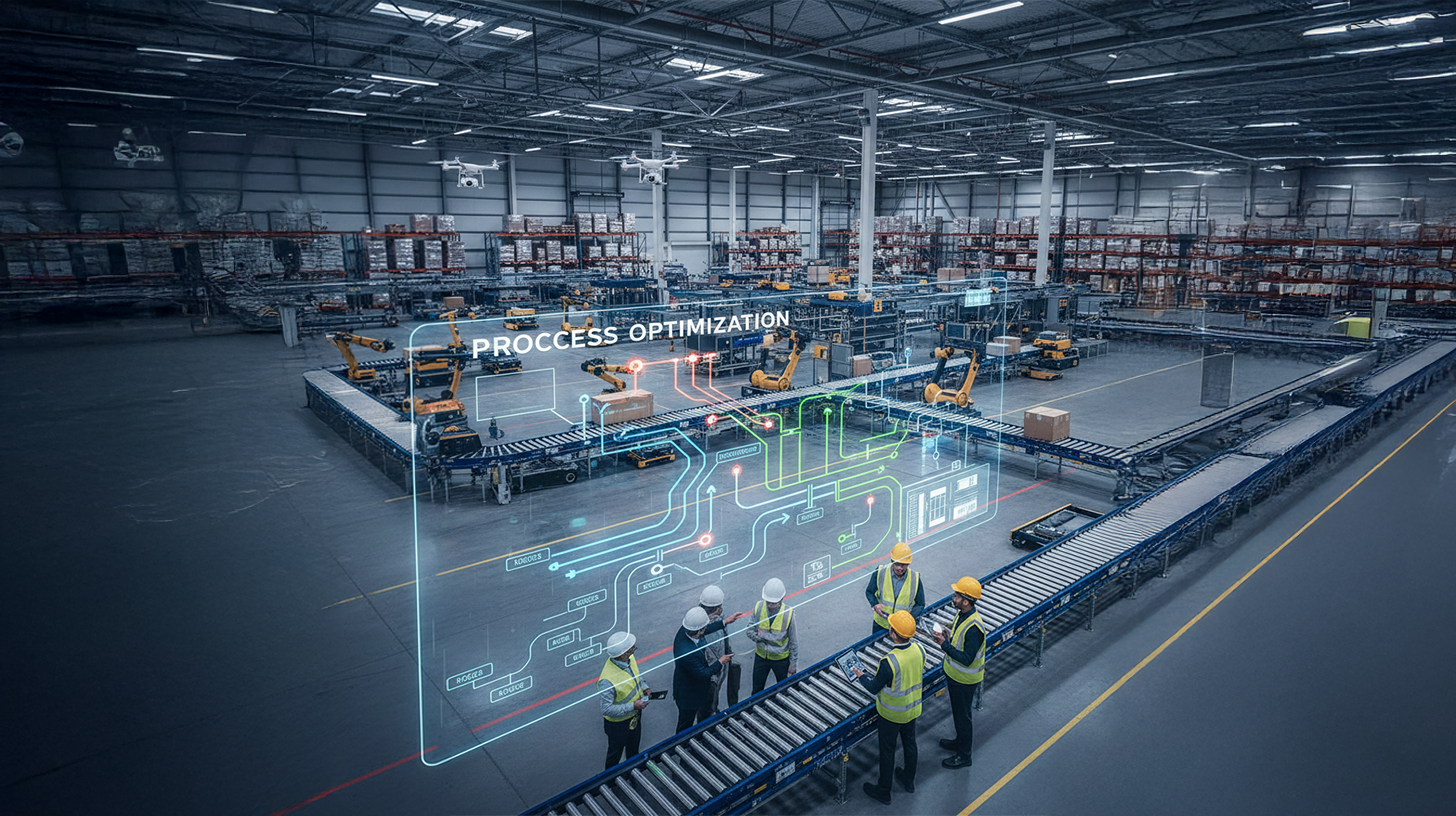
Process optimization or process exploration in intralogistics – The Kodak moment in logistics – Image: Xpert.Digital
The efficiency trap: Why pure optimization can ruin your warehouse
Deadly Perfection: When mere process optimization becomes a strategic dead end
Modern intralogistics is characterized by a constant conflict of objectives: on the one hand, there is the relentless pressure to reduce costs and increase efficiency, and on the other, the need to remain competitive through radical innovation. Many companies fall into a dangerous trap: they optimize existing processes to perfection – and overlook the fact that the technological landscape has already undergone fundamental changes.
But how do you solve this dilemma? The answer lies not in choosing one or the other, but in organizational ambidexterity – the ability to act with both hands. While established methods like Kaizen, Lean, and Six Sigma stabilize day-to-day operations (exploitation), disruptive technologies such as AI, autonomous robots, and process mining require entirely new ways of thinking and a willingness to take risks (exploration).
This article explores the tension between incrementally improving the familiar and boldly exploring the new. Learn why efficiency can become a hindrance, the role of the digital twin, and how leaders can balance operational excellence with forward-looking innovation to thrive in the long run.
When efficiency becomes a trap: The underestimated power of strategic realignment
Intralogistics faces a fundamental dilemma. On the one hand, there is constant pressure to increase efficiency, reduce costs, and minimize errors in existing processes. On the other hand, companies risk missing disruptive developments and ultimately losing their competitiveness by focusing too heavily on optimizing the status quo. This tension between improving the familiar and exploring the new shapes strategic decisions in warehouses, distribution centers, and production logistics worldwide.
The central question is not whether companies should optimize their processes or explore new avenues, but rather when each approach represents the right strategic choice and how both dimensions can be managed simultaneously. This distinction between process optimization and process exploration forms the backbone of successful intralogistics in an increasingly digitalized and volatile economic landscape.
The essence of process optimization
Process optimization in intralogistics refers to the systematic and continuous improvement of existing material and goods flows within a company. Essentially, it's about making established processes more efficient, cost-effective, and error-free without radically altering their fundamental structure. This form of improvement builds upon existing knowledge and proven methods.
The continuous improvement approach follows an incremental logic. Small, manageable changes are systematically introduced, tested, and standardized if successful. This process is repeated in regular cycles, which can lead to considerable efficiency gains over time. The Japanese Kaizen philosophy embodies this idea in its purest form, assuming that no process is ever fully optimized and that there is always room for further improvement.
In practical application, process optimization in intralogistics manifests itself through various established methods. The Lean philosophy focuses on identifying and eliminating waste in all its forms. This involves analyzing material flows, shortening transport routes, reducing waiting times, and eliminating excess inventory. Tools such as value stream mapping help to make processes transparent and identify potential for improvement. The systematic application of the 5S methodology ensures order, cleanliness, and standardization in the workplace, which in turn creates the foundation for efficient processes.
Six Sigma complements this approach with a strong focus on quality management and error reduction. Statistical methods are used to analyze and systematically reduce process variability. The goal is to lower the error rate to near zero, thereby achieving the highest process quality. The DMAIC cycle, with its phases Define, Measure, Analyze, Improve, and Control, provides a structured framework for improvement projects.
The advantages of process optimization are obvious. By focusing on familiar processes and proven methods, the risk remains manageable. Investments in optimization measures are generally more cost-effective than radical redesigns, as existing infrastructure and expertise can be leveraged. The results are often measurable in the short term and contribute directly to improved operational performance. Employees can be gradually introduced to new ways of working, which increases acceptance and reduces resistance.
Nevertheless, this approach also has fundamental limitations. Process optimization always operates within the framework of existing systems and ways of thinking. It cannot question or overcome the basic structures of a process. This leads to the phenomenon of the local maximum, where a process is optimal within its given structure but may still be far from a global optimum. Companies that focus exclusively on optimization risk being overtaken by disruptive innovations from competitors or by fundamental changes in markets and technologies.
The nature of process exploration
Process exploration stands in stark contrast to optimizing existing processes. It involves the systematic search for entirely new solutions, technologies, and business models. Exploration means leaving established paths, accepting uncertainty, and venturing into areas where the company has little or no prior knowledge. The focus is not on incremental improvement, but on identifying and developing fundamentally different approaches.
In intralogistics, exploration manifests itself through the introduction of disruptive technologies and innovative concepts. The implementation of autonomous mobile robots, for example, represents a fundamental break with traditional manual or semi-automated order picking processes. Instead of improving existing processes, a completely new operating model is established, in which intelligent machines navigate autonomously, detect obstacles, and respond flexibly to changing requirements. This necessitates not only significant investments in hardware but also the development of new skills, the adaptation of layouts, and the integration of complex control systems.
The digital transformation of logistics, often summarized under the term Logistics 4.0, represents another dimension of exploration. The Internet of Things (IoT) enables the comprehensive networking of all objects and systems in the supply chain. Sensors continuously collect data on the position, condition, and movement of goods and resources. This data is analyzed in real time to create transparency, detect anomalies, and make predictive decisions. Artificial intelligence optimizes routes, forecasts demand, and automates complex decision-making processes. Blockchain technology enables new forms of collaboration and transparency across company boundaries.
The development and use of digital twins illustrates the exploratory potential of modern technologies. A digital twin creates a virtual replica of the entire warehouse operation, including all physical objects, processes, and material flows. This virtual environment is continuously synchronized with real-time data from the actual operation. This allows for the simulation of various scenarios, the testing of alternative configurations, and the identification of potential problems without disrupting ongoing operations. Companies can thus experiment, learn, and continuously improve their systems.
The exploratory approach differs fundamentally in its focus on time and risk. While optimization aims for short-term, incremental improvements, exploration focuses on long-term transformation and unlocking new opportunities. Uncertainty is significantly higher, as the outcomes of exploratory activities are often difficult to predict. Not every experiment succeeds, and failures are an inherent part of the learning process. This necessitates a different culture, leadership styles, and evaluation criteria than those used in process optimization.
The advantages of successful exploration are considerable. Companies that embrace new technologies and business models early on can secure crucial competitive advantages and define markets before other players can react. Radical innovations enable leaps in performance that would be unattainable through incremental optimization. They create new value propositions for customers and open up entirely new business areas. At the same time, exploration makes companies more resilient to disruptive changes, as they themselves are part of the innovation process rather than being caught off guard by external developments.
Organizational ambidexterity as a strategic necessity
The central finding of modern management research is that companies must master both dimensions simultaneously. The concept of organizational ambidexterity describes an organization's ability to utilize existing competencies while simultaneously exploring new opportunities. These seemingly contradictory requirements must be brought into a productive balance.
The concept stems from the fundamental distinction between exploitation and exploration. Exploitation refers to the use of existing knowledge for refinement, production, and efficiency improvements. It is characterized by reliability, speed, and precise execution. Exploration, on the other hand, encompasses searching, risk-taking, experimentation, flexibility, and the development of entirely new solutions. These two strategies compete for the same scarce resources, require different organizational structures and cultures, and are fostered by different leadership styles.
The dilemma lies in the fact that companies cannot choose between the two options without incurring significant disadvantages. An exclusive focus on exploitation leads to short-term efficiency but long-term stagnation and vulnerability to disruptive change. The organization optimizes itself into a dead end, from which escape becomes increasingly difficult. Conversely, excessive exploration leads to high costs, a lack of operational excellence, and insufficient utilization of existing capabilities. Resources are invested in uncertain projects while the core business is neglected.
Empirical studies demonstrate the positive correlation between ambidexterity and business performance. Organizations that pursue both exploratory and exploitative innovation exhibit higher growth rates than those that focus on only one dimension. Crucially, it is not merely the presence of both activities that matters, but their balanced relationship. An imbalance, where one side dominates the other, negatively impacts performance.
In the context of supply chains and intralogistics, ambidexterity manifests itself in various forms. Companies develop parallel supply structures in which some product lines are handled via cost-optimized, efficient channels, while others operate via flexible, fast-reacting structures. This structural separation makes it possible to leverage the advantages of both approaches simultaneously and to shift production volumes between channels as needed.
The combination of Lean and Agile principles in the supply chain also illustrates this concept. Lean approaches optimize flow, eliminate waste, and reduce costs in stable, predictable environments. Agile approaches, on the other hand, enable rapid adjustments to demand fluctuations and market changes. Companies that integrate both philosophies achieve both operational efficiency and strategic flexibility.
The successful implementation of organizational ambidexterity requires specific prerequisites. A clear strategic direction must communicate and legitimize the importance of both exploitation and exploration. Top-level leaders must actively promote the integration of both dimensions and mediate resource conflicts. A shared vision and common values create an overarching identity that unites exploratory and exploitative units.
Structurally, it is often advisable to separate the two areas into distinct organizational units with their own teams, resources, and management structures. Exploratory units should be able to operate in a decentralized, small, and independent manner, free from established processes. They require freedom to experiment and a culture that accepts failure as a learning opportunity. Exploitative units, on the other hand, benefit from centralization, standardization, and a culture of continuous improvement.
At the same time, targeted integration mechanisms at a higher level must connect both areas. Leadership teams act as bridges, joint committees ensure knowledge transfer, and shared resources or services create synergies. This paradoxical combination of separation and integration represents one of the central challenges of ambidextrous organizations.
Methods and tools for process optimization
The practical implementation of process optimization in intralogistics relies on proven methods that have been developed and refined over decades. These tools form the foundation for systematic improvement activities and have proven their worth in a wide variety of industries and company sizes.
Kaizen embodies the philosophy of continuous improvement in its most consistent form. The term originates from Japanese and literally means "change for the better." At its core is the conviction that even the smallest improvements are valuable and that every employee, regardless of their position, can contribute to optimization. In intralogistics, for example, Kaizen is applied to systematically shorten transport routes within the warehouse, accelerate picking processes, and eliminate sources of error. Its strength lies in the broad involvement of employees, who contribute their practical experience and identify with the improvements.
The Lean methodology focuses on identifying and eliminating various forms of waste. In intralogistics, these manifest as overproduction, unnecessary waiting times, excessive transport distances, inefficient process steps, excess inventory, errors and rework, as well as underutilized employee skills. Value stream mapping visualizes the complete material flow from goods receipt to shipping and identifies activities that do not add value from the customer's perspective. Based on this, processes are redesigned to optimize the flow and eliminate waste.
Just-in-time principles complement the lean approach with a philosophy that provides materials and products precisely when needed. This reduces inventory, saves capital and storage space, and ensures a smooth process flow. However, this approach requires precise planning, reliable supply chains, and stable processes, making it vulnerable to disruptions.
The 5S method creates the foundation for efficient processes through systematic workplace organization. The five steps of Sorting, Set in order, Shine, Standardize, and Sustain establish order, reduce search times, and create a professional work environment. In warehouses, the consistent application of 5S leads to clearly marked storage areas, standardized filing systems, and clean, safe working conditions.
Six Sigma follows a data-driven approach to quality improvement and error prevention. The methodology aims to understand and reduce process variability in order to achieve near-flawless execution. The DMAIC cycle structures improvement projects into the phases Define, Measure, Analyze, Improve, and Control. Statistical tools such as capability analyses, hypothesis testing, and design of experiments enable an objective evaluation of improvement measures. In warehouse processes, for example, Six Sigma is used to reduce picking errors, increase delivery accuracy, or systematically resolve quality issues.
The combination of Lean and Six Sigma, often referred to as Lean Six Sigma, unites the strengths of both approaches. Lean focuses on speed and flow, while Six Sigma focuses on quality and variability. Together, they enable comprehensive process optimization that addresses both efficiency and quality. In warehouse logistics, this leads to measurably improved performance in key performance indicators (KPIs) such as throughput time, error rate, productivity, and customer satisfaction.
However, the successful implementation of these methods requires more than just technical knowledge. A culture of continuous improvement must be established, in which employees are encouraged to identify problems and propose solutions. Leaders must allocate time and resources for improvement activities and ensure that successes are recognized. Regular training keeps knowledge alive and further develops the organization's capabilities. Standardization ensures that improvements achieved are permanently implemented and that old patterns are not reverted.

Xpert partner in warehouse planning and construction
Process mining reveals: Optimize or reinvent? When your logistics needs a radical change of course
Technologies and approaches to process exploration
Process exploration in modern intralogistics is largely enabled and driven by technological innovations. These technologies open up possibilities that would not be achievable with conventional approaches and redefine the limits of what is feasible.
Process mining represents a data-driven approach to process analysis that goes far beyond traditional methods. The technology uses digital traces left by every transaction in operational systems to create a precise picture of actual process flows. Unlike manual process analyses or surveys, it objectively captures reality, regardless of how processes are officially documented or how employees believe they are performed. This often uncovers significant discrepancies between the intended and actual state, revealing optimization potential that was previously hidden.
In intralogistics, process mining enables the analysis of complex material flows across various systems. By integrating data from enterprise resource planning (ERP) systems, warehouse management (WMS) systems, and manufacturing execution (MES) systems, a holistic view of the processes emerges. Bottlenecks can be precisely located, process variants identified, and throughput times determined for different scenarios. Particularly valuable is the ability to continuously and automatically monitor how processes evolve over time and whether implemented improvements are achieving the desired effects.
Advanced process mining goes beyond mere analysis, enabling automated interventions. Based on the insights gained, systems can make rule-based or AI-supported decisions and control processes in real time. For example, during an ongoing production order, the expected completion date can be predicted, and the prioritization of downstream activities can be automatically adjusted. This closed-loop integration of analysis and control marks a significant leap forward in process optimization.
Digital twins create a virtual replica of the entire warehouse operation, including all its physical components, processes, and resources. Unlike static simulation models, digital twins are continuously synchronized with real-time data from actual operations, thus accurately reflecting the current state. This enables various application scenarios that are highly relevant for exploratory activities.
Before implementing new automation solutions, their impact can be tested in a virtual environment. Different layouts, robot fleets, and control strategies can be evaluated and compared without risk. The simulation considers not only theoretical capacities but also real-world constraints such as floor conditions, Wi-Fi coverage, and seasonal load fluctuations. This significantly reduces implementation risks and enables well-informed investment decisions.
During operation, digital twins support the identification of bottlenecks and the optimization of processes. What-if scenarios can be simulated to understand the impact of demand peaks, system failures, or process changes. Artificial intelligence algorithms can be trained and tested in the digital twin before being deployed in the real-world environment. This accelerates development and reduces the risk of unintended side effects.
Automation through autonomous mobile robots represents one of the most visible forms of technological exploration in intralogistics. While first-generation Automated Guided Vehicles followed fixed, defined paths and required significant infrastructure, modern Autonomous Mobile Robots navigate dynamically through their environment. They use sensors, cameras, and artificial intelligence to detect obstacles, calculate alternative routes, and interact safely with people and other machines.
This flexibility makes AMR systems particularly attractive for dynamic environments with frequent changes in layouts, product ranges, or order structures. Implementation requires no structural modifications and can be carried out gradually, starting with the introduction of individual robots and expanding the fleet if successful. The systems continuously learn from their experiences and improve their performance over time.
Integrating AMR into existing processes requires more than just acquiring hardware. New workflows must be designed, employees trained, and interfaces to higher-level control systems created. The collaboration between humans and machines must be orchestrated, optimally leveraging the strengths of both. This represents a fundamental transformation that goes far beyond the gradual optimization of existing manual processes.
Comprehensive digitalization within the framework of Logistics 4.0 combines various technologies into an integrated ecosystem. The Internet of Things (IoT) connects objects, machines, and systems, enabling continuous data exchange. Sensors constantly collect information about position, temperature, humidity, vibration, and other relevant parameters. This data is aggregated, analyzed, and used for control and optimization.
Cloud computing platforms provide the necessary computing power and storage capacity to process massive amounts of data. Artificial intelligence identifies patterns, creates forecasts, and makes automated decisions. Blockchain technology creates transparency and trust in complex supply chain networks by enabling tamper-proof records of all transactions.
These technologies should not be viewed in isolation, but rather unfold their full potential through intelligent integration. A fully digitized warehouse not only records the location of each pallet, but also understands its contents, condition, priority, and destination. The system can autonomously allocate resources, optimize routes, predict maintenance needs, and respond to disruptions. People are relieved of routine tasks and can focus on problem-solving, exception handling, and strategic decision-making.
When to optimize and when to explore?
The central strategic question for companies is not whether to optimize or explore, but rather when each approach should be prioritized. This decision depends on various factors that must be carefully analyzed.
Process optimization is the right choice when existing processes generally function well but exhibit identifiable inefficiencies. When employees know where time is wasted, where errors occur regularly, or where bottlenecks hinder productivity, optimization offers rapid and cost-effective improvements. Investments are manageable, risks are low, and results are measurable in a short time. This makes optimization attractive when a company is under cost pressure or needs to demonstrate short-term performance improvements.
Even in situations where the underlying technology and infrastructure are still up-to-date but not optimally utilized, optimization is the right approach. Often, significant potential lies dormant within existing systems, which can be unlocked through improved processes, more intensive training, or more intelligent control. Before investing in new technologies, existing resources should be fully exploited.
Process exploration, on the other hand, becomes necessary when the fundamental limits of existing systems are reached. If competitiveness erodes despite continuous optimization, if customers demand services that cannot be delivered with current resources, or if disruptive changes in the market or technology threaten, then it is essential to think beyond the status quo. Exploration is the answer to strategic threats and the basis for long-term competitive advantages.
Even when new technologies reach market maturity and promise potential that extends far beyond incremental improvements, exploration is essential. The introduction of autonomous robots, the use of artificial intelligence, or the implementation of fully digitized process chains all require exploratory approaches. The goal here is not to improve existing processes, but to develop new operating models.
The decision is also influenced by external factors. In highly dynamic markets with rapid technological changes and uncertain customer demands, exploration must play a more prominent role. Companies must continuously test new opportunities to avoid being overwhelmed by change. In stable, mature markets with established technologies, efficiency and operational excellence through optimization may be sufficient.
Resource availability also plays a role. Exploration requires capital, time, and expertise that not every company can provide to the same extent. While large corporations can fund separate innovation units, medium-sized companies may need to proceed more selectively, focusing exploratory activities on critical areas or supplementing them through partnerships and collaborations.
A practical heuristic for balancing exploration and exploitation is the so-called 37 percent rule. This guideline, originating from decision theory, states that in time-constrained decision-making processes, approximately 37 percent of the available time should be spent exploring various options before focusing on and exploiting the most promising one. Applied to businesses, this means that a substantial, but not dominant, portion of resources should be reserved for exploratory activities.
In practice, various models have proven effective in operationalizing this balance. Some companies dedicate a fixed percentage of their budget or their employees' working time to exploratory projects. Google is well-known for its 20 percent rule, and Amazon for its separate teams dedicated to new business areas. In intralogistics, this could mean that 85 percent of resources are invested in the continuous optimization of existing processes, while 15 percent are reserved for testing new technologies, pilot projects, or process innovations.
Assessing whether an activity is more exploratory or exploitative is not always straightforward. A rule of thumb is: if the company has sound knowledge of how something works and the primary goal is to do it better, faster, or more cost-effectively, it's exploitation. Conversely, if there is fundamental uncertainty about the best approach, if learning and experimentation are paramount, and if there is an opportunity to create something qualitatively new, it's exploration.
Measurement and control of both dimensions
Measuring optimization and exploration success requires different key performance indicators (KPIs) and evaluation logics. What is considered success in day-to-day operations may be inappropriate for innovative projects, and vice versa.
For process optimization, classic operational key performance indicators (KPIs) have become established. Process efficiency is measured by throughput times, throughput per unit of time, and utilization rates. Quality KPIs such as error rates, picking accuracy, and damage rates show how precisely processes are executed. Cost KPIs capture direct and indirect costs per unit processed, personnel productivity, and resource utilization. Delivery reliability, inventory turnover, and space productivity complete the picture.
These metrics are typically clearly defined, objectively measurable, and allow for comparisons over time, between locations, or against benchmarks. They are ideally suited for tracking the progress of continuous improvement programs and evaluating the effectiveness of specific measures. Regular monitoring and transparent visualization of these key performance indicators (KPIs) foster accountability and focus the organization on operational excellence.
However, these metrics are often unsuitable or even counterproductive for exploratory activities. In the early stages of exploration, there are no efficient processes yet that could be measured. Errors and inefficiencies are a natural part of learning. Applying operational metrics to pilot projects would systematically disadvantage them and stifle innovation.
Instead, different metrics are needed for exploration, measuring learning progress and potential. Input metrics capture how many resources are allocated to exploratory activities, such as innovation budget, number of dedicated staff, or invested working time. This ensures that exploration is not crowded out by operational priorities.
Process metrics measure the dynamics and efficiency of the innovation process itself. How many ideas are generated? How quickly do concepts progress through the various development stages? What are the conversion rates between phases? How long does it take from the first prototype to market launch? These key performance indicators (KPIs) help identify bottlenecks in the innovation process and optimize the innovation machinery.
Output metrics capture the results of exploration. The number of new products or services, patents filed, prototypes developed, or pilot projects completed demonstrate the activity and productivity of exploratory units. However, these metrics say nothing about quality or commercial success.
Outcome metrics ultimately assess the true business value. What revenue do new products or services generate? What cost savings result from process innovations? How does the market position change? These metrics are most important for justifying exploration investments, but also the most difficult to measure, as effects are often delayed and influenced by external factors.
Cultural metrics ultimately capture the extent to which innovation is embedded within the company. Participation rates in idea competitions, results of employee surveys on the innovation culture, and the degree of cross-departmental collaboration reveal whether the organization truly embraces innovation or merely proclaims it.
The challenge lies in managing both metric systems in parallel without one dominating the other. Exploratory units must not be measured against the same short-term efficiency metrics as operational areas. At the same time, innovation activities must also be accountable and must not become an end in themselves. Leading companies use differentiated balanced scorecards that define different mixes of key performance indicators (KPIs) for different organizational units, but all aligned with overarching strategic goals.
Organizational prerequisites for successful ambidexterity
Mastering optimization and exploration simultaneously places high demands on the organization, its structures, processes, and especially its culture. Without the right framework, ambidextrous approaches fail or degenerate into pure exploitation, as this ultimately presents the more pressing challenges.
Leadership plays a crucial role. Top management teams must understand and actively communicate the strategic necessity of both dimensions. This requires intellectual flexibility and the ability to navigate contradictions. Leaders must moderate resource conflicts between exploitation and exploration, given the natural tendency to withdraw funding from exploratory projects during challenging times. Strong leadership protects exploratory activities from this temptation and defends their strategic importance.
The organizational structure should ideally separate exploratory and exploitative activities. Separate teams or units enable the development of appropriate cultures, processes, and incentive systems. Exploratory units can operate small, agile, and with a willingness to take risks, without being hampered by the constraints of day-to-day operations. Exploitative units can focus on efficiency, quality, and continuous improvement, without being distracted by uncertain experiments.
At the same time, both areas must be integrated at a higher level. Bridging functions, joint strategic bodies, and structured knowledge transfer prevent exploratory units from becoming isolated laboratories whose results are never translated into operational reality. Finding the balance between separation and integration is one of the most difficult tasks for ambidextrous organizations.
Corporate culture must accommodate both ways of thinking. Exploitation-oriented cultures value reliability, precision, efficiency, and adherence to standards. Exploration-friendly cultures, on the other hand, encourage experimentation, accept mistakes as learning opportunities, and reward creative thinking. These seemingly contradictory values must be able to coexist.
This is best achieved through an overarching vision and values that portray both dimensions as complementary. Companies that define their identity through both operational excellence and innovation create a framework in which both approaches are recognized as equally valid. The statement that one aims to be both the most reliable and the most innovative provider simultaneously legitimizes both directions.
The incentive system must also be differentiated. While bonuses in operational areas are linked to efficiency and quality indicators, in exploratory areas, learning outcomes, successful experiments, and long-term potential should be rewarded. Punishing failures would stifle exploration from the outset.
Employee development plays a crucial role. Employees should have the opportunity to gain experience in both exploratory and exploitative areas. Rotation between exploratory and exploitative roles prevents silo thinking, fosters mutual understanding, and develops ambidextrous skills. Leaders, in particular, must learn to navigate the paradoxes of ambidexterity and decide, situationally, when each approach is appropriate.
Resource allocation must explicitly consider both dimensions. If budget decisions are based solely on short-term return-on-investment calculations, exploratory projects are systematically at a disadvantage. Instead, a portion of resources should be explicitly reserved for exploration, protected from access by operational departments. These funds must remain available even in difficult times; otherwise, exploration will appear as a luxury that can only be afforded in prosperous times.
Long-term perspective and strategic implications
The distinction between process optimization and process exploration is not merely an operational question, but has fundamental strategic implications for the future viability of companies. In an increasingly digitalized, networked, and volatile economic world, the ability to operate ambidextrously determines long-term success or decline.
Companies that focus exclusively on optimization achieve impressive operational efficiency. They become highly finely tuned machines that perfectly perform their specific tasks. This specialization brings cost advantages and quality. However, it also makes the organization inflexible and vulnerable to change. When markets shift, technologies become disruptive, or customer preferences fundamentally change, the ability to adapt is lacking. The organization has forgotten how to explore and is trapped in its structures.
Historically, there are numerous examples of highly successful companies that fell into this trap. Kodak mastered photography perfectly but failed to make the transition to digital photography, even though the technology was developed in-house. Blockbuster dominated the video rental industry through operational excellence but overlooked the disruption caused by streaming. Nokia was a leader in mobile phones but missed the smartphone transition. What they all had in common was an excessive focus on exploitation while neglecting exploration.
Conversely, companies that only explore fail due to a lack of operational capability. They generate brilliant ideas and develop innovative prototypes, but cannot scale, deliver reliably, or control costs. Many startups fail not because of a lack of innovation, but because they are unable to translate their innovations into stable, profitable business models. The transition from exploration to exploitation is one of the most critical phases.
Successful companies master both dimensions. They continuously optimize their core processes to remain competitive and generate cash. At the same time, they systematically invest in exploring new opportunities to lay the foundation for future growth. They don't switch between the two modes, but operate both in parallel.
In intralogistics, this manifests itself in various forms. A company can consistently apply lean methods in its established distribution centers, standardizing and continuously improving processes. At the same time, it might operate a pilot warehouse to test new automation concepts, artificial intelligence, or alternative organizational models. The insights gained from the pilot are then gradually integrated into the main sites once they have proven successful.
The timing of the balance between exploration and exploitation is also crucial. In economically challenging times, companies tend to reduce exploration and focus on short-term efficiency. This is understandable, but risky. It is precisely during crises that the most significant shifts in markets and technologies often occur. Those who fail to explore during such times miss out on setting the course for the future. Conversely, periods of strong growth should be used to invest in exploration, as resources are readily available and the risk of experimentation is manageable.
Geographic and segment-based diversification can also contribute to balance. While exploitation dominates in mature markets and product lines, exploratory approaches are pursued in new markets or innovative segments. This spreads risk and enables organizational learning in protected environments.
For German industry, and especially for medium-sized enterprises, organizational ambidexterity presents a particular challenge. Their traditional strengths lie in operational excellence, quality, and continuous improvement. Kaizen, Lean, and Six Sigma are deeply ingrained in their culture. These capabilities are valuable and should be preserved. However, they are no longer sufficient when disruptive changes redefine the rules of the game for entire industries.
The digitalization of logistics, the rise of artificial intelligence, and the increasing importance of platform economies and ecosystems all demand exploratory capabilities. Medium-sized enterprises (SMEs) often cannot develop these to the same extent as large corporations, but they possess agility and speed of decision-making. Collaborations, partnerships with technology providers, or investments in startups can be ways to complement exploratory capabilities without compromising operational excellence.
The ability to continuously shift between local and global thinking, between short-term and long-term, between security and risk, between efficiency and innovation, is becoming a decisive competitive advantage. Organizations that master this ambidexterity are resilient to change, seize opportunities early, and never lose sight of their operational foundations. They are future-proof in the truest sense.

Xpert.Plus warehouse optimization - high-bay warehouses such as pallet warehouses consulting and planning
Your global marketing and business development partner
☑️ Our business language is English or German
☑️ NEW: Correspondence in your national language!

Konrad Wolfenstein
I would be happy to serve you and my team as a personal advisor.
You can contact me by filling out the contact form or simply call me on +49 7348 4088 965 (Munich) . My email address is: wolfenstein ∂ xpert.digital
I'm looking forward to our joint project.
☑️ SME support in strategy, consulting, planning and implementation
☑️ Creation or realignment of the digital strategy and digitalization
☑️ Expansion and optimization of international sales processes
☑️ Global & Digital B2B trading platforms
☑️ Pioneer Business Development / Marketing / PR / Trade Fairs
Our global industry and economic expertise in business development, sales and marketing

Our global industry and business expertise in business development, sales and marketing - Image: Xpert.Digital
Industry focus: B2B, digitalization (from AI to XR), mechanical engineering, logistics, renewable energies and industry
More about it here:
A topic hub with insights and expertise:
- Knowledge platform on the global and regional economy, innovation and industry-specific trends
- Collection of analyses, impulses and background information from our focus areas
- A place for expertise and information on current developments in business and technology
- Topic hub for companies that want to learn about markets, digitalization and industry innovations










