
Published on: June 18, 2025 / update from: June 18, 2025 - Author: Konrad Wolfenstein
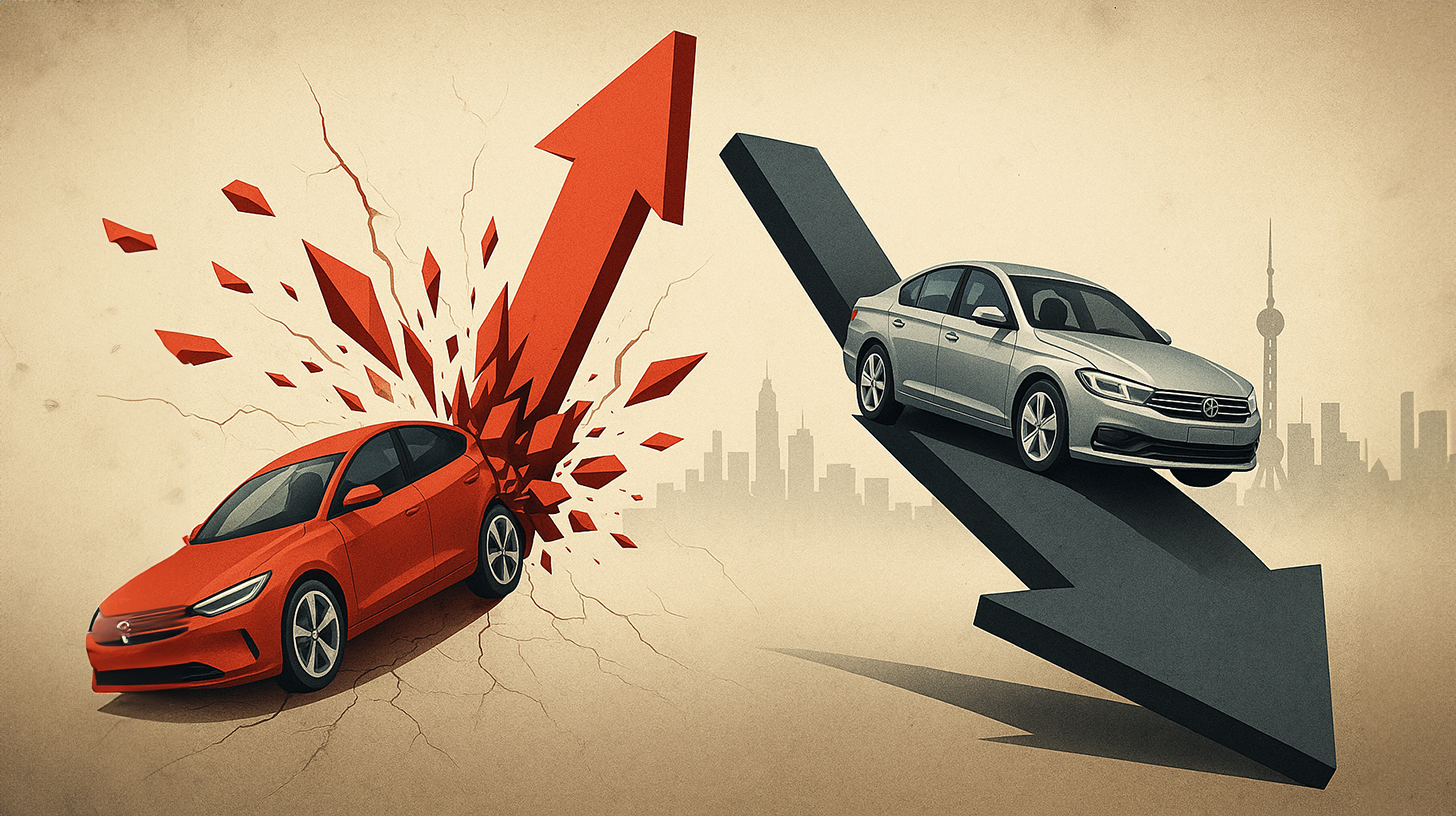
The escalation of the Chinese car market: collapse and chance for the European automotive industry - Image: Xpert.digital
China's car market in free fall: Livelihood -threatening price war shakes the entire industry
BYD triggers market quakes: 34 percent price reduction forces Chinese government to intervene
The Chinese car market is in an unprecedented crisis. What started as an intensive competition for years has now become an existential price war that shakes the entire market. In May 2025, this conflict reached its preliminary climax when the market leader BYD initiated an aggressive price reduction strategy that put the entire industry into turmoil. In a total of 22 models, the prices were reduced by up to 34 percent - an unprecedented step that forced the competition for similar measures and a chain reaction that further destabilized the already tense market.
The BYD e-small car from BYD, which is already one of the cheapest electric vehicles on the market, is now offered for only 55,800 Yuan (around 6,800 euros)-a discount of around 21 percent. The price reduction in the hybrid limousine Seal was even more dramatic, the price of which was reduced by 34 percent to 102,800 Yuan. This aggressive pricing policy has shown an immediate impact on the stock exchange: the BYD share price itself fell by up to 8 percent, while other manufacturers such as Li Auto and Geely recorded significant price losses.
The situation has become so serious that even the Chinese government had to intervene. The Ministry of Industry and Information Technology called for a meeting with the managers of the largest automobile manufacturers, including BYD, Geely and Xiaomi. The message was clear: no sales under cost costs, no inappropriate price reductions and an end to the practice of “zero-kilometer cars”, in which manufacturers sell excess new cars to financing companies or used car dealers. The government is not only concerned with the economic stability of the industry, but also about the reputation of the “Made in China” label abroad, which could be damaged by excessive cheap products.
Suitable for:
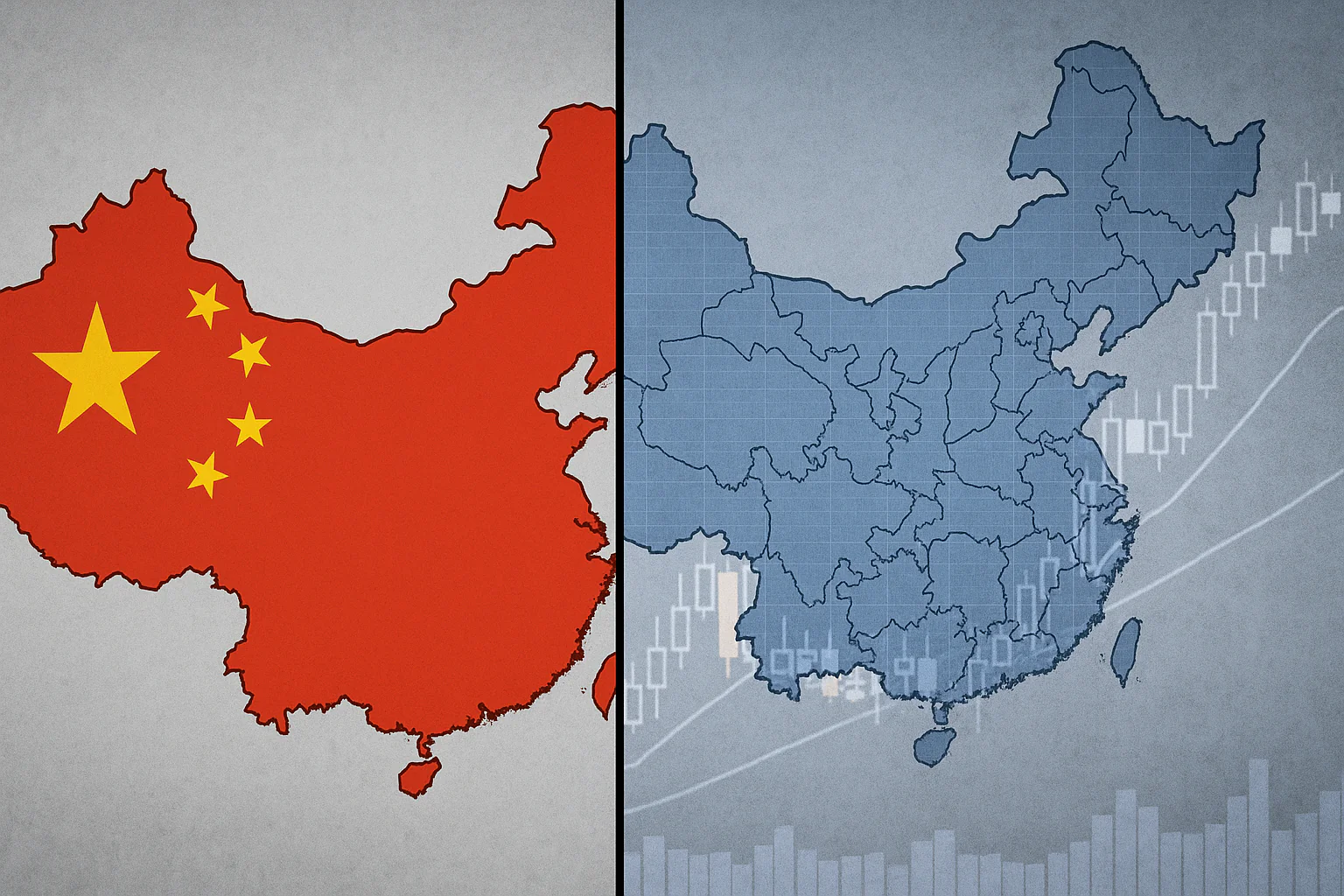
The structural problems of the Chinese car market
The current price war is not an isolated phenomenon, but the symptom of profound structural problems in the Chinese automotive sector. With over 170 active car brands, the market is extremely fragmented - more than half of these manufacturers have a market share of less than 0.1 percent. This fragmentation is not sustainable in the long term and consolidation has long been overdue.
The overcapacity in Chinese automotive production has achieved an alarming extent. The entire production capacity is estimated on around 50 million vehicles annually, while domestic demand is only around 30 million vehicles. In 2024, only 25 million cars were discontinued in China and another 6 million were exported. This discrepancy between production capacity and actual paragraph has led to enormous inventory, which further increase the financial burden for the manufacturers.
The emergence of these overcapacity is the result of years of state subsidies and grants. Each province wanted to establish its own electric car brand, and large technology groups such as Xiaomi and Huawei also urged the market. The government supported this expansion through grants, tax breaks and preferred access to raw materials. But now the negative consequences of this policy are evident: an overheated market with too many providers and not enough buyers.
Analysts of the Bank of America expect a real “bloodbath” this year. According to the China Association of Automobile Manufacturers (CAAM), only five to seven dominant brands will survive. This inevitable consolidation, which has long been predicted, has now started and will fundamentally change the Chinese automotive market.
The reaction of the Chinese government
In view of the escalating situation, the Chinese government intervened. At a meeting organized by the Ministry of Industry and Information Technology, the managers of the largest automobile manufacturers were ordered after Beijing. The message was unmistakable: the ruinous price war must have an end.
The government asked the manufacturers not to sell any vehicles under cost and to forego inappropriate price reductions. She sees the practice of “zero-kilometer cars”, in which new cars with minimal mileage are declared as used cars and sold at greatly reduced prices. In addition, fair treatment was warned by suppliers who particularly suffer from the price pressure of the manufacturers.
The reaction of the industry came promptly: 17 Chinese carmakers, including BYD, Geely, Chery and the startups Nio, Xpeng and Li Auto, have promised to limit their payment periods for suppliers to a maximum of 60 days. This is intended to reduce the financial burden on the supply industry and contribute to the stabilization of the entire value chain.
At the same time, the government is concerned about the international reputation of Chinese products. State media have warned that extremely cheap cars could damage the image of “Made in China” abroad. This is particularly relevant because Chinese manufacturers are increasingly relying on international expansion to reduce their overcapacity.
Despite these interventions, it remains unclear how effective the measures will be. The meeting did not lead to a binding guideline regarding the discounts, and it is not known what consequences the manufacturers have to expect if they do not follow the oral warnings. The government initially hopes for a “self -regulation” of the industry, but reserves the right to have further interventions if the price war.
The effects on the global market
The price war in China has far -reaching effects on the global automotive market. Since the Chinese market is overheated and the profit margins are falling, the manufacturers are increasingly looking for export options. Around 20 percent of all vehicles produced in China are already going abroad - an increase of 11 percent compared to the previous year.
Export pressure will continue to increase because various markets for Chinese manufacturers are becoming increasingly inaccessible. The United States has practically closed its market due to high tariffs, and Japan and South Korea could follow this example. The Russian market is also becoming more difficult as an export goal. Europe therefore focuses on as the primary export goal.
In October 2024, the European Union introduced anti-subsidy tariffs to Chinese electric cars and is currently negotiating minimum prices (around 35,000 euros) and import quotas. But even with these tariffs, Chinese vehicles remain attractive in terms of price. An example: The BYD Seal costs around 12,500 euros in China. Even with an inch of 45 percent, it would be able to be offered in Europe for around 18,125 euros - still only about half of the price of a comparable Tesla Model 3.
For Europe, this means increasing competitive pressure. The harder the competition in China becomes, the stronger Chinese manufacturers try to open up new markets, with Europe at the top of its list. The price war is exported to Europe, which will lead to falling prices and a more aggressive competition.
The fact that Chinese companies such as BYD are more resistant in price war are particularly worrying for European manufacturers thanks to their own battery and semiconductor production. With a gross margin of around 20 percent and a net profit, which even exceeds Tesla, you have financial reserves to pursue aggressive price strategies in the long term.
The opportunities for European automobile manufacturers
Paradoxically, the crisis in China also offers opportunities for European automobile manufacturers. The struggle for survival in China forces many companies to kneel, which opens up strategic investment opportunities for European corporations. Strangled Chinese manufacturers are looking for partners or investors, and German companies could selectively enter to gain access to technologies, production capacities or the Chinese market.
Consolidation in China could also reduce competitive pressure on the European market in the medium term. If only five to seven of the currently over 170 Chinese car brands survive, the number of potential competitors in Europe will decrease significantly. This could give European manufacturers time to adapt their own strategies and to develop more competitive products.
The current situation also offers the opportunity to redefine your own strengths. In the purely price competition, German and European manufacturers have no chance against Chinese competitors. You must therefore rely on other differentiation factors, such as quality, security, reliability and a strong brand. These values are particularly relevant in premium segments in which European brands are traditionally strong.
The European manufacturers could also learn from the experiences of Chinese competitors. The Chinese automotive industry has achieved great success in battery technology and invested early in the entire value chain at an early stage. European companies have to pursue similar strategies to reduce their dependence on Chinese suppliers and to build their own skills in key technologies.
Last but not least, the crisis in China offers the opportunity to rethink its own market positioning. While Chinese manufacturers are mainly active in the low -price segment, European brands could strengthen their position in the premium area and at the same time remain competitive through strategic partnerships or new business models.
The role of BYD as the market leader
BYD (Build Your Dreams) has established itself as a dominant force in the Chinese electric market market and plays a key role in the current market dynamics. With a market share of almost 30 percent for electric vehicles in China, the company is the undisputed market leader and sets the standards for the entire industry.
The latest terms of Citforce in BYD, in which 22 models were reduced by up to 34 percent in price, has lifted the intensive price war on a new level. This aggressive strategy is partly due to the growing inventory of the BYD dealers who have increased by around 150,000 units in the first four months of the year. According to the analysts of Deutsche Bank, the inventory for dealers is currently three to four months - probably the maximum that dealers can cope with.
BYD had sought sales growth from almost 30 percent to 5.5 million vehicles for 2025. In the first four months of the year, however, the plus was only 15 percent, which is significantly below expectations. The company had given great hopes in its autonomous driving functions, which are advertised as the “eye of God”, but they obviously did not adequately boost the paragraph.
Despite the current challenges, BYD remains in a strong position. The company is one of the few Chinese manufacturers who make profits and has a vertically integrated value chain with its own battery and semiconductor production. This makes BYD more resistant in price war than many competitors. The gross margin recently was around 20 percent, and the net profit even exceeded Tesla.
BYD is also expanding internationally. In April 2025, the company sold more electric cars in Europe than Tesla for the first time - an important milestone. In Europe, 7,231 BYD vehicles were re -registered, while Tesla came to 7,165 new registrations. This success underlines the growing global meaning of BYD and the challenge that the company represents for established western manufacturers.
BYD also plans to strengthen its presence in Europe through local production. The company is currently building a new work in Szeged, Hungary, which is due to start production at the end of 2025. This strategy could enable BYD to avoid EU tariffs and further improve its competitive position in Europe.
The consolidation of the Chinese auto industry
The Chinese auto industry is facing massive consolidation. According to industry experts, only five to seven survival will survive of the approximately 170 active car brands. This process, which has long been predicted, has now started with the escalating price war and will fundamentally change the market.
The consolidation is promoted by several factors. On the one hand, the overcapacities in production are no longer portable. With a total capacity of around 50 million vehicles annually and domestic sales of only about 25 million, enormous economic pressure arises. On the other hand, the intensive price competition leads to falling margins and financial losses that many smaller manufacturers cannot cope with for long.
The Chinese government has recognized that marketing is necessary and tries to control this process. An example of this was an attempt to promote a merger between the state manufacturers Changan and Dongfeng, which together formed the largest car company in China. However, this project failed due to political hurdles, local interests and complex possessions - a sign that consolidation does not run smoothly even in the centrally directed Chinese economy.
The numerous e-car startups such as NIO, LEAPMOTOR, XPENG and LI Auto are particularly under pressure. These companies are increasingly difficult to grow and make profits. Li Xiang, founder and CEO of Li Auto, predicted in early 2024 that only five electric car manufacturers could survive in China. In his opinion, BYD, Huawei and Tesla three of these brands have already been determined.
Consolidation is expected to take place in several waves. First, the smallest and financially weakest companies will disappear from the market or take over from larger competitors. In a second phase, medium -sized manufacturers could also merge or bought by state corporations. In the end, only the strongest and most innovative companies will survive that have sufficient financial reserves, technological competence and international presence.
For the global automotive industry, this consolidation means that China will result in fewer, but more stronger and more competitive companies. These concentrated forces could act even more effectively in international markets and represent an even greater challenge for established western manufacturers.
Suitable for:

The strategies of European manufacturers in competition with China
In view of the growing competition from China, European automobile manufacturers have to adapt their strategies to remain competitive. Volkswagen, as the largest European car manufacturer, has confirmed its engagement in China despite a “ruinous” price war at electric cars. VW brand boss Thomas Schäfer said that the group wanted to remain the largest international car manufacturer in the country, although the sales of the VW Group in China decreased by twelve percent in the first nine months of the year.
The European manufacturers pursue different approaches to deal with the Chinese competition. Some rely on premium strategies and focus on high -quality vehicles with advanced technology, in which the price is not the decisive factor. Others invest in research and development to catch up with key technologies such as batteries, electric motors and autonomous driving.
Another strategy is the formation of strategic partnerships with Chinese companies. These can facilitate access to technologies, production capacities and the Chinese market and at the same time reduce the risk. Such cooperation can also help reduce the dependence on Chinese suppliers and to build their own skills.
European manufacturers also have to rethink their cost structures in order to become more competitive. This can include measures such as the stronger use of standardized hardware or software platforms, the optimization of the supply chains and the increase in production efficiency. At the same time, industry representatives are calling for better political framework conditions, such as competitive energy prices and lower taxes in order to compensate for the structural disadvantages towards Chinese manufacturers.
The entry segment is a special challenge for European manufacturers. While you are increasingly withdrawing from the small car and compact segment or postponing these models into higher price regions, Chinese manufacturers use this gap to penetrate the European market. They launch cheap electric cars that are attractive for price -conscious buyers and can serve as an introduction to the brand.
In order to be successful in the long term, European manufacturers have to play their strengths and at the same time learn from the success of the Chinese competition. This requires courage to change, investments in future technologies and a clear positioning in global competition.
The future of the global automotive industry
The future of the global automotive industry will be significantly influenced by developments in China. The current price war and the beginning of consolidation mark a turning point, the effects of which will extend far beyond the Chinese market.
For Europe, this means both challenges and opportunities. The increasing export pressure from China will intensify the competition on the European market and could lead to a reorganization of the market shares. At the same time, consolidation in China offers opportunities for strategic investments and partnerships that can give European manufacturers access to technologies and markets.
The European automotive industry is faced with the task of redefining its position. In the purely price competition, European manufacturers cannot survive against Chinese competitors. You therefore have to rely on quality, innovation, security and brand image to differentiate yourself. At the same time, you have to optimize your cost structures and invest in key technologies in order to remain competitive.
Politics also play an important role. The EU has already responded to Chinese electric cars with anti-sub-aggressive tariffs and negotiates further measures such as minimum prices and import quotas. These protective measures can give European industry time to adapt, but should not lead to permanent foreclosure that hinders innovation and competition.
Ultimately, the success of the European automotive industry will depend on how well it can adapt to the changed market conditions. This requires courage to change, investments in future technologies and a clear strategy for global competition. The price war in China may be a crisis, but it also offers the chance for a fresh start and a repositioning of the European automotive industry in the global value chain.
The next few years will be decisive. According to experts, there could be a tilting point by 2040, where either the Chinese manufacturers dominate the market or successfully hold European companies. Which scenario occurs depends on the strategic decisions that are made today. The price war in China is not only a challenge, but also a wake -up call for the European automotive industry to reinvent itself and to equip itself for the future.
Suitable for:
Your global marketing and business development partner
☑️ Our business language is English or German
☑️ NEW: Correspondence in your national language!

Konrad Wolfenstein
I would be happy to serve you and my team as a personal advisor.
You can contact me by filling out the contact form or simply call me on +49 7348 4088 965 (Munich) . My email address is: wolfenstein ∂ xpert.digital
I'm looking forward to our joint project.


