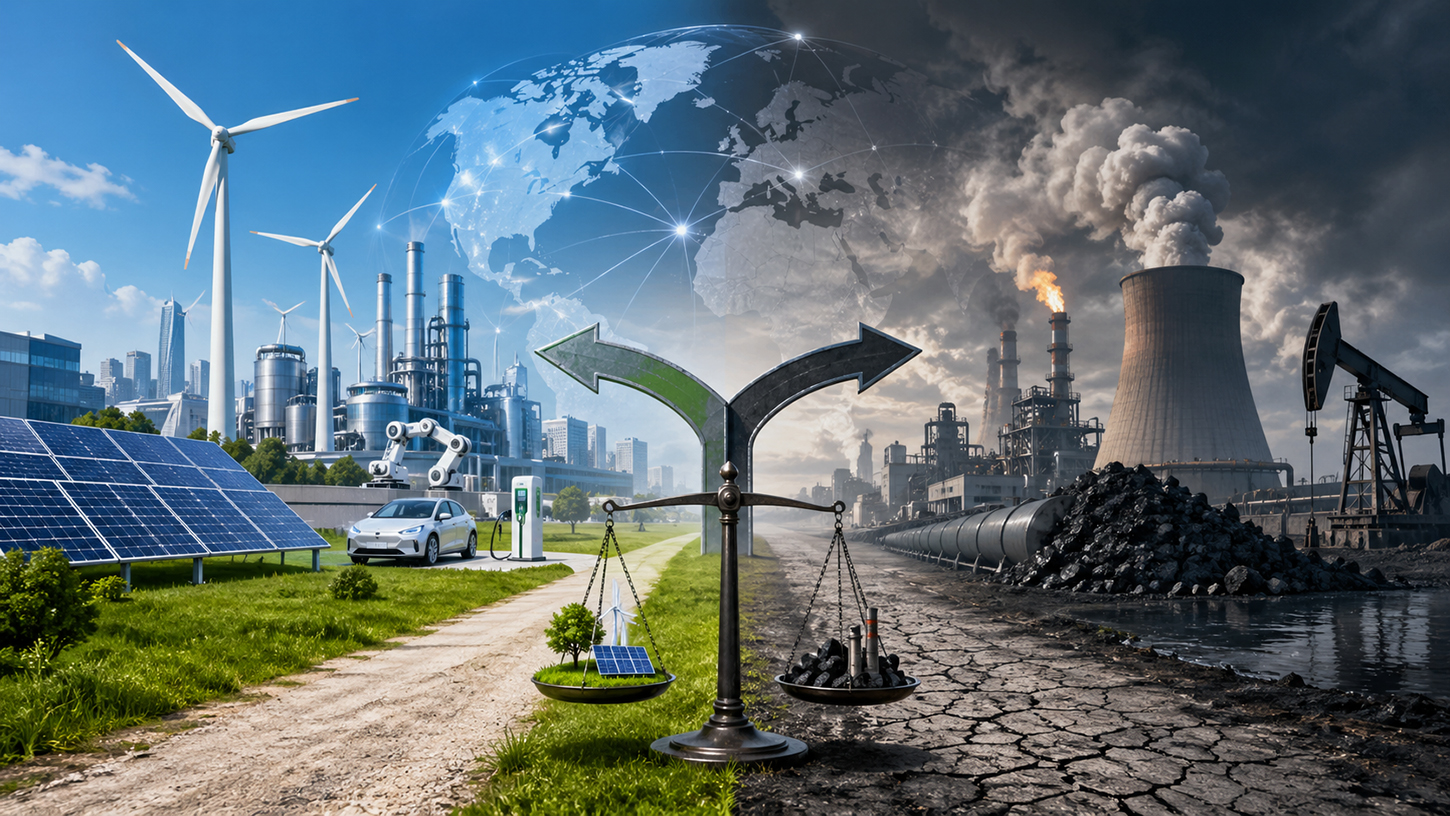
Why top manager and former BMW CEO Wolfgang Reitzle is fatally wrong with his energy criticism: Nuclear and gas instead of wind and solar – Image: Xpert.Digital
“They rejoice in our stupidity”: Why Reitzle’s lament for the energy transition ignores the global trend
Deindustrialization through the energy transition? Why Wolfgang Reitzle's theories are too simplistic
The myth of expensive green electricity: What top manager Reitzle completely overlooks in his analysis
Former top manager and industrial patriarch Wolfgang Reitzle, nearing the end of his career, has made a radical demand: Germany needs an immediate halt to the expansion of renewable energies and must instead return to a mix of nuclear power and modern gas-fired power plants. With his provocative theses, the long-time leader of companies like BMW, Linde, and Continental has struck a chord with an anxious business community and fueled the debate about the looming threat of deindustrialization. But how sound are the arguments of this experienced business leader really?
A detailed analysis reveals that while Reitzle's diagnosis identifies real structural problems in Germany's energy sector, his conclusions betray a dangerous blind spot. He relies on an outdated dogma of baseload power, overlooks the unprecedented cost revolution in wind and solar energy, and ignores the massive geopolitical risks of fossil fuel dependencies. This article examines in detail why halting the energy transition would not be a liberating move for Germany, but rather a fatal technological and economic setback – and why the global market is already heading in a completely different direction.
Related to this:

Wolfgang Reitzle and the energy transition: Where an industrial patriarch misjudges reality
A manager in farewell mode – and why his theories are dangerously simplistic
At the end of a long and impressive career, Wolfgang Reitzle – engineer, PhD graduate of the Technical University of Munich, former BMW board member, CEO of Linde, and long-time chairman of the supervisory board of Continental – gave a widely discussed interview to the Frankfurter Allgemeine Zeitung. What he states sounds like the judgment of an experienced business leader, but in parts it is a shockingly one-sided interpretation of the energy industry realities of the 21st century. Reitzle calls for an immediate halt to the expansion of renewable energies, the abolition of all feed-in tariffs, and instead advocates a mix of nuclear power and modern gas-fired power plants with carbon capture and storage. These positions are not only empirically questionable – they fundamentally contradict the current state of scientific knowledge, global market trends, and Xpert.Digital's own analyses on key points.
Related to this:

Who is Wolfgang Reitzle – and why does he speak like that?
Wolfgang Reitzle, born in Neu-Ulm in 1949, is one of Germany's most distinguished industrial managers. He studied mechanical engineering at the Technical University of Munich, earned his doctorate summa cum laude with a dissertation on metal lattice structures, and completed the Advanced Management Program at Harvard Business School. At BMW, he rose to the position of Head of Development and was considered the mastermind behind the model offensive of the 1990s. After a stint as CEO of Ford's Premier Automotive Group – responsible for Jaguar, Land Rover, Aston Martin, Volvo, and Lincoln – he became Chairman of the Executive Board of Linde AG in 2003 and transformed the company into a globally leading industrial gases provider. Since 2009, he has also served as Chairman of the Supervisory Board of Continental AG.
This biography is that of a man who thinks in terms of classic heavy industry: reliability, predictability, and efficiency in existing infrastructure. It's a school of thought that produces structural blind spots when analyzing disruptive technological shifts—like the energy transition. Reitzle has consistently held this view for years. As early as 2019, he publicly called for a return to nuclear power and described the nuclear phase-out as a national solo effort into an "exorbitantly expensive dead end." In 2021, he called the energy transition "not properly thought through from the start." Now, in his farewell interview, he draws the conclusion of his energy policy thinking—and draws the wrong conclusion.
The subsidy argument: A historical category error
Reitzle's central rhetorical point is: "A technology that still relies on subsidies after more than 30 years cannot be right." This statement sounds like free-market pragmatism. It isn't – it's a historical category error.
The question is not whether renewable energies were promoted, but whether they were promoted disproportionately compared to alternatives. The answer is a clear no. Between 1970 and 2016, Germany subsidized hard coal to the tune of €337 billion and nuclear power to €237 billion. Renewable energies received only €146 billion in government transfers during this period. Fossil fuels were thus subsidized to the tune of €674 billion – more than four times the amount of support for renewables. Furthermore, until very recently, fossil fuels in Germany received more than €46 billion in government subsidies annually – the majority of which were in the form of consumer subsidies through energy price exemptions and transportation subsidies.
On a global scale, the picture is even more drastic. Government subsidies for renewable energies amounted to only around 500 billion US dollars over a long period – less than 7 percent of global fossil fuel subsidies during the same timeframe. Anyone consistently applying Reitzle's logic – that a permanently subsidized technology cannot be sustainable – would first have to ban coal, gas, and oil from the market. But of course, Reitzle doesn't draw this conclusion.
More importantly, the EEG (Renewable Energy Sources Act) has fulfilled its purpose. It was a targeted market development instrument for scaling up new technologies – not a permanent subsidy program for irretrievably uneconomical forms of energy. The EEG's funding logic is comparable to the initial support provided to the automotive, aviation, or semiconductor industries – all sectors that received massive government support in their early stages before establishing themselves in the market. Renewable energies have now completed this maturation process.
Related to this:

The cost revolution: What Reitzle ignores
Perhaps the most consequential weakness of Reitzle's argument is his complete ignorance of the cost development of renewable energies. In 2010, the global average cost to generate one megawatt-hour of electricity from photovoltaics was around US$378. By 2019, this figure had fallen to approximately US$68 – and the price decline continues to this day. Bloomberg NEF forecasts that by 2025, the levelized cost of electricity (LCOE) from photovoltaic power plants will fall to around US$35 per megawatt-hour (3.5 cents/kWh) – with a further decline to US$25 by 2035.
In Germany, the Fraunhofer Institute for Solar Energy Systems (ISE) confirms concrete figures in its 2024 study: Photovoltaics generate electricity at levelized costs of approximately 4 to 14 cents/kWh, and onshore wind power at 4 to 9 cents/kWh. In comparison, the levelized costs for coal-fired power were 15 to 29 cents/kWh, and for nuclear power, 13 to 49 cents/kWh. Combined cycle gas turbine (CCGT) power plants cost between 10.9 and 18.0 cents/kWh in 2024 and will become even more expensive by 2045 due to rising CO₂ prices. The Fraunhofer ISE's message is clear: "Photovoltaic and wind power plants in Germany have long been producing the cheapest electricity – and this remains the case."
Xpert.Digital has documented this development in several analyses and pointed out that the total societal costs of nuclear power – including government subsidies, non-internalized external costs, and environmental, climate, and health damage – are higher than those of any other form of electricity generation. Wind and solar power are significantly cheaper than coal or nuclear power in this overall calculation. Wind energy incurs only about one-third of the total societal costs caused by lignite.
Reitzle's claim that relying solely on renewable energies is a "fatal mistake" because solar and wind power are "not capable of providing baseload power" may sound technically correct in the old energy world sense. However, it misunderstands how the energy system of the future is designed – and what current research says about it.
The baseload dogma: Outdated thinking from the industrial age
The term "baseload capability" is a relic from the era of centralized power plants, which Reitzle, like many of his generation, uses uncritically as a trump card. However, science has long since re-evaluated this concept. A joint study by the three German academies of sciences – acatech, Leopoldina, and the Union of German Academies of Sciences and Humanities – within the framework of the "Energy Systems of the Future" (ESYS) project arrives at a clear conclusion: A secure electricity supply is possible even without baseload power plants.
The study shows that an energy system based on a combination of solar and wind power plants, storage facilities, a flexible hydrogen system, flexible electricity use, and so-called residual load power plants can function reliably. Karen Pittel, head of the ifo Institute and deputy chair of the ESYS board of directors, puts it clearly: The cost risks associated with baseload technologies are generally considered to be even higher than those associated with the further expansion of solar and wind energy.
The crucial conceptual shift lies in the fact that a modern electricity system no longer requires continuously operating power plants, but rather flexibility and storage capacity. Germany has made considerable progress in this area in recent years: In 2024, almost 600,000 new battery storage systems were commissioned – a capacity increase of almost 50 percent within a single year. The expansion of battery storage in Germany has increased rapidly; nationwide, systems with more than 1.9 gigawatt-hours of storage capacity are now in operation, with a strong upward trend. Globally, storage capacity expansion of 1.9 terawatts is expected between 2025 and 2035.
The argument regarding insufficient baseload capability is not refuted – but it is significantly put into perspective. It describes a current technological gap that is being gradually closed through storage technologies, grid expansion, load management, and green hydrogen. This is not an idealistic vision, but an ongoing industrial process.
Reitzle's gas-fired power plant fantasy: Expensive, risky, and contradictory
Reitzle advocates for modern gas-fired power plants with carbon capture and storage (CCS) as an alternative to renewable energies. This proposal has three fundamental problems: it is expensive, technologically immature for use in intermittently operated gas-fired power plants, and creates new geopolitical dependencies.
Regarding costs: Fraunhofer ISE projects electricity generation costs for hydrogen-powered power plants of 30.5 to 49.8 cents/kWh in 2035. CCS at gas-fired power plants fares even worse: The CO₂ avoidance costs for CCS at gas-fired power plants for peak load coverage are estimated at 360 to 880 euros per ton of CO₂ equivalent. These figures are absurdly disproportionate to the current generation costs of wind and solar power.
Regarding the technical question: CCS at gas-fired power plants is only economically viable with continuous operation. However, the gas-fired power plants planned by the German government are not intended to run continuously, but only to kick in during peak demand periods. According to experts, CCS at intermittently operated power plants would only be possible with massive government subsidies – which is precisely what Reitzle criticizes.
Regarding security of supply: Reitzle's plea for gas-fired power plants completely ignores the lessons learned from the 2022 energy crisis. In 2021, around 55 percent of the natural gas consumed in Germany came from Russia. The collapse of these deliveries due to Russia's war of aggression against Ukraine led to skyrocketing gas prices and significant economic damage. According to a Greenpeace study, Germany is expected to pay around €32 billion for Russian oil and gas alone in 2022 – more than half of Russia's 2020 military budget. Since then, Russia has not delivered any gas directly to Germany. Renewable energies from solar and wind power, on the other hand, cannot be boycotted, sanctioned, or politically instrumentalized. They are the structural counterpart to fossil fuel import dependency.
Our EU and German expertise in business development, sales and marketing

Our EU and German expertise in business development, sales and marketing - Image: Xpert.Digital
Industry focus areas: B2B, digitalization (from AI to XR), mechanical engineering, logistics, renewable energies and industry
More information here:
A thematic hub offering insights and expertise:
- Knowledge platform covering global and regional economies, innovation and industry-specific trends
- A collection of analyses, insights, and background information from our key areas of focus
- A place for expertise and information on current developments in business and technology
- A hub for companies seeking information on markets, digitalization, and industry innovations
Reitzle's criticism fact-checked: Systemic errors instead of a technological problem
The electricity price thesis: Correctly observed, incorrectly diagnosed
Reitzle isn't entirely wrong. His reference to high German industrial electricity prices hits a nerve. German industrial companies pay above-average prices compared to their European counterparts: In 2025, industrial electricity prices for small and medium-sized enterprises were around 18.3 cents/kWh – roughly 17 percent above the EU average of 15.6 cents/kWh. Cheaper countries like Finland (8.0 cents/kWh) or Norway (7.4 cents/kWh) have particular geographical advantages when it comes to hydropower.
However, the diagnosis that the energy transition and the expansion of renewable energies are the cause of the high prices is too simplistic. The structure of the German electricity price comprises numerous components: grid fees, taxes, concession fees, levies, and the actual energy procurement price. The wholesale electricity price – that is, the market price for energy – has fallen significantly due to the massive expansion of wind and solar power. Agora Energiewende documents that the continuous expansion of renewables already led to a measurable decrease in wholesale prices in 2024. The so-called merit order effect – that is, the price-reducing effect of cheaper renewable energies on the wholesale electricity price – is well documented in academic literature.
The primary reasons driving up German industrial electricity prices are systemic: excessive grid fees, resulting in part from decades of neglecting grid expansion, high taxes and levies, and the costs of integrating volatile energy producers into the system. Added to this is the grid infrastructure problem: grid operators like Bayernwerk report connection requests for renewable energy projects totaling over 60 gigawatts that they cannot fulfill – waiting times of five to fifteen years for connecting new solar parks are not uncommon. These structural bottlenecks are the real economic policy problem – not the expansion of renewable energy itself.
The record expansion: What the numbers tell us
While Reitzle is calling for a halt to expansion, reality tells a different story. In 2024, according to the Federal Statistical Office, renewable energies in Germany reached a record share of 59.4 percent of domestically generated and grid-fed electricity. The Fraunhofer Institute for Solar Energy Systems (ISE) even reports 62.7 percent of net public electricity generation. At the same time, CO₂ emissions from electricity generation reached a new low. Photovoltaics achieved a new record high of 72 billion kWh in 2024, with record new installations of around 17 gigawatts exceeding the previous year's target. Wind power, with a share of around one-third, was by far the most important energy source in the German electricity mix.
Globally, the picture is even more dramatic. In 2024, around US$2 trillion flowed into the expansion of renewable energies – twice as much as into fossil fuels. Global investments in solar PV reached a record high of US$554 billion in 2024, an increase of 49 percent compared to the previous year. Over 90 percent of global investments in new electricity generation capacity in 2024 went to renewable energies – the addition of 585 gigawatts represented 92.5 percent of total capacity expansion. These figures make it clear: The market has decided. Not ideologically, but economically.
As an engineer and economist, Reitzle should know that a market transforming at this speed cannot be effectively reversed through administrative measures. A halt to expansion would not only be counterproductive – it would also be economically self-destructive, as it would isolate Germany from a global growth market.
Jobs and employment effects: The suppressed reality
Reitzle laments the deindustrialization of Germany as a consequence of flawed energy policy – a valid point about a real problem. What he overlooks, however, are the significant employment effects of the energy transition itself. In 2023, around 406,300 people were employed in the renewable energy sector in Germany. According to data from the Federal Ministry for Economic Affairs and Energy, this figure had already reached approximately 387,700 in 2022, representing an increase of almost 15 percent compared to the previous year.
A study by the German Economic Institute (IW), commissioned by the Bertelsmann Foundation, documents that the number of job postings in the renewable energy and energy infrastructure sector more than doubled between 2019 and 2024, rising from 173,000 to 372,500. While jobs are being cut in industry, the renewable energy sector continues to create new ones. One in every 25 jobs in Germany is now related to the energy transition.
These employment effects are not a marginal phenomenon. They represent a structural transformation of the German labor market that does not replace traditional industry, but increasingly complements and, in some cases, substitutes it. Anyone who halts the energy transition will also halt this engine of employment – precisely at a moment when Germany urgently needs growth impetus.
The deindustrialization argument: A differentiated look at the causes
The claim that the energy transition is the driving force behind German deindustrialization is an overly simplistic narrative that reduces complex interrelationships of causes to a single factor. In fact, Germany's deindustrialization is a multifactorial problem. The Association of German Chambers of Industry and Commerce (DIHK) reports that the proportion of companies considering production cutbacks or relocations rose from 21 percent in 2022 to 37 percent in 2024 – and even to 45 percent for companies with high electricity costs. However, these figures are not only influenced by energy prices, but also by structural factors such as excessive bureaucracy, a lack of digitalization, high labor costs, a shortage of skilled workers, geopolitical uncertainties, and a long-overdue structural transformation in the automotive industry.
The 2022 energy crisis, which led to extreme price increases, was largely due to the excessively long-standing dependence on Russian gas—a strategy that Reitzle himself had partly advocated and which was the antithesis of security of supply. Had Germany implemented the energy transition earlier and more consistently, its exposure to Russian gas price shocks would have been significantly lower. This connection is systematically underestimated in the public debate, including by Reitzle himself.
The 100% renewables question: Between reality and dogma
Reitzle is right to point out that the goal of 100 percent renewable electricity by 2035 is ambitious. The current monitoring report on the energy transition also acknowledges that electricity demand is growing more slowly than originally anticipated and identifies a need for adjustments to some support mechanisms. The Federal Ministry for Economic Affairs and Energy itself has signaled a need for reform – however, a halt to expansion is not the conclusion.
Herein lies the difference between nuanced systemic critique and Reitzle's maximalist critique. The former asks: How can we make the energy transition more cost-efficient, systemic, and equitable? The latter asserts: The entire approach is flawed; we must return to nuclear and gas power. This is not reform-oriented pragmatism—it is ideological restoration. Reitzle's claim that the 100 percent target is "unattainable anyway" contradicts the current state of development: In 2024, renewable energies already covered approximately 55 to 63 percent of German electricity consumption, depending on the calculation method. With an expansion rate that has more than doubled since 2019, this is difficult to justify as an upper limit.
The example of the Academy project "Energy Systems of the Future" shows that the scientific community thinks in a more nuanced way than Reitzle: Baseload power plants could be a useful addition under certain circumstances – but they are not a necessary prerequisite for security of supply. That is the difference between technological openness and an ideological fixation on the tried and tested.
Excursus: Infrastructure bottlenecks as the real brake on growth
One aspect completely missing from Reitzle's critique of energy policy is the question of infrastructure. The real bottleneck of Germany's energy transition is not a lack of generation capacity, but rather the state of the electricity grid. The well-known north-south divide—a surplus of electricity in the windy north that doesn't reach the industrial centers in the south—is a systemic failure that has nothing to do with the quality of renewable energy technologies, but rather with decades of neglect in grid expansion. Xpert.Digital's analysis of the electricity grid infrastructure has documented that the problem is not generation, but distribution: grid operators like Bayernwerk report connection requests on the order of over 60 gigawatts that cannot currently be fulfilled.
Related to this:

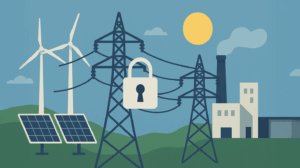
E.ON plans to invest around €43 billion in grid expansion by 2028. This is the right approach. A halt to renewable energy expansion would not solve this structural problem – it would merely dampen demand for grid connections without closing the structural investment gap. In the long term, this would cause Germany to fall further behind technologically, not catch up.
The narrative of German stupidity: self-flagellation without substance
Reitzle's statement that people abroad are "rejoicing in our stupidity" is a provocative, concise phrase that conveys more emotion than analysis. It is based on the implicit assumption that Germany is the only country attempting a systematic energy transition, while the rest of the world pragmatically continues to use fossil fuels. This assumption is factually untenable.
In 2024, over 90 percent of all global investments in new electricity generation capacity were in renewable energies. China alone installed 278 gigawatts of new photovoltaic capacity in 2024. The USA, India, South Korea, Japan, and the entire European Union are massively expanding their renewable energy capacities. Global capital is following this trend – Germany is not simply following a German ideology, but rather – despite all the justified criticism of its implementation – is part of a global economic development driven by cost reduction potential, technological learning curves, and geopolitical security of supply.
Anyone who claims that the expansion of renewable energies is a uniquely German folly, given these global market dynamics, misunderstands the fundamentals of the international energy market. Rather, it is the return to gas dependency and nuclear power that increasingly appears to be a dead end in international competition – economically, technologically, and geopolitically.
Legitimate concern, wrong conclusion
Wolfgang Reitzle is not a demagogue. He is an experienced industrialist with legitimate concerns about Germany's competitiveness, excessive bureaucracy, and the costs of an overly hasty transformation process. He is partly correct in these assessments. But his conclusions are wrong.
An immediate halt to the expansion of renewable energies would catapult Germany out of the most important global investment and technology trend, which relies on decades of cost degression, technological maturity, and geopolitical independence. It would jeopardize over 400,000 jobs in one of the few growth sectors of the German economy. It would revive the renewed dependence on Russian or otherwise imported gas—a technology that has proven to be geopolitically risky, price-volatile, and increasingly expensive to operate. And it would be based on a technological assumption—the necessity of conventional baseload power—that leading scientific academies have deemed obsolete.
Germany's real challenge lies not in an excessive focus on the energy transition, but in its lack of systemic support: grid expansion is too slow, grid fees are too high, there is too much bureaucratic investment backlog, insufficient storage infrastructure, and inadequate European coordination. Xpert.Digital has demonstrated in several analyses that the flaws in German energy policy lie not in the goal itself, but in the obstacles – in structural infrastructure deficits and decades of neglect of the grid, not in the development of clean energy sources.
Related to this:

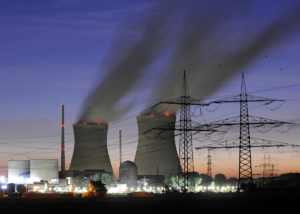

An engineer of Reitzle's caliber should know that you don't optimize a complex system by stopping it. You optimize it by identifying and fixing the systemic bottlenecks. That would be the task – not a return to an energy policy past that has made Germany expensive, dependent, and increasingly vulnerable in global competition.
Consulting - Planning - Implementation

Konrad Wolfenstein
I would be happy to serve as your personal advisor.
You can contact me at wolfenstein∂xpert.digital or
Just call me on +49 7348 4088 965 .
🎯🎯🎯 Data-driven B2B industry hub as a quasi-in-house solution


The quasi-in-house solution: How Xpert.Digital closes operational gaps in B2B marketing and sales – Smart Content-Driven Business - Image: Xpert.Digital
Xpert.Digital is a data-driven B2B industry hub led by Konrad Wolfenstein . The company acts as an external, quasi-in-house solution for industrial partners, closing operational gaps in marketing, content, and sales – without requiring additional resources on the client side.
More information here: