
Not just for mechanical engineering: tool storage with a shuttle system

Available in 27 languages 📢
Prefer Xpert.Digital on GoogleⓘPublished on: October 23, 2014 / Updated on: April 24, 2021 – Author: Konrad Wolfenstein
[In collaboration with Kardex Remstar – ADVERTISEMENT]
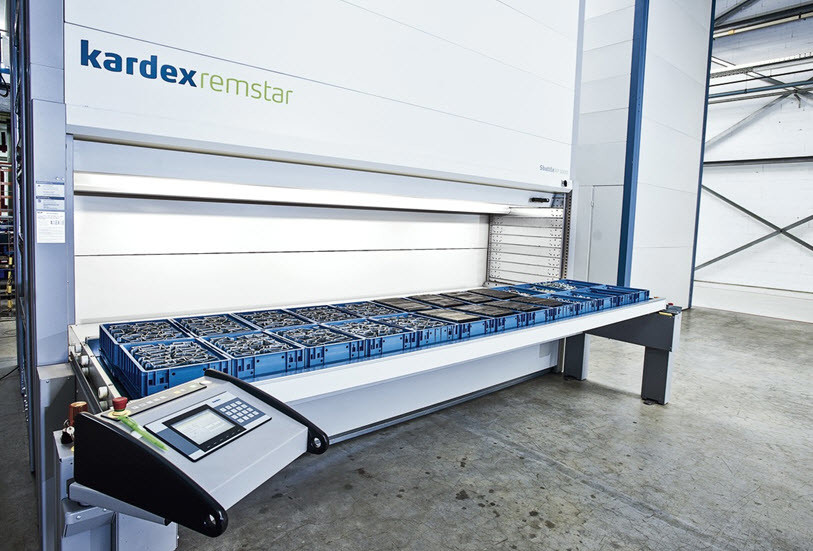
With a turnover of around €4.4 billion and approximately 30,000 employees in 2013, the toolmaking industry in Germany occupies a significant position in the industrial sector. German toolmakers account for a market share of approximately eleven percent of global trade, placing them fourth behind Japan, China, and South Korea. Despite competition from the Far East, the prospects for maintaining this position are good. This success is primarily due to the many small and medium-sized enterprises (SMEs) in the sector, which can flexibly adapt to individual customer requirements while ensuring a high level of quality. Thanks to their innovative strength, these companies consistently meet the ever-increasing global demand for specialized tools and custom solutions.
However, increasing competitive pressure is also affecting this industry; this means that manufacturers must constantly scrutinize and optimize their production processes in order to survive in the tough competition.
Tool storage with automated shuttle systems
Machine tools are used across industries in a wide variety of production steps for processing all kinds of materials. Companies in the metalworking industry, toolmaking, and automotive industries are particularly prominent among them.
Whether it involves forming machines used to process metals like steel or aluminum and plastics, or cutting machine tools used for materials such as wood, the manufacturing process always requires specialized, high-performance machining tools. When not in use, these tools must be stored in various ways. Storing them in special tool cabinets is certainly the most common method. Often, the tools are stored in numerous tool cabinets and containers of varying sizes, scattered throughout the entire production area. This inefficient storage arrangement alone wastes valuable space; not to mention the cumbersome access to the tools.
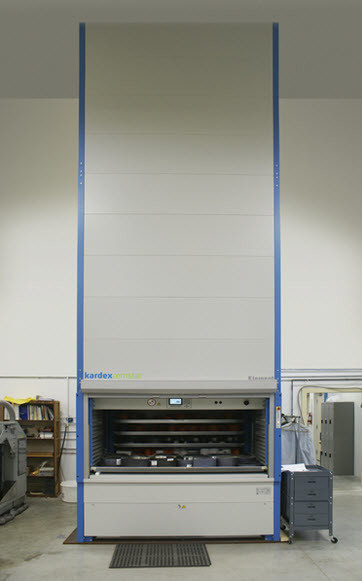
- greater flexibility in warehousing
- a greater variety of items to be kept available and
- lower storage volume
All of this means that the pressure to increase efficiency is also growing for conventional storage methods. Apart from the relatively inexpensive storage in static tool cabinets, this form of storage can contribute little to improved productivity.
Here, the introduction of storage in a central tool dispensing area using an automated storage lift – such as a shuttle – already brings measurable improvements. Storing the various tools in just a few container types or tool holders with precisely adapted dimensions offers further advantages in space utilization, as the storage volume of the storage locations can be optimally utilized in terms of depth and height.
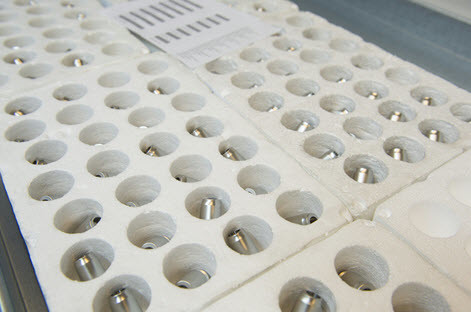
Dynamic systems such as automated storage and retrieval systems offer users significantly more opportunities to optimize the efficiency of their intralogistics processes. Faster and more precise access to stored parts are just two examples that speak in favor of this modern storage method.
Other advantages include:
- Significant reduction in walking distances for staff through the principle of delivering goods to the person.
- Fast and targeted access to stored goods, controlled by warehouse management software, avoids unproductive search times and increases picking accuracy to over 99%
- Furthermore, the use of warehouse management software enables precise control and management of all warehouse processes
- Optimal use of ceiling height and floor space in the building is achieved through the precisely fitted installation of the systems. The compact design of the equipment used allows for significant savings in floor space
- The ergonomically designed workstations, operating on the principle of goods to person, reduce employee downtime
- No more extensive instruction or training of order pickers is required
It is therefore no wonder that more and more companies involved in tool storage are now switching to automated storage lift systems in order to manage their intralogistics processes more efficiently.
Keep in touch










