
Real-time tracking and IoT in fully automated storage: increasing transparency in the cold chain | Logistics & warehouse advice

Available in 27 languages 📢
Prefer Xpert.Digital on GoogleⓘPublished on: January 19, 2024 / Update from: January 19, 2024 - Author: Konrad Wolfenstein
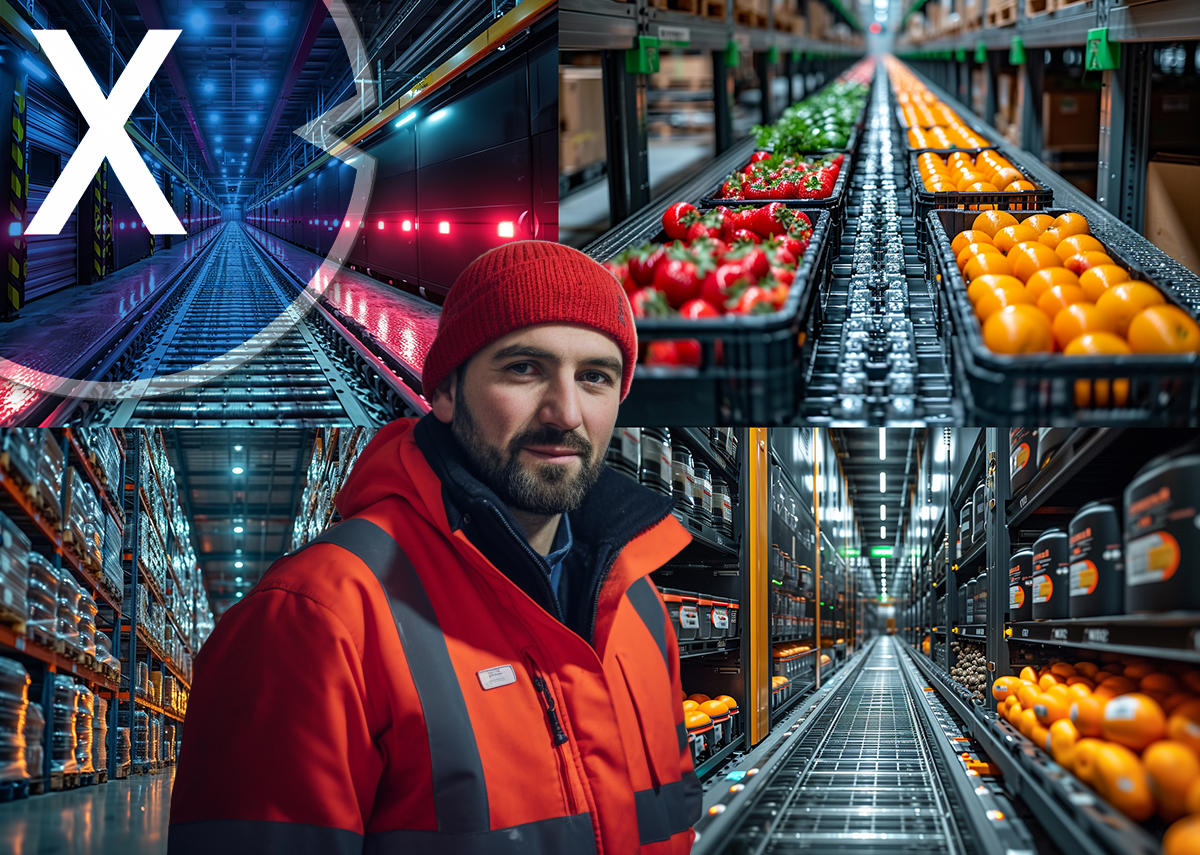
Real-time tracking and IoT: increasing transparency in the cold chain - Image: Xpert.Digital - AI & XR 3D rendering machine (art photo/AI)
📈 The revolution in refrigerated logistics: Digital transformation in focus
🌡️📡 Real-time tracking and the Internet of Things (IoT) have fundamentally changed the way the cold chain is operated and managed. In a fully automated warehouse, where precise temperature control is paramount, these technologies mean more than just progress - they have now become essential for efficiency, safety and transparency. This brings a variety of benefits, including improved food quality, optimized warehousing and controlled logistics.
📘 🌡️ Basics of cold chain logistics
The cold chain includes all steps for storing and transporting temperature-sensitive goods from production to the end user. This includes food, pharmaceutical products and other perishable goods. They must remain in a controlled environment throughout the chain to avoid loss of quality or decay.
📶 ⏱️ Why real-time tracking and IoT are becoming more important
Traditional cold chain monitoring methods involve regular manual checks, which is both time-consuming and error-prone. This has changed with the introduction of IoT devices. Sensors and connected technologies enable real-time tracking of each individual delivery. All information – from humidity to temperature – can be accessed in seconds.
An important point here is transparency. Supply chains are complex, and customers and regulators are increasingly demanding precise insights into the whereabouts and treatment of goods, particularly when it comes to food safety. The ability to seamlessly track goods and respond to critical conditions in real time provides unprecedented visibility and security.
🤖 🌐 The use of IoT devices in the cold chain
IoT devices in the cold chain are diverse: temperature and humidity sensors, RFID tags, GPS trackers and smart thermostats. They are attached to products, packaging or means of transport and continuously send data to a central system. This enables almost complete monitoring.
Fully automated storage systems that are equipped with these IoT devices can not only optimally store the goods, but also evaluate the data and intervene independently if necessary. This reduces the risk of human error and increases the speed of reaction to temperature fluctuations.
🏆 📈 Benefits of real-time tracking
Real-time tracking makes it possible to optimize processes and increase the efficiency of the cold chain:
Accurate monitoring of temperature
Products can be monitored in real time to ensure established temperature guidelines are accurately met.
Avoiding losses
Quick response to problems minimizes the risk of product loss due to malfunctions or external influences.
Increasing customer satisfaction
Consumers benefit from higher product quality and safety, which in turn strengthens trust in the brand.
Traceability
In the event of a quality defect, the cause can be quickly identified, leading to faster resolution.
Cost savings
Increases in efficiency reduce operating costs.
⚙️ 🔒 Challenges and solutions
Implementing real-time tracking and IoT poses challenges for companies. These include the high initial cost of hardware and software, as well as potential privacy and data security concerns.
A sophisticated IT infrastructure is also required to process the flood of data generated by the sensors. This is where modern data analysis methods and machine learning come into play. They help to effectively filter data streams and identify patterns that improve decision-making.
To ensure data security, companies use advanced encryption methods and robust security systems that ensure the protection of sensitive information.
🚀 🌟 Future prospects
The path towards an even more efficient, transparent and secure cold chain is paved by technological progress. The future belongs to solutions that integrate autonomy and artificial intelligence (AI) to create self-learning systems that further refine processes. Additionally, the increased use of blockchain technology will play a role in ensuring transparent and tamper-proof records of all transactions in the supply chain.
The further miniaturization of sensors will increase their applicability and thus enable the monitoring of the smallest packaging units, which will further increase accuracy.
🔄 🛰️ Real-time tracking and IoT
Real-time tracking and IoT in fully automated storage are revolutionizing the cold chain. Not only do they enable precise temperature control, but they also provide transparency and security for consumers and businesses. Despite the challenges, such as high initial investments and data security concerns, the benefits are immense.
The integration of real-time data analysis, the further advancement of automated systems, the application of AI and the use of secure, decentralized technologies such as blockchain opens up new opportunities for minimizing risk, reducing costs and increasing quality. This not only helps improve global food and pharmaceutical logistics, but also represents a significant step towards a more sustainable and responsible supply chain.
With exciting developments on the horizon and an ever-growing global need for high-quality refrigerated logistics solutions, the future of this field is rich in innovation and advancement to meet the demands of a dynamic world.
📣 Similar topics
- 🌡️ The future of cold chain logistics: real-time tracking and IoT
- 🚛🌡️ Efficiency and transparency: How IoT is revolutionizing cold chain logistics
- 🌡️🔒 Real-time tracking and IoT: transparency and security in the cold chain
- 🌡️🚚 The power of connectivity: IoT in cold chain logistics
- 🌡️💡 The technological revolution of cold chain logistics: real-time tracking and IoT
- 💻🌡️ The digital future of cold chain logistics: real-time tracking and IoT
- 🌡️📊 Improving cold chain logistics through real-time tracking and IoT
- 🌡️💡 New horizons for cold chain logistics: real-time tracking and IoT
- 🌡️🔄 Transparency and efficiency: IoT devices in cold chain logistics
- 🌡️🌍 Real-time tracking and IoT: A step towards global food logistics
#️⃣ Hashtags:
#cold chain logistics #real-time tracking #IoT #efficiency #transparency

Xpert partner in warehouse planning and construction
🧊 Technology leader Japan in refrigerated logistics – better working conditions optimize distribution processes

Refrigerated logistics/fresh logistics: Cold storage with automated material flow optimizes distribution processes - Image: Xpert.Digital
Asian countries such as Japan in particular are considered pioneers here. Tokyo, one of the largest cities in the world with over 38 million inhabitants, impressively shows how high population density and quality of life can be combined with the help of innovative urban and infrastructure planning. The expansion of efficient transport and supply systems has been the focus here for decades.
More about it here:

Xpert.Plus warehouse optimization - high-bay warehouses such as pallet warehouses consulting and planning
🚀 Adapting to a changing world
Adaptability to a changing world is a key element for success in the cold chain. Due to globalization and a rapidly developing world economy, companies must be able to respond immediately to changes in demand. Real-time tracking and IoT help by providing up-to-date data that can be used to make forecasts, optimize warehousing and improve inventory management.
🌍 As concerns around sustainability grow, these technologies can also help companies better monitor their carbon emissions and implement energy efficiency measures. Not only is this good for the planet, but it is often a cost reducer and a competitive advantage.
📦 Personalization and customer expectations
Customer expectations are becoming more specific and the desire for personalization is growing. This is where real-time tracking can contribute to higher customer satisfaction by allowing end users to follow the journey of their products from start to finish. This transparency creates trust and can lead to stronger loyalty to the brand.
✨ Additionally, by collecting and evaluating real-time data, companies can gain better insights into their customers' behavior and preferences. This information can be used to further personalize offerings and delivery, resulting in increased customer satisfaction.
🔄 Integration and intelligent automation
The integration of systems plays an essential role in taking full advantage of IoT and real-time tracking. Information systems that connect production facilities, logistics, suppliers and customers deserve special attention. They enable a synchronized supply chain that operates smoothly and can adapt quickly when necessary.
⚙️ Intelligent automation goes one step further. Through edge computing and artificial intelligence, decisions can be made closer to the action, so that changes can be responded to more quickly and efficiently. This can shorten response times when regulating cooling conditions and make the entire cold chain more resilient.
👨💼 People at the center of technology
Despite all the technology, the human factor remains crucial. Training and upskilling employees on the new technologies is of great importance as they are ultimately the ones who have to monitor and manage the systems.
🤝 It is also important that companies encourage adoption of these technologies among their employees. Fear of surveillance or losing your job due to automation can lead to resistance. Here it is crucial to communicate the added value and show that technology can make work easier and increase safety.
📝 Further development of real-time tracking and IoT applications
The ongoing development of real-time tracking and IoT applications is an essential element in the evolution of the cold chain. While new challenges arise, for example in the area of cybersecurity or the further scaling of technologies, the advantages are clear and progress cannot be stopped.
💪 Companies investing in these technologies position themselves as leaders in logistics and help create a safe, efficient and customer-centric future for cold chain logistics. It is about meeting and overcoming these challenges to form a resilient infrastructure capable of meeting global demand while protecting the environment and society.
🔗 By adopting a strategy that fully exploits the potential of real-time tracking and IoT, the cold chain can be redefined - to the benefit of everyone involved. The future is connected and digital, and the cold chain is poised to lead that future.
📣 Similar topics
- 🌍 Adaptations to a changing world
- 🛒 Personalization and customer expectations
- ⚙️ Integration and intelligent automation
- 👥 People at the center of technology
- 🏭 Advances in cold chain logistics
- 🔒 Cybersecurity challenges
- 🌱 Sustainability and CO2 emissions
- 🌐 Future of the connected cold chain
- ⏱️ Real-time tracking and increased efficiency
- 🤝 Collaboration between companies and partners
#️⃣ Hashtags: #Adjustments #Personalization #Integration #HumanCenter #Coldchainlogistics
📦🛒 Logistics & Warehousing Advice: The world of logistics and warehousing is currently experiencing change
🔍 Real-time tracking in logistics
The world of logistics and warehousing is currently experiencing a change that is unprecedented in its speed and complexity. The pressure to ensure faster delivery times, greater efficiency and ever-increasing customer satisfaction has brought the industry to a tipping point. In this context, real-time tracking and the Internet of Things (IoT) play a central role and enable fully automated storage, which promises companies enormous competitive advantages.
Let's start with real-time tracking. These are systems that make it possible to track the location and condition of goods and resources in real time. Equipped with GPS trackers, pallets and products can be identified anywhere in the warehouse. Sensors also record the condition of the goods, such as temperature or humidity, which is essential for storing sensitive products such as food or pharmaceuticals.
The advantages of real-time localization systems (RTLS) are manifold. On the one hand, shrinkage and theft can be drastically reduced through constant monitoring. On the other hand, they enable warehouse processes to be optimized, as the location data allows employees to plan their routes more efficiently and thus save time. Last but not least, inventory management is also being revolutionized. Through precise knowledge of the whereabouts of the goods, inventory can be controlled more precisely and overstocking or understocking can be avoided.
💡 Internet of Things and automated storage
The Internet of Things (IoT) usefully complements real-time tracking and creates an infrastructure in which objects and machines can communicate and interact. In a fully automated warehouse, for example, Smart Shelves would not only register the weight of the stored goods, but also automatically trigger repeat orders as soon as a minimum stock level is reached. Robots and automated conveyor systems could then pick up the goods and transport them to the right location in the warehouse or directly to the shipping area.
Implementing IoT in warehouses offers significant benefits in terms of automation and efficiency. Machines and goods are, so to speak, networked and share information about their condition and location. This leads to fewer manual errors because humans only carry out monitoring and controlling tasks. In addition, predictive maintenance, i.e. the timely recognition of maintenance needs through continuous monitoring of device states, can reduce machine downtimes and extend the service life of systems.
✈️ Use of drones and autonomous vehicles
Another aspect of fully automated storage is the use of drones and autonomous vehicles within the warehouse. Drones, for example, can be used to carry out inventories quickly and efficiently, while driverless transport systems (AGVs) optimize internal logistics by autonomously transporting goods to their destination.
🧠 Artificial intelligence and its role in warehouse automation
The integration of artificial intelligence (AI) represents the next level of warehouse automation. AI systems can recognize patterns in data, make predictions and make autonomous decisions. For example, AI could predict demand for certain products and automatically adjust inventory levels based on sales data, weather forecasts and current trends.
☁️ Importance of Cloud Computing and Data Security
However, in order to take advantage of the comprehensive advantages of highly automated warehouse logistics, companies must invest in the appropriate IT infrastructure. The complexity of real-time tracking and IoT systems requires powerful networks, data storage and analysis tools. Cloud computing plays a key role in this; it provides computing power where it is needed and enables the storage and analysis of large amounts of data.
Data security and data protection are of the utmost importance. Since a large amount of sensitive operational data is collected and processed, this information must be protected against unauthorized access. Security protocols and regular checks are essential to maintain the integrity of the system and not jeopardize customer trust.
🚀 Challenges and continuous adaptation
The switch to fully automated storage and logistics systems also comes with challenges. Employees need to be trained to use the new technologies, and some jobs may be eliminated or fundamentally changed. It is the task of the company management to accompany this change and to ensure a fair and socially acceptable transformation.
In addition, it is important that companies constantly review and adapt their processes. Technology is evolving rapidly, and what is considered high technology today may be outdated tomorrow. Continuous investment in research and development as well as an open corporate culture that promotes innovation are crucial for long-term success.
Real-time tracking and IoT in fully automated storage not only increase efficiency and reduce costs, but also significantly improve customer satisfaction and thus a company's competitiveness through increased transparency and flexibility. In a world where the demand for speed and reliability continues to grow, investing in these technologies is quickly becoming a necessity. Getting there requires strategic planning, long-term thinking and a willingness to invest in new systems and employee training. This is the only way companies can meet the requirements of the modern supply chain and secure and expand their position on the market.
📣 Similar topics
- 🔍 The future of warehousing: real-time tracking and IoT
- 🌍 The digital transformation of the logistics industry
- 🛒 From warehouse to smart factory: automation in warehousing
- 🌐 The Internet of Things (IoT) in warehouse logistics
- 📶 Real-time tracking for efficient warehouse processes
- 🚚 Autonomous vehicles and drones in warehouse logistics
- 💡 Artificial intelligence in warehouse automation
- ☁️ Cloud computing for optimized warehousing
- 🔒 Data security and data protection in automated storage
- 💼 The change in warehouse logistics: challenges and opportunities
#️⃣ Hashtags: #warehouse logistics #automation #IoT #real-time tracking #digitalization
We are there for you - advice - planning - implementation - project management
☑️ Smart City & Factory: Industry expert for energetic 5G buildings and halls as well as advice and installation of solar systems
☑️ Xpert.Plus - logistics consulting and logistics optimization
☑️ Industry expert, here with his own Xpert.Digital Industry Hub with over 2,500 specialist articles

Konrad Wolfenstein
I would be happy to serve as your personal advisor.
You can contact me by filling out the contact form below or simply call me on +49 7348 4088 965 (Munich) .
I'm looking forward to our joint project.
Write to me

Xpert.Digital - Konrad Wolfenstein
Xpert.Digital is a hub for industry with a focus on digitalization, mechanical engineering, logistics/intralogistics and photovoltaics.
With our 360° business development solution, we support well-known companies from new business to after sales.
Market intelligence, smarketing, marketing automation, content development, PR, mail campaigns, personalized social media and lead nurturing are part of our digital tools.
You can find out more at: www.xpert.digital - www.xpert.solar - www.xpert.plus
Keep in touch

Industrial & B2B Business Metaverse: Reduce costs with XR technology for photorealistic product images (XR 3D rendering machine)

Lathe in photorealistic representation (3D product presentation) - Image: Xpert.Digital
XR technology offers a superior solution for creating photorealistic images and allows companies to free themselves from the expensive fees of external media agencies. It is common knowledge that media agencies charge high costs to create such images as it requires expertise, special software and collaboration with various experts.
More about it here:











