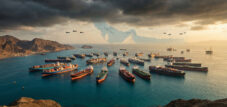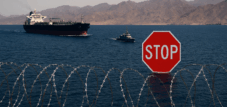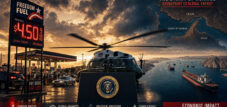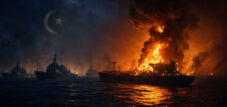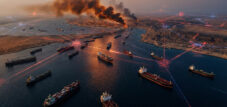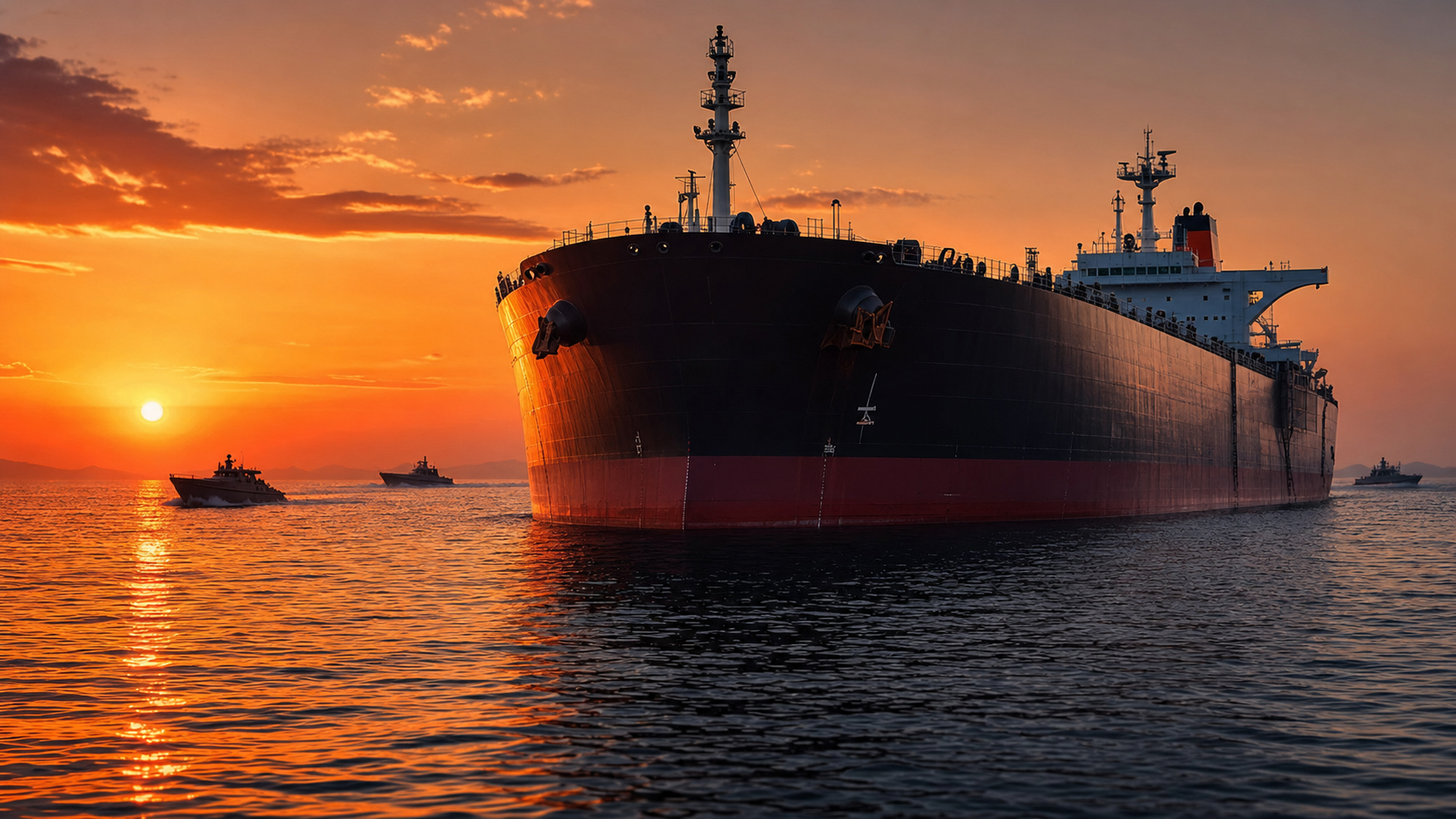
The situation of maritime shipping in the Gulf: An assessment by the shipowners' association – “No sustainable normalization without safety guarantees” – Creative image: Xpert.Digital
Supply chain collapse: Why the conflict in the Strait of Hormuz is costing us dearly
Ships impounded, freight rates exploding: The Strait of Hormuz is becoming a trap for the global economy
Following an unprecedented military escalation between the US, Israel, and Iran, the most critical bottleneck in the global energy supply has become a geopolitical bargaining chip. The consequences of this blockade strike at the heart of the globalized world – exploding oil and gas prices, a drastic collapse in world trade, and thousands of trapped seafarers, many of them on German ships. As the global economy teeters on the brink of recession and major powers seek to redefine international maritime law with absurd toll demands, Europe faces an existential question: How long can our economic model survive such a vulnerable dependency? This analysis examines the background, the dramatic economic domino effects, and the uncertain future of a shipping route that ultimately determines our prosperity.
Related to this:


A corridor that feeds the world
It is a mere 33 kilometers wide at its narrowest point, and the shipping lanes actually used are only a few kilometers in each direction – yet the Strait of Hormuz is arguably the single most important geographical point in the global economic order. Whoever controls this strait between Iran in the north and Oman and the United Arab Emirates in the south holds a lever that can destabilize the energy supply of entire continents within weeks.
Under normal circumstances, between 100 and 140 ships pass through this strait daily, including up to 40 supertankers fully loaded with crude oil. Around 14.9 million barrels of crude oil and condensates, as well as another 4.9 million barrels of refined petroleum products, flow through this relatively narrow channel every day – together, about 20 percent of global daily petroleum consumption. Added to this are all LNG exports from Qatar and the United Arab Emirates, representing one-fifth of total global liquefied natural gas trade. Before the outbreak of the conflict, data analysts at Lloyd's List Intelligence recorded around 3,000 ship transits per month. These figures make it unequivocally clear: whoever closes Strait of Hormuz is not attacking a region, but the very heart of the globalized energy supply.
The moment shipping traffic collapsed
In late February 2026, joint US and Israeli airstrikes against Iran fundamentally altered the geopolitical map of the Middle East. Tehran's reaction was immediate and dramatic: The Iranian Revolutionary Guard declared the Strait of Hormuz closed and threatened to set fire to any ship attempting to pass through. Within hours, shipping traffic virtually ceased. The Iranian state news agency Tasnim reported the de facto end of transit traffic, and radio messages from the Revolutionary Guard to ship crews in the region left no room for doubt: No passage without Tehran's authorization.
The statistical consequences of this escalation were devastating. According to data from the industry service provider Clarksons, the number of transits plummeted by 90 percent within a single week. UNCTAD recorded a collapse of almost 95 percent for March 2026: from 130 ships daily in February to just six transit movements per day. Since March 15, according to Lloyd's List Intelligence, no ships at all have been detected on the regular route via AIS tracking; the few transit attempts that did occur were exclusively through a corridor controlled by the Revolutionary Guard, requiring special clearance codes and an Iranian escort. British Foreign Secretary Yvette Cooper succinctly summarized the situation at a meeting of some 40 countries coordinated by London: Iran had hijacked an international shipping route and taken the global economy hostage.
Oil at $120 – the energy shockwave and its consequences for Europe
The economic shockwaves from this blockade were immediately felt. Brent crude oil rose within a few weeks from a pre-war level of around $70 to almost $120 per barrel at times, a price increase of over 70 percent. Iranian attacks on refinery facilities in the Gulf on March 18 damaged an estimated 30 to 40 percent of regional refining capacity, removing approximately 11 million barrels per day from the global supply chain. The International Energy Agency coordinated the release of 400 million barrels of oil from strategic reserves on March 11 in an attempt to stabilize markets—a measure that proved insufficient.
For the tanker markets, the crisis meant an unprecedented increase in rates. Theoretical spot earnings for very large crude oil tankers (VLCCs) in the Middle East-China trade skyrocketed to $480,000 per day, for Suezmax tankers to over $300,000 daily, and for clean MR tankers to more than $60,000. For LNG vessels, the rate increased fivefold to $205,000 – the highest level since September 2023. This development is not an abstract financial metric, but has a direct impact on end-user prices worldwide: Increased freight costs are regularly passed on to customers, as Hapag-Lloyd CEO Rolf Habben Jansen explicitly confirmed.
The impact on Europe is particularly severe. The European Commission estimated that gas prices rose by 70 percent and oil prices by 50 percent, driving up the cost of fossil fuel imports by €13 billion. At the time of the crisis, the European Union's natural gas storage facilities were 35 percent below the five-year average, the lowest level since the energy crisis following Russia's invasion of Ukraine in 2022. Of particular concern is the fact that more than 90 percent of Qatar's LNG exports—the world's second-largest LNG supplier—must be transported through the Strait of Hormuz; rerouting via land pipelines is technically impossible. Furthermore, in response to attacks on its industrial infrastructure in Ras Laffan, Qatar temporarily halted all LNG production.
IEA chief Fatih Birol described the situation as a "wake-up call" for European refineries and politicians, warning: "The whole world should be prepared for the worst-case scenario." At the same time, he pointed out that the share of electrification in the EU has stagnated at 23 percent for a decade – far below the level of Japan, South Korea, or China, which have hardly any oil and gas reserves of their own.
German shipping: 46 ships, 1,000 seafarers, millions in costs per week
No other maritime nation in Western Europe has been more fundamentally affected by the Hormuz crisis than Germany. According to the German Shipowners' Association (VDR), at the height of the crisis, 46 to 50 ships with German ties were in the Persian Gulf, with around 1,000 seafarers on board. A total of ten German shipping companies were directly affected by the escalation. The ships were trapped geographically: the Persian Gulf is a maritime dead end – those who enter it can only leave through the Strait of Hormuz.
The human dimension of this crisis is easily overlooked in dry press releases. Crew members reported being "trapped on board" and having no future prospects. VDR Managing Director Martin Kröger described the situation in May 2026: "The situation is still very tense for the crews on board because they are essentially trapped and have no future prospects as to when the situation will ease." Shipping companies were in contact with captains and crews several times a day, and many crew members were approaching the legal maximum of six months. Contact with families was only possible via satellite internet connections. According to IMO data from the end of April, ten seafarers were killed in 29 attacks on merchant ships, and others were injured.
The financial damage is precisely measurable. Hapag-Lloyd, Germany's largest container shipping company, quantified the additional costs caused by the blockade at 50 to 60 million dollars per week, resulting from increased fuel prices, soaring insurance costs, and storage fees for undeliverable containers. According to the company, fuel costs were more than 50 percent above normal levels. In the first quarter of 2026, Hapag-Lloyd reported a loss before interest and taxes of 134 million euros, with a net loss of 219 million euros – a decrease of 665 million euros compared to the same quarter of the previous year. Revenue fell by almost 17 percent. This was due not only to the war, but also to the global collapse in freight rates coupled with stagnant transport volumes.
The Fees Theater: When Two Superpowers Challenge Maritime Law
Amid the diplomatic turmoil of the conflict, one question increasingly came to the fore, one that extended far beyond the immediate consequences of the war: the question of controlling and monetizing the Strait of Hormuz. Tehran established a state agency early on to control shipping in the Persian Gulf and implemented a system requiring ships to register for passage. The fees were said to be as high as two million dollars per oil tanker—payable in cryptocurrencies or Chinese yuan to circumvent Western financial regulators. Reports also indicated that Iran introduced a system of one dollar per barrel of oil on board.
Then US President Donald Trump floated the idea of a separate toll for passage through the Hormuz. He initially proposed a "joint venture" with Iran for a toll system, spoke of sharing revenues with Tehran, and declared the US the self-proclaimed victor of the war. This announcement caused consternation in Europe. Shortly afterward, Trump backtracked, declaring in the Oval Office: "We don't want a toll. It's an international waterway." Foreign Minister Marco Rubio echoed this statement. This episode exemplifies how much the Hormuz crisis has blurred the lines between martial law, economic strategy, and diplomatic improvisation.
VDR Managing Director Martin Kröger clarified the fundamental legal and political principle to WirtschaftsWoche: "No single state should unilaterally make free access to an international waterway dependent on fees." The EU Commission formulated the same position in clearer legal language: A spokesperson emphasized that international law guarantees freedom of navigation, "which means: no payment or toll." The Strait of Hormuz is "like any other sea route, a public good for all of humanity."
Maritime law versus power politics: What international law actually prescribes
The legal classification of the Hormuz crisis is complex and politically charged. According to Articles 37 and 38 of the 1982 UN Convention on the Law of the Sea (UNCLOS), the right of transit applies to international straits used for navigation between two parts of the high seas or an exclusive economic zone – a right of passage that coastal states may not, in principle, suspend, not even on grounds of national security. This right goes beyond the right of innocent passage and cannot be unilaterally revoked.
The crucial problem under international law is that neither Iran nor the USA has ratified UNCLOS. Both sides selectively invoke certain rules of the convention – Iran rejects the right of transit when it benefits it, while the USA demands it even though it is not a party to the treaty. Valentin Schatz, Professor of International Law at Leuphana University, states that, according to the prevailing opinion, at least the right of innocent passage applies and cannot be unilaterally suspended by a coastal state. Fees for mere passage are, in principle, inadmissible under this long-standing principle of maritime law – regardless of whether transit or innocent passage applies. Exceptions exist only for services actually rendered, such as pilotage.
The European Commission also declared Iran's system of charging one dollar per barrel of oil and Trump's "joint venture" incompatible with the Law of the Sea Convention, as UNCLOS strictly prohibits fees for simple passage. Although the Commission emphasized that European companies would ultimately have to decide on any payments themselves, Brussels' position is clear: any charge for mere transit contradicts the customary law of the sea, established over decades. However, the fact that China was the first country to de facto pay for passage through the Strait of Hormuz demonstrates that geopolitical pragmatism sometimes outweighs legal principles.
Our global industry and economic expertise in business development, sales and marketing


Our global industry and economic expertise in business development, sales and marketing - Image: Xpert.Digital
Industry focus areas: B2B, digitalization (from AI to XR), mechanical engineering, logistics, renewable energies and industry
More information here:
A thematic hub offering insights and expertise:
- Knowledge platform covering global and regional economies, innovation and industry-specific trends
- A collection of analyses, insights, and background information from our key areas of focus
- A place for expertise and information on current developments in business and technology
- A hub for companies seeking information on markets, digitalization, and industry innovations
Infrastructure vs. Geopolitics: Lessons from the Hormuz Crisis for the Future
Global economic downturns: What the institutions' figures reveal
The economic consequences of the Hormuz crisis have been quantified by major international institutions to an extent that unequivocally underscores the seriousness of the situation. In April 2026, the International Monetary Fund (IMF) lowered its global growth forecast from 3.3 to 3.1 percent, warning that the world economy was in danger of "going off track again." For Germany, the IMF reduced its growth expectation from 1.1 to 0.8 percent – and already during the spring, leading German research institutes had lowered their forecast to just 0.6 percent, compared to 1.3 percent in the previous year's projection. The most recent IMF assessment, from July 2026, projects growth rates of 0.7 percent for Germany this year and 1.0 percent for 2027.
UNCTAD warned that growth in global merchandise trade could plummet from 4.7 percent in 2025 to just 1.5 to 2.5 percent in 2026. Global trade growth is projected to fall to 3.5 percent, down from 5 percent in 2025, according to the IMF forecast. The World Bank lowered its forecast for global growth to 2.5 percent – the weakest level since the start of the COVID-19 pandemic. UN Secretary-General António Guterres outlined three scenarios, all of which are alarming: Even in the best-case scenario of an immediate reopening, global growth rates would fall and inflation would rise to 4.4 percent. The medium scenario – disruptions until mid-2026 – would have pushed an additional 32 million people into poverty and threatened 45 million more with extreme hunger. The worst-case scenario, a continued lockdown until the end of the year, would have meant a global recession, according to Guterres.
Food prices are a particularly sensitive transmission channel. UNCTAD identified 61 vulnerable economies exposed to both oil import and grain shocks caused by the Hormuz disturbances. According to UNCTAD data, a five percent increase in food prices raises the risk of child wasting by 15 percent for poor children and by as much as 26 percent for children from poor rural families. The human dimension of the Hormuz crisis thus extends far beyond the ledgers of major shipping companies.
Related to this:

Booking slumps, cancellations, supply chain chaos
The immediate reactions from companies and logistics providers reflect the full extent of the loss of confidence in the route. Analyses by Dun & Bradstreet show that between March 1 and 3, newly booked import volumes for container transport via Hormuz plummeted by 59 percent compared to the previous week – from 25,144 to 10,382 TEU. At the same time, cancellations surged by 364 percent, from 8,010 to 37,193 TEU. On March 3 alone, over 21,700 TEU were cancelled, while only 1,900 TEU were newly booked, representing just 13 percent of the previous week's volume and marking the lowest weekday booking level since the beginning of 2024.
Particularly striking: At the height of the crisis, approximately 2,000 merchant ships with around 20,000 sailors and dockworkers were stranded in the Persian Gulf. The British Foreign Secretary reported in a London video conference that 2,000 ships alone were waiting to pass through, while in the previous 24 hours only 25 ships had been able to navigate the strait – out of a normal capacity of 150 ships per day. According to UNCTAD, around 50 loaded tankers carrying a total of approximately 10 million tons of oil remained in the Persian Gulf, their cargo unable to be delivered.
A fragile framework agreement and the question of sustainability
In mid-June 2026, the US and Iran signed a framework agreement that provided for a phased reopening of the strait. In the days that followed, 131 ships transited the strait, with 35 doing so on some days – a significant improvement, but far from the pre-war levels of 100 to 130 ships daily. Iran agreed to waive transit fees for an initial period of 60 days but insisted that all merchant ships must submit an application for passage. Iran's parliamentary speaker, Ghalibaf, reiterated that his country would "not return to pre-war conditions" and advocated for the inclusion of fees in the final agreement.
The German Shipowners' Association (VDR) welcomed the framework agreement as "an important first step," but warned that "an immediate return to regular operations is not to be expected at present." In his statement, Martin Kröger made clear what the future of the route truly depends on: "It will be crucial that risks to shipping, especially potential mine hazards, are eliminated in the coming weeks and that the safety of seafarers and ships is permanently guaranteed." According to the VDR, more than 40 merchant ships have been hit in the region since the start of the war, and the Revolutionary Guards have explicitly announced the presence of sea mines in the strait. No shipowner is willing to risk the lives of their crew under these conditions.
Hapag-Lloyd announced that it was preparing its chartered vessels in the Persian Gulf for a possible passage, but would only proceed "when it is safe." The company would first examine how the agreement between the US and Iran would be implemented in practice. At the same time, experts warned that the insurance market would take considerably longer to adapt: The Joint War Committee of the London Insurance Market continues to classify the strait as a high-risk area, and war risk premiums of $800,000 to $2 million per VLCC voyage are estimated by industry observers to require 12 to 36 months of accumulated no-claims data before they decline substantially.
Chain reaction: When a strait destroys the world's supply chains
The Strait of Hormuz is far more than just an energy route. It also carries portions of global container trade, fertilizers, chemicals, pharmaceuticals, and other intermediate products. Qatar, the world's largest LNG exporter, not only halted energy deliveries but also all related byproducts such as nitrogen fertilizers, polymers, and methanol. Fertilizer shortages have a delayed impact on food production: higher energy prices drive up transportation costs, higher agricultural production costs, and ultimately, higher food prices—a transmission channel that remains active months after the initial energy crisis.
The time lag with which such shocks are reflected in consumer prices is a key analytical element. The normal transit time for tankers from the Persian Gulf to Rotterdam via the Suez Canal is 18 to 22 days; the alternative route via the Cape of Good Hope takes 32 to 38 days. These time buffers explain why immediate physical shortages in Europe initially failed to materialize – but also why the price effects remain noticeable for months, even after the strait reopens. UNCTAD made it clear that freight contracts, supply chains, and food systems take longer to adapt than energy markets.
For Germany, a highly export-dependent economy, another dimension is added to the direct energy costs: the competitiveness of industry. Energy-intensive sectors such as steel, chemicals, and cement, which have already been struggling with high energy costs for years, face further burdens due to the Hormuz crisis – at a time when Germany's economic recovery after several weak years is already fragile.
The strategic lesson: From the eye of the bottleneck to the Achilles heel of globalization
The Hormuz crisis of 2026 is more than a war event with economic repercussions – it is a structural revelation. It brutally demonstrates how vulnerable the global supply architecture is due to the concentration of strategically important trade flows around a few geographical bottlenecks. The Red Sea crisis following the Houthi attacks from late 2023 onward had already demonstrated the disruptive effects that a single vulnerable strait can have. Hormuz is on a different scale – because here it is not about detours and higher freight costs, but about the disruption of the energy supply for a significant part of the world.
This raises a fundamental question for the maritime industry and its political framework: How robust and legally reliable is the global maritime law regime? The signs of erosion are worrying. Iran, which has not ratified UNCLOS, is using the straits as a geopolitical tool. Trump introduced – albeit briefly – a US demand for fees. China is de facto paying for passage without raising a formal protest. And the IMO had to coordinate a complex evacuation plan for 11,000 seafarers stranded in the Gulf region – an unprecedented event in the history of civilian shipping.
IEA chief Birol has established the structural connection: While Europe has diversified its energy mix away from Russian gas, it remains heavily dependent on fossil fuel imports from unstable regions. Electrifying the economy is the only way to reduce this vulnerability in the long term – but it requires massive investments in grid infrastructure, which currently lag far behind the expansion of renewable energy generation capacity. From the perspective of a sustainable energy strategy, Hormuz 2026 is the geopolitical accelerator that will force long-overdue political decisions.
A fresh start with question marks: Between hope and relapse
By mid-July 2026, at the time of this analysis, shipping traffic through the Strait of Hormuz had stabilized in a fragile recovery phase. The German Shipowners' Association (VDR) describes this with characteristic caution: instead of over 100 transit movements per day, currently only single-digit to low double-digit figures are being recorded. Recent attacks on tankers near the strait have prompted IEA chief Birol to once again warn of a "false sense of security" in Europe. The IMF anticipates that it may not be until March 2027 that conditions roughly return to pre-war levels – and even then, only under the condition that no further escalation occurs.
The German Shipowners' Association's assessment remains the sobering conclusion of an entire industry: "Without reliable safety guarantees, there can be no sustainable normalization of shipping traffic in this region, which is so crucial for global trade." This is not just about a shipping lane, but about whether international maritime law and the multilateral trading order can still hold up in a world of increasing geopolitical fragmentation – or whether the Strait of Hormuz will in future be treated as bargaining chips belonging to whoever happens to have the strongest fleet nearby. The answer to this question will not be decided in the strait itself, but in the capital cities.
Your global marketing and business development partner
☑️ Our business language is English or German
☑️ NEW: Correspondence in your native language!

Konrad Wolfenstein
I and my team are happy to be available to you as your personal advisor.
You can contact me by filling out the contact form here wolfenstein@xpert.digital:or simply call me at +49 7348 4088 965. My email address is
I'm looking forward to our joint project.
☑️ SME support in strategy, consulting, planning and implementation
☑️ Creation or realignment of the digital strategy and digitization
☑️ Expansion and optimization of international sales processes
☑️ Global & Digital B2B trading platforms
☑️ Pioneer Business Development / Marketing / PR / Trade Fairs
🎯🎯🎯 Data-driven B2B industry hub as a quasi-in-house solution


The quasi-in-house solution: How Xpert.Digital closes operational gaps in B2B marketing and sales – Smart Content-Driven Business - Image: Xpert.Digital
Xpert.Digital is a data-driven B2B industry hub led by Konrad Wolfenstein . The company acts as an external, quasi-in-house solution for industrial partners, closing operational gaps in marketing, content, and sales – without requiring additional resources on the client side.
More information here: