
No more TikTok from the barracks – Why the German Armed Forces are keeping their influencers on a short leash
Xpert Pre-Release

Available in 27 languages 📢
Prefer Xpert.Digital on GoogleⓘPublished on: March 7, 2026 / Updated on: March 7, 2026 – Author: Konrad Wolfenstein
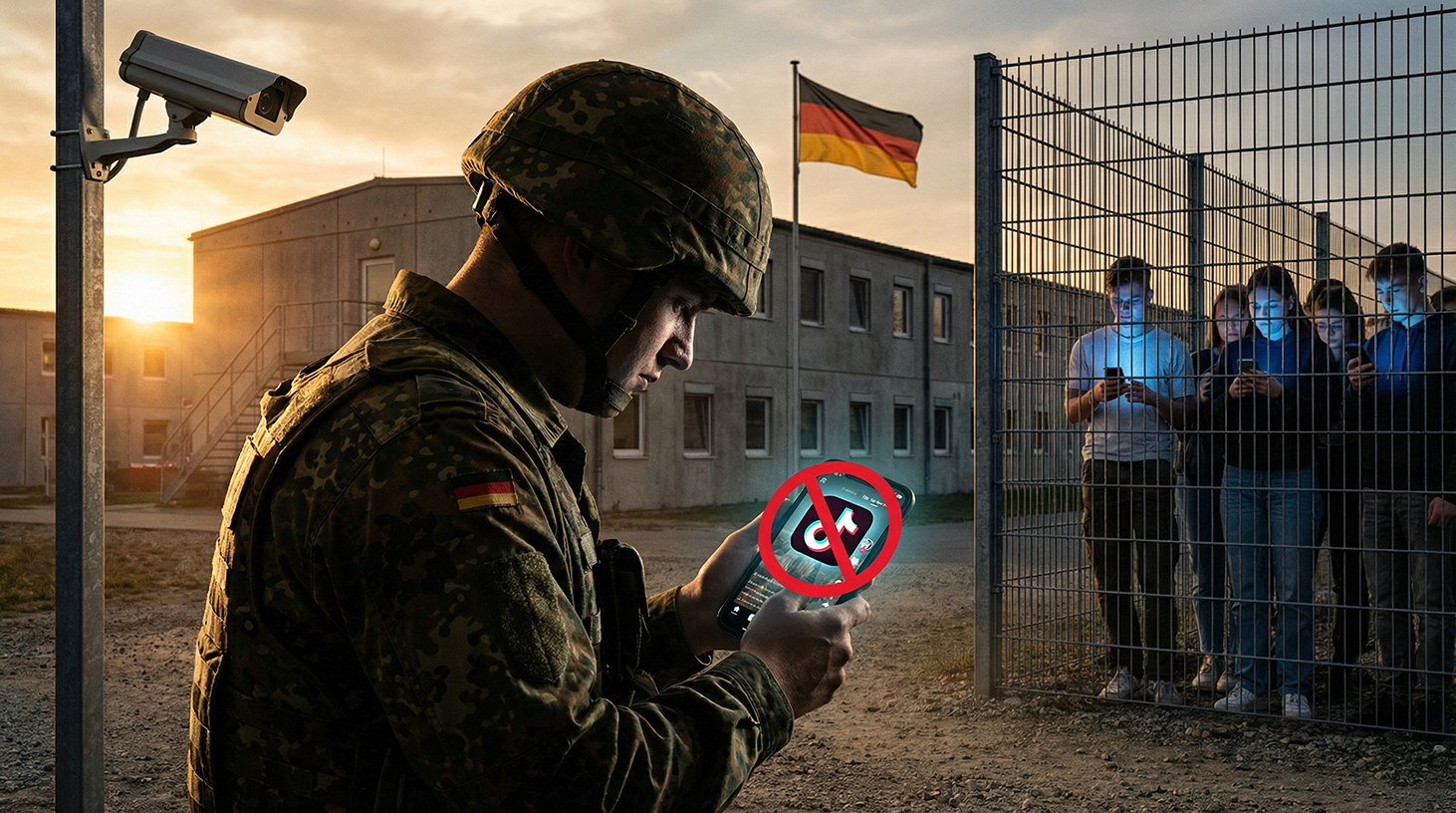
No more TikTok from the barracks – Why the German Armed Forces are keeping their influencers on a short leash – Image: Xpert.Digital
Russian drones and spies: Why soldiers are suddenly no longer allowed to post videos
Pistorius means business: The sudden end of the German Armed Forces influencers on TikTok
A cool selfie in front of a Leopard tank, a short TikTok video from the barracks, or a live stream from the training ground – what was celebrated for years as a modern and authentic way to recruit young talent will soon be history. German Defense Minister Boris Pistorius is pulling the plug and imposing a far-reaching ban on filming and photography in all Bundeswehr (German Armed Forces) facilities. The official justification is serious: a significantly heightened security situation and the growing threat of espionage from Russia and China no longer tolerate uncontrolled glimpses into the daily lives of the troops. But this radical change of course carries a huge risk. At the very moment when the Bundeswehr is desperately seeking tens of thousands of new recruits to combat demographic change, it is severing perhaps its most effective connection to the younger generation. Caught between acute counter-espionage and a looming personnel shortage, the armed forces face a balancing act in defense policy that will have far-reaching consequences.
Between security paranoia and recruitment panic – a balancing act in defense policy
What began in 2019 as a much-discussed paradigm shift has come to an abrupt end seven years later. Defense Minister Boris Pistorius has issued a revised General Regulation A-1130/17, imposing a general ban on filming and photography on all military properties, facilities, and installations of the German Armed Forces – including ships and boats of the Navy. Since February 20, 2026, soldiers are no longer permitted to take pictures, videos, or audio recordings unless they have obtained explicit permission beforehand. Independent publication on social media platforms is prohibited, and live streams from barracks and training grounds are strictly forbidden. Violations can be subject to disciplinary or criminal prosecution.
With this move, Pistorius reverses a decision made by his predecessor, Annegret Kramp-Karrenbauer, who in 2019, under the banner of social media reform, had specifically opened the German Armed Forces to the world of social media. At that time, filming and photography in military installations was generally permitted, unless explicitly prohibited. The goal: to make the German Armed Forces more visible in society, promote transparency, and, above all, inspire young people to join the armed forces. However, practice revealed not only the opportunities but also the risks of this openness.
The security situation as a driver
The official reason for the reversal lies in the worsened security situation. The Ministry of Defense argues that images from social media are being systematically used to gather intelligence about equipment and procedures, and that sensitive information and military operations must be protected from enemy intelligence services. The ministry emphasizes that the visibility of Bundeswehr personnel remains desirable, but a secure framework will be established for presenting their work environment.
This argument is by no means abstract in light of a drastically heightened threat level. At the end of 2025, the Military Counterintelligence Service warned of a record high in suspected cases of espionage and sabotage in years, with the threat emanating primarily from Russia and China. The focus is on information concerning troop strength, weapons systems, command and control structures, and deployment decisions. In 2024, three suspected Russian spies were arrested in Frankfurt for allegedly spying on German Armed Forces facilities.
Added to this are the systematic drone overflights of German military installations. In 2024, authorities registered at least 24 investigations into possible aerial espionage. Russian or Russian-controlled drones monitored supply routes in eastern Germany and hovered over barracks for minutes at a time. The German Armed Forces had to admit that their drone defense systems were partially ineffective. Russian spy satellites fly over Germany daily in the double digits, and this number has increased over the past five years.
In this context, the thousands of videos that soldiers have posted on TikTok, Instagram, and YouTube become a potential security risk. A short clip from a workshop can reveal information about the condition of a weapon system. A training video exposes procedures. A selfie with comrades provides faces and location data. What is intended as a harmless glimpse into the daily life of soldiers becomes, under the eyes of professional intelligence analysts, valuable intelligence material.
The heyday of Bundeswehr influencers
To understand the significance of this about-face, it's worth looking at what has developed in recent years. The 2019 social media reform had spawned a veritable influencer scene within the German Armed Forces. Soldiers like tank commander Josh Krebs, who, under the name Cinematic Sergeant, amassed more than 430,000 followers on TikTok, produced elaborate videos about close combat training, the Leopard tank, and ammunition knowledge. The content was professionally produced, outwardly almost indistinguishable from the productions of paid influencers, and actively promoted careers in the German Armed Forces.
Formally, these soldiers acted as private individuals – their channels bore the label "unofficial." However, they utilized the army's infrastructure and resources, filming in barracks, training grounds, and workshops. The lines between private content and official public relations became increasingly blurred. The Ministry of Defense has also confirmed official collaborations with individual content creators in the past, such as the long-term support of aspiring commando soldiers at the Special Forces Command.
In addition, the German Armed Forces ran their own social media campaigns, such as "Explorers," in which four young influencers traveled through Germany for a month, visiting various military bases. These formats portrayed military service as an adventure and a shared experience, complete with challenges, hashtags, and community polls. The message was clear: the German Armed Forces are not the dusty bureaucratic apparatus of the Cold War era, but a modern, dynamic employer.
The strategy was part of a broader trend. The German Armed Forces' advertising expenditures for recruiting new personnel have more than doubled since the Russian attack on Ukraine – from €35.2 million in 2022 to €58 million in the 2025 defense budget. A further increase to €70.5 million is planned in the 2026 draft budget. The German Armed Forces invested in campaigns on YouTube, Instagram, and TikTok, established their own channels, and produced short promotional videos portraying military service as an attractive career option.
Hub for Security and Defense - Advice and Information

Hub for Security and Defense - Image: Xpert.Digital
The Security and Defence Hub offers expert advice and up-to-date information to effectively support companies and organizations in strengthening their role in European security and defence policy. Working closely with the SME Connect Defence Working Group, it particularly promotes small and medium-sized enterprises (SMEs) that wish to further develop their innovative capacity and competitiveness in the defence sector. As a central point of contact, the Hub thus creates a crucial bridge between SMEs and European defence strategy.
Related to this:
Radio silence within the armed forces: This is why the Bundeswehr influencers are disappearing
The dilemma becomes tangible
The new regulation presents the German Armed Forces with a fundamental dilemma that cannot be resolved through decrees and service regulations. On the one hand, there is the undeniable need to protect sensitive information from enemy reconnaissance. On the other hand, there is the equally undeniable need to recruit enough qualified personnel in an increasingly competitive labor market.
The German Armed Forces' personnel targets are ambitious. Active troop strength is to increase from the current approximately 186,400 soldiers to up to 260,000 active personnel in order to meet the new NATO capability targets. In addition, around 200,000 reservists are to be added for a planned total defense force of 460,000 personnel by the mid-2030s. This corresponds to an increase of more than 80,000 active soldiers – a formidable challenge in light of an increasingly tight labor market and demographic change.
The latest figures show a positive trend. As of January 31, 2026, the German Armed Forces reached a new record high with approximately 186,400 active-duty soldiers – about 3,600 more than at the same time the previous year. Around 4,400 new soldiers were recruited in January 2026, 17 percent more than in the same month of the previous year. The number of military applications exceeded 10,000, which is 23 percent higher than the previous year.
However, a recent calculation by the German Economic Institute concludes that the targeted strength of 460,000 soldiers and reservists by 2035 cannot be achieved with current measures. Demographic change is continuously reducing the number of potential recruits. The overlap between civilian and military personnel demand will pose the greatest challenge to meeting the armed forces' personnel needs in the future. Germany is investing billions in military modernization – but there is a shortage of personnel to operate the new systems.
What the regulation means in concrete terms
The revised General Regulations represent a clear return to the principle of "prohibition with reservation of permission." This means: everything is prohibited unless explicitly permitted. Anyone wishing to take photographs, film, or make audio recordings in a barracks, on a training ground, aboard a naval vessel, or in any other military facility must obtain prior authorization from their superior officer. Military security personnel, superior officers, and press officers must be involved in all publication plans via the disciplinary superior. Individual decisions regarding publication are therefore no longer possible.
Exceptions exist in very limited cases. Private recordings in accommodations outside of regular working hours and without any official connection remain permitted. In cases of suspected criminal activity or a threat to public safety—for example, in the event of drone sightings or suspected espionage attempts—the ban can be temporarily suspended to allow for the securing of evidence. This material must, however, be handed over to the responsible security officer immediately.
The difficult middle ground
The Ministry of Defense is attempting to resolve the balancing act between security and visibility by referring to "controlled communication." While the visibility of Bundeswehr personnel remains desirable, a secure framework will be established for presenting their work environment. In practice, this means that the Bundeswehr's official channels will continue to be used, but the authentic, unfiltered glimpses into the lives of individual soldiers—the very factor that made their social media presence so successful—will be eliminated.
This authenticity was the decisive advantage of the Bundeswehr influencers over official communication. Young people trust real people more than institutional channels. A soldier who talks about his everyday life seems more credible than a professionally produced advertisement. Social media research has shown for years that user-generated content creates a higher engagement rate and a stronger emotional connection than traditional advertising.
With this ban, the German Armed Forces lose this channel. The official channels and their produced content will not be able to fully fill the gap. At the same time, the Ministry faces the contradiction of increasing advertising spending for recruitment to €70.5 million while simultaneously prohibiting the most cost-effective and authentic form of recruitment communication.
International comparison
The German armed forces are not alone in facing this dilemma. Nearly all Western armed forces are grappling with how to use social media for recruitment without jeopardizing operational security. The US military has relied on professional influencer programs for years, but simultaneously maintains strict rules for publishing content from military installations. The British Army operates its own TikTok channels with elaborately produced content, but carefully controls what leaks out of barracks and training grounds.
What distinguishes the German Armed Forces from these role models is the abrupt change of course. Instead of gradually reinforcing the existing openness with security mechanisms, the entire approach is reversed overnight. The rationale may be understandable – the Russian threat situation has significantly worsened in the past two years. However, the manner of implementation carries the risk that the close relationship with the young target group built up in recent years will erode faster than new, controlled formats can replace it.
The demographic time bomb is ticking
The urgency of the personnel issue is further exacerbated by demographic trends in Germany. The Bundeswehr (German Armed Forces) is seeking young, capable recruits, while the population is increasingly characterized by aging and shrinking. Even now, there are difficulties in filling certain military and civilian positions, particularly in technical fields. The overlap between civilian and military personnel demand will intensify in the coming years, as both sectors compete for the same shrinking cohort of young people.
The new military service, initially based on voluntary participation and including an online questionnaire for all 18-year-old men starting in 2026, is slated to introduce mandatory conscription in July 2027. Military service itself, however, will remain voluntary. The German Economic Institute (IW) doubts whether these measures will be sufficient to achieve the targeted personnel goals.
In this situation, restricting the most effective digital recruitment tool may be necessary from a security perspective. From a personnel recruitment perspective, however, it poses a risk whose consequences will only become apparent in the coming months and years. The Bundeswehr will have to find creative alternatives – formats that convey authenticity without disclosing operationally sensitive information. Whether this is possible under the new conditions will be the real test for the Ministry of Defense.
Pistorius's decision is an admission that the security situation in Europe requires prioritization. Protecting military secrets takes precedence, even if recruitment suffers as a result. It is a decision that makes sense in a time of increasing geopolitical tensions. Whether it proves wise in the long term will depend on how quickly and skillfully the Bundeswehr finds new ways to attract young people to its service – within a secure framework that meets the demands of a changing threat landscape.
Consulting - Planning - Implementation

Markus Becker
I would be happy to serve as your personal advisor.
Head of Business Development
Chairman SME Connect Defense Working Group
Consulting - Planning - Implementation
Konrad Wolfenstein
I would be happy to serve as your personal advisor.
contact me at wolfenstein ∂ xpert.digital
Just call me on +49 7348 4088 965 (Munich) .





