
Innovation Centre of the German Armed Forces (InnoZBw): New paths for faster military technology development
Xpert Pre-Release

Available in 27 languages 📢
Prefer Xpert.Digital on GoogleⓘPublished on: February 3, 2026 / Updated on: February 3, 2026 – Author: Konrad Wolfenstein
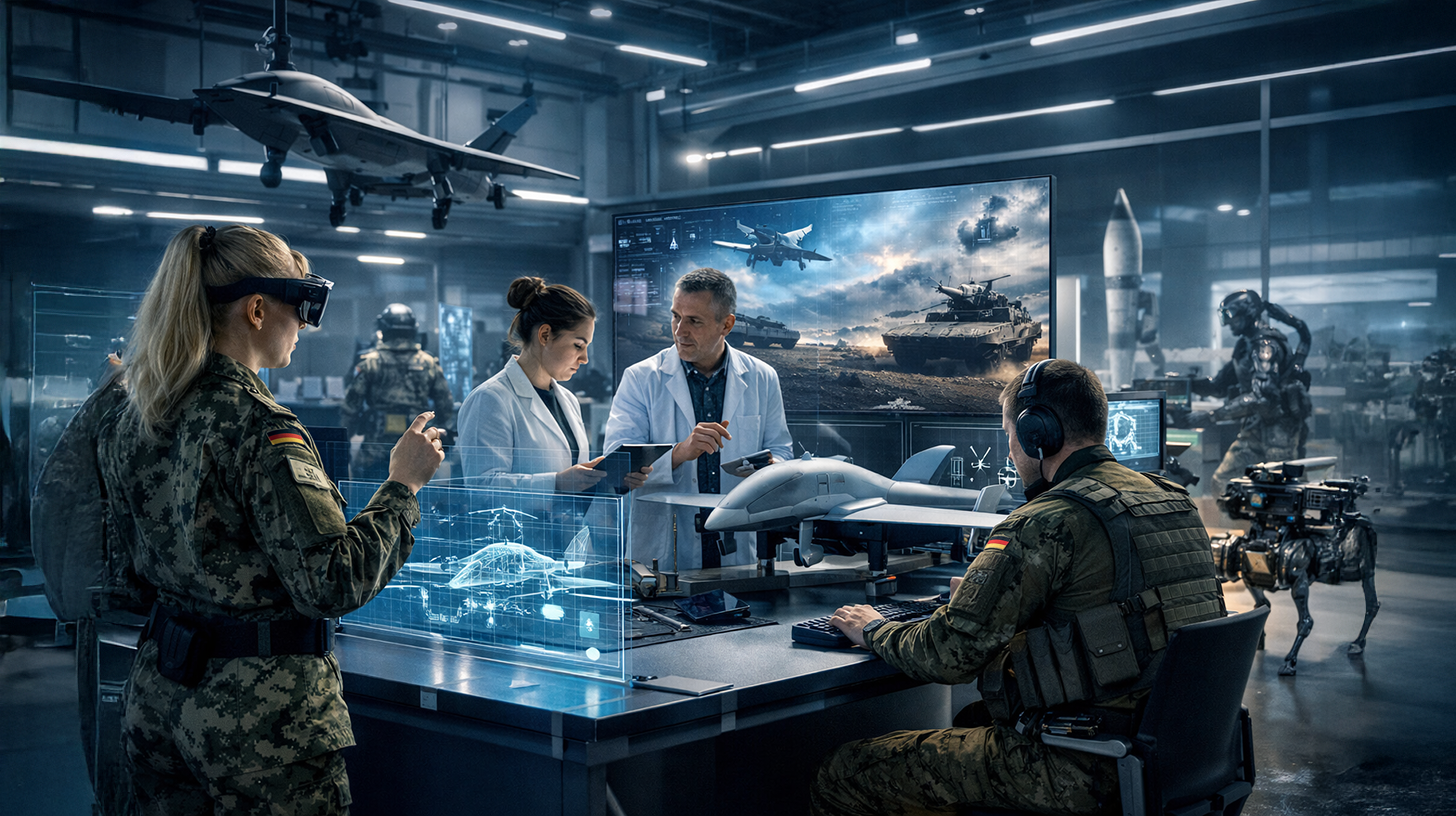
Innovation Centre of the German Armed Forces (InnoZBw): New paths for faster military technology development – Creative image: Xpert.Digital
New center in Erding: This is where the high-tech future of the German army is being created
Lessons from Ukraine: This is how the German Armed Forces plan to procure new technology in record time
On February 2, 2026, a technological revolution was launched in Erding, Bavaria, for the German armed forces. Defense Minister Boris Pistorius, together with Bavarian Minister-President Dr. Markus Söder, officially opened the new "Innovation Center of the Bundeswehr" (InnoZBw). This step marks the transition from mere announcements to concrete action: Less than a year after the initial concept, the center is now set to break down the cumbersome procurement processes of the past.
Given the rapid technological developments in the Ukraine war, where innovation cycles often last only weeks, the German Armed Forces are under pressure to act quickly. The new center in Erding is therefore intended to serve as a link between the troops, science, start-ups, and established industry. The goal is to make so-called "game changers"—from AI-supported drone swarms to state-of-the-art software—deployable not after years, but in the shortest possible time.
Pistorius made it clear that this is not just about military strength, but also about Germany's economic future. By stating that the defense industry will be just as crucial for the country's future as the automotive sector, the minister underscored the project's strategic dimension. The following overview explains exactly what the new innovation center plans to do, why Erding was chosen as the location, and what role the "Soldier System Innovation Lab" will play.
Related to this:

Why did Defense Minister Boris Pistorius open the Bundeswehr's innovation center?
On February 2, 2026, German Defense Minister Boris Pistorius officially opened the new Bundeswehr Innovation Center (InnoZBw) in Erding near Munich. Bavarian Minister-President Dr. Markus Söder also attended the event. This opening marks a significant step in the technological development of the German armed forces and fulfills an announcement Pistorius made less than a year earlier at the Munich Security Conference.
At the opening ceremony, the minister emphasized that innovation is not merely a nice-to-have for the German Armed Forces, but a key to success. With this statement, Pistorius underscores the strategic importance of technological innovation for the military capabilities of the Bundeswehr. The new center is intended to ensure that military technology is available more quickly in the future and is no longer subject to lengthy, traditional procurement cycles.
The opening follows the motto that Pistorius had already formulated at the Innovation Night of the Munich Security Conference: “It is time for fewer promises and more actions.” The rapid implementation within a little less than a year demonstrates the political will to modernize the Bundeswehr technologically and increase its responsiveness to current threat situations.
What are the goals of the Bundeswehr's Innovation Centre?
The Bundeswehr Innovation Center pursues several strategic goals aimed at fundamentally improving the innovative capacity of the German armed forces. At its core is the intention to more closely integrate research, innovation, and military practice. The troops, startups, industry, and researchers are to work together on solutions for operationally ready and state-of-the-art armed forces.
A key objective is the significant acceleration of innovation processes. Innovative products should be made available to soldiers more quickly and in the required quantities. In this context, Pistorius referred to the experiences in Ukraine, where drone technology changes within weeks. This rapid development requires new, more agile structures that move beyond the traditional procurement organization.
The InnoZBw (Innovation Center of the German Armed Forces) is intended to serve as a central coordination and control element for technology-driven innovations within the German Armed Forces. Based in Erding, a network will be established that specifically targets technology partners and offers small and medium-sized enterprises (SMEs) and startups new opportunities for exchange, project participation, and competition for fresh ideas. This follows a similar approach to the already successful Cyber Innovation Hub in Berlin.
What role does the innovation lab "System Soldat" play?
The existing and successfully operating System Soldat innovation lab, which has been running since 2022, forms the nucleus of the new innovation center. It is located at the Wehrwissenschaftliches Institut für Werk- und Betriebsstoffe (WIWeB) in Erding and has established itself in recent years as a pilot project for accelerated innovation processes.
The German Council of Science and Humanities has reviewed the concept of the innovation lab and emphasized its pioneering approaches for the necessary modernization of the German Armed Forces. The lab aims to accelerate the transfer of innovation into practical application and to intensify cooperation between defense technology and civilian research. The chairman of the Council, Wolfgang Wick, highlighted that this project has great potential to make technological innovations available more quickly in the future.
The innovation lab operates with a unique approach: procurement, research, and troops work hand in hand to develop pioneering solutions. Future users are involved in the development process early on, which is considered a key factor in accelerating progress. Among other things, the lab tests unmanned systems for land, sea, and air, as well as loitering munitions systems.
Another key element is the development of software sovereignty. The scientists in the innovation lab program Bundeswehr-specific software components for unmanned systems themselves, making these systems independent, rapidly adaptable, and secure. Project leaders in the lab have explained that the goal is to provide the exclusively German industry with concrete requirements regarding the capabilities of the various unmanned systems.
Why was Erding chosen as the location?
According to the Ministry of Defense, Erding offers ideal conditions due to its proximity to the innovative environment of the Munich metropolitan region. The region boasts a vibrant start-up scene, established industries, and renowned universities, which together form a high-performing innovation ecosystem.
In his speech, Pistorius described the greater Munich area as an "innovation hub of exceptional quality," offering ideal conditions for networking between the German Armed Forces, science, research, and industry. Here, start-ups and established companies of all sizes can engage in direct exchange with the armed forces.
In addition, the Bavarian state government plans to promote the establishment of civilian research institutions, companies, and start-ups on the grounds of the former Erding airbase with its "Defence Lab Erding" innovation campus initiative. This synergy between military and civilian innovation infrastructure creates additional potential for technological breakthroughs.
The former Erding airbase, where the last Tornado took off in 2014 and where almost all aircraft types of the German Air Force were maintained, is undergoing a fundamental transformation. The area originally planned for conversion into a new urban district has become a center for AI-controlled drones and unmanned transport systems.
Who manages the innovation center?
Rear Admiral Christian Bock will head the innovation center. He and his team will be responsible for bringing together innovative strength from the civilian and military sectors, accelerating networking, identifying opportunities, and enabling technological leaps.
Prior to his new role, Admiral Bock served as a sub-department head at the Federal Ministry of Defense, where he was also responsible for drone-related matters. He brings extensive expertise in state-of-the-art weapon systems, short innovation cycles, and rapid procurement processes, which are crucial for the center's work.
His appointment signals the importance the Ministry of Defense attaches to the topic of unmanned systems. The rapid technological development in this area, as clearly demonstrated by the war in Ukraine, requires leadership personnel with specific expertise and experience in agile procurement processes.
Hub for Security and Defense - Advice and Information

Hub for Security and Defense - Image: Xpert.Digital
The Security and Defence Hub offers expert advice and up-to-date information to effectively support companies and organizations in strengthening their role in European security and defence policy. Working closely with the SME Connect Defence Working Group, it particularly promotes small and medium-sized enterprises (SMEs) that wish to further develop their innovative capacity and competitiveness in the defence sector. As a central point of contact, the Hub thus creates a crucial bridge between SMEs and European defence strategy.
Related to this:
German Armed Forces attract start-ups: How fresh ideas are revolutionizing German defense
What role do drones and unmanned systems play?
Drones and unmanned systems play a central role in the work of the innovation center. At the opening, selected technologies were presented, including the networking of unmanned systems, sensor technologies, drone defense, and a drone swarm.
In his opening remarks, Pistorius referred to the experiences of the Ukraine war, where drones are considered a “real game-changer,” comparable to the first tanks 100 years ago. Drone technology is changing rapidly in this conflict, requiring new and faster development and procurement methods.
Various types of drones play a key role in the war in Ukraine. Conventional weapon systems such as tanks and artillery have lost some of their effectiveness when the skies above the battlefield are saturated with drones. So-called kamikaze drones, or loitering munitions, are inexpensive, small flying objects with integrated explosives that can be mass-produced.
According to both sides in the conflict, FPV (First-Person View) drones are now responsible for more than half of their respective losses on the battlefield. Ukraine aims to produce more than four million of these drones this year. These figures underscore the strategic importance of this technology.
The System Soldat innovation lab is working intensively on unmanned systems that can perform various functions. For flying drones, the focus is primarily on reconnaissance, defense, and combat effectiveness. On the ground, the systems can support the transport of materials and equipment or the rescue of the wounded.
A particular focus is on electronic warfare against unmanned systems. With the SPECTRA Challenge, the Cyber Agency, the Bundeswehr's Cyber Innovation Hub, and the System Soldier Innovation Lab have launched a joint innovation program to develop ideas for countering electronic threats such as jamming, spoofing, and signal interception. The best solutions can win development fees of up to €100,000.
Related to this:

What significance does artificial intelligence have for the German Armed Forces?
According to Defense Minister Pistorius, artificial intelligence plays a crucial role in a potential defense scenario. The number of human casualties could be kept lower "if we send in the technology first," the minister emphasized at the opening ceremony.
In the military sphere, AI is considered a game-changer because it can dramatically accelerate decision-making and reactions, especially in operational deployments. Professor Michaela Geierhos from the Bundeswehr University Munich sees "enormous potential" for the military. AI applications could automate reconnaissance and surveillance, control autonomous weapon systems, defend against cyberattacks, optimize logistics, and enable realistic training scenarios.
The German Armed Forces, together with the Cyber Innovation Hub, are actively driving the development of AI-supported systems, for example, for analyzing complex situational awareness or automating logistical processes. The Federal Ministry of Defense is increasingly relying on AI applications to be able to react faster and more efficiently in both cyber defense and operational planning.
Concrete examples of AI use already exist in various areas. At Electronic Warfare Battalion 912, research is being conducted on AI projects aimed at integrating artificial intelligence into a military context. For example, work is being done on the machine-based analysis of radio communications and the intelligent calculation of flight routes.
The German Armed Forces have already integrated initial AI models into their workflows, for example in creating and summarizing texts. Specialized AI models are being developed that are specifically designed for use in the military environment and are intended to enable military judgment.
A key conclusion from specialist events was that armed forces will only be able to conduct multi-domain operations with the use of AI, in order to win combat through information, command and effect superiority.
How is the collaboration with start-ups and industry structured?
The innovation center pursues a decidedly collaborative approach. Armed forces, startups, industry, and researchers are to work together on solutions, consciously overcoming the boundaries between different organizations. In his speech, Pistorius emphasized that the innovation center brings together the German Armed Forces and science, research and industry, startups and established companies of all sizes.
The center will expand its reach beyond Erding and actively seek out technology partners, similar to the successful approach already demonstrated by the Cyber Innovation Hub in Berlin. Small and medium-sized enterprises (SMEs) and startups will gain new opportunities for exchange, project participation, and competition for fresh ideas.
At the opening, universities and young companies presented their ideas on-site. This direct dialogue facilitates quick discussions, the exchange of questions, and collaborative learning across organizational boundaries. The early involvement of future users and direct collaboration with industry are considered a significant time advantage.
The System Soldier Innovation Lab is already collaborating with industry partners. Before being tested in the field, military users are trained in the lab together with industry partners on how the state-of-the-art systems work. This practical collaboration leads to valuable insights for all parties involved.
What is the economic and political significance of the arms industry?
Minister Pistorius emphasized at the opening ceremony that defense is of crucial importance for Germany as an industrial location. He expressed his belief in both the future of the German automotive industry and the significance and future of the German defense industry.
“Both will be crucial for our economic success over the next 15 years, but also for Germany’s importance in security and foreign policy,” the minister explained. This statement combines economic interests with security policy requirements and underscores the strategic dimension of the defense industry.
This statement is noteworthy because it places the defense industry on a par with the traditionally important automotive industry. This reflects the changed security policy situation and signals that the German government considers the industrial base for defense goods a strategic asset.
Pistorius also mentioned that talks were already underway regarding the potential joint production of arms in Ukraine and Germany. This demonstrates the desire to benefit from Ukraine's experience in modern warfare while simultaneously building industrial partnerships.
What lessons learned from the war in Ukraine are being incorporated?
The war in Ukraine serves as an important source of knowledge for modern warfare at the innovation center. At the opening ceremony, Pistorius pointed out that Germany benefits from the experience of the Ukrainian armed forces, particularly in the areas of drones, drone defense, artificial intelligence, and cost-effective weapons systems.
The pace of technological development in the Ukraine conflict is unprecedented. Drone technology is changing within weeks, and new tactics and countermeasures are being developed and deployed in record time. These rapid innovation cycles are rendering traditional, multi-year procurement processes obsolete and necessitating new, more agile structures.
The Ministry of Defense views drones as a key development in the context of the war in Ukraine. Their impact is described as comparable to that of the first tanks 100 years ago. In particular, their deployment in a coordinated manner could achieve a "precise and scalable impact deep into enemy key capabilities" and relieve pressure on friendly combat troops.
Smaller, inexpensive, and mass-produced systems have demonstrated their ability to destroy high-value weapons systems worth millions of euros. This asymmetry alters strategic calculations and underscores why speed in innovation and procurement is so crucial.
Ukraine is working intensively on developing new drone and defense systems, with rapid deployment, flexibility, and innovation being essential components of modern warfare. The German Armed Forces must also adapt to these insights, as Inspector General Carsten Breuer made clear with his demand for "speed" in the procurement of kamikaze drones.
What further developments are planned?
The innovation center is designed as a growing structure. Pistorius described it as "a necessary first step on a new path," implying that further expansion phases will follow. The center will be responsible for coordination, development, and idea management, and will build an external network from its base in Erding.
The German Council of Science and Humanities recommends developing a new, comprehensive strategic concept for the innovation lab to enable it to fulfill its tasks as a research institution at a high level. Key areas of action include strengthening its profile as a scientific institution, developing a coherent transfer and cooperation strategy, and establishing flexible budget and personnel management.
The German Council of Science and Humanities believes that the approaches to new work and cooperation structures in research within the German Armed Forces, tested in the innovation lab, should be rolled out more broadly. This suggests that the Erding model could serve as a blueprint for other innovation centers.
The Bavarian state government is planning a comprehensive innovation campus, the “Defence Lab Erding,” which aims to attract civilian research and start-ups. This symbiosis between military and civilian innovation could develop Erding into a significant technology hub.
The innovation center is also intended to collaborate with existing structures such as the Cyber Innovation Hub in Berlin and adopt their successful approaches. This networking of various innovation hubs could create a nationwide ecosystem for defense innovation.
Consulting - Planning - Implementation

Markus Becker
I would be happy to serve as your personal advisor.
Head of Business Development
Chairman SME Connect Defense Working Group
Consulting - Planning - Implementation
Konrad Wolfenstein
I would be happy to serve as your personal advisor.
contact me at wolfenstein ∂ xpert.digital
Just call me on +49 7348 4088 965 (Munich) .
Your dual-use logistics experts

Dual-use logistics experts - Image: Xpert.Digital
The global economy is currently undergoing a fundamental transformation, a watershed moment that is shaking the foundations of global logistics. The era of hyper-globalization, characterized by the relentless pursuit of maximum efficiency and the "just-in-time" principle, is giving way to a new reality. This new reality is marked by profound structural breaks, geopolitical power shifts, and increasing fragmentation of economic policy. The once taken-for-granted predictability of international markets and supply chains is dissolving and being replaced by a period of growing uncertainty.
Related to this:





