

When large solar system projects threaten to fail due to the grid compatibility assessment (NVP). What should politicians do about it?

Available in 27 languages 📢
Prefer Xpert.Digital on GoogleⓘPublished on: December 4, 2023 / Updated on: December 4, 2023 – Author: Konrad Wolfenstein
AI & XR 3D Rendering Machine: When large solar system projects threaten to fail due to the grid compatibility assessment - Image:
🔎 What is this network compatibility assessment all about? What can politicians and individuals do about it?
The grid compatibility assessment (GCA) is a crucial step in the planning and implementation of large-scale renewable energy projects, particularly the construction of large solar power plants. This assessment ensures that integrating the plant into the existing electricity grid is technically feasible and will not negatively impact grid stability. Problems with the grid compatibility assessment can indeed lead to solar power plant projects not being realized or experiencing significant delays.
⚡ The challenges of integrating renewable energies into the grid are multifaceted. On the one hand, the electricity grids must be expanded and modernized to accommodate the fluctuating electricity from renewable sources. On the other hand, operators of solar power plants must ensure that their systems meet technical requirements to avoid, for example, amplifying grid fluctuations.
🏛️ What can policymakers do to minimize such obstacles? One approach is to promote grid expansion and modernization to increase grid capacity and integrate intelligent grid control systems. Furthermore, policymakers can create regulatory frameworks that offer investment security and reduce the administrative burden for project developers.
🌍 As an individual, you can get involved, for example, by joining citizen energy cooperatives that directly market locally generated electricity and thus contribute to grid stability. Furthermore, you can help avoid peak loads on the grid by consciously choosing your energy consumption habits.
✅ To overcome these challenges, it is essential that all stakeholders work together. The energy transition is a project for society as a whole, and it can only succeed if policymakers, businesses, and citizens all pull together.
📣 Similar topics
- 🏭🌞 Challenges of grid compatibility testing for solar power plant projects
- ⚡️🔌 Grid compatibility assessment: Obstacles for large solar power plants
- 🏢🔋 What is behind the network compatibility test?
- 🔄⚡️ Grid integration of renewable energies: Tasks and solutions
- 🌍🔌 Grid compatibility assessment in the energy transition: Measures and potential
- 💡😀 Individuals in network compatibility assessment: Opportunities and options for action
- 🏭⚡️ Grid compatibility assessment for solar power systems: Policy and personal options
- 📊🔌 Grid compatibility assessment for solar projects: Challenges and solutions
- 🌞🏭 Obstacles to grid compatibility testing of solar power plants
- 🔌🏢 Grid compatibility assessment and renewable energies: requirements and strategies
#️⃣ Hashtags: #SolarEnergy #EnergyTransition #GridIntegration #Sustainability #RenewableEnergies
🌞 Faster grid expansion: The need for an expanded grid – especially for renewable energies

More speed for power grid expansion - electricity for everyone - especially for renewable energies - Image: Xpert.Digital
“We must work together to accelerate grid expansion. In the next two decades, we will need thousands of kilometers of additional power lines. These must be planned, approved, and built as quickly as possible,” said Federal Minister for Economic Affairs Robert Habeck at the groundbreaking ceremony for the converter construction of the “SuedLink” at the Leingarten substation near Heilbronn.
More about it here:
🌐📈 Power line expansion and grid stability
AI & XR 3D Rendering Machine: Impact on network stability and network compatibility testing (NVP) – Image: Xpert.Digital
⚡💡 Importance for network stability
The expansion of the high-voltage transmission network has a significant impact on grid stability and the grid compatibility assessment (GCA). Expanding the transmission networks increases electricity transmission capacity and improves grid stability. Robust grid stability is crucial to ensuring a reliable energy supply and minimizing the risk of power outages.
🔍🛠️ Role of the network impact assessment (NVP)
The grid compatibility assessment (GCA) also plays a crucial role in evaluating the impact of high-voltage transmission line expansion on the electricity grid. This assessment analyzes the effects of new infrastructure projects on the existing grid to ensure that the planned changes do not jeopardize system stability or compromise security of supply. The GCA assesses factors such as voltage stability, frequency stability, and grid reserves to ensure that the grid remains reliable and stable after the expansion.
🌱🔌 Advantages of expanding the power grid
Expanding the power grid brings numerous advantages. It enables the integration of renewable energies, particularly wind and solar power, which are often generated in remote regions. Improved grid connections for these locations allow for more efficient use of renewable energy sources, leading to a reduction in greenhouse gas emissions and a decrease in dependence on conventional energy sources.
💡🌍 Promoting decentralized energy generation
Furthermore, the expansion of the power grid contributes to decentralized energy generation. Smaller, locally produced amounts of electricity can be distributed and used via the grid, leading to more efficient use of renewable energy sources. This also promotes the energy transition towards a more sustainable energy system.
🔌⚠️ Detection and management of network bottlenecks
However, there are also challenges and potential impacts that must be considered during the planning and implementation of the high-voltage transmission line expansion. Increased strain on the grid due to the expansion can lead to bottlenecks, especially if insufficient reserves are available. This necessitates a thorough analysis and optimization of grid schedules to avoid potential bottlenecks and ensure grid stability.
🌳🛤️ Minimizing environmental impacts of construction
Another challenge lies in considering the environmental impacts of the expansion. The construction of new transmission lines can affect nature reserves and protected landscapes. It is important to minimize these impacts and examine alternative routing options to adequately address environmental concerns.
🤝🌐 Importance of cooperation in the energy market
A key aspect of expanding the high-voltage power grid is the cooperation between the various stakeholders in the energy market. Collaboration between grid operators, energy producers, authorities, and the public is crucial to ensuring efficient and acceptable implementation of the expansion. Open communication, transparent dialogue, and the inclusion of citizens in the decision-making process build trust and contribute to successful implementation.
🔍🌿 Conclusion and strategic emphasis
In summary, the expansion of the high-voltage transmission line has a significant impact on grid stability and grid compatibility assessments. It enables the integration of renewable energies, promotes decentralized energy generation, and contributes to the reduction of greenhouse gas emissions. Nevertheless, challenges such as grid bottlenecks and environmental impacts must be considered during planning and implementation. Effective cooperation among all stakeholders is crucial to ensuring the smooth and sustainable expansion of the high-voltage transmission line.
📣 Similar topics
- 🔌 Importance of grid stability through the expansion of power lines
- 💡 Role of grid compatibility testing (GCT) in the electricity sector
- 🌀 Benefits of renewable energies through electricity highway integration
- 🌱 Contribution of the power line expansion to the energy transition
- ⚡ Challenges in expanding electricity transmission networks
- 🏞️ Environmental protection in energy infrastructure projects
- 🤝 Importance of cooperation in the energy market for grid expansion
- 💬 Citizen involvement in energy infrastructure development
- 📊 Strategies for avoiding grid bottlenecks in the electricity grid
- ✅ Impact of decentralized energy generation through grid expansion
#️⃣ Hashtags: #GridStability #GridCompatibilityAssessment #EnergyTransition #PowerHighwayExpansion #RenewableEnergies
⚡ Smart Grid: Artificial Intelligence in the Renewable Energy Sector

Artificial intelligence in the field of renewable energies – @shutterstock | monicaodo
An intelligent power grid integrates all stakeholders into a comprehensive system through the interplay of generation, storage, grid management, and consumption. Power plants (including storage facilities) are already controlled to ensure that the amount of electrical energy produced always matches the amount consumed. Intelligent power grids incorporate consumers, as well as decentralized small-scale energy suppliers and storage facilities, into this control process. This results in a balanced consumption pattern across time and location (smart power/intelligent electricity consumption) and allows for better integration of non-dispatchable generation facilities (e.g., wind turbines and photovoltaic systems) and consumers (e.g., lighting).
More about it here:
⚡🚗 Impact of power lines on grid stability and grid compatibility 🌍⚙️
AI & XR 3D Rendering Machine: Accelerated approval processes as a model for the future of network compatibility assessment (NVP) – Image: Xpert.Digital
🛣️ SuedLink and SuedOstLink – Key to a sustainable energy supply
Federal Minister for Economic Affairs Habeck, together with the transmission system operator TransnetBW, has given the go-ahead for the construction of the first converter for the future "SuedLink" power line. From 2027/28, large quantities of wind power are expected to flow to Bavaria and Baden-Württemberg via this line and the "SuedOstLink".
💡 Early support for network stability through “SuedLink” converters
The "SuedLink" converter is scheduled to begin operation in 2026. Even before the "SuedLink" project is commissioned in 2028, it will make a significant contribution to grid stability in Baden-Württemberg. Leingarten is the southern end of the approximately 700-kilometer-long high-voltage direct current (HVDC) link between Brunsbüttel in Schleswig-Holstein and Großgartach in Baden-Württemberg.
⚡ “SuedOstLink” – A new era of electricity transmission begins
With the construction of the converter station in Wolmirstedt near Magdeburg for the "SuedOstLink" high-voltage direct current (HVDC) transmission line, this project is also entering the implementation phase. This approximately 540-kilometer-long power highway is intended to reliably transport large quantities of electricity from wind farms in Saxony-Anhalt, Brandenburg, and Mecklenburg-Western Pomerania, as well as from offshore wind farms in the north, to Bavaria starting in 2027.
🚀 Accelerated approval processes as a model for the future
The "SuedostLink" converter was approved in seven months and is scheduled for completion in 2025. Habeck described the rapid process at the groundbreaking ceremony at the end of March as a model for other grid expansion projects.
🏗️ Federal government's strategic planning for a robust electricity grid
The German government aims for a faster expansion of the electricity grid and emphasizes the need for thousands of kilometers of additional power lines in the next two decades.
🌐 The European dimension of Germany's power highways
The German government is aiming for a faster expansion of the electricity grid and emphasizes the need for thousands of kilometers of additional power lines over the next two decades. Construction of converter stations for the "SuedLink" and "SuedOstLink" power lines has begun to improve grid stability and ensure the supply of electricity to households and businesses. Expanding connections to neighboring European countries is also considered important.
📈 Promoting renewable energies and the role of transmission system operators
The German government is working to accelerate and simplify planning and approval processes to speed up grid expansion. Underground cables are to be given priority for major power lines. The four German transmission system operators are TenneT, 50Hertz Transmission, Amprion, and TransnetBW, and they are regulated by the Federal Network Agency. The share of renewable energies in Germany's energy demand is steadily increasing, and the government plans a significant increase in the installed capacity of offshore wind power and solar installations.
📣 Similar topics
- 🌱 The starting signal for the "SuedLink" power highway
- 🚀 Fast approval as a model for network expansion
- 🔌 Important step towards network stability through the “SuedLink” converter
- 🌬️ Wind power transport: The role of “SuedLink” and “SuedOstLink”
- ⚡ Grid compatibility assessment in the age of electricity highways
- 🏗️ Construction of the power converters: Milestone for the energy transition
- 🔄 Improved security of supply through “SuedOstLink”
- 📈 Federal government is pushing the expansion of renewable energies
- 🇩🇪 The importance of grid expansion for Germany's energy future
- 💡 “SuedOstLink”: An accelerated process sets new standards
#️⃣ Hashtags: #GridStability #PowerHighway #RenewableEnergies #GridExpansion #EnergyTransition
🌐📈 Renewable energies & solar: Preventing impending grid overloads through expansion – businesses and private households affected
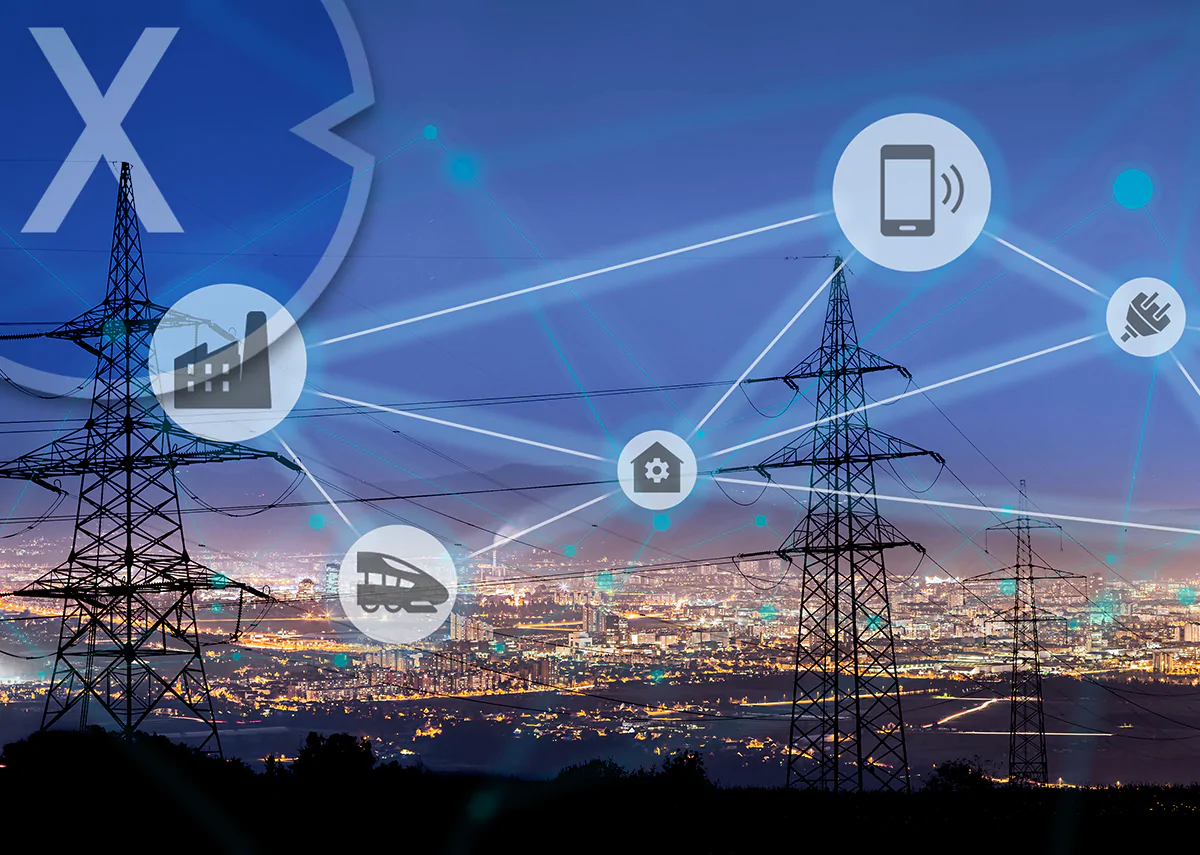
Renewable energies & solar: Prevent impending grid overloads through expansion – Image: Xpert.Digital
Current and future electricity supply faces new challenges. With the increasing use of renewable energies, especially solar power, the strain on the electricity grid is becoming ever more noticeable. This means that in some cases, surplus electricity generated by solar power plants cannot be fed into the grid. The cause lies in the overload of the existing energy infrastructure network.
More about it here:
⚡🛣️ The expansion of the power highway
🌬️🔗 Impact on grid stability and grid compatibility
The expansion of the high-voltage power lines, particularly the “SuedLink” and “SuedOstLink,” has a significant impact on grid stability and the grid compatibility assessment (NVP) in Germany. Federal Minister for Economic Affairs Habeck recently announced the construction of the first converter for the future “SuedLink” transmission line in cooperation with the transmission system operator TransnetBW. This converter is scheduled to go into operation from 2026 and will primarily contribute to grid stability in Baden-Württemberg.
🚀⚡ Construction of “SuedLink” and “SuedOstLink”
The approximately 700-kilometer-long high-voltage direct current (HVDC) connection known as the “SuedLink” is expected to transport large quantities of wind power to Bavaria and Baden-Württemberg starting in 2028. This will enable the efficient use of renewable energies and improve regional energy supply. Furthermore, the “SuedOstLink” is planned to support electricity transmission starting in 2027. This roughly 540-kilometer-long high-voltage transmission line will reliably transport wind power from the German states of Saxony-Anhalt, Brandenburg, and Mecklenburg-Western Pomerania, as well as from offshore wind farms in the north, to Bavaria. Construction of the “SuedOstLink” converter was approved in just seven months and is scheduled for completion in 2025.
🔍👷 Federal Network Agency and transmission system operators
The German transmission system operators, including TenneT, 50Hertz Transmission, Amprion, and TransnetBW, are supervised by the Federal Network Agency. They work closely with the Federal Government to accelerate the expansion of the electricity grid. The Federal Government has recognized that thousands of kilometers of additional power lines will be needed over the next two decades to meet the increasing demand for renewable energy.
🌐🔌 International networking and impact
Expanding connections to neighboring European countries is also of great importance in order to enable the cross-border exchange of electricity.
💡🔋 Grid stability and the role of power lines
Grid stability plays a crucial role in ensuring a reliable electricity supply for households and businesses. High-voltage transmission lines help to relieve pressure on the grid and enable the smooth transmission of large amounts of electricity over long distances. Optimized distribution and integration of renewable energies can prevent bottlenecks and increase security of supply.
⚡🌳 Grid compatibility assessment (NVP) and electricity highways
The grid compatibility assessment (GCA) evaluates the potential impacts of high-voltage power lines on people, the environment, and the landscape. It examines whether the construction and operation of the power lines comply with environmental and nature conservation regulations. Various criteria are used, such as the protection of sensitive habitats, noise abatement, and consideration of citizens' interests. Underground cables are preferentially used for large high-voltage power lines to minimize potential impacts on the environment and landscape.
🌬️ Renewable energies and grid expansion
The share of renewable energies in Germany's energy supply is steadily increasing. To continue this positive trend, the German government plans a significant increase in the installed capacity of offshore wind power and solar installations. Expanding the high-voltage transmission network is essential to efficiently distribute and utilize the generated electricity.
🏘️ Citizen interests and environmental concerns
However, grid expansion also presents challenges. Some citizens and environmental organizations have raised concerns about the route of the power lines and their potential impact on sensitive ecosystems. The German government is therefore striving to accelerate planning and approval processes and improve public participation in order to find a fair balance between the interests of the energy transition and the needs of the affected regions.
🔗 Impact on grid stability and grid compatibility testing
The expansion of the SuedLink and SuedOstLink power lines has a significant impact on grid stability and grid compatibility assessments in Germany. This crucial infrastructure enables the efficient transport of large quantities of renewable energy and improves regional supply. The German Federal Government is committed to accelerating grid expansion while adequately considering environmental and public interests to advance a sustainable energy transition.
📣 Similar topics
- 💡 The future of energy: Germany's “SuedLink” and “SuedOstLink”
- 🌱 Connecting renewable energies: Germany's new electricity highways
- ⚡ Grid stability and environmental protection: The challenges of electricity grids
- 🔌 Converter construction for “SuedLink”: A step towards grid stability
- 💨 Wind energy transport: The importance of “SuedLink” and “SuedOstLink”
- 🍃 The role of transmission system operators in the German energy transition
- 🏗️ Accelerated grid expansion: The federal government's plans
- 🔋 Grid compatibility assessment: A balance between development and the environment
- ✅ Accelerated approval processes for a smooth energy transition
- 🌍 European networking: Cross-border electricity trading
#️⃣ Hashtags: #EnergyTransition #RenewableEnergies #GridStability #GridExpansion #PowerHighway
🔋🛣️ Electricity Highway Infrastructure: Grid Expansion and the Energy Transition – Shaping and Expanding a Sustainable Future

Electricity Highway: Grid expansion and the energy transition – Image: Xpert.Digital
Germany's energy transition has the potential to pave the way to a climate-neutral future. Grid expansion plays a central role in this. A strong and intelligent grid enables the more efficient use and distribution of renewable energies.
More about it here:
Plan your solar system for the most common applications conveniently online with our solar system planner!
With our user-friendly solar system planner you can plan your individual solar system online. Whether you need a solar system for your home, your business or for agricultural purposes, our planner offers you the opportunity to take your specific requirements into account and develop a tailor-made solution.
The planning process is simple and intuitive. You simply enter relevant information. Our planner takes this information into account and creates a tailor-made solar system that meets your needs. You can try out different options and configurations to find the optimal solar system for your application.
Additionally, you can save your plan to review later or share with others. Our customer service team is also available to answer your questions and provide support to ensure your solar system is optimally planned.
Use our solar system planner to plan your individual solar system for the most common applications and advance the transition to clean energy. Start now and take an important step towards sustainability and energy independence!

The solar system planner for the most common applications: Plan the solar system online here - Image: Xpert.Digital
More about it here:
We are there for you - advice - planning - implementation - project management
☑️ Industry expert, here with his own Xpert.Digital industry hub with over 2,500 specialist articles

Konrad Wolfenstein
I would be happy to serve as your personal advisor.
You can contact me by filling out the contact form below or simply call me on +49 7348 4088 965 (Munich) .
I'm looking forward to our joint project.
Write to me

Xpert.Digital - Konrad Wolfenstein
Xpert.Digital is a hub for industry with a focus on digitalization, mechanical engineering, logistics/intralogistics and photovoltaics.
With our 360° business development solution, we support well-known companies from new business to after sales.
Market intelligence, smarketing, marketing automation, content development, PR, mail campaigns, personalized social media and lead nurturing are part of our digital tools.
You can find out more at: www.xpert.digital - www.xpert.solar - www.xpert.plus
Keep in touch

Industrial & B2B Business Metaverse: Reduce costs with XR technology for photorealistic product images (XR 3D rendering machine)

Lathe in photorealistic representation (3D product presentation) - Image: Xpert.Digital
XR technology offers a superior solution for creating photorealistic images and allows companies to free themselves from the expensive fees of external media agencies. It is common knowledge that media agencies charge high costs to create such images as it requires expertise, special software and collaboration with various experts.
More about it here:







