
Contract manufacturer and subcontractor (“extended workbench”) for long turned parts, precision turned parts and CNC long turned parts
Xpert Pre-Release

Language selection 📢
Published on: January 29, 2026 / Updated on: January 29, 2026 – Author: Konrad Wolfenstein
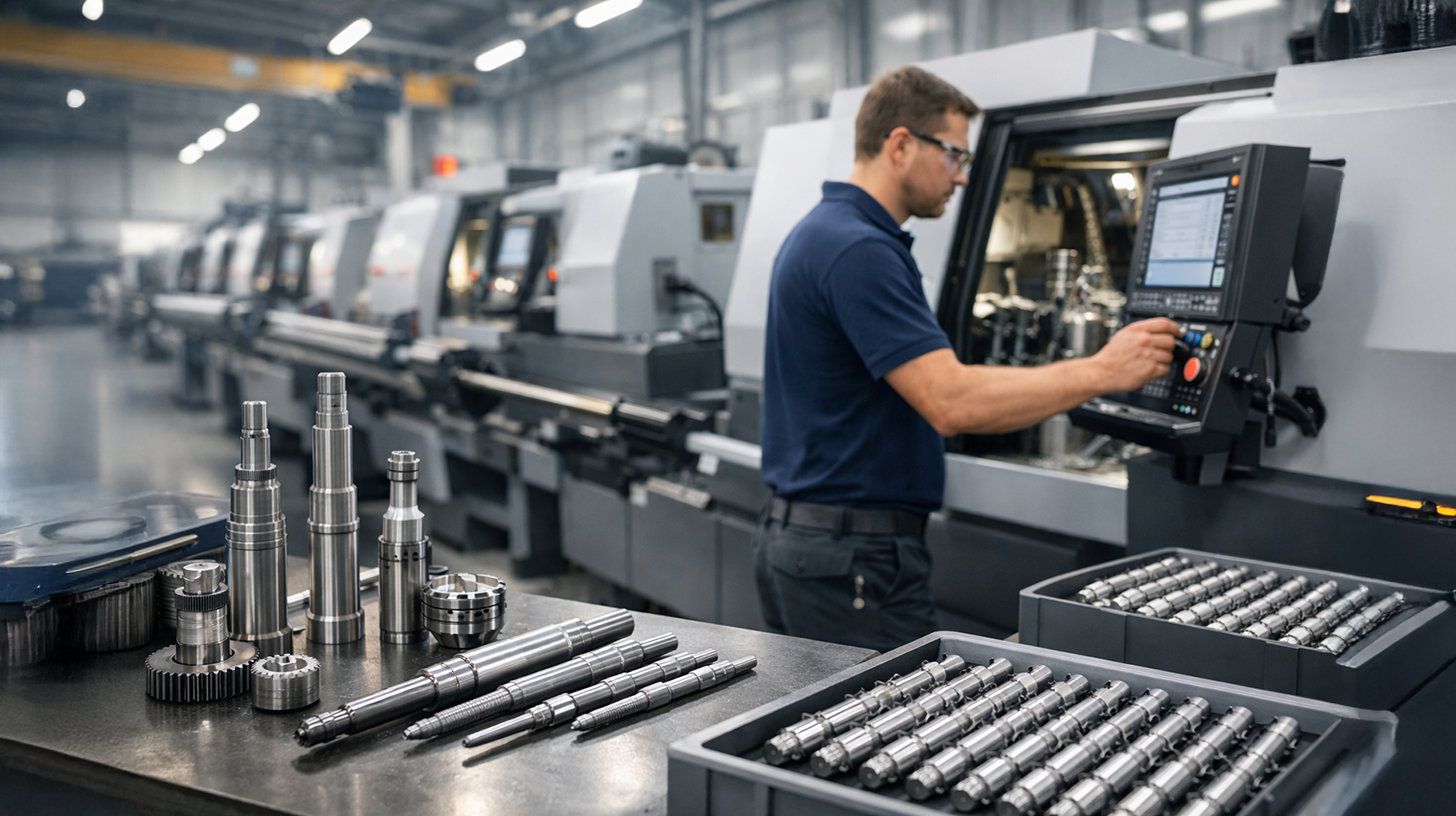
Contract manufacturers and subcontractors (“extended workbench”) for long turned parts, precision turned parts and CNC long turned parts – Image: Xpert.Digital
Multi-billion dollar market for long-turning machines: Where the real margins lie between medical technology and electric cars
Unseen heroes in global upheaval: How the market for precision and long-turned parts is reinventing itself
They are found in every modern vehicle, keep airplanes in the air, enable minimally invasive surgeries, and physically connect the digital world: long turned parts and precision turned parts are the invisible backbone of global industry. But the market for these key components is facing a historic turning point. What long functioned as a classic "extended workbench"—pure manufacturing according to drawings in constant price competition—is rapidly evolving into a high-tech battleground where only systems expertise and strategic foresight will determine survival.
As the global market for precision machining approaches a volume of nearly $200 billion, the industry's tectonic plates are shifting dramatically. The shift towards electric mobility is redefining material and tolerance requirements, demographic change is fueling medical technology as a profit driver, and geopolitical strategies like "China Plus One" are forcing OEMs to radically reorganize their supply chains. For contract manufacturers, this means the era of the simple parts producer is coming to an end. Those who want to survive today must master the balancing act between highly automated Swiss-type technology, digital integration, and resilient location policies.
This analysis sheds light on why the status quo is becoming a dangerous cost trap for contract manufacturers and where the real gold mines of the future lie – between high-tech hubs in Europe and the USA and new clusters in Latin America and Asia. We take a detailed look at a market that is transforming from a pure capacity provider into an indispensable systems partner.
What long turned parts and precision turned parts really are in the global industrial system
Long-turned parts, precision turned parts, and CNC-machined long-turned parts are not niche products, but rather invisible key components of modern value chains. These are mostly rotationally symmetrical components – shafts, bolts, bushings, fittings, valve components, screws, medical implants, connectors – manufactured in high volumes, with extremely tight tolerances and reproducible quality. Technologically, CNC lathes and, in particular, Swiss-type or long-turning automatic lathes with multi-axis machining, bar machining, and often integrated milling and drilling capabilities dominate today.
Economically, this market is best understood at the intersection of two perspectives: firstly, as part of the global precision machining sector and the production of precision turned parts; secondly, as the business model of the contract manufacturer, acting as an "extended workbench" for OEMs and system suppliers. The global precision machining market is estimated at around US$125 billion for 2024 and is projected to grow to nearly US$194 billion by 2030, representing an average annual growth rate of approximately 7.6 percent. Within this value chain, CNC machining dominates, expanding at higher growth rates than manual or conventional machining techniques.
More specifically, the market segments for "Precision Turned Product Manufacturing" – that is, precisely those components typically produced on Swiss-type and turning centers – are examined. This segment is estimated to be worth well over US$120 billion in the mid-2020s and is projected to grow by slightly more than 6 percent annually until 2031. It is noteworthy that CNC-controlled machining processes already account for around two-thirds of the value creation in this segment and are expected to grow by approximately 8.4 percent annually until 2031, generating a significant additional market volume.
At the same time, the market is highly fragmented: thousands of mostly medium-sized contract manufacturers compete globally with a few large, highly automated players. Technological barriers to entry are moderate – a modern CNC machine is capital-intensive, but not a monopoly commodity – but strategically increasingly high: the availability of skilled workers, certifications (especially in the automotive and medical technology sectors), integration into digital supply chains, and the ability to produce in series and large series are the real differentiators.
This makes it clear: The market for long turned parts and precision turned parts is no longer simply a cost race of traditional extended workbenches. It is evolving into a technologically sophisticated, geographically multipolar system in which regional specialization, geopolitical risks, and industry cycles of the customer industries are the key levers.
Technological change: From a simple turned part to a highly regulated, automated precision component
Technological advancements in the field of long and precision turned parts are shifting the competitive landscape from pure machine investment to system expertise. Modern CNC turning centers and Swiss-type lathes now form highly integrated production cells. The global market for CNC machining and turning centers is valued at approximately US$26 billion (2023) and is projected to grow to well over US$40 billion by 2030, representing an annual growth rate of about 6.6 percent. This growth is driven by the demand for high-precision, complex geometries in industries such as automotive, aerospace, medical technology, and defense.
In practice, several technological trends are gaining importance. Firstly, the transition to lights-out or at least highly automated manufacturing cells with automatic pallet and bar loading systems, integrated measuring and testing technology, and digital process monitoring. Analyses of the precision turned parts market show that IIoT-enabled CNC cells are already making significant contributions to the expected growth rate by partially compensating for the shortage of skilled workers and increasing machine uptime.
Secondly, Swiss-type or long-turning lathes with up to seven axes are driving growth, particularly in the area of complex, long, and intricate components. By the mid-2020s, such systems already accounted for a good third of the market volume for precision turned parts and, at almost 10 percent per year, were growing significantly above the market average. Typical applications include bone and bone screws, catheter components, complex valves, and long fittings, whose complete machining in a single setup considerably reduces setup time and scrap.
Thirdly, the material mix is shifting. Steel dominates with around 45 percent of the volume, particularly for the automotive, general industrial, and mechanical engineering sectors. In the long term, however, the shares of titanium and superalloys are increasing at growth rates of around 7.7 percent per year, driven by applications in aerospace, high-performance energy systems, and medical technology. For contract manufacturers, this means that the ability to reliably turn difficult-to-machine, temperature-resistant, and corrosion-resistant materials is becoming a key competitive advantage.
Fourth, there is a growing trend toward specialization according to end-use industries and geometry. Manufacturers report that precision turned parts are used in a wide variety of sectors: in the automotive industry for components of fuel and hydraulic systems, in aerospace as fittings, bushings, and structural parts, in medical technology for surgical instruments and implants, in electronics for connectors, pins, and housings, and in industry for valves, shafts, and special fittings. While this diversification mitigates risk, it also necessitates industry-specific certifications, quality standards, and documentation processes.
In summary, technological development directly impacts the market structure of contract manufacturing: price competition remains important, but without investments in multi-axis CNC, sophisticated material processing, digital integration and industry-specific quality management, the relevance of a contract manufacturer in the global procurement portfolio of OEMs decreases step by step.
Application areas: Why long turned parts are everywhere, but never in the spotlight
The demand for long and precision turned parts is supported by a wide range of customer industries, which together create a robust but cyclically differentiated demand pattern.
In the automotive sector, these components have formed the backbone of many subsystems for decades: fuel lines, injection components, brake systems, transmission shafts, axle components, fasteners, and valves. With the transition to electromobility, the fields of application are shifting, but not disappearing. Turned parts are increasingly used in electric powertrains, battery cooling circuits, thermal management systems, and power electronics housings. Analyses of the precision turned parts market estimate the share of automotive and EV applications at nearly 30 percent of the total volume in the mid-2020s. The challenge: While electromobility stabilizes the volume, shorter product lifecycles and greater part diversity increase the pressure on flexibility and changeover times.
The aerospace industry demands particularly sophisticated turned parts with extremely tight tolerances, compliance requirements, and often made from difficult-to-machine materials such as titanium and superalloys. These include fittings in hydraulic and fuel systems, structural connections, landing gear components, and engine parts. Market analyses show that the ramp-up of aircraft programs after years of crisis is a significant driver for precision turned parts, with measurable contributions to the overall market growth rate.
In medical technology, the importance of turned parts has increased significantly in recent years. Miniaturized, precision components for surgical instruments, endoscopes, implants (e.g., bone and spinal systems), and dental technology are frequently manufactured on Swiss-type automatic lathes. The aging population, the trend toward minimally invasive procedures, and regulatory requirements are generating structural growth with attractive margins. Studies confirm that the medical technology segment for precision turned parts has the highest growth rates with particularly profitable EBIT margins, as regulatory barriers to entry counteract price erosion.
The electronics and semiconductor industries require precision turned parts, particularly for mechanical interfaces – connectors, housings, sensor carriers, and contact pins. With increasing electrification and sensor technology in vehicles, industrial plants, and consumer goods, the number of mechanical-electrical interfaces continues to rise. At the same time, these parts are small, complex, and require tight tolerances – an ideal field for highly automated long-turning processes.
Furthermore, long turned parts play a central role in general industry, mechanical and plant engineering, energy applications (turbines, generators, valves), and the process industry (instrumentation, valve and connection technology). The markets for precision instrumentation components, which also rely heavily on turned and milled parts, are growing moderately but steadily; a volume of nearly US$10 billion is expected by 2030. While these applications are less spectacular, they offer broad, geographically diversified demand and thus contribute significantly to the baseline capacity utilization of many contract manufacturers.
Crucially for market assessment, these industries are partially decoupled in their cycles. While the automotive sector is clearly driven by economic cycles and policy (subsidies, emissions regulations, consumer confidence), medical technology and parts of the process industry are more driven by demographics and infrastructure. This presents contract manufacturers with the opportunity to mitigate volatility through smart portfolio diversification and to offset periods of crisis in individual segments with stable demand in others.
Business model for contract manufacturing: From extended workbench to system partner
The traditional contract manufacturer of turned parts was long understood primarily as a cost-driven extension of the workbench: The customer defines the part, the manufacturer delivers according to the drawing. This model still dominates in many regions, but is under pressure. Globally, the contract manufacturing market – which also includes the production of mechanical components – is growing very dynamically: Estimates put the market value at between 700 and over 750 billion US dollars by the mid-2020s, depending on the definition, with expected growth rates of between 6 and 7.5 percent per year until the end of the decade.
Within this overall market, contract manufacturing in mechanical and precision machining plays a significant role, although it is not always statistically reported separately. Drivers of the outsourcing trend include increasing product complexity, OEMs' focus on core competencies, capital-intensive investments in high-tech machinery, and a growing shortage of skilled workers. For OEMs, it is often more economical to utilize specialized contract manufacturers with modern machinery, industry-specific certifications, and high process expertise, rather than maintaining their own capacity for volatile product lifecycles.
At the same time, the demands placed on contract manufacturers are shifting. Simply manufacturing according to drawings is increasingly insufficient. Systemic services are required: support in design for manufacturability, tolerance optimization, material and supplier management, assembly of components, quality and documentation management, and digital integration into the customer's IT systems (EDI, platforms, traceability, digital test reports).
With this increased importance of the contract manufacturer's role, market concentration is rising only slowly. Market studies continue to classify the market for precision turned parts as relatively unconcentrated, meaning it has many players and comparatively little dominance by a few corporations. However, the increasing professionalism of individual suppliers, particularly in highly regulated sectors such as medical technology and aerospace, is creating regional oligopolistic structures. Those with certifications such as IATF in the automotive industry or MDR-compliant processes in medical technology gain access to more profitable segments that are not easily challenged by low-cost regions.
For contract manufacturers, this raises a strategic question: Should they remain in the role of a price-driven extended workbench, with all the risks of cost pressure, demand volatility, and interchangeability? Or should they ascend to the position of a system partner with higher margins, but also higher fixed costs, regulatory obligations, and investment requirements? This divergence is increasingly forming a market boundary between pure capacity suppliers – often located in very low-cost regions – and higher-value specialists in industrial centers with strong customer loyalty and technology-intensive services.
Regional market architecture: Where long turned parts are manufactured – and why
The geographical structure of the market for precision turned parts and CNC long turned parts follows the industrial centers of the world, but is in flux due to outsourcing, nearshoring and geopolitical realignments.
Asia-Pacific is currently the largest and fastest-growing center for precision turned parts and general precision machining. The region's market share for precision turned parts manufacturing is estimated to reach nearly 39 percent by the mid-2020s, with an expected growth rate of over 7 percent per year until 2031. This is due to enormous scaling, particularly in China and increasingly in India, driven by automotive and electromobility production, electronics manufacturing, and government industrialization programs. At the same time, the region also dominates the global contract manufacturing landscape, accounting for well over 40 percent of revenue in some sectors, thanks in part to a large, skilled, and cost-effective workforce, well-developed supply chains, and government support.
Europe remains a significant, highly developed location for precision turned parts, particularly in Germany, Switzerland, Italy, France, and parts of Central Europe. High-precision applications are concentrated here in mechanical engineering, automotive (especially premium segments), aerospace, medical technology, and the process industry. Growth rates tend to be lower than in Asia, but are supported by a high level of vertical integration, stringent industrial standards, and a strong focus on automation and digital integration.
North America, particularly the US and Canada, is expanding its role as a high-end manufacturing hub. The US contract manufacturing market alone is estimated at around $500 billion in 2024 and is projected to grow to nearly $900 billion by 2033. Here, too, high-precision machining capabilities are emerging for the aerospace, defense, medical technology, and specialized automotive components sectors. At the same time, the trend toward nearshoring to Mexico is intensifying, where more cost-effective yet skilled manufacturing can be combined with access to the North American domestic market.
While Latin America is not yet a globally dominant center for precision turned parts, it is gaining importance through its combination of automotive, oil and gas, and general industrial production. Countries like Brazil and Mexico are increasingly serving as manufacturing and export hubs for North and South America.
In this regional landscape, contract manufacturers of long turned parts are heavily dependent on the specific industrial centers and political stability of their locations. At the same time, the pressure is increasing to establish a global presence or at least collaborations in order to offer suitable alternatives to customers pursuing "China-plus-One" or "nearshoring to the end customer's region.".
Focus on Asia: Japan, South Korea and China as different models of precision manufacturing
Within Asia, Japan, South Korea and China differ considerably in their role in the market for long and precision turned parts.
Japan is traditionally a high-tech location for machine tools, precision machining, and sophisticated components in the automotive, aerospace, robotics, mechanical engineering, and especially medical technology sectors. Japanese manufacturers of Swiss-type automatic lathes and CNC machining centers are among the world's leading producers. Domestic industry demands extremely high quality standards, particularly in the automotive and electronics sectors, which compels contract manufacturers to possess advanced process capabilities. At the same time, the Japanese market is characterized by an aging population and a shortage of skilled workers, increasing the incentive for automation and lights-out manufacturing. For international customers, Japanese contract manufacturers are attractive when the highest precision, reliability, and fully documented quality are required—less so when cost leadership is the primary objective.
South Korea has developed into a key hub for sophisticated manufacturing in the semiconductor, display technology, automotive (especially brands like Hyundai/Kia), and shipbuilding sectors over the past few decades. Investments in smart factories and Industry 4.0 are high, particularly in precision machining for instrumentation and complex components. Contract manufacturers in South Korea benefit from their proximity to global market leaders in high-tech industries and these OEMs' willingness to collaborate closely with specialized suppliers. The focus is more on technological excellence and scalability than on pure labor cost advantages.
China is the dominant player in terms of quantity. The country combines enormous manufacturing capacity with a broad spectrum of quality – from simple, cost-driven turned parts to sophisticated precision components for EVs, electronics, and increasingly, medical technology. The precision machining market is growing dynamically, supported by government industrial development programs, the expansion of the EV industry, and a large pool of skilled workers. At the same time, China is positioning itself as a global export hub for contract manufacturing, offering competitive prices and increasing technological advancements.
However, geopolitical tensions, export controls, and the desire of many Western OEMs for supply chain resilience are leading to a reassessment of dependence on China. Strategies such as "China-plus-One" or "friendshoring" aim to shift parts of the value chain to other Asian countries (e.g., India, Vietnam) or to regions like Mexico and Eastern Europe. For Chinese contract manufacturers in the long-turning sector, this increases the pressure to differentiate themselves through speed, quality, service, and vertical integration. For competitors in other regions, this creates opportunities to position themselves as a "safe alternative" with comparable technological expertise but greater political reliability.
Europe and USA: High-quality niche markets, reshoring and automated printing
In Europe and the USA, distinct but structurally similar landscapes are emerging. Both regions possess highly developed manufacturing ecosystems with a strong focus on quality leadership and technological depth. At the same time, they are under pressure from higher labor costs, stricter regulations, and a shortage of skilled workers.
Market analyses show a trend toward reshoring or nearshoring certain components in the precision turned parts manufacturing sector. Reasons for this include geopolitical risks, supply chain resilience, intellectual property protection, reduction of transport times and costs, and regulatory requirements that favor local or regional manufacturing, particularly in medical technology and security-relevant applications. Depending on the study, this trend measurably contributes to the growth rate of precision machining in Europe and North America.
In the US, contract manufacturing services are increasingly linked to digitalization, automation, and advanced analytics. Investments in robotics, AI-driven process optimization, and smart manufacturing are growing to close the cost gap with low-wage regions while simultaneously offering higher quality and flexibility. For contract manufacturers specializing in long turning, this means they must position themselves as part of a highly automated, data-driven ecosystem – including digital interfaces, real-time monitoring, and comprehensive quality reporting.
The situation is similar in Europe, but with a stronger focus on sustainability, energy efficiency, and resource conservation. Manufacturers of precision turned parts face the challenge of meeting high quality standards while simultaneously optimizing their CO₂ footprint, energy consumption, and use of critical materials. Customers—particularly in the automotive, mechanical engineering, and medical technology sectors—are increasingly demanding transparent sustainability data along the supply chain. Therefore, contract manufacturers who want to succeed in Europe must integrate environmental standards and ESG requirements into their business models, going beyond automation.
In both regions, the pure cost advantages of offshore production diminish when logistical risks, inventory build-up, quality issues, and geopolitical uncertainties are factored in. For high-quality, critical, or regulated long turned parts, this strengthens the argument for regional manufacturing, structurally reinforcing the addressable market for advanced contract manufacturers in Europe and North America.
Latin America: An emerging location caught between cost arguments and industrial structure
Latin America is often underestimated in the global discourse on precision turned parts, but it is playing an increasingly important role as a complementary and alternative location to the Asian-dominated manufacturing region. Regional market studies on contract manufacturing indicate that Latin America, particularly Brazil and Mexico, is gaining in importance, driven by growing automotive, oil and gas, and general industrial activity.
Mexico is uniquely integrated into North American supply chains. Its proximity to the USA, free trade agreements, and cost levels below North American standards make it an ideal nearshoring location for mechanical components, including long turned parts. Clusters of contract manufacturers are emerging here, supporting both internationally operating Tier 1 and Tier 2 suppliers as well as OEM-related production facilities.
Brazil, on the other hand, functions more as a large-volume domestic market with a regional export focus. Local demand for precision turned parts stems from automotive production, agricultural technology, and the energy and raw materials industries. Due to regulatory and logistical peculiarities, Brazil is a market where local manufacturing and contract manufacturing structures are almost essential for many international OEMs.
For global competition, Latin American contract manufacturers represent a growing alternative to Asian sourcing, particularly for North American customers seeking to shorten transport routes and minimize currency, customs, and geopolitical risks. At the same time, the region often lags behind leading European, Japanese, or parts of China in technological depth and process maturity. This presents opportunities for companies to invest early in capacity, training, and certifications, establishing themselves as premium regional partners.
Our global industry and economic expertise in business development, sales and marketing

Our global industry and business expertise in business development, sales and marketing - Image: Xpert.Digital
Industry focus: B2B, digitalization (from AI to XR), mechanical engineering, logistics, renewable energies and industry
More about it here:
A topic hub with insights and expertise:
- Knowledge platform on the global and regional economy, innovation and industry-specific trends
- Collection of analyses, impulses and background information from our focus areas
- A place for expertise and information on current developments in business and technology
- Topic hub for companies that want to learn about markets, digitalization and industry innovations
"Extended workbench" is a thing of the past: These strategies secure the future for suppliers
Customer structure: Who determines the demand for long turned parts
The customer landscape for long and precision turned parts is heterogeneous and ranges from global OEMs to Tier 1 and Tier 2 suppliers, as well as smaller special machine builders and equipment manufacturers.
In the automotive industry, it is primarily Tier 1 and Tier 2 suppliers that integrate turned parts into complete modules – such as injection systems, brake systems, or actuators. OEMs themselves rely on modular units and have often outsourced the direct supply of simple individual parts. This structure shifts the bargaining power: Contract manufacturers compete for long-term supply contracts but are frequently pushed down the price ladder by Tier 1 suppliers due to the OEMs' price pressure.
In the aerospace and defense sectors, OEMs are more directly networked with precision-machining suppliers. Stringent certification requirements, audits, and documentation obligations foster stable, long-term relationships with a select few partners. Contract manufacturers who overcome these entry barriers can achieve above-average margins, but are also heavily dependent on the program cycles of individual aircraft or weapon systems.
Medical technology has a somewhat different structure. Many medium-sized and smaller manufacturers of medical devices, instruments, and implants require high-precision turned parts but lack the necessary vertical integration or prefer not to manage regulatory and technological complexities in-house. Here, contract manufacturers often act as development partners, not merely as extended workbenches. The ability to offer development support, prototyping, validation, and series production from a single source becomes a key differentiator.
In the electronics and instrumentation sector, customers are often highly globalized. Manufacturers of connectors, sensors, valves, and measuring instruments source components worldwide and compete with each other's production locations. Projects are frequently characterized by high volume and product variety, forcing contract manufacturers to invest in flexible automation, rapid changeovers, and comprehensive quality assurance.
In summary, the customer structure is shifting away from numerous small orders from individual end customers towards complex, integrated supply networks. Contract manufacturers often become sub-sub-suppliers in a global chain. Companies seeking visibility, trust, and direct access to demanding customers within this structure must position themselves strategically – for example, through specialization, certifications, and active key account management in selected industries.
Regional market opportunities: Comparison of Latin America, USA, Europe and Asia
Market opportunities for contract manufacturers in the long turning sector differ significantly by region, depending on the industrial base, wage level, regulatory environment and geopolitical situation.
In the US and North America, the opportunities lie primarily in the interplay of reshoring, technological upgrades, and a high willingness to pay for quality and delivery reliability. Contract manufacturing markets are growing robustly at rates of around 7 percent per year, indicating a sustained shift of value creation towards specialized suppliers. Contract manufacturers of long turned parts who position themselves as technological leaders with comprehensive automation, digital integration, and industry specialization (aerospace, medical technology, high-end automotive) can benefit disproportionately. Nearshoring to Mexico expands the scope of action but requires a clever allocation of manufacturing steps along cost and competence boundaries.
Europe offers particular opportunities in the premium segment. The market structure is mature, growth rates are moderate but driven by trends such as medical technology, e-mobility, renewable energies, and infrastructure modernization. Higher wage and energy costs are forcing contract manufacturers to achieve above-average productivity, automation, and specialization. Opportunities lie where high-end quality, short delivery times, regulatory compliance, and sustainability are required – in other words, wherever offshore competitors from Asia face structural disadvantages.
Asia, particularly China, remains the market leader in terms of volume, but the market opportunity there is ambivalent. On the one hand, demand for precision turned parts is growing dynamically due to the expansion of EV and electronics production. On the other hand, competition is extremely intense, price sensitivity is high, and dependence on domestic regulations and the geopolitical situation is risky. Japan and South Korea offer more niche opportunities in the high-end sector, with high barriers to entry, but stable, technologically sophisticated, and financially strong customers.
Latin America is increasingly positioning itself as a complement to Asia for companies in North and, to some extent, South America that want to shift value creation closer to their sales markets. Opportunities lie in automotive clusters, the energy and process industries, as well as in the growing medical technology and electronics manufacturing sectors. While market ramp-up is slower than in Asia, the region's strategic importance as a "second pillar" for both US and European companies is growing.
In summary, it can be said that the strongest absolute growth opportunities lie in Asia, the best quality and highest margin opportunities in North America and Europe, while Latin America is becoming interesting primarily as a complementary location with growing importance for resilient supply chains.
Future trends: E-mobility, medical technology, miniaturization and digitalization as growth drivers
The long-term development of the market for long and precision turned parts is shaped by several macroeconomic and technological trends that reinforce each other.
E-mobility is fundamentally changing the component structure in automotive engineering, eliminating certain components (e.g., classic engine parts) and creating new ones (e.g., components for battery and thermal management, power electronics, electric drive systems). Market analyses emphasize that the proliferation of EV drive components will make a significant contribution to the expected growth rate of precision turned parts manufacturing. Contract manufacturers who switch to EV-specific components early on, master materials and geometries, and meet the corresponding quality requirements will secure attractive volumes in the long term.
Medical technology is growing faster than many other industries, driven by demographic and technological factors. The miniaturization of implants, instrumented catheters, and surgical tools with integrated sensors requires high-precision long-turning technology. Swiss-type machines and specialized materials like titanium are key technological cornerstones in this field. Contract manufacturers positioning themselves in this segment can generate high added value with relatively low volumes – provided they can manage regulatory complexity and quality requirements.
Miniaturization and increased functionality also affect electronics, instrumentation, and sensors. Increasingly smaller, more complex components require tight tolerances, integrated machining in a single setup, and highly automated processes. Studies on precision instrumentation components highlight the growing use of 5-axis micromachining and additive manufacturing processes, which raises the demands on integrated manufacturing expertise.
Digitalization and automation are cross-cutting trends that are changing both cost structure and competitive position. IIoT-enabled CNC cells, real-time data analysis, predictive maintenance, automated quality data acquisition, and ultimately semi- or fully autonomous manufacturing environments are no longer a vision, but a reality or at least a key investment focus in many precision manufacturing companies.
For contract manufacturers in the long-turning sector, this means that the decisive competitive advantage of the future lies not only in the lowest hourly labor costs per machine, but in the ability to produce complex parts efficiently, with guaranteed quality, digital documentation, and flexibility in varying batch sizes. Those who master this can be just as competitive in high-cost countries as in low-wage regions – at least in the attractive segments of the market.
Strategic implications: How contract manufacturers of long turned parts need to reposition themselves
The overall picture shows that the market for contract manufacturers and subcontractors in the field of long turned parts and precision turned parts is neither a dying business model nor a simple growth market. It is a demanding, technology- and competence-driven playing field in which three basic strategic models are emerging.
The first model is the cost-driven volume manufacturer focusing on simple to medium complexity and large production runs, mostly operating in low- or medium-wage hubs. Competitive factors include economies of scale, standardized processes, aggressive pricing, and close integration into the global supply chains of OEMs and Tier 1 suppliers. Opportunities lie in Asia (especially China, and to some extent India and ASEAN) as well as in developing clusters in Latin America. The risk lies in high substitutability and high sensitivity to wage and exchange rate fluctuations.
The second model is the technologically focused premium manufacturer specializing in demanding materials, geometries, and industries, such as medical technology, aerospace, high-end instrumentation, and certain segments of the e-mobility market. Core competencies include process control, a high degree of automation, in-depth industry knowledge, certifications, and close development collaborations with customers. This model offers high margins and comparatively stable customer relationships but is capital- and knowledge-intensive. It is primarily found in Europe, North America, Japan, and South Korea.
The third model is the integrated system partner, which goes beyond mere parts manufacturing and takes on assembly, engineering support, logistics services, and in some cases even end-of-line testing and after-sales services. In this model, long turned parts are not an end in themselves, but part of a broader service package. Suppliers become involved in customer projects early on, influencing part design and manufacturing strategies, and are thus more deeply integrated into the value chain.
For contract manufacturers and subcontractors in the long-turning sector, the key strategic question is: In which of these models – or which differentiated mix – do they want to position themselves? Existing path dependencies, such as acting as a traditional extended workbench, are only partially sustainable. Without a conscious focus on specific industries, regions, and levels of value creation, there is a risk of remaining in a "no man's land": too expensive for pure cost competition, and not differentiated enough for premium or system partner roles.
However, global market dynamics offer substantial opportunities. The volume of the precision machining and contract manufacturing markets is growing continuously, driven by e-mobility, medical technology, electronics, and digitalization. Regions such as Asia remain volume drivers, while Europe and North America are developing new, robust demand centers with reshoring, technological leadership, and sustainability requirements. Latin America is emerging as a strategic complementary and nearshoring hub.
Contract manufacturers who consider these trends early on in their investment, customer, and location strategies, consciously define their role in the supply chain, and develop technical and organizational excellence will benefit from this transformation. Those who cling to the traditional image of the extended workbench, however, risk being squeezed between technologically superior premium suppliers and cost-driven volume manufacturers. In a world where precision, traceability, resilience, and speed are gaining importance, the extended workbench will become a strategic hub—or it will fade into the shadow of those who have successfully made this transition.
Your global marketing and business development partner
☑️ Our business language is English or German
☑️ NEW: Correspondence in your national language!

Konrad Wolfenstein
I would be happy to serve you and my team as a personal advisor.
You can contact me by filling out the contact form or simply call me on +49 7348 4088 965 (Munich) . My email address is: wolfenstein ∂ xpert.digital
I'm looking forward to our joint project.
☑️ SME support in strategy, consulting, planning and implementation
☑️ Creation or realignment of the digital strategy and digitalization
☑️ Expansion and optimization of international sales processes
☑️ Global & Digital B2B trading platforms
☑️ Pioneer Business Development / Marketing / PR / Trade Fairs
📈🔵 Order acquisition and organizational development: From classic sales to a strategic business function💡

Order acquisition and organizational development - Image: Xpert.Digital
Xpert.Digital supports companies in this complex transformation, whether it's building a modern order acquisition function from the ground up or optimizing existing processes. With comprehensive expertise in marketing, sales, data analysis, digital transformation, and organizational development, we guide your company toward strategic repositioning. Our approach is holistic: We not only optimize processes but also develop the people and organizational culture necessary to achieve sustainable, measurable success.
More about it here:










