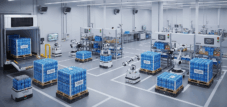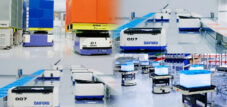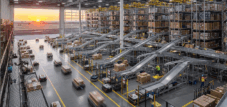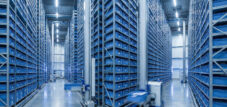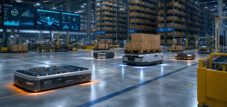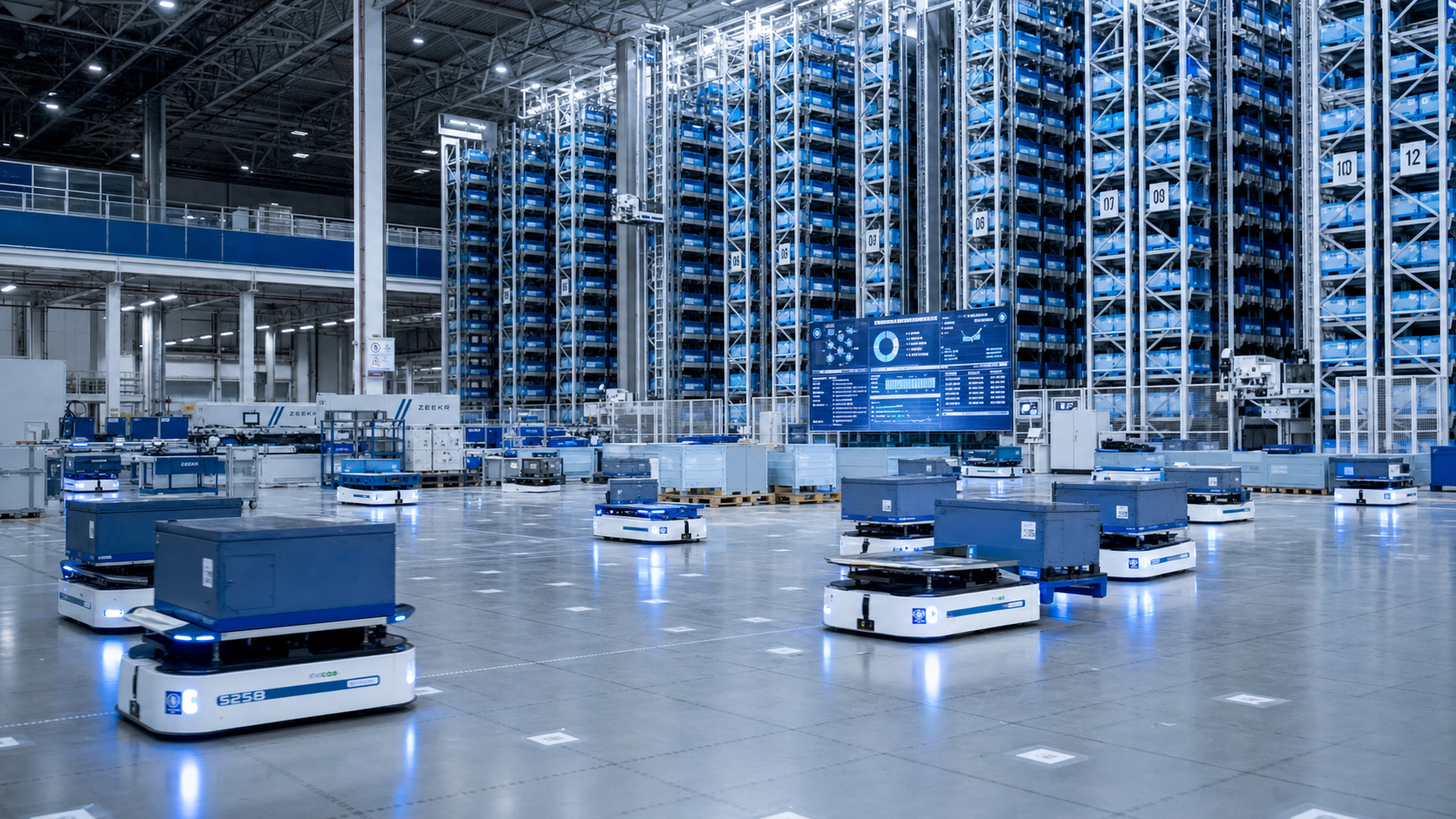
Why modular robots are now replacing rigid conveyor systems: How modular logistics systems reduce your upfront costs – Image: Xpert.Digital
Say goodbye to capacity bottlenecks: Here's how to make your intralogistics flexible for the future
Staff shortage in the warehouse? How scalable automation can alleviate the problem immediately
Modular automation: Intelligent, future-proof intralogistics
The days when companies had to plan years in advance and erect gigantic, rigid fixed installations are increasingly becoming a thing of the past. Complex global supply chains, unpredictable demand fluctuations due to e-commerce, and a severe shortage of skilled workers—with tens of thousands of unfilled positions in the logistics sector alone—are forcing companies to radically rethink their strategies. The answer to these challenges is modular automation.
Instead of tying up capital in inflexible large-scale projects, the modular approach enables agile, demand-driven growth. Capacities are no longer expanded through time-consuming and costly construction projects, but rather through the straightforward addition of intelligent units – such as the autonomous SOTR series (Sorting Transfer Robot). However, modular systems do not spell the end of traditional conveyor technology. On the contrary, the trend is moving towards hybrid systems that combine the absolute efficiency of stationary systems with the boundless flexibility and AI-powered intelligence of mobile fleets.
The following guide provides a detailed explanation of how modular automation works, the economic advantages it offers, and how companies – from a step-by-step approach to a fully integrated AI solution – can make their logistics processes future-proof, resilient, and profitable.
What is modular automation in intralogistics?
What is meant by modular automation in intralogistics, and how does it differ from classic fixed installations?
Modular automation refers to an engineering approach in which manufacturing and logistics processes are divided into independent, clearly defined modules. Instead of building a fully developed, rigid system for a single operating scenario from the outset, this approach enables a phased build-up that is aligned with real business needs and measurable returns. The key difference from traditional fixed installations lies in reversibility and expandability: While conventional stationary systems require high initial investments and are difficult to modify after commissioning, modular systems can be adapted to changing requirements at any time by adding further units, robots, or vehicles. By 2026, modular systems will no longer be considered an optional add-on feature, but rather a fundamental requirement for competitive intralogistics.
What economic advantages does the modular approach offer?
For what economic reasons do companies today opt for modular rather than permanently installed automation solutions?
The key economic advantage lies in aligning capital investments with actual business growth. Starting with a system tailored to current needs requires significantly less upfront capital than purchasing a large, fixed installation. Projects that rely on scalable and mobile technologies are generally faster to design, install, and commission, allowing for quicker realization of benefits and profitability. Furthermore, there is a considerable reduction in risk: capacity and functionality can be validated during operation before initiating the next scaling phase. Crucially, this approach does not represent underinvestment, but rather investing at the right pace, where each phase is justified by measurable returns. Automated systems can reduce labor costs by up to two-thirds and enable up to 85 percent greater utilization of warehouse space.
Why are modular and scalable systems gaining in importance?
What market and environmental trends are driving the spread of modular automation solutions?
Three key developments have significantly increased the demand for modular solutions in recent years. First, demand uncertainty has become the norm: Seasonal peaks, e-commerce surges, and promotional campaigns make it difficult to accurately forecast long-term throughput needs, which is why companies need systems that can scale capacity up or down without completely redesigning a facility. Second, labor availability and costs remain a global challenge: According to IAB statistics, over 60,000 warehouse logistics positions were vacant in 2025, while a study by AutoStore found that 39 percent of European warehouse operators cited staffing shortages as their biggest challenge. Over 80 percent of the companies surveyed therefore expect to see increased use of AI and automation technologies to mitigate the labor and skills shortage in warehouses. Third, external factors such as customs uncertainty, geopolitical risks, and supply chain restructuring make long-term, single-scenario investments difficult; modular automation offers effective protection here by keeping options open.
What is the SOTR series and what does the abbreviation stand for?
What is behind the SOTR product family, and what application areas does it cover?
SOTR stands for Sorting Transfer Robot and refers to Daifuku's latest product family, which combines modularity and scalability for a wide range of intralogistics applications. The family comprises three models—SOTR-S, SOTR-M, and SOTR-L—covering intralogistics processes at the piece, container, and pallet levels. All three models follow the same basic principle: instead of fixed conveyor infrastructure, autonomous mobile robots handle transport and sorting tasks, and capacity can be increased simply by adding more vehicles, without requiring any structural modifications. With this series, Daifuku builds on more than 85 years of automation experience and combines the new mobile robotics range with proven fixed systems such as automated storage and retrieval systems.
For which applications is the SOTR-S designed?
In which industries and processes is the SOTR-S used, and what technical features characterize it?
The SOTR-S is designed for sorting small, lightweight items and is primarily aimed at companies in e-commerce, pharmaceuticals, cosmetics, and similar sectors with high sorting volumes. The system travels at speeds of up to 180 meters per minute and achieves a throughput of up to 10,000 items per hour. A key design feature is its two-story structure: dedicated lifting devices transport the vehicles between levels, enabling greater space efficiency and ensuring a continuous, smooth material flow. Thanks to a tilting tray function, a narrow aisle layout is possible, reducing the footprint to less than half that of conventional sorting systems. The system can be quickly expanded by adding more vehicles or chutes without major construction work.
What are the capabilities of the SOTR-M, and what are its advantages compared to solid conveyor technology?
What function does the SOTR-M perform, and to what extent does it replace or complement classic conveyor belts?
The SOTR-M is an autonomous transport and sorting system that replaces stationary conveyor lines with mobile robots featuring integrated conveyor modules. As a mobile platform for containers, boxes, and medium-weight goods, it combines the functionality of a conveyor belt with the flexibility of autonomous mobility, offering significantly greater freedom in layout design. Its key advantage lies in its reconfigurability: when operational requirements change, the SOTR-M system's layout can be quickly adapted without extensive modifications. Additional robots can be easily added as demand increases, eliminating the need for significant structural alterations. The system is particularly well-suited for distribution centers with dynamic product ranges, such as those found in e-commerce or the food retail sector.
What role does the SOTR-L play in pallet logistics?
In which environments is the SOTR-L used, and what difference does it make compared to conventional pallet conveyor systems?
The SOTR-L is designed for the reliable and precise transport of pallets, making it ideal for both manufacturing companies and distribution centers. Compared to fixed pallet conveyor systems, the fleet-based flexibility of the SOTR-L offers a scalable alternative that significantly reduces the need for costly and difficult-to-modify fixed infrastructure. As volumes increase or system requirements change, there's no need to build new conveyor lines; instead, simply adding more robots is sufficient to increase capacity. This feature is particularly valuable in production environments where layout changes occur regularly, or in logistics centers that handle different product families with varying throughput requirements.
Does stationary automation still play a role?
Are classic fixed installations such as stacker cranes and automated storage/retrieval systems still relevant in a world of modular robotics?
Stationary automation remains indispensable for certain application profiles. Automated storage and retrieval systems (AS/RS) are characterized by inherent modularity, as aisles, stacker cranes, and racks can be added later. They are particularly economical in high-throughput environments with stable storage profiles because they offer the lowest cost per unit processed over time. These systems enable 24/7 operation, reduce personnel requirements, increase storage density, and significantly improve inventory management. At the same time, stationary systems have structural limitations: installation is complex and time-consuming, storage stability is low under changing demands, and system failure often requires external maintenance support. Furthermore, their flexibility cannot match that of mobile systems like the SOTR-L or SOTR-S, which can be rapidly expanded by adding more robots instead of infrastructure.
Expert partner in warehouse planning and construction

Hybrid in intralogistics: When does a mix really pay off?
What is a hybrid automation strategy?
What does a hybrid automation approach mean in intralogistics, and when does it make sense?
A hybrid automation approach combines mobile or modular systems with stationary installations to leverage the strengths of both. Mobile or modular systems handle volatility, assortment changes, and seasonal peaks, while stationary systems ensure efficient throughput for stable core processes. Hybrid intralogistics systems combine human labor with robots and automated material handling: robots take over routine tasks such as order picking, transporting, or packing, while humans remain involved in control, monitoring, and specialized processes. Hybrid automation thus ensures efficient handling regardless of whether the product category is fashion, cosmetics, food, or other categories with varying handling requirements. An experienced automation partner can help determine the ideal balance and clarify whether a hybrid approach is truly necessary in a specific case.
What measurable benefits does modular automation offer?
What specific, measurable improvements can companies expect when introducing modular automation?
With thoughtful implementation, modular automation delivers a range of measurable operational and financial improvements. In terms of peak response, scalable systems allow for capacity expansion to meet seasonal or promotional demand spikes without creating permanent overcapacity. Capital efficiency is improved because investments are aligned with growth incrementally, with each expansion stage delivering a clearly defined return on investment. Furthermore, operational resilience is enhanced: the flexibility of modular systems helps mitigate risks arising from tariff changes, supply chain disruptions, and market volatility. Scalable automation also ensures greater future viability, as modular platforms facilitate the adoption of new technologies once they are ready for practical application. Finally, with AS/RS, a single employee can handle the picking tasks of multiple employees in a manual system, while error-free autonomous operation simultaneously safeguards workplace safety.
How does modular automation respond to the shortage of skilled workers?
To what extent can modular and scalable automation specifically address the shortage of skilled workers in warehouse logistics?
The shortage of skilled warehouse workers is measurable and serious: According to IAB statistics, over 60,000 warehouse logistics positions were vacant in Germany in 2025, and more than half of the companies surveyed cited the lack of operational warehouse staff as their biggest challenge, leading to significant operational disruptions for 13 percent. Modular systems allow companies to selectively introduce automation where it can immediately reduce the burden of manual processes, without requiring a complete overhaul of their operations. This phased approach significantly lowers the barrier to entry: Companies can start with a specific bottleneck, quickly alleviate the strain there, and then expand automation to other areas. Human labor remains involved, for example, in control and quality assurance processes, while routine transport and sorting tasks are fully automated.
How does the scalability of mobile robots differ from that of an AS/RS?
What is the difference in scalability between a mobile robot fleet system and an automated storage and retrieval system?
The fundamental difference lies in the type and effort required for capacity expansion. With an AS/RS (Automated Storage and Retrieval System), increasing capacity requires the construction of additional aisles, stacker cranes, and racking systems, resulting in significant construction work, lengthy planning cycles, and substantial investments. Mobile robot fleet systems like the SOTR series, on the other hand, scale by simply adding more vehicles to the existing fleet, without requiring fundamental infrastructure changes. This difference is particularly important in volatile environments: While an AS/RS is largely fixed to a specific layout after commissioning, a robot fleet can be flexibly reconfigured, relocated to other sections of the hall, or even temporarily reduced in response to a drop in demand. Both system types, however, possess their specific strengths: AS/RS systems outperform mobile fleets in high-throughput, continuous operation scenarios in terms of cost per unit processed.
How can the right automation system be selected?
What criteria should companies use when deciding between modular, stationary, and hybrid automation?
Automation decisions are more complex than ever, and the central question is no longer whether to automate, but how and when. For environments with stable, predictable volumes and a clearly defined product range, stationary systems like AS/RS offer the highest efficiency over the lifecycle and the lowest cost per unit processed. Companies with dynamic product profiles, seasonal fluctuations, or a changing business model, on the other hand, benefit more from modular mobile systems that scale quickly and enable faster time to value. In many cases, a hybrid strategy is the most effective solution, with mobile or modular systems absorbing volatility and peak times, while stationary systems ensure efficient core processes. Modular automation should always be understood as a complement to and enhancement of traditional automation, not as a replacement for it.
What role does AI play in modular and scalable automation?
How does artificial intelligence complement modular automation systems, and what additional benefits does it create?
Artificial intelligence is the catalyst that elevates modular systems from mere hardware flexibility to intelligent operational adaptation. AI-powered algorithms predict demand patterns, optimize picking sequences, and reduce stockouts, significantly improving predictability and service levels. In the dynamic route planning of autonomous mobile robots, AI responds flexibly to changes in the warehouse environment, efficiently manages fleets, and avoids collisions and downtime. Predictive analytics and machine learning also enable proactive inventory optimization and automated replenishment control, drastically reducing manual planning efforts. By 2026, the trend is clear: hybrid systems, modular growth, and AI integration are replacing rapid adoption with practical, ROI-driven strategies. 82 percent of companies surveyed in an industry study expect the use of artificial intelligence and automation technologies to increase.
How does modular automation integrate into existing IT systems?
How is modular automation integrated into existing warehouse management, ERP, and transportation management systems?
The seamless integration of modern automation systems into the existing IT landscape is a crucial success factor. Interfaces between warehouse management systems (WMS), transportation management systems (TMS), and enterprise resource planning (ERP) systems are essential for smooth processes. Scalable automation integrated into this IT infrastructure enables complete traceability of all goods movements, automates inventory data in real time, and improves both planning and service levels. IoT devices and sensors can be deployed throughout the warehouse to collect real-time data on inventory levels, environmental conditions, and equipment performance, and transmit this data to higher-level systems. Furthermore, modern low-code platforms facilitate the gradual digitization of logistics processes by allowing the flexible integration of custom applications and workflows without requiring a complete overhaul of the entire logistics operation.
What are typical entry-level scenarios for modular automation?
Where is it advisable for companies to start with modular automation if they have previously relied on manual processes?
The most effective way to implement modular automation is to start with clearly identified bottlenecks or particularly labor-intensive processes. Typical entry-level scenarios include sorting and distribution processes for small, individual items in e-commerce fulfillment centers, where the SOTR-S delivers maximum benefit, or container transport between storage areas and picking stations, which can be efficiently automated with the SOTR-M. In production environments, pallet transport—that is, supplying production lines or removing finished goods—offers a clearly defined starting point for using the SOTR-L. Scalable automation allows companies to introduce automation where it offers immediate benefits while maintaining the flexibility to adapt to technological advancements. Modern warehouses require scalable solutions to adapt to changing demands, and the modular design allows storage capacity to be expanded without costly infrastructure modifications.
What does the future of intralogistics automation look like?
What long-term developments are shaping intralogistics automation, and what role does modularity play in this?
Intralogistics is characterized by a balanced approach to automation, where hybrid systems, modular growth, and the integration of AI are replacing the previous focus on rapid mass adoption. Modular systems are no longer a desirable feature but often a fundamental requirement for companies that want to remain competitive. Several reinforcing trends are emerging in the long term: AI, modular solutions, IoT, and sustainability are jointly shaping the future of warehouse automation. Companies that integrate these trends early can sustainably increase their efficiency and reduce operating costs. Modular platforms facilitate the introduction of new technologies as they mature and ensure that investments create long-term value, even in a rapidly changing technological landscape. Ultimately, modular automation is not a replacement for traditional automation but a parallel evolution that redefines how automation strategies are planned and implemented.
Your intralogistics experts

Consulting, planning and implementation of complete solutions for high-bay warehouses and automated storage systems - Image: Xpert.Digital
More information here:
Your global marketing and business development partner
☑️ Our business language is English or German
☑️ NEW: Correspondence in your native language!

Konrad Wolfenstein
I and my team are happy to be available to you as your personal advisor.
You can contact me by filling out the contact form here wolfenstein@xpert.digital:or simply call me at +49 7348 4088 965. My email address is
I'm looking forward to our joint project.
☑️ SME support in strategy, consulting, planning and implementation
☑️ Creation or realignment of the digital strategy and digitization
☑️ Expansion and optimization of international sales processes
☑️ Global & Digital B2B trading platforms
☑️ Pioneer Business Development / Marketing / PR / Trade Fairs
Our global industry and economic expertise in business development, sales and marketing


Our global industry and economic expertise in business development, sales and marketing - Image: Xpert.Digital
Industry focus areas: B2B, digitalization (from AI to XR), mechanical engineering, logistics, renewable energies and industry
More information here:
A thematic hub offering insights and expertise:
- Knowledge platform covering global and regional economies, innovation and industry-specific trends
- A collection of analyses, insights, and background information from our key areas of focus
- A place for expertise and information on current developments in business and technology
- A hub for companies seeking information on markets, digitalization, and industry innovations