Germany as a military logistics hub – The urgent need to catch up in infrastructure – Image: Xpert.Digital
From problem child to bulwark: Can a 500 billion euro plan still save Germany's decaying infrastructure?
NATO hub on shaky feet: Germany's infrastructure disaster threatens all of Europe
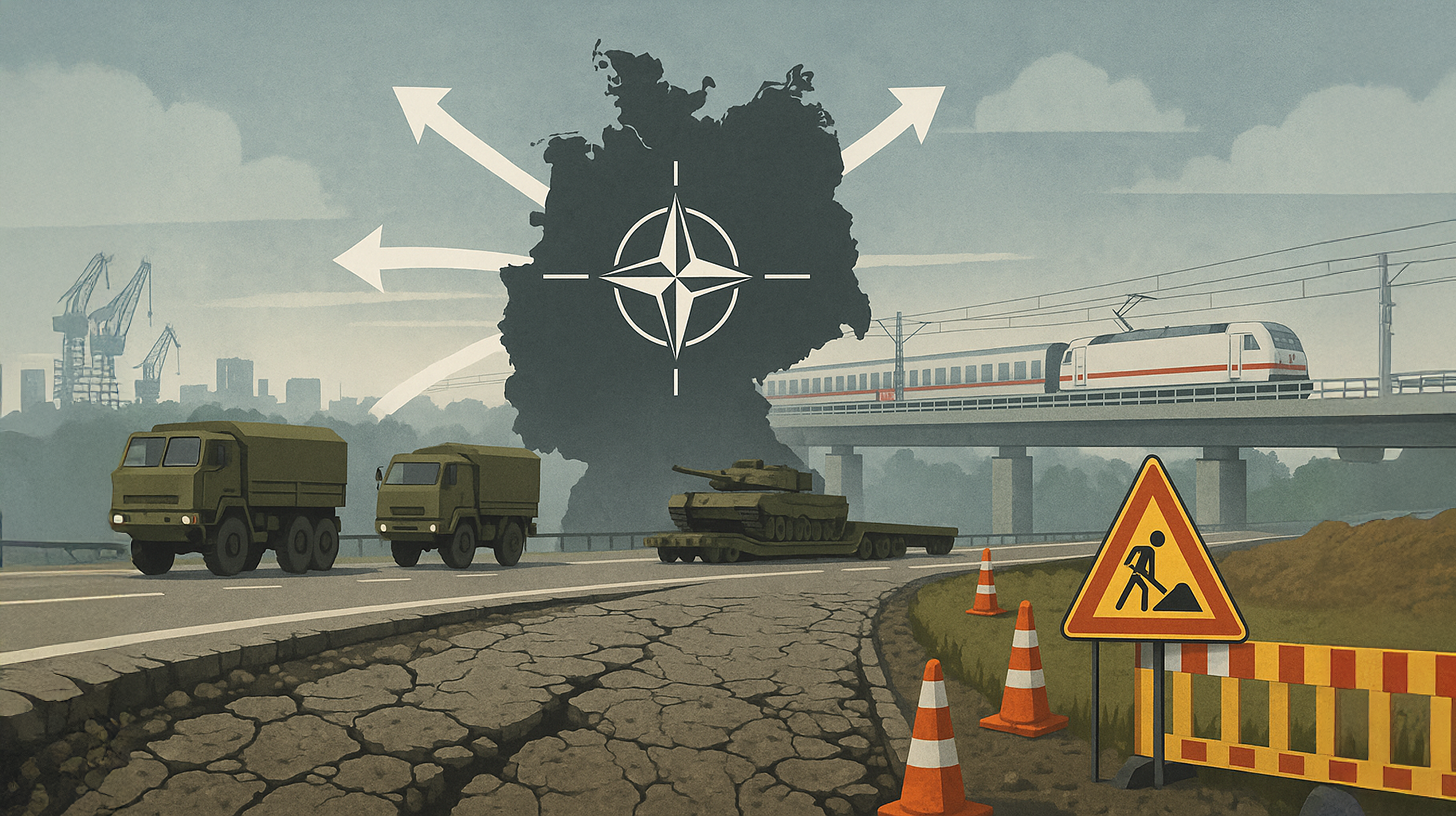
Germany is in a historically significant phase of military and security policy realignment. As a central European power and an indispensable hub for NATO logistics, the country faces enormous infrastructural challenges that significantly impair both its national defense capabilities and the security of the alliance. Decades of neglect of critical transport and defense infrastructure have resulted in a dramatic backlog of necessary repairs and renovations, which now requires unprecedented investment efforts.
Related to this:

Germany's new strategic role in the NATO alliance
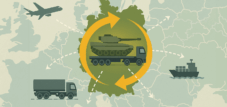
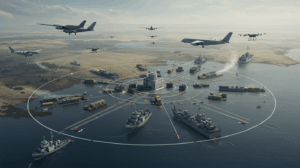
Since the end of the Cold War, Germany has undergone a fundamental strategic transformation. While the country was considered a potential frontline state until reunification, it now occupies the central position of a logistical hub for the entire NATO alliance. This geographical location makes Germany an indispensable transit zone for troops, materiel, and supplies needed to defend NATO's eastern flank.
The new security policy reality following the Russian invasion of Ukraine has further intensified this role. Germany must now be able to transport and supply up to 800,000 soldiers and 200,000 vehicles across its territory within six months. These enormous logistical demands require a completely new dimension of infrastructural capacity.
With the new Force Model and the defense targets agreed upon at the 2025 summit—3.5 percent of gross domestic product for nuclear defense spending and an additional 1.5 percent for militarily usable infrastructure—NATO has redefined its strategic priorities. Germany is expected to achieve these ambitious targets by 2029, thereby fully fulfilling its role as a European defense hub.
Related to this:
The dramatic state of Germany's transport infrastructure
Bridges in critical condition
Germany's transport infrastructure exhibits alarming deficiencies that jeopardize both civilian economic activity and military logistics. The condition of the bridges is particularly dire: approximately 16,000 bridges owned by the federal government are considered structurally unsound. On highways, 42 percent of the 28,000 bridges are in need of repair or complete reconstruction.
Although the Federal Ministry of Transport has launched a bridge modernization program aimed at renovating 4,000 motorway bridges over the next ten years, its implementation is lagging dramatically behind. Instead of the planned 280 modernizations, only 69 were completed in 2024. The backlog of repairs is steadily worsening and endangers not only civilian traffic but also military mobility.
The Carolabrücke bridge in Dresden, which partially collapsed into the Elbe River in September 2024, and the closed Ringbahn bridge in Berlin are just the most spectacular examples of the dilapidated state of Germany's bridge infrastructure. Experts warn of a years-long wave of repairs, as many bridges from the 1960s and 1970s were originally designed for lower traffic loads.
Rail network in disastrous condition
The German rail network, which is of paramount importance for military transport, is also in a critical condition. Deutsche Bahn recently assessed the condition of 33,000 kilometers of track: 23 percent of the rails are in extremely poor condition, as are 48 percent of all signal control centers, 42 percent of level crossings, over 25 percent of all switches, and 22 percent of all overhead lines.
These shortcomings have a direct impact on performance: in 2022 alone, one in three trains was delayed. For military transports, which must be carried out reliably and with critical time constraints, these conditions pose a significant security risk. The Association of German Transport Companies is therefore calling for a dedicated military railway network with additional investments of billions of euros.
The demands placed on a military rail network are particularly high: it involves transporting exceptionally heavy military vehicles that far exceed normal traffic volumes. Redundancies in the route, modernized bridges and tunnels, and specialized transshipment points for rapid transfer between road and rail are essential.
Road infrastructure under enormous pressure
Germany's roads are suffering from decades of underfunding. Nearly 25,000 kilometers of highways are damaged. On autobahns, the figure is 11,000 kilometers, or about 19 percent, while on federal roads it's as high as one in three kilometers. These figures illustrate the extent of the backlog of repairs, which also significantly impacts military transport.
The German Armed Forces have now concluded administrative agreements with eight federal states to simplify military road transport. These agreements reduce bureaucratic hurdles and make it possible to announce many military transports only, instead of requiring individual approval. Nevertheless, the basic infrastructure remains the limiting factor for efficient military mobility.
Related to this:
Military infrastructure – a backlog of repairs amounting to billions
German Armed Forces properties in a disastrous state
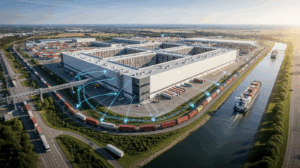
After decades of underfunding, the German Armed Forces' military infrastructure is in a dramatic state. The total cost of modernization is estimated at €67 billion, extending into the 2040s. The German Armed Forces own 1,500 properties with 35,000 buildings and 90,000 rooms, covering an area the size of the Saarland.
The Parliamentary Commissioner for the Armed Forces, Eva Högl, describes the condition of many barracks as disastrous. At the Südpfalz barracks in Germersheim, she found mold in living quarters and sanitary facilities, water damage, and plaster peeling from the walls. Similar conditions prevail in numerous other properties, where soldiers are forced to live and work under unacceptable conditions.
The situation regarding accommodations is particularly critical. The German Armed Forces' new accommodation concept envisions single and double rooms with en-suite bathrooms, instead of the outdated four-man rooms with shared sanitary facilities. Thirty-eight new accommodation buildings with 1,400 single rooms are planned by 2028, but given the more than 3,100 existing accommodation buildings, this is merely a drop in the ocean.
Infrastructure investments are lagging behind demand
Infrastructure investments in the German armed forces have been neglected for decades. Traditionally, they accounted for only 3.4 to 4.2 percent of defense spending. Even with the €100 billion special fund, this share remains low. Only €11.31 billion is earmarked for the accommodation, operation, and maintenance of barracks and facilities in 2025.
The German Armed Forces (Bundeswehr) will have approximately €1.4 billion available for infrastructure investments in 2024, compared to less than €1 billion in previous years. Given the €67 billion backlog of necessary renovations, this is completely inadequate. A breakdown of the financial requirements illustrates the scale of the challenge: €24 billion for the accumulated renovation backlog, another €24 billion for energy-efficient upgrades to all 30,000 buildings, and an additional €12 billion for new projects related to the modernization of the armed forces.
Special requirements for new weapon systems
The modernization of the German Armed Forces brings with it additional infrastructure requirements. Büchel Air Base must be prepared for the new F-35 fighter jets, with the American manufacturer Lockheed Martin having very high infrastructure requirements. New logistics battalions need suitable barracks, and the takeover of the former Warnow shipyard in Rostock as a naval arsenal requires extensive conversion work.
Investments in military logistics capabilities
Special funds and defense budget
Germany has dramatically increased its defense spending. The 2025 defense budget amounts to €62.43 billion, supplemented by €24.06 billion from the special Bundeswehr fund. This brings the total available for defense to more than €86 billion – a historic high.
The medium-term financial plan foresees further drastic increases: to €82.69 billion in 2026, €93.35 billion in 2027, €136.48 billion in 2028, and €152.83 billion in 2029. By 2029, a total of around €600 billion is to be spent on defense, of which €450 billion will come from the special authorization for arms investments.
Logistics infrastructure and dual-use approaches
An innovative approach to addressing infrastructure challenges is the dual-use concept. Critical transport infrastructure is primarily financed through defense funds, but designed to be efficiently shared by civilian users in peacetime. This applies particularly to combined transport facilities, terminals, and transshipment points for road-rail transfers.
Rising NATO defense spending is leading to a significant increase in demand for logistics space. In Germany, an additional need of up to 6 million square meters is projected. Companies like Rheinmetall are already pushing ahead with their own projects, such as a new munitions factory in Unterlüß.
Military Mobility Corridors
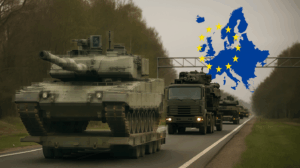
NATO and the EU jointly developed the Military Mobility project to accelerate troop movements in Europe. The first pilot corridor between the Netherlands, Germany, and Poland was successfully tested and enables standardized procedures for cross-border military transport.
The goal is to create a military Schengen area that eliminates bureaucratic obstacles and drastically reduces reaction times for troop movements. The west-east corridor is particularly important for transporting troops, equipment, and supplies from major Western European ports to NATO's eastern flank.
Related to this:
Hub for Security and Defense - Advice and Information


Hub for Security and Defense - Image: Xpert.Digital
The Security and Defence Hub offers expert advice and up-to-date information to effectively support companies and organizations in strengthening their role in European security and defence policy. Working closely with the SME Connect Defence Working Group, it particularly promotes small and medium-sized enterprises (SMEs) that wish to further develop their innovative capacity and competitiveness in the defence sector. As a central point of contact, the Hub thus creates a crucial bridge between SMEs and European defence strategy.
Related to this:
Resilient infrastructure with dual-use terminals: When civilian ports handle military logistics – How Germany prevents supply bottlenecks
Ports as strategic hubs
Bremerhaven and Hamburg as military logistics centers
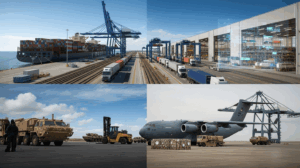
German seaports play a central role in NATO logistics. Since World War II, Bremerhaven has developed into one of the most important transshipment points for military equipment. The port has a 240-hectare parking area and a roll-on/roll-off system that allows for the handling of goods up to 21,000 tons.
During the large-scale exercise Defender 2020, Bremerhaven served as a central hub for 37,000 US soldiers. Recent arms shipments to Ukraine, including 60 Bradley tanks and 90 Stryker armored personnel carriers, were handled via Bremerhaven. These examples illustrate the strategic importance of port infrastructure for military logistics.
Related to this:
Security risks and protective measures
German ports are increasingly targeted by hybrid threats. Experts warn of sabotage, espionage, and cyberattacks on this critical infrastructure. Drone overflights of port facilities occur repeatedly, such as at the industrial plants in Brunsbüttel or the British aircraft carrier Queen Elizabeth in the Port of Hamburg.
Port operators are largely powerless against these threats. Security experts are therefore calling for the authority of security agencies to quickly bring drones down and for the use of jamming devices to protect critical infrastructure. The security of ports is not only a matter of human lives, but also of supply security and military readiness.
Innovative solutions and modernization programs
Acceleration of construction projects
To tackle the enormous backlog of renovations, the federal and state governments have established a working group that has developed 38 measures to accelerate construction projects. These include raising the thresholds for direct awards, consolidating contracts with general contractors, and relaxing historic preservation requirements for military infrastructure projects.
Bavaria has already passed a new law to support the German Armed Forces, which provides for a relaxation of strict regulations for military infrastructure projects. A central information platform is intended to improve cross-state coordination and allow other federal states to take over projects when the local construction authority is overloaded.
Special fund for infrastructure and climate neutrality
The German Federal Government has established a special fund of over 500 billion euros for infrastructure and climate investments. Of this, 100 billion euros will go to the federal states and municipalities, another 100 billion to the Climate and Transformation Fund, and 300 billion euros are available to the federal government for additional investments.
More than nine billion euros will be available for investments in rail infrastructure in 2025. By 2029, approximately 100 billion euros are to be invested in rail infrastructure and a total of 166 billion euros in transport infrastructure. These investments will also benefit military mobility.
Technological modernization
Digitalization plays a crucial role in the modernization of military infrastructure. €8.6 billion from the special fund is earmarked for the digitalization of land-based operations alone. Satellite communications and Satcom systems will receive a further €4.7 billion.
Modern IT infrastructure is essential not only for communication between troop units, but also for coordinating complex logistical movements. The system's vulnerability was highlighted by acts of sabotage, such as the simultaneous attacks on fiber optic cables in Herne and Berlin-Karow, which led to a widespread disruption of train operations.
Related to this:

European dimension and international cooperation
Military Mobility as a European project
Military mobility has become a flagship project of European cooperation. The EU and NATO are working closely together on various projects to establish a European Military Schengen. The European Union, through the Connecting Europe Facility, promotes projects to expand military mobility, with a focus on dual-use rail infrastructure projects.
The PESCO project Military Mobility and the Network of Logistic Hubs aim to simplify, standardize, and accelerate troop movements. At the same time, they seek to modernize transport infrastructure to meet both civilian and military needs.
Rhine-Main-Danube corridor as a strategic axis
The Rhine-Main-Danube corridor, as the only continuous navigable connection between the North Sea and the Black Sea, represents a vital geostrategic artery. For supplying NATO's eastern flank, this waterway offers a high-capacity alternative to the congested land routes.
However, the Danube downstream from Germany suffers from significant navigability problems. Narrow passages, insufficient channel depths, and a lack of maintenance prevent continuous transport with modern ships. Eliminating these bottlenecks is therefore a key project of European transport and security policy.
Challenges in implementation
The complexity of cross-border military transport is significantly compounded by differing legal systems and jurisdictions. Differing national regulations regarding weight limits, vehicle dimensions, and approval procedures create bottlenecks that can have catastrophic consequences in a crisis.
The harmonization of these regulations and the creation of uniform standards are therefore essential for the functioning of European Military Mobility. This requires not only technical adjustments, but also extensive political and legal reforms at both national and European levels.
Related to this:

Strategic Recommendations
Prioritizing investments
The enormous investment needs require strategic prioritization. While the procurement of new weapons systems is the focus of public debate, the fundamental infrastructural prerequisites must not be neglected. Without functioning transport routes, secure depots, and modern communication systems, even the most advanced weapons will remain ineffective.
A balanced relationship between procurement and infrastructure investments is essential for a credible defense capability. The traditional neglect of infrastructure in favor of spectacular weapons systems must be corrected to ensure sustainable military effectiveness.
Integration of civilian and military needs
The dual-use concept offers significant synergies between civilian and military infrastructure needs. Investments in transport routes, primarily financed with defense funds, can simultaneously promote economic development and improve the quality of life for the population.
This integrated approach not only reduces costs but also increases public acceptance of defense investments. Modern, high-performance infrastructure serves both national security and economic prosperity.
Resilient and redundant systems
The vulnerability of modern infrastructure systems to sabotage, cyberattacks, or natural disasters necessitates the development of resilient and redundant systems. Critical transport routes must have alternative routes, and central communication systems require backup solutions.
Decentralizing key functions and creating modular systems increases the survivability of infrastructure in the event of a crisis or conflict. This requires a comprehensive risk analysis and the integration of redundancies into all critical systems as early as the planning phase.
Germany's transformation into a modern, defensible NATO logistics hub is one of the greatest infrastructural challenges since its post-World War II reconstruction. The decades-long backlog of necessary renovations, amounting to billions of euros, must now be addressed under enormous time pressure, while at the same time the demands posed by new threats and changing strategic circumstances are constantly increasing.
Only through decisive investments, innovative solutions, and close coordination between civilian and military actors can Germany live up to its new role as a European defense hub. The time for half-hearted measures is over – the security of Europe depends on the successful modernization of German infrastructure.
Consulting - Planning - Implementation

Markus Becker
I would be happy to serve as your personal advisor.
Head of Business Development
Chairman SME Connect Defense Working Group
Consulting - Planning - Implementation
Konrad Wolfenstein
I would be happy to serve as your personal advisor.
You can contact me at wolfenstein∂xpert.digital or
Just call me on +49 7348 4088 965 .