
Venezuelan crude oil Merey-16: US hunt for Russian tanker threatens China's road construction
Xpert pre-release

Available in 27 languages 📢
Prefer Xpert.Digital on GoogleⓘPublished on: January 11, 2026 / Updated on: January 11, 2026 – Author: Konrad Wolfenstein
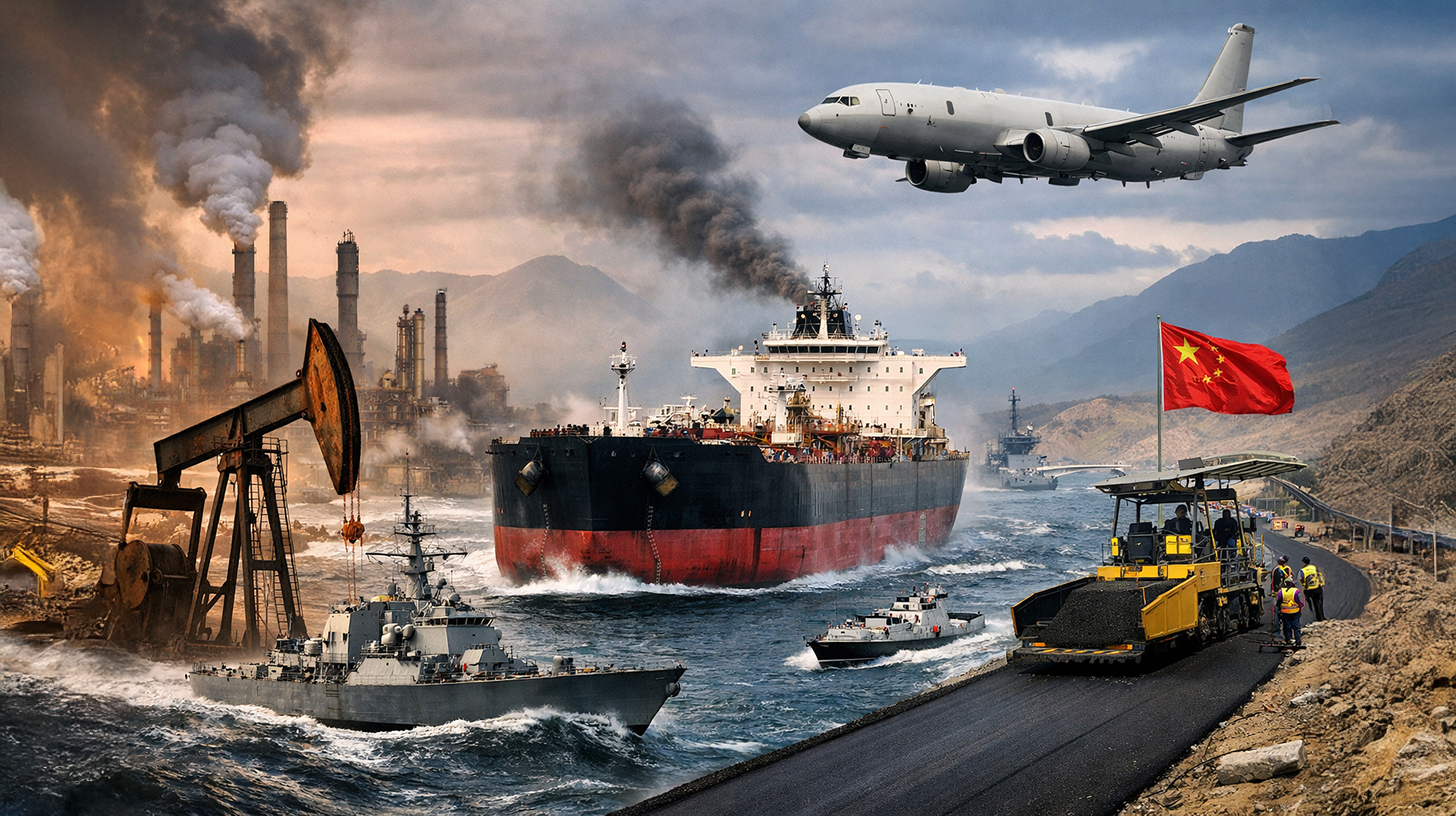
Venezuelan crude oil Merey-16: US hunt for Russian tanker threatens China's road construction – Image: Xpert.Digital
Hunt for the shadow fleet: USA cuts off China's most important bitumen vein
What role did the shadow fleet play in the US blockade of Venezuela?
The Russian shadow fleet has been a key element in Venezuela's oil trade in recent years. This fleet consists of approximately 1,000 vessels that use deceptive tactics to evade their role in transporting sanctioned and illegal oil. Around 70 percent of Venezuelan oil exports were handled by these sanctioned ships to circumvent the crippling US sanctions against the Venezuelan oil industry. The Trump administration specifically targeted this shadow fleet and has seized several oil tankers since the end of 2025. The most prominent case was the pursuit and seizure of the oil tanker initially known as Bella 1, later renamed The Marinera, after its crew attempted to sail under the Russian flag. These seizures were intended to exert pressure on the Venezuelan interim government and dismantle the system of illegal oil exports.
Why is Merey-16 of particular importance to China?
Venezuelan Merey-16 crude oil is of critical importance to China's road construction industry. It is a heavy oil with an exceptionally high bitumen content, specifically used for the production of road surfaces. The oil is primarily delivered to China's Shandong province, home to numerous refineries that produce approximately 40 percent of China's bitumen. Experts at the price reporting agency Argus Media estimate the volume at around 250,000 barrels per day. Merey-16's chemical composition makes it particularly valuable to the road construction industry, as it provides the necessary properties for high-quality asphalt mixtures. No other type of oil can fully replace Merey-16, which is why the refineries in Shandong are specialized in processing this specific crude oil.
How critical was China's dependence on Venezuelan oil imports before the blockade?
Before the Trump administration's blockade, refineries in Shandong imported approximately 430,000 barrels of Venezuelan oil per day. By comparison, Iran, another supplier of heavy oils, supplied only about 130,000 barrels per day. This illustrates the extreme reliance on Venezuelan imports. While China as a whole only sources about five percent of its total oil imports from Venezuela, the dependence is absolutely critical for Shandong's specialized bitumen production. Oil expert Tom Reed of Argus Media emphasizes that any disruption to imports of heavy, acid Merey crude oil would mean either a reduction in bitumen production starting in March 2026 or that China would have to purchase more expensive types of crude oil. Reed considers the reduction more likely, especially since fewer infrastructure projects are planned to be undertaken in China in 2026 anyway.
What consequences would a disruption of Merey imports have for China's economy?
A complete halt to Venezuelan Merey-16 imports would have both direct and indirect consequences for the Chinese economy. The immediate consequence would be a reduction in bitumen production in Shandong starting in March 2026, leading to a shortage of road surface material. The alternative option of importing more expensive crude oil grades would significantly increase production costs and jeopardize the profitability of refineries. Shandong is the center of smaller, independent Chinese refineries, which account for approximately 18 percent of China's total refining capacity. These refineries rely on bitumen and heavy fuel oil as feedstocks and lack the flexibility of large-scale refineries. A decline in production in this region would impact local infrastructure projects, as less asphalt would be available for road construction.
What alternative oil sources could China use to replace Merey-16?
China's options for replacing Merey-16 are limited. The country sources oil from a number of countries, with Russia and Iran being the main suppliers of heavy oil. While Iran also supplies heavy oil, its capacity is insufficient to fully compensate for the loss of Venezuelan imports. Russian oil is available in principle, but its composition is not identical to Merey-16, and refineries in Shandong would need to adjust their processes. Other countries, such as Brazil, Mexico, and Kuwait, produce heavy oil, but not with the specific chemical composition of Merey-16. Venezuela's Boscan crude, which is also heavy and acidic, could serve as a partial substitute, but it is not available in sufficient quantities. Theoretically, Chinese refineries could also use bitumen blends from other sources, but this would entail higher costs and altered production processes.
What does the Monroe Doctrine look like, and what is the new Donroe Doctrine?
The original Monroe Doctrine, dating back to the 19th century, warned against foreign interference in all of America. It was an attempt by the United States to establish its hegemony in the Western Hemisphere. The new Donroe Doctrine, named after Donald Trump, is a reinterpretation of this doctrine for the 21st century. Trump has openly described this strategy as an evolution of the original Monroe Doctrine, stating, “We have surpassed it by a great deal, really a great deal. It is now called the Donroe Doctrine.” The Donroe Doctrine aims to limit China’s economic and political influence in Latin America. It comprises several components: first, US companies controlling Venezuela’s oil and other raw materials; second, creating a new Western supply chain for critical minerals without Chinese involvement; and third, preventing non-hemispheric competitors from positioning forces or controlling strategically important assets in America.
Suitable for:

Why is the Trump administration so active against Venezuela?
The Trump administration's actions against Venezuela pursue several strategic goals that extend beyond simply securing oil supplies. First, the administration seeks to contain growing Chinese influence in Latin America, which it views as a threat to its own hegemony in the region. Second, it aims to bring Venezuela's natural resources—oil, gas, key minerals, and rare earth metals—under the control of American companies. US Secretary of State Marco Rubio explicitly states that one of the reasons for the military action is to restrict foreign investment in Venezuela. Third, the administration seeks to establish a new supply chain in the Western Hemisphere that excludes China and prepares the US for future conflicts. Fourth, Trump wants to sever other Latin American countries' ties with China and Russia. In a press conference following the bombing of Venezuela, Trump declared that the US government would govern the country and send the largest US oil companies there to invest billions.
How has China supported Venezuela's economy?
China has provided Venezuela with massive financial support for years. It is estimated that China has granted the country loans totaling approximately US$60 billion, of which experts believe roughly US$10 to US$12 billion remains outstanding. These debts were repaid through oil deliveries under former President Nicolás Maduro. China has also made direct investments in Venezuela's oil industry, with estimated investments exceeding US$2 billion between 2016 and 2023. In 2008, China National Petroleum Corporation established a joint venture with Venezuela's state-owned oil company PDVSA called Petro Sinovensa, which has constructed state-of-the-art production facilities. Another example is China Concord Resources Corporation, which announced in August its intention to invest the equivalent of more than €1 billion in Venezuelan oil production. Furthermore, Chinese companies such as Huawei and ZTE have been invested in Venezuela's telecommunications infrastructure for more than 20 years, particularly in the development of 4G and planned 5G networks.
Our Latin America expertise in business development, sales and marketing

Our Latin America expertise in business development, sales and marketing - Image: Xpert.Digital
Industry focus: B2B, digitalization (from AI to XR), mechanical engineering, logistics, renewable energies and industry
More about it here:
A topic hub with insights and expertise:
- Knowledge platform on the global and regional economy, innovation and industry-specific trends
- Collection of analyses, impulses and background information from our focus areas
- A place for expertise and information on current developments in business and technology
- Topic hub for companies that want to learn about markets, digitalization and industry innovations
Billions in write-offs loom: The true extent of China's potential Venezuela debacle
What role do stablecoins and digital currencies play in evading sanctions?
China and Venezuela have used digital currencies to circumvent Western sanctions. The Atlantic Council stated that Venezuela primarily uses stablecoins and other digital currencies to specifically evade Western sanctions. The stablecoin Tether, pegged to the US dollar, is particularly used for such transactions. China has traded similarly with Russia since 2022: after Europe ceased to be the main buyer of Russian oil, China stepped in. Some Russian oil companies use Bitcoin, Ether, and stablecoins like Tether to facilitate the conversion of Chinese yuan into Russian rubles. However, China has simultaneously tightened its measures against stablecoins. The Chinese government views stablecoins, especially those pegged to the US dollar, as a threat to financial stability and as a potential facilitator of capital flight. This creates a paradox: while China uses this technology to circumvent sanctions, it simultaneously attempts to control its use by its own population.
Why could Trump's actions affect oil prices?
The Trump administration's actions against Venezuelan oil exports could have significant repercussions for the global oil market. Oil expert Tom Reed of Argus Media estimates that the US acquisition of Venezuelan oil assets will cause a shift of oil grades like Merey away from the Shandong market and onto the global market. In theory, this will put more downward pressure on global crude oil prices. For a long time, OPEC production cuts had led to shortages of heavy, sour crude. With the release of Venezuelan quantities onto the world market, this could change. OPEC had artificially maintained higher prices for heavy oil through its production cuts. Now that large quantities of Venezuelan oil are available on the world market, the price of heavy oil could fall. On the other hand, various analysts predict that oil prices will fall in 2026 anyway: Goldman Sachs sees the average price for Brent at $62 per barrel, JP Morgan forecasts $58, and a Reuters survey expects $62.2 for Brent crude oil.
How advanced is China's economic presence in Latin America overall?
China's influence in Latin America has grown over decades and is far-reaching. Chinese trade in goods with the region has increased roughly fortyfold since 2000. In 2024, the trade volume is projected to have reached approximately US$518 billion. According to Enrique Dussel Peters, head of the Mexico-China Studies Center at the National Autonomous University of Mexico, China has held the upper hand in virtually all economic aspects of Latin America for practically the entire 21st century. This deep economic integration extends across several sectors: infrastructure, telecommunications, mining, energy, and financial services. The deeply interconnected supply chains that Beijing has built are difficult to unravel, as analysts point out. China has invested in almost all major infrastructure projects in the region, from ports to railways. This economic dominance is a direct reason why the Trump administration is pursuing such an aggressive course with its Donroe Doctrine.
Which other Chinese investments in Venezuela are at risk?
In addition to direct oil investments, China has also invested in other Venezuelan sectors that are threatened by the political changes. Huawei and ZTE have invested in Venezuela's telecommunications infrastructure for over 20 years and were heavily involved in building Venezuela's 4G network. These companies would likely have been involved in the planned 5G networks as well. A particularly sensitive aspect concerns Chinese satellite infrastructure. Venezuela's VRSS-2 Earth observation satellite was built by Chinese companies. Even more critical are the ground stations at the "Captain Manuel Rios" airbase near El Sombrero, which operate using Chinese technology. These stations were crucial for China's remote sensing capabilities, as the People's Republic otherwise has limited options for satellite stations outside its own territory. The loss of these ground stations would be a significant blow to China's reconnaissance capabilities.
Will the US approach in Venezuela be geopolitically successful?
Experts are skeptical about the long-term geopolitical prospects of the US approach. Enrique Dussel Peters argues that it may already be too late for the US. While the Trump administration can demand that Latin American countries sever their ties with China, analysts say China already has a head start of many years. China has held economic dominance in Latin America for virtually the entire 21st century. China's deeply integrated supply chains in the region are difficult to dismantle. While the US could control access to Venezuela's raw materials militarily and in the short term, this does not automatically mean that Latin America will turn away from China in the long run. Many Latin American countries have a vital interest in trading with China, and the economic ties are too deeply entrenched to be easily severed by external pressure.
Why is bitumen production in Shandong not completely replaceable by other sources?
The refineries in Shandong are specifically designed to process heavy bitumen crude oil. They produce about 40 percent of China's bitumen and are optimized for Merey-16. This oil has specific chemical properties—particularly its bitumen content and API weight—that are essential for high-quality asphalt mixtures. Alternative oils, such as Iranian or Russian heavy oil, have different compositions and require adjustments at the refineries. Furthermore, the Shandong refineries are predominantly small, independent operations that lack the flexibility of large-scale refineries. They have limited raw material quotas and cannot easily switch between different oil types. A shift to alternative oils would require new refining processes, potentially new equipment, and time for adaptation. In the meantime, bitumen production would be reduced, leading to shortages of road construction materials.
How might China react economically to the US blockade of Venezuela?
China has limited direct options for responding to the US blockade of Venezuela. A military confrontation would be unrealistic. However, China does have indirect leverage. The country could exert pressure on the US through other channels, such as trade measures or by reducing imports of American products. China could also use rare earth elements as leverage, as it controls a large portion of global rare earth production, and these are critical to the American technology and defense industries. In the short term, however, China must accept that the US blockade exists. The government could increase its strategic oil reserves to take advantage of falling oil prices. Trump himself has suggested that Venezuela could continue to supply its oil to China—possibly to help repay its debts and thus demonstrate Chinese commitment.
What losses could China suffer from the blockade of Venezuela?
China's financial losses could be substantial. Estimates suggest China might be forced to write off roughly 10 to 12 billion dollars of its loans to Venezuela. This would directly impact the Chinese state budget. Added to this are the losses from investments in Venezuela's oil industry, particularly the Petro Sinovensa joint venture and the planned investment by China Concord Resources. Short-term operating losses from reduced bitumen production and higher raw material costs in Shandong are difficult to quantify but could amount to hundreds of millions of dollars. In the long term, China could also gradually lose its geopolitical influence in Latin America if the US blockade is successful and other Latin American countries follow the Trump doctrine. The total losses could amount to tens of billions of dollars over several years.
Your global marketing and business development partner
☑️ Our business language is English or German
☑️ NEW: Correspondence in your national language!

Konrad Wolfenstein
I would be happy to serve you and my team as a personal advisor.
You can contact me by filling out the contact form or simply call me on +49 7348 4088 965 (Munich) . My email address is: wolfenstein ∂ xpert.digital
I'm looking forward to our joint project.
☑️ SME support in strategy, consulting, planning and implementation
☑️ Creation or realignment of the digital strategy and digitalization
☑️ Expansion and optimization of international sales processes
☑️ Global & Digital B2B trading platforms
☑️ Pioneer Business Development / Marketing / PR / Trade Fairs
🎯🎯🎯 Benefit from Xpert.Digital's extensive, five-fold expertise in a comprehensive service package | BD, R&D, XR, PR & Digital Visibility Optimization

Benefit from Xpert.Digital's extensive, fivefold expertise in a comprehensive service package | R&D, XR, PR & Digital Visibility Optimization - Image: Xpert.Digital
Xpert.Digital has in-depth knowledge of various industries. This allows us to develop tailor-made strategies that are tailored precisely to the requirements and challenges of your specific market segment. By continually analyzing market trends and following industry developments, we can act with foresight and offer innovative solutions. Through the combination of experience and knowledge, we generate added value and give our customers a decisive competitive advantage.
More about it here:










