
Mechanical engineering at its limits? How AI and robotics are solving the biggest challenge in heavy-lift logistics
Xpert Pre-Release

Available in 27 languages 📢
Prefer Xpert.Digital on GoogleⓘPublished on: September 15, 2025 / Updated on: September 15, 2025 – Author: Konrad Wolfenstein
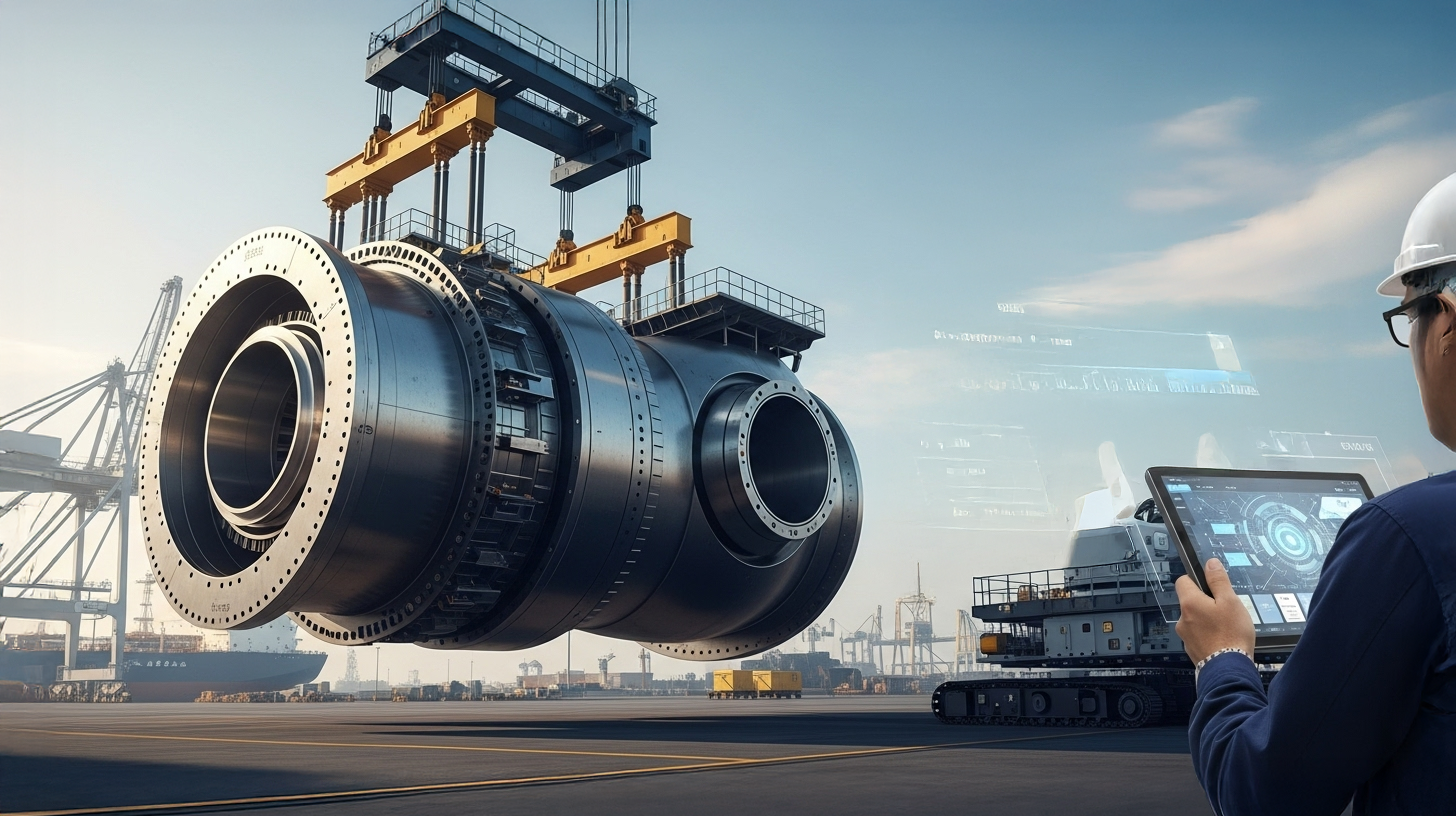
Mechanical engineering at its limits? How AI and robotics are solving the biggest challenge in heavy-lift logistics – Creative image: Xpert.Digital
Intelligent logistics: The secret lever for success in German mechanical engineering
Robots lift tons: How AI is forever changing heavy haulage logistics – How digital twins make heavy transport safer and faster
The transport of machine parts weighing tons, entire plants, or gigantic components has long been the domain of brute force, meticulous manual planning, and human expertise. But this image will soon be a thing of the past. Heavy-lift logistics for mechanical engineering is facing a fundamental paradigm shift, driven by a symphony of data, algorithms, and autonomous technology. Rigid plans and purely mechanical solutions are being replaced by an intelligent, networked ecosystem in which artificial intelligence (AI) and robotics play the leading roles.
In the age of Industry 4.0, where production processes are highly automated and supply chains are globally networked, the demands on logistics are becoming increasingly complex. It's no longer simply about moving a heavy load from point A to point B. What's required is maximum efficiency, millimeter-precise accuracy, seamless transparency, absolute safety, and increasingly, sustainability. This is precisely where new technologies come into play: AI-powered algorithms optimize routes in real time, autonomous robots handle hazardous loading operations, and digital twins simulate the entire transport process before a single wheel even turns.
This article delves deep into the technological revolution of heavy-lift logistics. We explore the technological foundations, from sensors and 5G to edge computing, and demonstrate how automation and robotics are transforming physical processes. Learn how digital twins enable virtual test runs, the role AI plays in strategic planning, and how the Internet of Things is creating a self-learning transportation network. Finally, we analyze the far-reaching implications of this development—from new business models and increased sustainability to the critical challenges of safety and implementation. Welcome to the future of heavy-lift logistics.
The future of heavy-load logistics for mechanical engineering in the age of robotics and AI
Digitalization is fundamentally changing heavy-lift logistics. While traditional transport methods rely on proven mechanical solutions, new technologies such as artificial intelligence, robotics, and the Internet of Things enable unprecedented efficiency and precision in the transport of heavy machinery and equipment. This development is accelerated by the rapid automation of Industry 4.0, which places entirely new demands on the logistics sector.
Artificial intelligence is already revolutionizing transport planning through precise predictive models and automated route optimization. The integration of sensors and intelligent monitoring systems makes it possible to continuously monitor the condition of heavy loads during transport and to detect potential problems early on. At the same time, autonomous transport systems and collaborative robots enable unprecedented flexibility in loading and unloading processes.
Heavy haul logistics is facing a fundamental transformation that goes far beyond mere digitalization. A fully networked ecosystem is emerging in which physical transport processes merge with virtual planning models, and self-learning systems continuously increase efficiency.
Technological foundations of digital transformation
Modern heavy haul logistics is based on a complex infrastructure of networked systems that goes far beyond traditional GPS tracking solutions. At the heart of this development are Industrial Internet of Things (IIoT) applications that integrate heavy transport vehicles, loading cranes, and handling equipment into an intelligent network.
Sensor technologies play a central role in this process. Modern heavy-duty transporters are equipped with a variety of monitoring devices that continuously collect data on tilt angles, vibrations, temperature, and structural loads. This information is transmitted in real time to central control systems, where machine learning algorithms can detect anomalies and initiate preventative measures. A practical example is the monitoring of tilt angles during heavy transport, where even minimal deviations from the optimal load distribution pattern can lead to costly damage.
Data processing is increasingly performed via edge computing systems integrated directly into transport vehicles. These decentralized computing units enable time-critical decisions to be made without delays caused by network latency. For example, if sensors detect a critical load shift during travel, the edge computing system can immediately initiate countermeasures such as activating hydraulic stabilization systems, without relying on external data processing.
5G networks form the communicative foundation for these interconnected systems. Their extremely low latency of less than one millisecond enables the wireless transmission of even time-critical control commands. This is particularly relevant for coordinated transport of multiple heavy-duty vehicles, where precise synchronization is crucial. The high bandwidth of 5G networks also supports the transmission of high-resolution video data from surveillance cameras, which serve as visual aids for remote operators during complex maneuvering operations.
Predictive maintenance technologies are fundamentally changing the maintenance of heavy-duty equipment. Instead of relying on fixed maintenance intervals, intelligent systems continuously analyze the wear condition of critical components such as hydraulic cylinders, wheel bearings, and drive trains. Machine learning algorithms recognize characteristic patterns that indicate impending failures and trigger preventive maintenance measures before critical damage occurs.
Automation and robotics in heavy-load logistics
The integration of robotic systems into heavy-lift logistics is taking place on various levels and is revolutionizing both physical handling processes and coordinating planning tasks. Autonomous mobile robots are increasingly taking over tasks that were previously performed exclusively by human operators.
In the field of crane control, telepresence robotic systems enable the remote operation of heavy mobile cranes over long distances. Operators can monitor and control complex lifting operations from central control stations, while high-resolution cameras and force feedback systems ensure precise control. This technology not only reduces personnel costs but also minimizes safety risks during hazardous lifting operations in hard-to-reach areas.
Collaborative robot systems, known as cobots, support assembly and disassembly work on heavy machinery. These systems can precisely position heavy components and work alongside human technicians. Integrated force sensors ensure that the robots stop immediately if unexpected resistance occurs, thus guaranteeing safe human-machine collaboration.
Route planning for heavy transport is being revolutionized by AI-powered optimization algorithms. These systems take into account a multitude of factors such as bridge load capacities, road widths, temporary construction sites, traffic density, and weather conditions. Machine learning methods analyze historical transport data and identify patterns that lead to optimized routes. This not only minimizes transport times but also reduces fuel consumption and wear and tear.
Automated storage systems for heavy machine components utilize specialized robotic cranes and intelligent conveyor systems. These systems can position heavy components weighing several tons with millimeter precision, determining optimal storage based on dimensions, weight, and retrieval frequency. Image processing systems automatically recognize the type of stored components and assign them appropriate storage positions.
The coordination of complex transports is increasingly handled by autonomous planning systems. These AI-based solutions can coordinate multiple heavy transports simultaneously, resolve resource conflicts, and dynamically replan in the event of unforeseen circumstances. For example, if a specialized crane breaks down due to technical problems, the system can automatically identify alternative equipment and create new schedules for all affected transports.
Digital twins and virtual simulations
Digital twins are revolutionizing the planning and execution of heavy transport operations by creating precise virtual representations of all components involved. This technology makes it possible to fully simulate and optimize complex transport operations even before physical execution.
A digital twin of a heavy transport encompasses not only the transport vehicle and its cargo, but also the entire transport route with all relevant infrastructure elements. Bridges, underpasses, roundabouts, and inclines are digitally mapped with millimeter precision. CAD data of the machinery being transported is linked to its physical properties, such as weight distribution, center of gravity, and structural load-bearing limits.
The simulation takes into account dynamic factors such as wind loads, road gradients, and curve speeds. Finite element analyses calculate the stress distribution in critical structural elements during different transport phases. These calculations make it possible to identify potential weak points and plan preventive reinforcement measures.
Real-time sensor data during actual transport is continuously compared with simulation results. Deviations between virtual predictions and real-world measurements trigger automatic recalibration of the digital twin. These self-learning systems become more precise with each transport and can make increasingly accurate predictions for future operations.
The integration of weather data and traffic forecasts enables dynamic adjustments to transport plans. For example, if strong crosswinds are predicted, the system can suggest alternative routes or plan for delays to wait for optimal transport conditions.
Virtual training systems based on digital twins make it possible to train crane operators and transport drivers for specific operations without risking real equipment and expensive loads. These immersive simulations can also recreate rare emergency situations that would be too dangerous or costly in reality.
Artificial intelligence in planning optimization
The application of AI technologies in heavy haul logistics goes far beyond simple route optimization and encompasses complex decision-making processes that significantly surpass traditional planning methods in their efficiency.
Machine learning analyzes historical transport data and identifies subtle patterns that are imperceptible to human planners. These systems can, for example, predict the optimal times of day for heavy transport on specific road sections, based on traffic density, weather conditions, and even seasonal variations. Neural networks process millions of data points from past transports and develop optimization strategies that are continuously refined.
Predictive analytics enables precise forecasting of resource requirements. AI systems can analyze when specific specialized cranes, support vehicles, or qualified operators will be needed and automatically make reservations. This proactive resource planning reduces waiting times and minimizes costly empty trips for specialized equipment.
Dynamic price optimization is enabled by AI-based algorithms that analyze market conditions, demand fluctuations, and operating costs in real time. These systems can automatically generate price offers that are both competitive and profitable, while simultaneously optimizing capacity utilization.
The integration of external data sources such as traffic information, weather data, and economic indicators enables AI systems to make even more precise predictions. For example, if a major construction project is announced, the system can identify alternative routes months in advance and plan capacity accordingly.
Autonomous negotiation systems can automatically negotiate transport contracts with customers, taking into account factors such as transport complexity, available resources, and strategic customer relationships. These AI agents can learn which negotiation strategies are successful with different customer types and adapt their approaches accordingly.
Networked transport systems and IoT integration
The Internet of Things is transforming heavy-lift logistics by seamlessly connecting all participating components into an intelligent, self-organizing ecosystem. This comprehensive networking enables unprecedented transparency and control over complex transport operations.
Intelligent sensor networks continuously monitor all critical parameters during transport. Acceleration measurements detect vibrations and shocks that could indicate damage to sensitive machine components. Temperature sensors monitor both the ambient temperature and the heating of critical transport elements such as hydraulic systems and wheel bearings. Tilt sensors detect even minimal deviations from the optimal load position and trigger automatic corrections if necessary.
Communication between different transport vehicles takes place via dedicated vehicle-to-vehicle protocols. In coordinated transport operations involving multiple heavy-load vehicles, these systems can synchronize speeds, automatically adjust distances, and initiate collective braking maneuvers in emergencies. GPS data is combined with relative position measurements to enable centimeter-accurate coordination.
Infrastructure-to-vehicle communication integrates heavy transport into intelligent traffic infrastructure systems. Traffic lights can automatically react to approaching heavy transports and provide optimized switching cycles. Bridges and tunnels can transmit their structural parameters, such as maximum load capacity and current traffic load, to passing transports, thereby avoiding critical situations.
Blockchain technologies ensure the integrity and traceability of all transport data. Every sensor reading, every route change, and every interaction with the infrastructure is stored in immutable data blocks. This technology is particularly relevant for high-value or safety-critical transports where complete documentation is required.
Edge computing nodes in transport vehicles process large amounts of data locally and reduce reliance on continuous network connectivity. These systems can make autonomous decisions and maintain critical safety functions even during temporary communication interruptions.
Your container high-bay warehouse and container terminal experts

Container terminal systems for road, rail and sea transport in the dual-use logistics concept of heavy-lift logistics - Creative image: Xpert.Digital
In a world marked by geopolitical upheavals, fragile supply chains, and a new awareness of the vulnerability of critical infrastructure, the concept of national security is undergoing a fundamental reassessment. A state's ability to guarantee its economic prosperity, the provision of essential goods and services to its population, and its military capability increasingly depends on the resilience of its logistical networks. In this context, the concept of "dual-use" is evolving from a niche category of export control to a broader strategic doctrine. This shift is not merely a technical adjustment but a necessary response to the "paradigm shift" that demands a profound integration of civilian and military capabilities.
Suitable for:
Digital platforms & predictive maintenance as efficiency boosters for machine manufacturers
Sustainability and energy efficiency
The integration of sustainability aspects into heavy haul logistics is being significantly advanced by digital technologies, enabling a significant reduction in the ecological footprint while simultaneously saving costs.
Electrification of heavy-duty vehicles is made feasible by intelligent energy management systems. AI-based algorithms optimize battery usage based on route profiles, load weights, and topographical conditions. Regenerative braking systems are strategically employed to recover energy when driving downhill. Predictive charging strategies plan optimal charging stops based on the availability of high-performance charging stations and current electricity prices.
Hybrid drive systems intelligently combine different energy sources. Fuel cells can be used for long-distance journeys, while battery systems maximize efficiency at low speeds in urban areas. Hydrogen refueling stations are networked via IoT systems, enabling real-time availability and pricing information.
Fuel efficiency in conventional powertrains is optimized through precise analysis of driving patterns and automatic adjustment of engine parameters. AI systems learn optimal acceleration and braking patterns for various transport scenarios and can support drivers through adaptive cruise control systems. Aerodynamic optimization is achieved through automatically adjustable wind deflectors and side skirts that configure themselves based on wind direction and speed.
Route optimization takes environmental factors such as CO2 emissions and noise pollution into account. Alternative routes are evaluated not only according to time and cost criteria, but also according to their environmental impact. Night journeys can be planned automatically to minimize noise pollution in residential areas.
Circular economy principles are supported by digital platforms that identify and combine return loads. When a heavy transport vehicle delivers a machine to a destination, AI systems can automatically search for return loads, thus avoiding empty runs. These platforms can also identify temporary storage needs and optimize transport capacity for multiple customers.
Security and cyber protection
The increasing digitalization of heavy haul logistics creates new security challenges that encompass both physical and digital aspects and require special protective measures.
Cybersecurity is becoming a critical factor, as networked transportation systems represent potential targets for cybercriminals. Manipulations of control systems could have catastrophic consequences if, for example, crane controls or hydraulic stabilization systems are compromised. Multi-layered security architectures with end-to-end encryption, biometric authentication, and continuous monitoring of network activity are therefore essential.
Anomaly detection through machine learning identifies suspicious activity in networked transportation systems. These systems learn normal behavior patterns and can immediately detect deviations. For example, if unusual control commands are sent to critical systems, automatic safety mechanisms can block them and trigger an alarm.
Physical security is enhanced by intelligent surveillance systems. AI-supported video analytics can automatically detect suspicious activity around parked heavy transport vehicles. Motion detectors and vibration sensors register unauthorized access and trigger both local alarms and notifications to security services.
Backup systems ensure functionality even in the event of partial system failures. Critical control functions are designed redundantly, allowing for automatic switching to manual or alternative control modes if the primary systems fail. Offline navigation systems can maintain basic transport functions even if the communication link is completely lost.
Compliance with security standards such as IEC 62443 is ensured through automated monitoring and documentation systems. These systems log all security-relevant events and automatically generate compliance reports. Regular security updates are managed centrally and automatically distributed to all networked systems.
Emergency protocols are continuously updated and optimized by AI systems. These systems learn from past incidents and develop more effective response strategies. In critical situations, automatic emergency calls can be made with precise location data and situation descriptions.
Challenges and implementation strategies
The transformation to digital heavy haul logistics brings with it complex technical, organizational and economic challenges that require well-thought-out implementation strategies.
Integrating diverse technology platforms presents one of the greatest technical challenges. Existing vehicle fleets, crane controls, and logistics systems often come from different manufacturers and use incompatible communication protocols. Therefore, developing middleware solutions and standardized interfaces is crucial for successful integration. API-based architectures enable phased modernization without requiring complete system replacement.
Finding and training qualified personnel to use new technologies poses significant challenges for many companies. The combination of traditional transportation expertise and modern IT skills is rarely available on the job market. Systematic training programs and close cooperation with educational institutions are necessary to close this skills gap.
High investment costs for digitalization can be particularly overwhelming for smaller companies. Cloud-based Software-as-a-Service models and hardware leasing options can reduce these hurdles. Phased implementation strategies make it possible to start with critical areas and, after successful validation, digitize further areas.
Data protection and data security require special attention, as sensitive information about transport routes, cargo, and customers must be protected. Local data processing through edge computing and encrypted communication are key components in this process. Clear data policies must define which information is shared and which remains local.
Regulatory uncertainties surrounding autonomous transport systems and AI-based decision-making complicate investment decisions. Close collaboration with regulatory authorities and participation in pilot projects can help create legal clarity and develop standards.
Change management is crucial for the successful implementation of new technologies. Employees must be involved in planning processes early on, and the benefits of digitalization must be clearly communicated. Gradual implementations with sufficient training phases reduce resistance and increase acceptance.
Future prospects and market development
Heavy haul logistics is at the beginning of a fundamental transformation, which will be accelerated in the coming years by technological breakthroughs and changing market requirements.
Autonomous heavy transport systems are gradually becoming a reality, starting with controlled environments such as industrial sites and ports. The first fully autonomous systems for standardized transport routes between fixed points will be operational within the next five years. The technology will then expand to more complex scenarios, with human operators initially serving as a safety backup.
Artificial intelligence will increasingly act proactively rather than reactively. Future AI systems will not only react to current situations but will also incorporate market trends, technological developments, and even geopolitical events into their planning. These systems could, for example, automatically reserve capacity for anticipated infrastructure projects or develop alternative supply chains before disruptions occur.
The integration of quantum computing will solve optimization problems that are currently unsolvable. Complex multi-objective functions with thousands of variables can then be optimized in real time, achieving previously unattainable efficiency gains. Route optimization for hundreds of simultaneous transports, taking all relevant factors into account, will become standard practice.
Sustainability is evolving from a nice-to-have to a competitive advantage. Regulatory requirements are becoming stricter, while customers are increasingly demanding CO2-neutral transport. Companies that invest early in sustainable technologies will gain a market edge. Hydrogen-based propulsion systems could become particularly relevant for heavy-duty applications.
New business models are emerging through platform economies and sharing economy approaches. Transportation-as-a-Service is also becoming relevant for heavy-duty logistics, giving companies on-demand access to specialized transport capacities. Digital marketplaces will automatically match supply and demand and enable optimal resource allocation.
The convergence of different technologies will enable entirely new applications. Augmented reality could give crane operators X-ray vision through obstacles, while brain-computer interfaces will allow for intuitive control of complex systems. 6G networks will make holographic telepresence possible for remote surgeries.
Impact on the mechanical engineering industry
The digitalization of heavy-load logistics is fundamentally changing the mechanical engineering industry and creating new opportunities for efficiency improvements and customer service.
Shorter delivery times through optimized transport planning enable machine manufacturers to respond more flexibly to customer requests. Just-in-time deliveries of heavy machine components are made possible by precise predictive models that seamlessly coordinate production cycles, transport times, and installation dates. Customers benefit from reduced project durations and can better plan their own investment cycles.
New service business models are emerging through the continuous monitoring of installed machinery. Predictive maintenance is being extended from the machine's location to the entire transport route, with the condition of critical components being monitored even during transport. This allows problems to be identified and resolved before the machine reaches its destination.
Global supply chains are becoming more transparent and resilient. Machine manufacturers can track the location of their products in real time and proactively respond to disruptions. Alternative transport routes and backup plans are automatically activated when primary routes are blocked. This transparency also enables better communication with end customers regarding delivery status and expected arrival times.
Cost optimization through intelligent logistics reduces overall costs for machine manufacturers. Optimized route planning, reduced empty runs, and preventive maintenance significantly lower transport costs. These savings can either be used to increase margins or passed on to customers as a competitive advantage.
Continuous monitoring during transport ensures that sensitive machinery arrives in optimal condition. Sensors detect harmful vibrations or extreme temperatures and trigger protective measures. This quality assurance reduces warranty costs and improves customer satisfaction.
New opportunities for collaboration arise through networked platforms. Machine manufacturers can work more closely with logistics service providers and develop joint optimizations. Shared intelligence makes it possible to share best practices and develop continuous improvements.
The transformation of heavy-lift logistics through robotics and artificial intelligence marks a turning point in industrial development. While the technological foundations are already in place, successful implementation will depend on companies' ability to intelligently integrate people, processes, and technologies. Those companies that meet this challenge will not only benefit from significant efficiency gains and cost reductions, but will also be able to develop new business models that were unthinkable in traditional logistics.
The future belongs to networked, intelligent systems that autonomously make optimal decisions while pursuing both economic and environmental goals. This development will transform heavy-lift logistics from a reactive service provider to a proactive partner of the mechanical engineering industry, one that not only provides transport services but also becomes an integral part of the value chain.
Advice - planning - implementation

Markus Becker
I would be happy to serve as your personal advisor.
Head of Business Development
Advice - planning - implementation
Konrad Wolfenstein
I would be happy to serve as your personal advisor.
contact me at wolfenstein ∂ xpert.digital
Just call me on +49 7348 4088 965 (Munich) .










