
Diella – Albania’s AI Minister for Public Procurement: Fight against corruption or political theater?
Xpert pre-release

Available in 27 languages 📢
Prefer Xpert.Digital on GoogleⓘPublished on: September 13, 2025 / Updated on: September 13, 2025 – Author: Konrad Wolfenstein
Diella – Albania’s AI Minister for Public Procurement: Fight against corruption or political theater?
Can an algorithm defeat corruption? Albania dares to conduct an unprecedented experiment – No bribery, no scandals: Why an AI is now awarding billion-dollar contracts in Albania
What does the appointment of an AI as minister mean for the future of governance?
In September 2025, Albania took an unprecedented step in the history of governance. It became the first country in the world to appoint an artificial intelligence named Diella as the official Minister of Public Procurement. This decision raises fundamental questions about the future of democracy, the role of technology in government, and the fight against corruption.
Diella, which means sunshine in Albanian, is not just a symbolic step forward, but is intended to take on concrete government tasks. She will be responsible for awarding all public contracts, an area that has been plagued by corruption scandals in Albania for years. The idea behind it is strikingly simple: An algorithm cannot be bribed, threatened, or otherwise influenced.
Who is Diella and what abilities does she already have?
Diella is by no means a completely new phenomenon in Albania's digital landscape. Since January 2025, she has been serving as a virtual assistant on the e-Albania platform, assisting citizens with various administrative tasks. In her role so far, she has processed over a million requests and issued more than 36,600 digital documents.
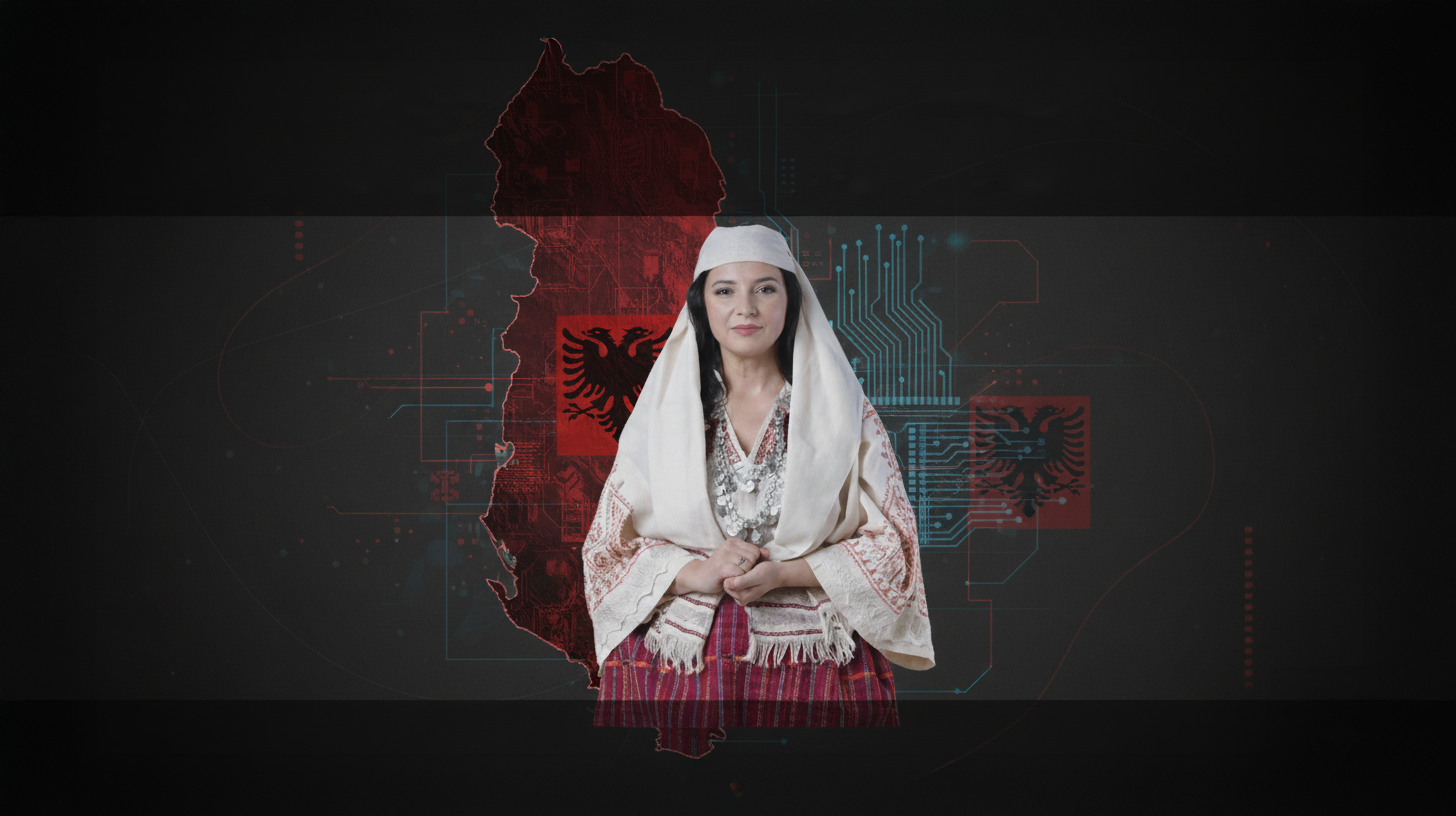
Technically, Diella is based on OpenAI models and Microsoft's Azure cloud platform. She can communicate via both voice and text commands and is represented as an avatar of a young woman in traditional Albanian clothing. This representation is intended to create cultural proximity and emphasize Albanian identity.
Its capabilities go beyond simple chatbot functions. Diella can understand natural language, recognize various Albanian dialects, and issue documents with electronic seals in real time. Development of Diella 3.0, which will enable full voice-based interaction, is already underway.
What political motivations lie behind this decision?
Diella's appointment as minister is inextricably linked to Albania's ambition to join the European Union by 2030. Prime Minister Edi Rama, who began a historic fourth term in May 2025, has declared this goal the top priority of his government.
Corruption is the biggest obstacle on Albania's path to EU membership. In Transparency International's 2024 Corruption Perceptions Index, the country ranks 80th out of 180 countries, scoring 42 out of 100. Although this represents an improvement over the previous year, Albania remains well below the EU average of 64 points.
Public procurement is a particularly corruption-prone area. Billions of dollars are regularly managed here, making the sector an attractive target for bribery and cronyism. The EU has repeatedly criticized these abuses in its annual Rule of Law Reports.
Rama's vision goes even further. He has suggested that, in the long term, even the office of prime minister could be taken over by artificial intelligence. These statements demonstrate how profound he envisions the digital transformation of government.
How exactly should the AI Minister function?
The exact technical details of Diella's new role remain largely unclear. While Rama has announced that the AI will gradually take over all decisions regarding public tenders, it hasn't explained exactly how this process will work.
What's clear is that Diella will be tasked with evaluating every proposal from private companies for government contracts. She will look for signs of money laundering, drug trafficking, or other illegal activities. She will also be given the right to hire talent from all over the world and reform administrative structures.
The AI will also be empowered to recruit international specialists, suggesting that its role goes beyond mere contract awarding. However, it remains unclear what human oversight is planned and how errors or manipulation will be prevented.
A crucial aspect is the data basis for Diella's decisions. What information is incorporated into her assessments and what criteria are used to evaluate tenders. This transparency is essential for building trust in the system.
What constitutional challenges arise?
The appointment of an AI as minister raises fundamental constitutional questions. The Albanian Constitution explicitly defines the Council of Ministers as consisting of the Prime Minister, Deputy Prime Ministers, and human ministers who must be sworn in and can sign legal documents.
Gazmend Bardhi, the parliamentary group leader of the opposition Democratic Party, has described Rama's initiative as unconstitutional. He argues that Rama's activism cannot be transformed into legally valid actions by the Albanian state.
Constitutional lawyers see the need to redefine Diella's role to avoid constitutional violations. The most promising approach would be to position AI as a decision-support technology that produces recommendations requiring human ministerial approval, rather than establishing it as an autonomous decision-maker.
The Albanian parliament must vote on the new cabinet, but it remains unclear whether Diella's virtual office will also be voted on. This legal ambiguity could lead to further constitutional disputes.
Which international standards must be observed?
As a candidate for EU membership, Albania must comply with European legal standards, including the EU Regulation on Artificial Intelligence, which entered into force in August 2024. This first comprehensive AI legislation worldwide establishes a risk-based approach to AI regulation.
The EU AI Act classifies AI applications into four categories based on their risk potential: unacceptable, high, limited, and minimal. AI systems in public administration, especially those with decision-making power, typically fall into the high-risk category and are subject to strict security, transparency, and quality requirements.
In addition, as a member of the Council of Europe, Albania is bound by the Framework Convention on Artificial Intelligence and Human Rights, Democracy and the Rule of Law, adopted in September 2024. This first legally binding international agreement on AI sets clear standards for the protection of human rights in the use of AI systems.
The Convention requires parties to provide remedies for victims of human rights violations related to AI systems and to implement procedural safeguards, including notification of persons who interact with AI systems.
What risks does the use of AI in combating corruption entail?
Although AI is theoretically incorruptible, its use in combating corruption carries its own risks. The quality and completeness of the data on which AI systems are based are crucial to their effectiveness. Incomplete, biased, or outdated data can lead to inaccurate results and undermine the integrity of anti-corruption efforts.
A major problem is the lack of transparency of many AI systems, which operate as black boxes. This makes their decision-making processes difficult to interpret and validate. In China, for example, the Zero Trust corruption identification system was rolled out to over 60 million civil servants, but internal researchers admitted that the system could not explain how it reached specific conclusions.
The opacity of AI systems can weaken public trust and undermine the principles of transparency and accountability in public decision-making. This is particularly problematic in legal contexts, where evidence must meet high standards of proof and transparency.
A new dimension of digital transformation with 'Managed AI' (Artificial Intelligence) - Platform & B2B Solution | Xpert Consulting

A new dimension of digital transformation with 'Managed AI' (Artificial Intelligence) – Platform & B2B Solution | Xpert Consulting - Image: Xpert.Digital
Here you will learn how your company can implement customized AI solutions quickly, securely, and without high entry barriers.
A Managed AI Platform is your all-round, worry-free package for artificial intelligence. Instead of dealing with complex technology, expensive infrastructure, and lengthy development processes, you receive a turnkey solution tailored to your needs from a specialized partner – often within a few days.
The key benefits at a glance:
⚡ Fast implementation: From idea to operational application in days, not months. We deliver practical solutions that create immediate value.
🔒 Maximum data security: Your sensitive data remains with you. We guarantee secure and compliant processing without sharing data with third parties.
💸 No financial risk: You only pay for results. High upfront investments in hardware, software, or personnel are completely eliminated.
🎯 Focus on your core business: Concentrate on what you do best. We handle the entire technical implementation, operation, and maintenance of your AI solution.
📈 Future-proof & Scalable: Your AI grows with you. We ensure ongoing optimization and scalability, and flexibly adapt the models to new requirements.
More about it here:
Diella, the AI Minister: New approach in the fight against corruption – Can algorithms stop corruption?
How do experts assess the opportunities and limitations of this innovation?
The international reaction to Albania's AI minister has been mixed. Supporters see it as an innovative solution to chronic corruption problems and a way for smaller countries to overtake technologically advanced nations.
Dr. Andi Hoxhaj of King's College London, a specialist in the Western Balkans and corruption, sees considerable potential in the initiative. While AI is still an emerging tool, if programmed correctly, it can provide clear insights into whether a company meets the necessary conditions and criteria for online tenders.
Critics, however, warn against excessive expectations. Scientific studies show that AI applications in the fight against corruption primarily mimic existing surveillance measures by human officials and can therefore only offer incremental improvements, not a fundamental transformation of the anti-corruption architecture.
Neidaajrari Bja, founder of the financial services firm Balkans Capital, notes that Edi Rama often mixes reform with theatricality, leading many to question whether this is merely symbolic. Nevertheless, she believes that an AI minister could be beneficial if it develops into real systems that improve transparency and trust in public procurement.
What technical challenges exist during implementation?
The practical implementation of Diella's new role presents significant technical challenges. Integrating AI systems into existing administrative structures requires comprehensive data interoperability between different authorities.
The e-Albania platform on which Diella already operates handles a wide range of government services. However, expanding it to include complex procurement requires significantly more sophisticated data processing and decision-making logic.
Security considerations are crucial. AI systems in critical government functions are attractive targets for cyberattacks and manipulation attempts. Ensuring the integrity and security of Diella's decision-making processes will be an ongoing technical challenge.
Scalability is another consideration. While Diella currently handles thousands of citizen inquiries, evaluating complex multi-million euro tenders differs significantly from processing simple document requests.
How does the Albanian population react to this innovation?
The public reaction in Albania is complex and reflects the divide between technological optimism and skepticism. Both enthusiasm and criticism are evident on social media.
Some Facebook users expressed doubts with comments like "Even Diella will be corrupted in Albania" and "The stealing will continue and Diella will be blamed." These reactions reflect a deep distrust of the ability to combat corruption through technological solutions.
Others see the initiative as an important step toward modernizing the country and preparing for EU accession. Younger Albanians, in particular, who already make extensive use of the e-Albania platform, are more open to the expansion of Diella's responsibilities.
The fact that Diella has been successfully operating as a virtual assistant for months has created a certain level of trust among the public. Many citizens have already had positive experiences with the AI when applying for documents and handling administrative procedures.
What impact does this have on Albania's prospects of joining the EU?
Albania's EU accession process has gained considerable momentum in recent years. In October 2024, the country opened negotiations on Cluster 1 of the EU accession chapters, and by April 2025, 16 of the 33 negotiation chapters had already been opened.
The EU Commission and the European Council have signaled that Albania and Montenegro are considered frontrunners in EU enlargement. Montenegro has opened all 33 chapters and provisionally closed seven, while Albania has opened four clusters with a total of 24 chapters for review.
Following Rama's election victory in May 2025, Emmanuel Macron declared that Albania could join the EU in just two years with a clear mandate for Rama, suggesting accession as early as 2027. This is significantly more ambitious than Rama's original target of 2030.
The AI initiative could be interpreted as a demonstration of Albania's willingness to innovate and its commitment to combating corruption. At the same time, the legal and technical aspects must comply with EU standards to avoid becoming an obstacle.
What international attention does this initiative receive?
The appointment of the world's first female AI minister has garnered international media attention and is considered a pioneering achievement. International observers view it as both a remarkable innovation and an experiment with an uncertain outcome.
The initiative fits into a global trend in which governments are increasingly using AI technologies to improve administrative efficiency. Ukraine already introduced Victoria Shi, an AI-generated spokesperson for foreign affairs, in May 2024.
International anti-corruption experts are following the experiment with interest, as it could provide important insights into the practical application of AI in governance. The results could inspire other countries to implement similar systems or warn of the risks.
The technical implementation is also being closely followed in the AI research community as it represents one of the first large-scale tests of AI in critical government functions.
What long-term effects on democracy can be expected?
The introduction of AI into government functions raises fundamental questions about the future of democratic decision-making. If Diella's approach proves successful, it could set a precedent for further automation of government functions.
Delegating decision-making authority to AI systems changes the traditional concept of democratic accountability. While human ministers can be held accountable, accountability for AI decisions raises new legal and ethical questions.
There is a risk that success in one area such as procurement will lead to the excessive expansion of AI systems into other areas of government without adequate consideration of their impact on democratic processes.
On the other hand, successful implementation could strengthen citizens' trust in government and demonstrate that technology can contribute to improving the quality of democracy. The challenge lies in finding the right balance between technological innovation and democratic principles.
What lessons can other countries learn from this experiment?
Albania's AI Minister experiment offers important lessons for other countries seeking to implement similar technologies. The importance of a solid legal foundation is highlighted, as constitutional challenges could hamper the initiative's effectiveness.
The need for comprehensive transparency and accountability mechanisms is underscored by criticism of the lack of clarity regarding Diella's functionality. Future implementations should incorporate clear monitoring and control mechanisms from the outset.
The importance of public acceptance is reflected in the mixed reactions of the Albanian population. Successful implementation of AI in government requires comprehensive public education and trust-building.
The technical complexity of integrating AI into existing administrative structures should not be underestimated. Countries must plan for significant investments in infrastructure and skilled workers.
The Albanian experiment will serve as a case study in the coming years, demonstrating both the possibilities and limitations of AI in governance. Its success or failure will likely influence the future development of AI-powered government systems worldwide.
This revolutionary initiative represents a turning point that could redefine the relationship between technology and government. As the world watches, Albania's experiment with Diella will provide important insights into whether artificial intelligence can truly be the solution to one of humanity's oldest political problems: corruption.
EU/DE Data Security | Integration of an independent and cross-data source AI platform for all business needs

Independent AI platforms as a strategic alternative for European companies - Image: Xpert.Digital
Ki-Gamechanger: The most flexible AI platform-tailor-made solutions that reduce costs, improve their decisions and increase efficiency
Independent AI platform: Integrates all relevant company data sources
- Fast AI integration: tailor-made AI solutions for companies in hours or days instead of months
- Flexible infrastructure: cloud-based or hosting in your own data center (Germany, Europe, free choice of location)
- Highest data security: Use in law firms is the safe evidence
- Use across a wide variety of company data sources
- Choice of your own or various AI models (DE, EU, USA, CN)
More about it here:
We are there for you - advice - planning - implementation - project management
☑️ SME support in strategy, consulting, planning and implementation
☑️ Creation or realignment of the AI strategy
☑️ Pioneer Business Development

Konrad Wolfenstein
I would be happy to serve as your personal advisor.
You can contact me by filling out the contact form below or simply call me on +49 7348 4088 965 (Munich) .
I'm looking forward to our joint project.
Write to me

Xpert.Digital - Konrad Wolfenstein
Xpert.Digital is a hub for industry with a focus on digitalization, mechanical engineering, logistics/intralogistics and photovoltaics.
With our 360° business development solution, we support well-known companies from new business to after sales.
Market intelligence, smarketing, marketing automation, content development, PR, mail campaigns, personalized social media and lead nurturing are part of our digital tools.
You can find out more at: www.xpert.digital - www.xpert.solar - www.xpert.plus
Keep in touch








