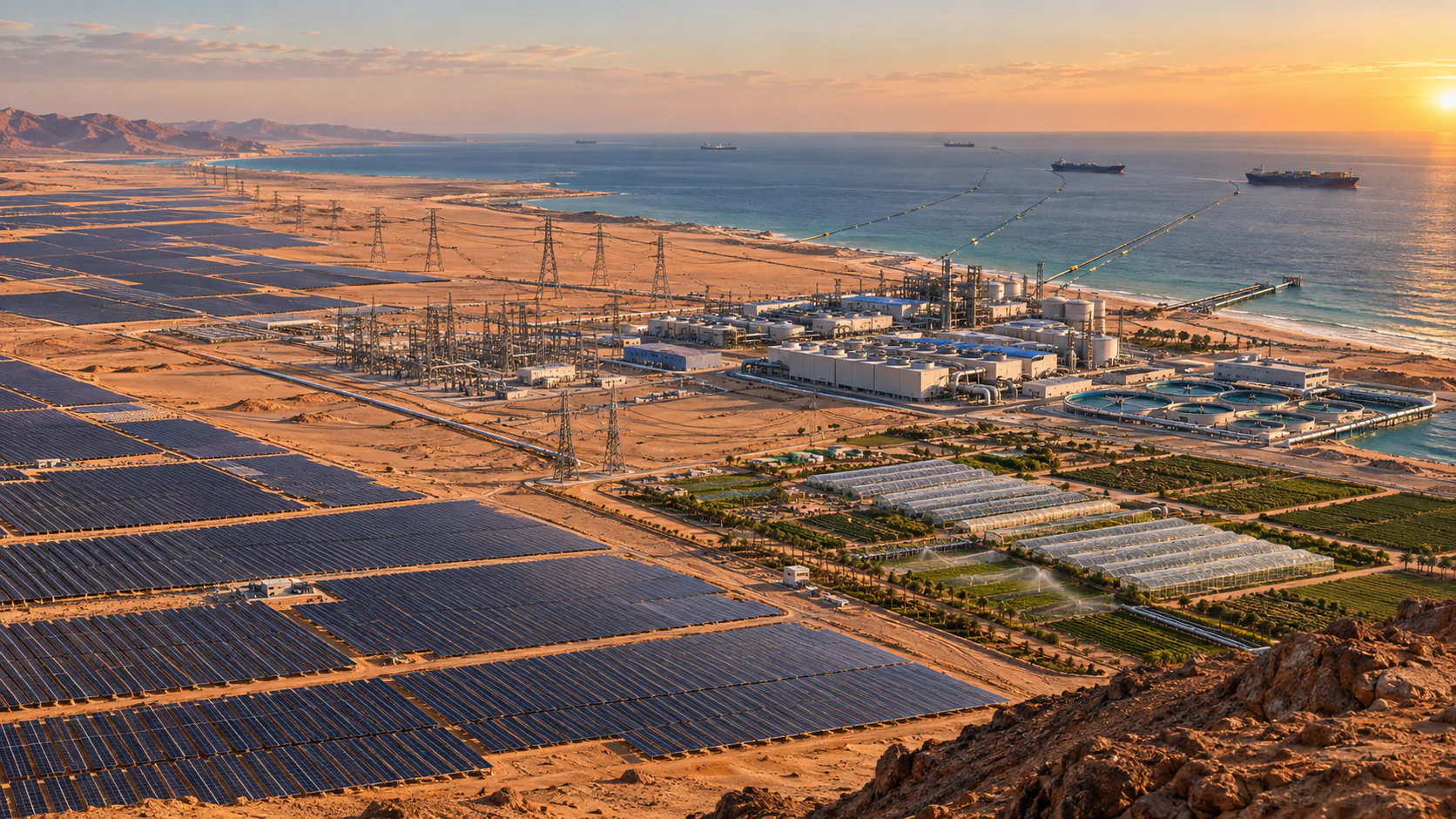
IMEC Corridor | India as a maritime superpower: From colonial port to global trading hub – Image: Xpert.Digital
Mission 2047: With this gigantic master plan, India will become the new world power of the seas
Attack on China's Silk Road: India's new mega-project will change world trade forever
135 billion for new mega-ports: Why Europe must act now in the face of India's rise
India is rearming – on the world's oceans. With its "Maritime Amrit Kaal Vision 2047" and an unprecedented level of investment, the subcontinent is planning nothing less than its rise to become a global logistics superpower. Historical colonial laws are being overturned, gigantic offshore ports are being built, and the IMEC corridor is creating a direct, democratic alternative to China's Belt and Road Initiative. For Europe and export-dependent nations like Germany, this massive modernization program offers a unique historical opportunity. To achieve its goals, India urgently needs European expertise in digitalization and green port technology. But the window of opportunity is rapidly closing. Those who hesitate now risk leaving the lucrative shaping of the new maritime world order to others. This is an analysis of India's catch-up efforts, geopolitical power shifts, and why Europe's ports must now join forces.
Those who arrive too late will lose access to the world's oceans – why Europe must act now
India is currently writing one of the most ambitious chapters in its economic history. What at first glance reads like technocratic infrastructure planning is in reality a geopolitical repositioning of historic proportions: A subcontinent with 1.4 billion people is claiming its place as a hub of the global trade architecture – and in doing so, is drawing Europe into account as an indispensable partner.
From vision to blueprint: What lies behind the year 2047
The year 2047 is not just an arbitrary planning horizon in India. It marks the 100th anniversary of independence from the British colonial empire – and thus the symbolically charged moment by which India aims to have made the leap to a developed economy. This target date lends all reform programs an emotional depth that goes far beyond mere project plans. The "Maritime Amrit Kaal Vision 2047" is one of the central programmatic pillars of this national catch-up effort.
The scale of the project is impressive. India's ports are projected to handle around 10 billion tons of goods annually by 2047 – more than three times the current estimated capacity of 2.8 billion tons. This projection is not far-fetched: the country's major ports already handled over 915 million tons of cargo in fiscal year 2024–25, a record figure. Growth is clearly on an upward trend. The question is no longer whether India will become a global maritime power – but rather how quickly.
The path to achieving this goal is defined by more than 300 individual initiatives and measures, grouped into eleven thematic areas of action. These range from deepening port basins to a draft of 18 to 23 meters and establishing transshipment hubs to achieving complete CO₂ neutrality for all major ports – a goal with both environmental and competitive considerations. The estimated investment volume for its realization amounts to 75 to 80 trillion rupees – a figure considered epochal even by European standards.
What is remarkable is how far India's ambition extends beyond the traditional port business. The vision addresses inland waterways, coastal shipping, cruise tourism, shipbuilding, and ship recycling equally. India possesses 7,517 kilometers of coastline and 14,500 kilometers of potentially navigable waterways – a geographical asset that has thus far been insufficiently utilized. Vision 2047 is also an attempt to systematically close this gap with maritime nations such as Singapore, the Netherlands, and Germany.
The legislative framework: How India buried a 117-year-old law
More symbolic than any investment plan is the step taken by the Indian Parliament in August 2025: The passage of the “Indian Ports Bill 2025” ended the validity of the “Indian Ports Act” of 1908 – a colonial law enacted under British administration that had been considered an institutional anachronism for decades. This act is more than a legal rectification. It signals India’s political will to fundamentally modernize the regulatory framework of its maritime economy.
The new law brings institutional clarity to a previously fragmented regulatory framework. It establishes the Maritime State Development Council (MSDC) as a statutory coordinating body between the central government and coastal states. The council, chaired by the relevant Union Minister, comprises representatives from the state ministers, the navy, the coast guard, and senior ministerial officials. Its responsibilities range from coordinating national port development strategies and providing guidance on tariff transparency to advising on legislative matters and connectivity planning.
The background to this reform is a structural weakness of the previous system: While the twelve major ports were under direct federal jurisdiction, over 200 so-called non-major ports were administered by the respective states – often without clear coordination, without uniform standards, and with significant regulatory friction. The new law authorizes coastal states to establish state maritime authorities (State Maritime Boards), thereby creating a structurally coherent governance architecture for all 217 non-major ports.
The reform package is complemented by the introduction of Dispute Resolution Committees, which enable industry-specific dispute resolution between port operators, concessionaires, and users. In addition, the law requires all ports to comply with international environmental conventions (MARPOL, Ballast Water Convention) and to submit periodically audited pollution control and disaster management plans. With this, India is aligning itself with international standards that have long been taken for granted in Europe.
Another element deserves special attention: the Maritime Development Fund, with a capital of 25,000 crore rupees, which is to be financed 49 percent by the state and 51 percent by port authorities, state-owned enterprises, and private stakeholders. The aim is to finance an Indian shipping fleet under the national flag – with the explicit goal of increasing India's share of global cargo movement to 20 percent by 2047.
The Sagarmala Programme: Operational Platform for a Maritime Revolution
While the Maritime Amrit Kaal Vision 2047 outlines the strategic horizon, the Sagarmala Programme – the operational backbone of Indian port policy since March 2015 – is the concrete implementation instrument. With 839 identified projects and a total investment volume of approximately 5.5 lakh crore rupees (around 60 billion euros), the programme represents one of the most extensive infrastructure projects ever initiated by an emerging economy.
The program rests on five operational pillars: port modernization and new construction, improved hinterland connections, port-oriented industrialization, development of coastal communities, and coastal shipping and inland waterway transport. This multidimensional structure makes it clear that Sagarmala is not merely an infrastructure program, but an economic development approach that views ports as growth centers around which industrial clusters, logistics zones, and jobs are to be organized.
The results so far are measurable. Coastal shipping has more than doubled within a decade – an increase of 118 percent. The average container dwell time has been reduced to three days – a figure below that of countries like the USA (7 days) or Germany (10 days). The turnaround time for Indian ports is now 0.9 days, which is lower than that of Singapore (1.0 days), the USA (1.5 days), or Australia (1.7 days).
India's ranking in the international container handling index has improved from 44th to 22nd place since 2014 – an indication of the real productivity gains generated by the program. These efficiency improvements are significant from an economic policy perspective: India's total logistics costs now stand at 7.97 percent of GDP – far below the previously communicated and politically used estimates of 13 to 14 percent. While this does not eliminate a key economic weakness of India – the high costs of goods distribution – it has significantly mitigated it.
New mega terminals: Vadhavan and Galathea Bay as anchor projects
Two major projects embody the leap in quality that India is striving for in port construction: the Vadhavan Port in Maharashtra and the Galathea Bay International Container Transshipment Port in the Andaman and Nicobar Islands.
Vadhavan, an artificial island being built in the Arabian Sea, is planned as India's first offshore port. The foundation stone was laid in August 2024 by Prime Minister Modi. The project, a public-private partnership between the Jawaharlal Nehru Port Authority, is expected to have a capacity of 298 million tons per year, including approximately 23.2 million TEU (twenty-foot equivalent units) of container throughput. With planned water depths exceeding 20 meters, the latest generation of ultra-large container ships will be able to call at the port. The total project volume is estimated at around 762 billion rupees (approximately US$8.1 billion). International shipping companies such as Evergreen Marine and Gulftainer have already announced terminal projects in Vadhavan.
Galathea Bay Port on Great Nicobar Island follows a different strategic logic: its geographical location in close proximity to the east-west global shipping route makes it a natural transshipment hub capable of consolidating cargo from across the Indian Ocean. The project was approved by the relevant authority (PPPAC) in April 2026 with a budget of 48,862 crore and is planned to reach a total capacity of 11.8 million TEU in two phases. The ownership structure is concentrated on Indian entities: 55 percent must be held by an Indian-controlled entity, excluding foreign operators.
Together, these two projects illustrate India's dual maritime strategy: to strengthen the flow of goods with the Middle East and Europe on the west coast with Vadhavan, and to control the transition between the oceans on the island groups with Galathea Bay.
The IMEC corridor: trade route, alternative proposal and infrastructure alliance
The most far-reaching geopolitical element in India's maritime strategy is the India-Middle East-Europe Economic Corridor (IMEC). On September 9, 2023, on the sidelines of the G20 summit in New Delhi, India, Saudi Arabia, the United Arab Emirates, the European Union, France, Germany, Italy, and the United States signed a joint declaration of intent to implement this multimodal corridor. The project is designed to cover a route of approximately 6,000 kilometers and will connect Indian ports via sea routes to the Arabian Gulf, from there by rail through Saudi Arabia and the Gulf States to Israel, and from there again by sea across the Mediterranean to European ports.
The economic indicators are impressive: IMEC is expected to reduce transit times between India and Europe by up to 50 percent – according to calculations by the Misgav Institute and the Konrad Adenauer Foundation, even more than the previously projected 40 percent. Transport costs are expected to fall by 30 percent. Based on realistic trade volumes, even with moderate capacity utilization, up to 1.5 to 3 million TEU could flow through the corridor annually.
IMEC is more than just a trade route. The project encompasses four technical infrastructure dimensions: first, the multimodal transport network of sea and rail lines; second, high-speed data cables (fiber optics) along the entire route; third, infrastructure for the transmission of green energy, particularly hydrogen pipelines; and fourth, electricity grid connectivity as a prerequisite for a climate-neutral energy supply along the corridor. At the EU's Global Gateway Forum in Brussels in October 2025, the EU-Africa-India Digital Corridor – based on the 11,700-kilometer-long Blue Raman submarine cable – was presented as the first concrete IMEC flagship project.
Geopolitically, IMEC is the most concrete Western democratic alternative to China's Belt and Road Initiative (BRI) to date. Unlike the BRI, with its model of bilateral debt architecture and centralized Chinese control, IMEC relies on a multilateral partnership model with pluralistic financing, democratic governance structures, and market-based operating logic. The US sees IMEC as a strategic response to Beijing's infrastructure diplomacy and has positioned the project as proof of the superiority of cooperation among democracies. The EU has integrated the project into its Global Gateway Initiative, which has a budget of €300 billion.
Your container high-bay warehouse and container terminal experts
Container high-bay warehouses and container terminals: The logistical interplay – expert advice and solutions - Creative image: Xpert.Digital
This innovative technology promises to fundamentally change container logistics. Instead of stacking containers horizontally as before, they will be stored vertically in multi-story steel racking structures. This not only allows for a drastic increase in storage capacity within the same area, but also revolutionizes all processes at the container terminal.
More information here:
From digital ports to green shipping – how Europe can shape India's infrastructure
Europe's hesitant rapprochement: Between strategic self-interest and the imperative of implementation
That IMEC would move beyond a declaration of intent was far from certain for a long time. Progress was hesitant well into 2025. The most sobering assessment came from Berlin: In October 2024, the Bundestag rejected a motion by the CDU/CSU parliamentary group to obligate the German government to an active IMEC support strategy. Germany – a signatory to the original MoU and directly affected by the strategic vulnerability of its supply chains following the Houthi shelling in the Red Sea – acted remarkably passively during this period.
From 2025 onwards, the European side of the project gained momentum. France and Italy appointed IMEC special envoys and positioned the port cities of Marseille and Trieste as potential European endpoints. France hosted the first IMEC Sherpa meeting in June 2025; a larger format followed in New Delhi in August 2025. The entire complex gained a new institutional foundation with the signing of the India-EU Free Trade Agreement in New Delhi on January 27, 2026. The agreement—described by both sides as "historic" and the largest trade agreement ever concluded by either party—provides some form of tariff concession for 99.5 percent of bilateral trade, with a phased-in zero-tariff arrangement for over 93 percent of Indian exports to the EU.
The most visible concrete step to date was taken by Adani Ports in February 2026, when the Indian port operator and the Port of Marseille-Fos signed a cooperation agreement in the presence of French President Macron. In addition to operational cooperation, the Memorandum of Understanding (MoU) provides for the establishment of an "IMEC Ports Club"—a coordinating body for all key ports along the corridor route. The agenda includes smart port platforms, data interoperability, cybersecurity, alternative fuels, shore power facilities, and low-carbon bunkering solutions. Specifically, the aim is to create a Mundra–Marseille Green Maritime Corridor—a dedicated sustainability route between the two largest operational anchor points of the IMEC project.
Hamburg's strategy: How Germany's largest port is fighting for Indian cargo
While political action has been hesitant, the port industry has long been in flux. Hamburg – Germany's and Northern Europe's most important container hub – has recognized and established itself as a strategic growth market in India. Container throughput between Hamburg and India increased by 21 percent between 2020 and 2024. In 2025, Hamburg reached a record volume of 290,000 TEU in direct trade with India – a 50 percent increase compared to the previous year. This propelled India to sixth place among the Port of Hamburg's most important trading partners in terms of container volume.
The operational connections are correspondingly dense: Twelve regular liner services connect Hamburg with India, including six container services, three RoRo services, and three conventional general cargo services, some of which specialize in heavy cargo transport. These services link Hamburg directly with a number of major Indian ports, including Nhava Sheva, Mundra, Mumbai, Chennai, Ennore, and Hazira.
For Hamburg, the quality of cooperation with India is not solely a matter of trade volume. During high-level delegation trips to Chennai, Mumbai, and New Delhi, representatives from Hamburg's port industry and the Hamburg Port Authority exchanged practical knowledge on climate-neutral port development – from shore power facilities and transformation processes in port areas to cruise terminal development. The event format "Ports in Conversation – Hamburg meets Mumbai" reflects a strategic partnership that extends beyond the mere exchange of goods and explicitly focuses on the transfer of know-how.
The European expertise portfolio: Where Europe can truly help India
Europe – and in particular Germany, the Netherlands, and Belgium – possesses expertise that is directly relevant to India's maritime catch-up strategy. This competence is not abstract, but tangible in specific areas of action.
In the area of digital port infrastructure, Europe has developed world-leading systems. The integration of Port Community Systems (PCS), which connects all port stakeholders – shipping companies, freight forwarders, customs authorities, and terminal operators – via interoperable data platforms, is a core competency in which Rotterdam, Hamburg, and Antwerp are setting standards. India has recognized that its international competitive disadvantage is no longer primarily physical – container dwell times and turnaround times have reached world-class levels – but increasingly lies in digital hinterland integration. Under the Trade and Technology Council (TTC), the EU reached agreements with India in February 2025 on the interoperability of digital public infrastructures and the mutual recognition of electronic signatures – a foundation for more comprehensive digital trade protocols.
In the field of green port technology, Europe possesses a decisive advantage that India can strategically leverage. Shore power facilities (shore power for ships in port), LNG bunkering, green hydrogen as a maritime energy source, and low-emission port logistics equipment are areas in which European – particularly German – companies are international leaders. Germany has developed extensive expertise in mechanical engineering for handling and automation systems. The VDMA (German Engineering Federation) has explicitly identified this potential as complementary to India's logistics modernization needs. Germany intends to position its logistics expertise – from automation to digitalization – as a complementary competency to Indian target programs such as "Make in India" and the National Logistics Policy.
India is still at the beginning of a long road in the field of port automation. While Thiruvananthapuram Port, the country's first fully automated port, serves as a showcase project, the widespread implementation of advanced container terminal automation is still pending. European port terminal equipment suppliers and system integrators could act as technology partners here, contributing not only machinery but also complete operational concepts, training programs, and maintenance infrastructure.
The EU-India free trade agreement provides the institutional framework for this. The agreement not only reduces tariffs on industrial goods, machinery, and electrical equipment, but also improves market access for European companies in the maritime services and finance sectors. This opens up concrete market opportunities for German SMEs, which are strong in maritime logistics technology.
The investment offensive: India's Maritime Week 2025 as a signal
The India Maritime Week 2025, held in Mumbai from October 27 to 31, 2025, raised the geopolitical signal level even further. The event concluded with more than 600 Memoranda of Understanding and investment commitments exceeding 12 lakh crore rupees (approximately US$135 billion) – a 41 percent increase compared to the Global Maritime India Summit 2023. Delegates from over 85 countries participated, including eleven foreign ministers.
The quality of the investment commitments is as revealing as their quantity. The Shipping Corporation of India announced a fleet expansion to 216 vessels by 2047 with an investment of 1 lakh crore. Public companies in the oil and gas sector placed 59 shipbuilding orders worth 47,800 crore, sending a clear signal to the domestic shipbuilding industry. DP World announced US$5 billion for green coastal and short-sea shipping. In parallel, a "Green Tug" program was launched, aiming to put 100 low-emission tugs into service by 2040 with an investment of 12,000 crore.
These figures signal a shift from the strategic discourse phase to the phase of concrete capital mobilization. The international investor community is taking India's maritime ambitions seriously – and that is no small feat in a sector traditionally characterized by long payback periods, political risks, and regulatory complexity.
Structural risks: What can jeopardize ambitions
Any economic analysis that ignores the significant implementation risks would be incomplete. India's maritime transformation faces four structural challenges that could undermine its level of ambition.
The first risk lies in governance fragmentation. The structural separation between major ports (federal level) and non-major ports (state level) is formally addressed by the Indian Ports Bill 2025, but has not yet been operationally overcome. Coordination between twelve major ports and over 200 non-major ports, between various departments and state agencies, and between private terminal operators and state port authorities remains a systemic efficiency problem. The newly created MSDC has an advisory role – not an enforcement authority.
The second risk concerns hinterland connectivity. Even world-class ports are only as good as their hinterland. India's inland transport infrastructure – despite significant investments in Dedicated Freight Corridors and the PM Gati Shakti program – lags behind port capacity. The containerization rate of Indian goods is low by international standards, and the modal shift from road to rail and inland waterways is progressing more slowly than anticipated.
The third risk is geopolitical in nature and specifically concerns the IMEC corridor. The Middle East is a geopolitically volatile region. The section of the corridor that includes Israel and its neighboring states remains vulnerable to regional conflicts and political turmoil. The Houthi attacks on merchant ships in the Red Sea in 2023 and 2024 demonstrated how quickly existing trade routes can come under pressure—and unintentionally gave IMEC additional strategic momentum as a route that bypasses the Bab el-Mandeb Strait.
The fourth risk is the financing risk of the IMEC itself. While the infrastructure at the endpoints – in India, the Gulf States, and Europe – is already covered by national investment programs, a robust financing plan is lacking for the critical middle section – particularly the rail network through Saudi Arabia and the UAE, as well as the Israeli connection. An investment framework of up to US$20 billion has been communicated for the entire corridor, but a binding financing architecture with private and public participation has not yet been structured.
The strategic conclusion: Europe's window of opportunity
Rarely in modern economic history has a rising power communicated its transformation goals so transparently and simultaneously sought international expertise so explicitly as India in the field of maritime infrastructure. The Maritime Amrit Kaal Vision 2047, the Sagarmala Programme, the Indian Ports Bill 2025, the IMEC Corridor, and the major projects in Vadhavan and Galathea Bay together present a coherent strategic picture: India intends to fundamentally overcome its maritime underdevelopment over the next two decades – and is prepared to utilize foreign technology, capital, and expertise to achieve this.
For Europe, this window of opportunity is limited, but real. The EU-India Free Trade Agreement of January 2026 provides the institutional foundation. The IMEC dynamic with the Marseille-Adani Agreement sets concrete anchors. Hamburg's growing engagement with India shows that the port industry is already taking the lead. What is still lacking is a coordinated European strategy that combines technology transfer, financing instruments, and diplomatic support.
Germany and the Netherlands, as leading port nations, France and Italy as southern IMEC anchor points, and the EU Commission with its Global Gateway financing framework, possess complementary strengths that are in demand in India. The alternative—watching as other actors shape the emerging maritime world order—is not a strategically viable option for an export-dependent economy like Germany's.
India's maritime revolution is underway. The question is no longer whether Europe wants to be a part of it. The question is whether Europe will act quickly and decisively enough to play a shaping role in it.
Consulting - Planning - Implementation
I would be happy to serve as your personal advisor.
You can contact me at wolfenstein∂xpert.digital or
Just call me on +49 7348 4088 965 .
Our global industry and economic expertise in business development, sales and marketing
Our global industry and economic expertise in business development, sales and marketing - Image: Xpert.Digital
Industry focus areas: B2B, digitalization (from AI to XR), mechanical engineering, logistics, renewable energies and industry
More information here:
A thematic hub offering insights and expertise:
- Knowledge platform covering global and regional economies, innovation and industry-specific trends
- A collection of analyses, insights, and background information from our key areas of focus
- A place for expertise and information on current developments in business and technology
- A hub for companies seeking information on markets, digitalization, and industry innovations
Your container high-bay warehouse and container terminal experts
Container terminal systems for road, rail and sea transport in the dual-use logistics concept of heavy-lift logistics - Creative image: Xpert.Digital
In a world marked by geopolitical upheavals, fragile supply chains, and a new awareness of the vulnerability of critical infrastructure, the concept of national security is undergoing a fundamental reassessment. A state's ability to guarantee its economic prosperity, the provision of essential goods and services to its population, and its military capability increasingly depends on the resilience of its logistical networks. In this context, the concept of "dual-use" is evolving from a niche category of export control to a broader strategic doctrine. This shift is not merely a technical adjustment but a necessary response to the "paradigm shift" that demands a profound integration of civilian and military capabilities.
Related to this: