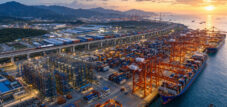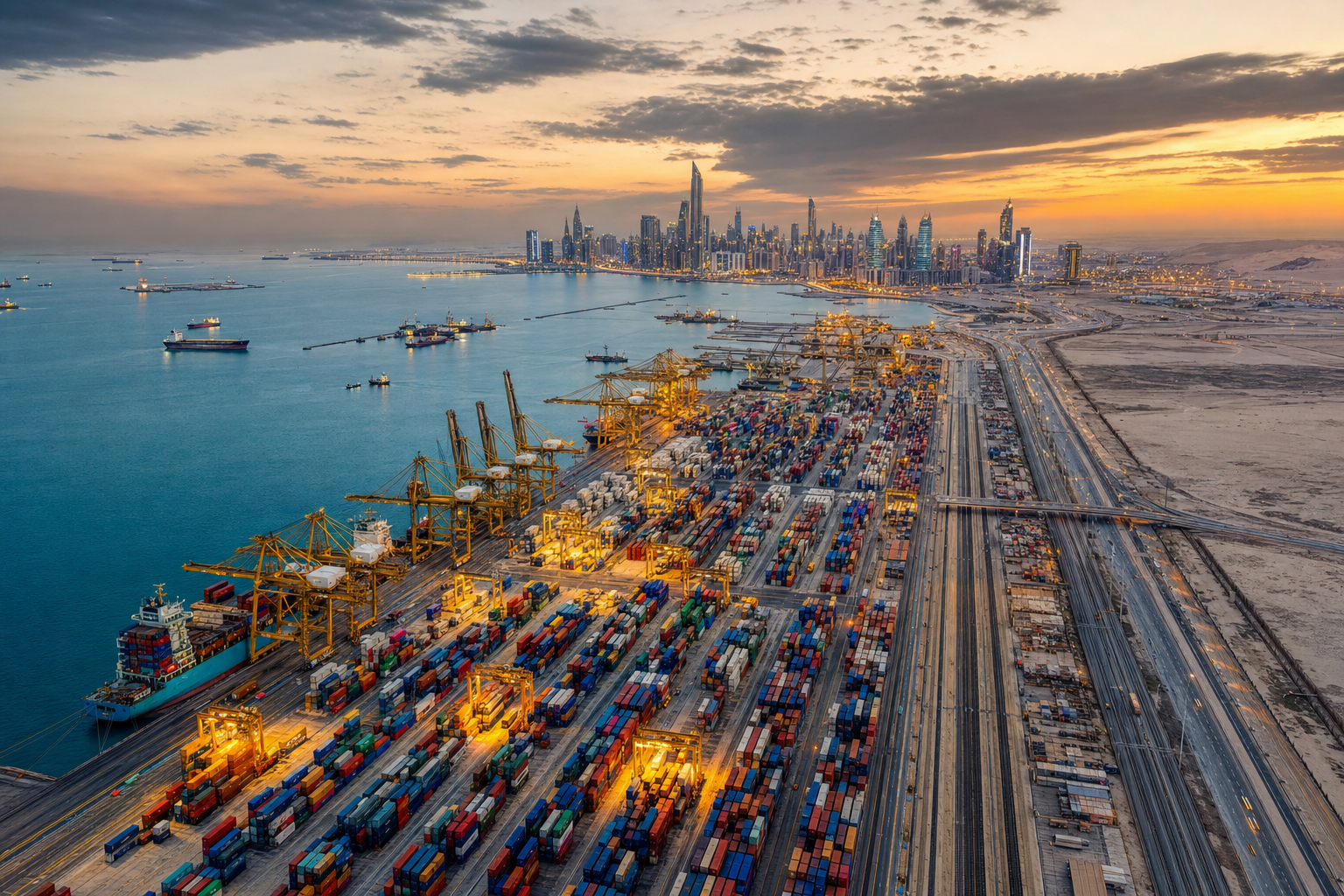
Global trade hubs: Why the Gulf States are becoming the new axis of global supply chains – and why this is no coincidence – Creative image: Xpert.Digital
Mega-corridors in the Persian Gulf: What the new trade routes mean for Europe and our economy
Gigantic railways and new ports: How the Arab states are challenging China's Silk Road
From oil to logistics: Why the Gulf region will soon dominate our global supply chains
The Arab Gulf states are reinventing themselves. For a long time, the world's attention was focused almost exclusively on the region's immense oil wealth. But in the shadow of global crises and the constant geopolitical threat to the bottleneck at the Strait of Hormuz, an unprecedented transformation is currently underway: Saudi Arabia, the United Arab Emirates, Oman, and Qatar are investing hundreds of billions in a gigantic, future-proof network of deep-sea ports, cross-border rail networks, and new intercontinental transport corridors. What once began as a strategy for crisis management and economic independence from oil is rapidly developing into the new main artery of global trade. The following report examines these ambitious megaprojects in detail, analyzes the driving geopolitical forces, and shows why the Gulf states' new logistics routes will soon play a crucial role in determining how quickly and securely goods flow between Asia, Europe, and the rest of the world—and what enormous power shifts this entails.
Related to this:

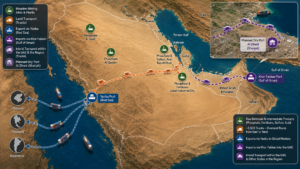
Logistics routes of the Arab Gulf states – inventory, strategies and global interconnections
The Arab Gulf states are undergoing one of the most profound logistical transformations in their history. What was once considered a purely energy-exporting region has evolved into one of the densest and most ambitious infrastructure ecosystems in the world. World-class ports, multi-billion-dollar railway projects, new transnational trade corridors, and a reshaping of route architecture accelerated by geopolitical crises define the region's landscape in 2026. This report analyzes all major existing, developing, and planned logistics routes in and through the Arab Gulf states, with a clear focus on their economic significance, strategic drivers, and global dimensions.
The geopolitical foundation: Between Hormus dependence and diversification
The geography of the Persian Gulf has shaped the region's logistics strategy for decades – and simultaneously made it its Achilles' heel. The Strait of Hormuz, through which around 20 percent of the world's traded oil is transported daily, is the critical bottleneck of every supply chain that begins or ends in the region. For a long time, the Gulf states tolerated this dependency because the system functioned efficiently and cost-effectively in peacetime. With the outbreak of the Iran conflict in February 2026, which led to the de facto closure of the Strait of Hormuz, the vulnerability of this infrastructure became strikingly apparent.
The governments reacted swiftly and strategically: Saudi Arabia, the United Arab Emirates, and Oman activated alternative logistics corridors within weeks, some of which had been in the planning phase for years. This development is accelerating a transformation of route architecture that has been underway for several years. The difference from previous reform phases lies in the combination of political pressure, financial capacity, and the structural maturity of many projects, which can now be rapidly implemented.
Saudi Arabia's rail strategy: The Landbridge project as its centerpiece
No single infrastructure project illustrates Riyadh's logistical ambitions better than the Saudi Landbridge project. The planned rail link, spanning approximately 950 to 1,500 kilometers, connects the Red Sea port of Jeddah, via the capital Riyadh, to the Persian Gulf port of Dammam. The project is part of Crown Prince Mohammed bin Salman's Vision 2030 and aims to transform Saudi Arabia into a global logistics hub. With a total investment of around seven billion US dollars, the Landbridge is one of the most expensive railway projects in the Middle East.
The corridor comprises a newly constructed, approximately 900-kilometer (500-mile) rail line between Riyadh and Jeddah, as well as a 115-kilometer (70-mile) line from Dammam to Jubail, which will connect to the existing rail network. In April 2026, the contract for the project's design phase was awarded to the Spanish engineering firm Sener – a clear signal that the project is moving from the planning to the construction stage. Operations are expected to commence in the early 2030s, with some estimates suggesting 2034 as a realistic completion target. When operating at full capacity, the landbridge is projected to transport over 50 million tons of freight per year and reduce the transit time between the ports of Jeddah and Dammam from five days by sea to less than 20 hours by rail.
The Landbridge project is complemented by five newly announced rail logistics corridors, officially launched by Saudi Arabia's Railway Organization (SAR) on April 10, 2026. These corridors connect Saudi Arabia's main ports of Jeddah, Dammam, and King Abdullah Port with logistics centers in Bahrain, the UAE, and Kuwait, as well as indirectly with Qatar and Oman. One particularly strategic corridor aims to connect Saudi Arabia's eastern ports—King Abdulaziz Port in Dammam, Al-Jubail Commercial Port, and King Fahd Industrial Port in Jubail—with the Jordanian border crossing at Al-Haditha. This approximately 1,600-kilometer route establishes, for the first time, a direct rail freight link to markets in Jordan and beyond.
The East-West Pipeline: Saudi Arabia's strategic security network is operational
Even before the full development of its rail infrastructure, Saudi Arabia possesses an existing and now crucially important bypass: the East-West Crude Oil Pipeline (Petroline). This 1,200-kilometer pipeline system connects the oil production centers in the Eastern Province with the port of Yanbu on the Red Sea – completely bypassing the Strait of Hormuz. Under normal circumstances, the pipeline transported between 1.7 and 2.8 million barrels per day. With the outbreak of the Gulf War in the spring of 2026, it became a vital export artery: Saudi Aramco converted parallel liquefied natural gas (LNG) pipelines to crude oil transport and increased the flow capacity to a historic maximum of seven million barrels per day. This logistical feat enabled the Kingdom to maintain the majority of its oil exports, while other Gulf states like Kuwait, lacking a comparable bypass option, suffered massive production losses.
The strategic lesson is clear: route redundancy protects economic stability. The East-West pipeline is a decades-old project whose function, originally conceived as a precautionary measure, is now proving essential. Saudi Arabia is therefore considering in the long term whether to further expand its capacity or develop new routes. One possible option would be the development of additional export terminals on the Saudi Red Sea coast, perhaps as part of the Neom megaproject, whose port could serve as a future strategic exit point for energy and goods.
Etihad Rail: The UAE's first national railway network is taking shape
The United Arab Emirates owns Etihad Rail, a project that is already largely operational. The 900-kilometer network stretches from the Saudi border in the Emirate of Abu Dhabi (Ghuwaifat) across all seven emirates to Fujairah on the east coast. Since February 2023, the network has been used for freight transport and is expected to reach an annual freight capacity of 60 million tons by 2030. Passenger service is scheduled to begin in 2026, initially connecting Abu Dhabi, Dubai, Sharjah, and Fujairah, with plans to gradually expand to a total of eleven cities and regions. Each train is designed to carry up to 400 passengers and reach speeds of up to 200 kilometers per hour.
For the freight sector, the strategic positioning of the Etihad Rail network is particularly significant: it links Jebel Ali Port – the largest port in the Middle East by container throughput – with the eastern ports of Fujairah and Khorfakkan, which lie outside the Strait of Hormuz. This geographical advantage makes the network a crucial inland connection when goods have to take the detour via the Gulf coast of Oman. In March 2026, the first coordinated freight operations took place, transporting cargo from the east coast of the UAE via the Etihad Rail network inland and onward to Saudi Arabia.
Hafeet Rail: The first cross-border rail line in the Gulf
A key project for regional rail integration is the Hafeet Rail project – a 238-kilometer cross-border rail corridor connecting Abu Dhabi with the Omani port of Sohar. The joint venture between Etihad Rail, the Omani ASYAD Group, and the sovereign wealth fund Mubadala Investment Company officially began construction in April 2024, making it the first fully completed cross-border railway project in the history of the Gulf States. As of April 2026, 40 percent of the line is complete; construction is underway simultaneously at 80 different locations, including two critical 2.5-kilometer tunnels through the Hajar Mountains.
The planned travel time for freight trains between Al Ain and Sohar is 47 minutes, while passengers are expected to travel the route from Abu Dhabi to Sohar in under 100 minutes. The freight capacity per train journey is stated as 15,000 tons. The project costs approximately US$2.5 billion. ArcelorMittal is supplying a total of 33,100 tons of rail steel from its plants in Gijón, Spain, underscoring the global nature of the project's supply chains. Upon completion, Hafeet Rail will connect the Etihad Rail network in Al Ain with Sohar Port, creating the first rail link capable of transporting goods directly from Omani ports to the heart of the UAE.
The Sharjah-Oman logistics corridors: Rapid responses to acute crises
While major rail projects are designed to last for decades, the crisis of 2026 led to the rapid activation of complementary land-sea corridors. On May 14, 2026, the Sharjah-Oman Logistics Corridor commenced operations. The route connects the port of Khalid in Sharjah, via the Khatmat Malaha and Al Madam border crossings, with the Omani ports of Sohar, Duqm, and Salalah – Sohar being the primary hub due to its proximity to the UAE.
The corridor is based on a joint customs agreement between the authorities of both countries and allows freight to be cleared directly at the border crossings in Sharjah, without further transshipment. Fast-track lanes for certain goods categories, pre-processing of freight data, and direct transport under customs supervision are intended to significantly reduce transit times and transport costs. The corridor is explicitly designed to be bidirectional: goods from Oman enter the Emirati market via Sharjah, while goods from Sharjah can be exported via Omani ports.
A complementary corridor between Dubai and Omani ports follows the same logic: On March 12, 2026, Dubai Customs issued Customs Notice No. 04/2026, activating the Green Corridor between Dubai and Omani seaports. Goods from Oman are cleared through customs at Omani ports, cross the country under supervision to the Al Wajajah border crossing, and are then imported into the UAE via the Hatta border crossing. The reverse procedure applies. This Green Corridor makes it possible to seamlessly utilize the entire east-west corridor – from ships in the Arabian Sea to Dubai's free trade zones – without having to cross the high-risk Persian Gulf.
The GCC rail network: Regional integration by rail until 2030
Behind all the national projects lies an overarching regional undertaking: the GCC Railway Project, a 2,177-kilometer rail network intended to connect all six member states of the Gulf Cooperation Council. First announced in 2009, the project has now gained momentum after a lengthy start-up phase. Completion is planned for December 2030. The network will connect Kuwait in the north, through Saudi Arabia, Bahrain, Qatar, and the UAE, to Oman in the south – thus integrating the six largest economies of the Arabian Peninsula into a common transport system.
The current implementation status varies considerably by country. The UAE, with Etihad Rail, is furthest along and is already in the operational phase for freight traffic. Kuwait awarded an $8 million design contract in April 2025 for the 111-kilometer section from Nuwaiseeb to Al-Shadadiya, and a 650-kilometer rail project from Kuwait to Saudi Arabia is scheduled to begin construction in 2026 and be completed by 2028. Bahrain will be connected to Saudi Arabia via the new King Hamad Causeway, a 57-kilometer route parallel to the existing King Fahd Causeway with four lanes for traffic and two railway tracks. It will connect the planned King Hamad International Station in Bahrain's Ramli district with Dammam Station in Saudi Arabia and will provide a direct link to Bahrain International Airport.
The Khor Fakkan Corridor: A strategically important UAE bypass route
Khor Fakkan is a container terminal in the Emirate of Sharjah on the east coast of the UAE and the only fully operational seaport in the Emirates not located in the Persian Gulf. This geographical peculiarity makes Khor Fakkan a key element in the Hormuz bypass strategy. During the 2026 crisis, the Saudi Ports Authority (Mawani) partnered with the Sharjah logistics company Gulftainer, utilizing the Khor Fakkan Commercial Terminal and the Sajaa Dry Port as the hub of an integrated land-sea corridor transporting cargo from Saudi Arabian Red Sea ports to the east coast of the UAE and vice versa. This route allows regional players to manage the entire flow of cargo between the Arabian Sea and the Gulf region's inland markets without ever having to transit the Strait of Hormuz.
Oman's quiet logistical power: Duqm, Sohar and Salalah as global platforms
The Sultanate of Oman possesses a unique structural feature that is particularly evident in the current geopolitical turmoil: all its major ports lie outside the Strait of Hormuz. The port of Salalah on the Arabian Sea, the port of Duqm on the southeast coast, and the port of Sohar north of the Strait of Hormuz have been developed into strategic platforms, not only geographically but also in terms of economic policy.
Duqm has undergone rapid development in recent years. In 2024, the port recorded a 152 percent increase in cargo volume. In May 2025, the international investment firm Investcorp announced a joint investment of US$550 million in the expansion of the Port of Duqm, together with the DEME Group and the Port of Antwerp-Bruges. The expansion includes extensive dredging and the construction of a new quay wall for a planned low-emission industrial plant for the production of hydrogen-based green steel. Oman's state-owned logistics holding company, ASYAD Group, manages the ports, free trade zones, and shipping lines as an integrated system, positioning Oman as a one-stop shop for industrial development, transit logistics, and re-export.
Sohar Port, located in the north and soon to be connected to Abu Dhabi via Hafeet Rail, has become a hub for the petrochemical industry, metal processing, and containerized cargo. The Port of Salalah in the south is a deep-water transshipment hub at the intersection of major Asian-European shipping routes. Together, Oman's ports handled approximately 137 million tons of cargo and 4.2 million TEU in 2024 – a significant increase from 93.2 million tons the previous year. Oman is also developing an Oman-Europe hydrogen corridor from Duqm, which will deliver green hydrogen via the Port of Amsterdam to Germany and other European markets. Engineering firms were commissioned in 2025 to develop the associated terminals at the Port of Amsterdam.
Your container high-bay warehouse and container terminal experts


Container high-bay warehouses and container terminals: The logistical interplay – expert advice and solutions - Creative image: Xpert.Digital
This innovative technology promises to fundamentally change container logistics. Instead of stacking containers horizontally as before, they will be stored vertically in multi-story steel racking structures. This not only allows for a drastic increase in storage capacity within the same area, but also revolutionizes all processes at the container terminal.
More information here:
The new trade architecture: Saudi Arabia, Türkiye and Gulf hubs
Qatar between ambitions and realities: Hamad Port as a multiplier
With Hamad Port, Qatar has built by far the largest and most modern port in the region, boasting an annual capacity of 7.5 million containers and serving over 200 destinations worldwide. The port is directly connected to Hamad International Airport and the free trade zones of Ras Bufontas (for time-critical goods near the airport) and Umm Alhoul (for chemicals, oil/gas, and heavy machinery near the port). Together with the Qatar Rail Freight system, increasingly integrated multimodal corridors are emerging.
Logistics services accounted for approximately five percent of Qatar's GDP in 2024; the Ministry of Transport plans to increase this to eight percent by 2030. Qatar is pursuing a niche strategy: While the UAE and Saudi Arabia focus on volume and general cargo throughput, Qatar is positioning itself as a specialized hub for pharmaceutical logistics, high-tech supply chains, and green logistics solutions, including electric fleets and solar-powered warehouses. The Umm Alhoul Free Zone already accounts for 27 percent of GCC trade volume. In the context of the Iran conflict in 2026, the Qatar Chamber of Commerce strengthened the handling of goods transport across the Saudi Arabian land border with accelerated customs procedures, while Mawani and Qatar Ports Management Company had already signed a Memorandum of Understanding on maritime and logistics cooperation on February 18, 2026 – a remarkably forward-looking gesture.
Related to this:


The IMEC project: The India-Middle East-Europe Corridor as a geopolitical gamble
Of all the global corridors passing through or across the Gulf States, the India-Middle East-Europe Economic Corridor (IMEC) is the most ambitious and strategically significant project. Officially announced at the G20 summit in New Delhi in September 2023, the Memorandum of Understanding (MoU) was signed by India, the USA, the EU, France, Germany, Italy, Saudi Arabia, and the UAE. IMEC aims to connect India to Europe via the UAE, Saudi Arabia, Israel, and Greece through a multimodal infrastructure chain comprising rail, ports, data cables, power lines, and a potential hydrogen pipeline.
The Konrad Adenauer Foundation estimates that IMEC could reduce transit times between India and Europe by more than 50 percent. During his state visit to Washington in February 2025, US President Donald Trump described IMEC as one of the greatest trade routes in history. The project directly responds to China's Belt and Road Initiative and is embedded in the G7 framework "Partnership for Global Infrastructure and Investment." The EU supports IMEC with its Global Gateway Initiative, providing a financing framework of €300 billion. However, IMEC remains largely a political document at present: a concrete overall financing plan is lacking, and the originally planned Israeli port of Haifa as the Mediterranean terminus is highly controversial due to the ongoing Middle East conflict. Analysts now see ports in Egypt or – in an alternative scenario – in Turkey as possible replacements.
The Iraqi Development Road: Faws Port as a Bridge to Europe
A direct competitor to IMEC is the Iraqi Development Road project, which is also supported by the Gulf states of the UAE and Qatar. This megaproject, costing between 17 and 20 billion US dollars, connects the Grand Faw Port in southern Iraq on the Persian Gulf to the Turkish border near Ovaköy and onward to Europe via a 1,200-kilometer rail and highway route. The Grand Faw Port, intended to become one of the largest ports in the Middle East, is strategically located at the northern entrance to the Shatt al-Arab waterway.
On December 4, 2025, Iraqi Prime Minister Mohammed Shia' Al-Sudani inaugurated the first phase of the project—a 51-kilometer section from the port to a 2,444-meter-long submerged tunnel under construction beneath the Khor Al-Zubair waterway. The complete project is planned in three phases, to be completed by 2028, 2033, and 2050. The World Bank estimates that the Development Road could attract up to 14 million tons of international and 20 million tons of regional cargo by 2040. Turkey has finalized a $17 billion financing framework for the construction and expects Turkish construction companies to play a major role. The project consortium, comprising Turkey, Iraq, Qatar, and the UAE, signed the corresponding Memorandum of Understanding at the 2024 Istanbul Summit.
Saudi Arabia, Turkey and the new trade architecture model
The 2026 Strait of Hormuz crisis triggered a broader strategic discussion, resulting in the outlines of a completely new regional trade architecture. Saudi Arabia, Turkey, and the UAE are working on a system of multiple multimodal hubs connecting the Indian Ocean to the Mediterranean. Specifically, this means that freight from the UAE and Omani ports outside the Persian Gulf will be transported by rail through Saudi Arabia to Jordan and from there either via the Suez Canal or through the Syrian ports of Latakia and Tartus.
Saudi Arabia and Turkey agreed on joint geo-economic cooperation during President Erdoğan's state visit to Riyadh in February 2026. Part of this cooperation includes plans to revive the historic Hejaz Railway, originally built by the Ottoman Empire to connect Istanbul with the Arab territories. Jordan, Turkey, and Syria are working on reactivating this route, which could serve as a support system for the Saudi-Jordan Railfreight Corridor. This development is complemented by the NEOM Port Corridor, which aims to connect the Gulf States and Iraq to the Suez Canal via the Gulf of Aqaba.
The Northern Corridor Puzzle: INSTC and the Role of the Gulf States
Another global corridor affecting the Gulf States is the International North-South Transport Corridor (INSTC). This 7,200-kilometer multimodal corridor connects the Indian Ocean and the Persian Gulf, via Iran and Azerbaijan, with Russia, Western Europe, and Scandinavia. Compared to the traditional sea route via the Suez Canal, the Mediterranean, and the Baltic Sea—which takes 45 to 60 days—the INSTC enables delivery times of only 20 to 25 days. Azerbaijan plays a central role as a transit country; the railway line from the Russian to the Iranian border is fully operational for a length of 511 kilometers. For the Gulf States, the INSTC is primarily relevant as a supplementary northern route, especially for goods transported to Central Asia, Russia, and Northern Europe. However, the geopolitical complications arising from the Iran conflict in 2026 have temporarily limited the usability of this corridor.
Energy bypasses as logistics routes: Pipelines beyond the Strait of Hormuz
In addition to transport corridors for general cargo and containers, energy transport bypasses play an independent and strategically crucial role. Saudi Arabia's already completed east-west oil pipeline is the most prominent example. The UAE possesses the Habshan-Fujairah oil pipeline, a 380-kilometer-long line with a capacity of approximately 1.5 million barrels per day, which pumps crude oil directly from Abu Dhabi to the port of Fujairah, located outside the Persian Gulf. According to sources in the Gulf financial sector, this pipeline was used extensively as Abu Dhabi's "Plan B" during the 2026 financial crisis.
Given the ongoing threat to the Strait of Hormuz, industry experts are discussing a variety of alternative bypass options. Christoph Bush, CEO of the private Lebanese company Cat Group, which played a key role in the construction of Saudi Arabia's East-West Pipeline, reports numerous inquiries about new pipeline routes. However, the costs for new projects are considered prohibitively high: Expanding the capacity of the East-West Pipeline through the basalt mountains on the Red Sea coast would cost at least five billion US dollars, while more complex cross-border routes through Iraq to Jordan, Syria, or Turkey are estimated at 15 to 20 billion US dollars. These figures illustrate why, in the short term, expanding the capacity of existing systems is taking precedence over new construction.
Jebel Ali and DP World: The commercial engine of the global Gulf hub
Amidst all the geopolitical transformations, Jebel Ali remains the undisputed anchor of the Gulf logistics system. The container port, operated by DP World, is the largest in the entire region, handling approximately 70 million containers annually – roughly 10 percent of global container traffic. In August 2025, DP World expanded vehicle storage capacity by constructing a new 2.6 million square foot facility at Terminal 4, designed to accommodate 13,000 additional vehicle units and featuring an 800-meter quay wall for three simultaneous RoRo vessels. In the first half of 2025, Jebel Ali handled 545,000 vehicles, representing a year-on-year increase of 28 percent – a testament to the continued momentum at one of the world's most critical supply hubs. DP World is simultaneously investing US$2.5 billion in the global expansion of its end-to-end logistics infrastructure, including new terminals in India, the UK, Ecuador, Senegal, and the Democratic Republic of Congo.
The economic logic: Structural drivers behind the infrastructure boom
The intensity of logistics expansion in the Gulf States cannot be explained solely by geopolitical reactions. It is rooted in a fundamental economic paradigm shift: the transition from a petro-rentier economy to a diversified service and industrial economy. Saudi Arabia's Vision 2030 identifies logistics as one of its priority sectors, in which the Public Investment Fund (PIF) plans to invest heavily between 2026 and 2030. The UAE, with its D33 Agenda, aims to double Dubai's economy by 2033 – with logistics, trade, and global supply chain services as key drivers. Oman's Vision 2040 explicitly positions logistics as a key sector of its non-oil economy.
Logistics is not merely an infrastructural issue, but also an economic policy instrument: it creates jobs in high-wage sectors (IT, engineering, financial services), attracts foreign direct investment, builds regional value chains, and strengthens negotiating positions vis-à-vis global corporations. Maersk, the world's largest shipping company, moves approximately 20,000 TEU per week into the Gulf region and a comparable amount out – a volume that underscores the region's economic importance as a consumer market and production location. The restructuring away from the Hormuz-dependent system is therefore occurring not despite, but because of, the region's economic ambitions.
Risks and structural weaknesses: What the analyses conceal
Despite the impressive investment volumes and the strategic coherence of the individual projects, significant risks and limitations exist that are often downplayed in official presentations. Firstly, coordination between the six GCC countries has historically been weak: while free trade negotiations at the GCC level progressed at a snail's pace for years, and the Gulf conflict brought all regional integration efforts to a standstill from 2017 to 2021, the current corridors often emerge as bilateral or national stopgap solutions whose multilateral compatibility remains to be proven.
Secondly, there are significant financing risks. The Iraqi Development Road (US$23.9 billion), the Saudi Landbridge project (US$7 billion), the Hafeet Rail project (US$2.5 billion), and the GCC rail network together amount to over US$30 billion in their basic components alone – not including the accompanying port infrastructure. Financing is largely dependent on the price of oil and the fiscal leeway of state investment funds, which is closely linked to energy prices.
Third, the experiences of the 2026 crisis demonstrate that even well-designed alternative routes are vulnerable to physical attacks: A drone attack in April 2026 on a pumping station of the Saudi East-West pipeline temporarily reduced its flow by 700,000 barrels per day. The port of Duqm, considered particularly secure outside the main conflict zone, also suffered limited attacks. The conflict vulnerability of modern logistics infrastructure is therefore not an abstract risk, but a lived reality.
The Gulf States as an unavoidable axis
Over a period of approximately fifteen years, the Arab Gulf states have transformed themselves from passive transit areas of global trade into active shapers of a new trade architecture. The combination of geographical advantage – the Gulf lies on the shortest sea route between the rapidly growing economic regions of Asia and the European and African markets – financial capital from the oil business, and the political will to diversify has created an infrastructure complex whose density and strategic coherence are unparalleled worldwide.
The logistics routes of the Gulf States are not a disjointed collection of large-scale national projects. Despite all the competitive friction between individual states, they are guided by a shared conviction: that the transit of goods, energy, and data is among the most fundamental sources of economic sovereignty in a fragmented and conflict-ridden 21st century. Whoever controls the nodes of the global trading system determines not only prices and supply chains, but also political influence and economic resilience. The Gulf States have internalized this lesson – and they are literally building it into the ground with concrete, steel, and digital infrastructure.
Consulting - Planning - Implementation

Konrad Wolfenstein
I would be happy to serve as your personal advisor.
You can contact me at wolfenstein∂xpert.digital or
Just call me on +49 7348 4088 965 .
Our global industry and economic expertise in business development, sales and marketing

Our global industry and economic expertise in business development, sales and marketing - Image: Xpert.Digital
Industry focus areas: B2B, digitalization (from AI to XR), mechanical engineering, logistics, renewable energies and industry
More information here:
A thematic hub offering insights and expertise:
- Knowledge platform covering global and regional economies, innovation and industry-specific trends
- A collection of analyses, insights, and background information from our key areas of focus
- A place for expertise and information on current developments in business and technology
- A hub for companies seeking information on markets, digitalization, and industry innovations
Your container high-bay warehouse and container terminal experts
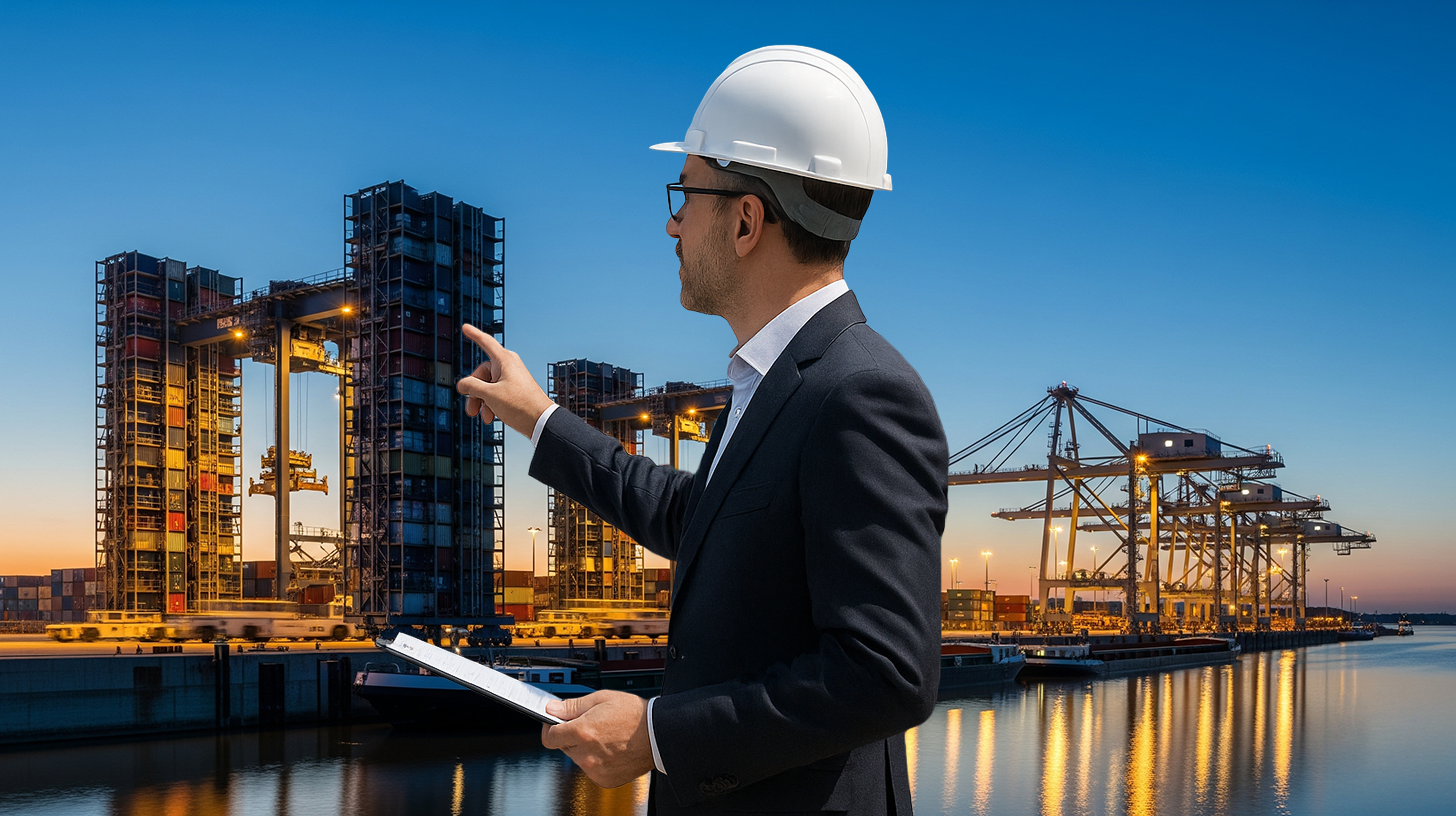
Container terminal systems for road, rail and sea transport in the dual-use logistics concept of heavy-lift logistics - Creative image: Xpert.Digital
In a world marked by geopolitical upheavals, fragile supply chains, and a new awareness of the vulnerability of critical infrastructure, the concept of national security is undergoing a fundamental reassessment. A state's ability to guarantee its economic prosperity, the provision of essential goods and services to its population, and its military capability increasingly depends on the resilience of its logistical networks. In this context, the concept of "dual-use" is evolving from a niche category of export control to a broader strategic doctrine. This shift is not merely a technical adjustment but a necessary response to the "paradigm shift" that demands a profound integration of civilian and military capabilities.
Related to this: